Dateline June 27, 2011, Anchorage to Denali
After our wonderful time in Anchorage we settled into a beautiful Alaska state campground on the Eagle River, in the town of the same name, a hundred feet from the water and within easy reach of the kind of sound that puts you right to sleep. The first morning we drove into town for fishing licenses, the kind that would last us through Alaska. Then we had a tee time at Eagleglen on Elmendorf Air Force Base, where civilians are allowed to play. Robert Trent Jones, Jr. designed the course, and Golf Digest has called it the best in Alaska. Ship Creek runs back and forth across the holes. We walked all 18 carrying our bags, finished around 8 PM, and came back to the campsite where several of the Roadtrek group had a fire going with s'mores and cocktails. We joined them for a while, then back to our own site for another long-sun, sound-sleep night.
In the morning we drove up to Palmer and Wasilla, no Sarah Palin or her bus to be seen, then on to Hatcher Pass in the Talkeetna Mountains to see the old Independence Mine.
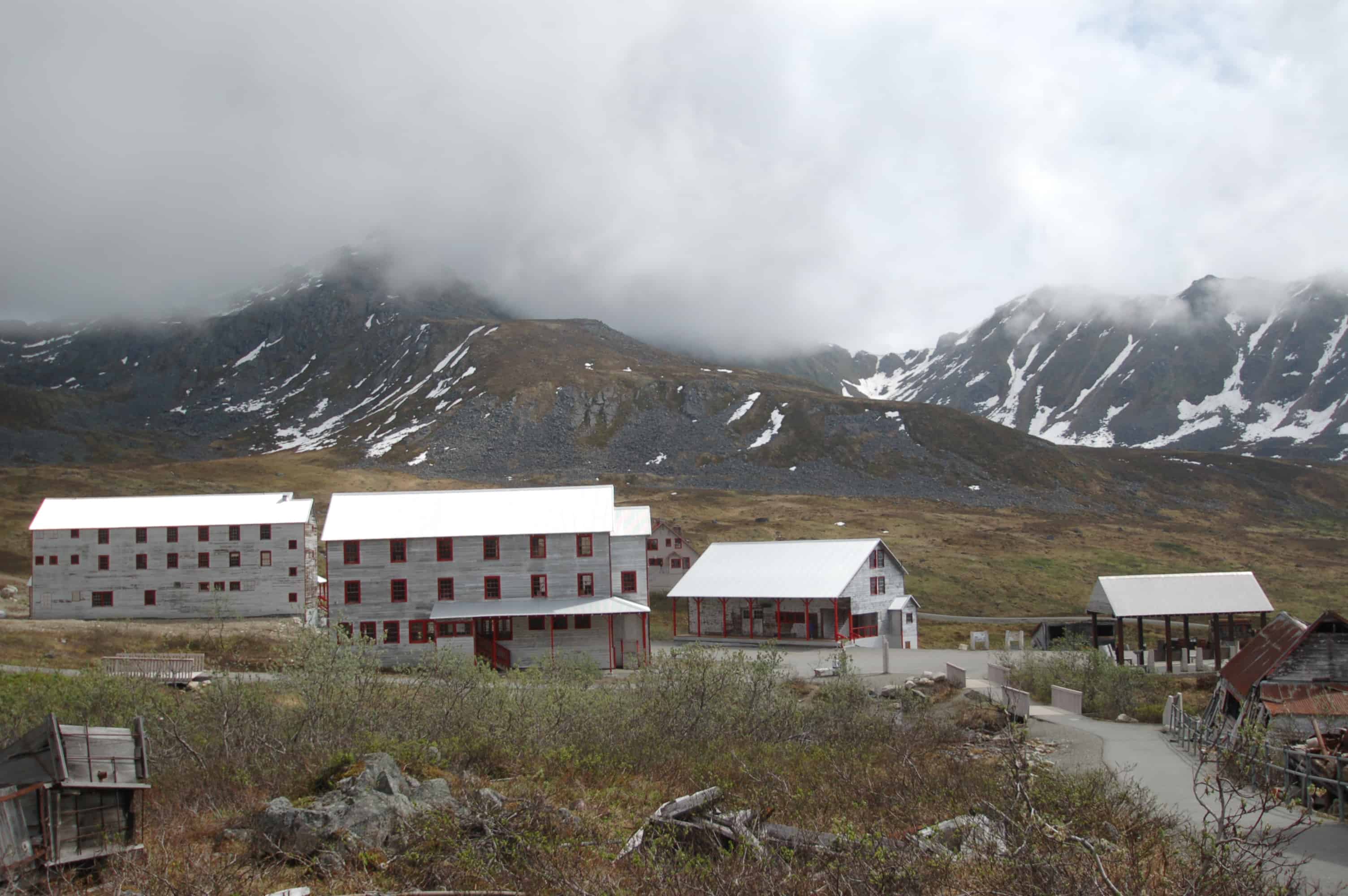
The mine ran from the 1930s through 1951. Gold was discovered in the Willow Creek area in 1896, and Robert Lee Hatcher staked the first hard rock claim in 1906. In 1938, the Alaska Free Gold Mine merged with Independence Mine to form the Alaska-Pacific Consolidated Mining Company. The merger brought new bunk houses, cafeterias, and other infrastructure to handle a growing operation. With 83 claims, the company became the largest producer in the district, and at peak production the tunnels yielded over 34,000 ounces of gold a year. Production cost was about nineteen dollars an ounce; the government-controlled price was thirty-five.
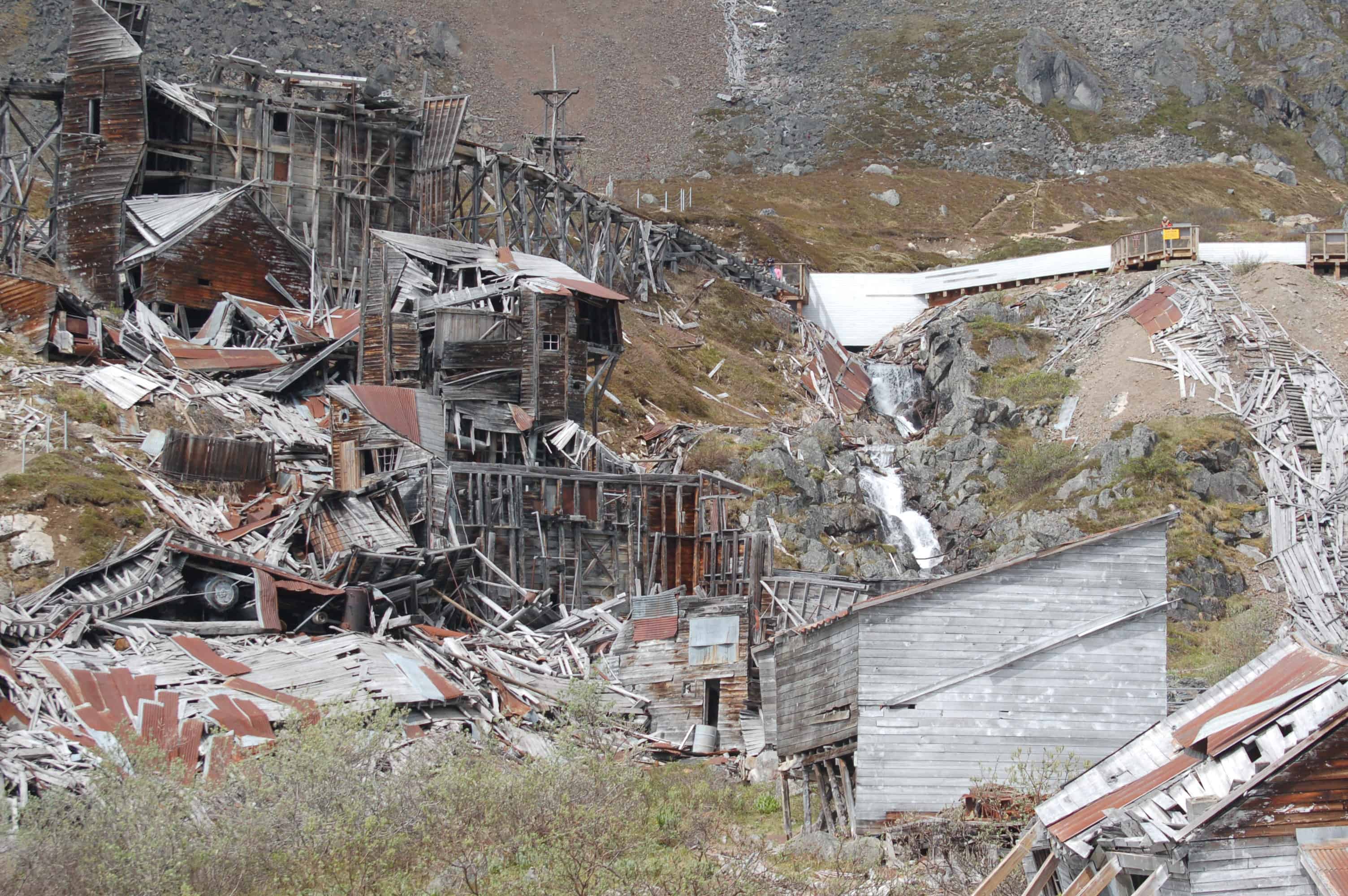
The men worked eight-hour shifts and got two weeks off a year. The mine ran 24 hours a day with only Christmas and the Fourth of July off. The government shut it down in 1943 because gold mining was not essential to the war effort. It reopened after the war and finally closed in 1951. A must-see when you travel Alaska.
From Hatcher Pass we headed down for a round at Settlers Bay in Wasilla, said to have one of the most beautiful nine holes in Alaska. We took carts because the course is hilly. Always on the lookout for animals, we got a good shot of this duck:
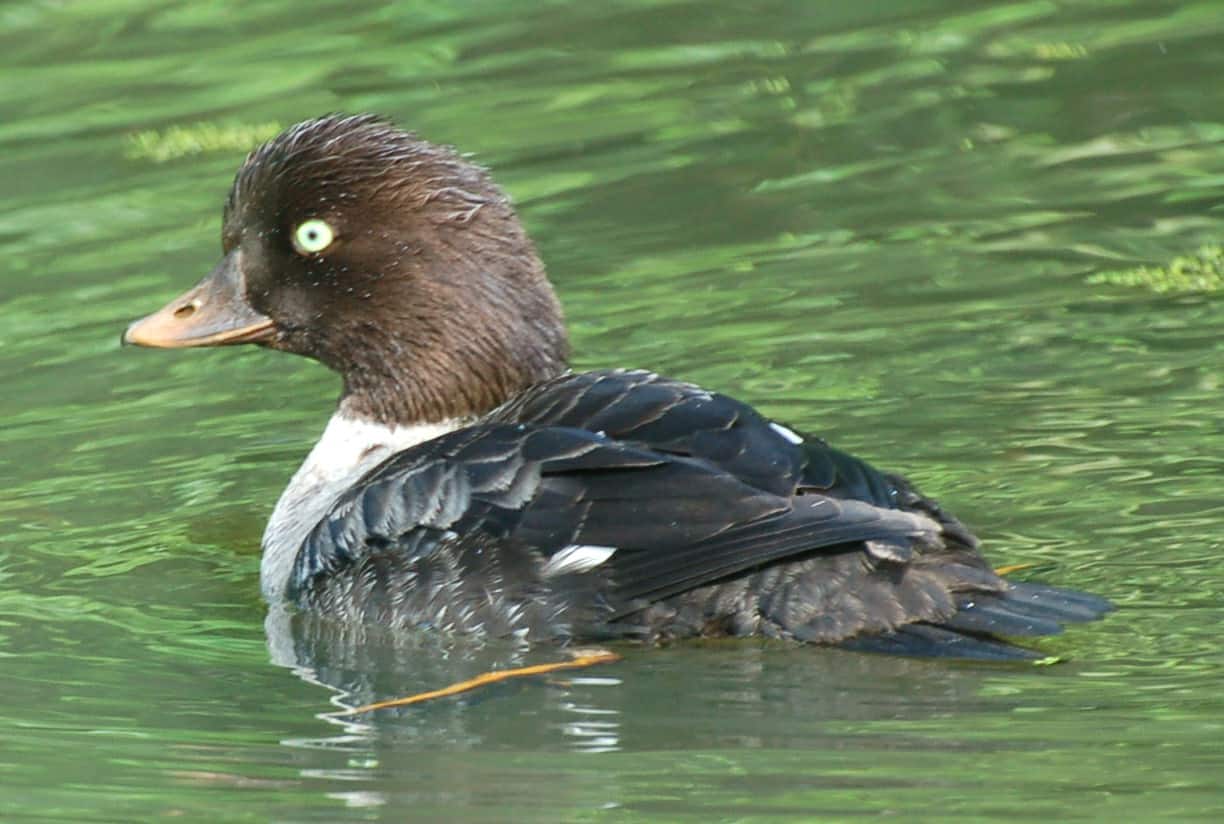
A beautiful nine and a great afternoon with Chuck and Carol over a few beers and a plate of Alaska nachos. Most beautiful nine in the state? Hard to call after so much beauty up here.
Up the Parks Highway toward Denali, we stopped at a few Alaska state parks and found most of them to be little more than parking fields, so we kept driving toward Talkeetna.
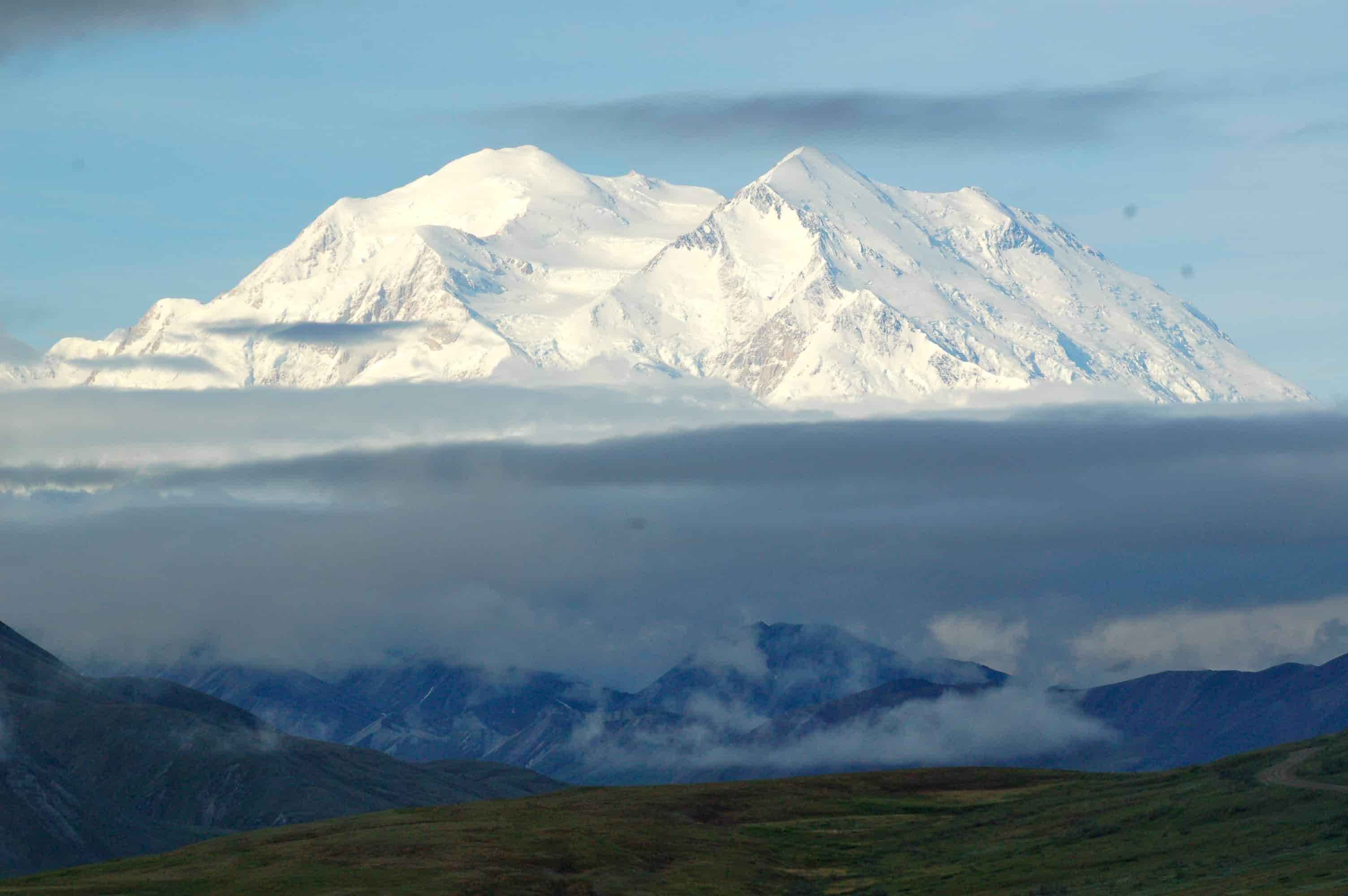
Talkeetna sits just over 100 miles south of Mount McKinley, also called Denali, in Denali National Park. Most climbing activity on the mountain is staged from here, with about 1,200 climbers a year originating their expeditions in town. In 1915 Talkeetna became the engineering center for the Alaska Railroad, the line that ran from Fairbanks to Seward. With land available for under fifteen dollars an acre the town grew, and once the road from Anchorage was finished in 1964 the railroad shifted toward tourist traffic. Talkeetna is also the main hub for flight-seeing trips around the mountain. One couple in our Roadtrek group was up in the air when their pilot got a call to pick up a climber stranded on McKinley; they landed on a glacier, loaded him in, and flew back to Talkeetna. We arrived on a Thursday with the view of the mountain crystal clear.
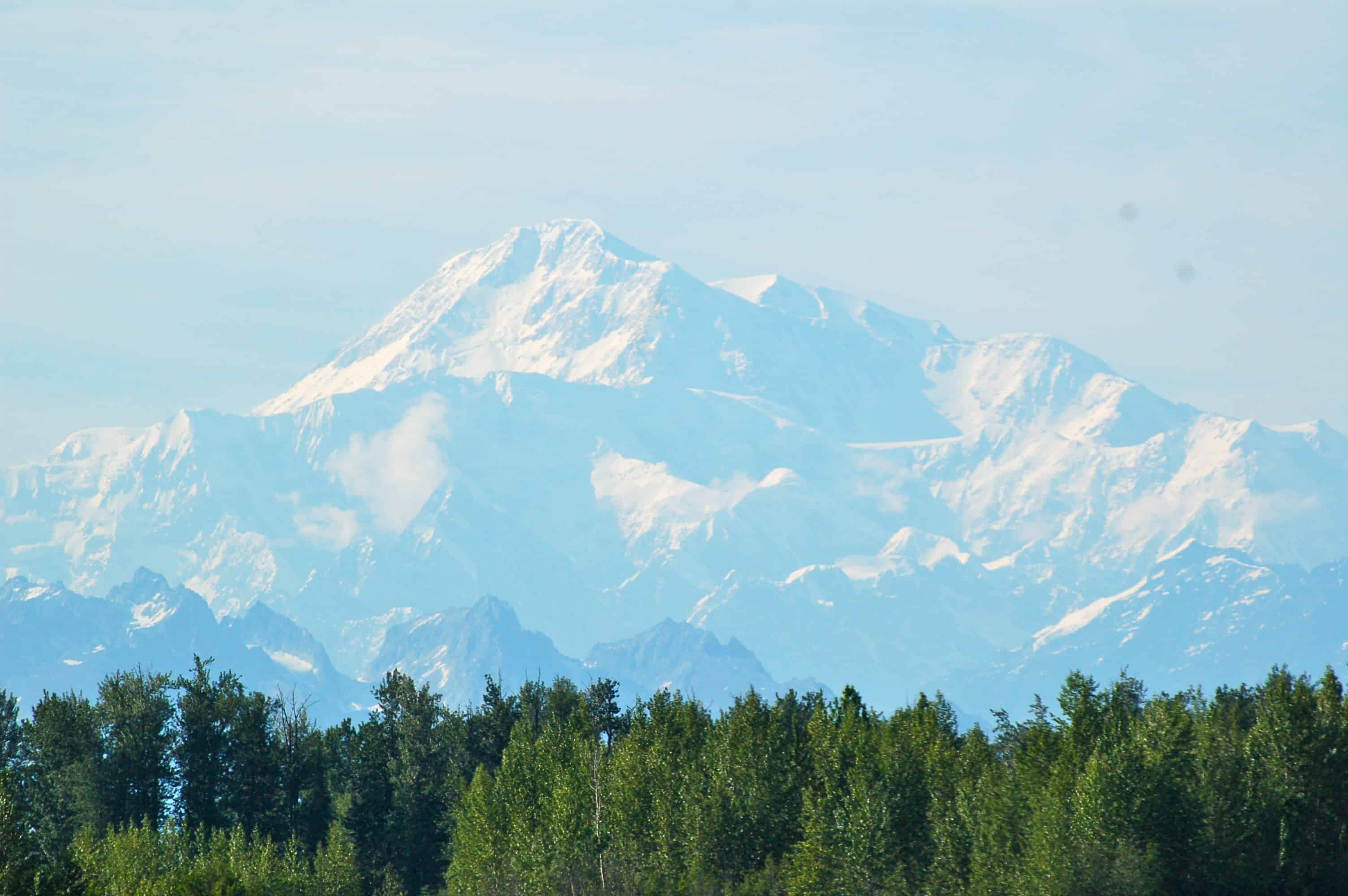
We were told we were in the 30% club. Cloud cover hides the mountain 70% of the time.
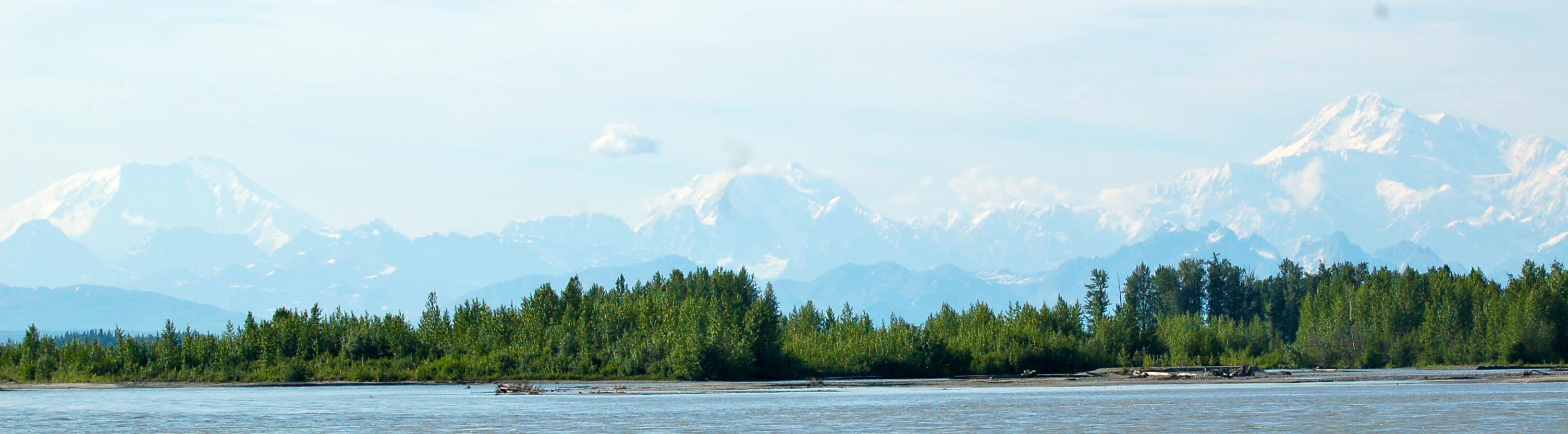
That evening we took a boat ride up the river, where three rivers converge at Talkeetna, and the view of the mountains from the water was an absolute wow. Left to right, Mount Foraker at 17,400 feet, Mount Hunter at 14,573 feet, and Mount McKinley at 20,320 feet, all of them clear as a bell. That trio is the lead picture of this post.
Talkeetna is a fun town. Two of its restaurants have been featured on the Travel Channel's "Man vs. Food": the Roadhouse for its breakfast and the West Rib Pub and Cafe for its Seward's Folly sandwich, a four-and-a-half pound burger on a sourdough bun. There is a junior version too, only two pounds.
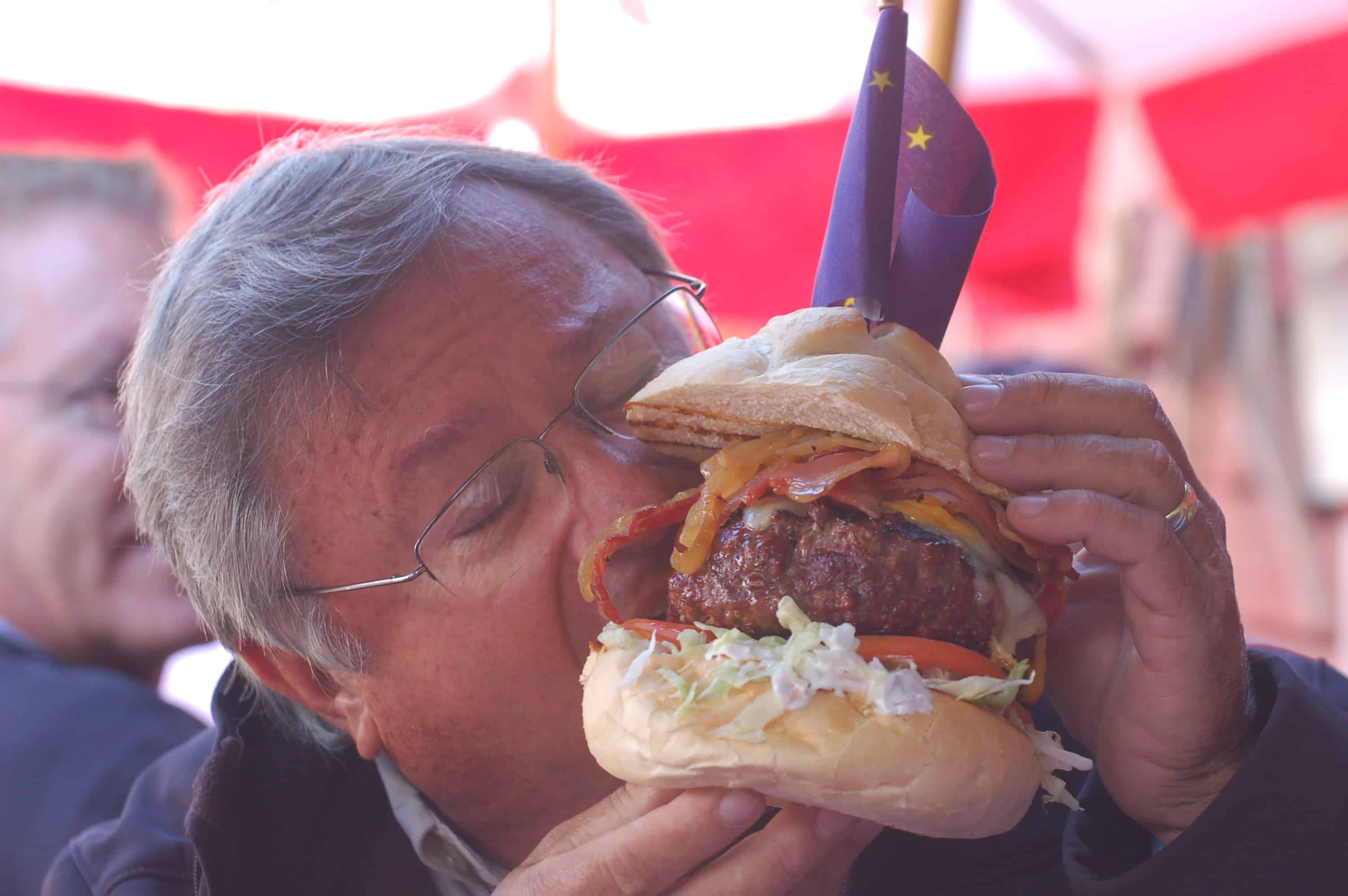
Pete Warenski and John decided to try the two-pounder, to the great delight of everyone else.
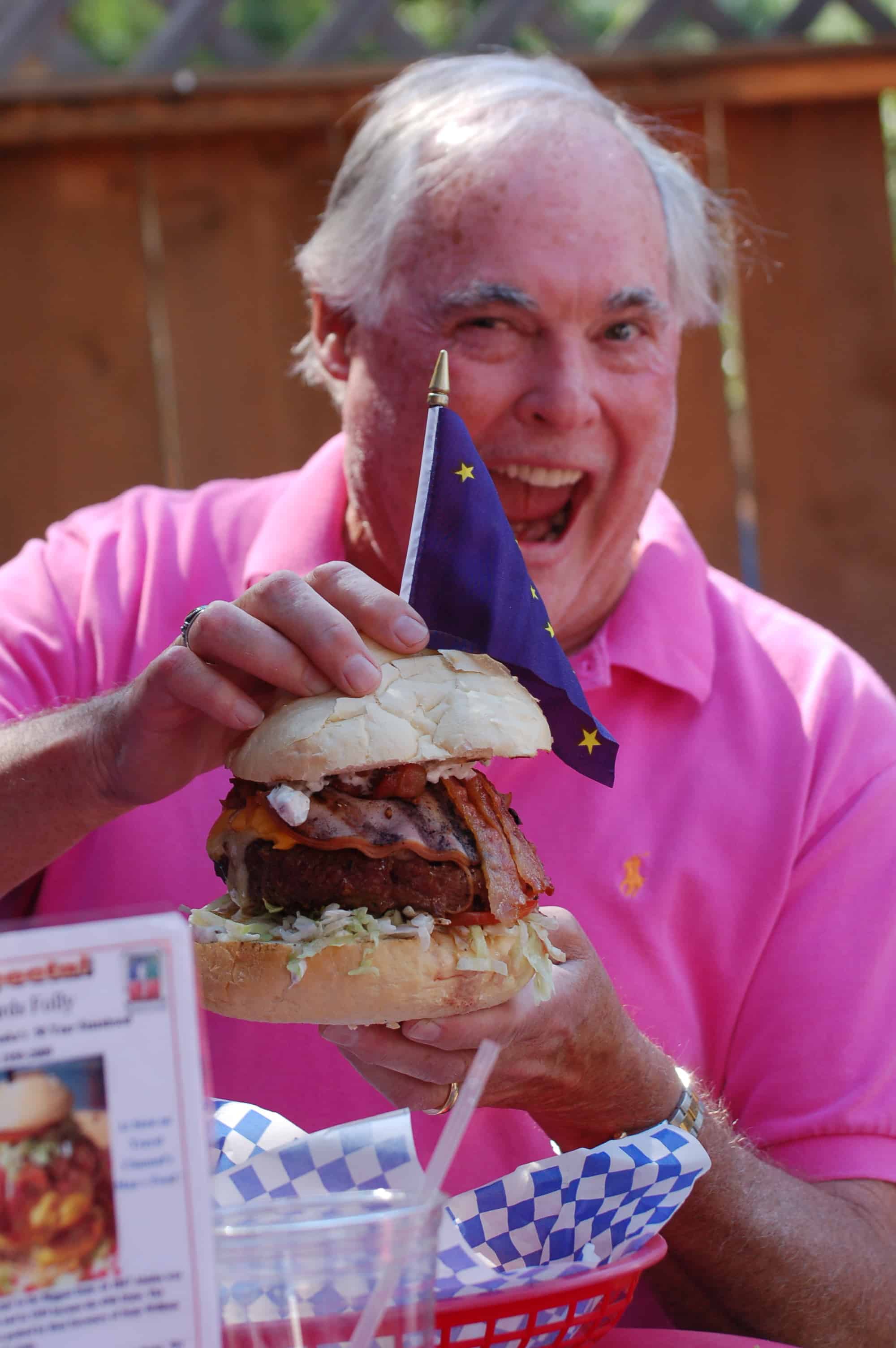
The makings: one pound of caribou burger cooked to order, six slices of bacon, four of ham, Swiss and cheddar, grilled onions, served with an Alaska state flag stuck through the top. Plus enough french fries for an army. How was it? The caribou was interesting and good. Janice thought it tasted like steak. John couldn't finish the sandwich even after avoiding most of the bread, ham, cheese, and bacon. Pete made it through half. The leftovers from Pete went home with him; John's went to Hal and Kim's dog Benny.
An odd attitude develops when you tour Alaska slowly in an RV. You start to feel more local than the people coming through on the cruise ships. Talkeetna is part of the land-based portion of the cruise itineraries, and after noon the shops and restaurants fill up with people carrying Princess or Holland America bags. We tended to step aside for an hour or two.
After a long walk to settle the food, back to the camp to grab the Roadtreks and head out fishing. No fish caught, but a fine evening anyway. In the morning, on toward Denali, 125 miles up the highway.