Dateline July 26, 2013, The Ronald Reagan Presidential Library and Museum
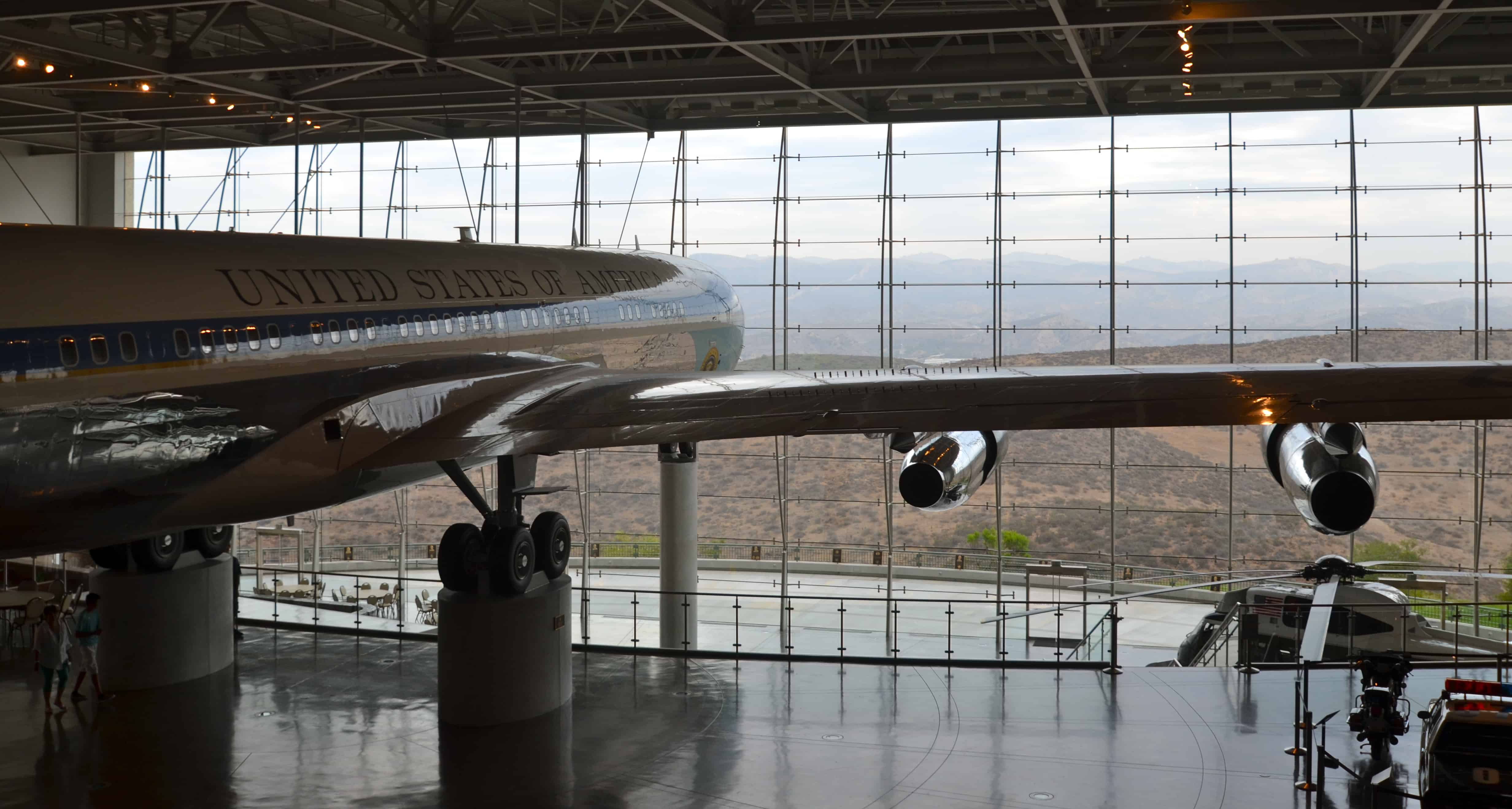
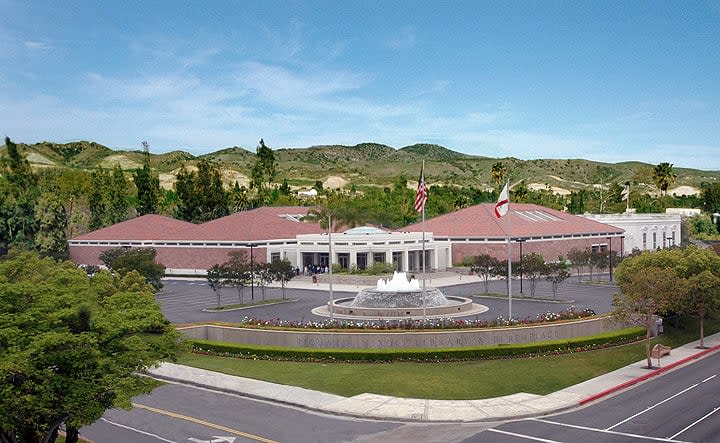
We drove from Malibu over the coastal mountain roads to Simi Valley, sometimes at 15 MPH around the curves. Fun to spot the homes of the rich and famous on the way, but nothing really prepared us for the entrance drive up to the Reagan Presidential Library and Museum. Portraits of each president line the road up the hill. At the top, the library sits with a sweeping view over the valley below.
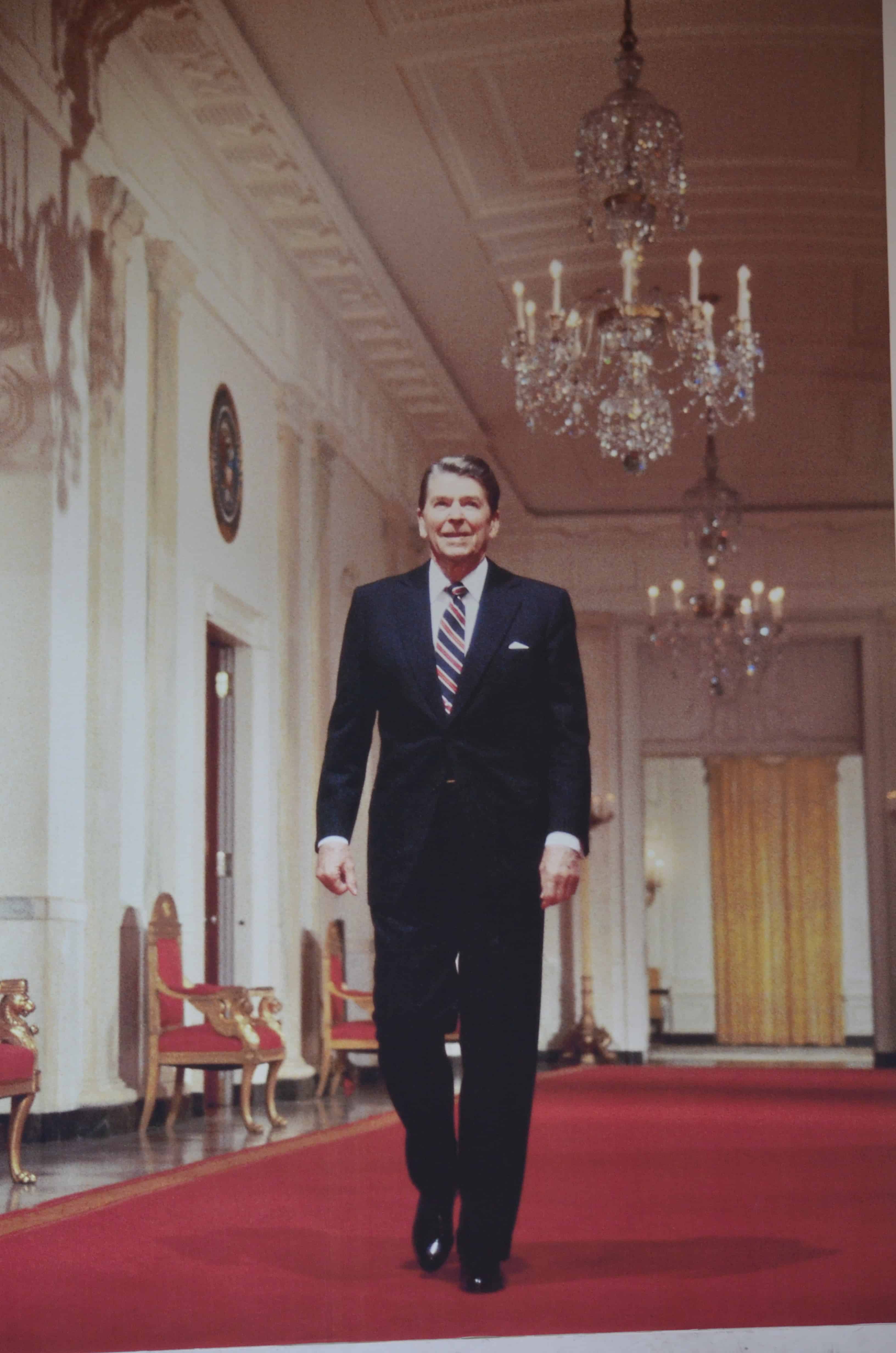
The library takes you through Reagan's life in chronological order. The emotion of it comes from the simple fact that, for visitors of a certain age, you lived through the years that he shaped. Starting with his boyhood, the exhibits follow him to Eureka College and on to his early job as a sports announcer, where he would call a baseball game by reading the ticker tape and inventing all the surrounding detail. (Pause for the realization that this is essentially how sports radio worked for decades.) He was discovered and invited to MGM for a screen test. His more memorable Hollywood films include Knute Rockne, All American (1940), where he played the Gipper, Kings Row (1942), and Bedtime for Bonzo (1951). When the war came, his eyesight kept him from overseas service, so he spent the war making training films for the Army.
Working up to his entry into politics, the library traces his years as president of the Screen Actors Guild, where he was instrumental in resolving the union issues that had been roiling the entertainment industry, then his years hosting General Electric Theater. Touring GE plants and talking to both management and labor became the practical foundation of his political shift, away from the New Deal politics of his youth and toward conservatism.
His first appearance on the national political stage was a televised speech for Barry Goldwater's 1964 presidential campaign. The speech, delivered October 27, 1964 and now known as "A Time for Choosing," laid out his conservative views in full. He acknowledged at the top that he had written it himself. He spoke about the tax burden, the necessity of a balanced budget, anti-communism, and individualism. He condemned what he called "a little intellectual elite in a far-distant capital," along with bureaucracy, public housing, and welfare. He closed with what became one of his signature lines:
"You and I have a rendezvous with destiny. We will preserve for our children this, the last best hope of man on Earth, or we will sentence them to take the last step into a thousand years of darkness."
There is a video of "A Time for Choosing" on YouTube (here). It is the speech that really started national interest in Reagan as a candidate.
He ran for Governor of California in 1966 and won, defeating Pat Brown, the father of California's current governor Jerry Brown, who was running for a third term. Reagan served two terms in Sacramento. From there he entered the national stage, first as a rival to Gerald Ford for the 1976 Republican nomination, then winning the 1980 nomination over George Bush, choosing Bush as his running mate.
The campaign exhibit is very well done. The famous Carter debate moment is there, with the question "Are you better off now than you were four years ago?", followed up with questions about paychecks, the economy, security, and the rest. Still one of the most discussed debate performances in American political history, and a benchmark every challenger since has been measured against. The video of the debate is on YouTube (here).
As you walk through the displays you are hit with one memorable event after another. The assassination attempt by John Hinckley and Reagan's recovery in the hospital, the moments brought close enough to feel happening in front of you. The Air Traffic Controllers strike. The bombing of the Marine barracks in Lebanon. The Grenada invasion. Each is brought to life with sounds, video, and photographs.
The negotiations with Gorbachev are very well covered. Gorbachev agreed that US research on the Strategic Defense Initiative would be considered separately from the INF agreement (the INF being the Intermediate-Range Nuclear Forces Treaty), but Reagan ended the Reykjavik conference itself. Despite the apparent failure of the summit, participants and observers have since described Reykjavik as an enormous breakthrough that eventually facilitated the INF Treaty, signed at the Washington Summit on December 8, 1987. Reagan famously talked about "trust but verify," and this was the first time the United States was able to inspect and verify what the Soviets said they were doing. As with every administration, there were also disappointments. The library gives you both.
One hall is the Air Force One pavilion. T. Boone Pickens made the display possible.
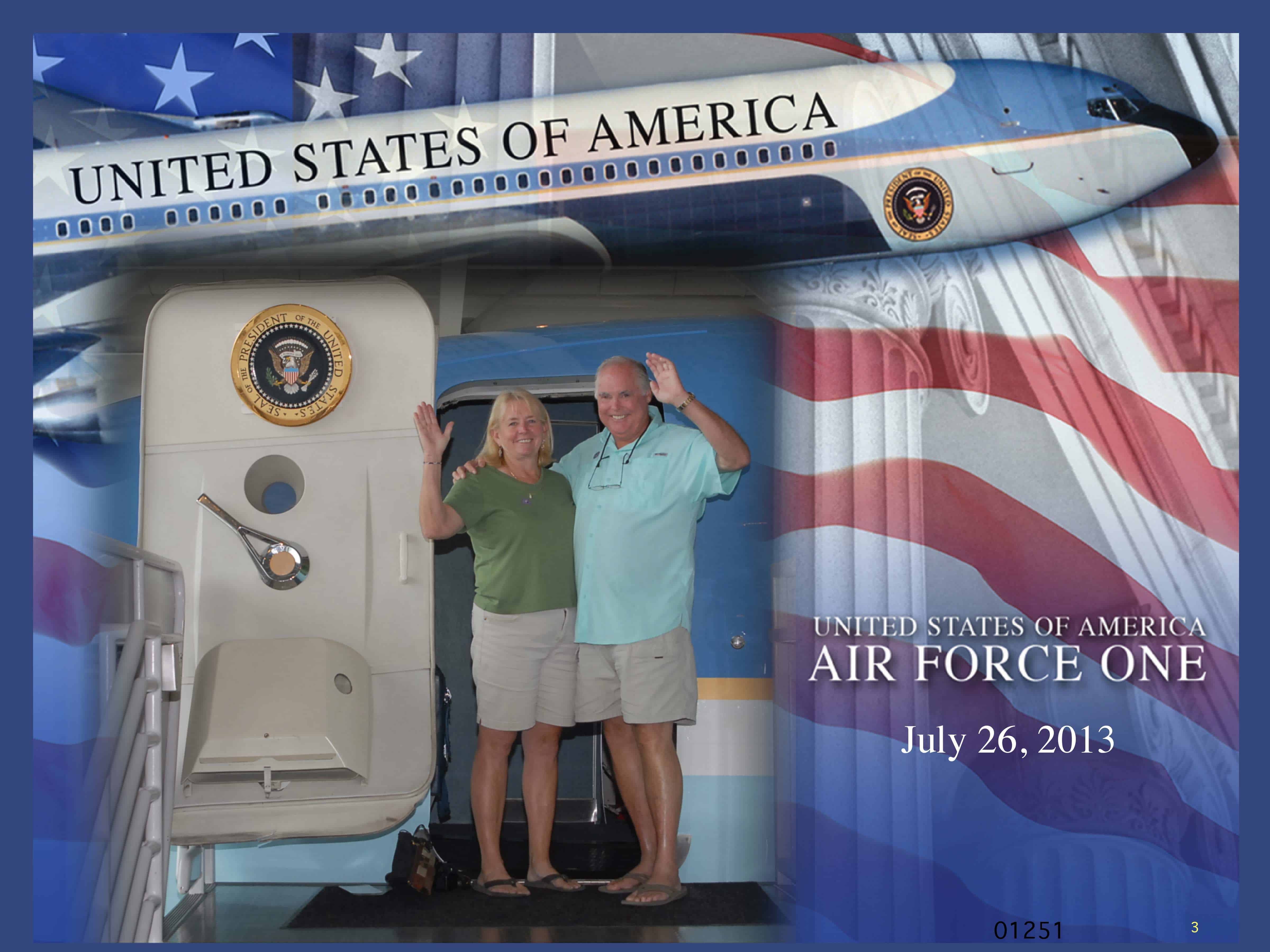
The aircraft, SAM 27000, is one of the Boeing 707s (in civilian designation) that served as Air Force One from Nixon through George W. Bush, retiring in 2001. It rests high in a three-story atrium that looks out on the hills of Simi Valley. Around it are a number of other presidential transports, including the presidential limousine with its license plate: GIPPER. Marine One, the presidential helicopter, is also on display.
Touring the plane is a real pleasure. As you walk back from the front, the seats get smaller, ending in the press section. (The press pay first-class fare plus one dollar to ride.) President Reagan loved chocolate cake, and Nancy was strict about him eating it. So Reagan made sure there was always a chocolate cake in the back of the plane. He would find out who in the press section had a birthday, walk the cake down, sing Happy Birthday, and then enjoy his slice. There were also numerous jars of Jelly Bellys onboard, his favorite jelly bean.
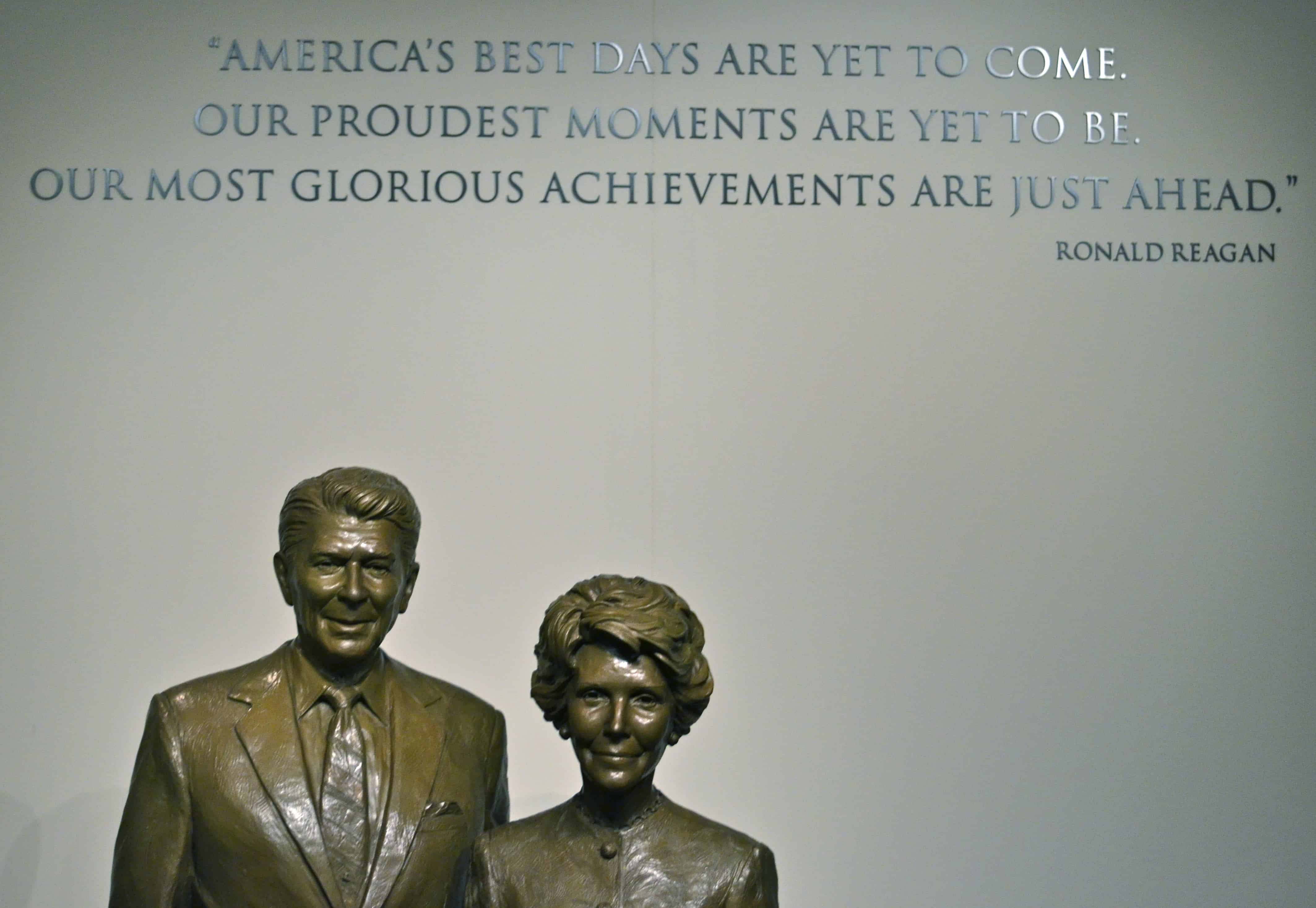
The spirit Reagan inspired stays with people who remember those years. He believed wholeheartedly in what was good about America and the American people. His own words upon leaving the presidency:
"I've spoken of the shining city all my political life, but I don't know if I ever quite communicated what I saw when I said it. But in my mind it was a tall proud city built on rocks stronger than oceans, wind-swept, God-blessed, and teeming with people of all kinds living in harmony and peace, a city with free ports that hummed with commerce and creativity, and if there had to be city walls, the walls had doors and the doors were open to anyone with the will and the heart to get here. That's how I saw it and see it still... And how stands the city on this winter night? More prosperous, more secure, and happier than it was eight years ago. But more than that; after 200 years, two centuries, she still stands strong and true on the granite ridge, and her glow has held steady no matter what storm. And she's still a beacon, still a magnet for all who must have freedom, for all the pilgrims from all the lost places who are hurtling through the darkness, toward home."
At the end of the tour, there is a beautifully presented sequence about the celebration of his life after he passed away in 2004 from Alzheimer's. It brings tears, as you say goodbye one more time to someone whose presidency shaped a generation.