Dateline February 3, 2015, Christchurch
We left the Marlborough Valley early in the morning and drove south toward Christchurch.
Ōhau Point.
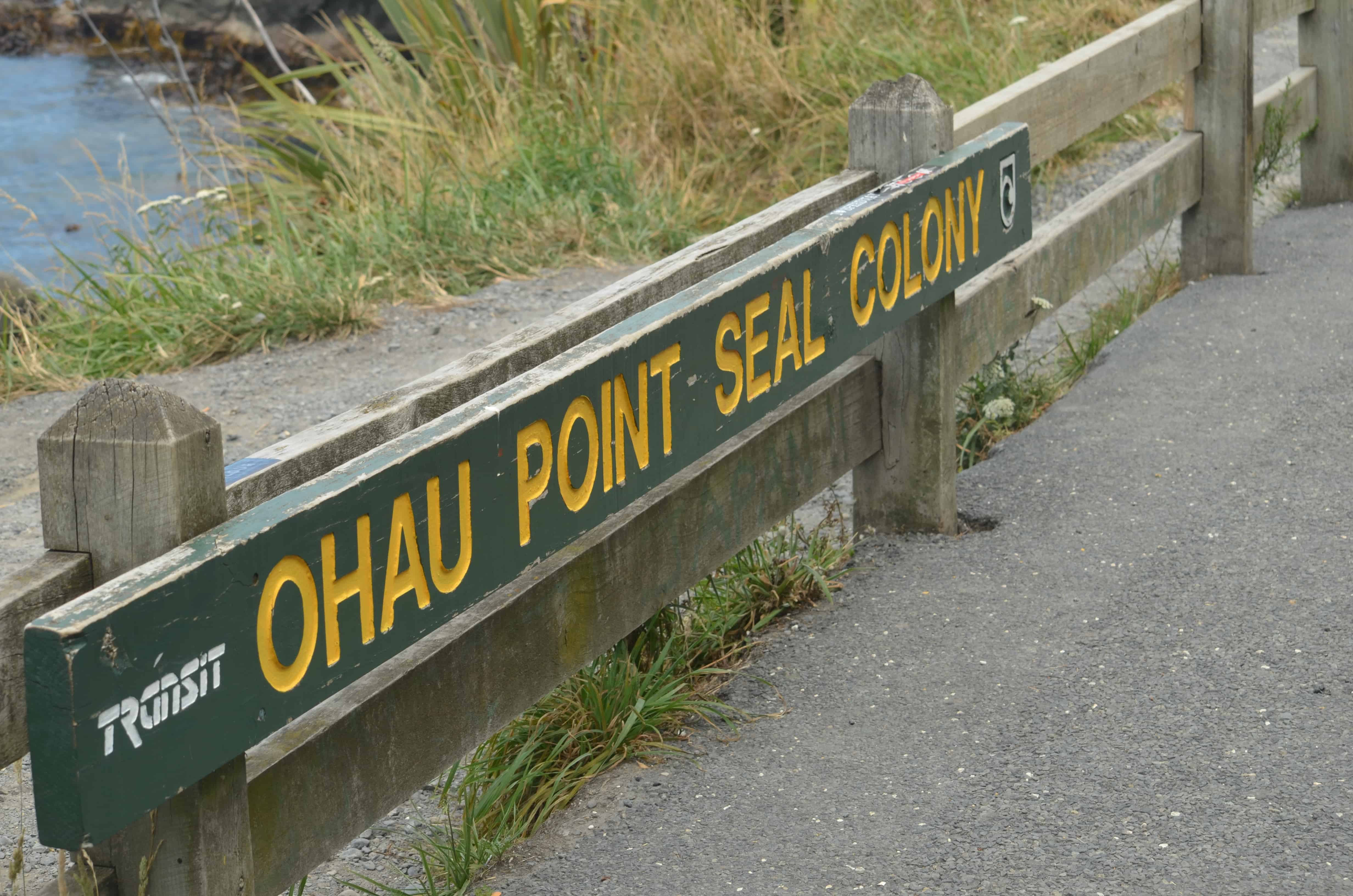
En route, we pulled off the road at what turned out to be the Ōhau Point Seal Colony, a New Zealand fur seal breeding ground on State Highway 1, about twenty-five kilometers north of Kaikōura. The fur seal, kekeno in Māori, returns to Ōhau Point in late spring to give birth, which meant that in early February we were a few weeks past the peak of pupping. The rocks and tide pools were full of baby seals at play, with a few mothers nursing nearby. We stayed a lot longer than we had planned.
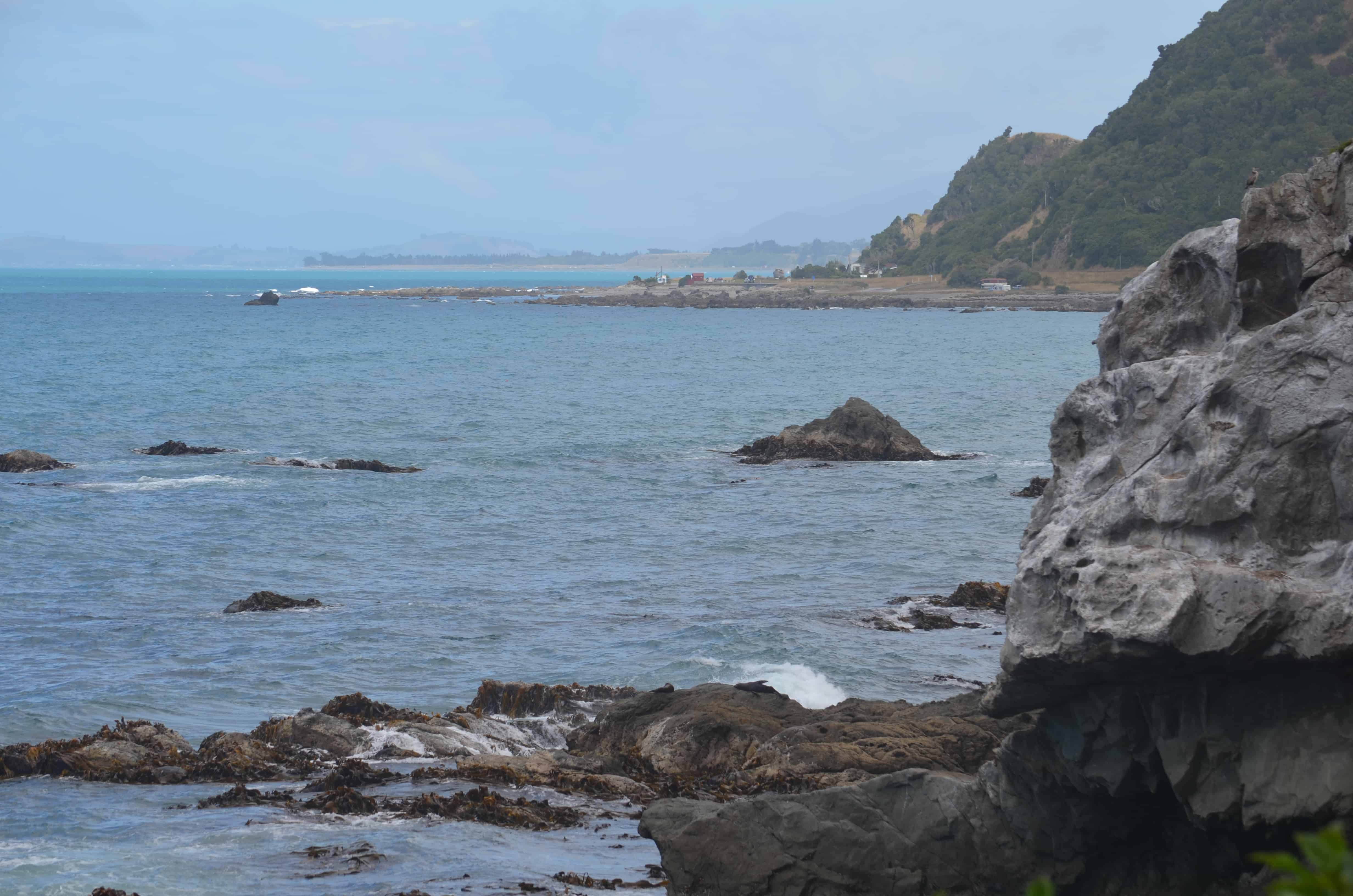
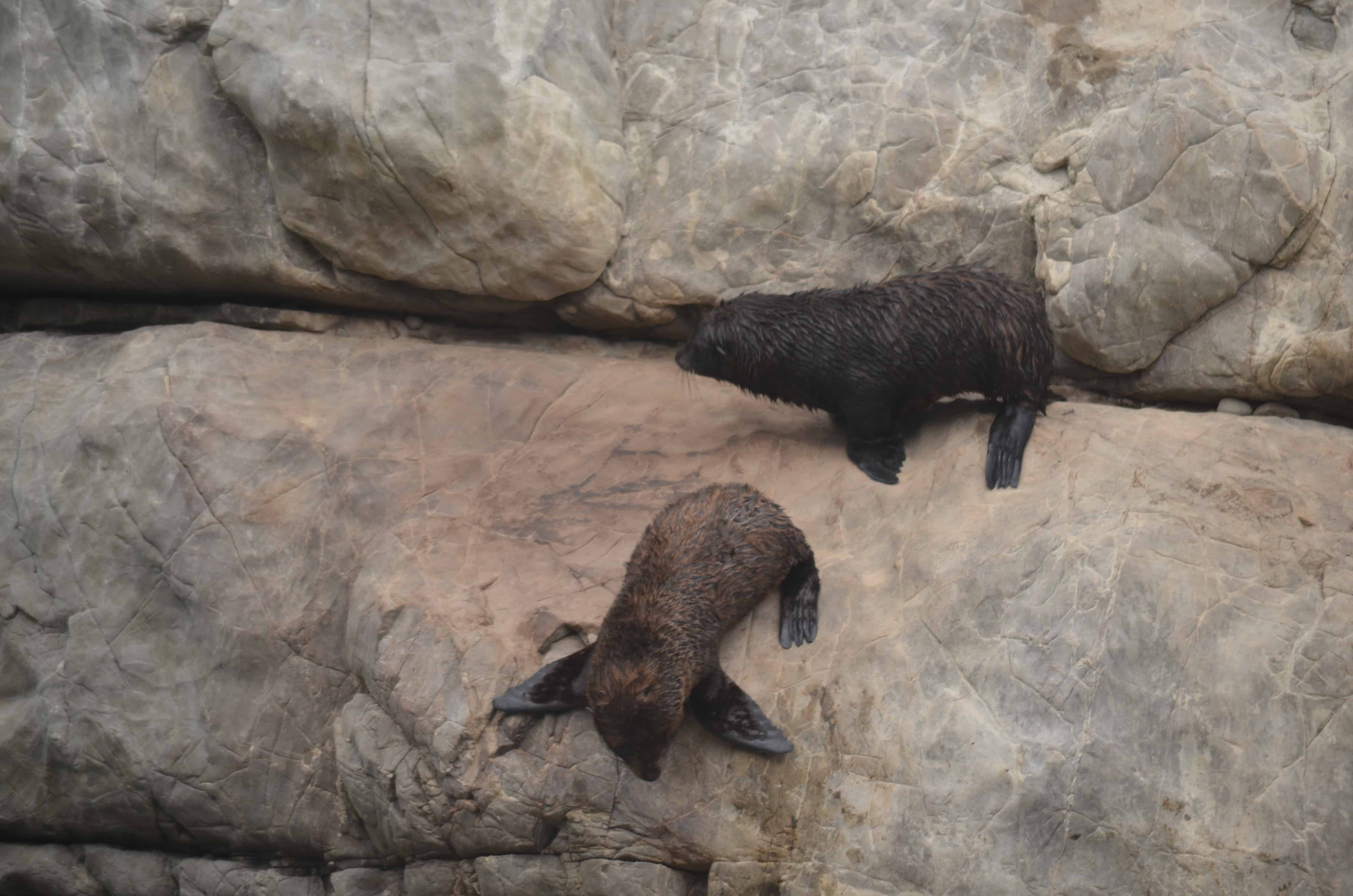
(A note from years later: in November 2016, the Kaikōura earthquake caused massive landslides at Ōhau Point and destroyed the original walkway down to the pup pool. The lookout has since been rebuilt with a new boardwalk, and the seals returned in good numbers.)
Christchurch and the earthquake.
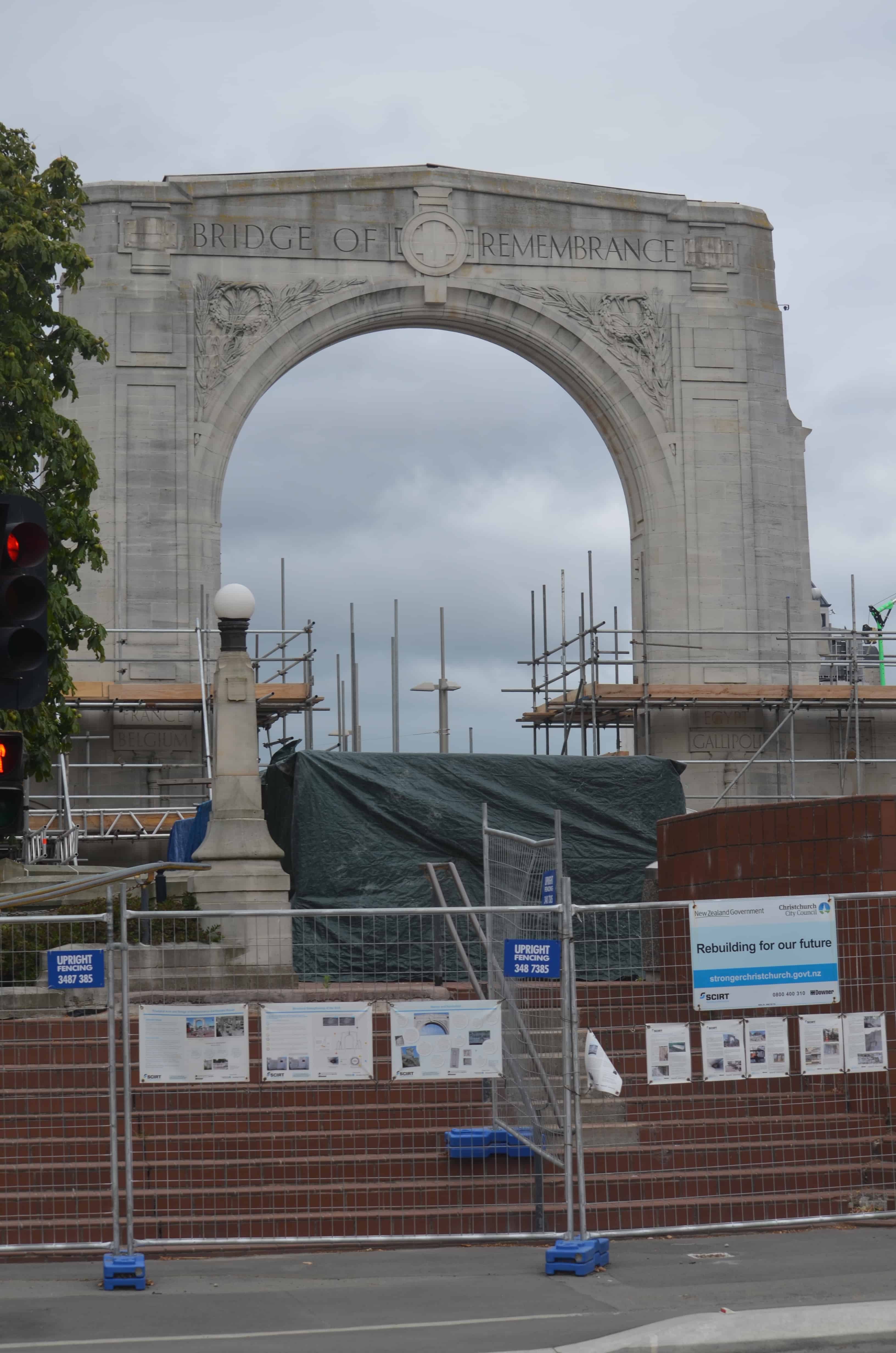
As many of you know, Christchurch suffered a devastating earthquake in February 2011. The shallow magnitude 6.3 quake demolished a large part of the city center and killed 185 people. The community has been slowly but surely rebuilding, and people we spoke with were upbeat about the modern design plans for the new city. Some important buildings and memorials may not be saved, however, because of the extent of the damage. The war memorial to Christchurch's fallen soldiers was one of the ones being restored.
We arrived in Christchurch late in the afternoon, after our drive down from the Knights of the Sky Museum. We were booked at the Classic Villa B&B, right in town. Alisa met us at the door and showed us to our rooms. Classic Villa is an old home from the 1850s, with several rooms on the original ground floor and additional rooms added upstairs in a later renovation. Pete and Bunny took rooms upstairs in the newer wing (Janice's hip was hurting and they kindly volunteered for the staircase). Janice and John stayed downstairs in the original section.
After settling in we walked out to do some touring and shopping. The shops have been relocated into temporary buildings on the edge of the reconstruction zone, with much of the surrounding street network roped off. Reconstruction is going slowly. There is not enough money, and the insurance settlements are crawling along. The hostess at the B&B told us that a San Francisco earthquake expert who was staying with them at the time, in town to advise the city on infrastructure repair and new construction, had told her that Christchurch had taken more damage than the San Francisco earthquake.
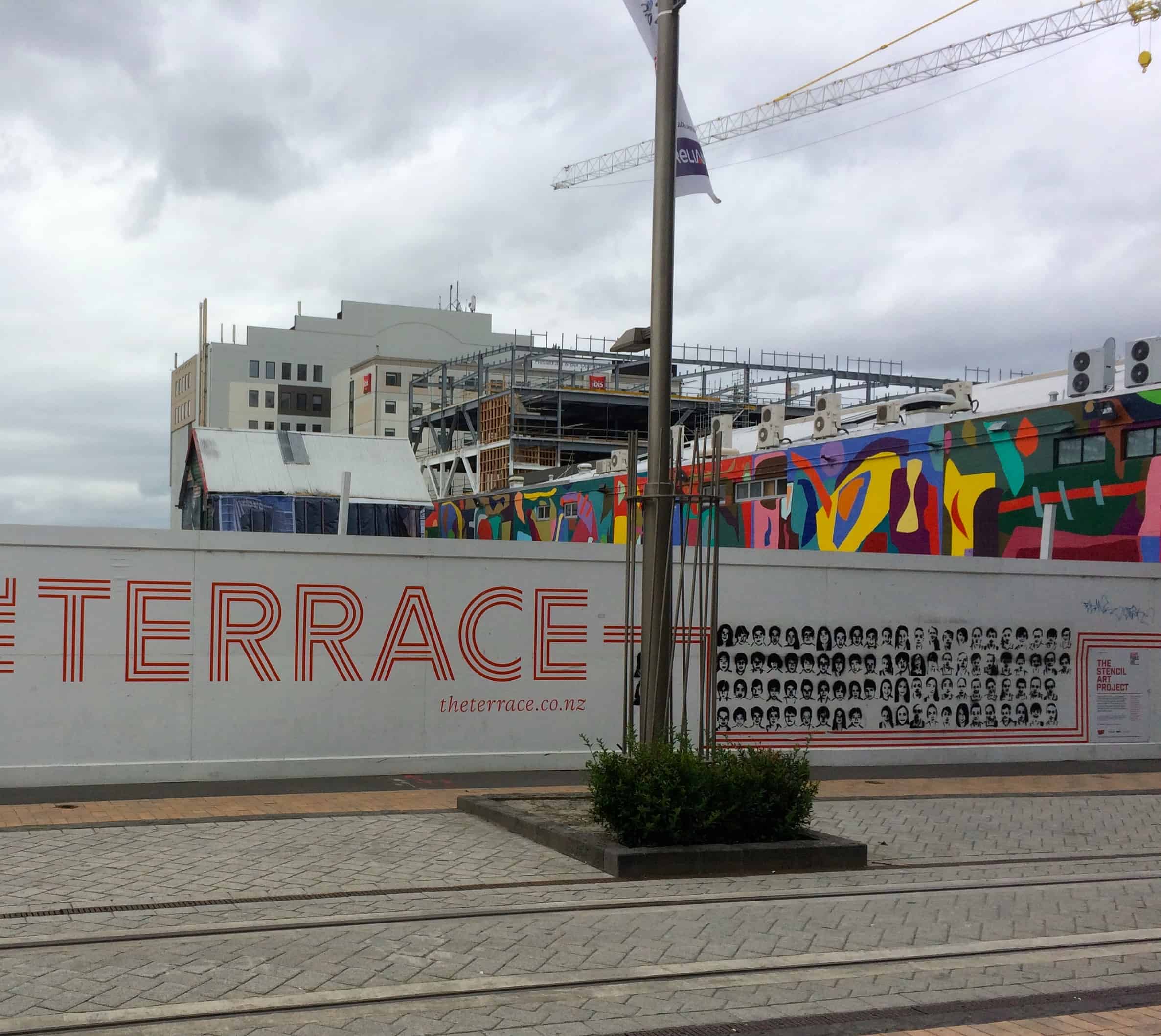
We found a lovely place for dinner and had lamb burgers, which were delicious.
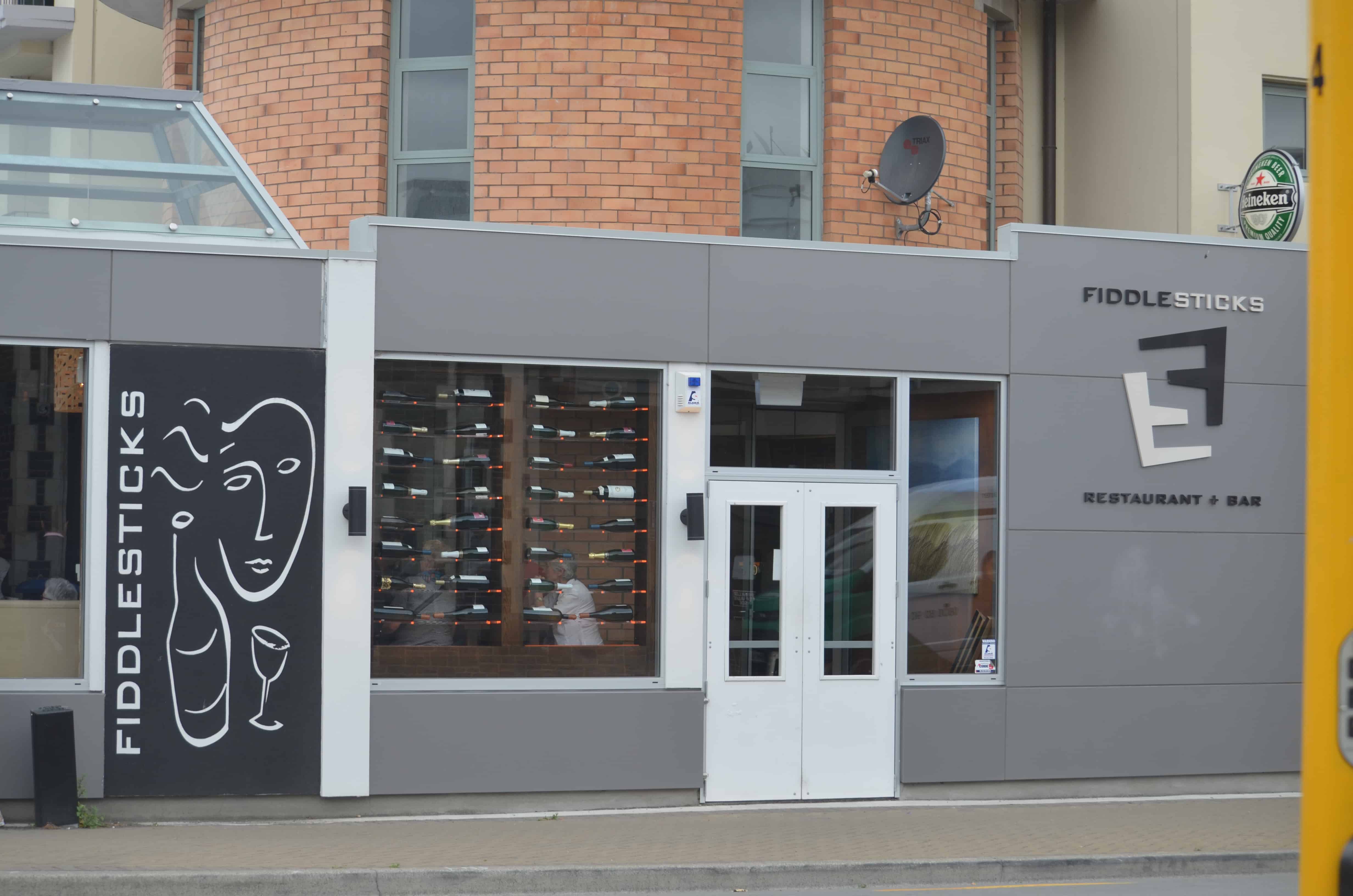
We had planned to meet back at the B&B for wine afterward, but Janice and John took a pass. Janice was exhausted from driving (she and Pete were trading off day by day) and headed up to bed for an early night.
A sheep-farming education.
At breakfast the next morning, Janice fell into conversation with two sheep farmers, and we got a long, interesting lesson on the business.
One of the men was a New Zealand farmer who had sold his own operation to a large agricultural corporation and now worked for them. The company manages around 6,000 hectares of sheep and cattle land. He walked us through the economics.
Sheep on a New Zealand ranch are herded almost entirely by dogs. A large ranch can keep sixty dogs. They are not all one type, either. Different breeds do different jobs, some for long-range work moving sheep across distances, others for keeping a tight flock in one place. The human staff is small, two to ten people per ranch.
What surprised us was how tightly the whole thing runs on schedule. The animals are fed and watered exactly to plan. If a sheep is off-plan and is not ready for market at the specified time and weight, it can cost the business twenty percent of the revenue on that animal.
Sheep have to be sheared for health reasons. If the coat gets too heavy, that is a problem. Most of us probably assume wool is still where the money is in sheep. It is not. Synthetics have eaten most of the market for clothing and carpets, and wool is now a small part of the business.
The other small problems were a bit grimmer than we expected. Hawks and seagulls will move in on a ewe that is birthing and try to peck her eyes out. When the afterbirth is dragging behind the mother, wild pigs will sometimes go after it and end up killing the lamb, or the ewe, or both. Theft, by comparison, is the smallest problem; locals occasionally take a sheep or two for the freezer.
Most New Zealand lamb goes to Europe and Australia. Very little of it reaches the United States.
The same is true on the beef side. The corporation supplies top prime beef to European markets. American buyers are not interested in the premium beef from New Zealand. Their interest, he said, is primarily the scraps that go into hamburger production.
Sheep on the highway.
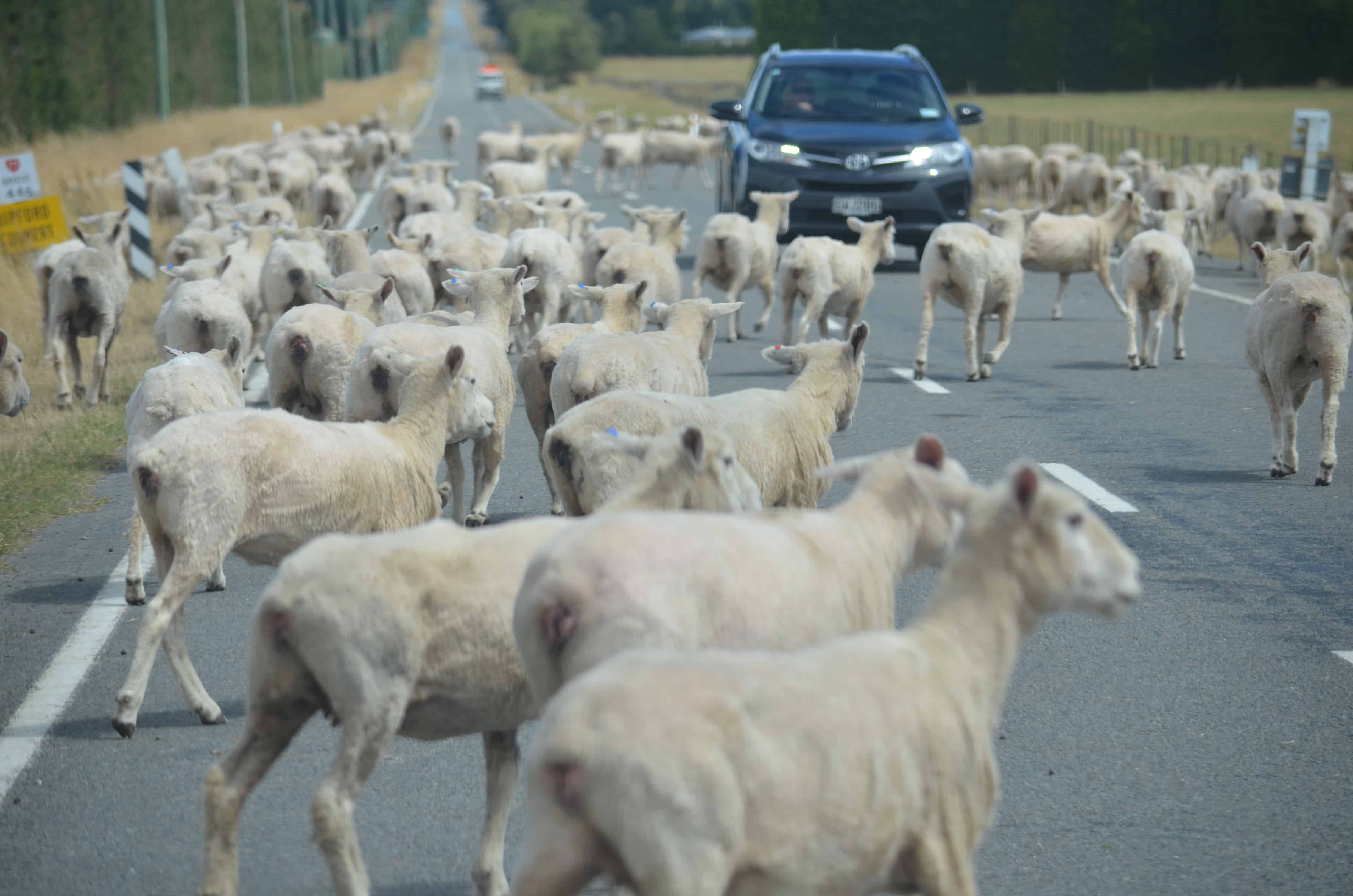
As we drove on toward Terrace Downs for our next round of golf, we came upon a herd of sheep mowing the side of the highway.
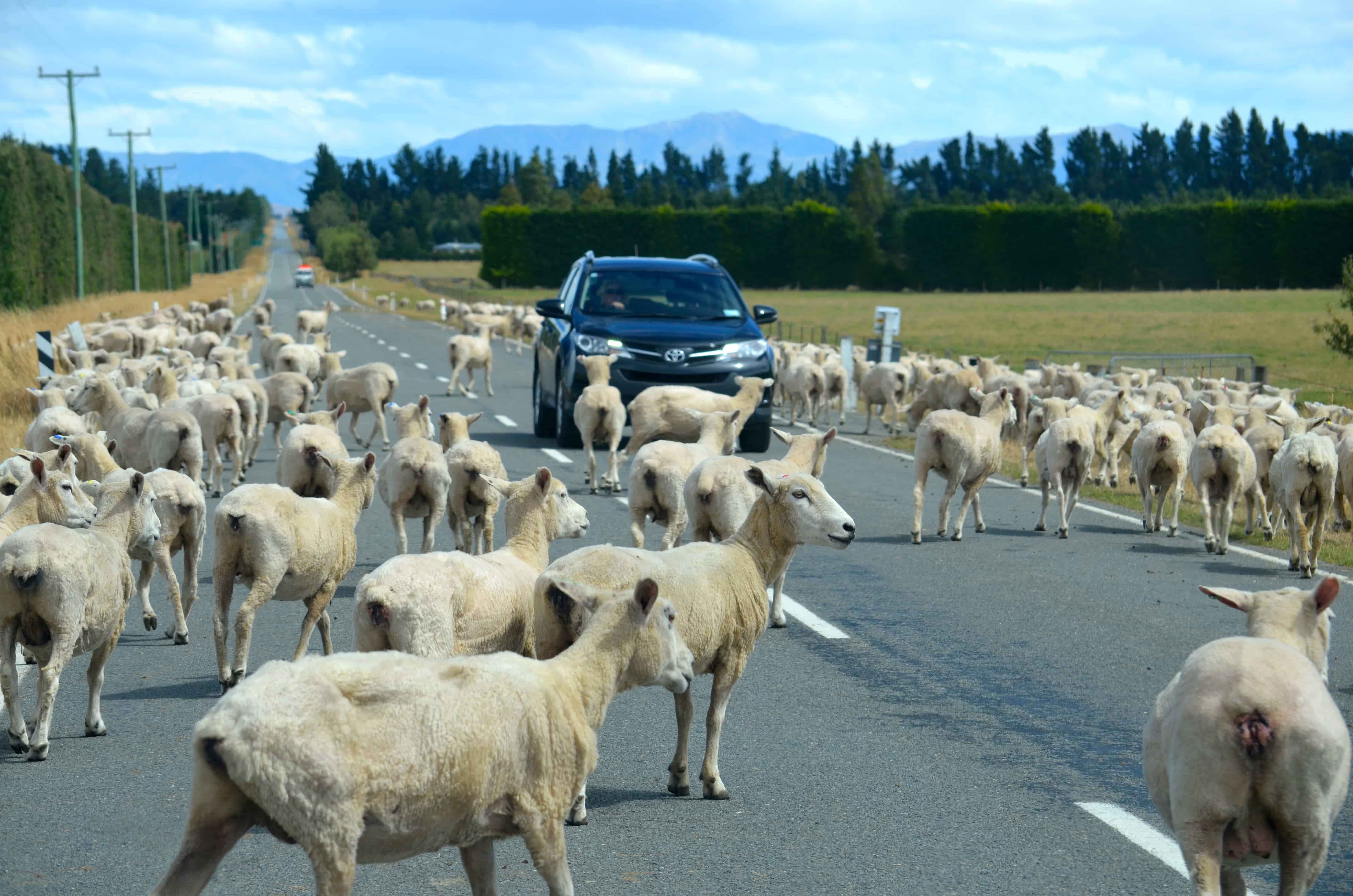
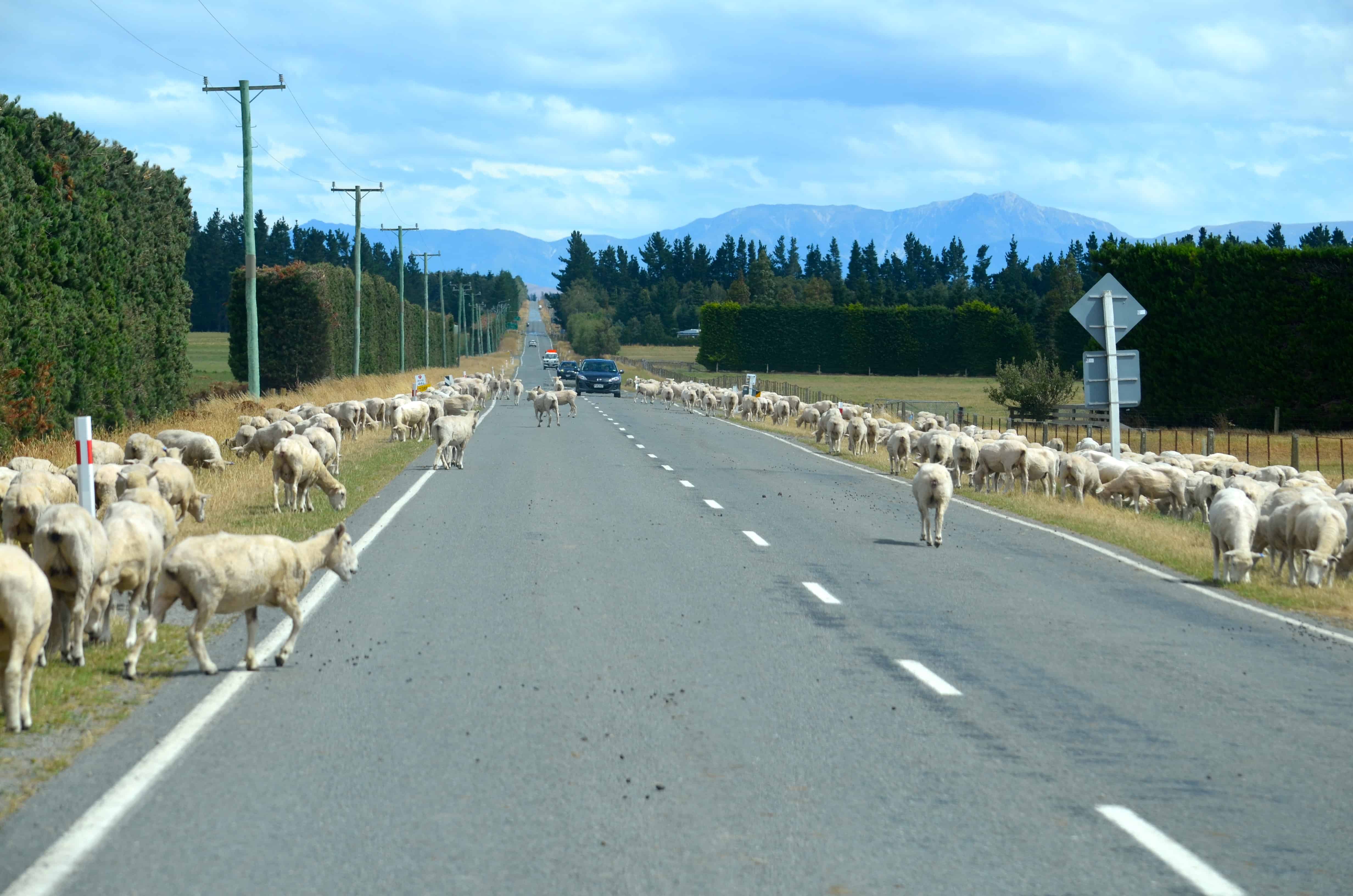
It is amazing how many prison convicts we would put out of work in the US if we had sheep taking care of our highway grass.