Dateline August 21, 2017, The Fortress of Louisbourg
Many of the folks we had met along the way told us the Fortress of Louisbourg was something special, so we made our way out to Cape Breton to see for ourselves. We found the Riverdale RV Park only a few miles from the gate, which made the next morning easy, and since this was Canada's hundred and fiftieth anniversary, the national parks were waving their entry fees.
A little history. Louisbourg was one of France's main strongholds, built to guard a port that in its day was the third busiest in the New World, behind only Boston and Philadelphia. The walls went up mostly between 1720 and 1740, and by the time they were finished this was among the largest and costliest fortifications Europeans had raised anywhere in North America, better than thirty million livres spent on it. It was besieged twice, in 1745 and again in 1758. A treaty in 1748 handed Louisbourg back to France in trade for ground won in the Austrian Netherlands, today's Belgium, and a British post at Madras in India; the departing British carried off the great Louisbourg Cross from the chapel, and it sat unrecognized in Harvard's archives until late in the twentieth century, when it was found and sent back on long-term loan. After the second siege the British took no chances, and their engineers leveled the works in 1760 so the place could never serve France again. Those two sieges, the second one especially, helped decide who would hold what is now Canada. Then, beginning in 1961, the Canadian government set about rebuilding a quarter of the town and its walls, which is what we had come to see.
The tour. A bus carried us from the visitor center out to the fortress, where a storyteller met us in the first building.
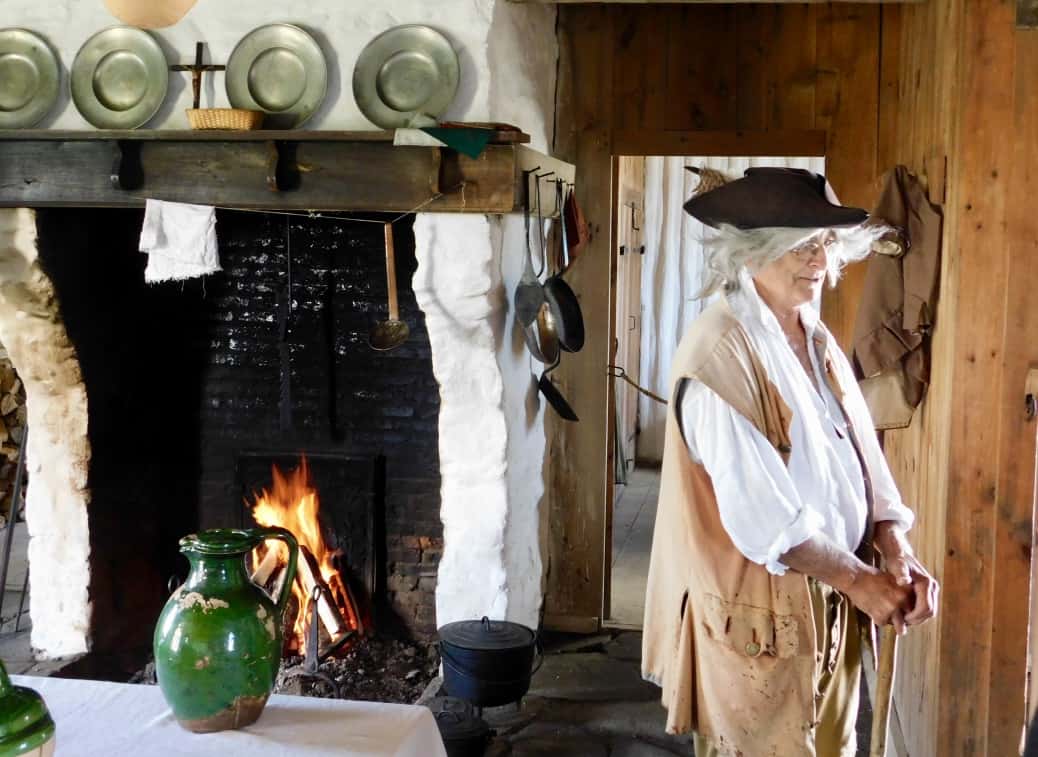
He told us about the settlers who lived outside the walls and got by on their catch, salting the fish and shipping it back to France, where it would keep for two years. When an attack was coming, the settlers would burn their own homes and carry their valuables inside the fortress for safekeeping; if they did not burn them, the British would, settlers and all.
All the staff wear period costumes, each one locally made and fitted to the actor who wears it. At the main gate a guard looked John over and informed him that his red coat was the wrong color entirely. One of the things you could sign up to do was fire a musket, and Janice had her eye on that from the start, so off we went to put our names down.
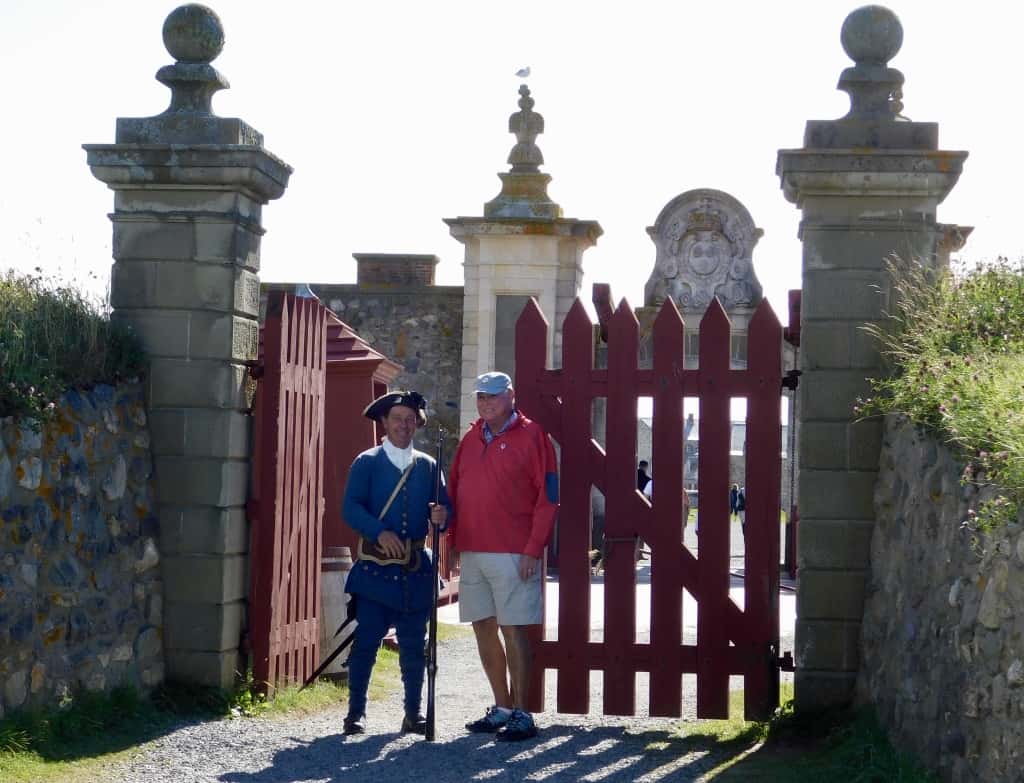
Past the guard house we came to the main fortification and the soldiers' barracks, and what fine accommodations they were: eight beds for twenty-four men, three to a bed, the saving grace being that one of the three was always on twenty-four-hour duty, so only two were ever in the bunk at once. The men worked twenty-four hours on and forty-eight off. The same building held the prison, a chapel, the officers' quarters, and the governor's quarters, and those last were remarkably grand, with a fully staffed kitchen, a dining room, a sitting room, and two bedrooms. All through it we met actors who told us how life had gone in the fortress.
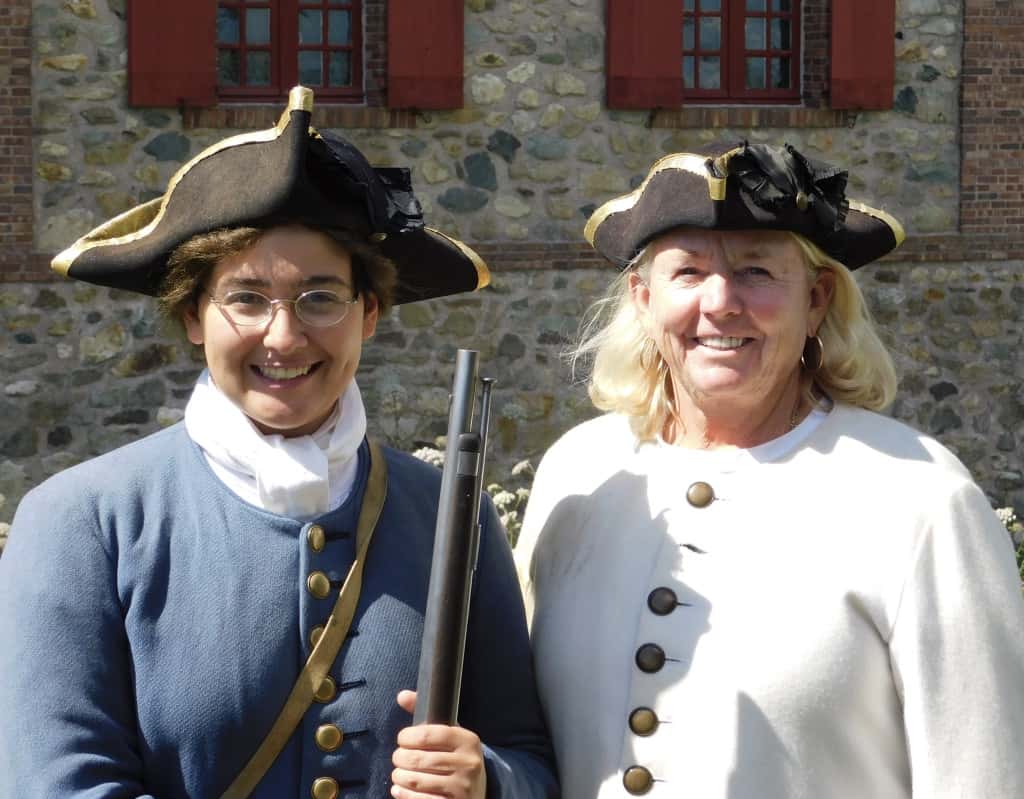
When it came time to shoot, we were taken to meet the soldier assigned to us. First we pulled on wool uniforms, partly to look the part and partly to keep the sparks off, and our instructor, George, led us outside to begin, when we were interrupted.
At eleven there was a presentation on how the army found its recruits and what their lives were like, and since we were already in costume, George asked if we would stand up with him before the hundred guests as new recruits to the fortress. Being the shy sort, we said yes.
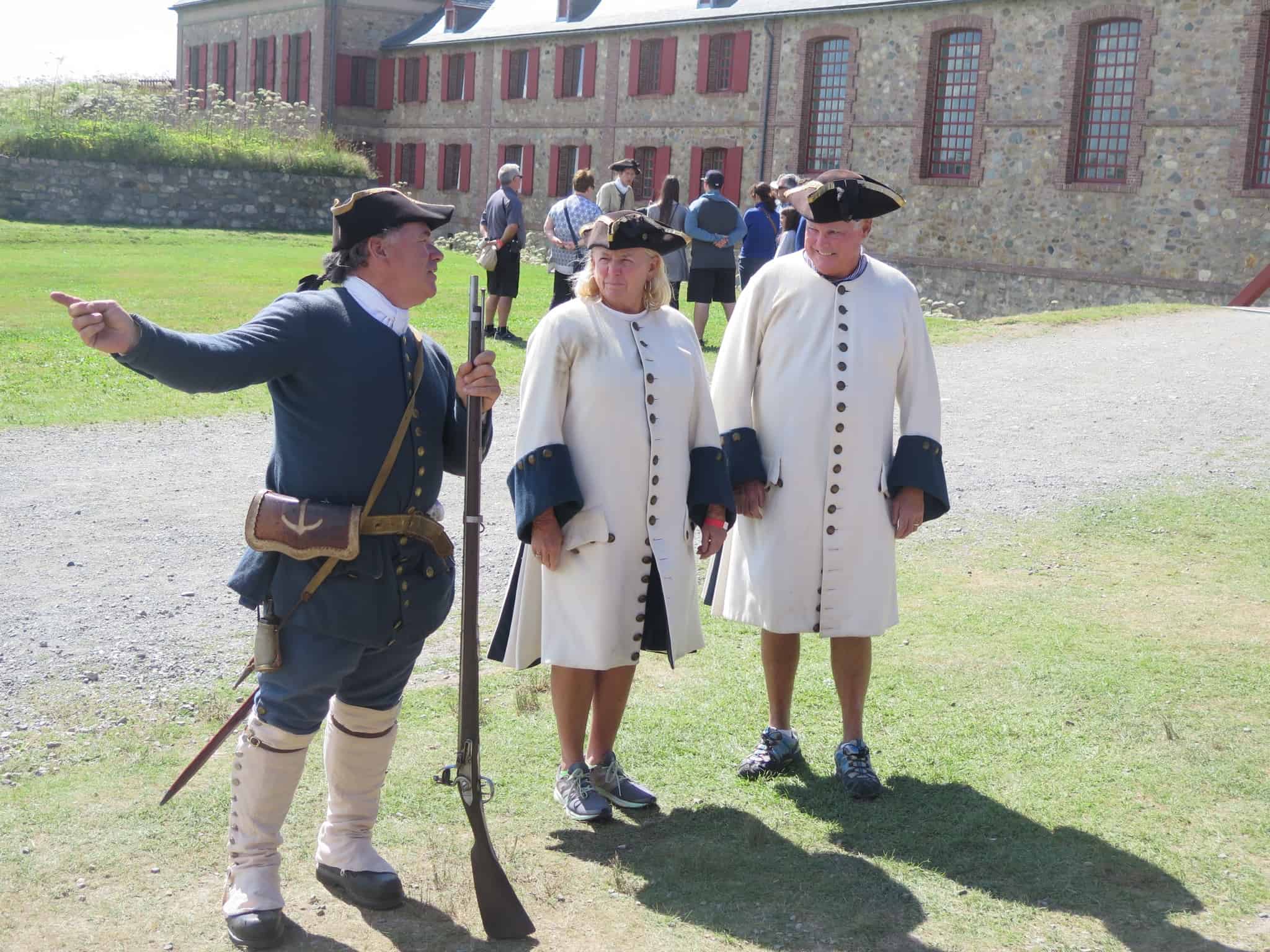
What fun.
George told us the recruits were gathered from the poorer corners of France's cities, young men with no schooling, no wives, and a fondness for drink. They were signed up for a grand six-year adventure in the new world, promised a place to sleep, a meal a day, and nine livres a month, a livre being enough for one shoe or one bottle of wine. All a man had to do was make his X on the contract.
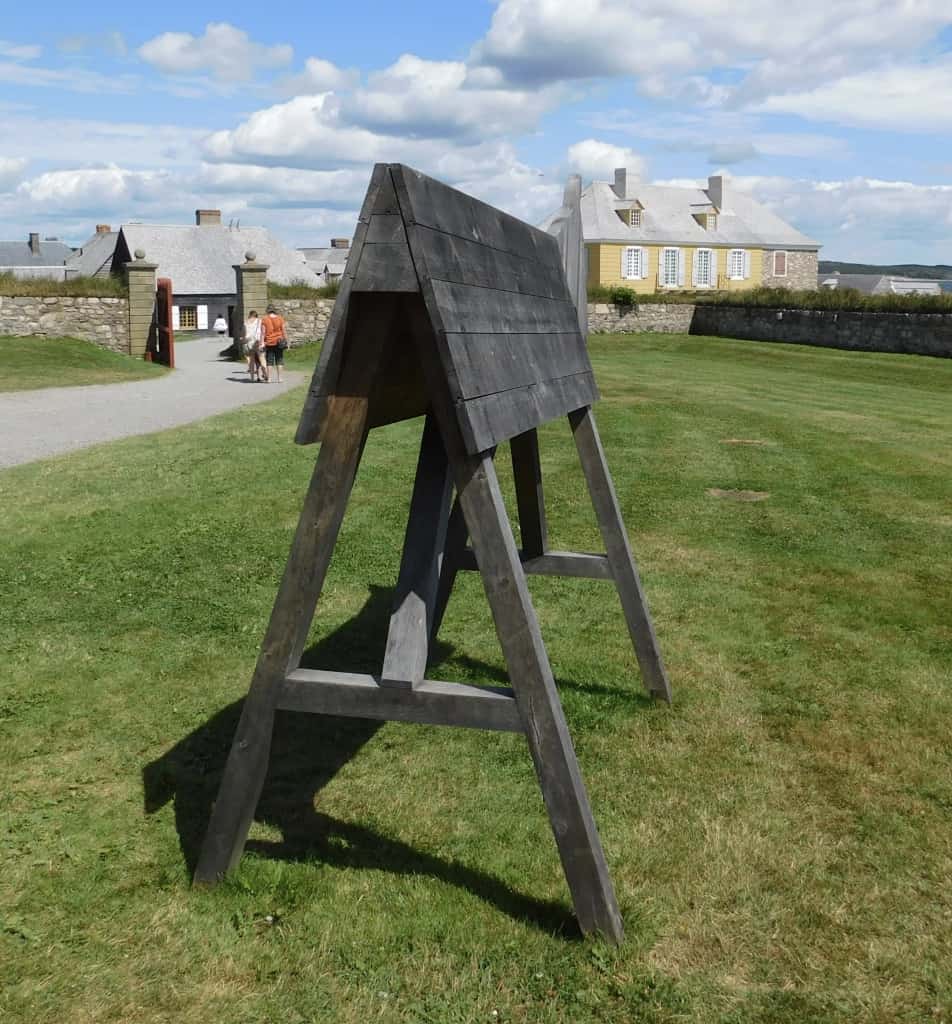
He walked us through that twenty-four-hour day and the price of falling asleep on duty: twelve hours astride a wooden horse built for the purpose. In those wool uniforms, with the chafing and the work of keeping your balance, it was no small punishment. If you ever saw a soldier walking down the lane bow-legged, George said, you knew exactly where he had spent the day before. The crossing from France ran about thirteen weeks, and the men knew they were nearing Louisbourg by the smell of it, the honey buckets emptied outside the wall. And no one had told them, going in, that seven and a half livres a month went straight back to the King, which left each man a monthly choice between shoes and wine.
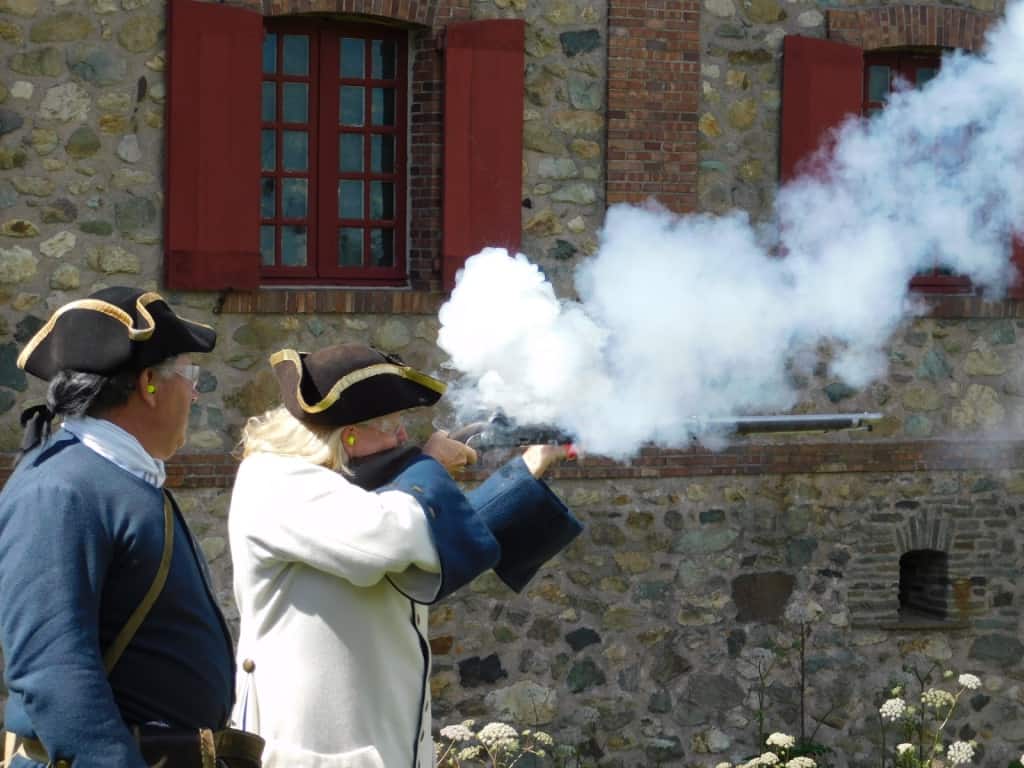
With the talk finished, we got back to the muskets. John went first, and holy cow. Then it was Janice's turn, and George walked her through the rifle and the safety of it before she fired. It was a thing to remember for both of us, slow as a dream, the crack of the shot and the smoke hanging in the air.
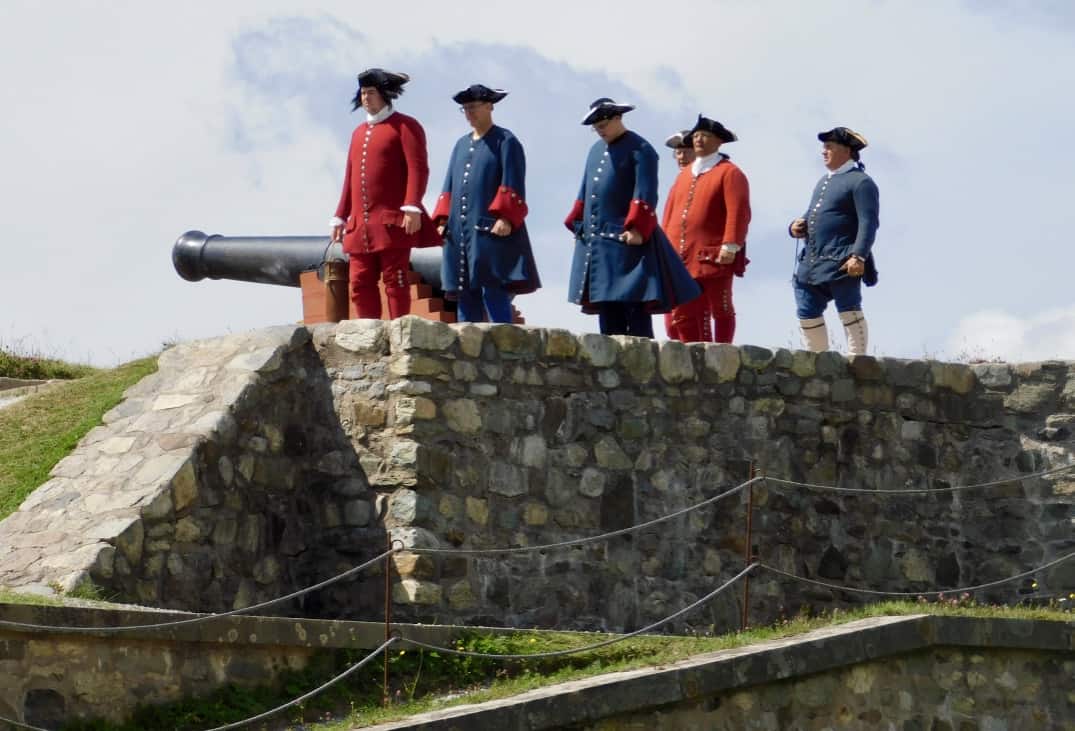
Afterward we watched the muskets and the cannon fired together in the square, and we came away impressed by all the care that goes into giving a visitor the real thing.
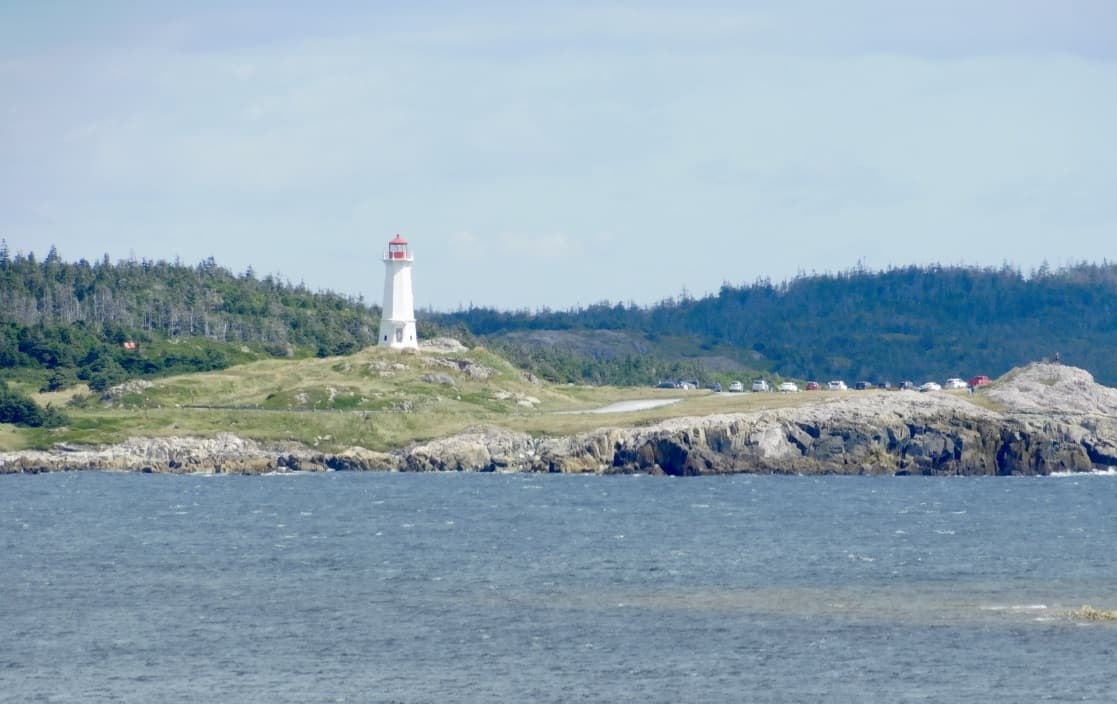
The lighthouse. Just down the way is the site of the first lighthouse in Canada. The one standing now, the fourth to be built here, went up in 1923, the earlier ones lost to damage or built of materials that did not last. The very first was raised in 1730, to guide ships safely in to the fortress.
We had one more stop in mind before the ferry north, the summer home of a man whose name everyone knows.