Dateline July 23, 2018, Janice's Cooperstown
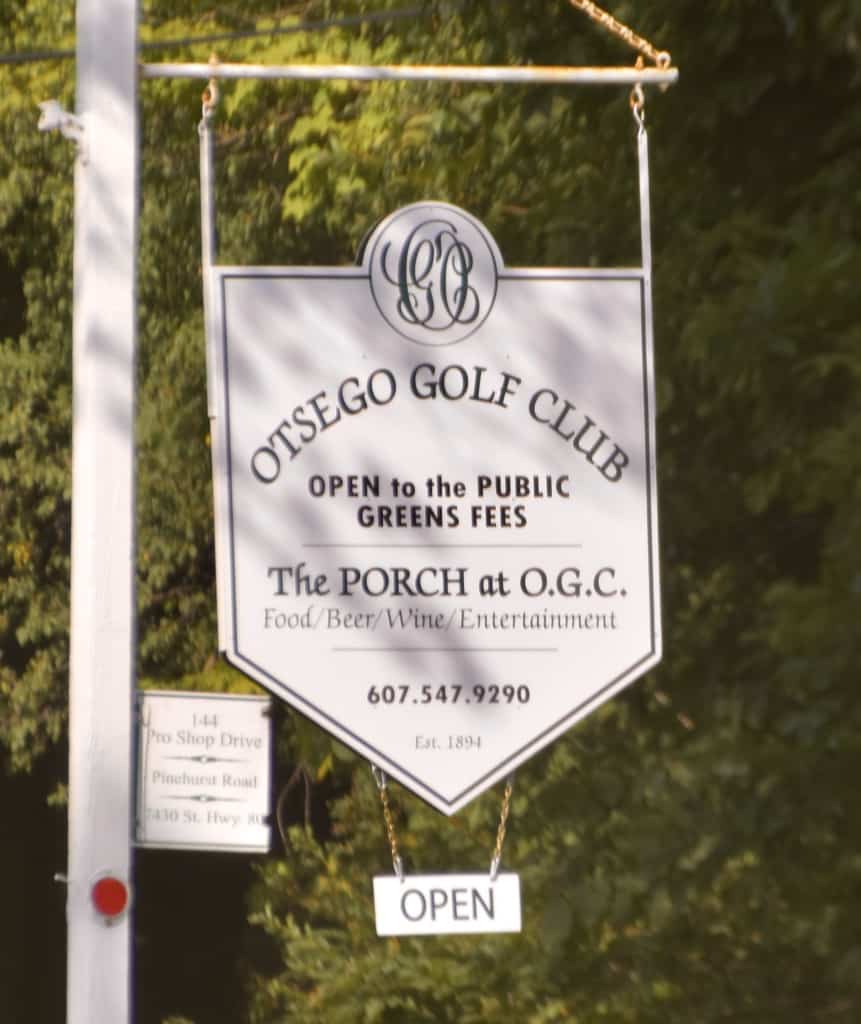
Cooperstown will always hold a special place in Janice's heart. Most of us know it as the home of the Baseball Hall of Fame and of James Fenimore Cooper's "The Last of the Mohicans," but for Janice it is the town of her childhood summers. From the time she was ten until she was seventeen, her family came up from New Jersey to a little camp on the lake, and she spent those summers water skiing and fishing with her father. She has a hundred memories of the place: watching a ball game at Doubleday Field from a perch in the trees beyond the outfield, ice cream at Thayers, a country store on the lake in those days, and golf with her dad at the little nine-hole Otsego Golf Club at the north end of Lake Otsego.
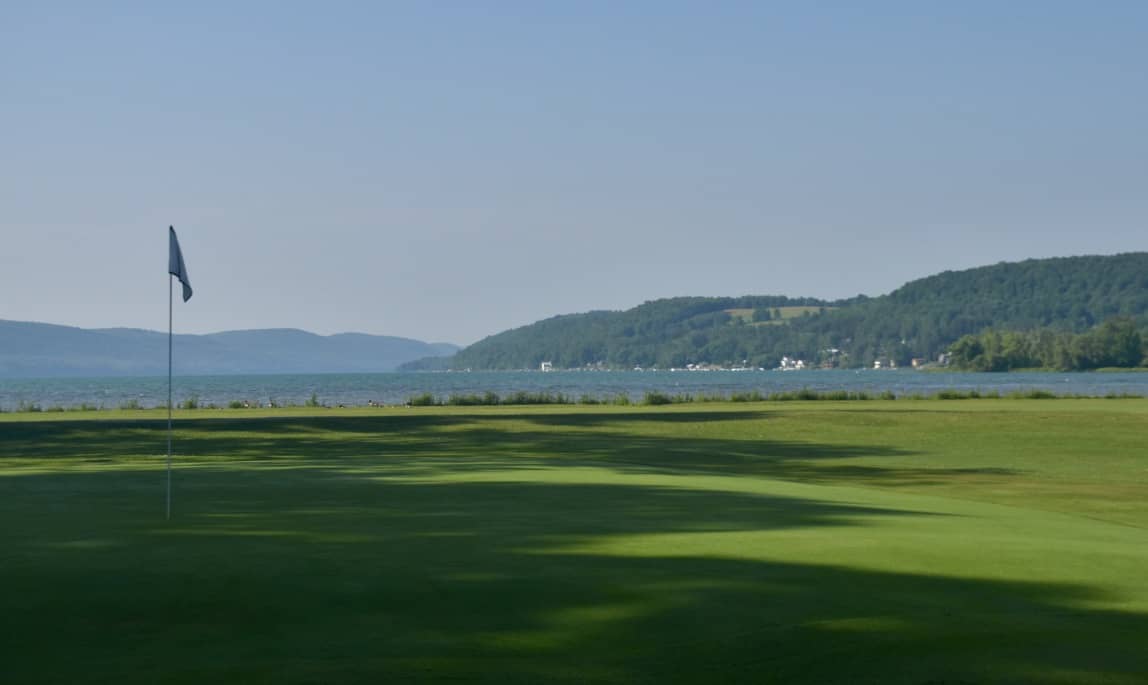
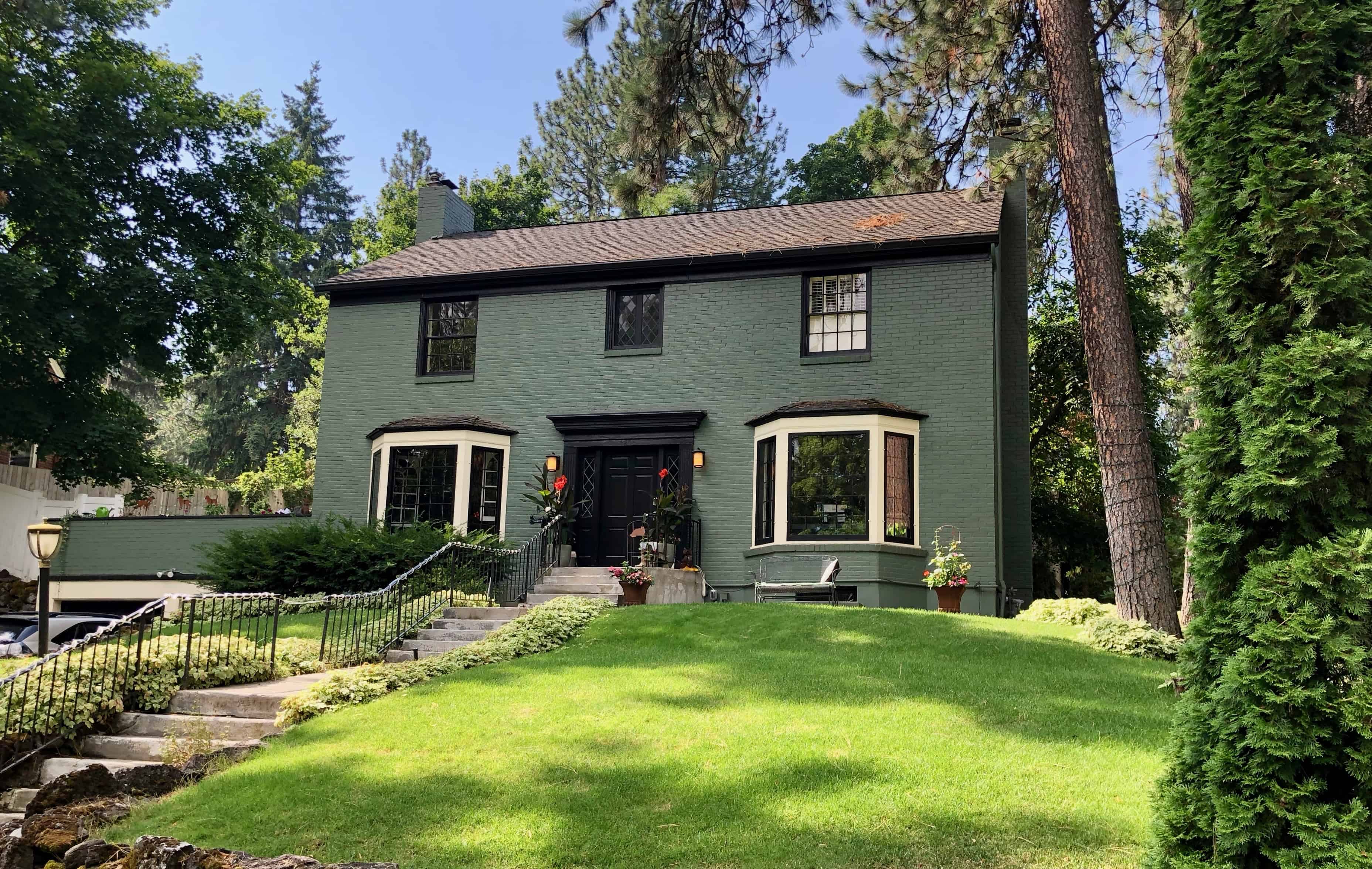
Looking up an old friend. We meant to stay a night, see the town, and play that old course, one of the oldest in the country, laid out in 1894. John also had an old family friend in Cooperstown, Steve Mahlum, from the Long Island days, and though they had not seen each other in thirty years, John tracked down his number and called. Steve called right back and said come ahead, and he and his wife, Ellen Morris, proceeded to bring the whole town to life for us. The two of them grew up in Cooperstown, save for a few years their families spent on Long Island, and after a while married they came back, and they have lived a block off Main Street, in a beautiful old three-story house, for the last thirty years.
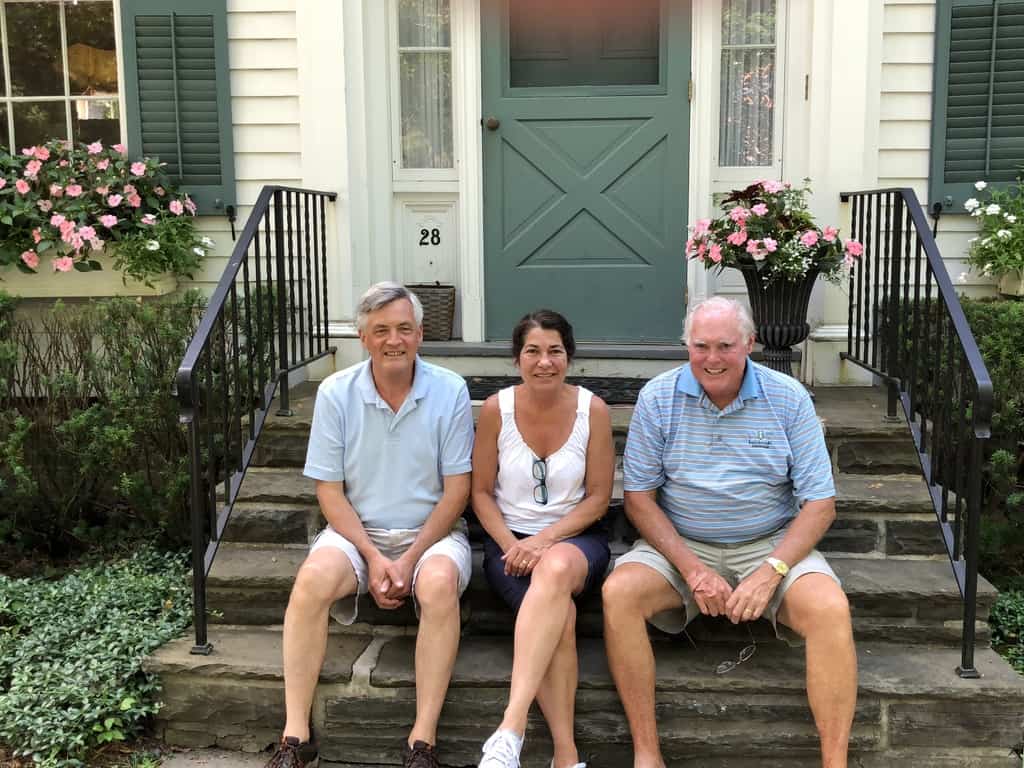
They were waiting on the front steps when we pulled up, and Steve helped Janice work the RV around to the alley and back it into the yard, parking being next to impossible downtown. Then they took us to lunch at the Blue Mingo Grill, out on the deck over Otsego Lake, and we caught up on family and old times. It turns out Steve had gone to Locust Valley High School with John's brother Will and his sister Carol.
Over the next while they gave us the grand tour. The town was founded in 1786 as the Village of Otsego by William Cooper, the father of the novelist, and renamed Cooperstown in 1812; about two thousand people live there year round today.
The Clarks and the Singer fortune. Steve told us the story of Edward Cabot Clark, a patent lawyer who threw in with Isaac Singer to found the Singer Sewing Machine Company in 1851. Singer had made real improvements to the machine, though he was hardly the first to patent one, and Clark's stroke of genius was to stop fighting over patents and simply sell people on how useful the thing was in the home. In 1856 he came up with what may be the first installment plan: a dollar down and a dollar a month, and the machine was yours, paid off out of what it helped you earn. It was marketing genius, and the rest, as they say, is history.
Clark built his Cooperstown home, Fernleigh, in 1869, and came to own better than ten thousand acres in and around the town. He and Singer also poured money into New York City real estate; it was Clark who had the Dakota built up over Central Park, though he died in 1884 before it was finished and left it to his grandson. That is the same Dakota where, many years later, John Lennon lived, and outside which he was killed. The family's holdings, gathered over a century and a half, are run through trusts and foundations to this day.
Who really invented baseball. Now here is a good one, the way Steve tells it. We all grow up believing that Abner Doubleday invented baseball right here in Cooperstown, and a great many people now think that a myth. The word "baseball" turns up in a Jane Austen novel, written before Doubleday was ever born, and games with a ball and a stick go all the way back to the ancient Egyptians. So much for that.
The tale took hold this way. Albert Spalding, the sporting-goods man, was sure baseball was a pure American invention, while the English-born writer Henry Chadwick, who gave the game its box score, held that it grew out of the old English game of rounders. To settle it, Spalding got up a commission in 1905, headed by a former National League president named Abraham Mills. Their great piece of evidence was a letter from a seventy-one-year-old mining engineer in Colorado, one Abner Graves, printed in an Ohio newspaper that April, in which he recalled, in suspiciously fine detail, that as a boy of five in Cooperstown he had watched a twenty-year-old Abner Doubleday scratch out a diamond in a cow pasture, draw up some rules, and name the game baseball. Graves was a famous spinner of yarns; he also claimed to have ridden for the Pony Express in 1852, which would have been a neat trick, since it did not exist until 1860, but he became the commission's star witness all the same. Never mind that Doubleday was away at West Point at the time and never once, in all his life, claimed any hand in the game, not even to Mills, who was a friend of his. After three years the commission solemnly declared that Abner Doubleday had invented baseball at Cooperstown in 1839.
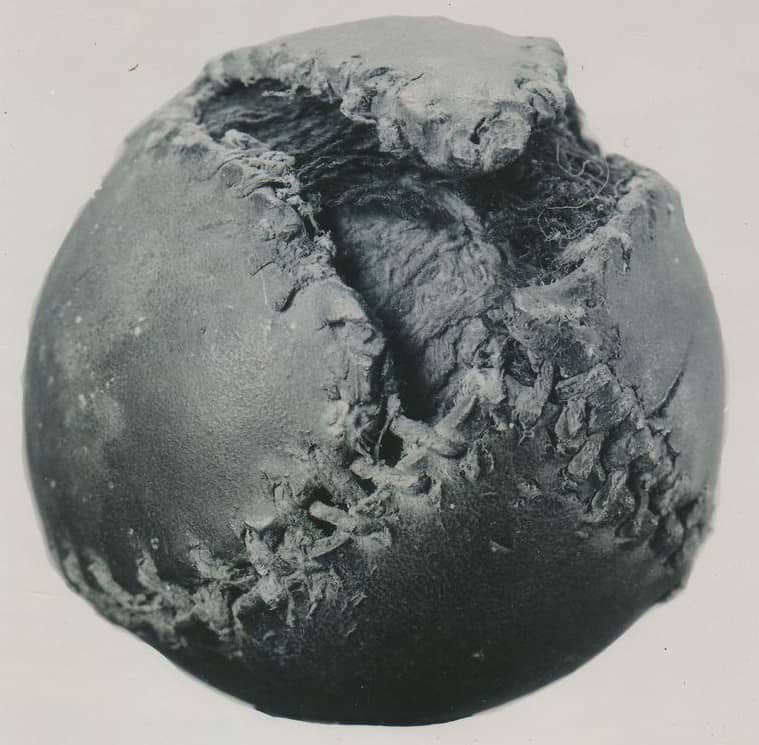
Cooperstown leaned into the legend during the Depression. In 1935 Stephen C. Clark, of that same Clark family, paid a farmer five dollars for a battered old leather ball said to have turned up in a trunk Abner Graves left behind when he lit out for the Gold Rush in 1848. With nothing at all to prove it, Clark pronounced it the very ball Doubleday had used. He saw in baseball a way to bring some life, and some visitors, and a few guests for his Otesaga Hotel, to a town the Depression was grinding down, and he made the case for a baseball museum. The "Doubleday ball" became its first exhibit, and when the Hall of Fame opened its doors in 1939 the tale was complete. The lovely irony is that Doubleday himself, to this day, has never been voted into the Hall. Jane Forbes Clark runs the family's trusts and foundations now and chairs the Hall of Fame; they say that with thirty teams in the major leagues, she counts as the thirty-first owner.
Hops. Steve and Ellen drove us past fields where hops were coming up again, and told us this had once been hop country, that the better part of the nation's beer hops were grown around Cooperstown, and some of the finest in the world at that. A blight took hold around 1909 and, what with that and Prohibition close behind, the crop all but vanished, until growers brought it back in the 1990s for the craft brewers.
There was still more of the town to see, and dear people yet to meet, before we turned for home.