Dateline August 10, 2019, The Lewis and Clark Caverns
From Camp Three Forks we set out in the morning for the Lewis and Clark Caverns, over near Whitehall.
The discovery. The cave came to light in 1892, when two local ranchers, Tom Williams and Bert Pannell, out hunting one winter, spotted steam rising from a vent in the mountainside.
The cave holds a steady fifty to sixty degrees the year round, so in cold air it breathes out a plume of steam, and that vent, a sheer drop into the dark, was the only way in. Not until 1898 did Williams and a few friends rope their way down to have a proper look.
Around 1900 a local quarryman named Dan Morrison opened a gentler entrance, laid some two thousand wooden steps, and began guiding tours, calling the place Limespur Cave. He filed a mineral claim in 1905, but the Northern Pacific Railroad disputed it and took him to court; the railroad won and handed the land to the federal government. On May 11, 1908, President Theodore Roosevelt, using the Antiquities Act, proclaimed it the Lewis and Clark Cavern National Monument, the fifteenth in the country, declared the very same day as the Grand Canyon. Lewis and Clark themselves had camped within a mile of here, along the Jefferson River in 1805, never dreaming of the labyrinth under their feet.
The trouble was that the monument drew almost no money and little notice for three decades, and Morrison simply kept right on running his tours. The rangers, who rode out by horseback a few times a year, would padlock the cave; Morrison would cut their lock and hang his own; they would cut his and add another, and round and round it went. He kept up the feud until his death, at eighty. His tours were lit by miners' helmets, the visibility slight at best, and on the tour today they still point out some of his old steps.
Montana's first state park. A good many Montanans grew unhappy with all that federal neglect, and in 1935 Governor Frank Cooney asked Washington to turn the caverns over to the state.
On August 24, 1937, Congress abolished the national monument and handed the land to Montana, making it the state's very first state park, formally declared the following April. The state meant to open it safely to the public, and so the work became one of the Civilian Conservation Corps projects. About two hundred young men built the roads and the visitor center, hauled out bat guano for fertilizer, carved steps, widened the passages to reach the loveliest chambers, turned up new rooms, dug an exit, and strung the first electric lighting, in 1940. They followed many of Morrison's old paths and pushed the route clear to the bottom of the cave; after the war the wooden steps were replaced, though we could still make out signs of the old ones.
The CCC, for the younger crowd, was one of the New Deal's relief programs, running from 1933 to 1942, for unemployed, unmarried young men, first those eighteen to twenty-five and later seventeen to twenty-eight. As many as three hundred thousand were enrolled at any one time, and some three million passed through over its nine years; it gave them food and clothing and shelter and thirty dollars a month, twenty-five of which had to be sent home to their families.
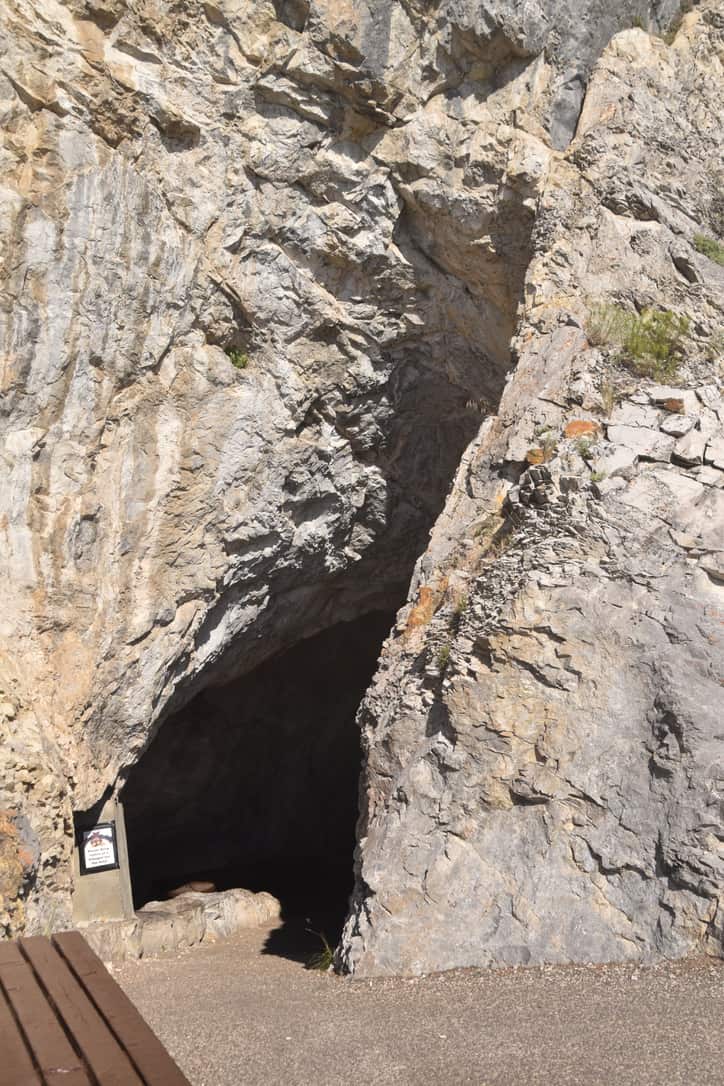
The tour. This tour was fabulous. The first leg is a hike of three-quarters of a mile up the mountain; the guide warned us we would be three hundred feet higher by the entrance, a tough pull on old bones, but we kept up with the group and made it. The cave is home to Townsend's big-eared bats, and we saw a few just inside, asleep with their babies in a maternal roost, where the mothers take turns slipping out for food while the others mind the young. They feed mostly on moths, and here is the marvel of it: over the ages the moths learned to hear the bats and to jam their signals, so the bats grew bigger ears to find them anyway, and now a moth that catches a bat's signal drops straight to the ground to keep from being eaten. The animal kingdom is forever changing to survive, ourselves included.
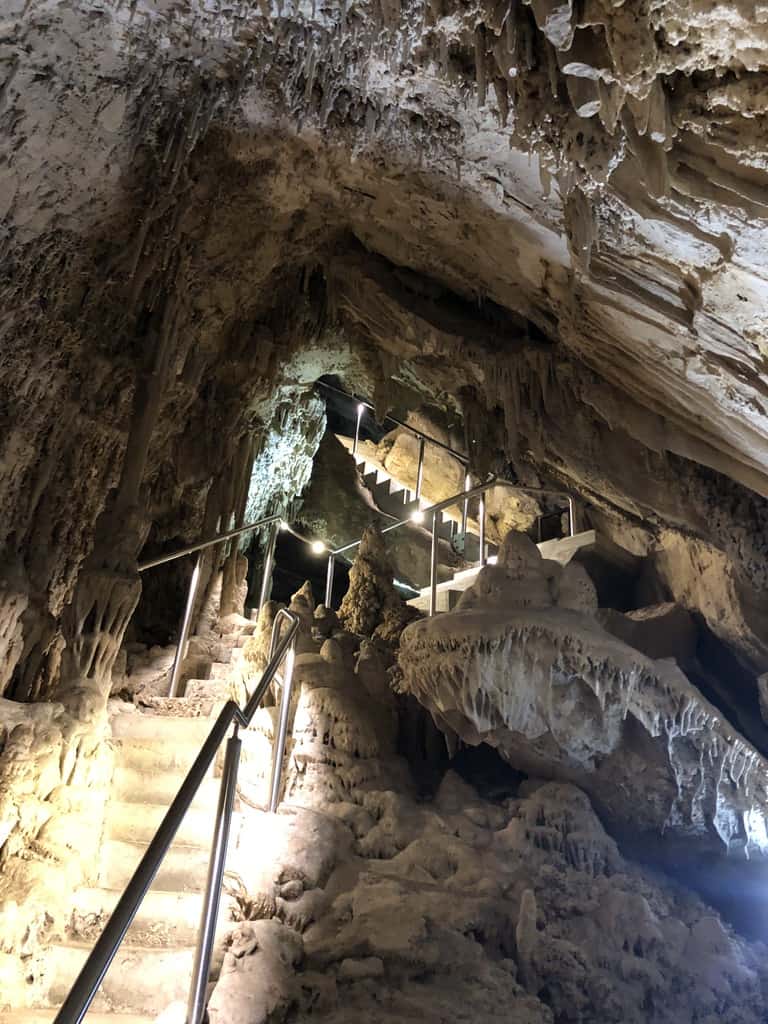
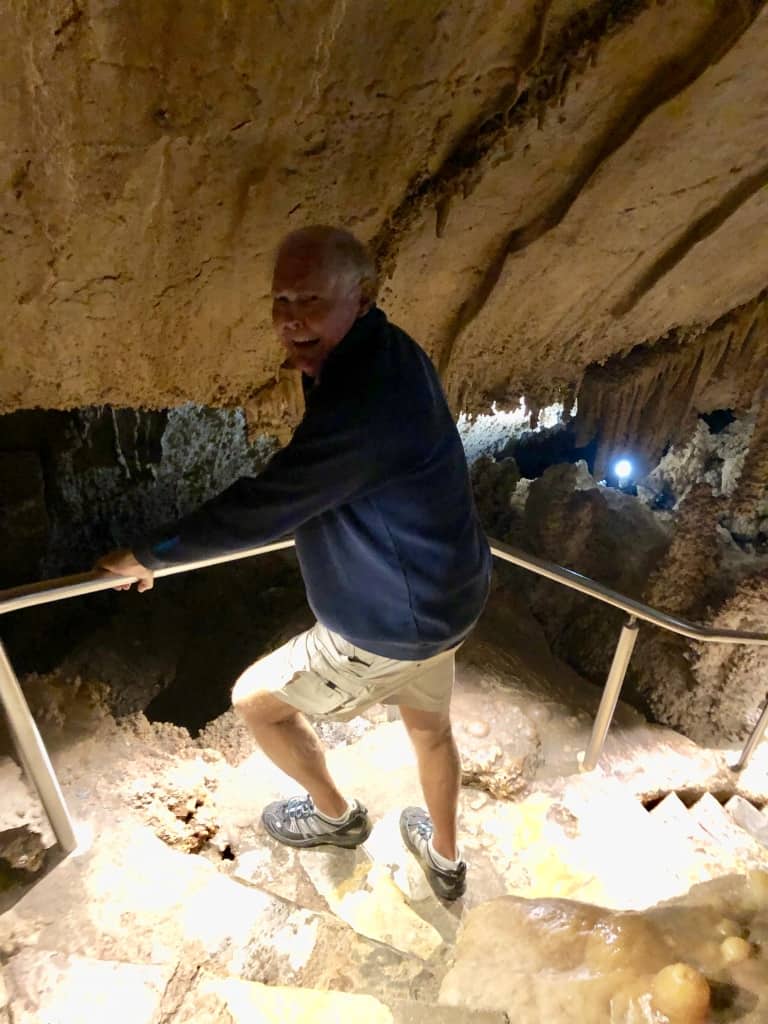
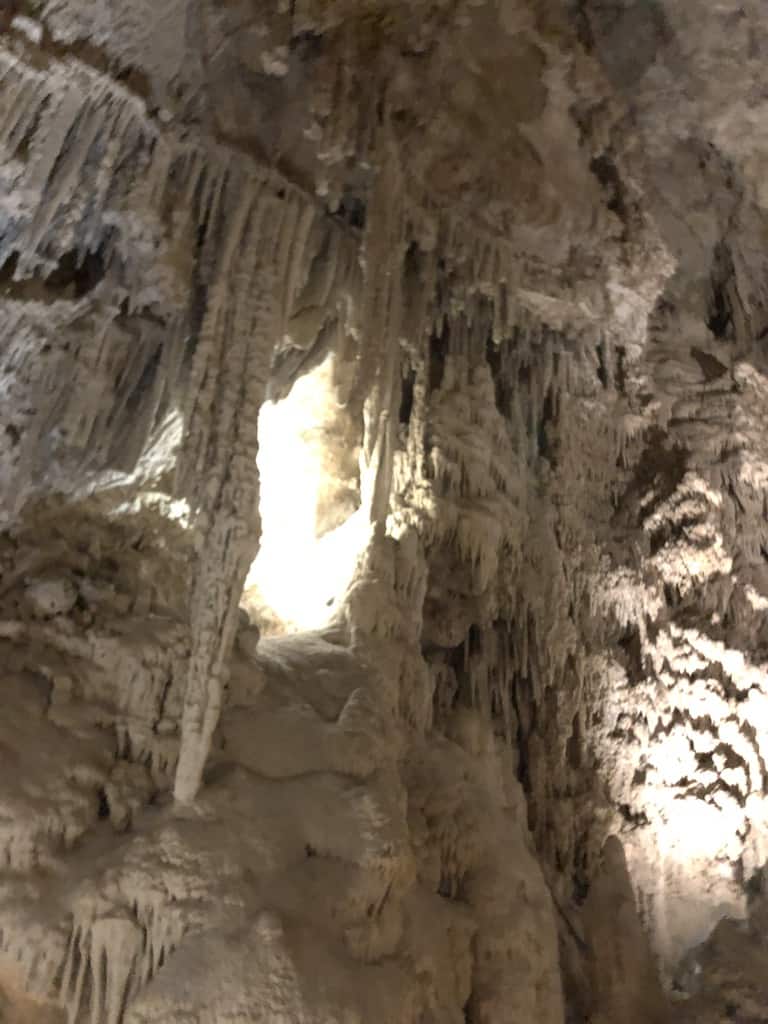
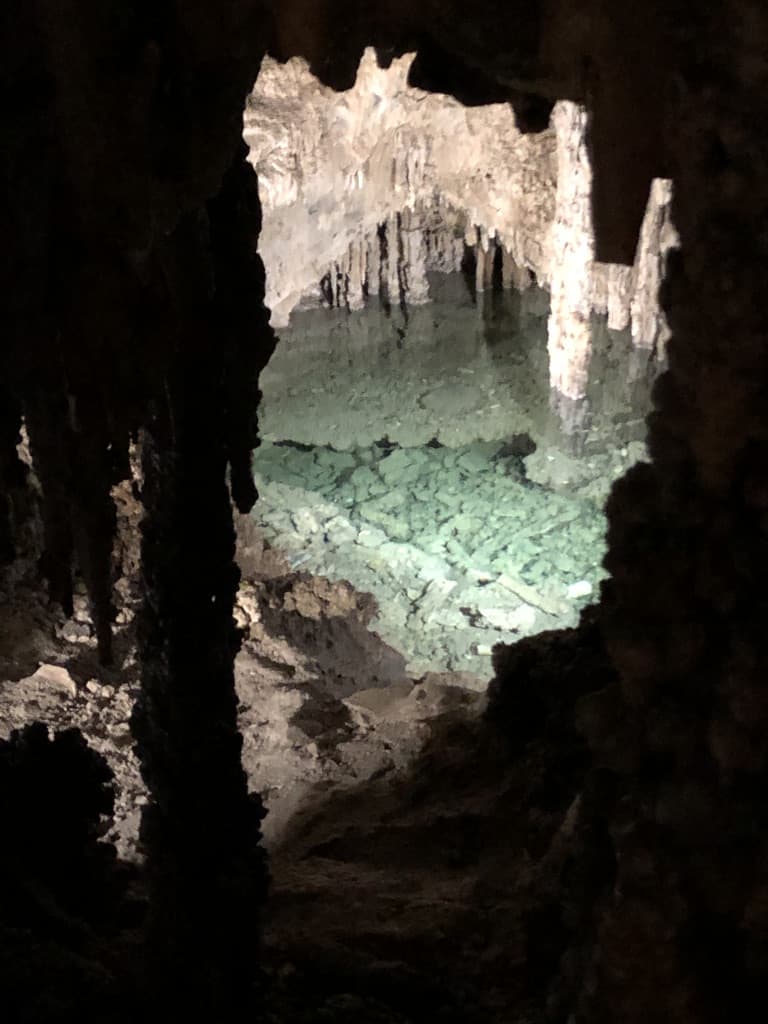
We walked another mile through the caverns, down better than five hundred stairs carved from the rock or poured in concrete, sliding at one point down a stretch on the seat of our pants and forever ducking our heads. The speleologists who have studied it believe the cave to be over three hundred million years old, dissolved out of the limestone when river water seeped in long ago. In Morrison's day he let his visitors snap off a stalactite or a stalagmite to carry home, and they reckon three hundred tons of the cave went out the door that way.
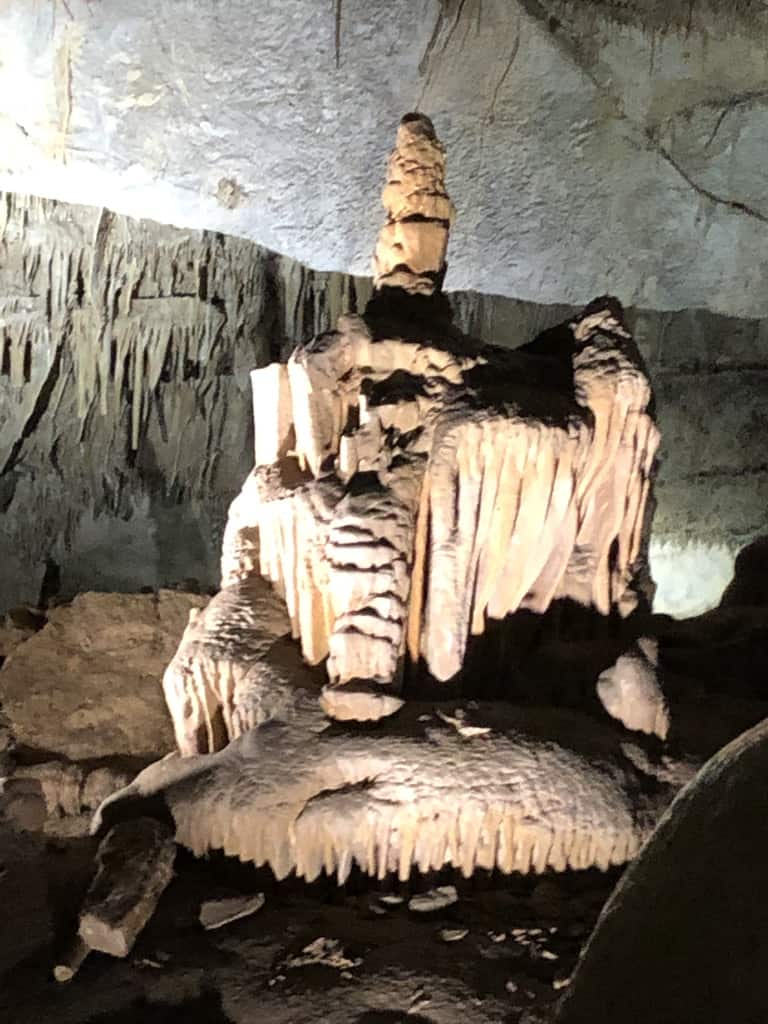
You can see the flat, broken ends of those old formations, a small new tip just beginning to grow back; they grow about an inch every ten years. Holy cow. One broken column we passed had perhaps eight feet of new growth on the piece still standing, which means it must have come down about a thousand years ago. The lighting made some of it eerie and all of it magnificent.
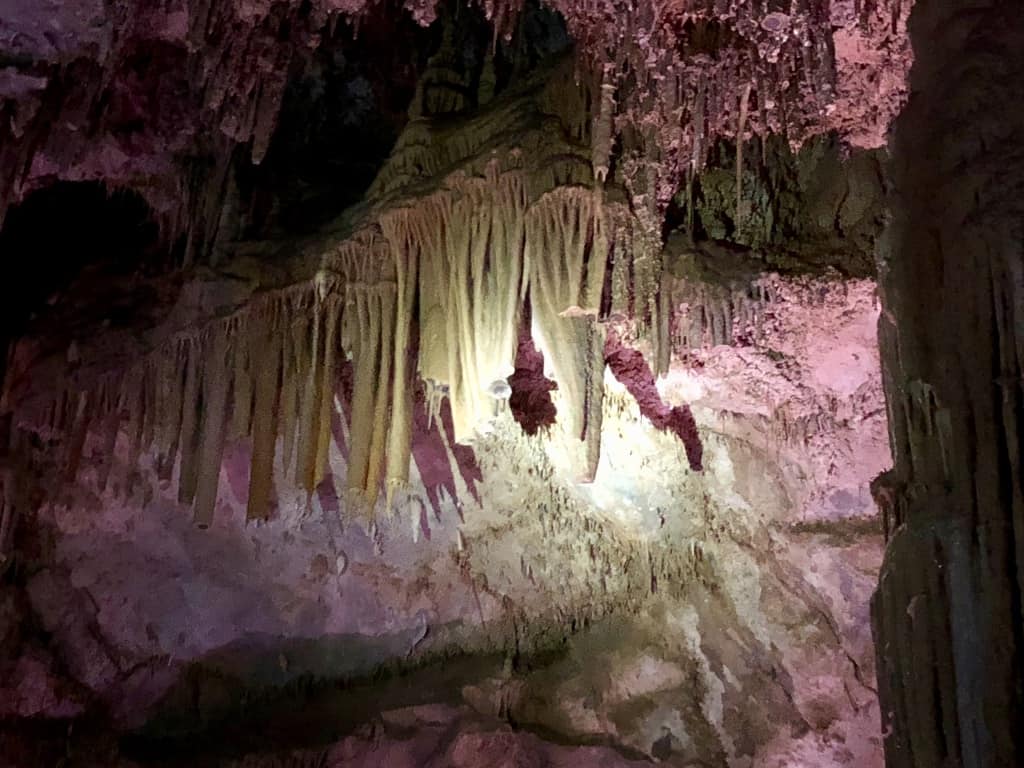
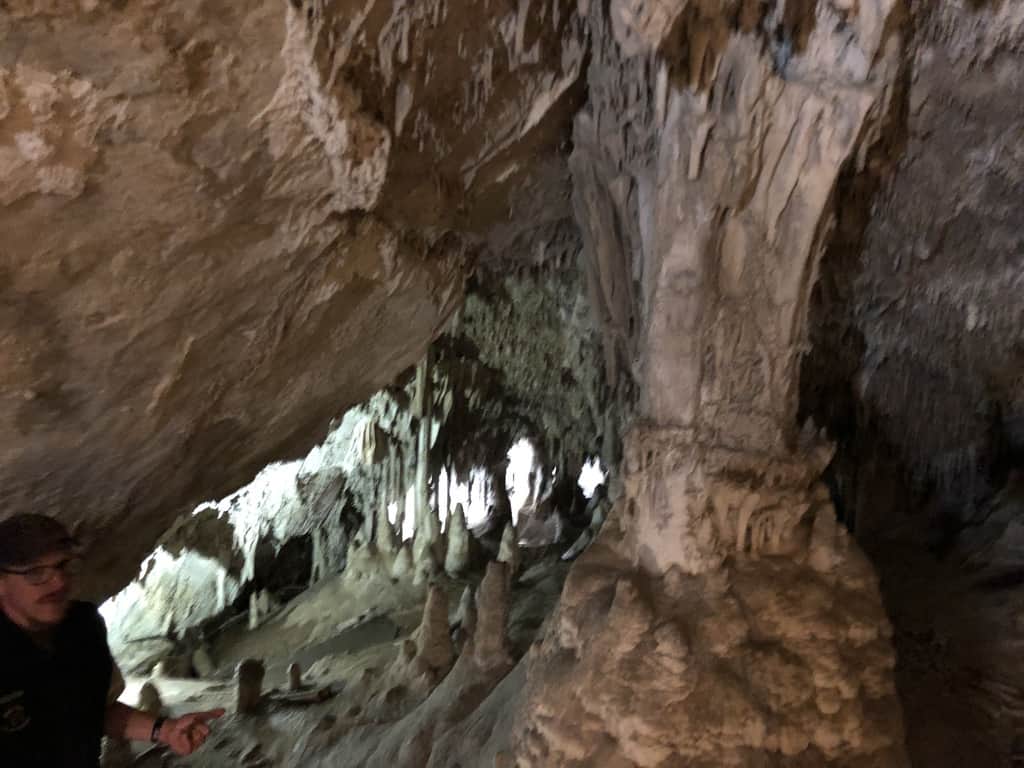
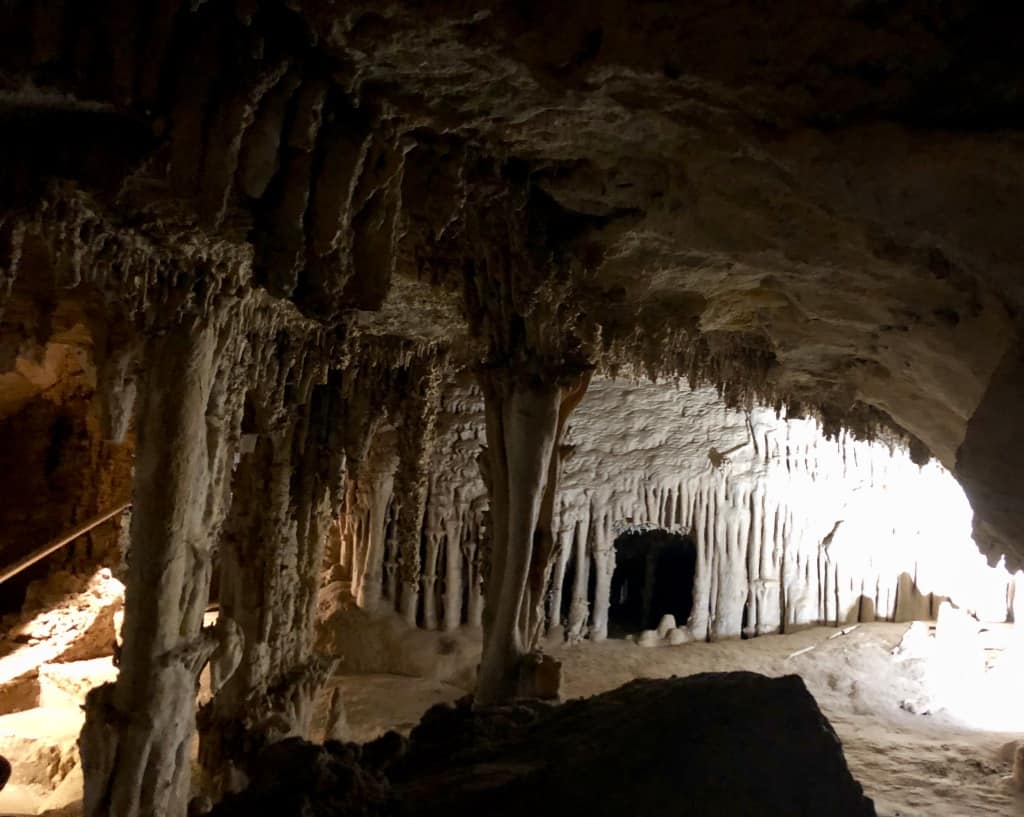
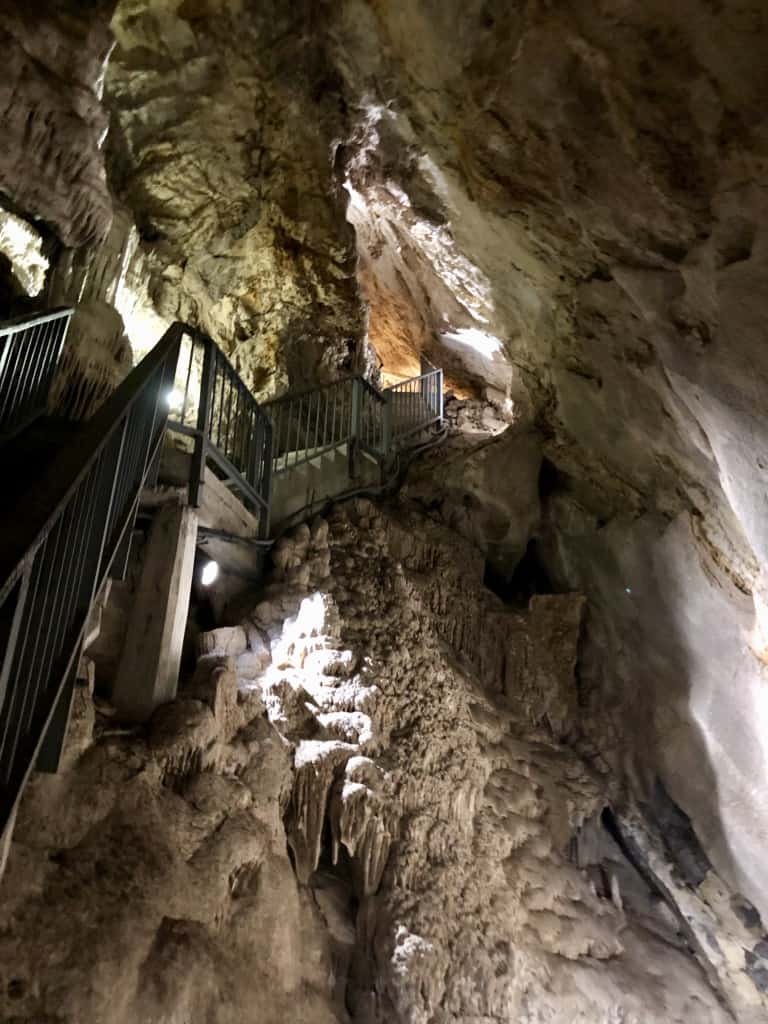
Too many beautiful formations, too much fun. If you are ever near, do not miss this two to two-and-a-half-hour tour. We left the mountain behind and pointed the rig toward Missoula.