Dateline August 7, 2020, Indiana Golf
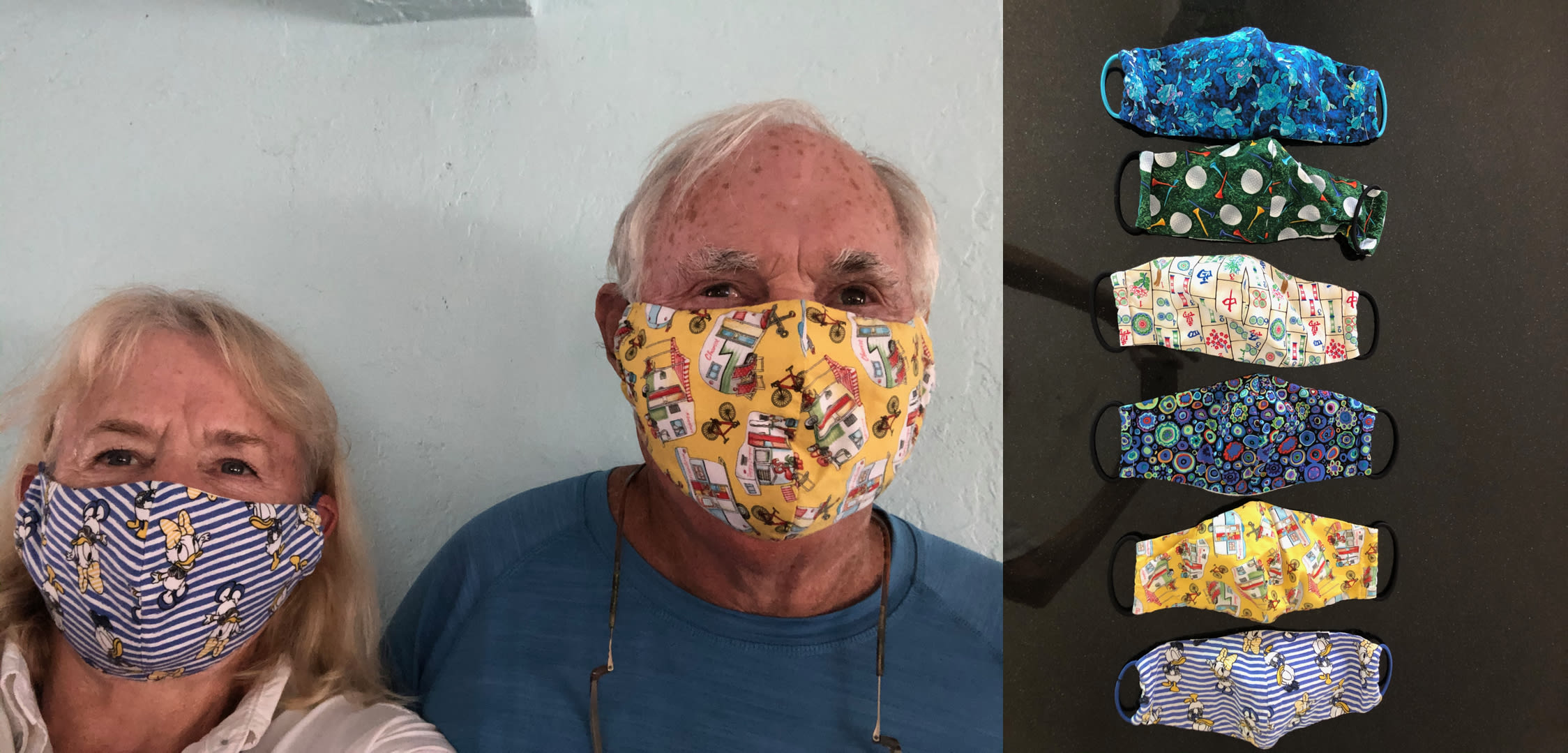
The beginning of our masked travels. Thanks to Janice's sister-in-law Marilyn Roberts, who sewed up a whole batch of fine masks, we had a choice of "mask look" for each day of the trip. This was our first summer in the car rather than the Roadtrek, and the first with masks in the glovebox.
John drove up, stopping in Raleigh for a few days with the family, then on to Indianapolis to collect Janice. She had spent the weekend in the hot, humid Central Florida heat playing in the Florida State Four-Ball, and was delighted to step off into Indiana's low seventies.
The Golfweek rater retreat. We had come for four days at a Golfweek rater retreat, to get a better feel for the criteria and the pleasure of visiting and playing some of the wonderful college campus courses in Indiana. The other raters had come from various states around the country. The ratings turn on things like how memorable the holes are and what we came to call the "walk in the park" test, and the rater gives each course an overall score. These campus courses are generally open to public play and a lot of fun; many of them turn up on Golfweek's list of the best campus courses in the country.
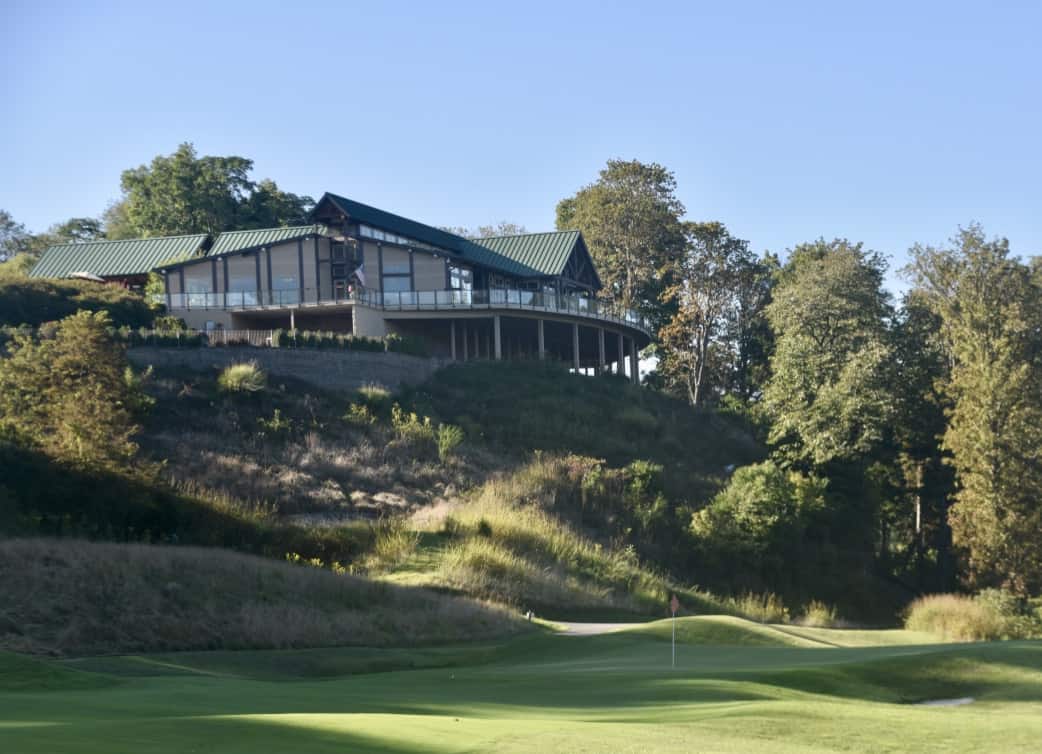
Indiana University. Our first stop was Indiana University, in Bloomington. The Pfau Course had just opened that year after a total remake, the Pfau family's long ties to the university and to IU Athletics making it happen. It was designed by Steve Smyers and the Hoosier native and two-time major winner Fuzzy Zoeller. The course runs to 7,900 yards from the tips; we played the whites at about 6,200, and it felt like 7,000. Yikes. A look back from the championship tees was an experience all its own, and John joked that on his best day he could not have reached the fairway.
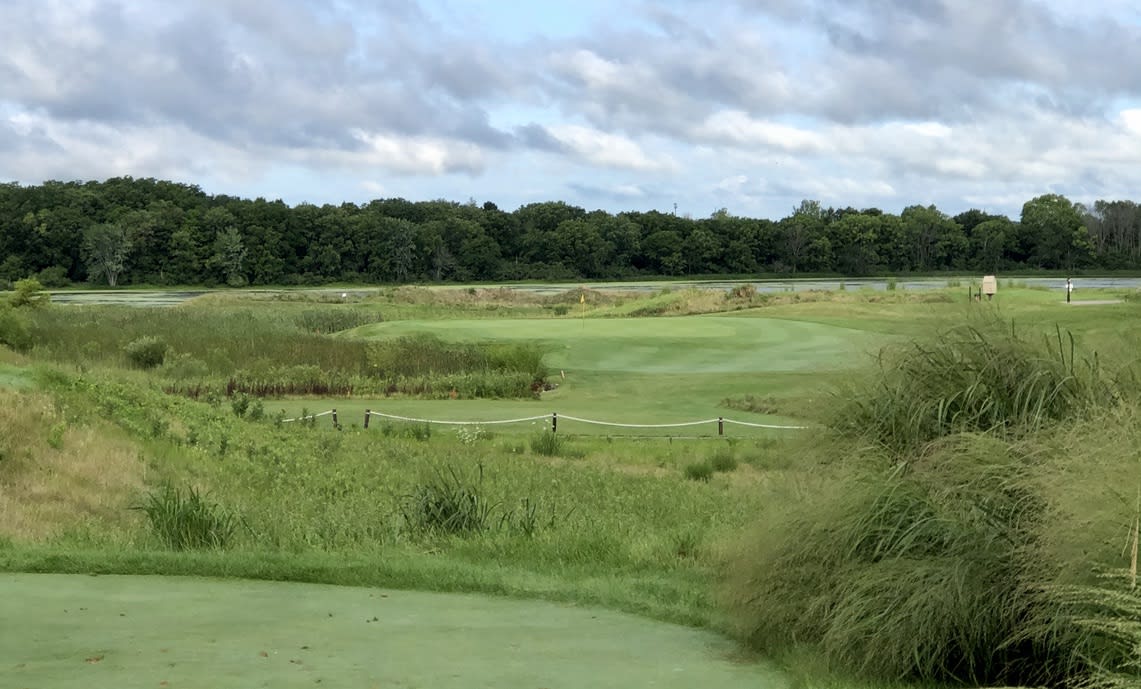
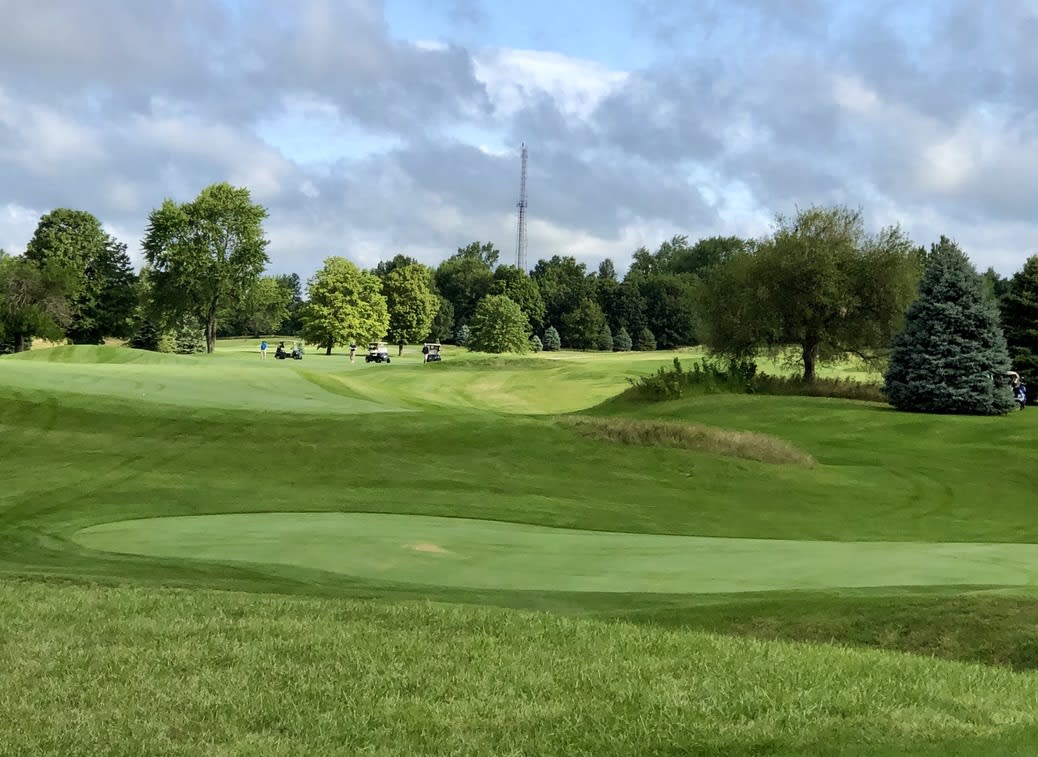
The greens are bent grass, the fairways zoysia, the roughs bluegrass, and the rest a reddish fescue that gives it the look of Ireland. It is a hilly course, full of doglegs, with fescue framing the fairway bunkers. It will be a popular college course and will surely crack Golfweek's top thirty campus courses before long. It was full of character and a real challenge, a pleasant day, and the two Floridians enjoyed the cool. After golf we drove about two hours north and checked into our hotel.
Purdue and the Birck Boilermaker complex. We arrived early to play thirty-six holes, with a grab-and-go lunch box between the two rounds.
The morning round was on the Kampen Course, which grew out of Pete Dye's work at Purdue beginning in 1996. It is a unique links-style layout, with strategically placed waste bunkers, native grasslands, man-made wetlands, large greens, and a natural celery bog, measuring better than 7,400 yards from the back. A wonderful morning of play.
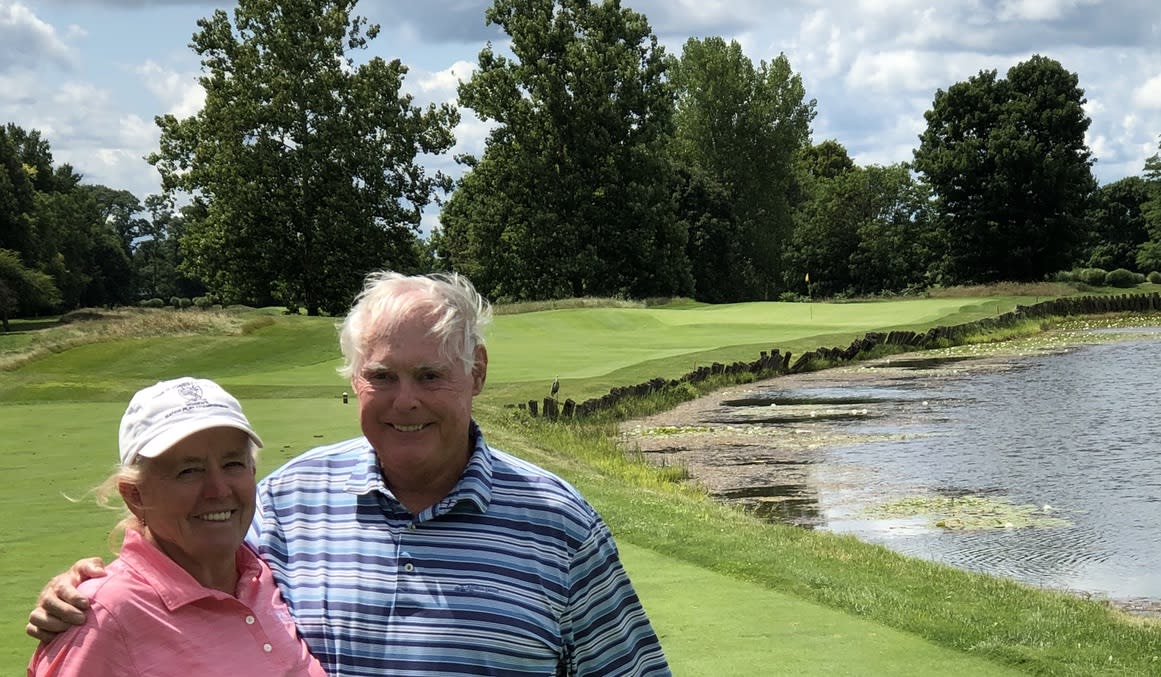
In the afternoon we played the Ackerman-Allen Course, another course with Pete Dye's hand on it, a parkland-style layout with large bent-grass greens, rolling hills, tree-lined fairways, white sand bunkers, and very little water. The joy of playing both of Purdue's Dye courses was the dramatic difference between them, the links style in the morning and the classic parkland in the afternoon.
We were paired with a father and son, Ryan and his father Greg Deckard, from Spokane, Washington, and it made for a special day, because Greg is a member of the old Spokane Country Club where John had his very first golf lesson. John's roots there run deep: his grandfather, Han Fairweather, was the club's president and a board member back in the 1930s, and his mother grew up around the club. We wrote about playing there last year on our trip through Washington. Greg is no relation to us, a Spokane banker who joined the club only in the late 1990s and kept his membership right through its bankruptcy and reorganization. It was simply a happy small-world meeting, and we traded contact information, meaning to look him up if we ever came through Spokane. Ryan was a delight, and hit the ball farther than John could see. He works alongside his father, and it is a fine thing to see a father and son who are such good friends.
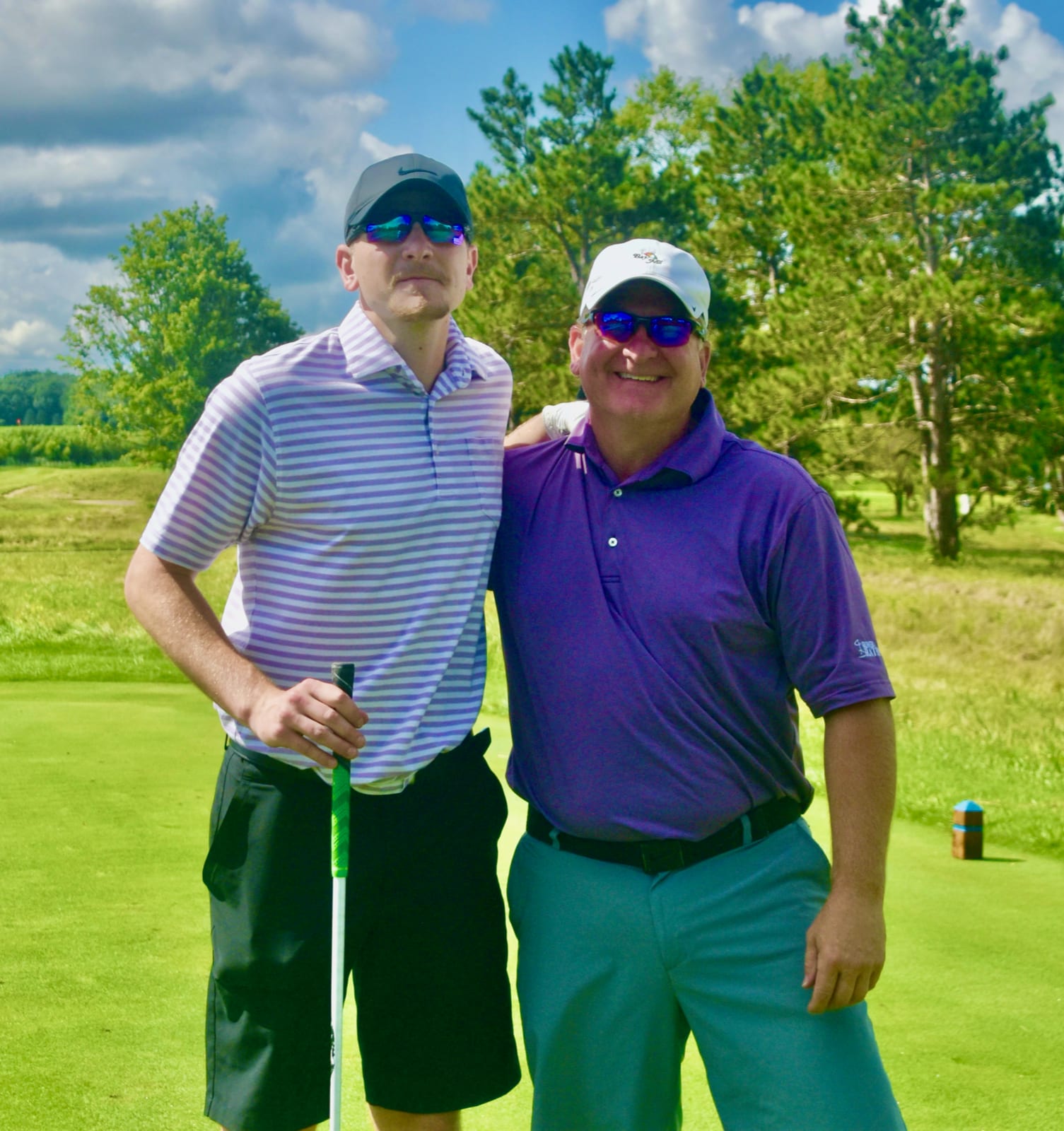
We could not leave Purdue without a toast to Janice's nephew Jason Roberts, a Purdue graduate and now a software engineer living in Nashville, Tennessee. We also spent time with Devon Brouse, the women's golf coach, who had been the Director of Golf when both courses were built by Pete Dye and had wonderful stories of working with him. Devon took his degree at Purdue in turf, and Dye liked working with him so well that he had him help with the agronomy on a good many of the midwest courses Dye built between 1998 and 2005.
Culver Academy. Tuesday morning was meant to be a nine-hole course at Culver Academy, ranked the number two course in the college listings. When we arrived we found you had to walk and carry, and with Janice's Achilles giving her trouble, walking was not an option. The course was built in 1924, meant to be twenty-seven holes, with the best nine built first and the rest to follow; the rest never came. In 2008 Bobby Weed was asked to look at restoring it, and he said it was like opening a barn door and finding a 356 Porsche under the dust. The restoration finally began in 2013, and it is now a mix of par 3s, 4s, and 5s, about 3,300 yards.
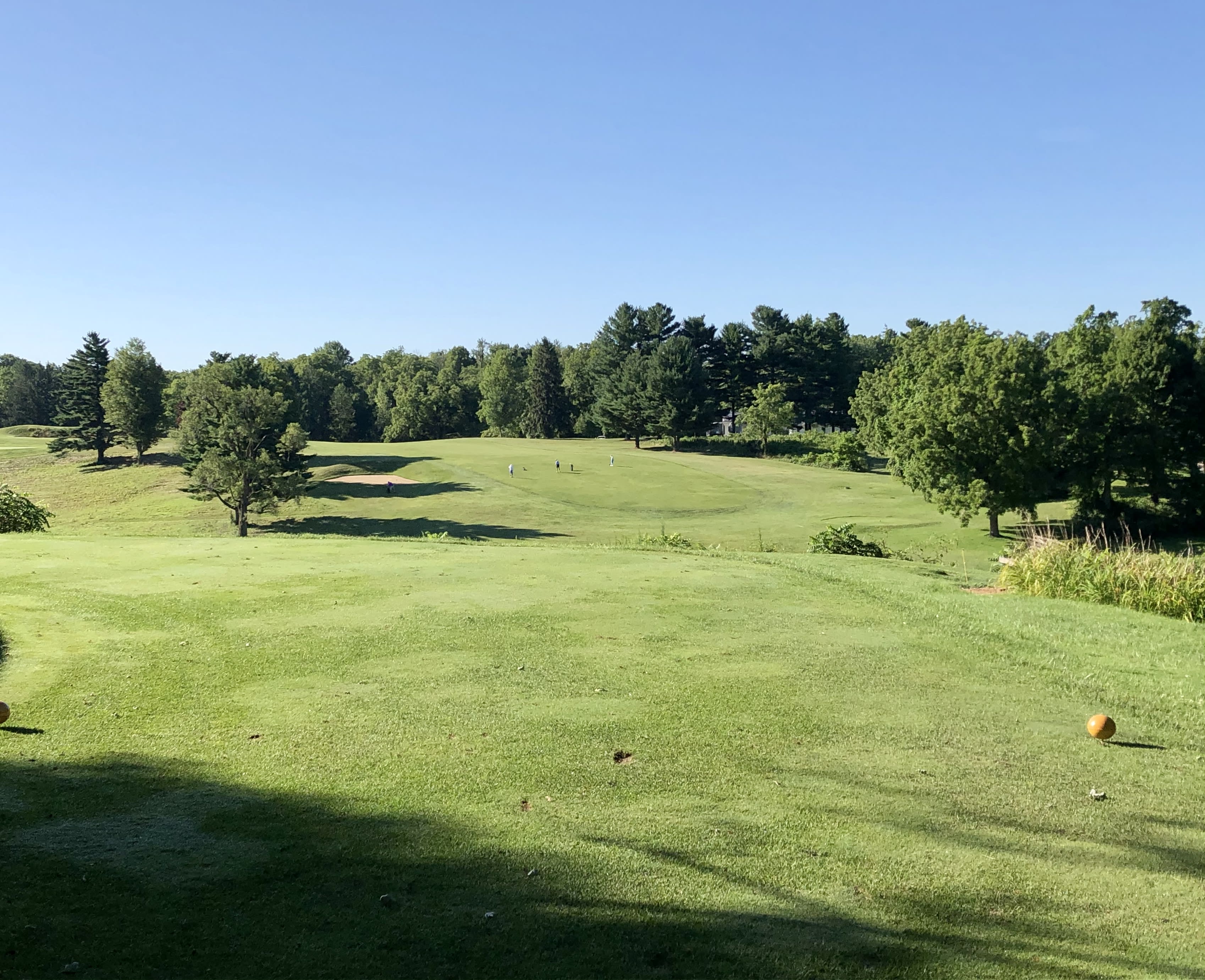
Swan Lake, Plymouth. Not a college course, but a good afternoon stop while the others made their way over from Culver. We had played Swan Lake the year before, driving through Indiana, and told its story then, the chicken farmer Roy Swanson who fell for golf and grew a few backyard holes into two full courses; you can read all of that in last year's post. Chad Hutsell, the Director of Golf, remembered us and sent us out for nine holes. The ladies had a dollar going, last one to make three pars in a row takes it: Theresa Stotler from Ohio, Debbie Mooksang, a Florida golf friend and fellow rater, and Janice. Debbie needed a par and made a birdie instead, and since the game had been Theresa's idea and she knew its rules, Janice signed her dollar over to Theresa. Another good day for all.
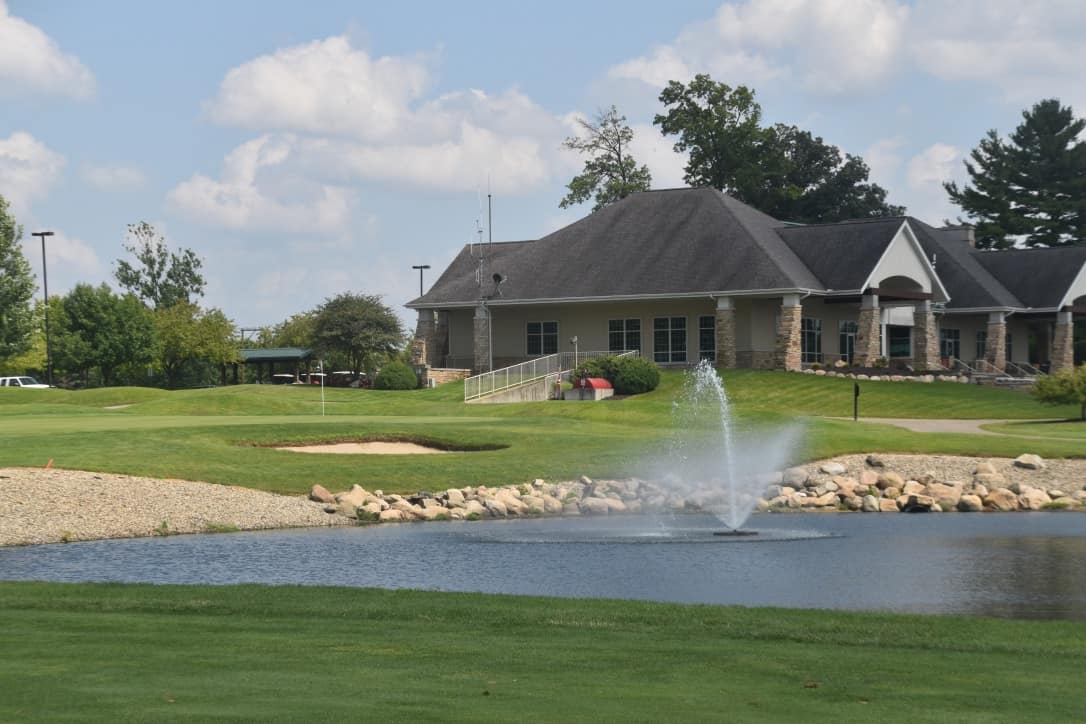
Notre Dame. There is so much to say about Notre Dame, the football tradition, the faith, and of course the golf. John still remembers writing his first elementary-school book report on Knute Rockne, the great football legend, and then there is Lou Holtz.
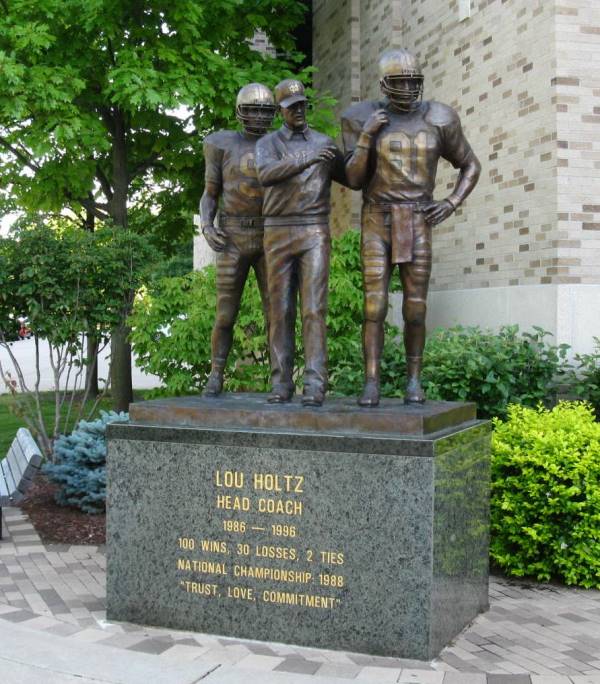
Asked about becoming the winningest coach in Notre Dame history, Holtz waved the idea off, saying the record "belongs to Knute Rockne or some other coach in the future." He left Notre Dame with one hundred wins, thirty losses, and two ties, and the 1988 national championship, and as a famous motivational speaker he boiled his whole philosophy down to three words: Trust, Love, Commitment.
The William K. and Natalie O. Warren Golf Course opened in the fall of 1999, thanks to the generosity of William K. Warren, Jr., Notre Dame class of 1956, who named it for his parents and tied together three of his abiding loves, his family, golf, and Notre Dame. His gifts have funded improvements that helped the course earn its standing among the top collegiate courses in the country, and the year before our visit it hosted the 2019 U.S. Senior Open, where Steve Stricker won his first USGA title.
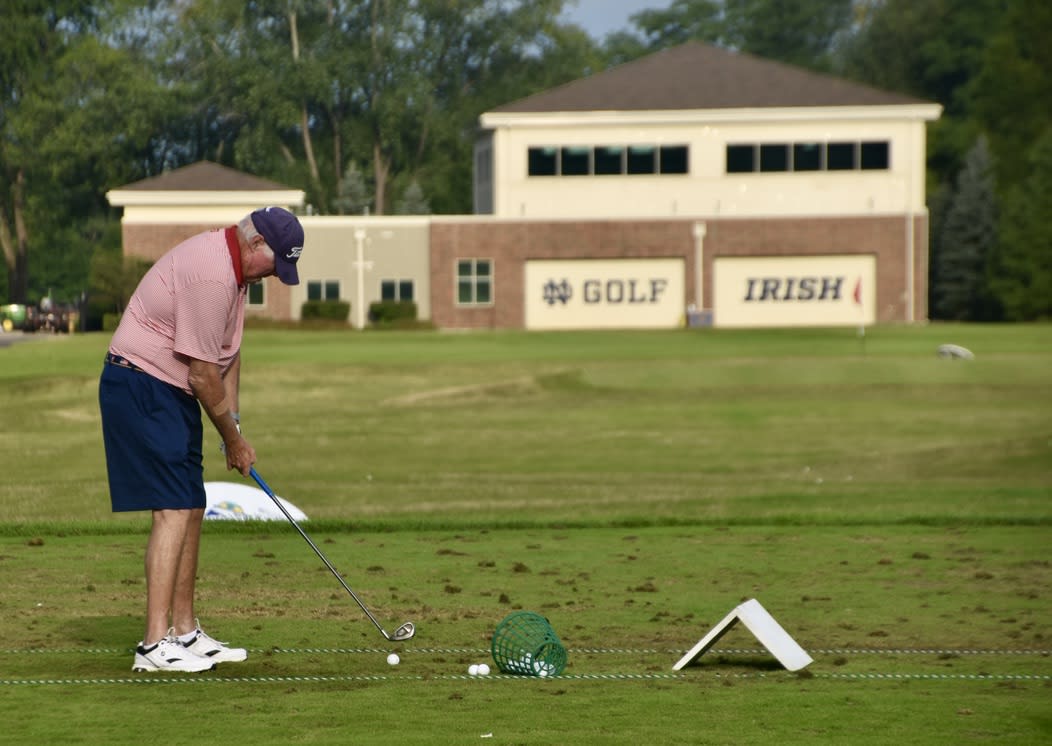
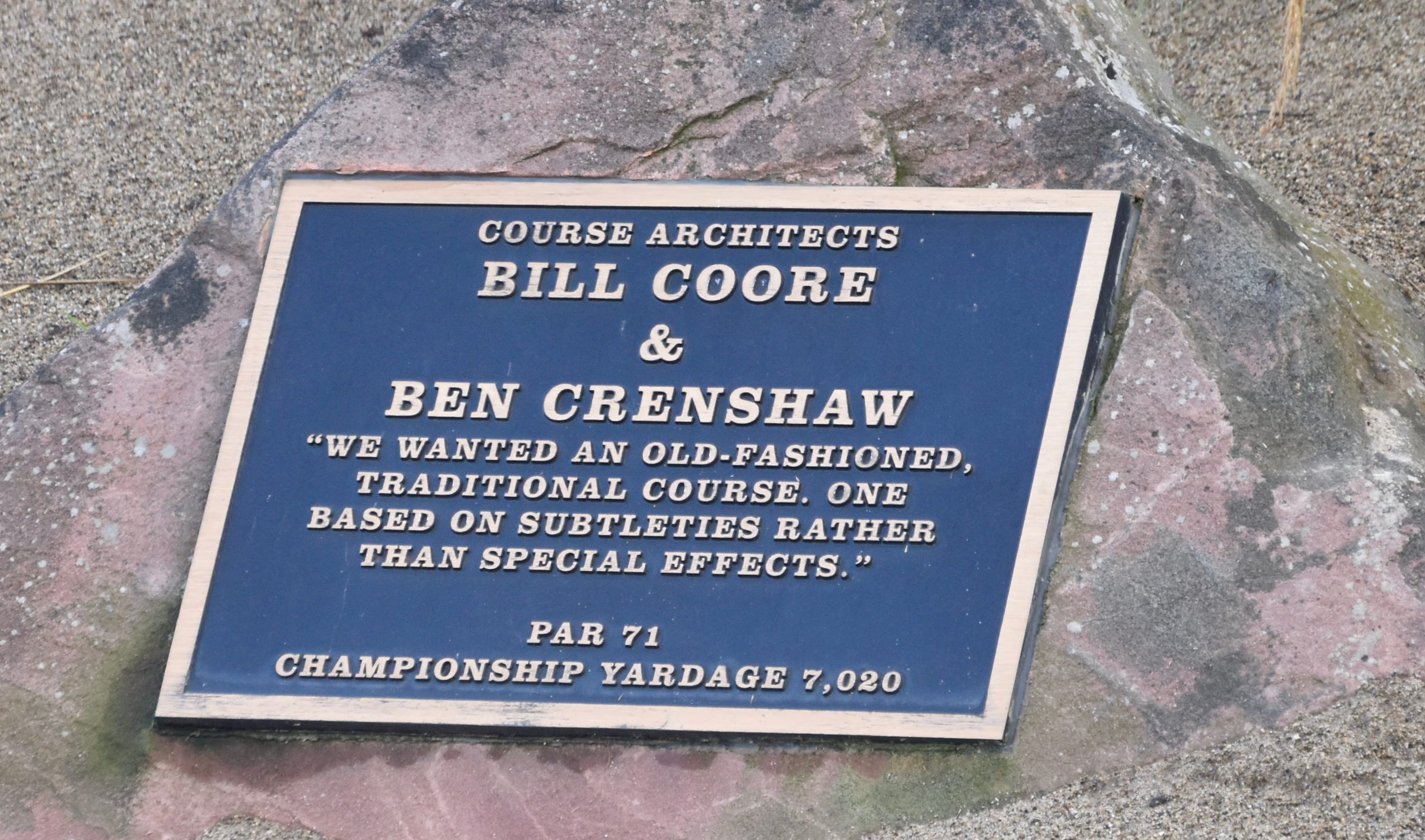
It is a beautiful links-style course tucked into two hundred and fifty wooded acres, designed by Bill Coore and Ben Crenshaw, preserved as a wildlife habitat with Audubon International certification, all lush fescue fairways and softly rolling ground with the Golden Dome in the background. It was excellent, and like Indiana University and Purdue a real test of golf. We played with Theresa and Bob Stotler from Ohio, who have been rating courses for better than twenty-five years.
We had lunch with everyone from the retreat, and the men's and women's golf coaches told us about the course and their teams. The ACC would have no golf competition that fall because of COVID-19. We said our goodbyes and drove on to Dublin, Ohio, and our next stop, the Columbus Zoo.