Dateline June 29, 2013, The Eisenhower Library and Museum
Saturday afternoon we arrived at the Eisenhower Library in Abilene, Kansas, a peaceful and beautiful smaller town about three hours west of Kansas City.
From a wall in the library: "Dwight David Eisenhower was born the year the US census pronounced the frontier closed and died the year man walked on the moon. In between those milestones he planned and led the greatest amphibious military assault in history and waged eight years of peace and prosperity as President. Yet on reflection of this eventful life he declared: 'The proudest thing I can claim is that I am from Abilene.'"
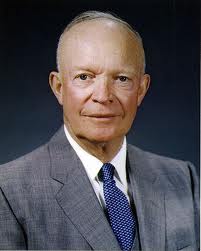
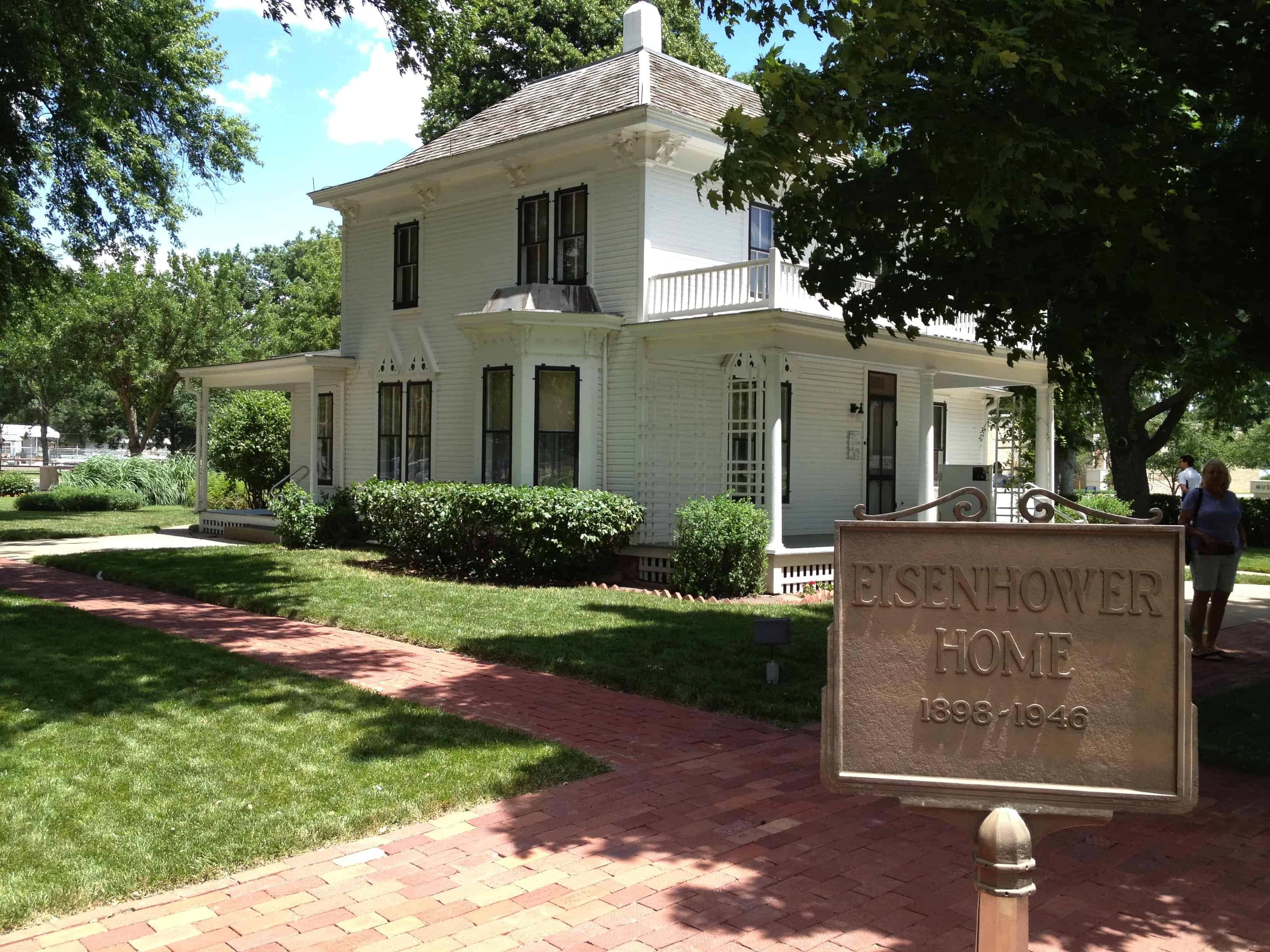
The 34th President of the United States was born on October 14, 1890. The family moved to Abilene when he was young. His parents, David and Ida Eisenhower, were hardworking people. The family home sits on the grounds of the library and is fun to tour. He was an excellent student, with a love for the history of the Old West and for world history generally, and a good athlete. He went on to West Point in 1911, graduating in 1915 with what later became known as the Class the Stars Fell On.
His military career started at Fort Sam Houston with a series of domestic assignments. In 1922 he went to Panama and met General Fox Connor, who took him under his wing and helped him get into the Command and General Staff School at Fort Leavenworth, Kansas. Eisenhower graduated first in the 1926 class of 245 officers. After assignments at the War Department from 1929 to 1935, he accompanied General Douglas MacArthur to the Philippines as an assistant military advisor. His principal duty was helping MacArthur and his staff build a viable Filipino Army.
Following the Japanese attack on Pearl Harbor on December 7, 1941, Eisenhower was called back to the War Department by Army Chief of Staff General George Marshall, who put him in charge of plans for the Pacific War. Two months later Marshall promoted him to chief of the War Plans Division, with his second general's star. In June 1942 Marshall sent him to England as Commanding General, US Army, European Theater, with a mission to build cooperation among the Allies.
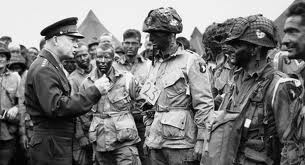
From there he went on to plan the June 6, 1944 D-Day invasion and command all Allied Forces until Germany's unconditional surrender on VE-Day, May 8, 1945.
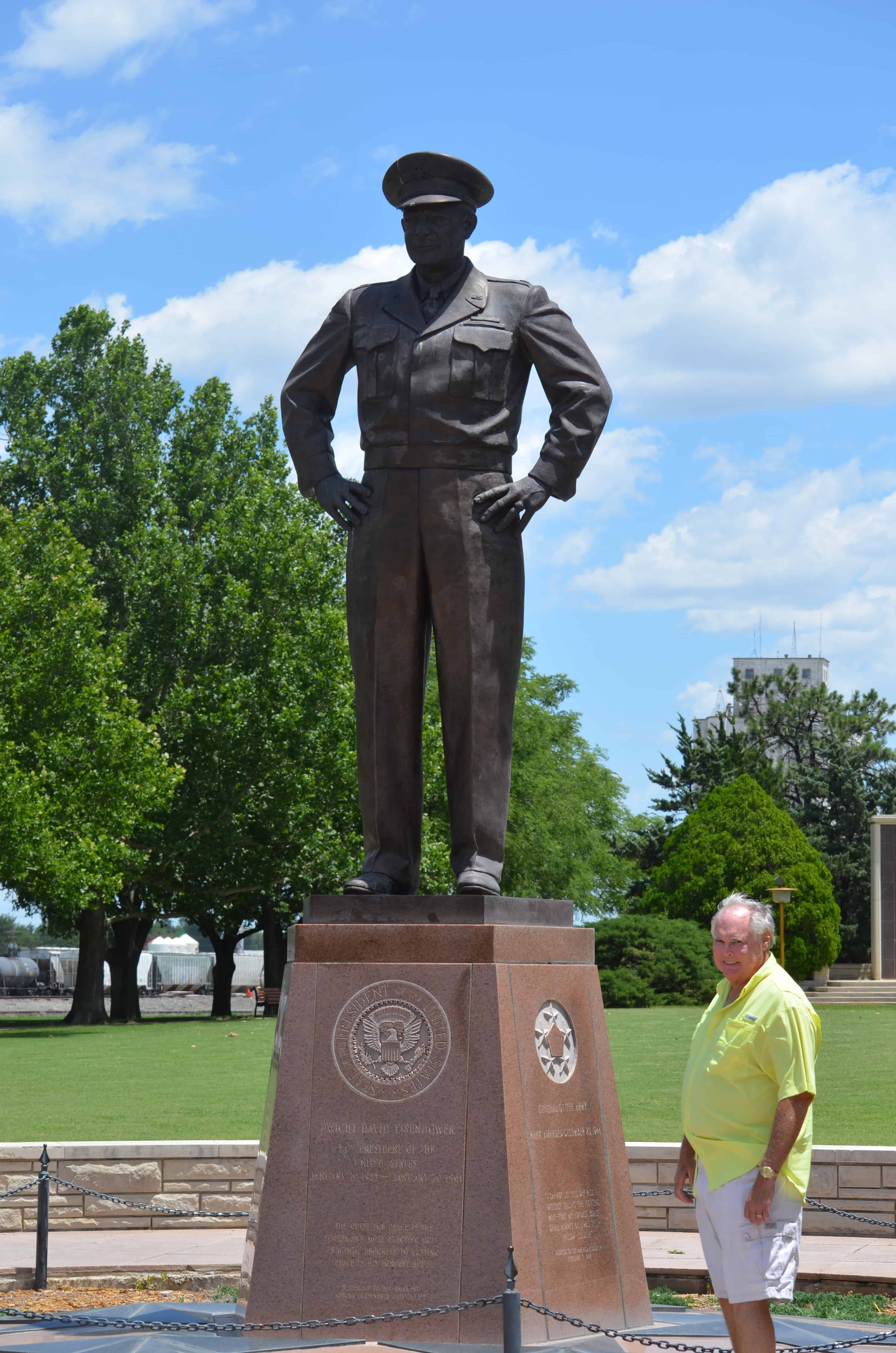
General Eisenhower served as Chief of Staff of the United States Army from November 1945 until February 1948. He resigned from the Army to serve as president of Columbia University. In 1950, at President Truman's request, Eisenhower took a leave of absence from Columbia to command NATO. He served as Supreme Allied Commander, Europe, until June 1, 1952, when he came home.
It had taken extraordinary political skill to work with the many military and political personalities Eisenhower had managed during the European campaign and during NATO's first years. Both parties noticed. Heading into the 1952 presidential election, both the Democrats and the Republicans wanted Eisenhower as their candidate. He chose the Republicans and went on to defeat Adlai Stevenson, with Richard Nixon as his running mate.
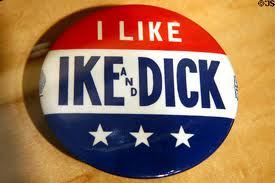
With the Cold War in progress, Eisenhower's deft handling of crisis after crisis gave the country eight years of relative peace, and allowed the Greatest Generation, the men and women who had fought in World War Two, to begin the postwar economic expansion that would build so much of American prosperity in the decades that followed.
The library lays out five of his presidential accomplishments. We will keep their framing.
1. He kept America at peace. Eisenhower was confronted with a major Cold War crisis nearly every year he was in office: Korea, Vietnam, Formosa, Suez, Hungary, Berlin, the U-2 incident. More than once the country was on the brink of war and advisors around him pushed to drop the bomb. He kept a level head every time. He dealt calmly and rationally with each situation and found a solution that avoided war without diminishing American standing.
2. He ended the Korean War. He alone had the prestige to persuade Americans to accept a negotiated peace, and to convince the Chinese that failure to reach an agreement would lead to dire consequences. Eisenhower considered this his greatest presidential accomplishment.
3. He balanced the budget. Three times. Despite considerable pressure to do otherwise, he also refused both to cut taxes and to raise defense spending. His fiscal policy contributed materially to the prosperity of the 1950s.
4. He sponsored and signed the Federal Aid Highway Act of 1956. This created America's interstate highway system. Eisenhower worked hard to get the bill passed and considered it his favorite piece of legislation.
5. He sponsored and signed the Civil Rights Bill of 1957. This was the first civil rights bill since Reconstruction. Much to Eisenhower's regret, Congress amended the bill and weakened its effectiveness.
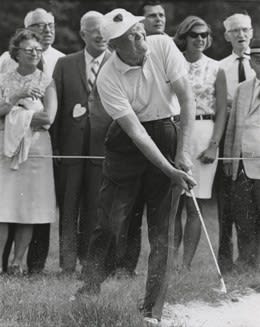
He set a relaxed tone for the country. He enjoyed an occasional round of golf, some 800 of them while in the White House, averaging two rounds a week. It is striking, looking back, how differently the country thought about a president and his golf. Eight hundred rounds in eight years raised no national objection in Ike's time. Presidents since have not been so lucky.
After leaving office, Eisenhower retired to his home and farm in Gettysburg, Pennsylvania, with winter months in Palm Springs, California, and a few months a year at the Eisenhower Cottage at Augusta National Golf Club. (We had stood next to that cottage a year ago when we walked the Masters practice round. It is curious how the same place keeps showing up in different stories.)
Ike is warmly remembered for his ability to get cooperation between the two parties in Washington. As we walked through the gift shop on the way out, a t-shirt caught our eye. The slogan: Truman and Eisenhower 2012. A longing, from one part of the country at least, for the kind of bipartisan grown-up leadership that used to seem normal.
Another interesting and educational afternoon.