Dateline June 28, 2013, The Truman Library
Our stop at the Truman Library was a pleasant and educational morning. Most of us had our World History and US History courses in school, but unless we became serious students of the subject, the details of any one president's tenure tended to fade.
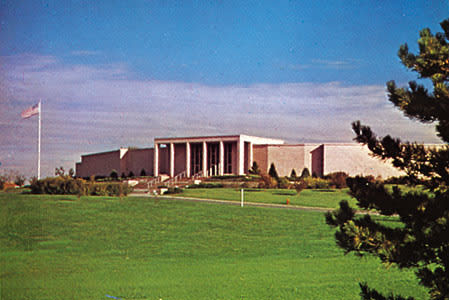
The 33rd President of the United States, Harry S. Truman (May 8, 1884 – December 26, 1972), had been Franklin Roosevelt's third Vice President, joining the ticket as the 1944 running mate after Henry Wallace and John Nance Garner had each been pushed aside. Truman succeeded FDR as president on April 12, 1945. World War II in Europe was coming to a close. The war in the Pacific against Japan was still going, with heavy losses on both sides. The Japanese military code held it a profound insult to surrender, and the prospect of a land invasion of the home islands threatened casualties beyond anything yet seen. An ultimatum was issued. Japan rejected it.
Truman made the decision to use the first atomic bombs, the only two ever used in wartime. Hiroshima was bombed on August 6, 1945, Nagasaki on August 9.
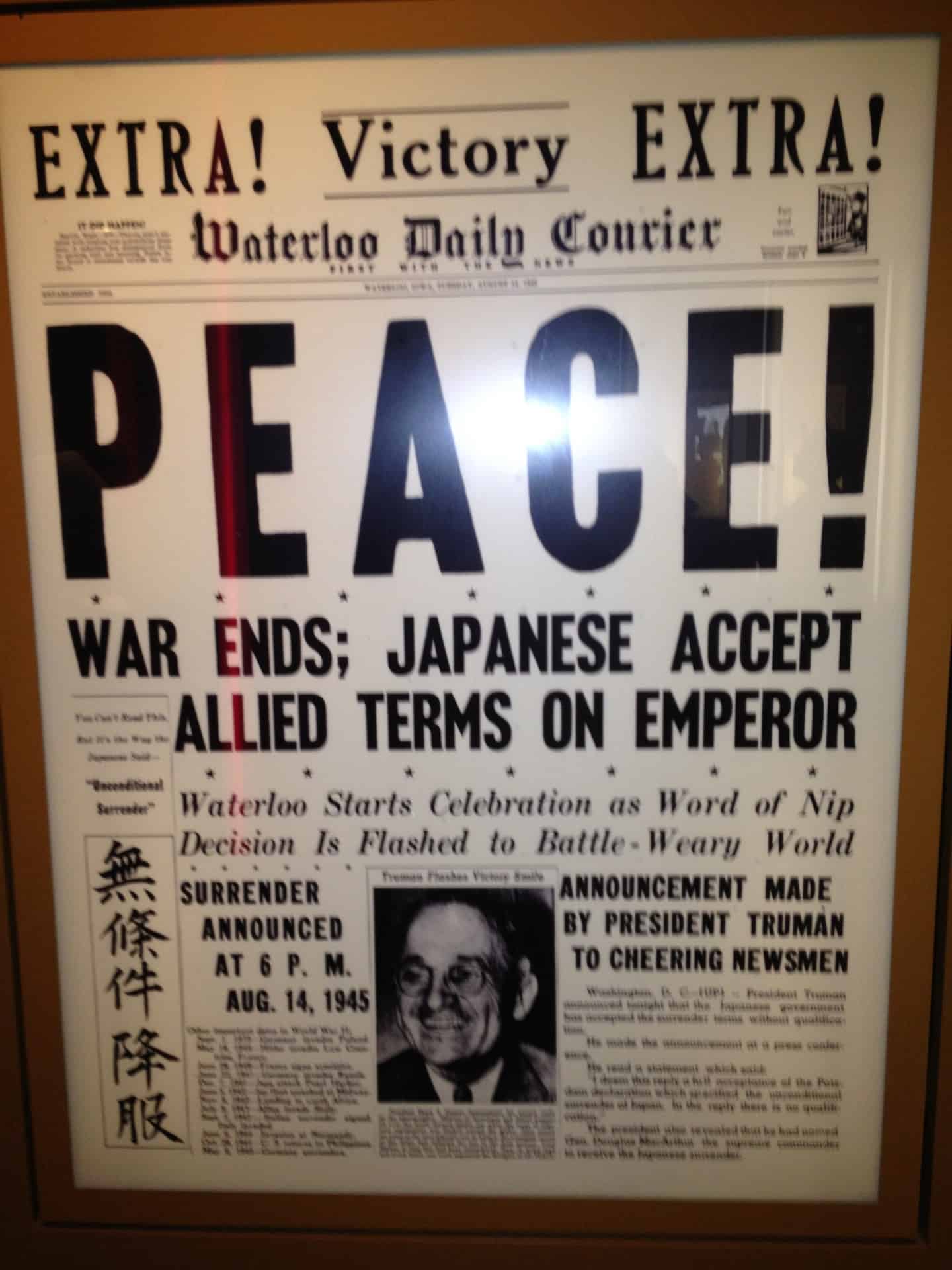
Japan surrendered. The newspaper headline at the museum announcing the surrender is reportedly the largest type ever set on a front page to that date.
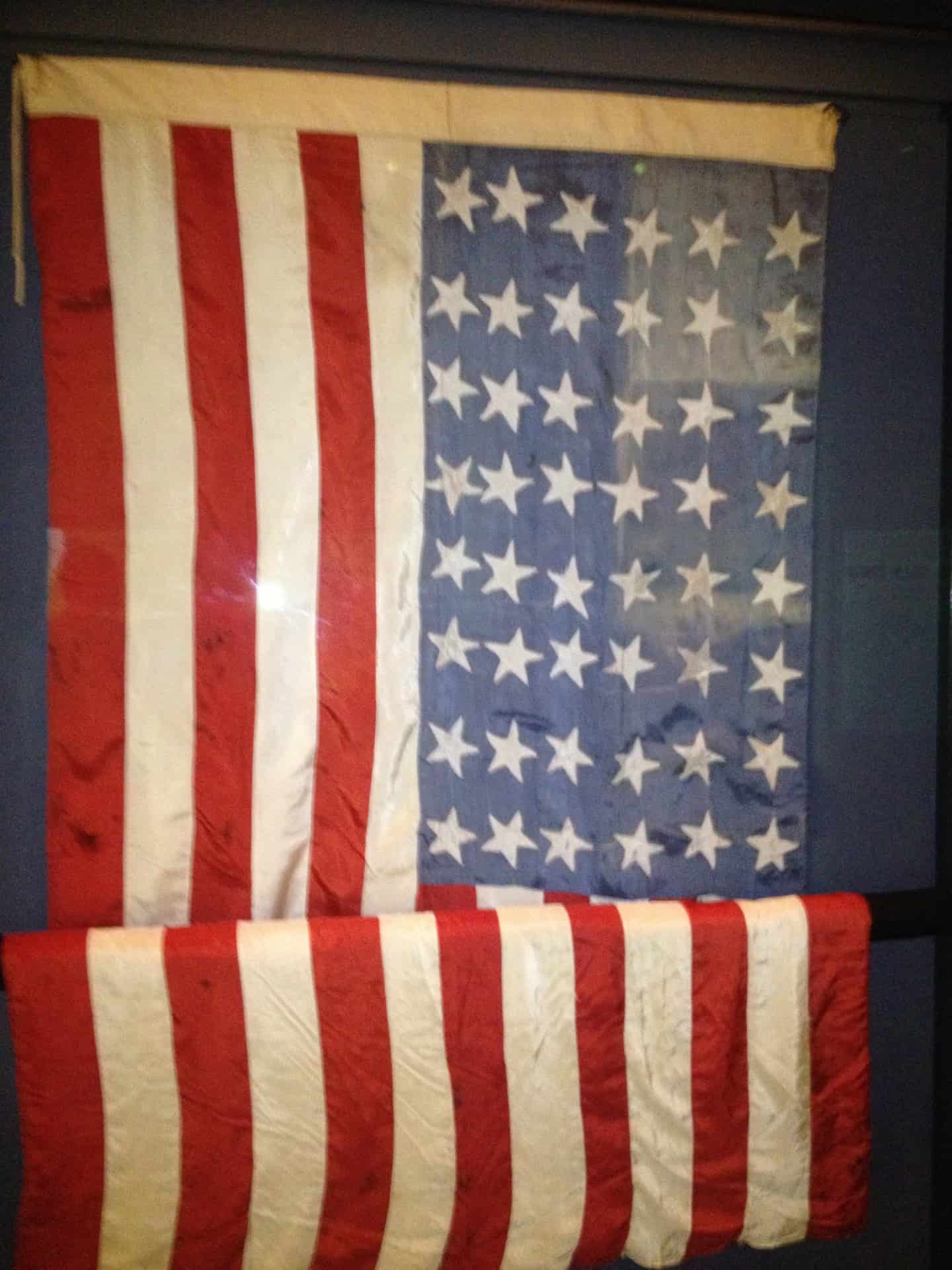
The flag was made by American POWs in Japan after the war ended, sewn together from the parachutes used to drop supplies into the camps while they waited for liberation. It hangs in the library.
With the wars ended, Truman turned to the postwar order. Looking at the failed League of Nations, the United Nations was put together. Confronting the increasingly aggressive posture of the Soviet Union, on March 12, 1947, Truman gave the speech that became known as the Truman Doctrine, asking Congress to support Turkey and Greece against Soviet pressure. This was the start of the Cold War, and the foundation of the policy of containment. Europe meanwhile needed to be rebuilt. In what may have been the most generous gift one country has ever made to others in world history, $13 billion was committed to the Marshall Plan, which lifted Western Europe back onto its feet.
It is worth pausing on that. The only ground the United States claimed in Europe after the Second World War was the soil it needed to bury its dead. The Marshall Plan rebuilt the countries that had been our enemies as well as our allies. The trading partners that grew out of that rebuilding were the dividend. By the standards of recorded history, that is not how victorious powers usually behave.
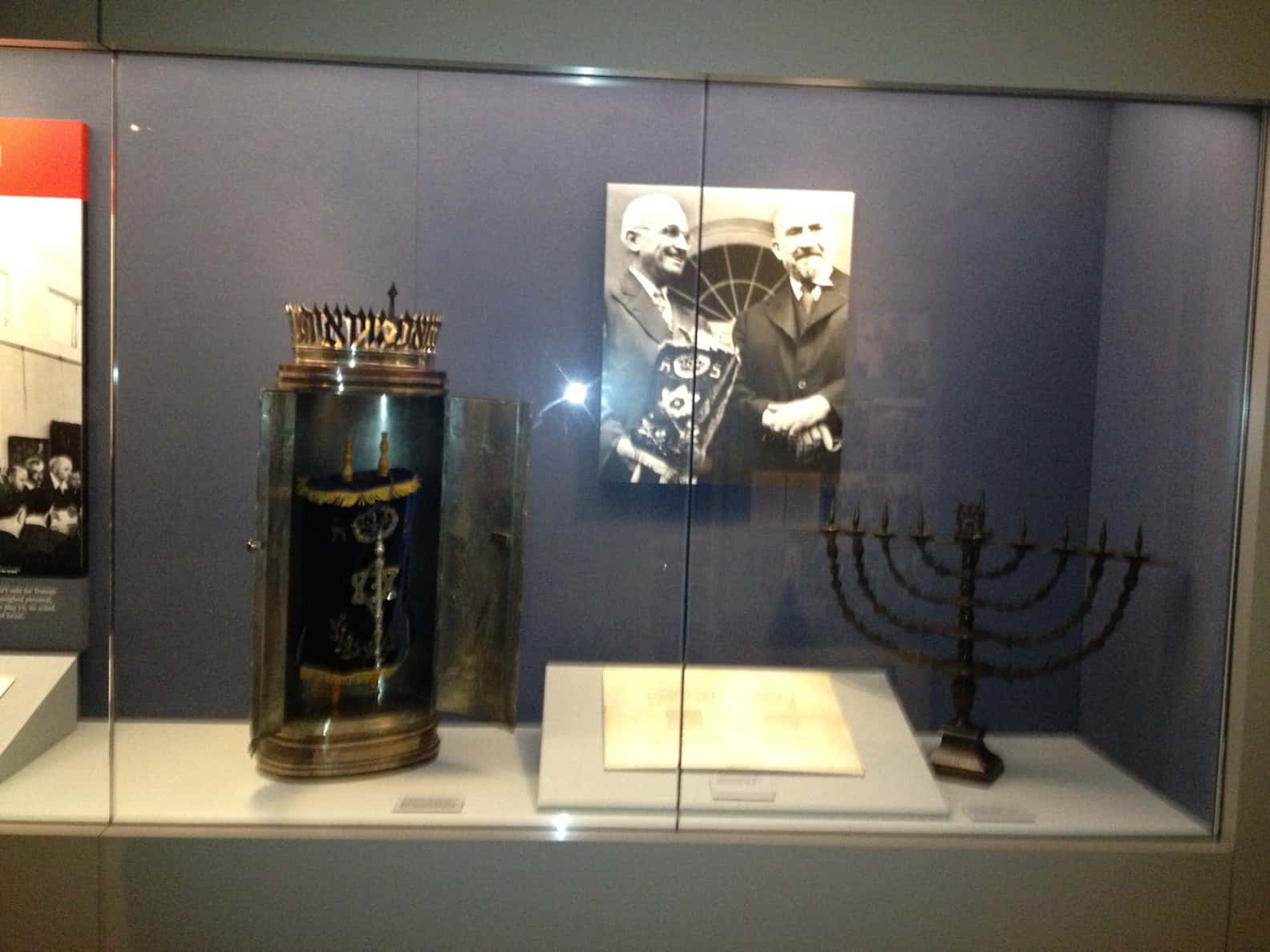
The international recognition of Israel came at the United Nations in May 1948. Truman's senior advisors, including Secretary of State George Marshall, advised against US recognition because of the country's Arab allies and the importance of Middle Eastern oil. The story goes that Truman took eleven minutes to make his decision in favor.
Truman authorized the Berlin Airlift in 1948 when the Soviets cut off road and rail supply to West Berlin, hoping to starve the city into submission. In 1949, NATO was founded to anchor Western Europe against further Soviet pressure. In 1950, North Korea invaded South Korea, and the matter was taken to the United Nations. The Soviet Union, at that point boycotting the UN, was not in the chamber when the Security Council voted, and the Council passed authorization for a "police action" to push the North Koreans back. The US military planners believed China would stay neutral. China did not. Chinese forces poured into Korea on the side of the North, and the UN advance was driven back.
That set up another Truman moment. General Douglas MacArthur, the famous World War II Pacific commander, wanted to expand the war to China. Truman, weighing the risk of a third world war, fired him.
Leadership and decisions of that scale rest on any President of the United States. Truman epitomized that, whether you agreed with him or not.
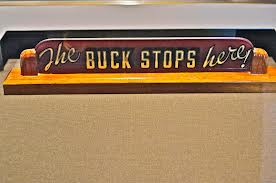
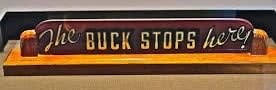
The sign on his desk read "The Buck Stops Here."
There is so much more to the Truman story: his politics, his service in World War One, his loving relationship with Bess and Margaret, and many other facets of his life. The library brought all of it back to life for us.
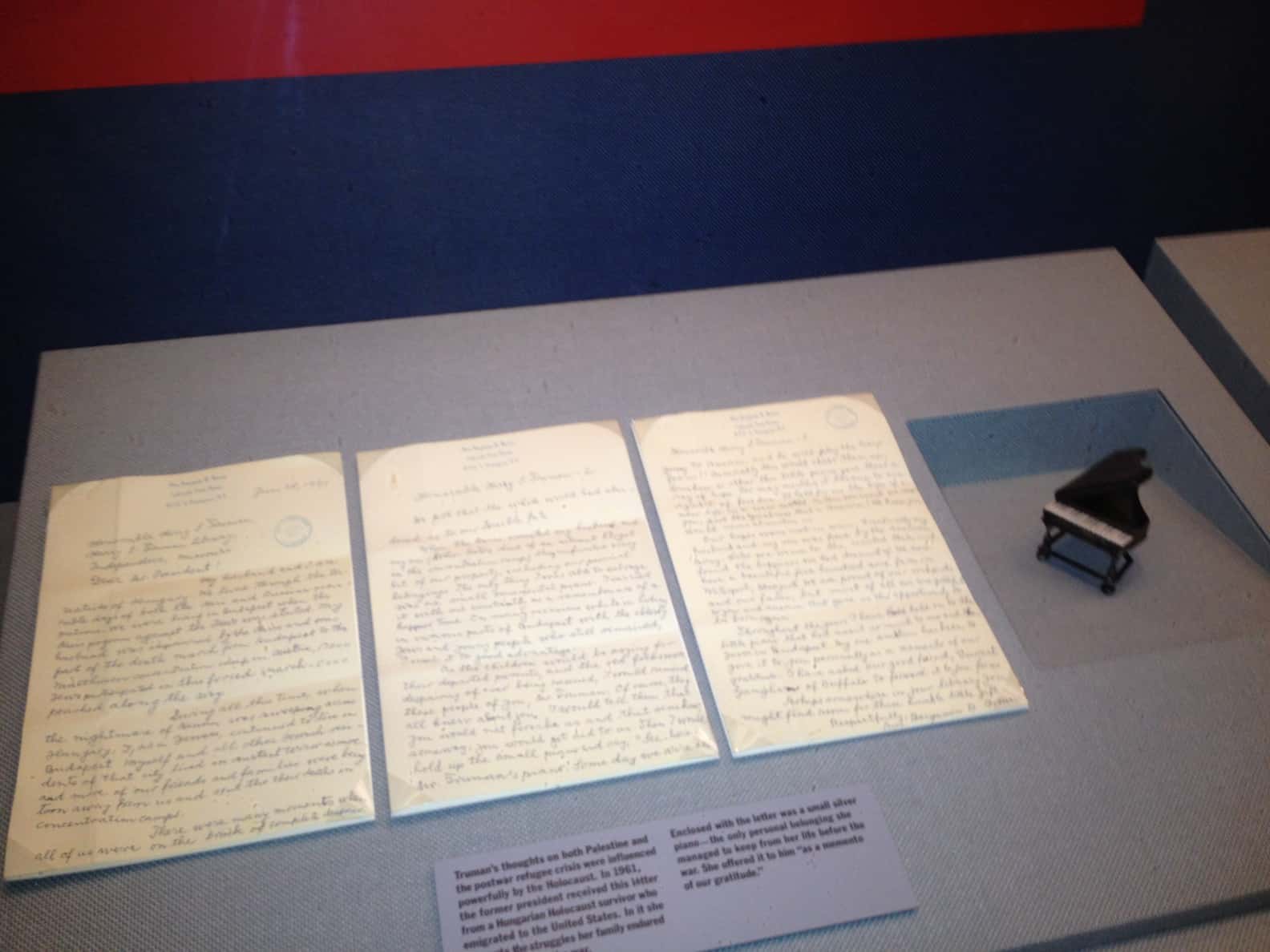
There is one small exhibit in the World War II section that we have not been able to stop thinking about. A small silver piano, the size you might find in a dollhouse, given to Truman after the war by a Holocaust survivor, along with a letter of gratitude to the people of the United States for what they had done. The piano was all she had left in the world.
What a wonderful country we have.
We hope you have enjoyed this as much as we did.