Dateline February 27, 2015, Melbourne, Just a Great City
Robinsons In The City.
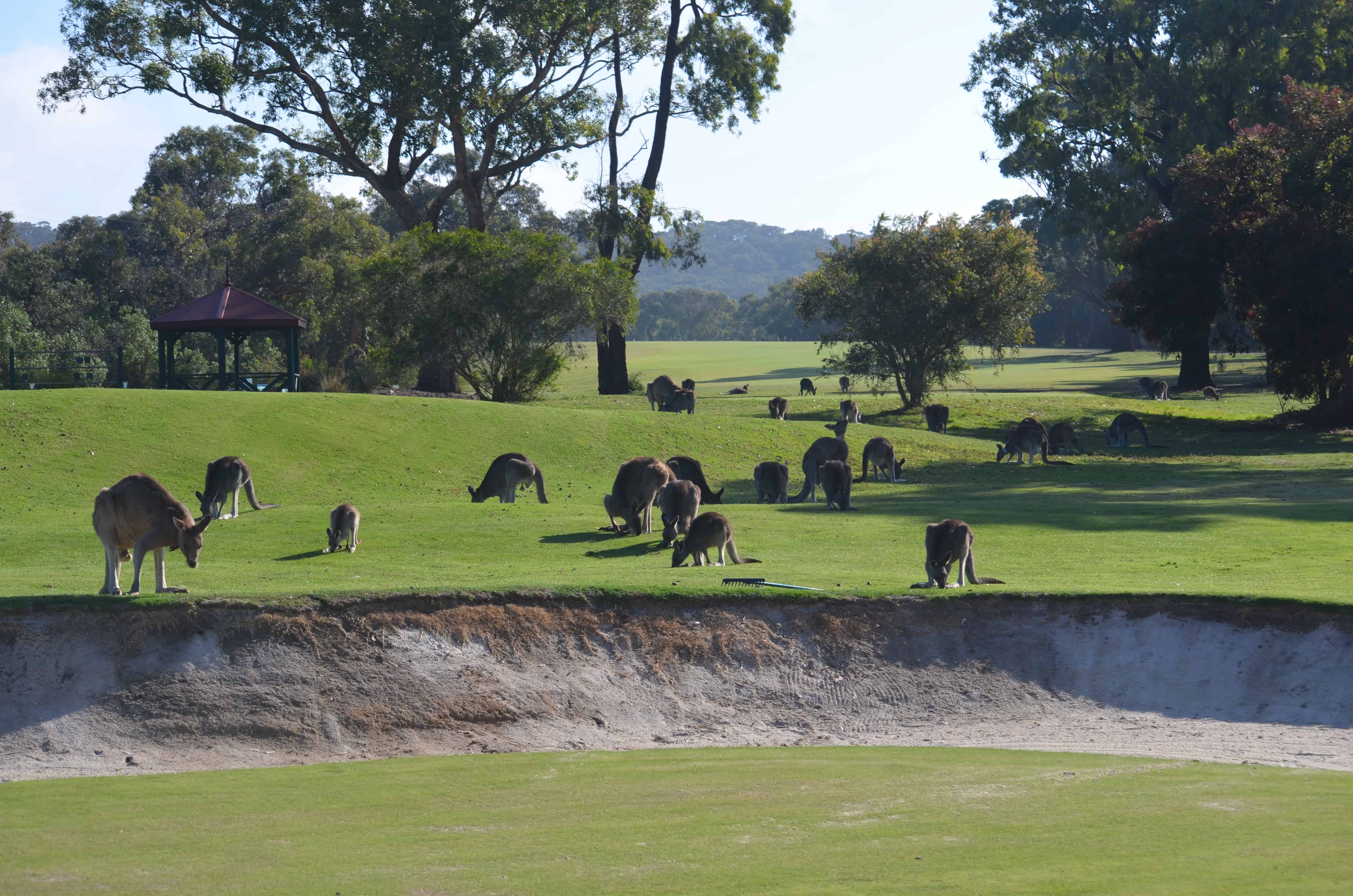
After that wonderful afternoon with our kangaroo friends at Anglesea Golf Club, we arrived at Robinsons In The City and were greeted by the General Manager, Paul Humphreys, who got us settled into this wonderful boutique hotel. A little history:
Melbourne was originally a village founded by John Batman and based around Flagstaff Hill (now Flagstaff Gardens just minutes from the hotel's doorstep) and Batman Hill (now Southern Cross Station). From the top of the Flagstaff Hill, settlers would look out to the mouth of the Yarra River and monitor the entering ships. It was the main point for communicating with the vessels on the river by semaphore.
Commerce quickly developed in the immediate area, and Mr Henry William Bennett was the proprietor of Dalston's Bakery, one of Melbourne's first commercial bakeries in the early 1850s. The bakery is no longer operational but the original brick ovens survive. Mr Bennett's bakery and original family home are now the premises of Robinsons in the City.
This urban bed and breakfast is the successor to Wendy Wright's (previously Robinson) very well-known Bed & Breakfast in St Kilda, Robinsons by the Sea. Wendy retained the personality and integrity of the original building while establishing the hotel.
Business owners Paul Humphreys and Tish Black spent a number of years working in four- and five-star hotels and resorts prior to purchasing Robinsons, and have brought this experience with them. They have, however, left behind the attitude that can be found in so many hotels.
The original bakery with its iron-bound twelve-foot-high ovens is now the breakfast room at the hotel, and the six guest rooms are a mix of unique rooms, big and small, each with private bathroom or ensuite. The setting is contemporary and unified, albeit set within an 1850s heritage building.
This may be one of the nicest boutique hotels ever. The rooms were fabulous, with a separate large bathroom for each room in the hall. You can identify which bathroom is yours because the color of the bathroom door matches the color of your bedroom door. Pretty slick: after a few too many drinks, you are still safe.
The Royal Mail.
After checking in, we wanted to grab a bite to eat, so Paul sent us up the street to a local pub called the Royal Mail. We walked in the bar entrance and were led back to the dining area. The food was very good, and we enjoyed meeting the locals in the bar after dinner. We heard a few stories, especially from a fireman and his wife who had been married in City Hall in New York City only two years before. Back to the hotel for a good night's sleep. No driving for four days. Nice.
The old bakery, and Stanley.
The next morning we went down to the breakfast room. You can see the old bakery fireplaces. What a cool room.
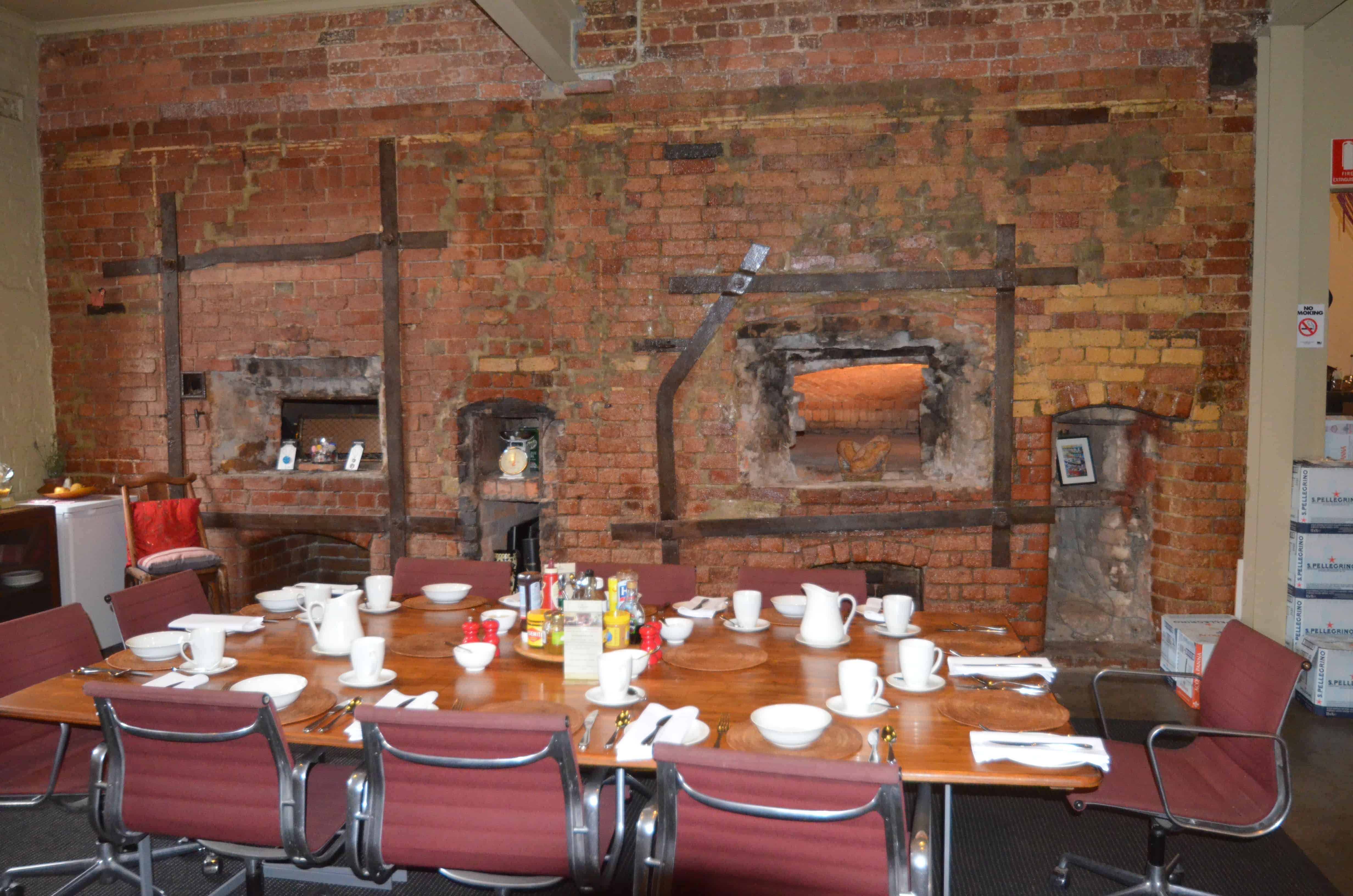
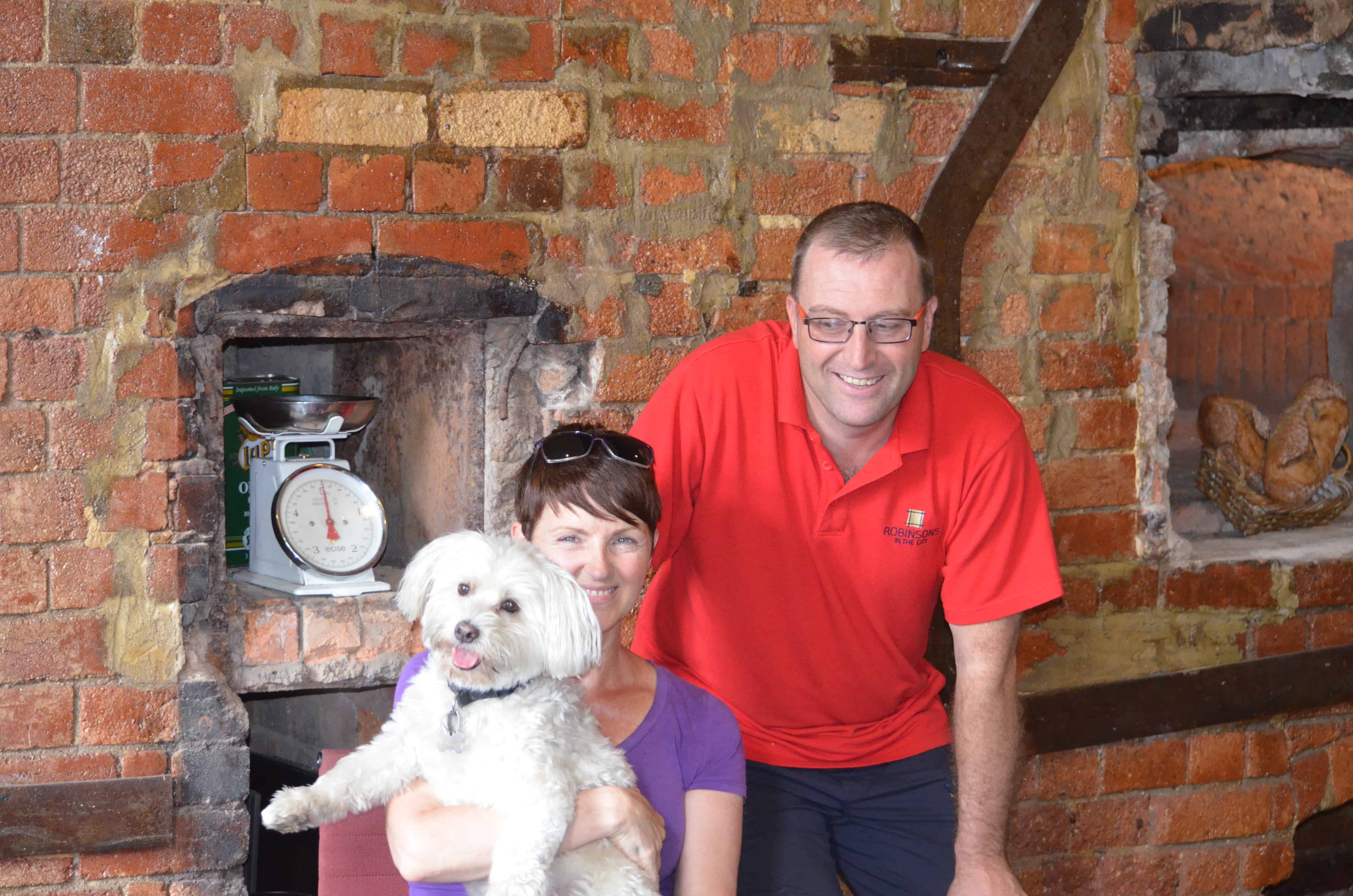
The metal shoring of the brick is original. It was there to protect the ovens from expansion and contraction when the fireplace was heated and cooled. We also met Stanley (the dog), and Tish, Paul's wife, on their way out for the morning dog walk.
Melbourne by tram.
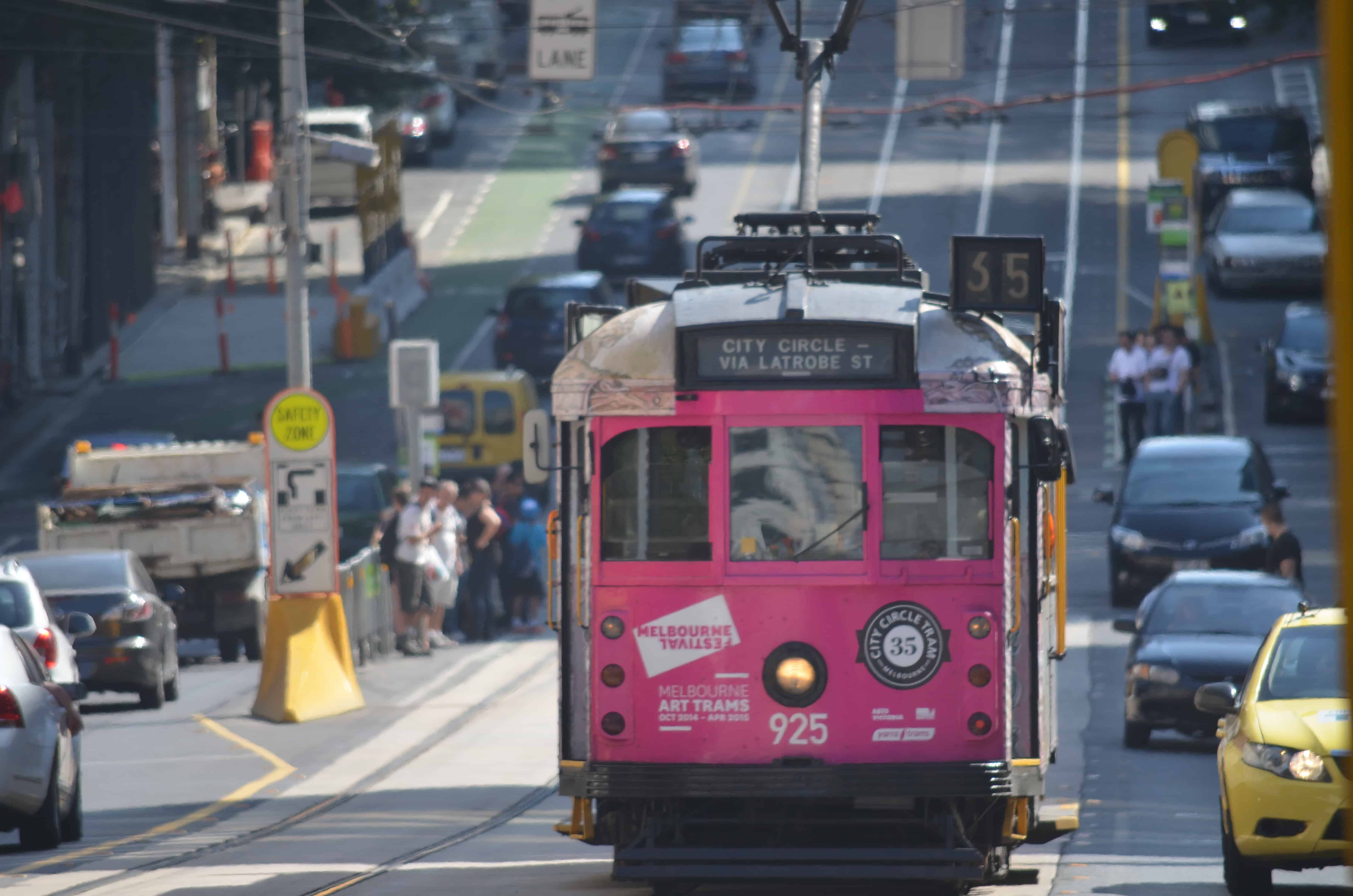
Melbourne is a vibrant city with many small restaurants and coffee houses. There is an extensive tram system that gets you around the inner city, and within the central loop it is free to ride. A few of the old original trams operate on a loop around the city's edge.
Victoria State Library.
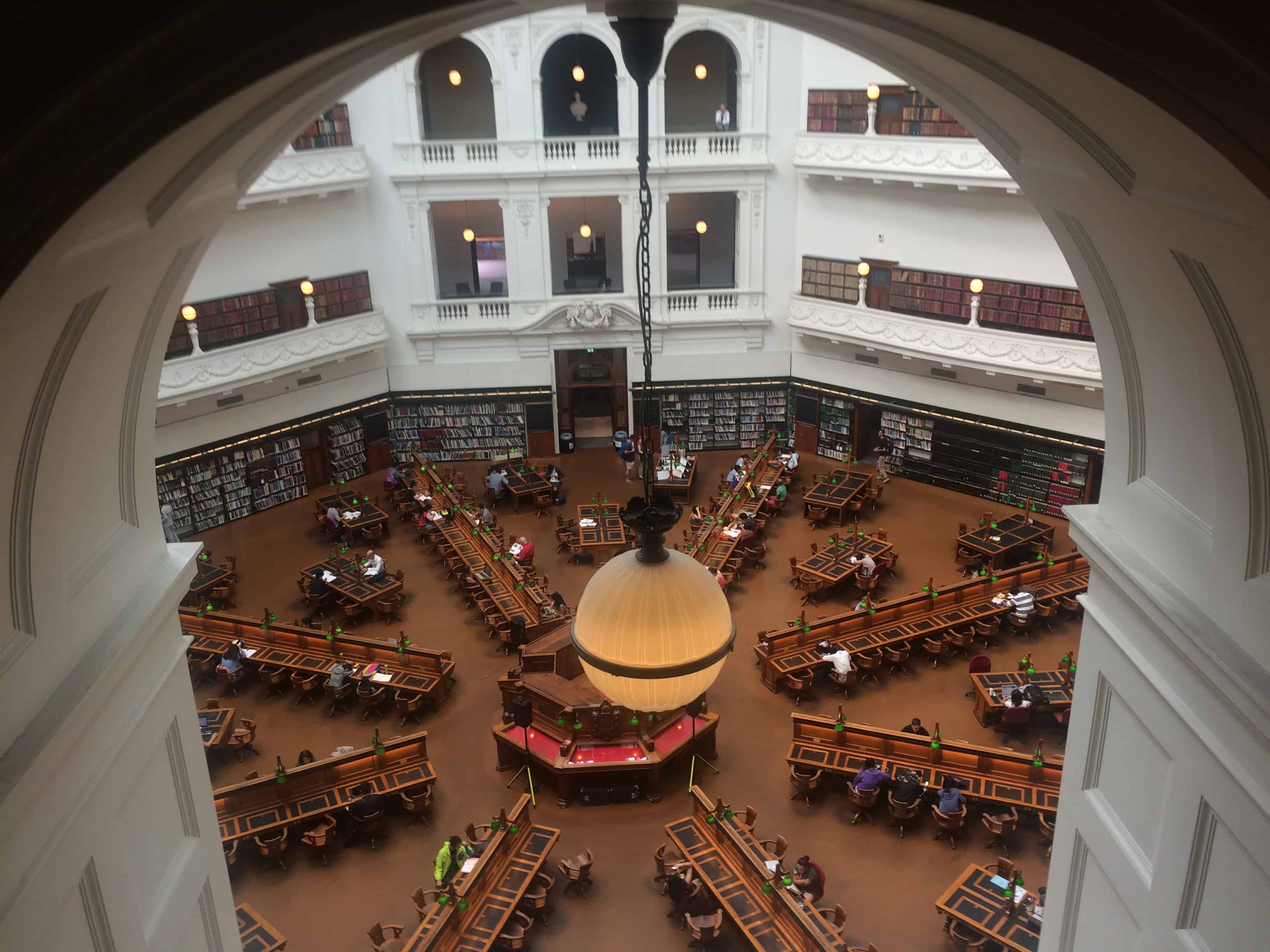
We headed to the Victoria State Library on Paul's recommendation. It was a lesson in the history of Melbourne and of the library itself. The library opened in 1856, and the landmark Domed Reading Room opened in 1913, designed by Norman G. Peebles. The reading dome's original skylights were modified and covered in copper sheets in 1959 due to water leakage. The reading room was closed in 1999 and restored to its original light, reopening in 2003.
It is incredibly hard to photograph.
Coops Shot Tower.
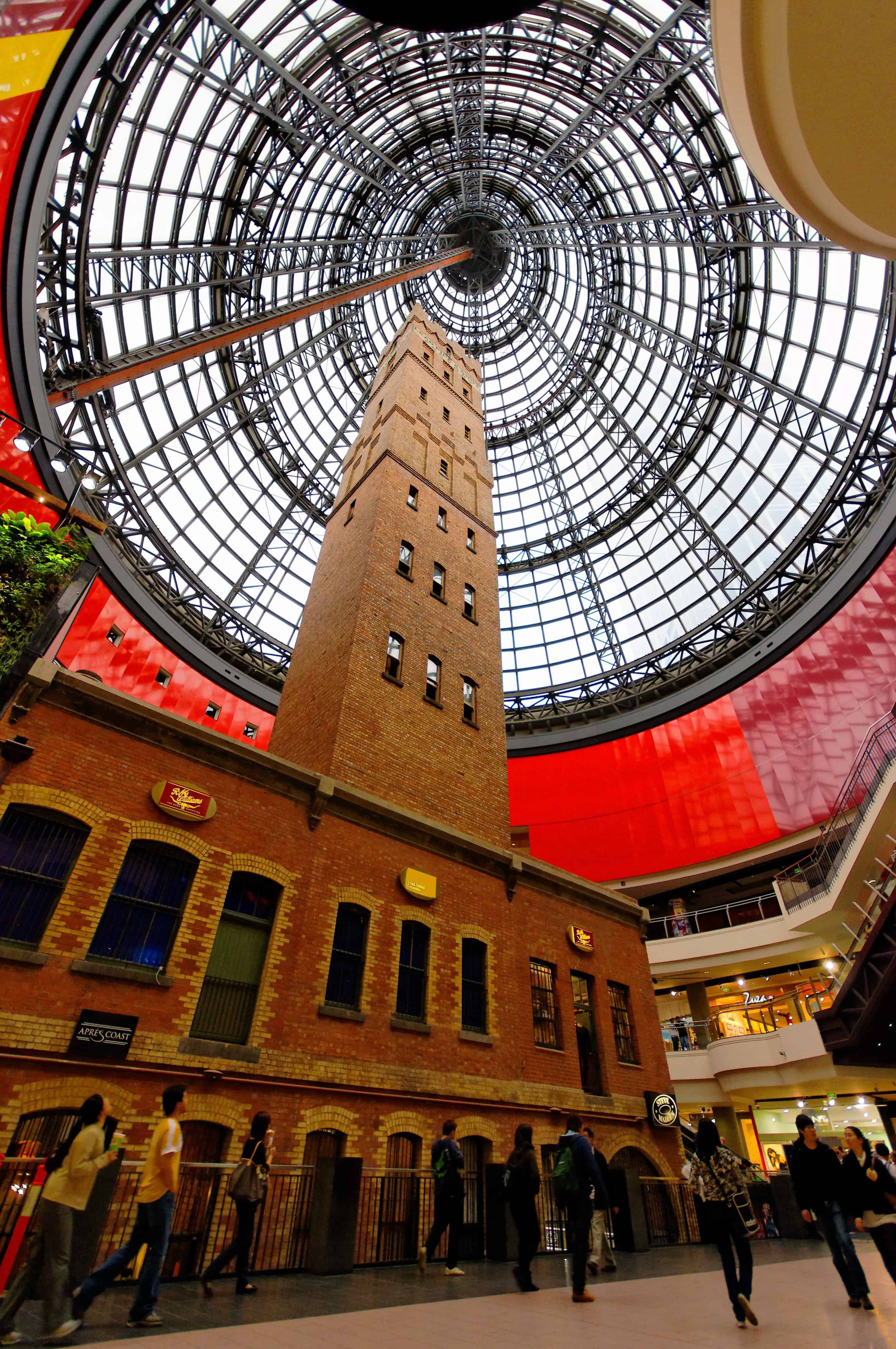
We left the library and walked across the street to the Melbourne Central Shopping Center to see the shot tower. Coops Shot Tower is in the heart of Melbourne. It was completed in 1888 and is 164 feet high (50 meters). The building was given historic status and was saved from demolition in 1973. In 1991 it was incorporated into the shopping complex, underneath a 275-foot-high (84 meters) glass and lead structure that protects the building and keeps the center dry.
Coop's Shot Tower is nine stories high, and has 327 steps to the top. The tower produced six tons of shot weekly up until 1961, when demand for the lead shot dwindled because of new firearm regulations in Australia.
Kangaroo, on the menu.
We returned to the Royal Mail for some wine. We sat at the bar and enjoyed conversations with the locals, including the owner Michael. After enough wine, John tried the kangaroo steak and enjoyed it. Janice had a taste and thought it was just OK. We kind of thought it was like eating Bambi, or in this case Joey, after playing golf with all the kangaroos a few days before. Good dinner, nice wine, and back to Robinsons for a good night's sleep.
Saturday, and no cricket.
The next morning, Saturday, we headed out to try and purchase tickets for the Cricket World Cup match between India and Pakistan, to be played the following day. Unfortunately, it was sold out. Knowing very little about cricket, we figured the game was a 50/50 — it would start at 2:00 and end at 10:00, and in eight hours we might have learned something. As we love to say: life is an adventure.
The botanical gardens and the Henley Regatta.
We then headed for the botanical gardens and the Shrine of Remembrance. We walked across the river and started down a path alongside the river and saw some racing shells. It was the Australian Henley Regatta.
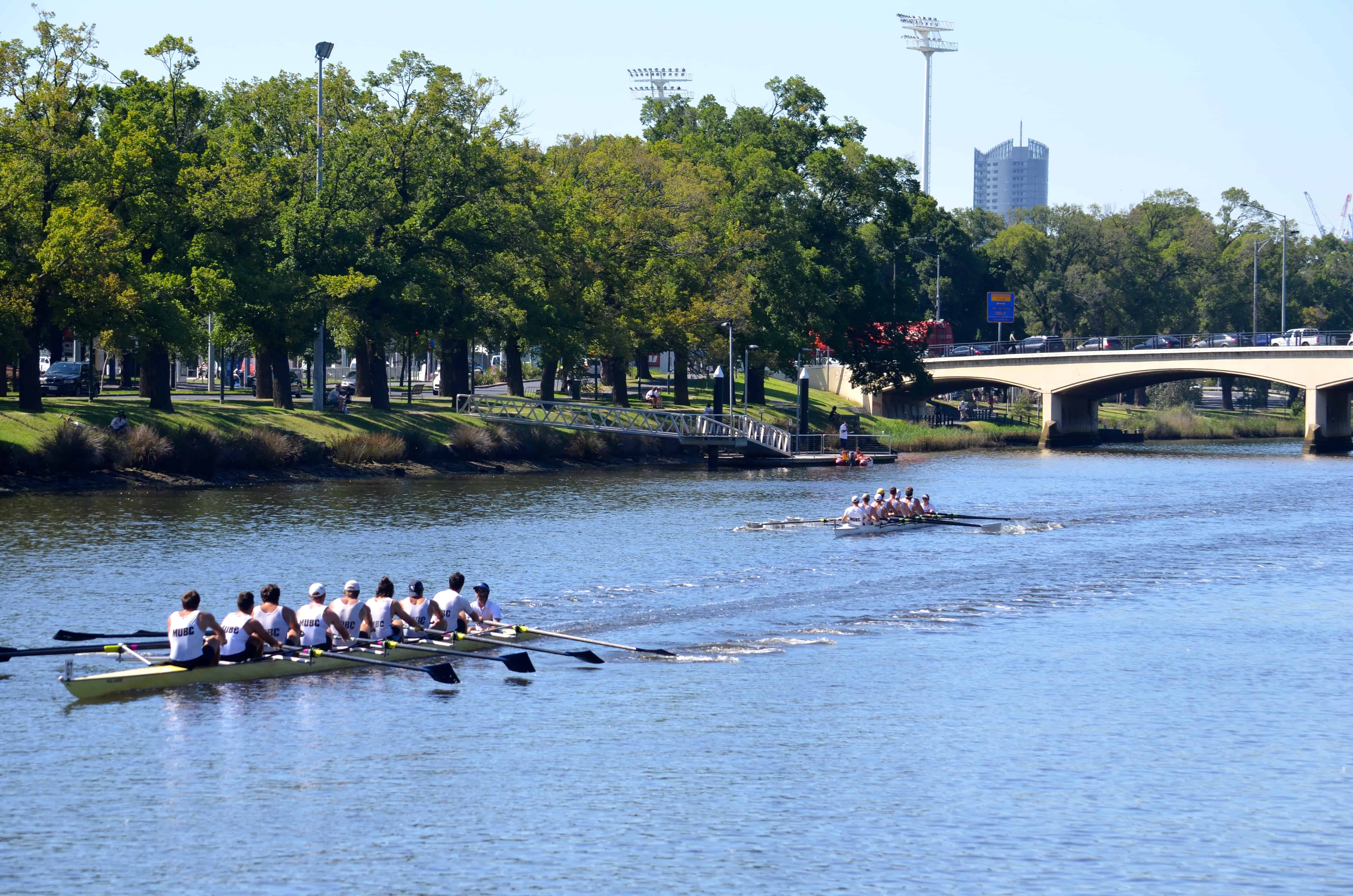
The Australian Henley is an amateur rowing regatta which is held annually in Melbourne, under the auspices of Rowing Victoria. Also known as Henley-on-Yarra, it is organized by the Melbourne Amateur Regatta Association. The event is based on the Henley Royal Regatta and features a two-lane knock-out format. First staged in 1904, the Australian Henley was established to raise funds to send Australian crews overseas and to bring international crews to Australia.
We watched a few races and headed on toward the botanical gardens. The walk seemed endless. We passed one section that was reserved for a music festival and stopped to listen to the Melbourne Symphony Orchestra practice. Then we continued. We arrived at the gardens, which were nice, but it was very hot and many of the flowers had bloomed and seen their day. So we headed to the Shrine.
The Shrine of Remembrance.
The Shrine of Remembrance was created to meet the needs of a grieving community after the extensive loss of lives in the First World War (1914–18). 114,000 Victorians enlisted. Of the 89,000 who served abroad, 19,000 were killed. They were buried in distant graves far from home, at a time when most Australians did not travel abroad. The Shrine provided a place where Victorians could grieve as individuals, as families, or as a community, and where they could honor and preserve the memories of those they had lost.
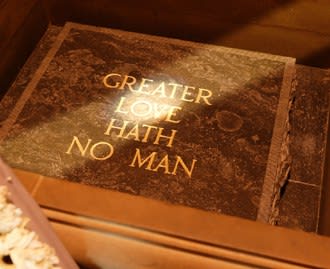
Sunk into the centre of the Sanctuary floor like a grave, the Stone of Remembrance is a potent reminder of the sacrifice made by Victorian service men and women. The inscription GREATER LOVE HATH NO MAN is taken from the Bible, the Gospel of John, 15:13.
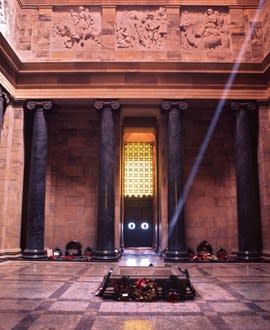
The Ray of Light ceremony is central to the experience of the Shrine of Remembrance. A ray of natural sunlight passes through an aperture in the ceiling of the Sanctuary and falls onto the Stone of Remembrance over the word "love" at precisely 11:00 a.m. on 11 November each year. This is the moment when the armistice was signed in 1918, marking the end of hostilities in the First World War. The ceremony is now reproduced every half hour using electric light, to allow all visitors to the Shrine to experience it.
Frank Doolan, the surveyor of the Shrine, and the astronomer Dr Joseph Baldwin completed the arduous calculations to position the aperture, with the help of the government. Decades later, Doolan solved the problem presented by daylight saving by inserting two mirrors within the aperture's shaft.
The Ray of Light ceremony is a very moving moment. It has you thinking of all the service personnel who have given their lives for our freedom and liberty.
A woman at the Shrine told us much about the history and the memories. One of the reasons so many were lost early, especially at Gallipoli, was that the military leaders were sons of the aristocracy in England. She explained the convention: the first son of a lord became a lord, the second usually a priest, and the third an officer in the military. The military gentry were untrained, and not leaders for men to follow. They made disastrous decisions in battle, and the locals back home had little or no respect for them.
The names of all who served in WWI are listed in books around the inside area. The names are all without rank, since the belief was that all were equal. The complete history of Australian service in various wars is very well displayed in the Shrine. We were surprised how early in WWI and WWII Australian and New Zealand troops were involved, but they were part of the British Empire, and when the King spoke, out they went.
Back across the river.
We hiked back toward the central city. We could not find a tram station where we could buy a ticket, so we found the bridge and crossed back into Central Melbourne and on to Chinatown. Both the Chinese and the Greeks have huge populations in the city. The Chinese came to Melbourne during the gold rush in the 1850s and have been a major part of the Melbourne fabric ever since. A nice lunch at a Chinese restaurant, and we continued the walk back to Robinsons. We figured we had walked from nine in the morning until nearly five.
Sunday at Albert Park.
Since we couldn't go to the cricket match, we decided to get a round of golf in at Albert Park Golf Course, a municipal course. We arrived for a noon tee time and walked it. The course was in outstanding condition and was a great test of golf.
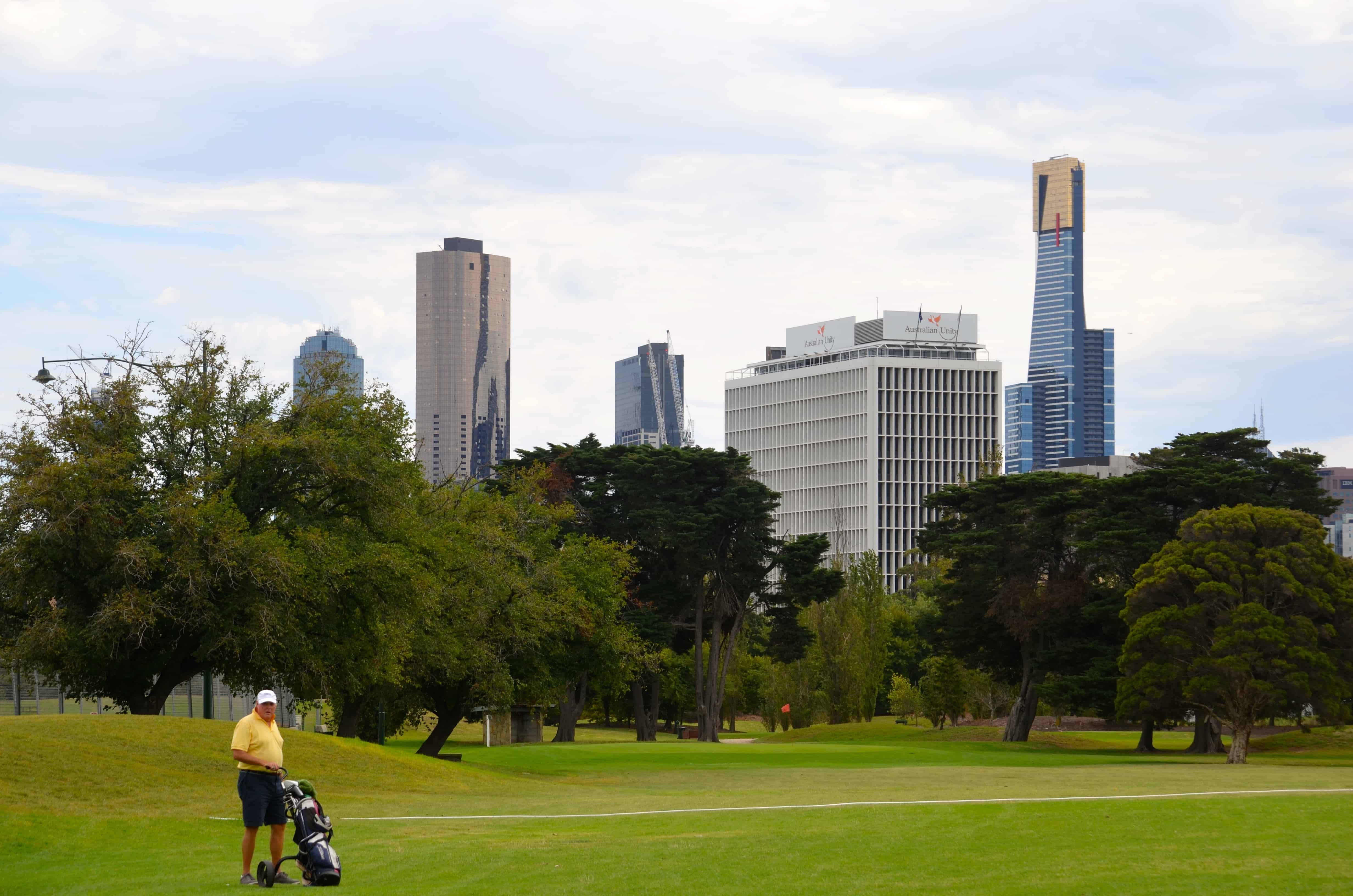
The course is laid out on and around the race track that hosts the Melbourne Grand Prix, which was only three weeks away. The roads were already blocked off to outline the track, with big Rolex signs everywhere. During the race, the golf course is closed and is used for parking and corporate tents. From the course, there were terrific views of the city.
Errol Street, and farewell.
Returning to the hotel, we ran into Tish and Paul and asked where a nice local place would be for dinner on a Sunday night. A short walk away, on Errol Street, we found a number of local restaurants. We selected Errol's, a Lebanese-Italian place. Good wine, veal parma, and garlic bread to die for. The walking was over for the day, so we called a cab back.
Melbourne was a wonderful stay. We had spent several days there on our last trip and seen many of the sights while we played a lot of golf on the famous sand-belt courses. If you plan a trip to Australia, Melbourne should be at the top of your list. Paul and Tish run a magnificent boutique hotel that has the special touch of a B&B. We were so pleased with the experience.