Dateline May 14, 2016, St. Petersburg
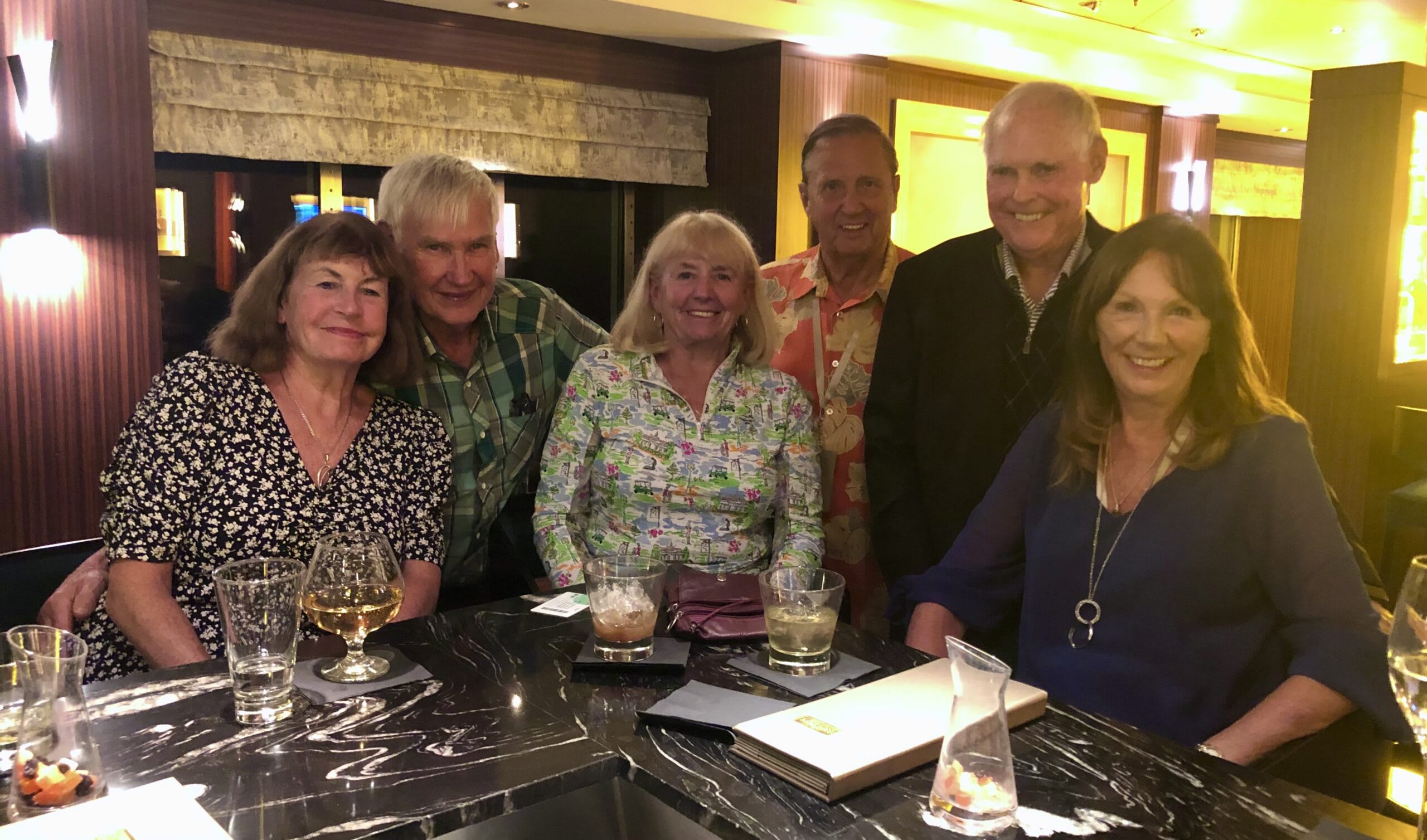
From Bergen the Norwegian Star crossed into the Baltic, and the stop we had circled on the map long before we left home came next: St. Petersburg. It is the most northern of the world's great cities and pays for it dearly, with something like thirty-five sunny days a year, so we counted ourselves lucky to draw two warm, clear ones. We were met at the ship with six other passengers and turned over to Marianna, our guide for two full days, who knew the city and its history cold.
A little history. Peter the Great founded St. Petersburg in 1703 on the swampy banks of the Neva, at the head of the Gulf of Finland, to give Russia a window on the Baltic. Before him the country was poor and a long way behind Europe; as a young man he had gone abroad to learn shipbuilding in the Netherlands and England, and he came home determined to drag Russia forward. He made French and German the languages of his court, imported European manners wholesale, built a navy from nothing, and declared Russia an empire. What followed was two centuries of Romanov rule and more than fifty palaces, right up to the revolution of 1917.
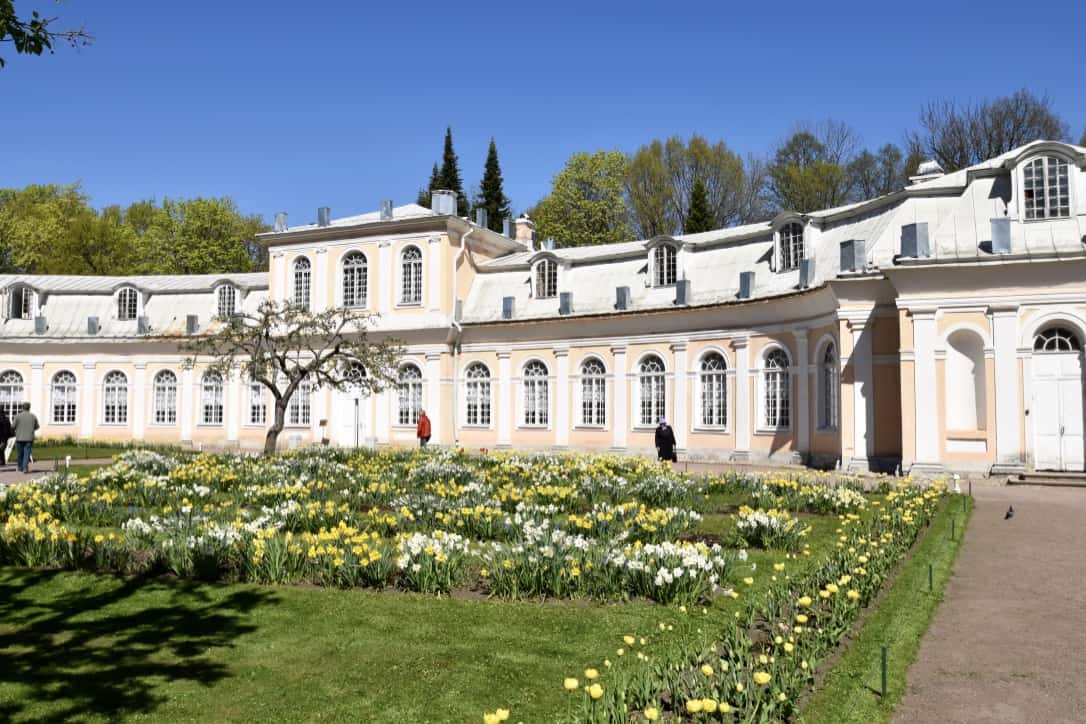
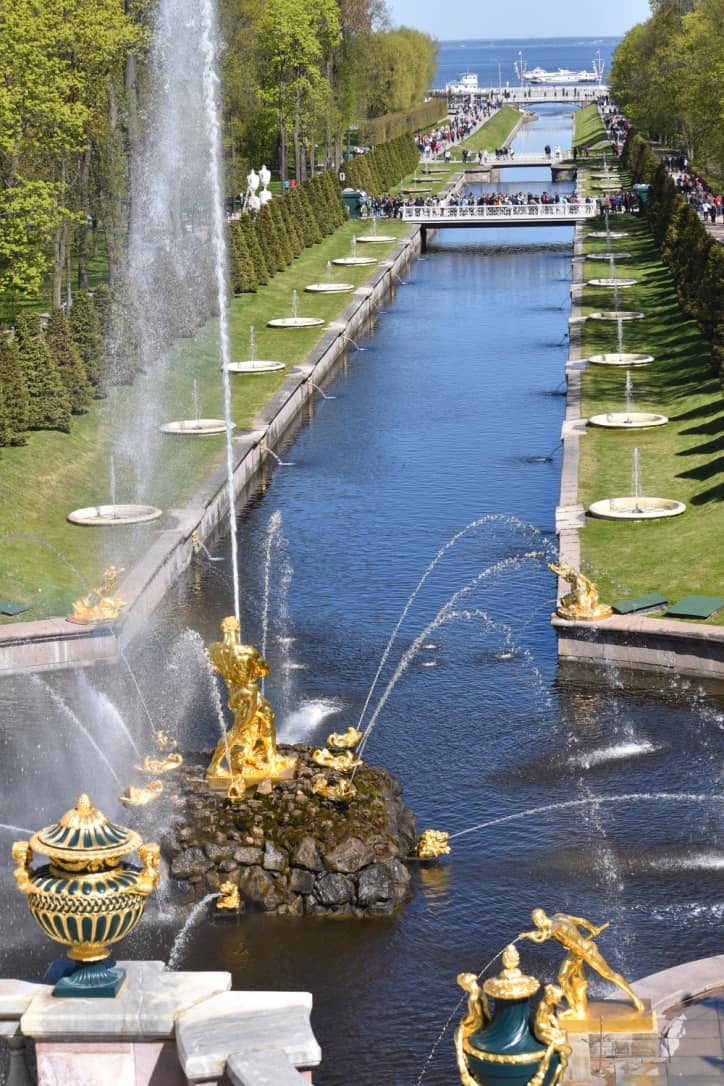
The Summer Palace at Peterhof. Peter wanted his own Versailles, and at Peterhof, which means "Peter's Court," he got it, a grand palace above a park of fountains running down to the sea.
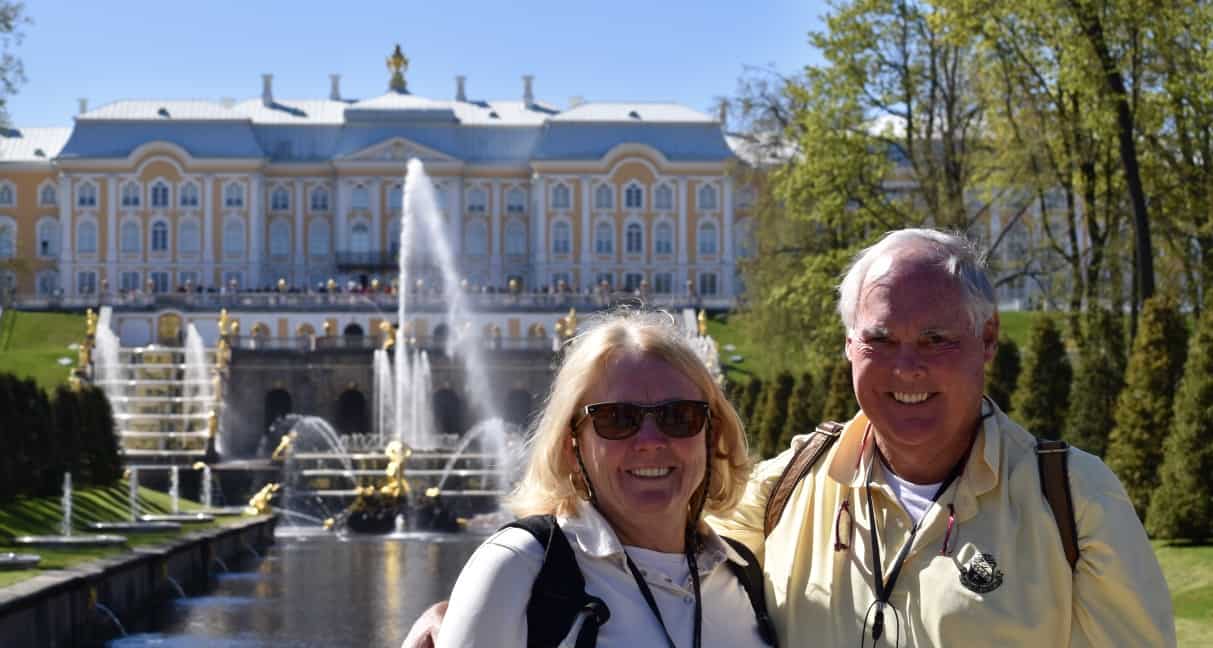
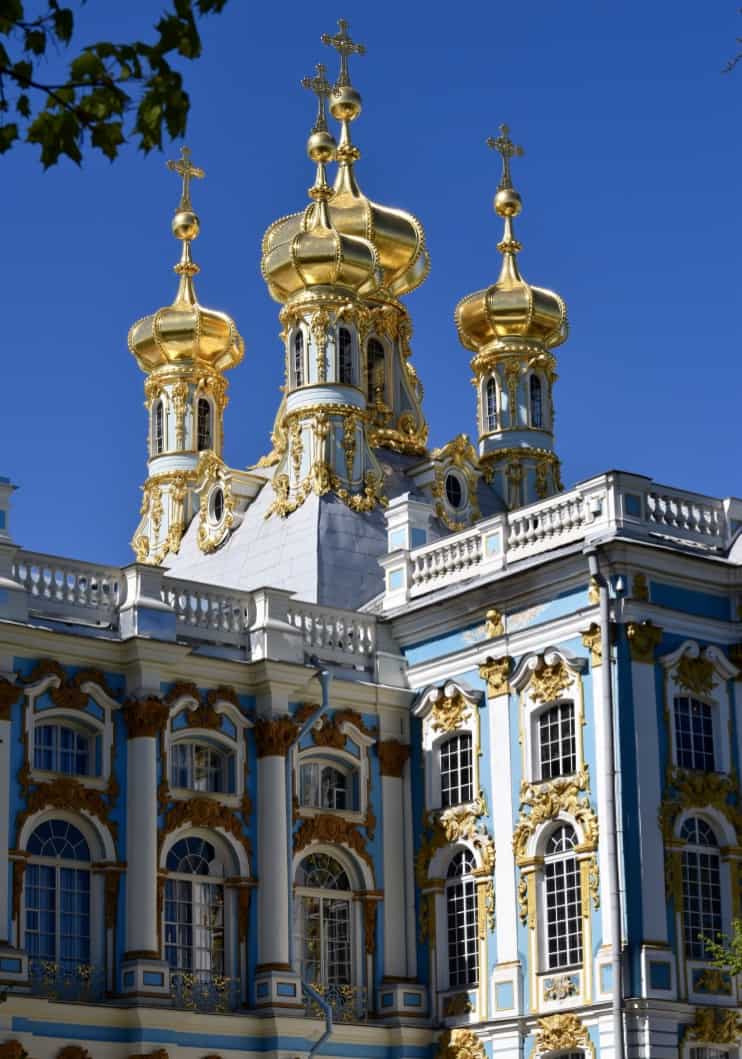
His daughter, the Empress Elizabeth, expanded the place and laid out the famous Grand Cascade, and she gave the palaces their look, blue and white Italian baroque picked out in gold, with gilded domes on the palace church.
Not every Romanov was so refined. Marianna told us of the Empress Anna, a cousin who held the throne in between, by repute a cruel woman who had serfs drive animals toward the palace so she could shoot them from a second-floor window.
The Winter Palace and the Hermitage. The Winter Palace, on the Neva, was the heart of the city.
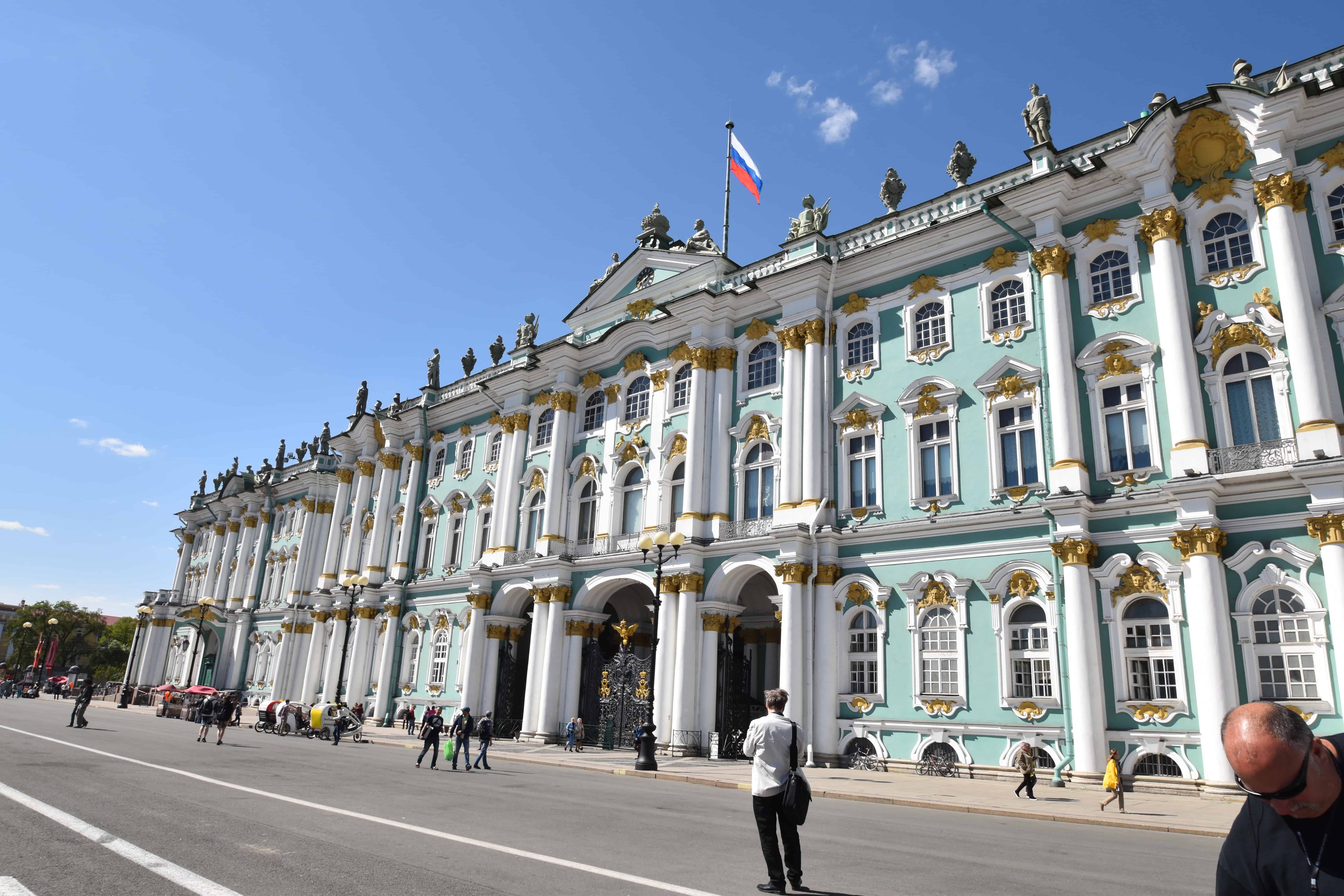
It was Catherine the Great who made it famous. She came to power in 1762 by conspiring against her own husband, Peter III, who obligingly stepped down and was then strangled by her co-conspirators a few days later, and buried, like all the Romanovs, in the Peter and Paul Cathedral. Catherine built herself a private annex onto the Winter Palace, a place to slip away from the court and enjoy her art in peace, like a hermit, and that is how the Hermitage got its name.
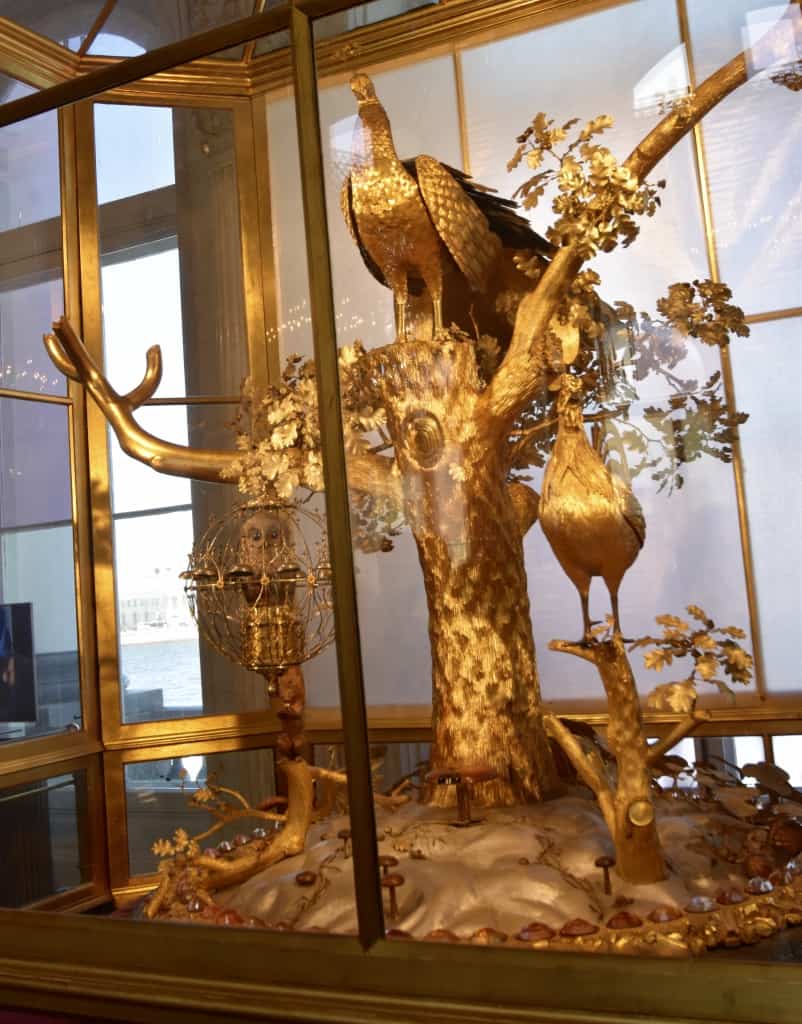
Today it is the third largest art museum in the world. Only about fifteen percent of the collection is ever on display, and Marianna told us it would take eight or nine years to see all of it, which in a city with so few sunny days is at least a way to pass the winters. Among its treasures is the Peacock Clock, an automaton of three life-sized mechanical birds made in the eighteenth century and bought by Catherine in 1781. It is wound once a week, and after more than two centuries it still keeps perfect time.
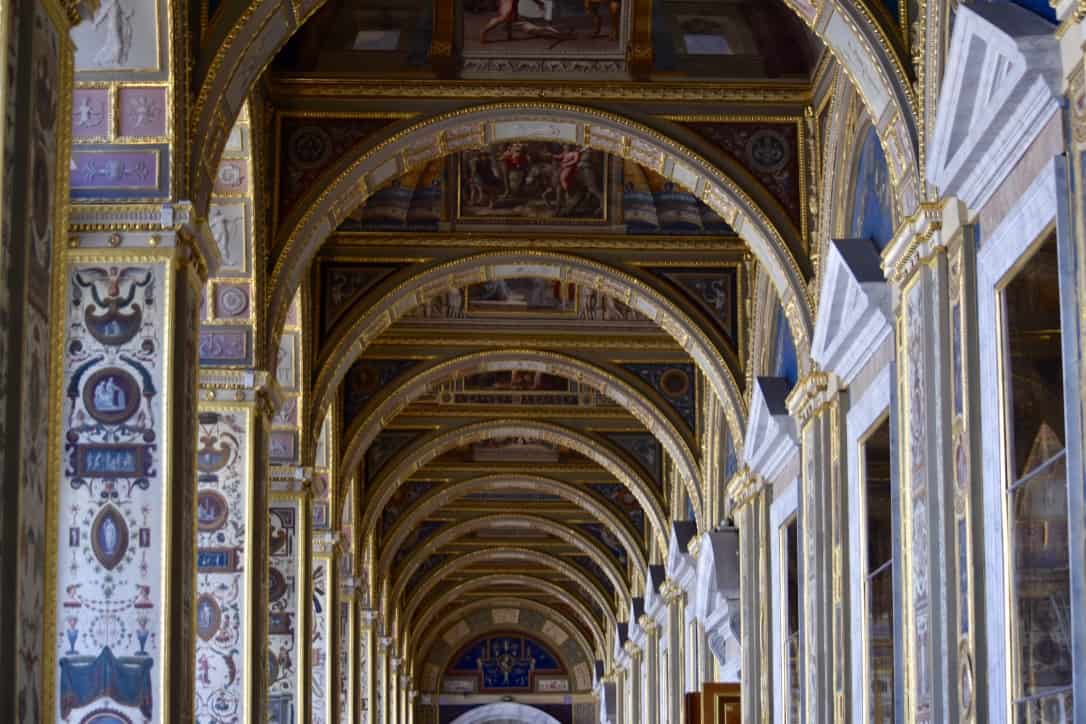
Catherine had a full-size copy made of the Raphael Loggias from the Vatican.
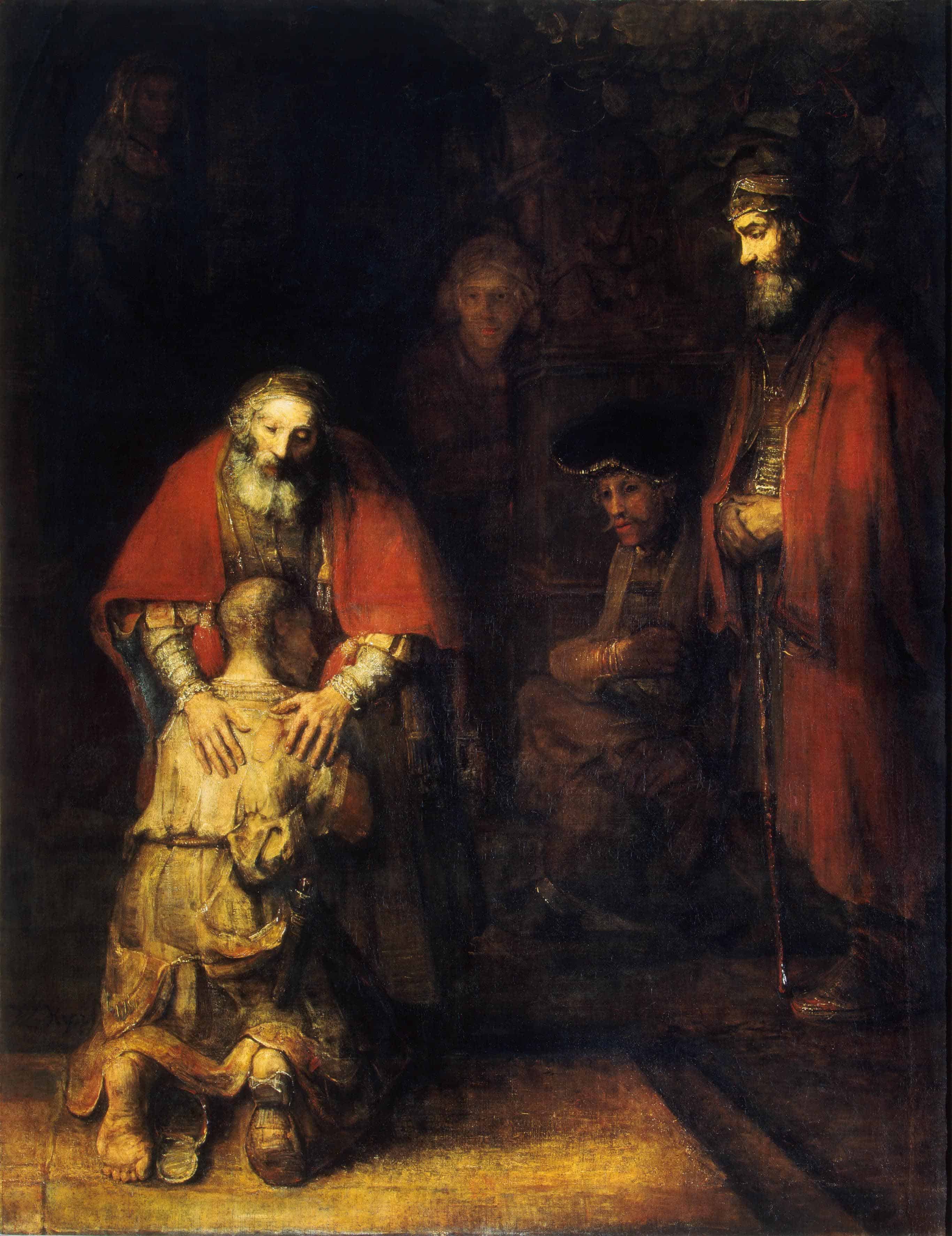
The painting that stopped us was Rembrandt's Return of the Prodigal Son, part of a collection that came to Russia when Napoleon's Josephine sold her Rembrandts to Czar Alexander I.
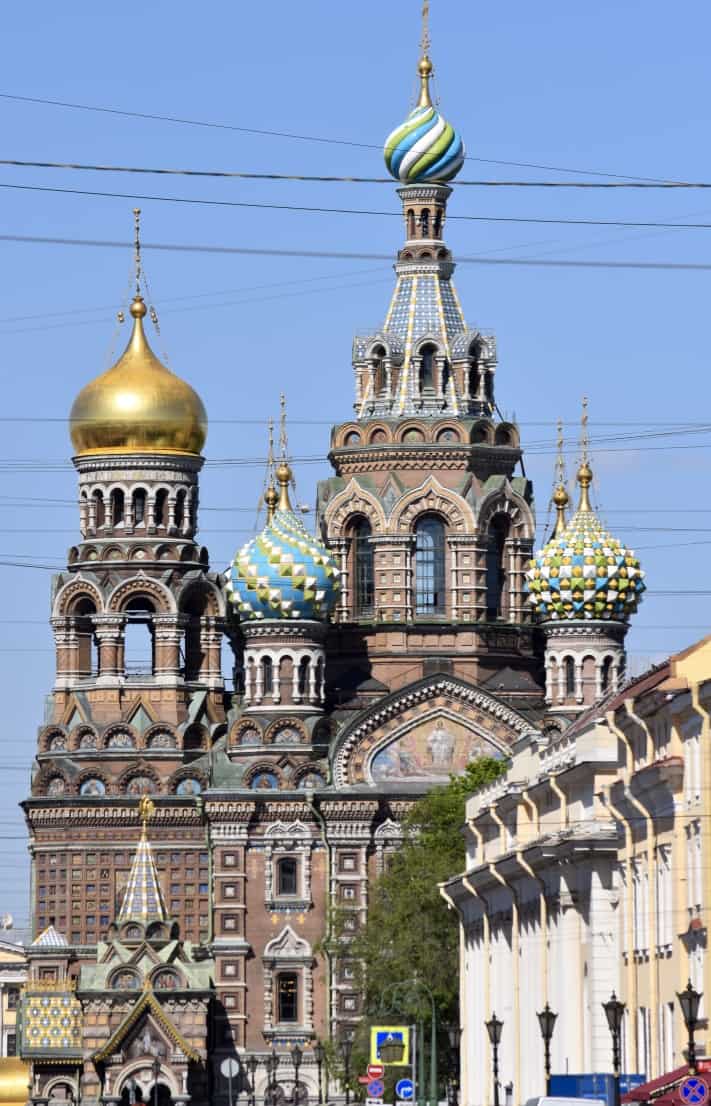
The Church of the Savior on Spilled Blood. This one we will not forget. It stands on the exact spot where Emperor Alexander II was killed by a bomb thrown at his carriage in 1881. He had been a reformer, the czar who freed the serfs in 1861, and he had survived several attempts on his life before the one that took him. The church went up between 1883 and 1907, paid for by the imperial family and thousands of private donors, and every surface inside and out is worked in mosaic.
The Kunstkamera. Marianna pointed out Peter the Great's old cabinet of curiosities, a collection of preserved oddities he put on display, he said, to show what bad habits like too much vodka could do to a body. The guides joke that anyone who goes in never comes out, and that you are offered a shot of vodka for courage on the way. We took a pass.
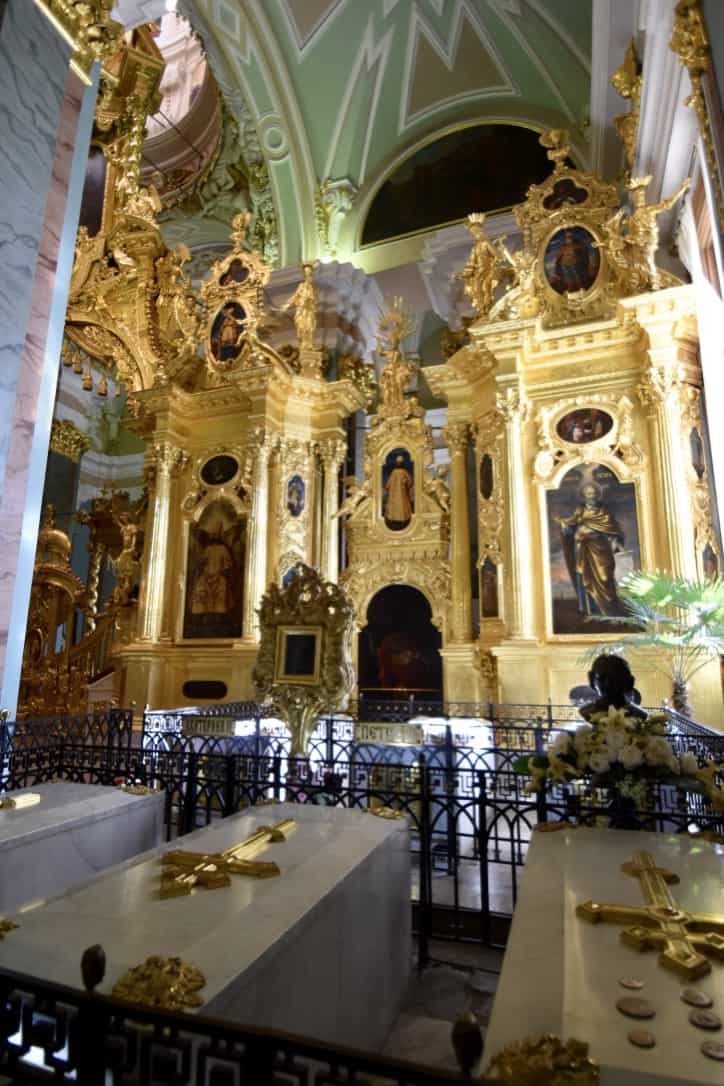
Peter and Paul Fortress. The first thing Peter built, in 1703, and so the birthplace of the city, the fortress never fired a shot in defense. It became a prison instead, holding some of Russia's most famous political prisoners, and the cathedral within it is where the Romanovs are buried.
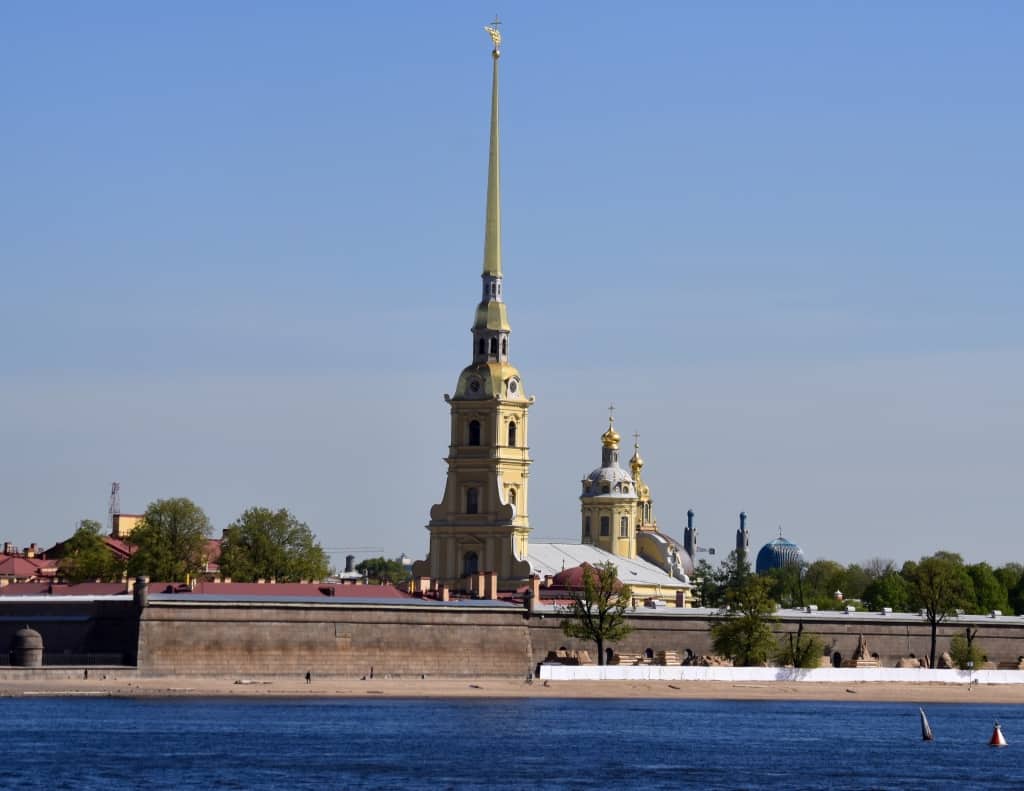
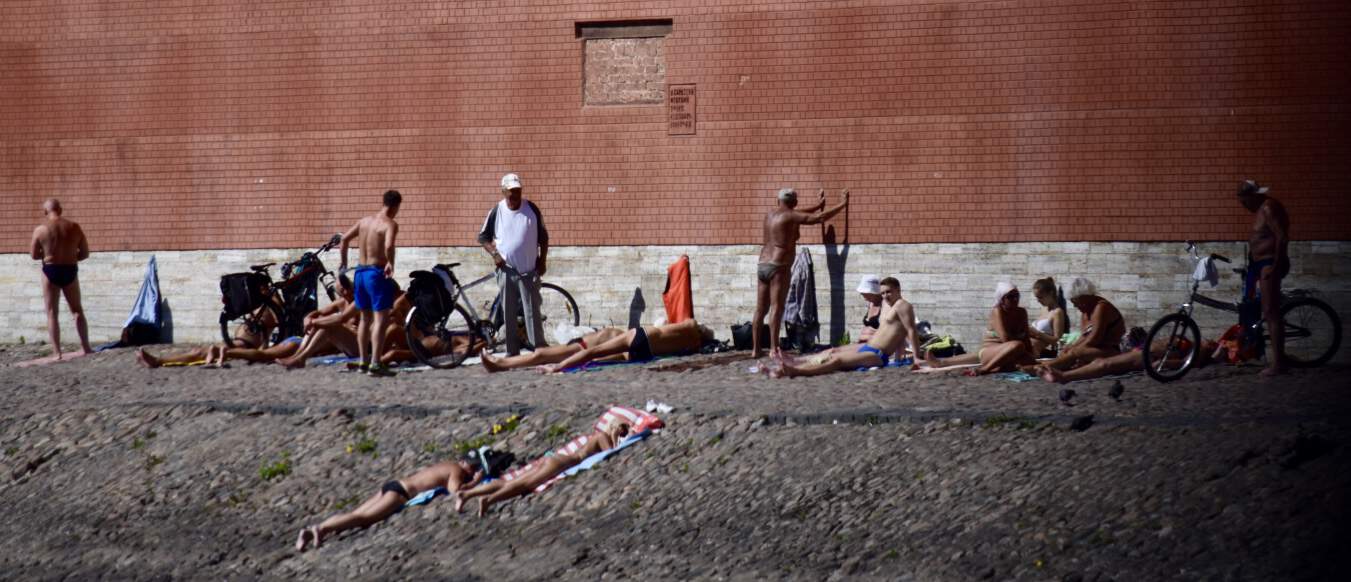
The old prison walls have found a gentler use. Whenever the sun is out, the same hardy crowd turns up to sunbathe and swim along the fortress beach, no matter the temperature.
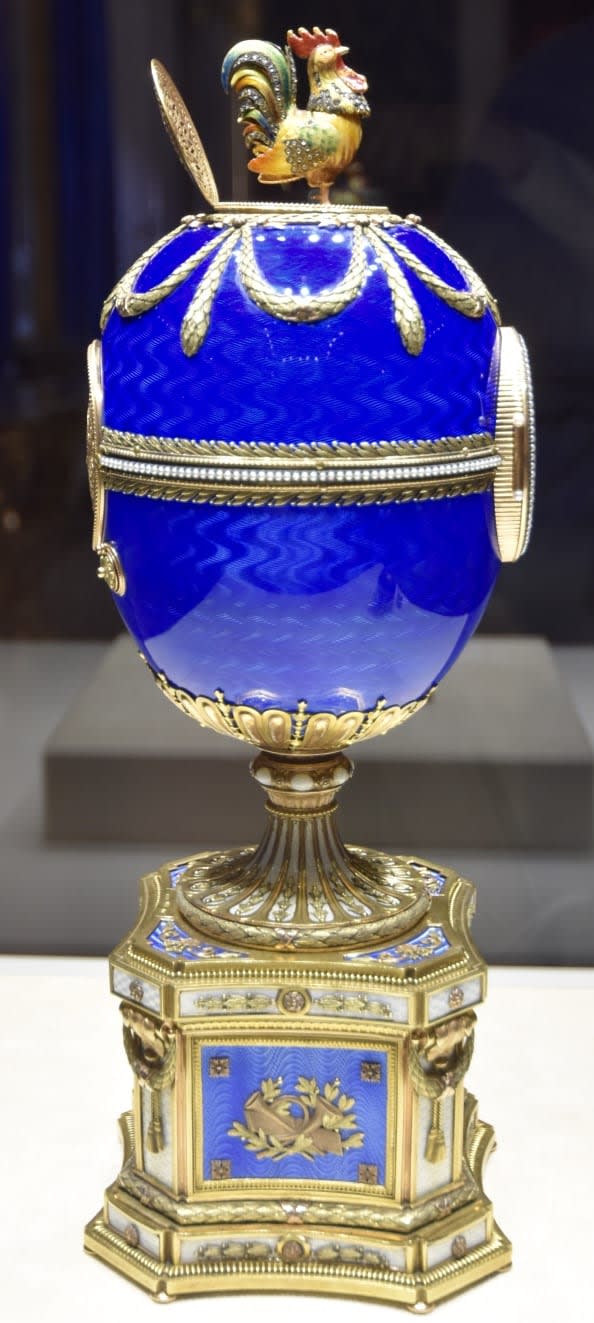
The Fabergé Museum. We had the treat of the Fabergé Museum. The first of the imperial eggs, the Jeweled Hen, was made for Alexander III to give his wife at Easter in 1885; it opened to a golden yolk, the yolk to a golden hen, and the hen to a tiny crown and a ruby pendant. He liked it so well that he ordered a new egg every Easter, each with a hidden surprise, and Fabergé let the designer choose the surprise so that even he could not give it away when the czar asked. Of the fifty-four known imperial eggs, forty-three survive. One turned up in a US antique shop, bought for eight thousand dollars and later sold for millions. The museum owns nine, bought back for Russia from the Forbes collection.
Reconstruction after the war. The Nazis never took the city, but the siege of Leningrad ran more than two and a half years and all but destroyed it. Much of the art had been crated and shipped to Siberia for safekeeping, and the palaces and churches had been measured, drawn and photographed in detail beforehand. After the war the Soviet Union spent hundreds of millions putting it all back exactly as it had been, a job that still goes on. The churches today are largely museums, with worship kept to a small corner of each.
We left after two packed days with a real fondness for the place. We had seen it mostly through a tour window, so we cannot claim to know its people, but Marianna was wonderful company, even if she does think Vladimir Putin is a rock star, a view he did his best to confirm by lacing up and skating in a hockey game that very evening. And John gave the trip its last laugh at passport control, where a stern young officer kept glancing from his unsmiling face to his grinning passport photo until she asked him, please, to smile. He did, told her how pretty she looked when she smiled back, and turned her beet red. Then we were back aboard and sailing on to the Baltic capitals.