Dateline November 27, 2022, Oman, the Emirates, and Dubai
The four days at sea brought us at last to the Arabian shore, and to the new cities the oil age has raised there.
Muscat. We made several calls along the coast of Oman and chose to go ashore at Muscat, the capital, with a guide. Oman is reckoned the oldest independent state in the Arab world, with the oldest ruling family in the region; at its height in the eighteenth century its empire reached from here down the east coast of Africa. A new chapter opened in 1970, when Sultan Qaboos bin Said came to the throne and shortened the country's name from the Sultanate of Muscat and Oman to simply Oman. Our driver told us that a dirty car will earn you a ticket here; the roads are kept so spotless they might have been in Disneyland, and most of the city is new, built up out of the oil years.
The Grand Mosque. Our first stop was the Sultan Qaboos Grand Mosque, opened in 2001, three decades into the Sultan's reign. It is enormous, set on more than forty acres; the main prayer hall holds some six thousand five hundred worshipers, the women's hall seven hundred and fifty, and with the courtyards and passages the whole can take perhaps twenty thousand. The chandeliers are great masses of Swarovski crystal, and the carpet beneath the main hall, a single piece, took four years to weave. The tall minarets carry the speakers that sound the call to prayer.
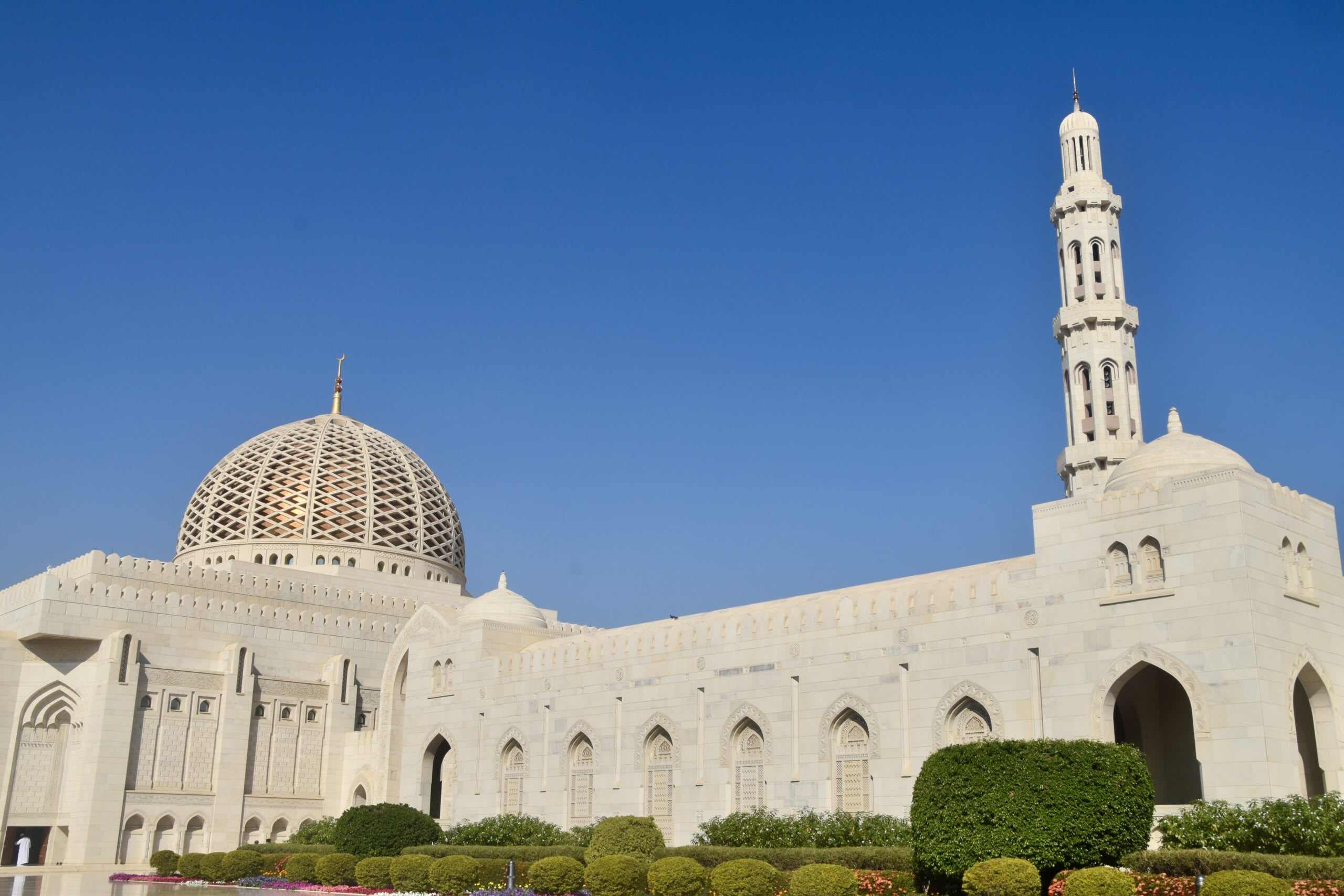
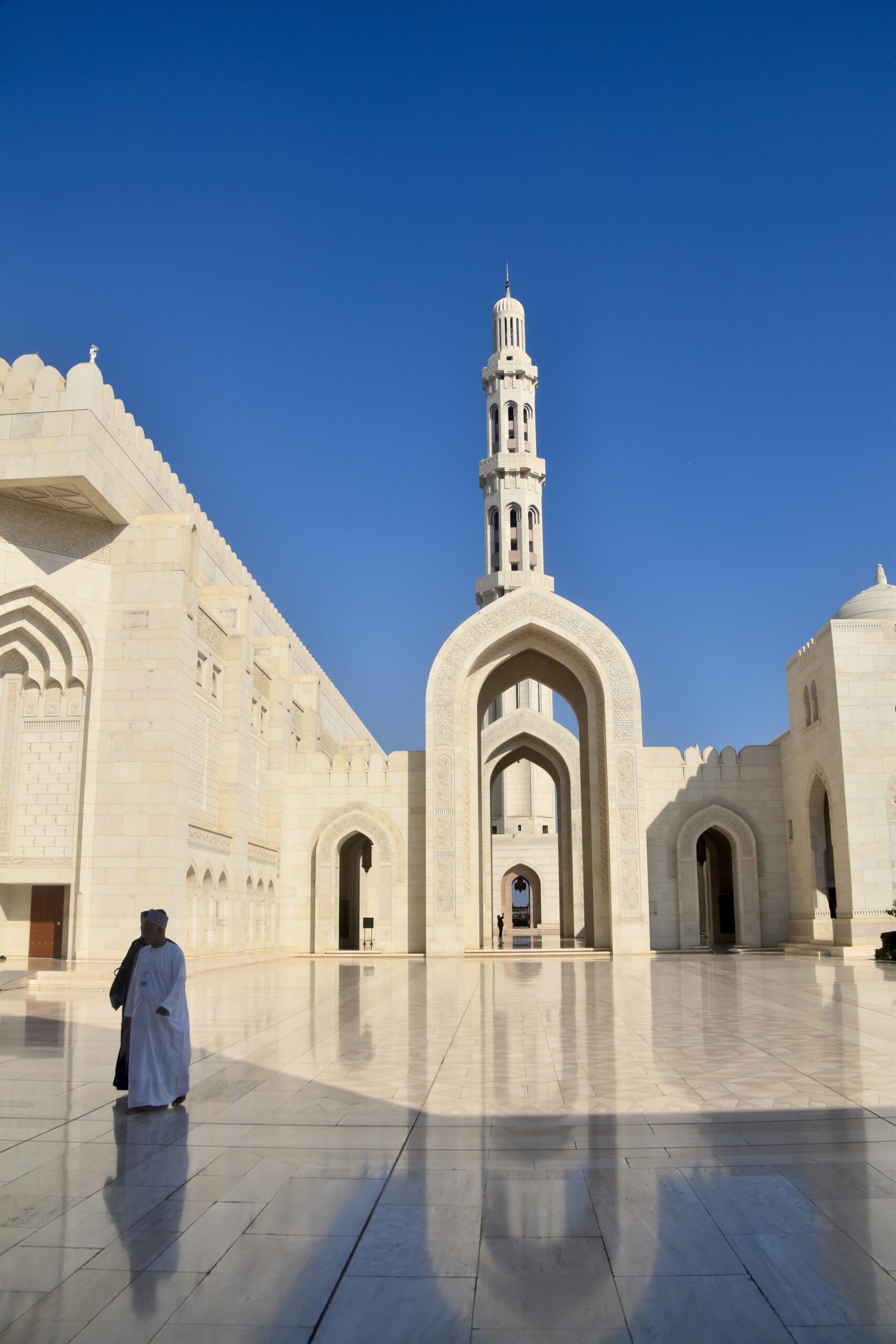
Before prayer the men wash at a fountain, the face and arms and hands and feet, a cleansing they call wudu; they pray five times a day. Janice asked our guide why the men and women pray apart, and without missing a beat he grinned and said that if a man happened to glance up while the women were bowed in prayer in front of him, he might find the view a touch distracting. An American standing nearby overheard, took it upon himself to stop and deliver the solemn religious reason, and managed to find no humor in any of it, which rather took our guide aback. The plainer truth is that it is simply part of what they believe.
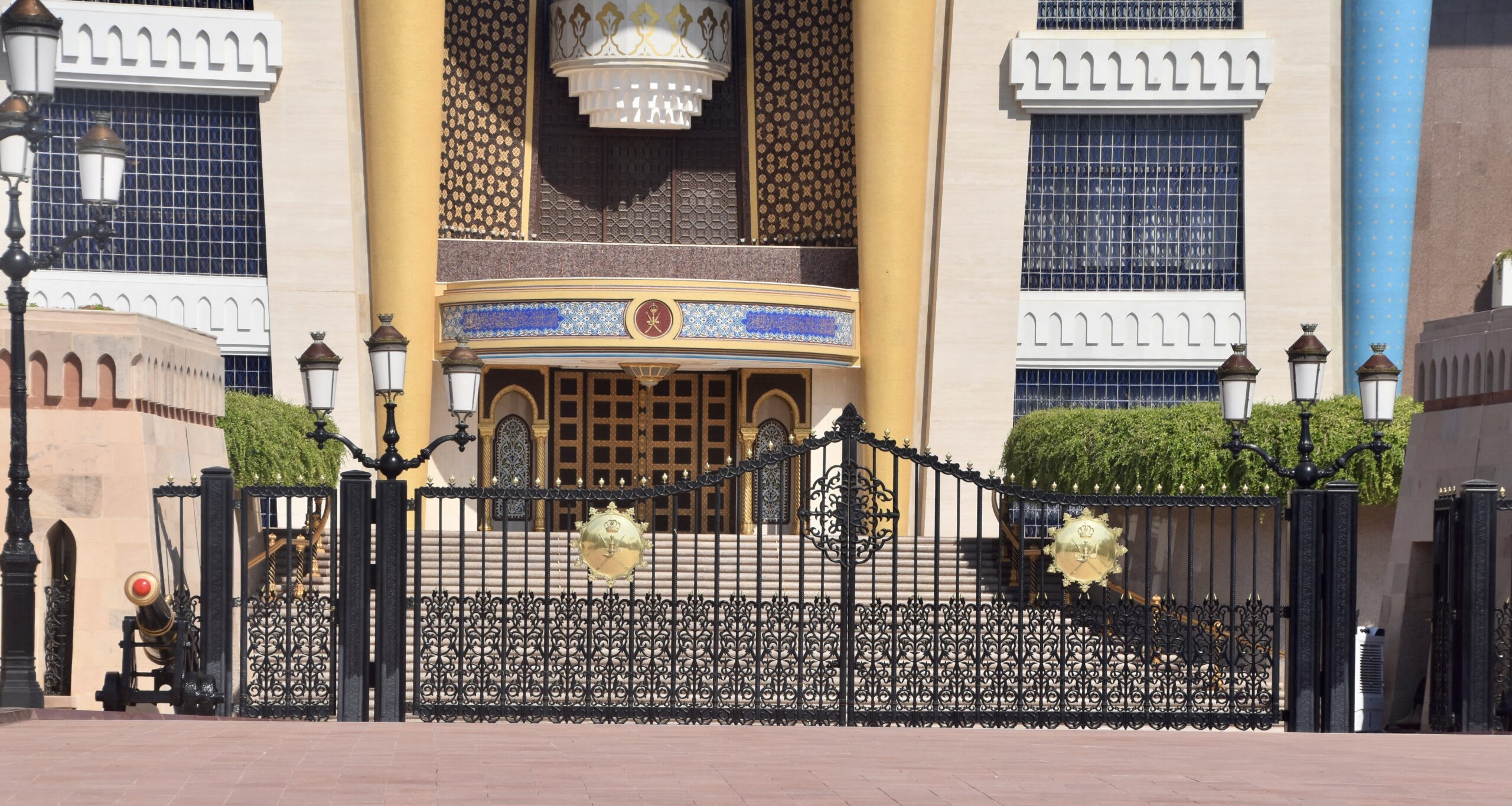
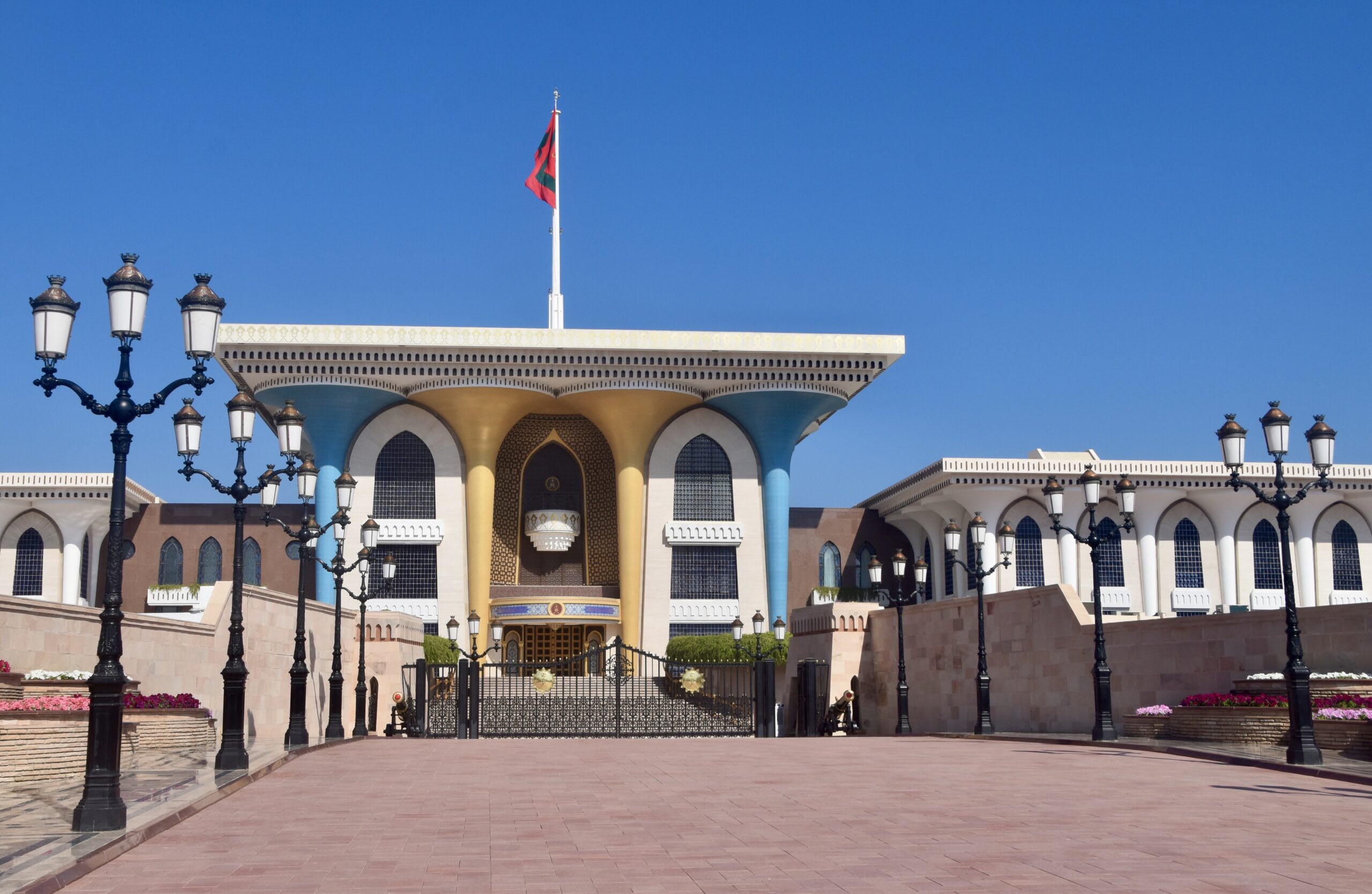
The Sultan's Palace. We drove on to the Sultan's Palace, which we could admire only from the gate, a vast and handsome building on grounds kept immaculate, with workers everywhere gathering up clippings.
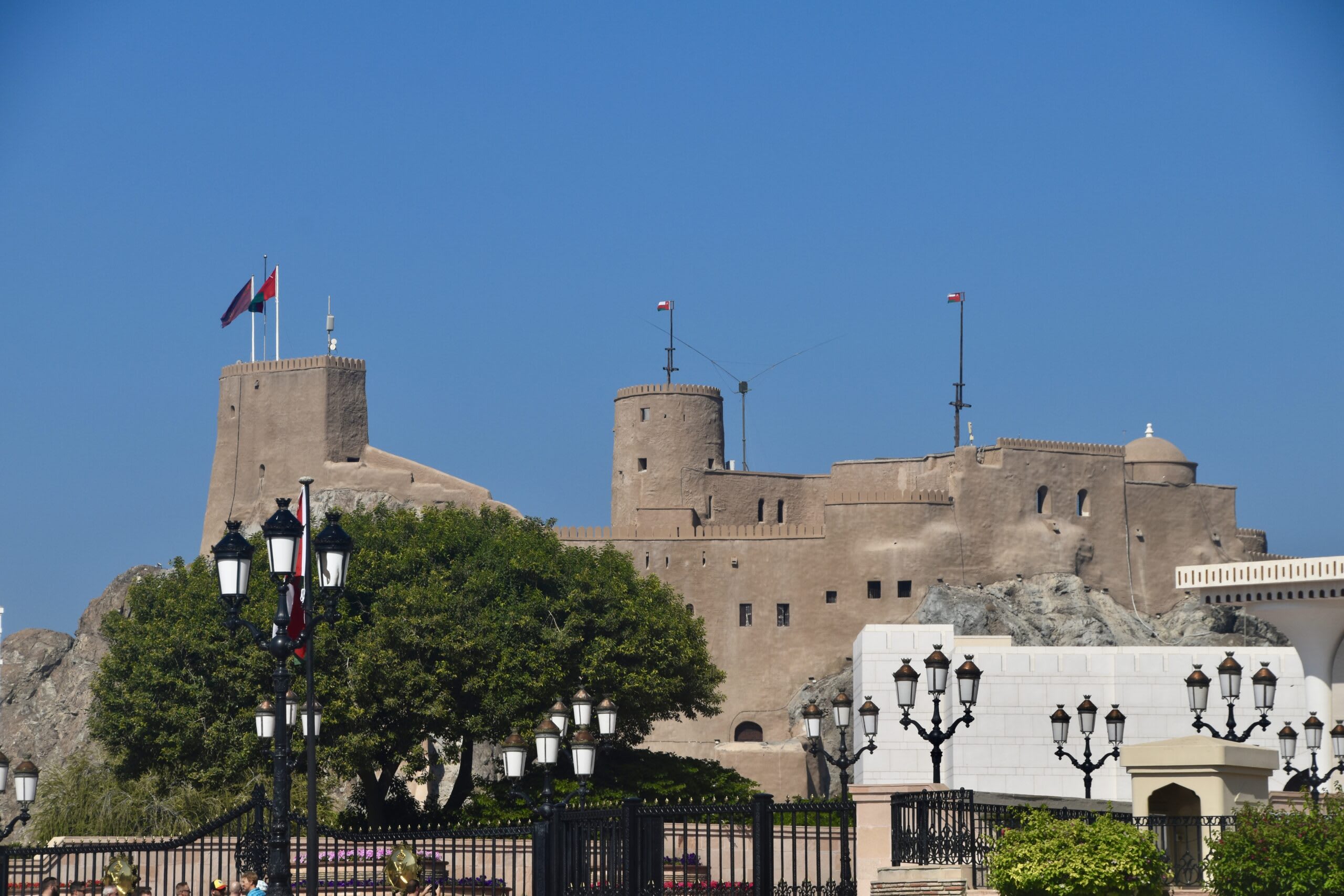
Above it on a rocky height stands the old Al Mirani Fort, left from the years of Portuguese rule and retaken in 1649; it was closed the day we came.
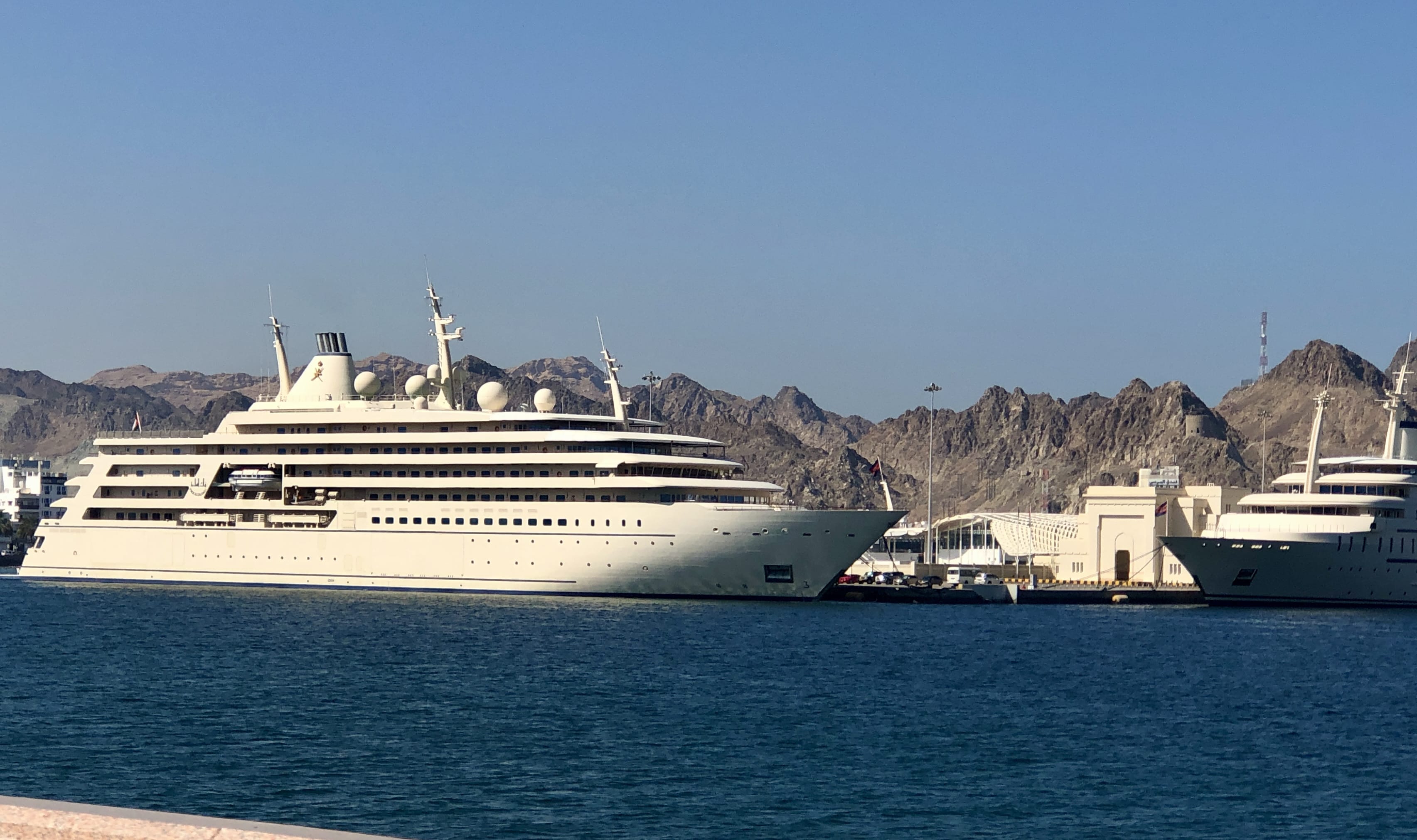
On the way back to the ship we passed two great private vessels, both the Sultan's. One, the Al Said, is among the largest private yachts in the world, better than five hundred feet, built in Germany in 2008, with a concert hall inside big enough for a fifty-piece orchestra, quarters for sixty-five guests, and a crew of a hundred and forty. Money, money, money.
Abu Dhabi. Our next port was Abu Dhabi, on the Persian Gulf. We could find nothing in particular we wanted to see, so we climbed aboard the Big Red Bus and took the upper deck, glad of its roof as the sun climbed higher. Abu Dhabi is the capital of the Emirates, established as such in 1971, all of it new and gleaming; relics have turned up in the area from ten thousand years back, but, unlike in Egypt and Jordan, they seem to be tucked away out of sight.
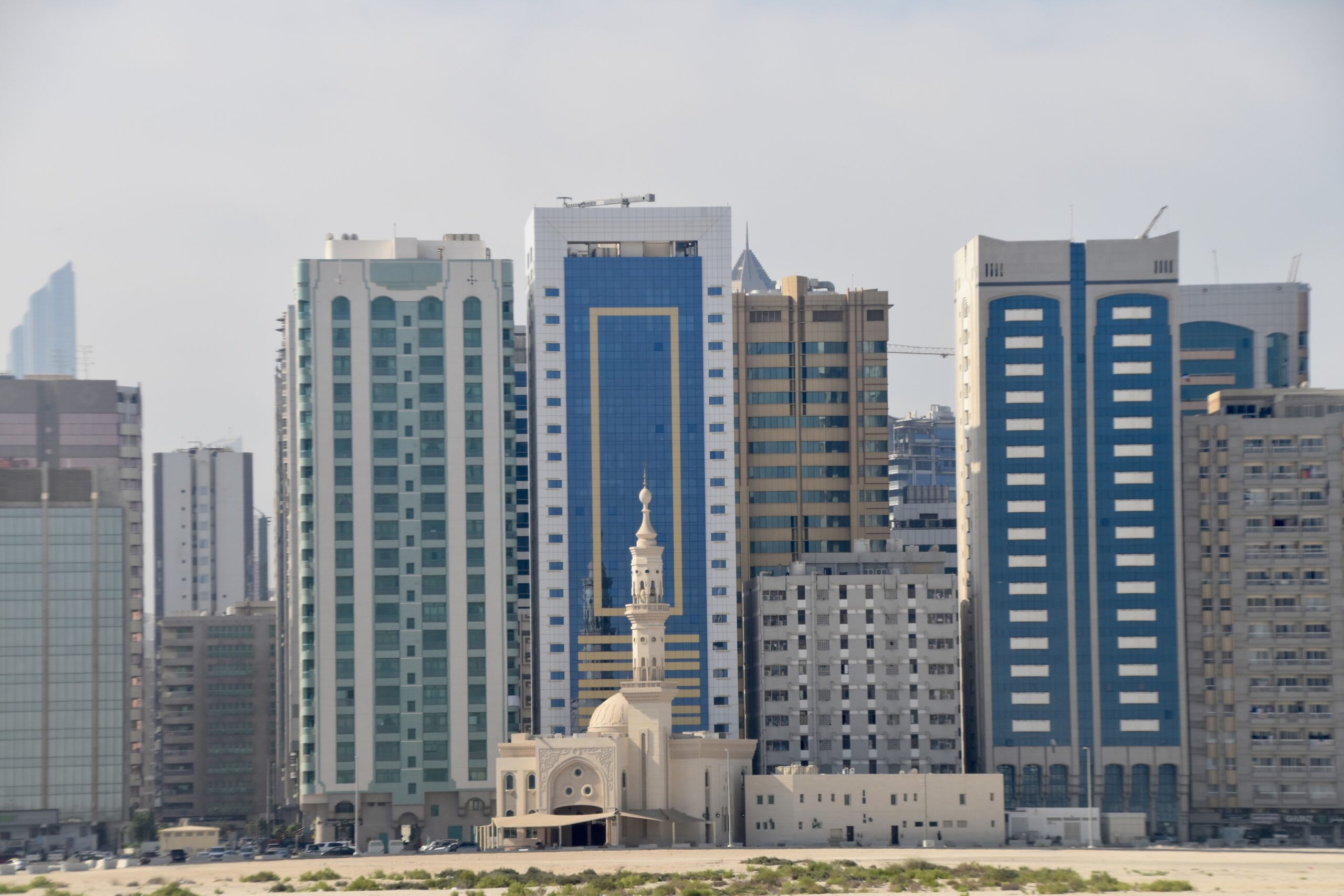
They keep enlarging the city by making islands and raising fresh housing on them; we were told that some land had been left to the Bedouin to live as they always have, though we never saw it, and that the government had built free housing for all, "free" left undefined. Out on a man-made island they are building a grand new museum, the Zayed National Museum, in honor of Sheikh Zayed, the father of the country. At one point the recorded narration on the bus thanked the United States for the thirty billion dollars we had given toward an oil-research building. Thirty billion. We could have used that at home.
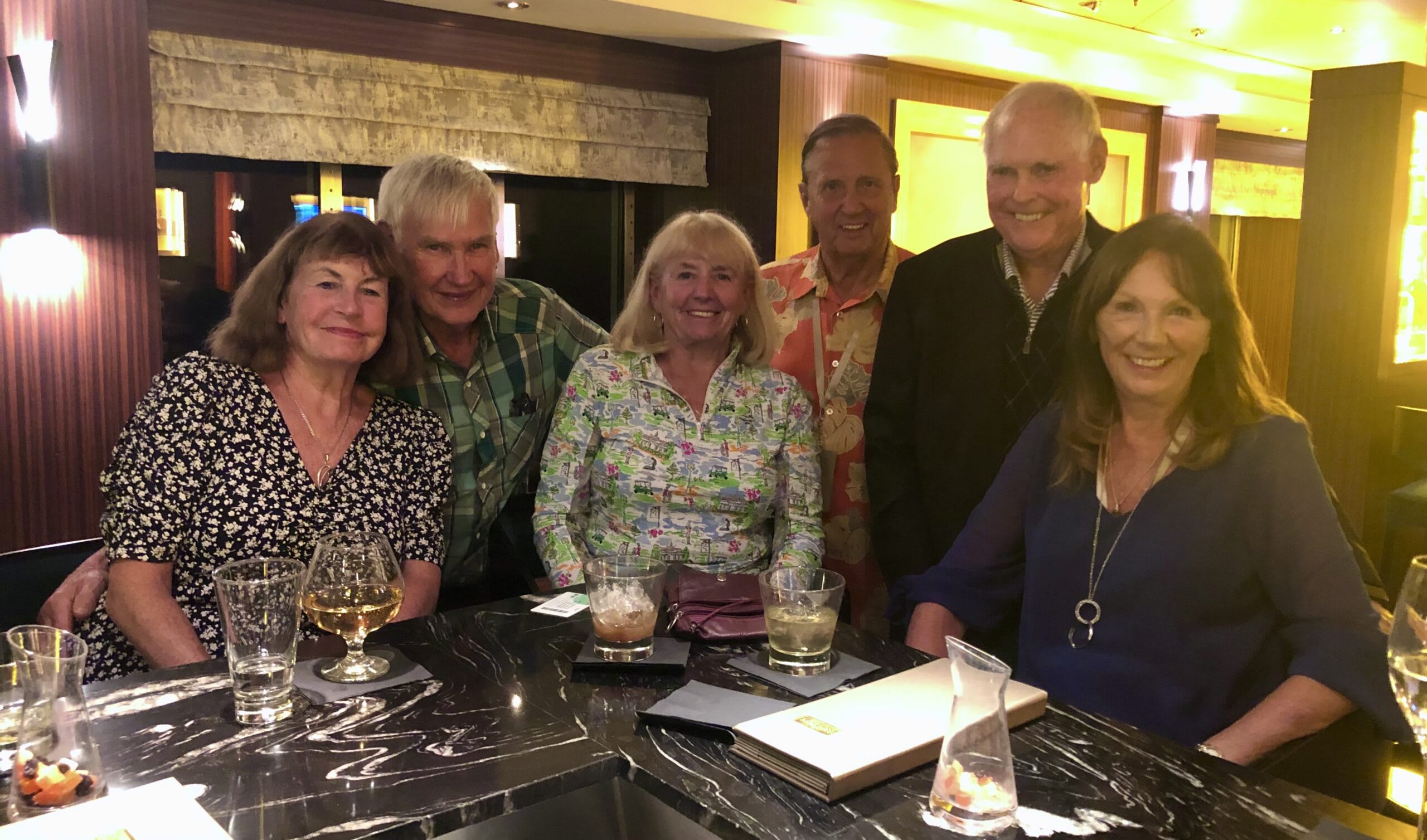
Dubai, and the end of the cruise. Dubai was our last stop. That evening we had cocktails one more time with our British and Scottish friends at the Martini Bar, said our goodbyes to them and to the fine crew, and went off to a lovely dinner at the ship's French restaurant, Le Bistro. We had meant to spend a few days in Dubai, but the rule at the time was that you needed every Covid shot and booster to stay, and we had decided against any more of them, so we changed our plans to fly straight to Cairo instead. They lifted the requirement just before we sailed, too late for us, and we did not mind much; we love history, and Dubai struck us as one more big shiny city without any. We left the ship for the airport and our flight back to Cairo, to finish our Egyptian travels and to see Alexandria.