Dateline July 18, 2017, Plains and the Jimmy Carter Library
After our morning round at Georgia Veterans, we had seen the signs for Plains, Jimmy Carter's hometown, and with the GPS to guide us we drove over for the afternoon.
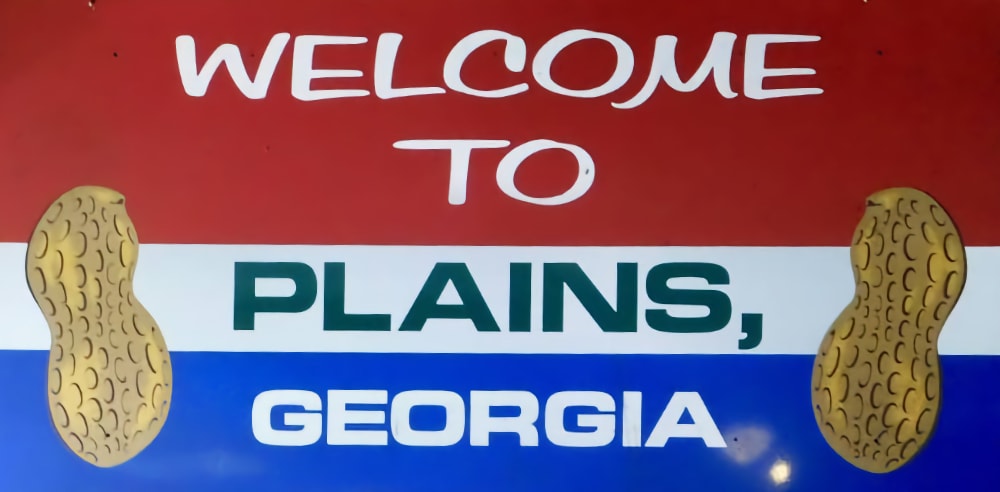
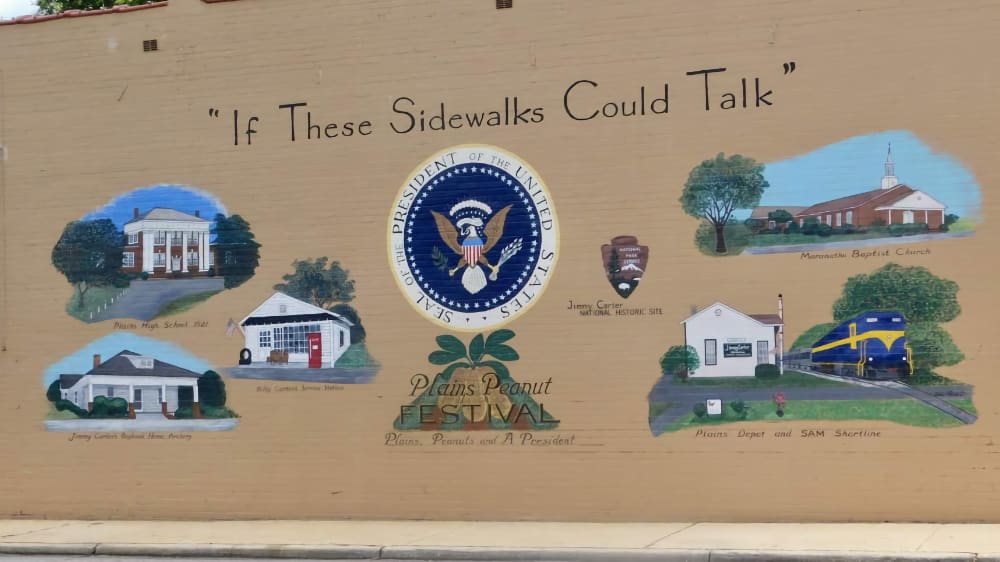
Plains, Georgia. Just before town there is a visitor center that lays out where everything is, which is a little funny when you realize the whole place fits inside a square mile, maybe less. Downtown, a long mural runs along one wall under the title "If These Sidewalks Could Talk," with the town's landmarks painted across it: the high school, the boyhood home, Maranatha Baptist Church, brother Billy's service station, and the old depot.
We drove out past the Carter home. The President and Rosalynn still live there, and the house you see from the road is only for the Secret Service; their own home sits back in the trees, out of sight behind the gate. It is the first and only home the two of them have ever owned. We turned around and came back into town.
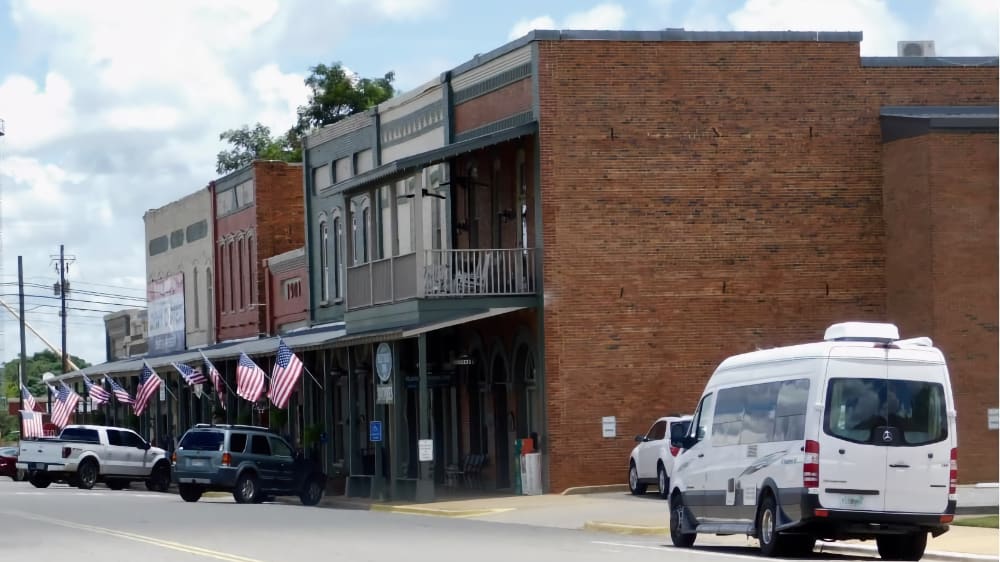
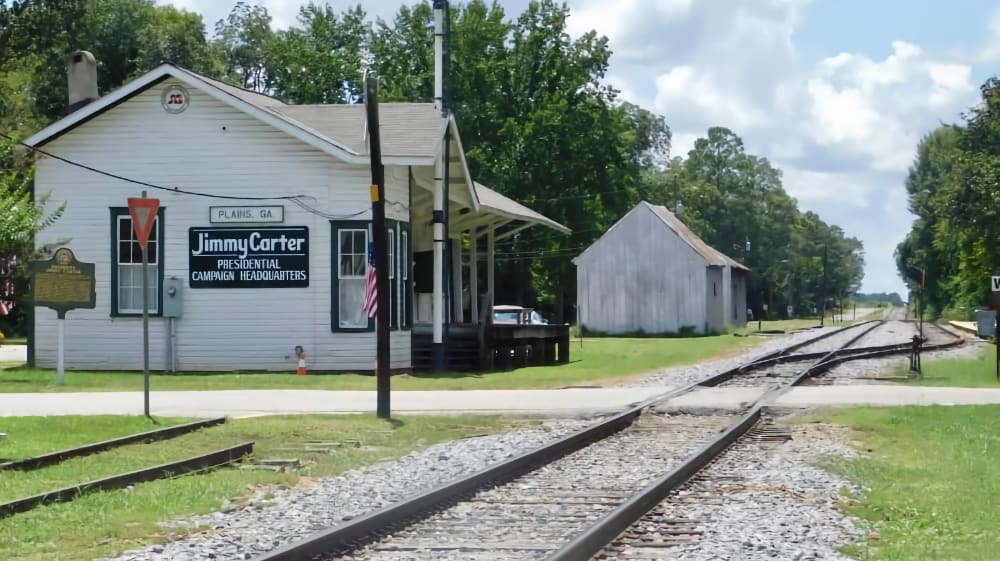
The campaign depot. The little train station in Plains served as the offices of Carter's presidential campaign and is now a historic site.
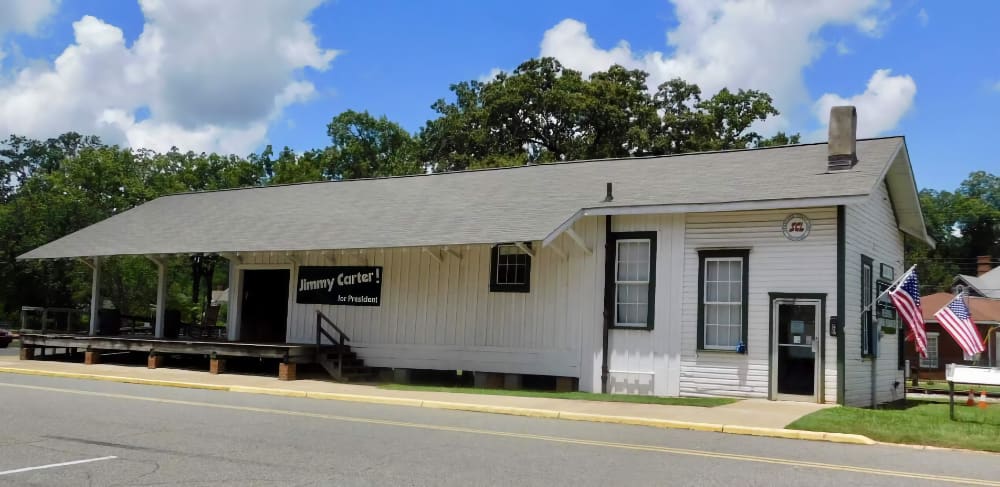
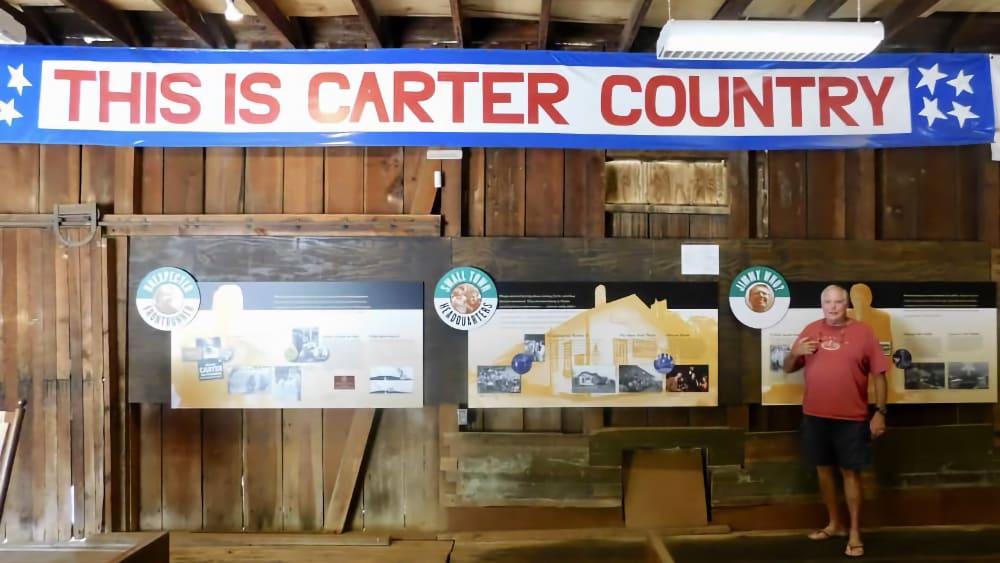
Inside, the old building is hung with banners and exhibits from the campaign, and John could not resist a photo under the one that says it best.
The memorabilia man. One of the stores held a remarkable collection of presidential campaign memorabilia, and the owner was a real character. He told us about the politicians and former presidents who had wandered into his shop over the years, and explained that he carries only items actually made by the campaigns, winners and losers alike, going clear back to Woodrow Wilson. Some of his buttons run as high as two hundred dollars, the Wilson among the dearest. He had a story for everything, and when a new couple came through the door, we told them what a treasure he was and slipped out while they took our place.
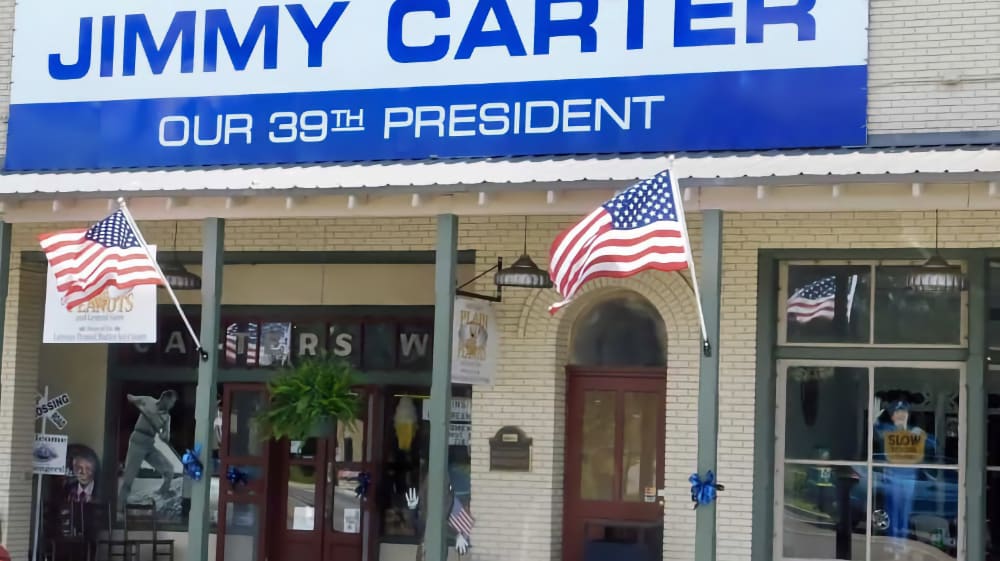
Then we stopped at the Peanut Store. Carter's father owned a large peanut farm, which Jimmy took over when his father died, before he ever went into politics, so peanuts are the pride of Plains. We tried fried peanuts and peanut ice cream, and it was spectacular. With the walk about done, we headed back to the state park for a good night's sleep, with the Carter library in Atlanta on the schedule for the next day.
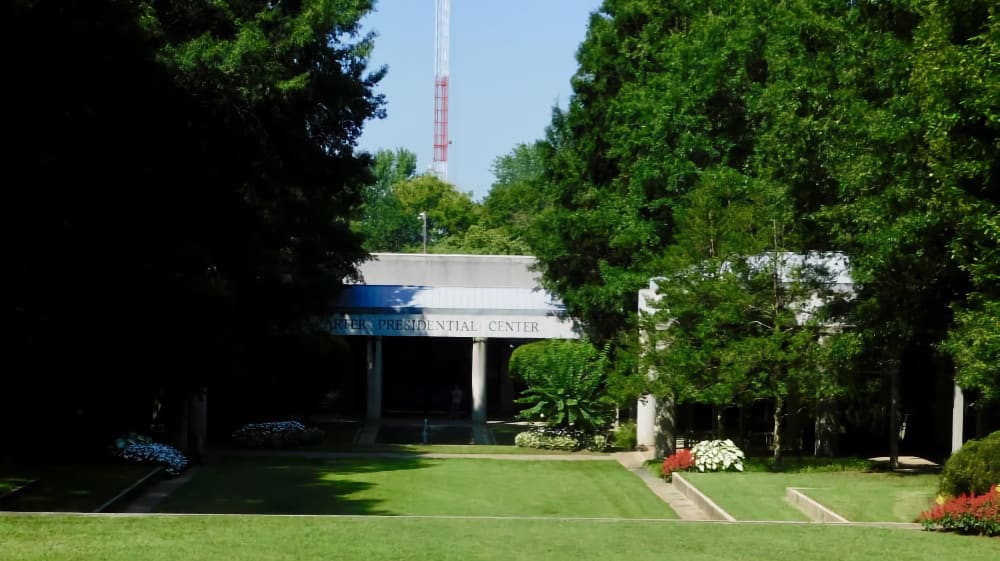
The Carter library. The library is beautiful inside, though it leans more toward his life before and after the presidency than the four years in office. His great challenges as president were the energy crisis and runaway inflation; some of us still remember waiting in line for gas, and Janice has not forgotten the twenty-one percent interest on her first mortgage.
One thing that does stand out from his term is the Camp David Accords. In 1978 Carter brought the Israeli prime minister Menachem Begin and the Egyptian president Anwar Sadat to the table, and out of it came a peace: Israel gave back the Egyptian land it had taken in the 1973 war, and Egypt became the first Arab nation to recognize Israel. Begin and Sadat shared the Nobel Peace Prize for it, and the two countries have not gone to war since.
A wonderful humanitarian. In truth, Carter may have done more good after his presidency than during it, through the Carter Center alongside the library. He took on Guinea worm disease, a brutal tropical affliction that struck an estimated three and a half million people in 1986; by 2014 it was down to little more than a hundred cases, and it looks set to become the first human disease wiped out since smallpox. He gave Habitat for Humanity a great lift, started a group that monitors elections around the world, traveled to dozens of countries in its service, and was himself awarded the Nobel Peace Prize in 2002.
We have now seen all but two of the presidential libraries, and we came away from this one with the same feeling the others have left us, a quiet wonder at what these people gave to the country. It makes you see the nasty rhetoric between the parties for what it is, which is to say not important. Every one of these men did the best he could for all of us, and whether or not we always agreed, our thanks go out to each of them.