Dateline May 27, 2025, Visiting the National WWII Museum
After spending months on Jack's Story, John reached out to the National WWII Museum in New Orleans to share what he had, his father's wartime letters and photographs and the Silver Star awarded him during the Battle of the Bulge. One of the curators, Chase Tomlin, wrote back to say the museum would be interested in talking about a donation.
When the book came out in November, John reconnected with the museum, and we knew we wanted to make the gift in person. As the new year began, we were introduced to Derrick Strassburg, one of the museum's senior fundraising leaders, through Sara Blackburn, a longtime friend of John's sister. Sara had been talking with Derrick about her own father's collection of World War II photographs. So we built a trip around Memorial Day to visit both Chase and Derrick, and it became an experience we will never forget.
Arrival in New Orleans. Fayetteville, home of Fort Bragg, is only forty-five minutes from us, and we love flying out of there. It is one of those rare airports where it is barely a hundred steps from the parking lot to check-in, maybe a hundred and ten if you are carrying a suitcase and a coffee. You can practically wave at the TSA agent from your car. We left early and landed in New Orleans by a quarter to nine. We had planned only to drop our bags and find breakfast, but our hotel room was already waiting, so after a short rest we set off on foot for the museum, an easy fifteen-minute walk in perfect weather. Derrick had arranged our credentials and tickets at the Will Call desk, and Chase was to meet us there for a one o'clock appointment. First, though, we had lunch at the museum's own restaurant, The American Sector, fried Gulf oysters and a fresh salad, a relaxed and delicious way to ease into the day.
A museum with roots and heart. We thought we knew what to expect, big exhibits, a lot of history, probably some tanks. But the story of how the place came to be pulled us in as much as anything inside it. It began in the early 1990s with the historian Stephen Ambrose, the same man behind Saving Private Ryan and Band of Brothers, who believed with his University of New Orleans colleague Nick Mueller that the country needed a place to honor the American experience of the war. When the doors opened in 2000, on the fifty-sixth anniversary of D-Day, it was more than a collection of artifacts; it stood on sacred ground. The site had once been the Higgins Industries boatyard, where Andrew Higgins designed the shallow-draft Eureka boats that became the Higgins boats, the landing craft that carried soldiers onto the beaches of Normandy and a hundred other shores. Janice's father commanded them in the Pacific as a Coast Guard officer. In 2006 Congress named the place America's National WWII Museum, and today it spreads across six acres and seven pavilions. What stayed with us was that it still carries its founders' first purpose, to make the history personal and to keep it from being forgotten.
A conversation with the curator. Meeting Chase Tomlin was less a museum tour than an afternoon with a thoughtful historian who happens to guard thousands of untold stories. As an associate curator he weighs donations, shapes exhibits, and sees that what is entrusted to the museum is kept with care. He is in his early thirties, one of a younger generation of historians who do not only study the past but bring it to life, and you can tell the work is a calling rather than a job. He walked us through the archive in a quiet conference room. The museum receives nearly four thousand unsolicited packages a year, he told us, and only about four hundred make it into the permanent archive. Then he said something that stunned us: the museum holds only two hundred and fifty items tied to the Seventh Armored Division, a hundred of them from a single donor. For so pivotal a unit, the number seemed impossibly small.
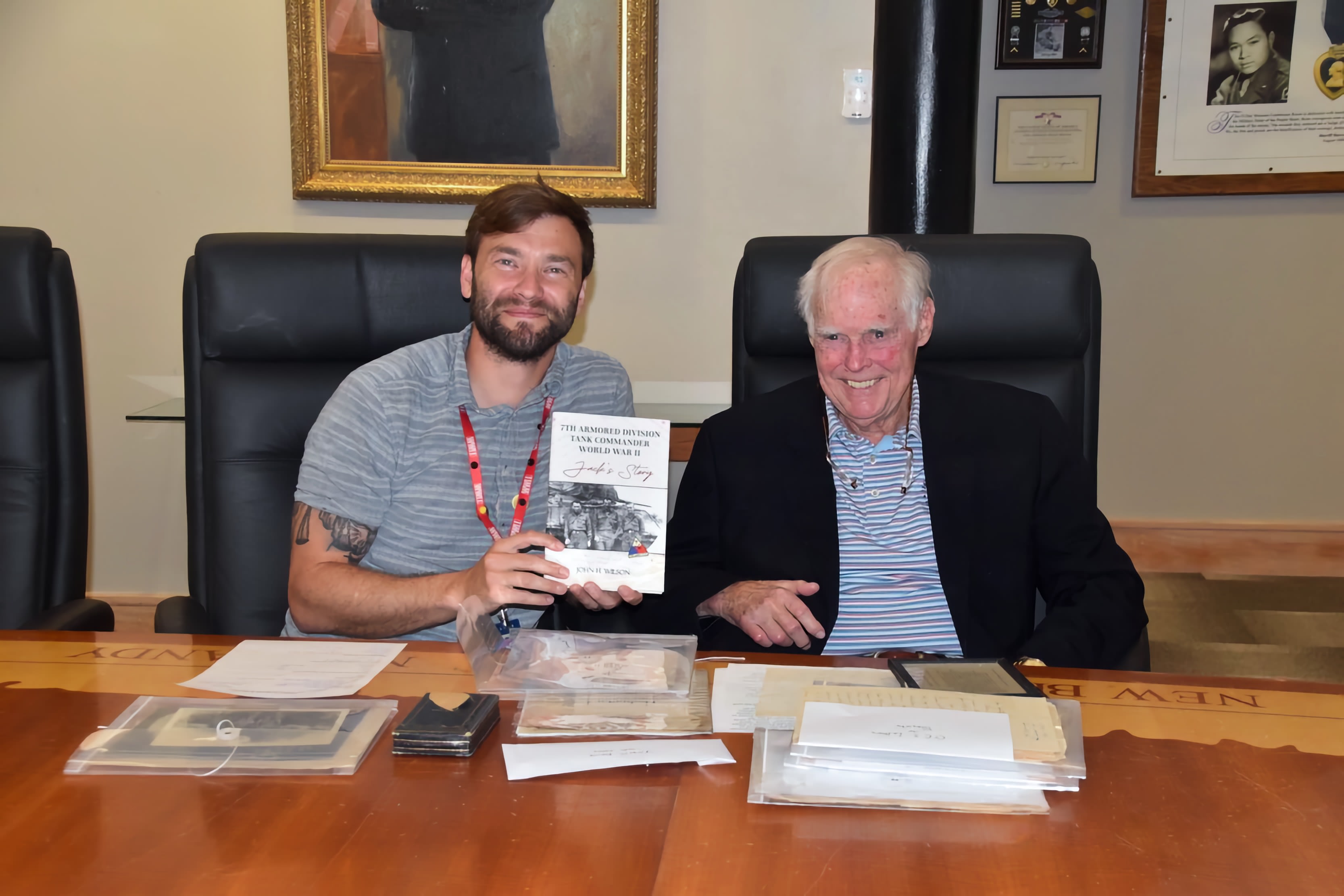
We unpacked John's father's materials, the original letters, the photographs, the discharge papers, the Silver Star citation. Chase studied each piece with quiet focus, asking questions, taking notes, and in the end accepted about ninety-eight percent of what we brought; only duplicates went back. He showed us the staging area where new material waits to be cataloged, a slow path that can run two to three years before an item is ready for researchers. What moved us was not the wait but the respect, every envelope and faded photograph handled with dignity. John felt it deeply. A lifetime of family memory was becoming part of the nation's memory.
The tank and the curator. As we left the archive Chase grinned and asked if we wanted to see the Sherman. Of course we did. He led us to a central hall where a fully restored Sherman tank stood like a silent sentinel, the very type John's father had commanded in the war, not a display so much as a direct line to his father's footsteps.
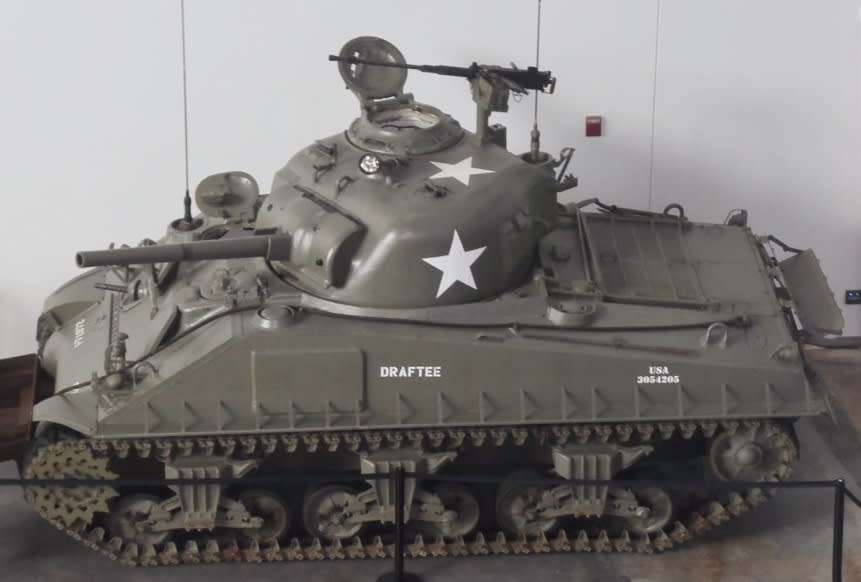
Then came a surprise: Chase is one of only two people at the museum trained to drive the Sherman. When it has to be moved for an event or for maintenance, he is the one at the controls, and he told us what it feels like in that cramped driver's seat, how the gears answer, how people react when they hear it rumble across the floor. It was history you can hear and feel and very nearly smell.
Beyond All Boundaries. From there we went into the Solomon Victory Theater for the film Derrick had promised would stay with us. Beyond All Boundaries is not a documentary so much as a full-sensory experience, a thirty-minute production by Tom Hanks built by more than five hundred historians, technicians, and designers, with layered screens, stage effects, motion, and even falling snow that drops you into the middle of the war.
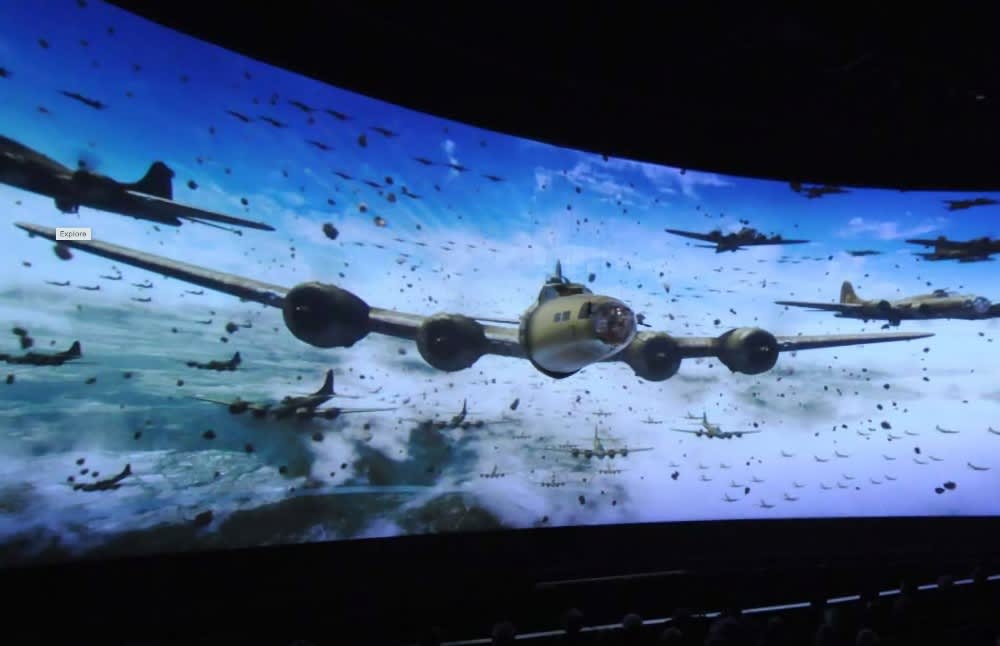
A nineteen-forties radio rises from the stage to deliver the news of Pearl Harbor, the seats shudder with tank fire, planes roar past, the cold of a European winter brushes your skin. Voices of soldiers and reporters, read by a cast that includes Gary Sinise, Viola Davis, Neil Patrick Harris, and Kevin Bacon, carry the war's staggering cost, more than seventy million lives. What struck us most was that the film does not look away from the darkness; it honors the courage and the sacrifice, but it also faces the concentration camps and the firebombed cities and the grim arithmetic of a global war. The local paper, the Times-Picayune, called it a magnificent and moving spectacle, and that is fair, though it is also a heart punch, a reminder of why these stories matter.
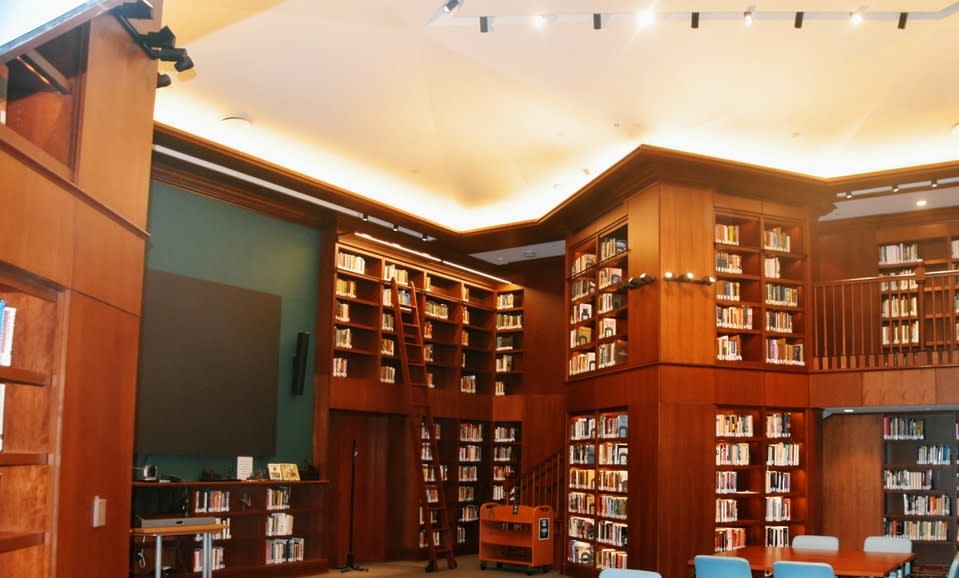
Behind the scenes. Afterward we met Derrick Strassburg, who took us back to the research and editorial offices, first the area where exhibits are designed, then the research library, which holds nearly every book ever written about World War II. The books cannot be borrowed but can be studied on site, and the librarian showed us exactly where Jack's Story would sit on the shelf.
We moved on to the Jenny Craig Pavilion, home of the Jenny Craig Institute for the Study of War and Democracy, named for a major donor inspired by the brothers she had lost to the war. There we met Rebecca Poole, a research specialist who writes short books on individual service members, including one on Tom Hanks's father, and who shared her warm impressions of Jack's Story, which the museum is taking in despite its self-published origins.
PT-305 and a piece of history. Next we toured PT-305, a fully restored patrol torpedo boat in the Kushner Restoration Pavilion. Built by Higgins Industries right here in New Orleans, it had been sold after the war, shortened by thirteen feet, and put to work fishing off the New Jersey coast. The restoration was possible only because a museum volunteer pulled the original Higgins blueprints out of a dumpster. Karen Kersting, who helped with the work, told us the story; she painted the boat inside and out three times over and has written about the long effort.
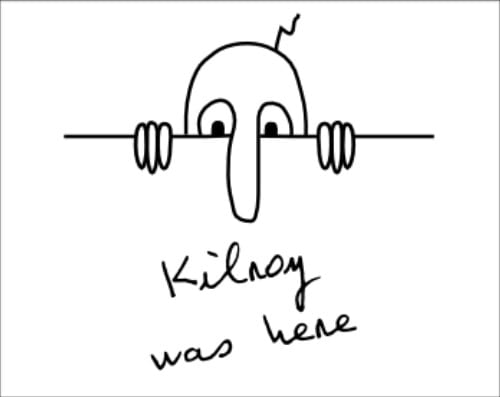
Winding down at Kilroy's. We finished the day with drinks at Kilroy's Lounge in the Higgins Hotel. As children we had both drawn the little Kilroy figure without any idea where it came from, and now it came full circle.
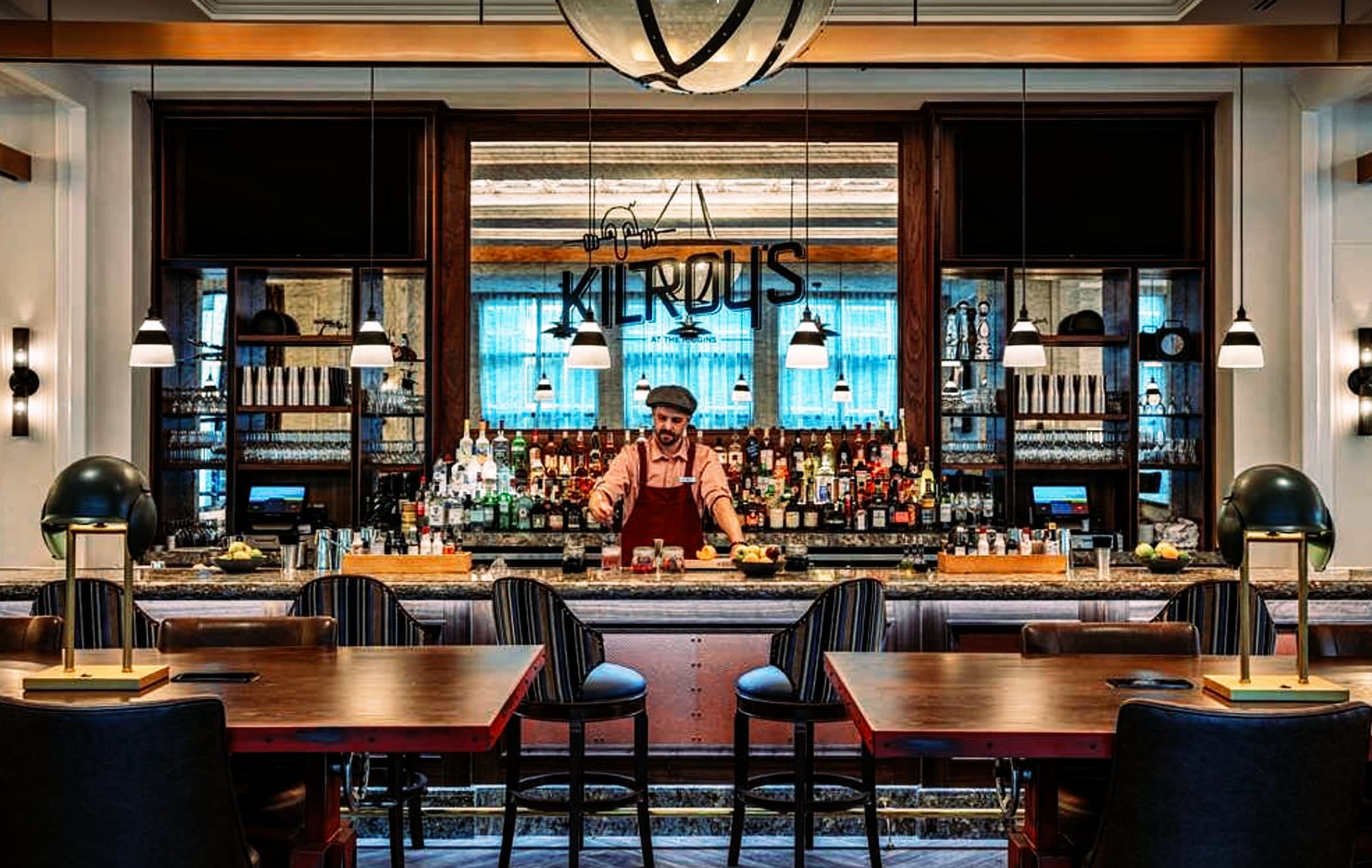
During the war, "Kilroy was here" became a wink of American presence, a bald little man with a long nose peeking over a wall, scrawled in the unlikeliest places across Europe and the Pacific. No one is sure who started it, but Kilroy turned into an unofficial mascot of the GIs, a mark that said American troops had been here first.
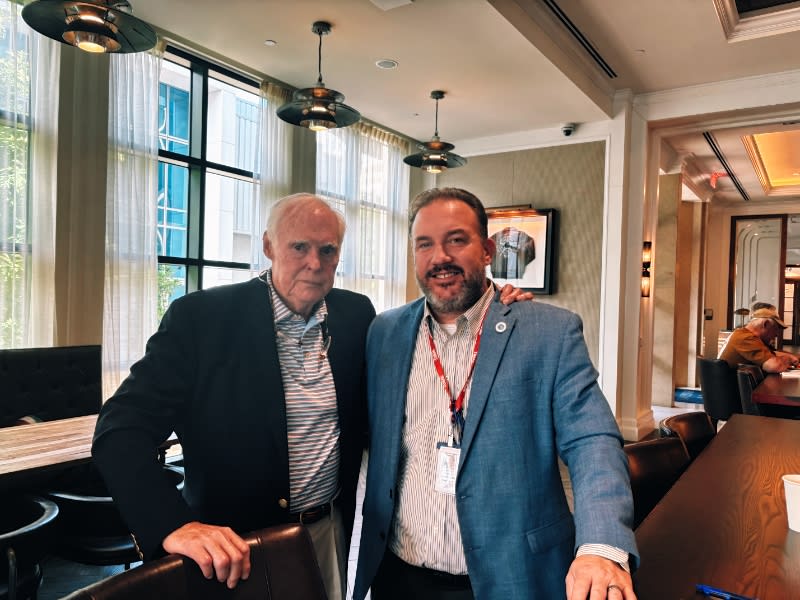
We talked over the whole day with Derrick and with Jeremy Collins, the museum's senior director of programs. Janice spoke about her years in the computer industry and her wish to write about them, and Jeremy pointed her to Hedy's Folly by Richard Rhodes, the story of the actress Hedy Lamarr and the early invention that helped lead to Wi-Fi, a story we mean to tell later.
Then it was off to dinner at Pêche Seafood Grill, a fitting end to a remarkable day.