Dateline June 21, 2018, The Great Dams of the Columbia
From the Cascades we came down into the dry country of eastern Washington, which turns out to be dam country, and we could not get over the scale of what we saw.
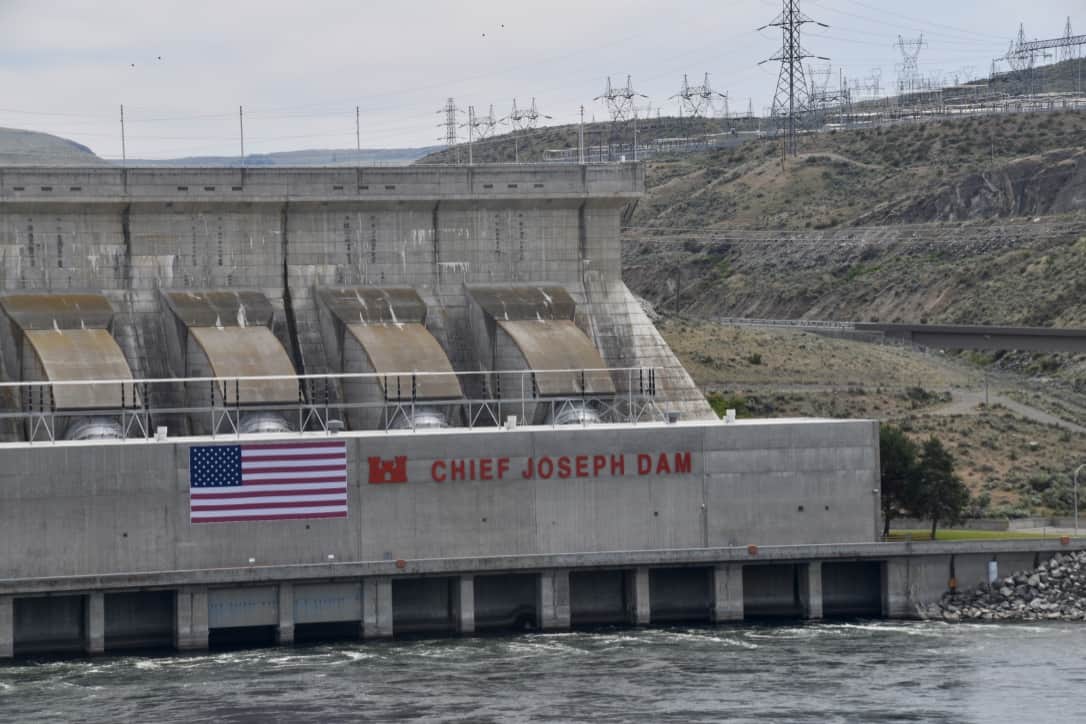
Chief Joseph. The first was Chief Joseph Dam, at the little town of Bridgeport. It is the second largest producer of hydropower in the country, and the largest run by the Army Corps of Engineers. Its powerhouse alone is better than a third of a mile long and holds twenty-seven turbines the size of houses; that one dam makes enough electricity to light the whole of metropolitan Seattle.
Grand Coulee. Then we came in sight of Grand Coulee, and it fairly stops you. It stands on the Columbia west of Spokane, five hundred and fifty feet high and nearly a mile long, with some twelve million cubic yards of concrete in it, one of the largest things human beings have ever built.
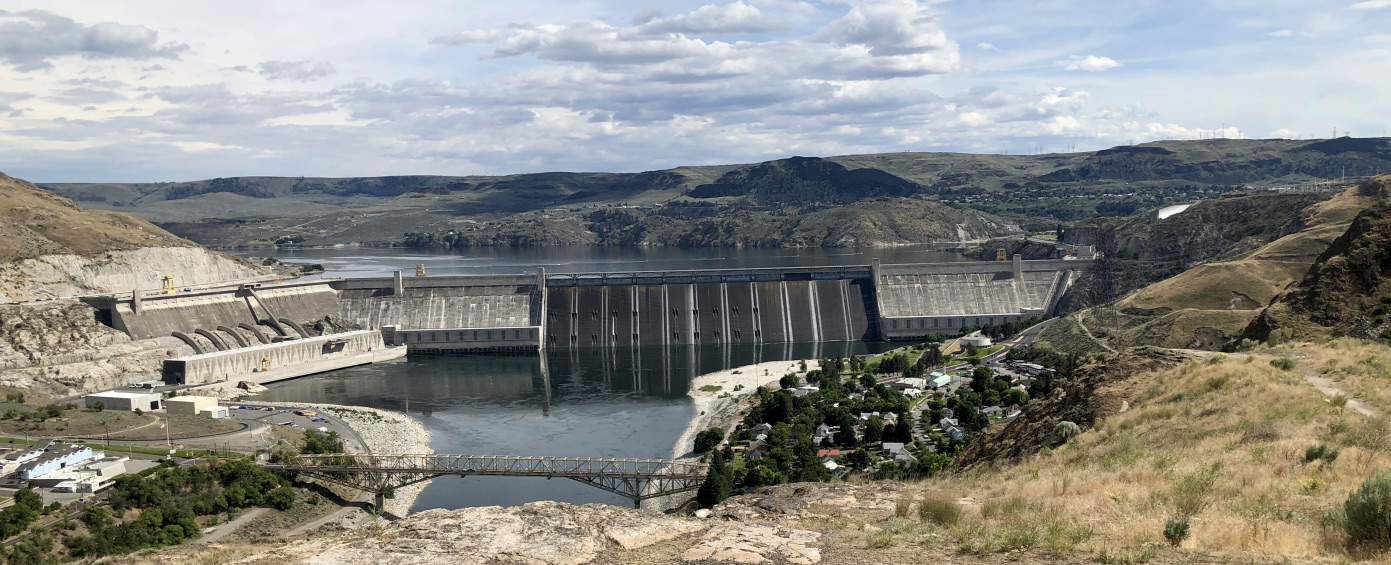
It was raised between 1933 and 1941, work that put a great many people back on their feet in the Depression, and with a third powerhouse added in 1980 it became the largest producer of power in the country and one of the largest in the world, on the order of twenty-one billion kilowatt-hours a year, sent out across the western states and into Canada under a treaty between the two countries. But the dam is only the heart of it. The Columbia Basin Project that grew up around it carries water through hundreds of miles of canals and a couple of thousand miles of smaller laterals to irrigate something like six hundred and seventy thousand acres of land that was dry before, and it holds back the floods that used to come down the river. It is, in the plainest terms, amazing.
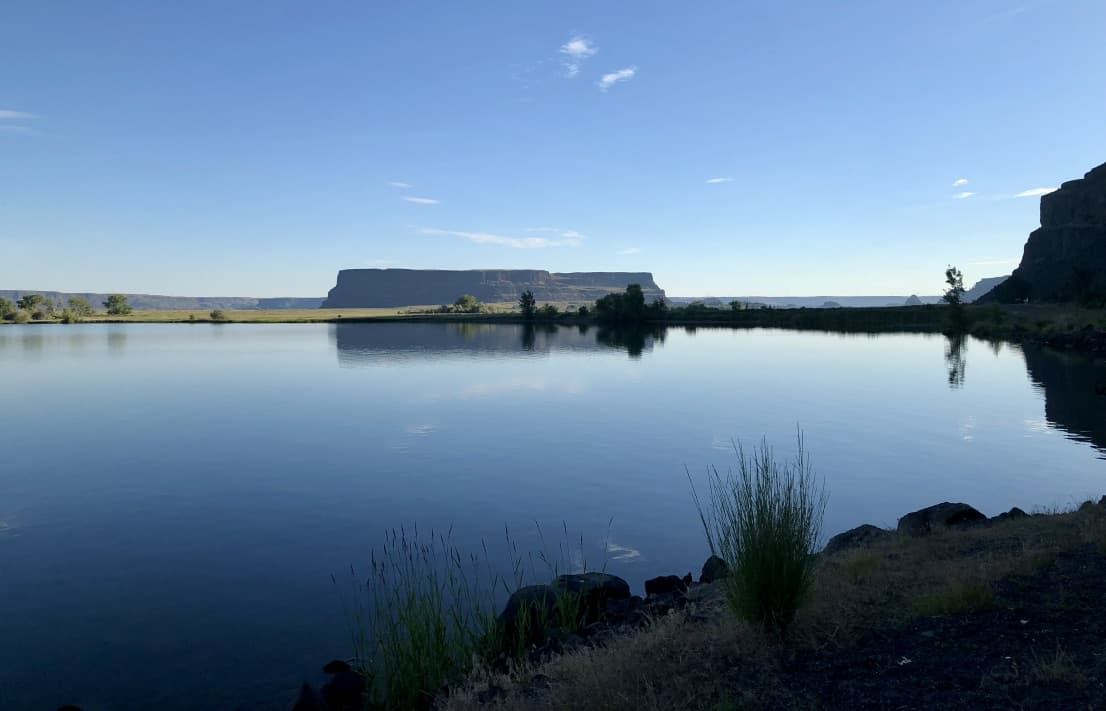
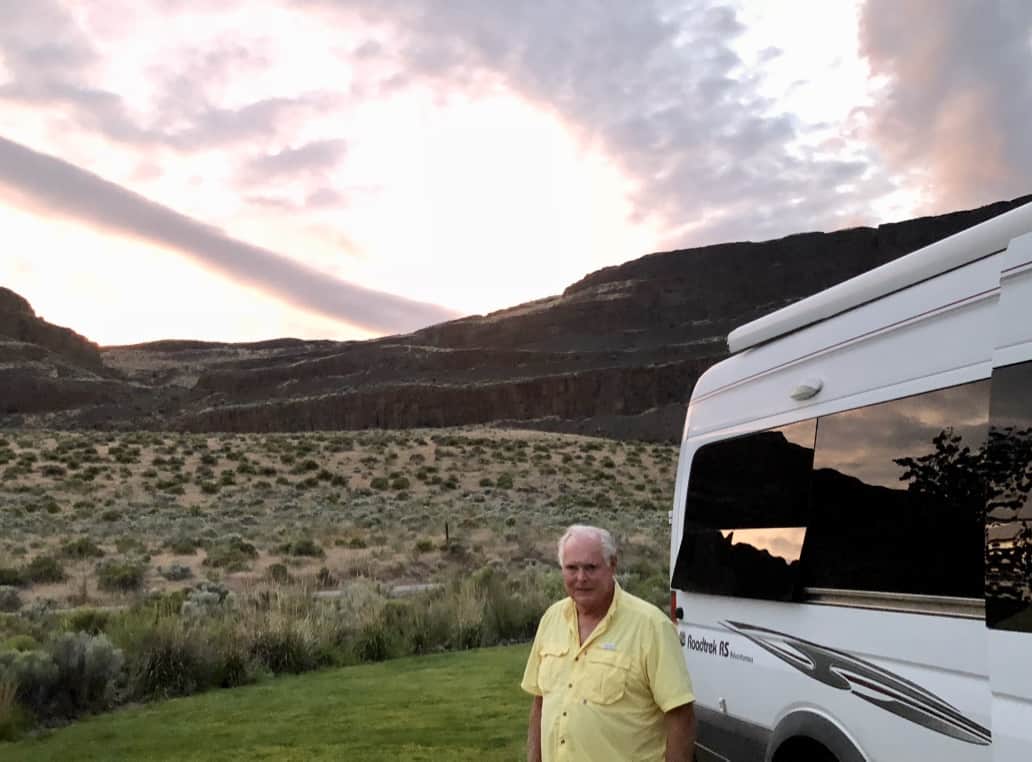
We spent the night nearby at Steamboat Rock State Park, one of the recreation grounds the project left behind, and a beautiful one, full of people enjoying it.
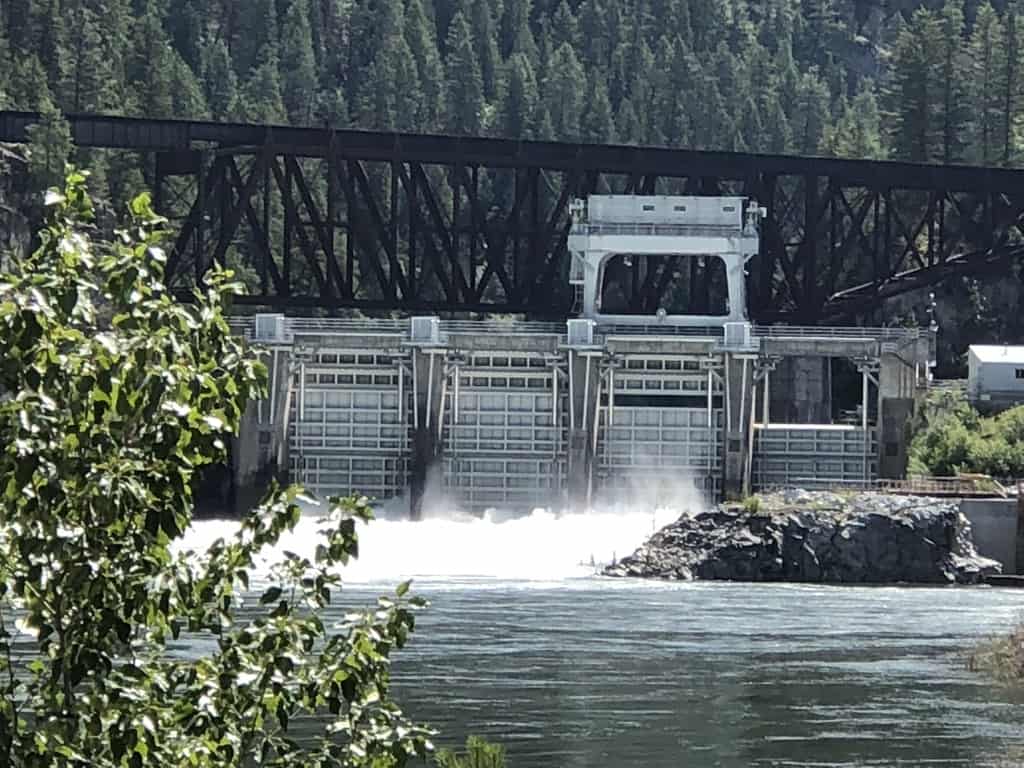
Box Canyon. Pushing north through eastern Washington toward Canada, we stopped by one more, the Box Canyon Dam, finished in 1956 on the Pend Oreille River about ninety miles north of Spokane. The Pend Oreille is an odd one; it feeds into the Columbia, and it is among the few rivers that run north.
From there it was up the back roads to the Canadian border, and a crossing we will not soon forget.