Dateline July 8, 2018, Soudan Underground Mine
We drove up into the north woods of Minnesota to see the Soudan Underground Mine, which holds a large place in the history of the country.
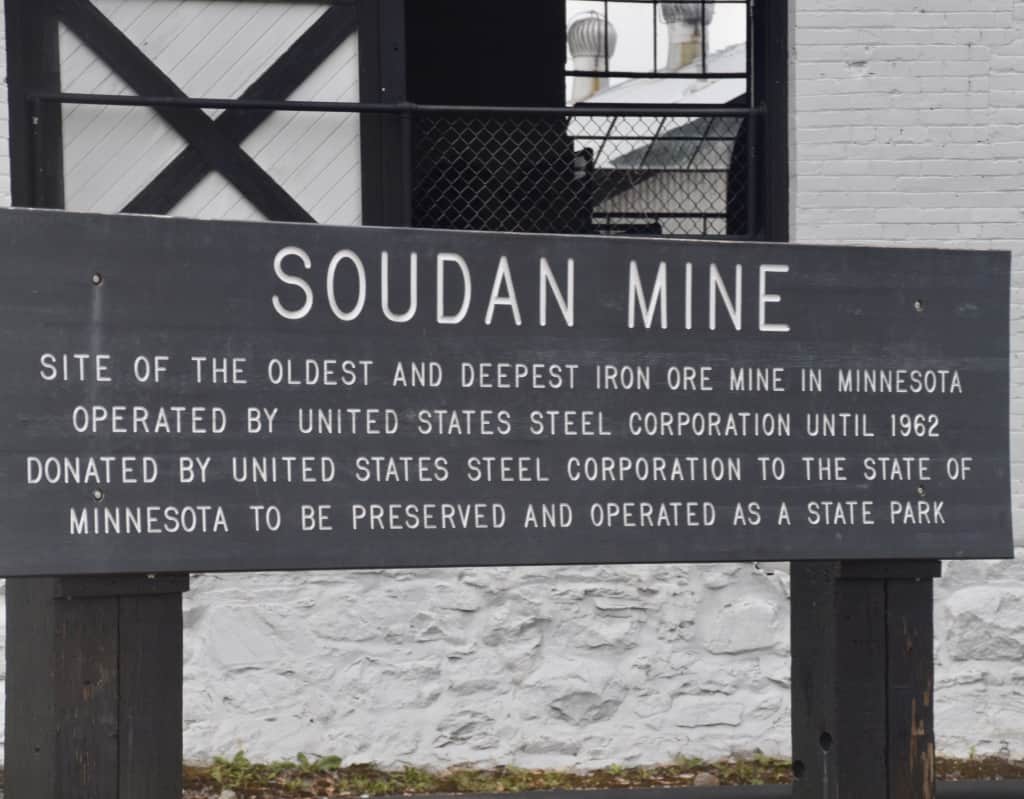
Going down. We had a reservation for the ten o'clock tour, and after we signed in we were sent to a little theater, where every tour begins with a short film on the mine's history. Our guide was a fellow named James Juip, got up for the part in a hard hat and headlamp, bib overalls, and a flannel shirt, and he had a way of putting things in proportion: eighty years of mining, he said, set inside more than two billion years of rock. Every time he puts on the outfit, he told us, it brings to mind the men who worked down there before him, and the old miners who still turn up at his door of an evening wanting to tell their stories.
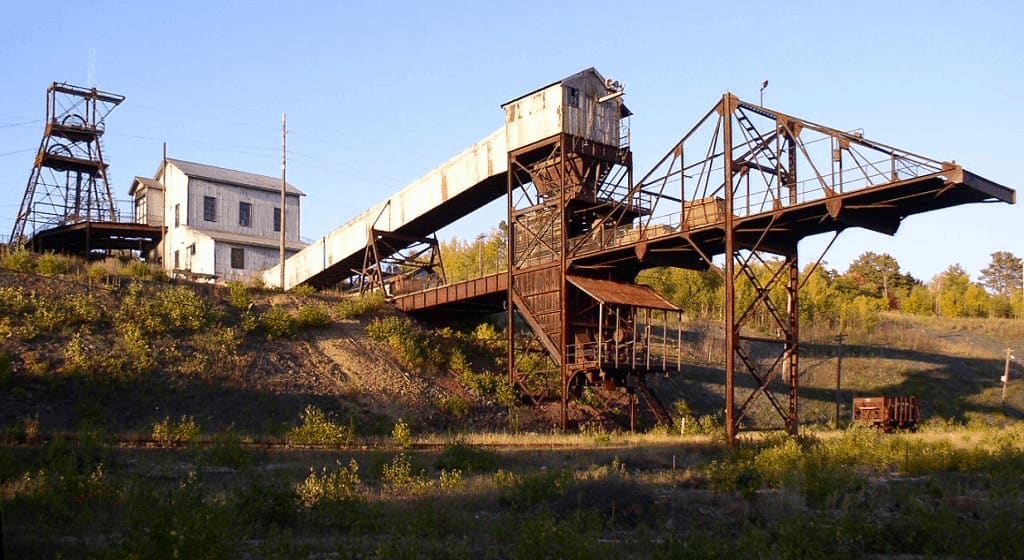
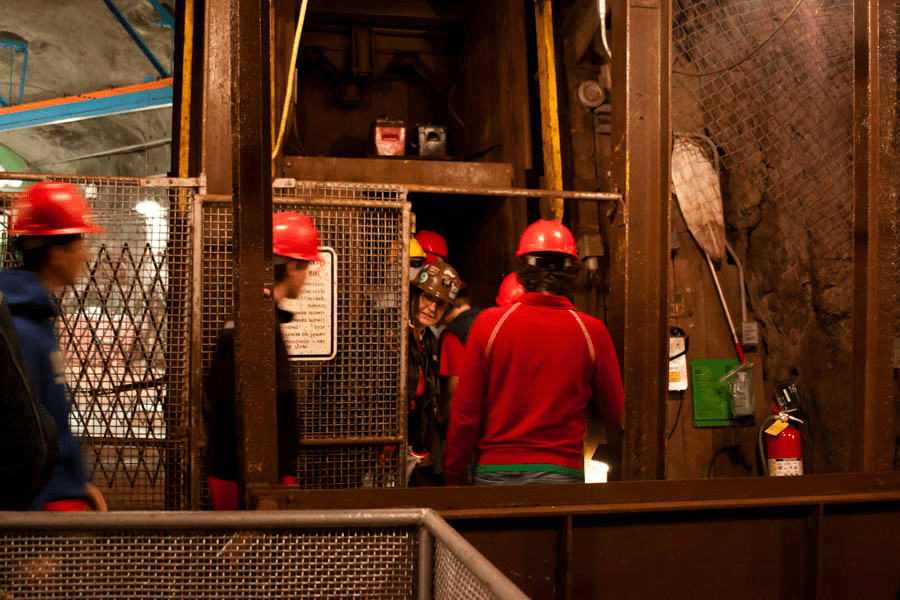
He showed us how to fit the helmets, blue and yellow, that everyone has to wear, and ran an eye over the crowd to be sure we all had the right shoes for the descent. Then we gathered at the foot of the ninety-foot steel tower, the headframe, that stands over Shaft Number Eight. A rattle of cables and a buzzer told us the cage was ready.
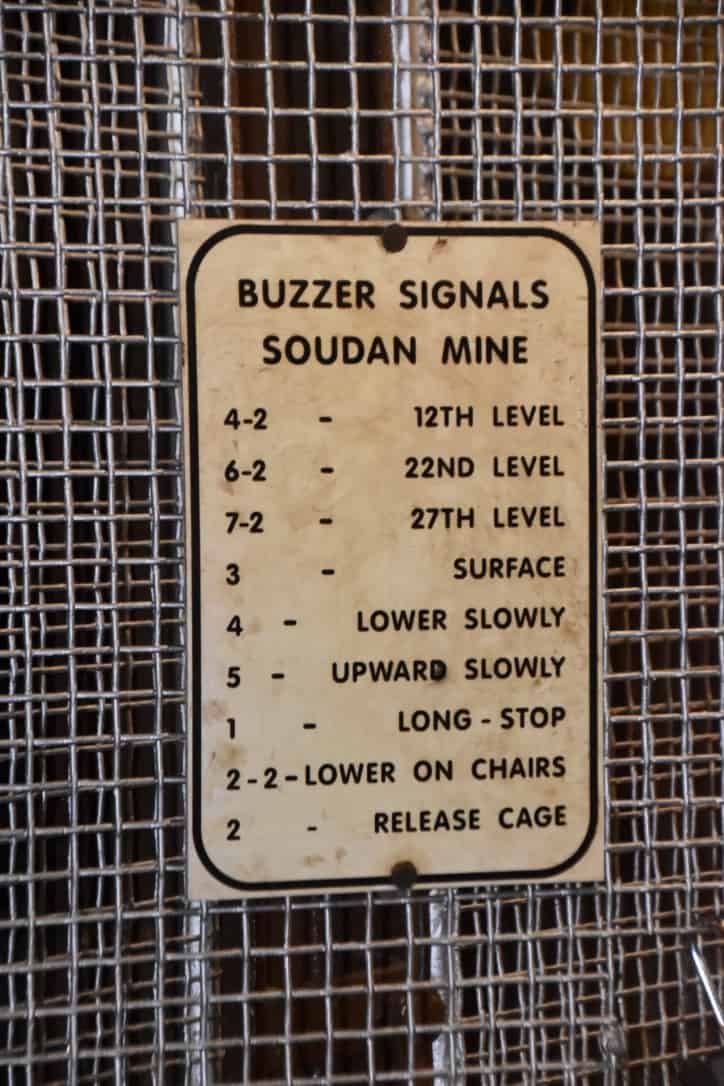
Not for the timid. The ride down is loud and black the whole way, and James calls the cage a kind of time machine; he spends about half his working hours below. The mine began as an open pit in 1882 and took its final shape around 1950, after which nothing much changed until it closed. The miners used to pack eighteen men into a cage five feet by six and a half; we rode down with ten new close friends. It took two or three minutes at something like ten miles an hour to reach the twenty-seventh level, a three-quarter-mile drop that follows the slant of the ore and lets you out five hundred feet north of where you started.
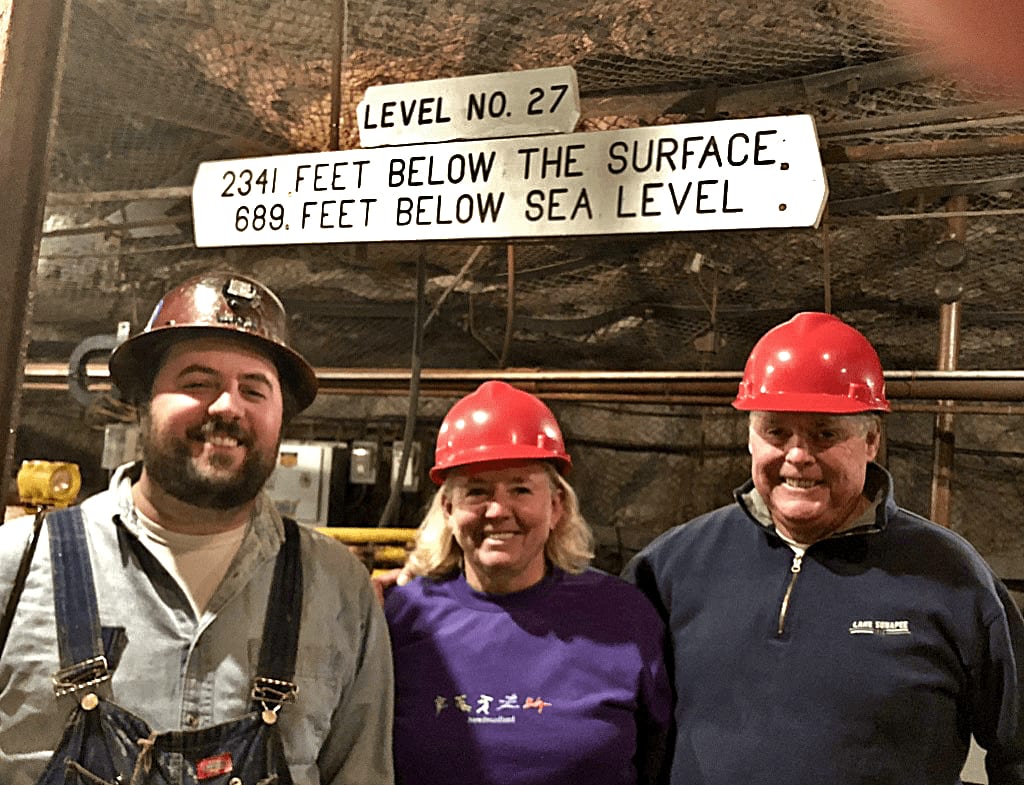
We came out 2,341 feet beneath the surface, nearly seven hundred feet below the level of the sea.
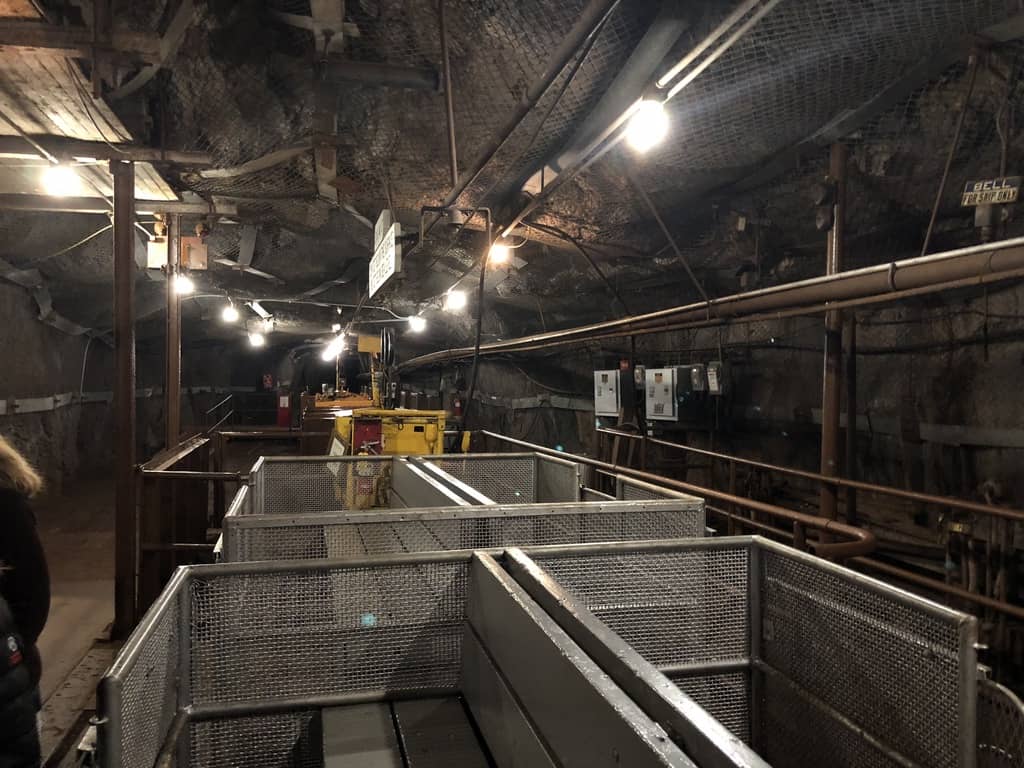
The ore train. At the bottom they loaded us into a little train, built to haul ore rather than tourists, so we were told to keep our hands inside. It carried us three-quarters of a mile uphill into the tunnel at six miles an hour, and as we went, spotlights picked out scenes of miners at work. It was like riding through a piece of artwork.
The richest iron. Back in the late 1800s, prospectors hunting for gold in northern Minnesota found instead some of the richest iron ore on earth, a hard, high-grade hematite that often ran better than sixty-five percent iron. That quality was the whole point of Soudan: its ore was so good it was added in small amounts to leaner ores elsewhere to bring them up to standard. The mine opened as an open pit in 1882, went underground by 1900 for safety, and from 1901 until it closed in 1962 belonged to the Oliver Iron Mining division of United States Steel. By 1912 it was already a quarter of a mile deep, and by the end the twenty-seventh level lay 2,341 feet down, with more than fifty miles of tunnel behind it.
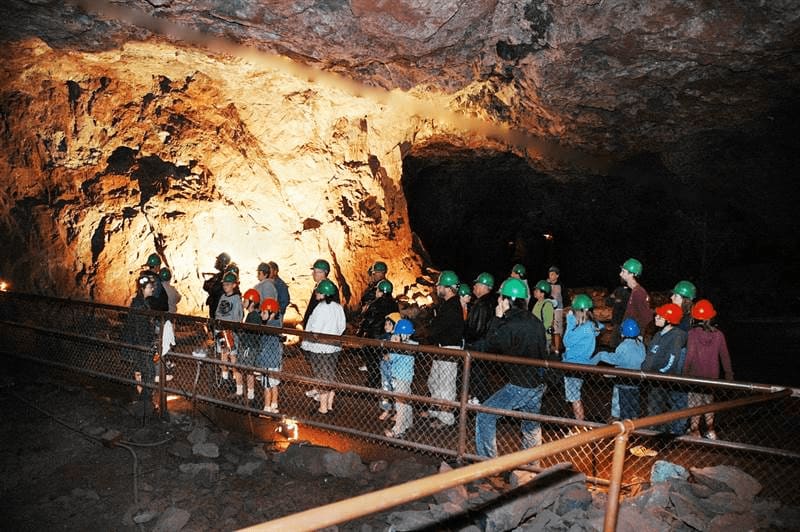
The Cadillac of mines. James told us that many of the mining families never left; some still live in the same houses, and they are rightly proud, for the famous steel of U.S. Steel would not have been possible without the iron that came up out of Soudan. He came back, more than once, to how safe a place it was to work: the tunnels run through solid, unfractured rock, fresh air moves through every twenty minutes, and it is dry as a bone. No cave-ins, no bad air, no flooding. That safety, and pay three times what other mines offered, earned it the name the Cadillac of mines.
The method below was what they call cut and fill. They would mine the ore out of the ceiling and then build the floor back up with waste rock at the same pace, so the working space stayed ten to twenty feet high and no rubble ever had to be hauled to the surface. It worked here because the hematite was strong and the surrounding greenstone weak, and it would not have worked in the neighboring mines, where the iron lay in fractured, unstable ground.
The iron that built America. It is no exaggeration to say the iron of the Range built the country and then helped defend it. In the Second World War the ore out of these mines went into the steel that beat Germany and the Axis, by some reckonings ten American tanks rolling off the line for every one of theirs, and the people of the Iron Range carry that pride to this day. The district still turns out most of the taconite pellets that feed the nation's steel furnaces.
Why it ended. By the early 1960s the steel business had moved on. There was now plenty of low-grade taconite that could be crushed and rolled into pellets, and new furnaces that blew oxygen straight into the melt, and between them they took away the need for Soudan's costly, high-grade underground ore. The mine shut down in 1962, with the last of the stockpiled ore shipped out the following year, and more than a million and a half tons of it still sit in the ground. In 1963 United States Steel sold the mine and a thousand acres, five miles of shoreline among them, to the State of Minnesota for a single dollar, and it became a state park, open for tours since 1965. The mining never really stopped on the Range, though; by the iron industry's own count it still pours better than three billion dollars and eleven thousand jobs into the state each year.
What we carried up. It was one of the most fascinating few hours of the whole trip, down in those tunnels seeing how the ore was won, and that ride up and down in the cage fairly took our breath away. These are the stories of what made the country what it is, of hard-working men and women digging out the raw material the rest of us built our lives on.