Dateline July 23, 2021, On the Road Again, Golf in Mississippi
It had been a while since we had been away, close to a year, so this was our first trip in some time. We decided we needed a golf vacation, and who better to take it with than our friends Pete and Bunny Warenski. We had played golf with them in New Zealand and Australia back in 2015, and walked the Robert Trent Jones trail in Alabama a few years before that, so it was time for another short adventure.
We left early on a Sunday morning, headed for West Point, Mississippi, our first golf destination. Rather than drive the full twelve hours at a stretch, we broke the trip in Troy, Alabama.
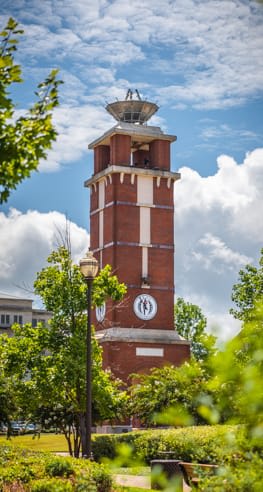
Troy, Alabama. Troy is a wonderful college town, home to Troy University. The school was founded in 1887 by an act of the Alabama legislature as a state normal school, set up to train teachers for Alabama's schools, and it grew steadily from those humble beginnings. It became Troy State College in 1957, Troy State University in 1967, and finally simply Troy University in 2006. The campus made for a beautiful drive, and we enjoyed sitting down by the lagoon and watching the activity out on the water.
We checked into the Econolodge. It had been highly rated, but we came away recognizing that ratings do not mean much at the lower end of the lodging scale. The old RV was always rated high in our minds.
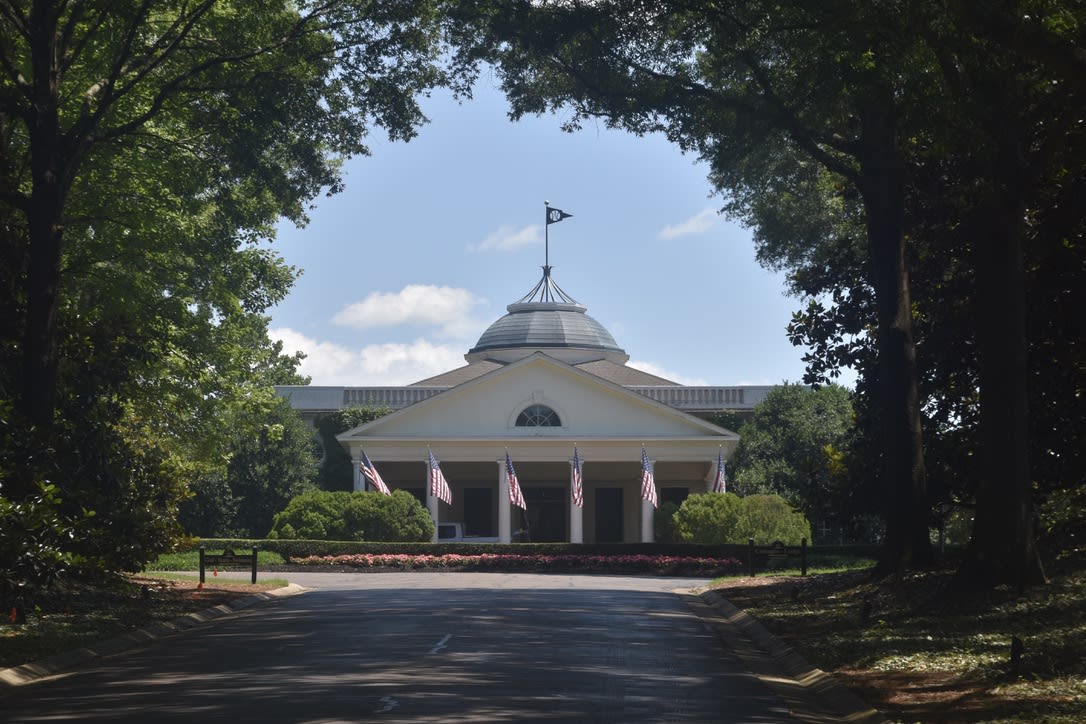
West Point, Mississippi. Monday morning we drove into Old Waverly. It brought back memories, because Janice had played here in the 2006 USGA Women's Mid-Amateur, which Old Waverly hosted. The club, a Bob Cupp and Jerry Pate design that opened in 1988, has serious championship pedigree; it also hosted the 1999 U.S. Women's Open, where Juli Inkster ran away with the title. Old Waverly has a sister course just across the way called Mossy Oak, designed by Gil Hanse. Mossy Oak was the first new course of Hanse's to open after his celebrated work on the 2016 Olympic course in Rio de Janeiro.
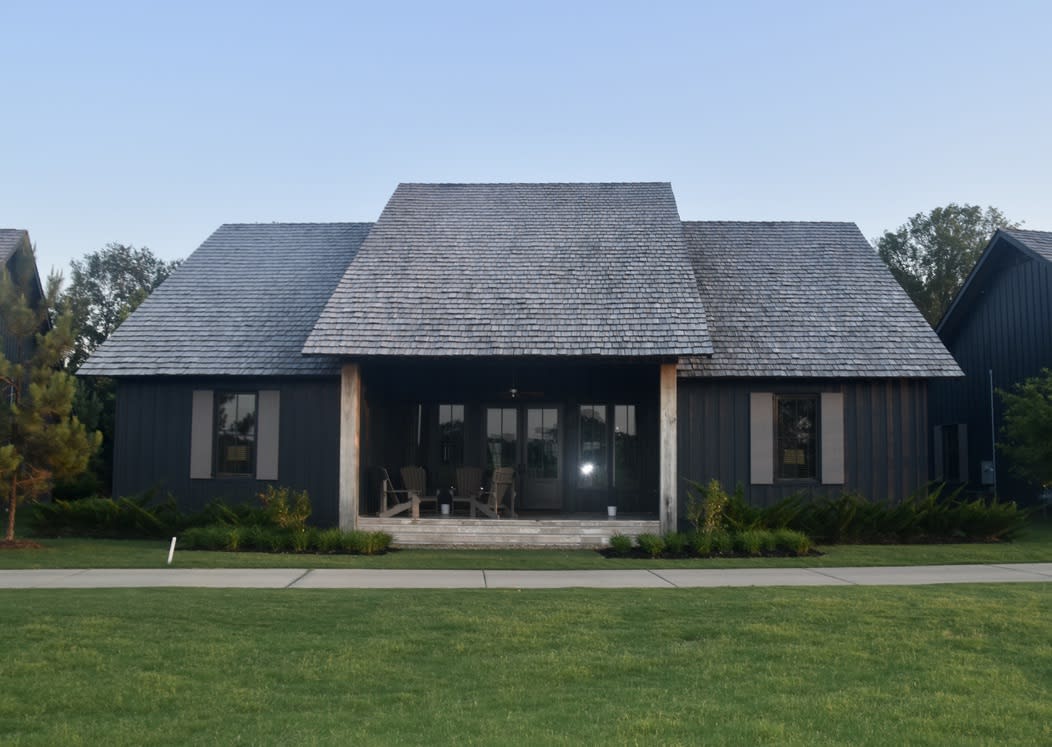
We met up with Pete and Bunny and went to check in. They had us stay in the cottages out on the Mossy Oak course. Each cottage had four large bedrooms and a magnificent common area with everything you need, a television, an ice machine, a coffee maker, and plenty of seating and dining space. The back porch looked out over the 10th hole of Mossy Oak, a fine place to sit with a cocktail as the sun went down.
After we rested a bit, and after John of course went off to hit balls, it was time for dinner. On a Monday in West Point most of the restaurants are closed, Old Waverly's included, but the Tin Lizzy in town was open, so we headed in. It was a cute spot and the Southern food was delightful. Our waitress was adorable, and we got to talking with her. She was going to be a senior in high school and was working three jobs to save up for college. She had been a foster child until her aunt and uncle were able to adopt her a short while back. Nothing seemed to stop her; we are not sure she even knows the words "I can't." A true American story in the making.
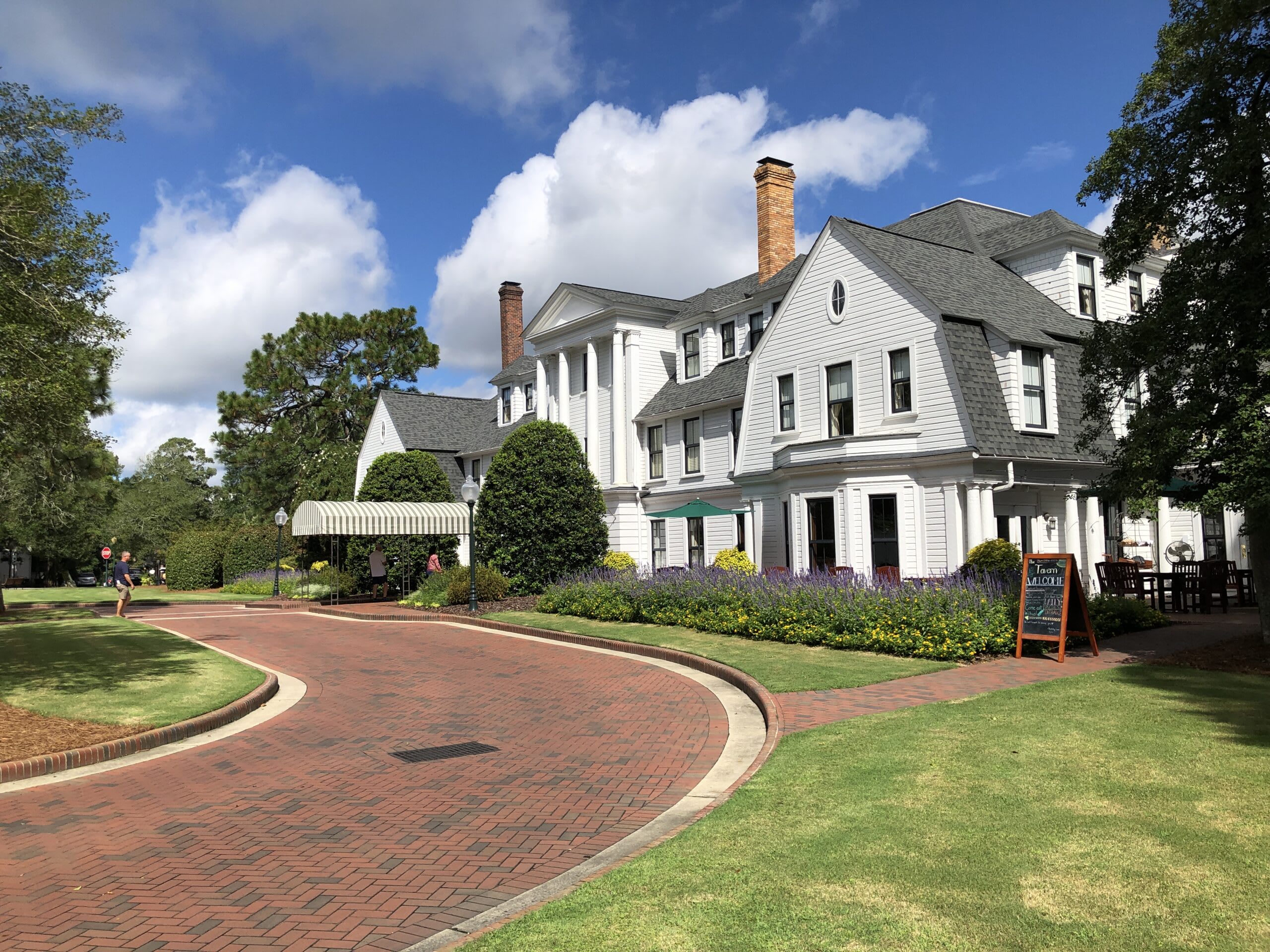
Golf at Old Waverly. The next morning it was off to play Old Waverly. We drove up to the clubhouse, and what a beautiful entry it is. We went into the bar for breakfast and sat out on the porch on a lovely morning. It had been raining for days, and the crews had not been able to mow until that Tuesday, so they were working hard to get the course into shape. For all that, it was a delight to play, a very fair test, but one where you need your "A" game to handle it.

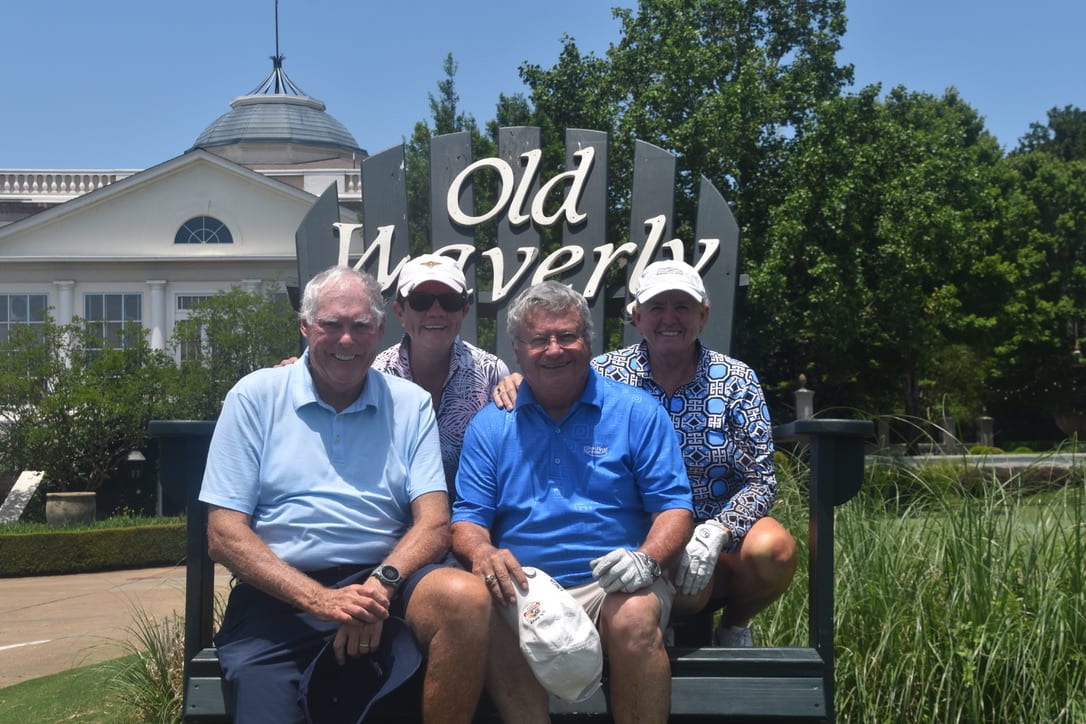
We finished up and drove down the 18th toward the clubhouse. What a finishing hole. Of course we could not resist taking pictures at the Old Waverly chair, just off the 18th green.
That evening we had dinner in the downstairs bar at Old Waverly, good food and good drinks, and then back to the cottage. The next morning we started with breakfast at Old Waverly and then went to play Mossy Oak.
Golf at Mossy Oak. Mossy Oak sits on a piece of land known as the Black Belt Prairie. The rich black soil is ringed by big forests, and the contrast is striking enough that it stands out even from the air.

Before the farmers discovered how fertile the soil was, the Black Belt was mostly open prairie. By one account, some 356,000 acres of it were documented across the Black Belt in the 1830s, and less than one percent of that prairie survives today. Find one of those remnants, the researchers say, and you can still see grassland birds and a remarkable web of life, more than two hundred kinds of plants, a thousand species of moths, better than a hundred kinds of bees, and dozens of grasshoppers and ants, work documented by JoVonn Hill of Mississippi State University.
The whole idea at Mossy Oak was to build a golf course without changing the contours of the land. The result is sensational, and the beauty of it is hard to put into words. The golf world fell for the course in a hurry; Golf Digest called it the third-best new course in the country in 2017, both Golf Digest and Golfweek rate it among the top modern courses, and it is rated the second-best course you can play in Mississippi.
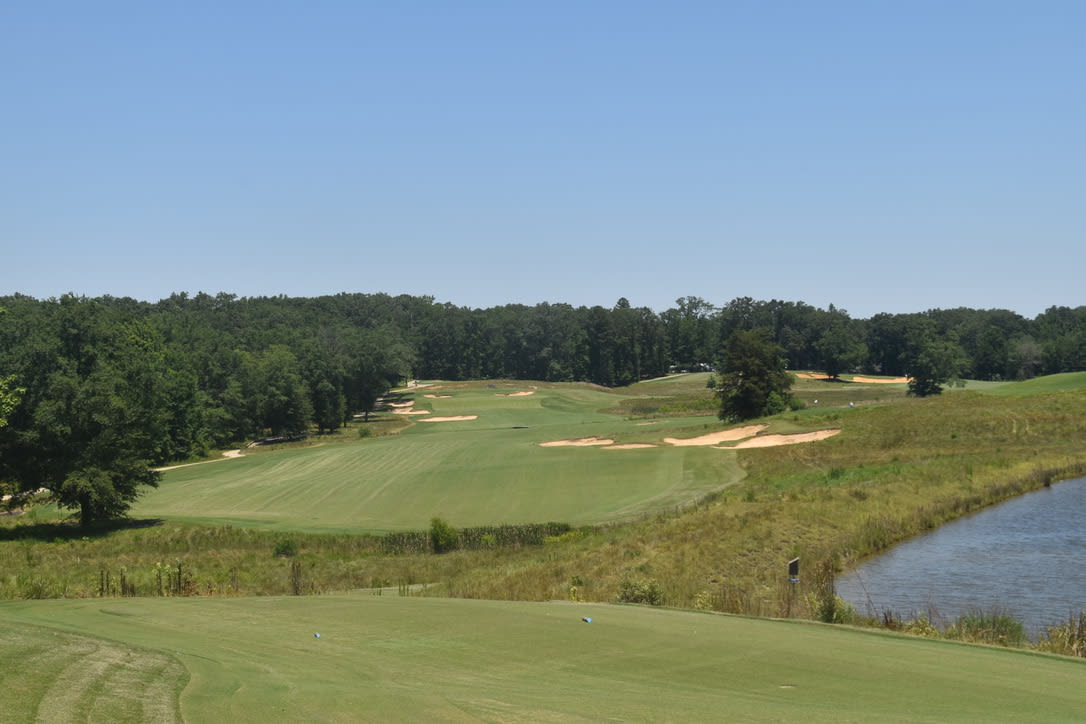
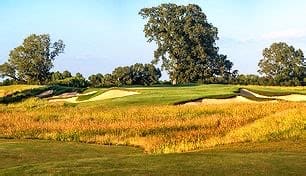
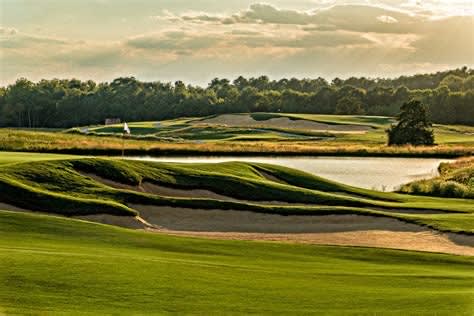
Playing Mossy Oak is a tremendous experience. There are many sets of tees, so you can be challenged as much as you like, and some of the holes share fairways, which can be unsettling when you think someone is hitting straight at you. The use of conservation across the landscape only adds to it. It lives up to its tagline, "Nature's Golf." We had a wonderful round full of challenges, one of the finest courses we have had the pleasure to play. It was so different, not a links course exactly, but more like the early courses in Scotland, where the landscape itself was the course. It looks much like this Scottish course.
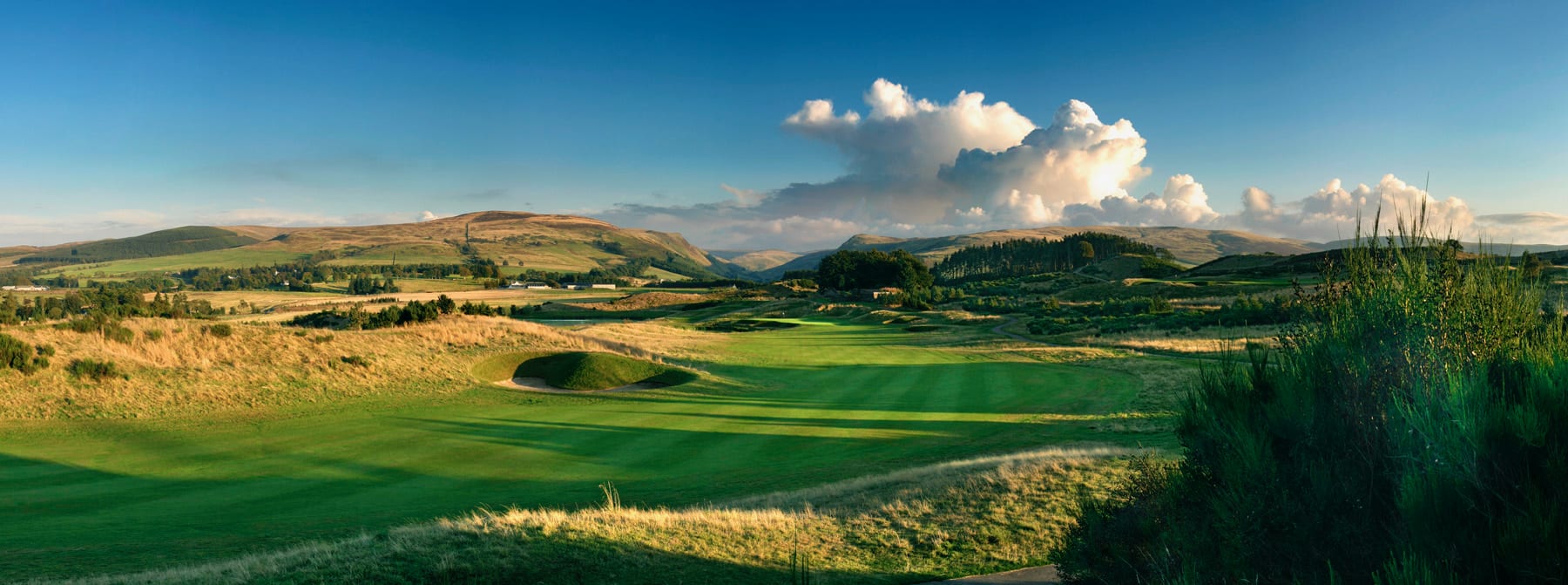
That is Prestwick Golf Club in Scotland, the birthplace of the Open Championship and an Old Tom Morris links laid out in 1851. We finished at Mossy Oak and drove back to Old Waverly for lunch and checkout. The drive on to Philadelphia took us a few hours.
Dancing Rabbit, Choctaw, Mississippi. Our next stop was the Dancing Rabbit golf courses, part of Pearl River Resort near Philadelphia, owned by the Mississippi Band of Choctaw Indians. The tribe holds tens of thousands of acres across ten Mississippi counties, numbers more than eleven thousand members, and provides thousands of jobs to its members and others. Dancing Rabbit has a large inn and a golf pro shop, next door to the Pearl River Casino.

The Treaty of Dancing Rabbit Creek. The resort takes its name from a creek in Noxubee County, and that name carries a great deal of history. It was there, in September of 1830, that Choctaw leaders signed the Treaty of Dancing Rabbit Creek, the first removal treaty carried out under the Indian Removal Act. Under it the Choctaw ceded more than ten million acres, the whole of their remaining homeland east of the Mississippi, in exchange for land in what is now Oklahoma. Of roughly nineteen thousand Choctaw then living in Mississippi, about thirteen thousand were removed west over the next three years. That march, and the marches forced on the Cherokee, Chickasaw, Creek, and Seminole under the same act, came to be remembered as the Trail of Tears, and thousands died along the way of cold, hunger, disease, and exhaustion. The treaty was signed under heavy pressure, amid threats and worse, and a provision meant to let Choctaw families stay in Mississippi as citizens was, in practice, honored for very few. The ones who refused to leave, and held on, are the ancestors of the Mississippi Band that endured here and owns this land today.
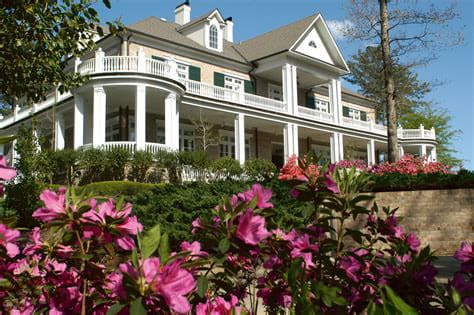
Dancing Rabbit. There are plenty of places to stay around the Pearl River Casino, the Dancing Rabbit Inn among them, and if you are lucky there are ten rooms up in the clubhouse itself. We were lucky, and it was a treat. The balcony looked out over the driving range and was just right for an evening cocktail. In the morning we rolled out of bed, down the stairs to breakfast, and straight into our golf carts to hit a few and play. The two courses are tucked beautifully among the towering pines and oak forests, both of them the work of acclaimed designer Tom Fazio and PGA great Jerry Pate. They cover more than seven hundred acres, with some five miles of spring-fed streams winding through, lovely to look at and a real factor in how the courses play.
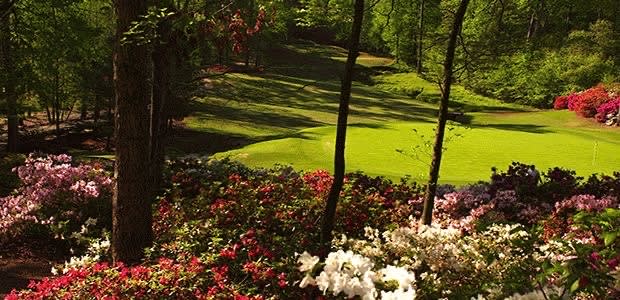
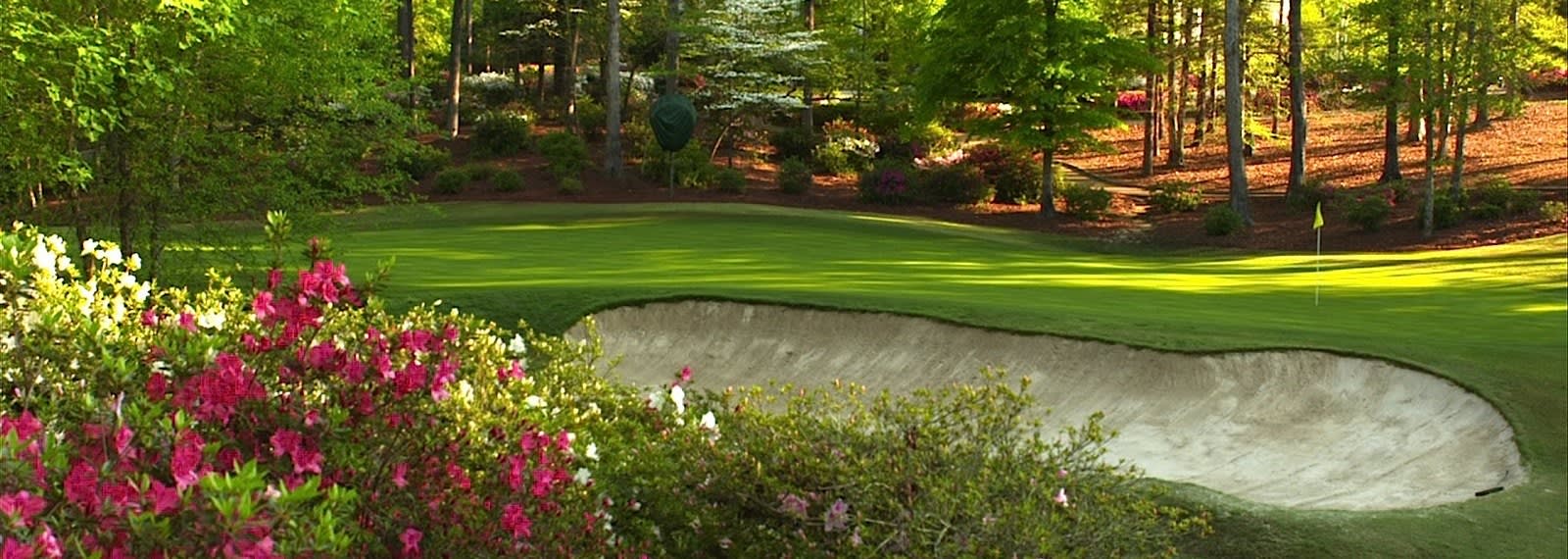

The Azaleas Course. The first course we played was the Azaleas, long marketed by Golf Magazine as "the Augusta you can play." Golfweek rates it eighth in the state, and well deserved; it wanders through the pines, and the planted azaleas do call to mind the views of Augusta you see when you watch the Masters.
Phillip M and the casino. We made reservations for dinner that evening. One advantage of staying in the clubhouse is that they give you golf carts with headlights, so we picked ours up outside and followed the trail over to the Pearl River Casino, where, sure enough, they had reserved parking spots for the carts. "Phillip M" inside the casino had been recommended to us as the best dining in the South. It was just all right, but a nice experience. We passed on the gambling and headed back to the clubhouse for a few drinks on the balcony.
The Oaks Course. The next morning we had a tee time on the Oaks, every bit as charming and challenging as the Azaleas. Golfweek rates it fifth in the state, and it was a treat to play; we thought it the better of the two. A great day of golf.
The storm, and home. Our plan had been to spend one more night up at the Dancing Rabbit Inn and head out in the morning, Pete and Bunny back toward Chicago and the two of us down to Biloxi to play Fallen Oaks. Then the big news on the television was a named tropical storm bearing down on Biloxi, with words like "catastrophic" being thrown around. So we changed our plans, said our goodbyes to Pete and Bunny, and pointed the car southeast for home in Florida. What we had not reckoned on was every motel being full. We drove a good deal longer than we wanted before we finally found a room for the night, which, as it turned out, was just past Troy, right where we had stayed on the way out. Too funny.
Two wonderful days of golf at Dancing Rabbit and two more at Old Waverly and Mossy Oak. We could not say enough about what a pleasure both places were. And of course the best of it was the time with our friends Pete and Bunny, which we look forward to doing again soon.