Dateline August 25, 2021, Cape Cod
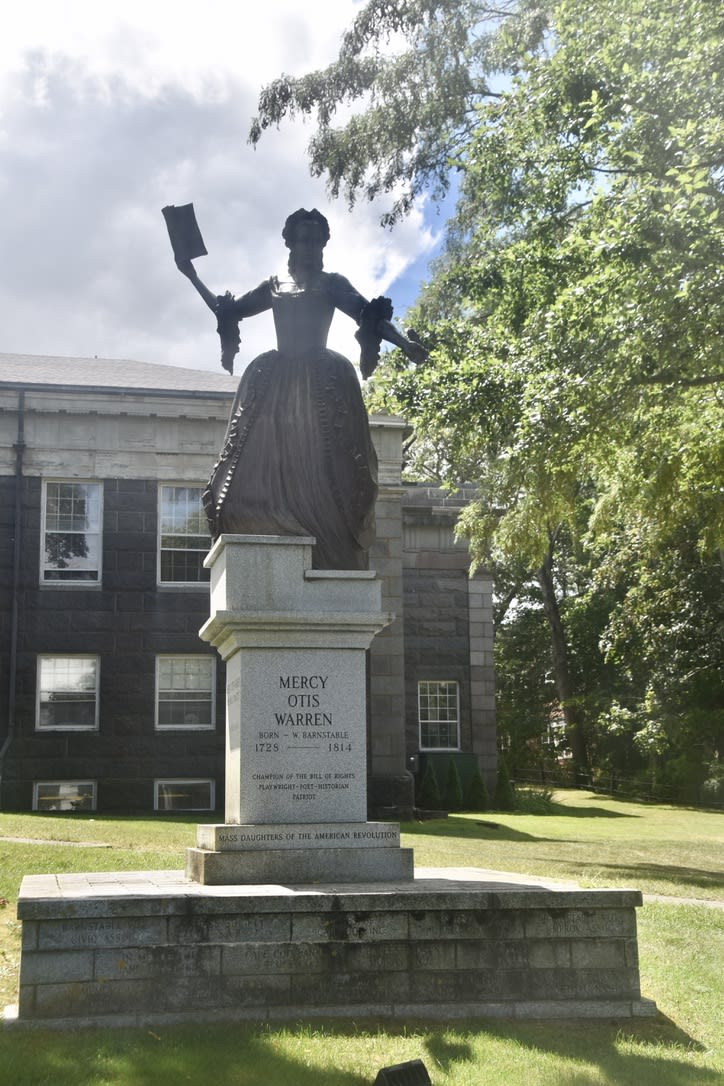
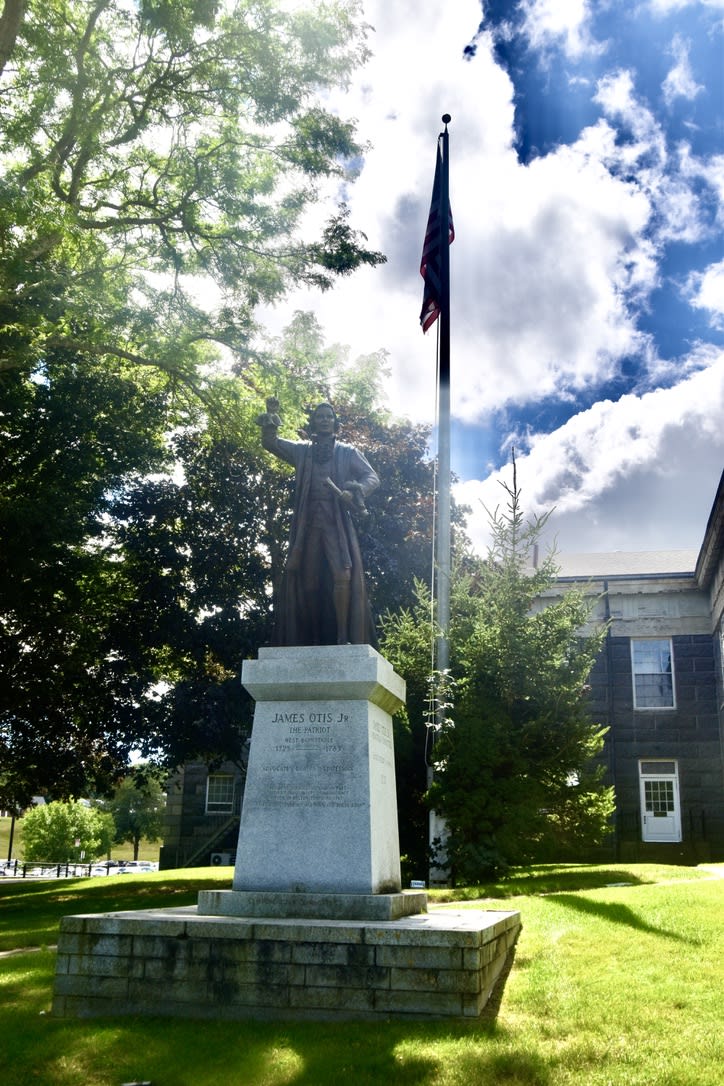
We left Pinehurst and headed north to visit Janice's Uncle Bill and Aunt Margaret in Harwich, on Cape Cod. We made a few stops along the way. The first was a run to Total Wine for some Flor de Caña "commie" rum, hard to find and we were clean out. The second was Plymouth, which we had seen before but only so early in the morning that nothing was open, so this time we made a proper tourist stop. The third was Barnstable, where two statues stand outside the courthouse, James Otis and Mercy Otis Warren, both instrumental in the founding of the country and both, as it happens, Janice's relatives.
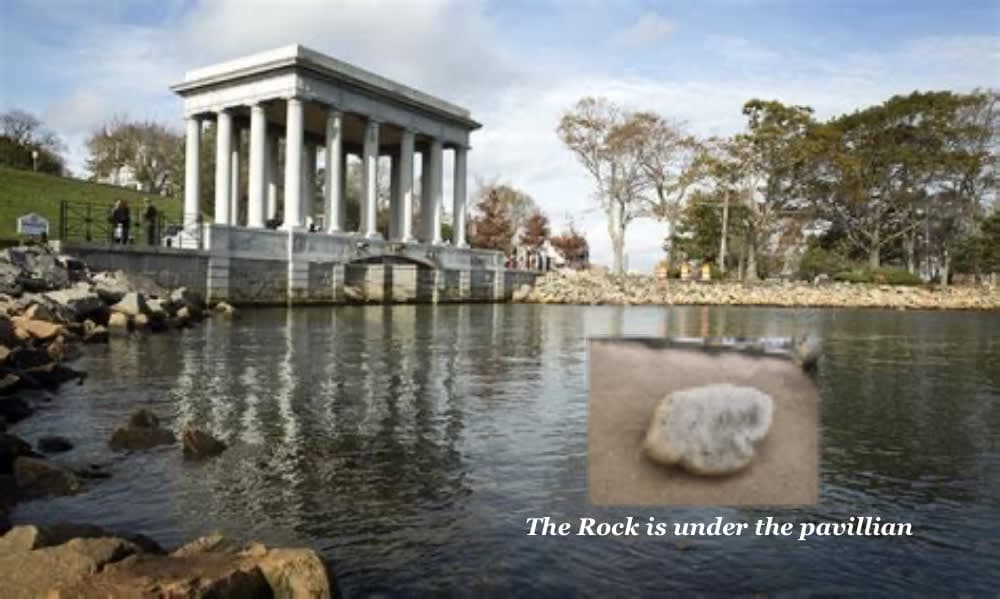
Plymouth. Janice's mother was an Otis. Her own mother, Jeanne, and grandmother, Helen Otis, had traced the family tree all the way back to the Mayflower's landing at Plymouth Rock, which makes Janice a true Mayflower descendant and a Daughter of the American Revolution. So we stopped to see the rock. Something upwards of a million people visit it every year, and it is a surprisingly small thing, sitting in a protected spot on the shore of Plymouth Harbor.
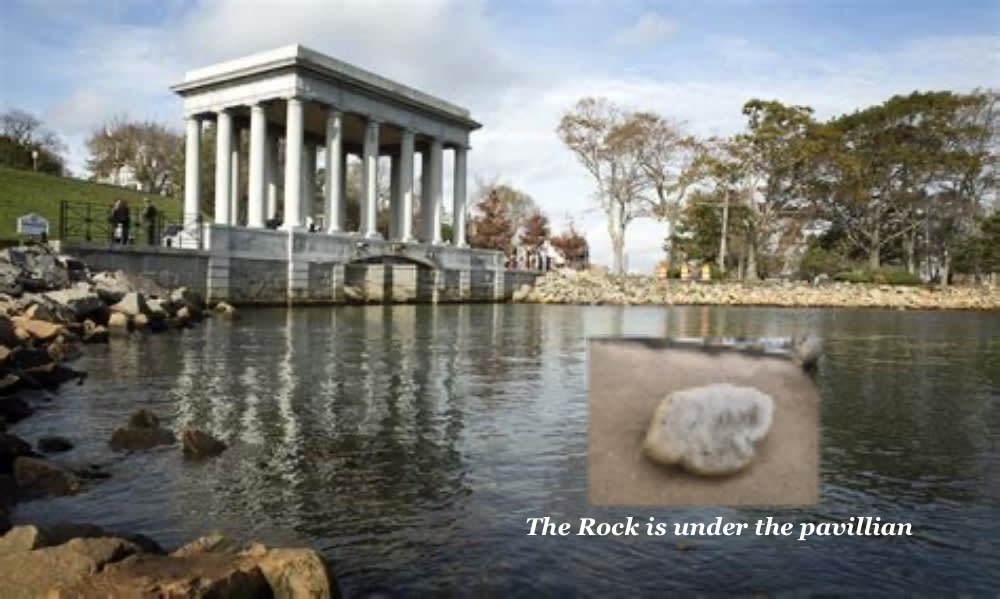
It was not until 1741, some 121 years after the Mayflower, that this ten-ton boulder was singled out as the exact spot where the Pilgrims first stepped ashore. The claim came from Thomas Faunce, a church elder then in his nineties, who said his father, who had reached Plymouth a few years behind the Pilgrims, and several of the original passengers had assured him the stone was the place. In 1774, an attempt to haul it up to the town square split it clean in two; the bottom half stayed down at the harbor while the top went traveling about town for years. In 1880 the top was brought back and cemented to its base, and the date "1620" was carved into the surface in place of the painted numerals it had worn before. Between the souvenir-hunters chipping away at it and all the accidents, the rock today is reckoned to be only a third or so of its original size, much of it buried in the sand, with a cement scar to mark its travels. The thing can be a bit of a letdown up close, but there is something to be said for a symbol that has managed to endure. We bought a few t-shirts; John's old one was a good ten years old.
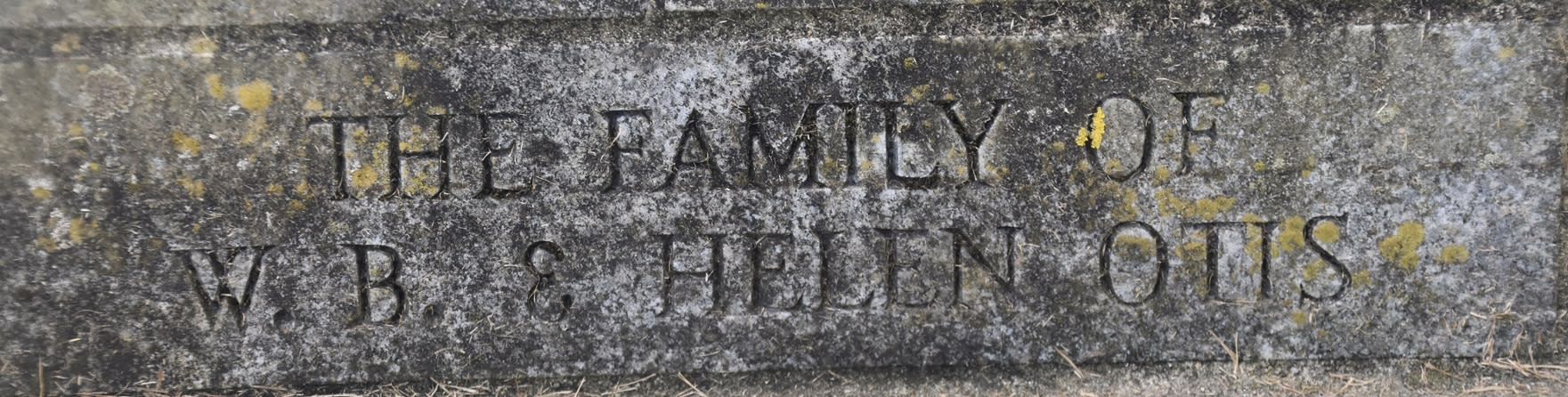
Barnstable and the Otis ancestors. Twenty years ago the Otis clan gathered at the Barnstable courthouse for a reunion to unveil a monument to Mercy Otis Warren, alongside the one already standing for her brother James. When we rolled up on a Friday afternoon, a crowd of press was packed around the back of the courthouse. We asked one harried news fellow what was going on; wired up with voices talking in his ear, he settled enough to explain that it was the sentencing of a man who, some years before, had killed a local police officer and his patrol dog. Out front, where we wanted our pictures of the two statues, we had the place entirely to ourselves.
Mercy Otis Warren. Mercy Otis Warren was a poet, playwright, and satirist in an age when women were expected to hold their tongues on anything political. She did the opposite, trading ideas with John, Abigail, and Samuel Adams, and becoming an outspoken commentator and, in time, a historian; her three-volume history of the Revolution earned her a name as the country's first female historian, and a pamphlet she wrote against the new Constitution helped press the case for a Bill of Rights. John Adams called her "the most accomplished woman in America."
James Otis. Her brother James made his name in 1761, with a blistering challenge before the Superior Court in Boston to the writs of assistance, the general search warrants that let customs officers ransack any house for smuggled goods without ever having to name the house or the goods. Arguing that such writs were null and void even if Parliament itself had authorized them, he handed the colonists a principle they would lean on for years to come; John Adams said afterward that American independence was born in that courtroom. Otis is credited with the rallying cry "Taxation without representation is tyranny," and he went on to sit as a delegate to the Stamp Act Congress of 1765.
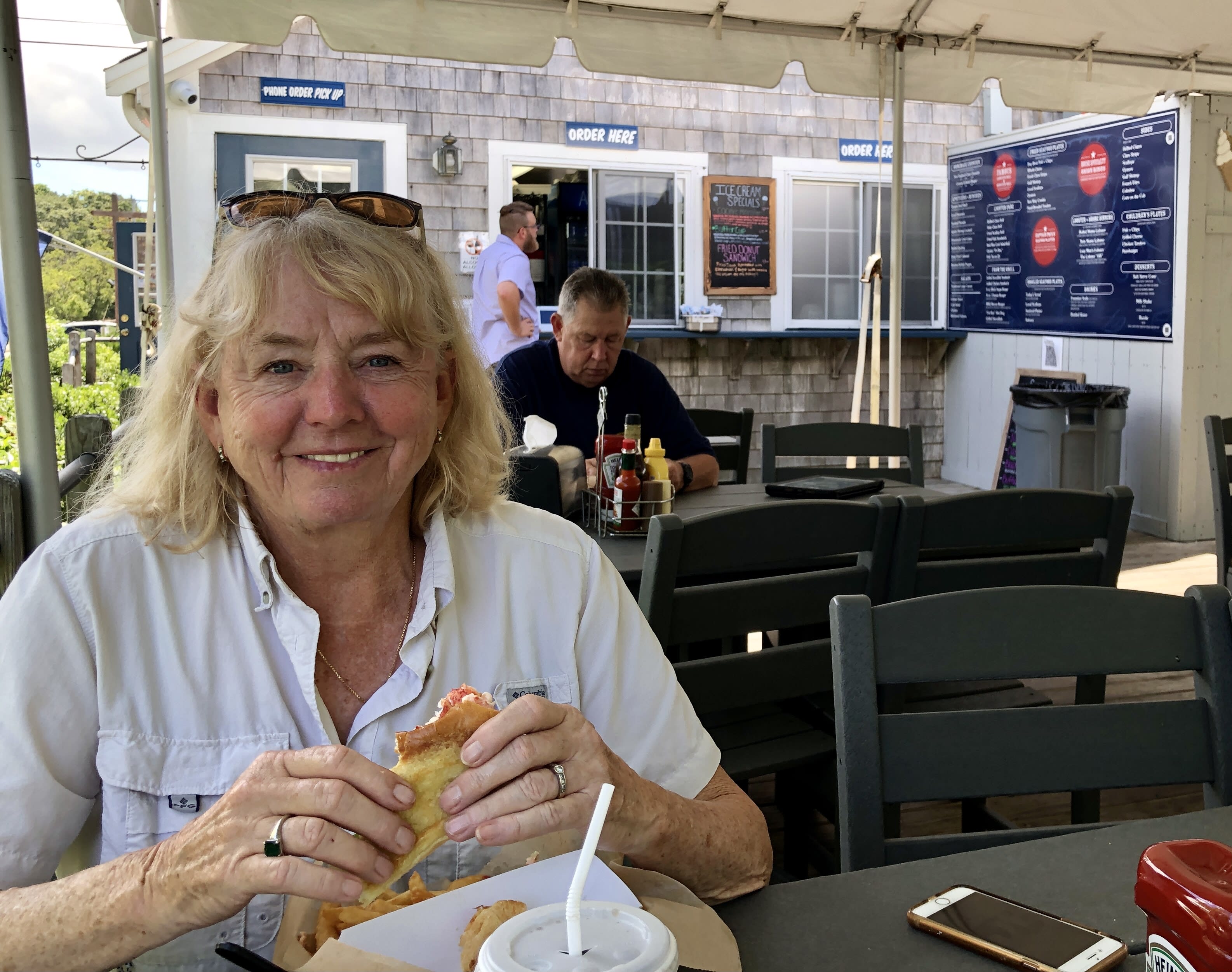
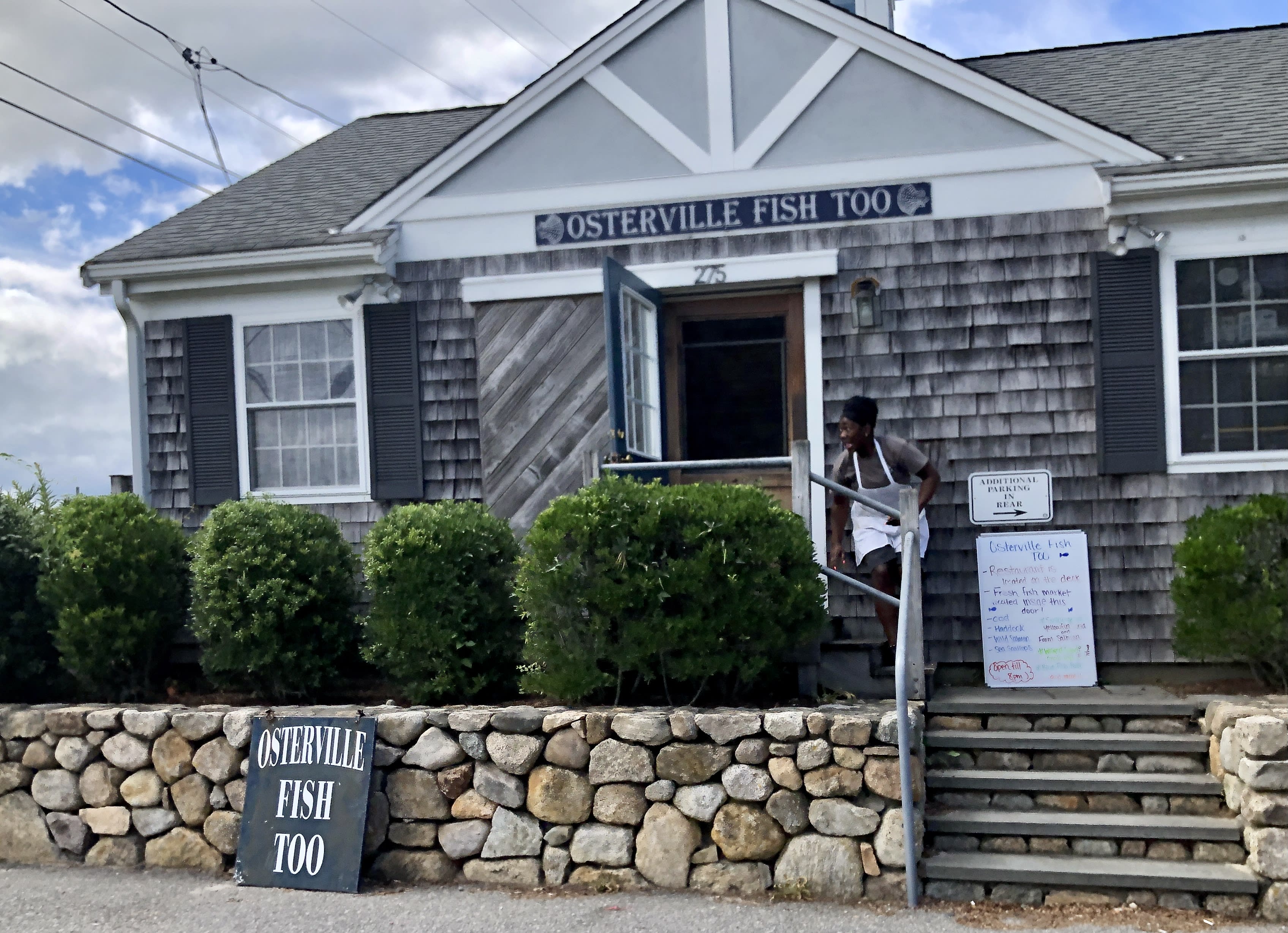
A lobster roll for lunch. After the statues we went looking for a local place for a lobster roll and landed at the Osterville Fish Too. Seafood here all seems to be priced "at market," and we ordered two without asking. "That will be seventy dollars," said the server. They were good, but that is thirty-five dollars apiece. Welcome to Cape Cod in the summer.
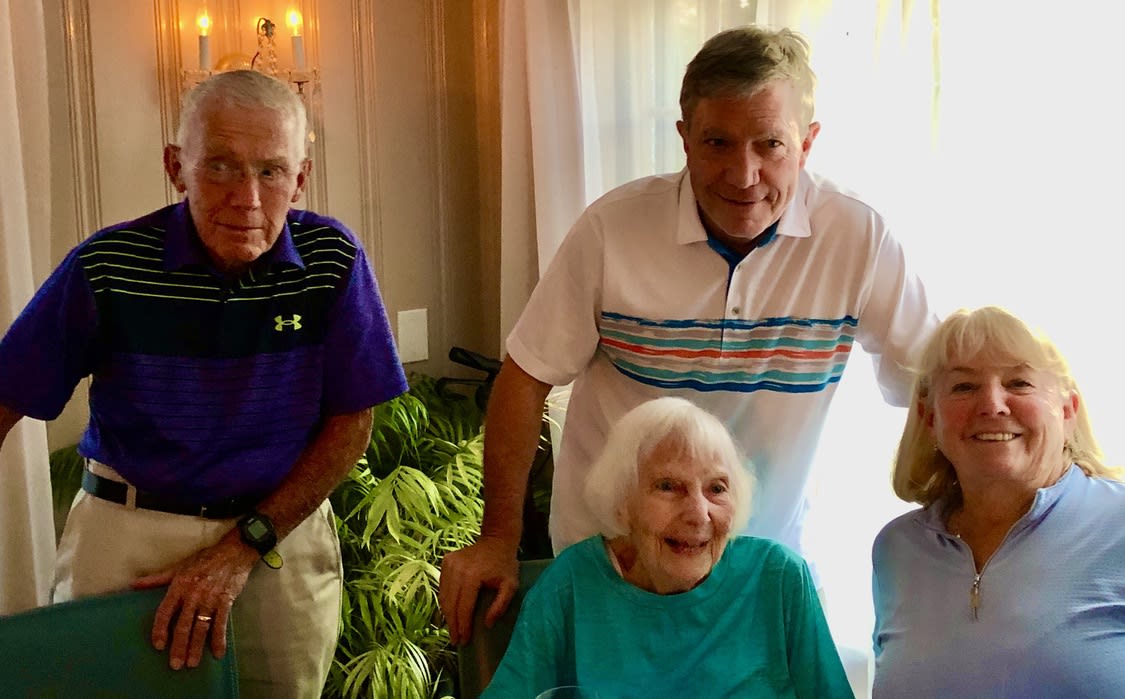
Uncle Bill and Aunt Margaret. We arrived at Bill and Margaret's, where their son, Janice's cousin Bob, was visiting from California while doing some work up in Boston. We had a delightful catch-up and made a plan to meet for dinner at the Mooncussers Tavern, where we were staying. Uncle Bill told us how the name came about: "mooncussers" were a band of land pirates who lit bonfires on the beach to lure ships onto the shore, where they could wreck and plunder them. Their one problem was a full moon, when no ship could be fooled, and so they cursed the moon. Hence, mooncussers. It made a fine introduction to the tavern.
The legend. The Cape is thick with stories of these shore pirates, said to have decoyed vessels onto the rocks on the blackest nights with lanterns and fires, then stripped and gutted the ships and put the sailors to death. Other tellings are kinder, holding that the wreckers actually pulled the sailors to safety and only then picked the ship clean. Myth or legend, it seems no one will ever quite know.
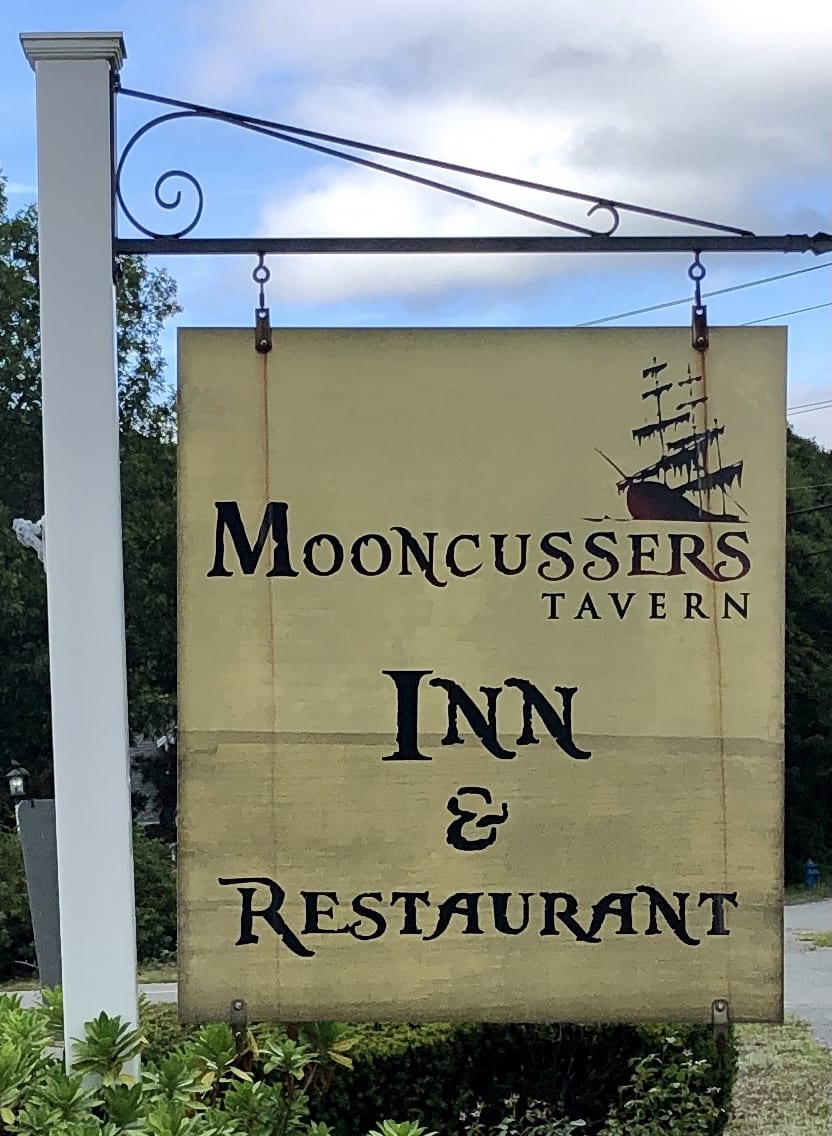
The Mooncussers Tavern. We drove over to check in and met the owner, Ana. When we told her Uncle Bill's story, she smiled and said yes, that is just why they named the place. The building went up in 1786, with a popular restaurant on the ground floor and seven guest rooms upstairs.
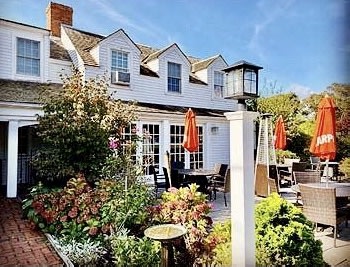
We made a half-past-six reservation for Aunt Margaret, Uncle Bill, and Bob, and had a delightful dinner full of old family stories and talk of the younger generations, finished off with a couple of crème brûlées. Then we said goodnight and turned in ahead of golf.
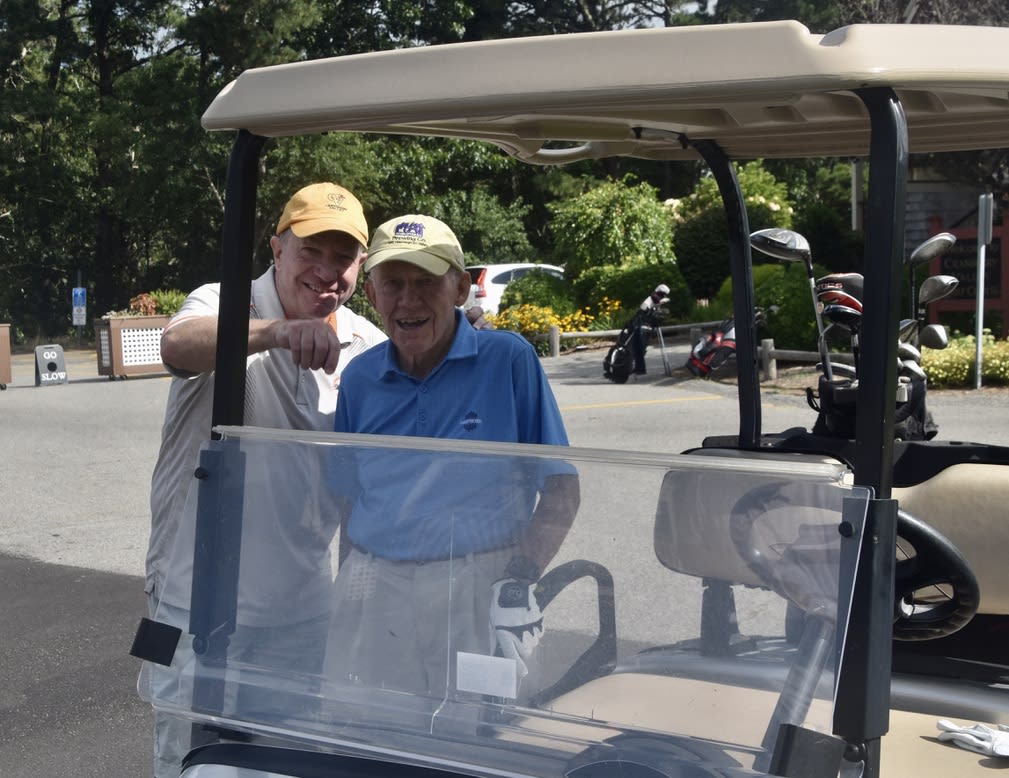
Golf with Uncle Bill at Cranberry Valley. We had a ten o'clock tee time at Bill's home course, Cranberry Valley. Uncle Bill is ninety-three and has come close to shooting his age more than once, a goal he is still chasing; he walks the course, pushing his own clubs, two or three times a week. He rode in a cart with Bob this day, but he would not be seen riding down to the first tee, he did not want anyone catching him in a cart. Janice walked the course years ago and found it a real test. The only reason Bill rode at all, he let us know, was that he was playing with three out-of-shape youngsters.

We headed back to Bill and Margaret's to say our farewells, promising to return soon. It is always a wonderful time with them. From the Cape, we pointed the car north toward Connie and Lee's in New Hampshire.