Dateline January 30, 2022, Cruising the Caribbean from Puerto Rico
Like everyone we know who loves to travel, we had been aching to do something, anything, again. Our first plan, a cruise out of the Dominican Republic, had been canceled by COVID. So when word came in December that the January sailing of the Norwegian Epic was on, out of Puerto Rico, we jumped, and then spent the next few weeks untangling the rules, which were a little crazy. To board, Norwegian required a rapid COVID test right there at the pier; test positive and you could neither sail nor fly home but had to quarantine in Puerto Rico for seven days, though if you had taken a PCR test within the previous seventy-two hours they would help with the cost. Puerto Rico, for its part, demanded an antigen test within forty-eight hours of arrival, and since no PCR comes back that fast, that meant paying for yet another test. Insurance covered the PCR; the antigen was out of pocket. Two negative tests later, exactly as we expected, we figured the one at the pier would be a formality.
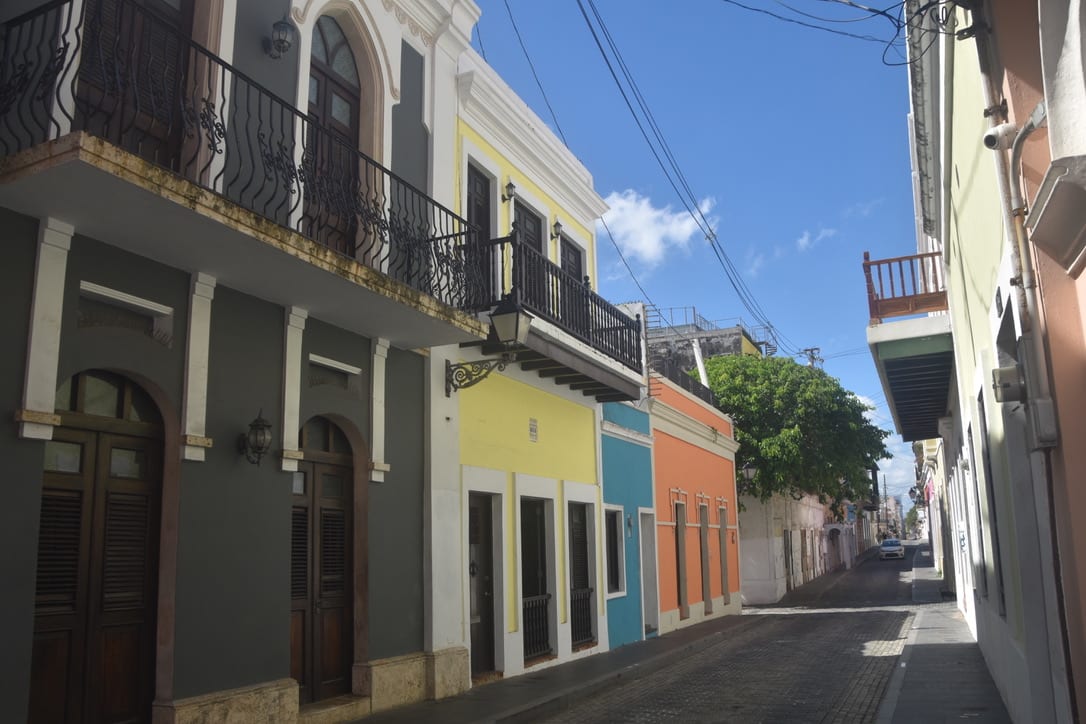
Old San Juan. With flights canceling left and right, we flew in a day early and rented an Airbnb in Old San Juan, a cute boutique hotel, half renovated and half a work in progress. Our host, Daniel, carried our bags up three floors when the elevator turned out not to be running yet, and pointed us to the good local spots.
Dinner was El Jibarito, the real, unfussy Puerto Rican thing, where we tried a local rum so good we photographed the bottle to hunt for it back home; no luck, you cannot find it on the mainland. Breakfast the next morning was at La Carreta, at a tall table in an open window over a little park, with strong, almost-espresso coffee and, to Janice's dismay, no hot tea.
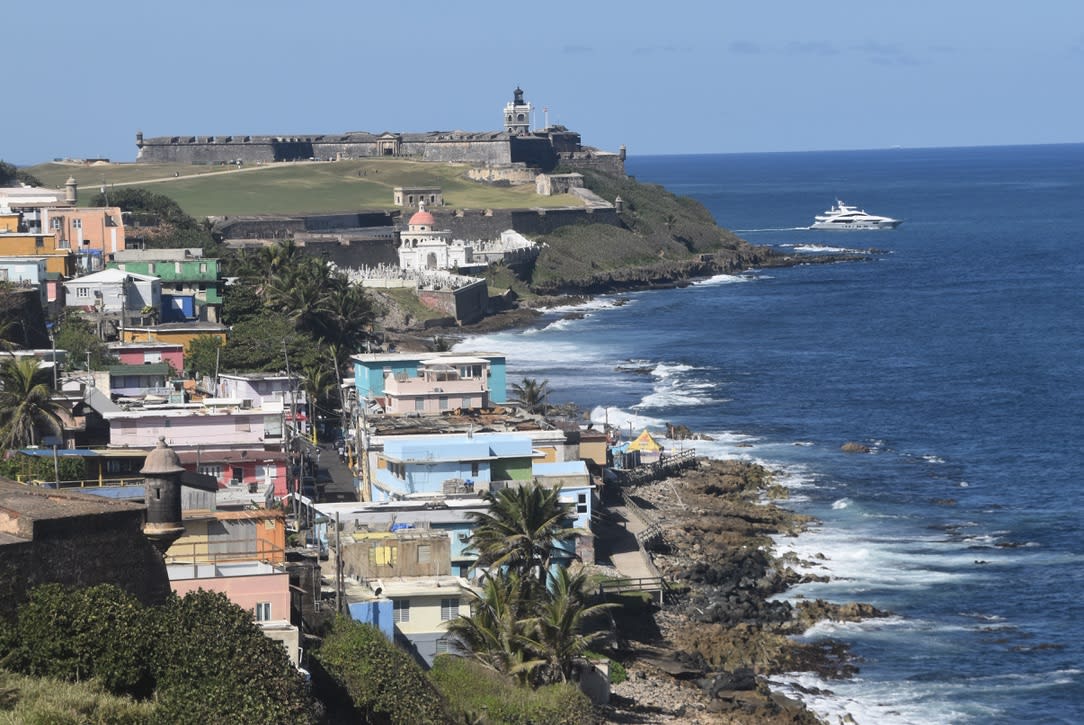
Castillo San Cristóbal. A block from our room stood the old fort, and we spent the morning on it before heading to the port. Castillo San Cristóbal is the largest fortress Spain ever built in the New World, a UNESCO World Heritage Site begun in 1634 and finished by about 1790, sprawling over twenty-seven acres on the eastern, landward gate of the city. After the English sacked San Juan in 1598 and the Dutch came in 1625, Spain set out to guard the place from attack by land, and the work fell to the Irish-born chief engineer Thomas O'Daly, who served Spain for the tidy reason that Spain was the enemy of his own enemy, England. The morning was beautiful, the views from the ramparts breathtaking, and walking the levels of the place was a fine bit of exercise. The National Park Service has a good write-up.
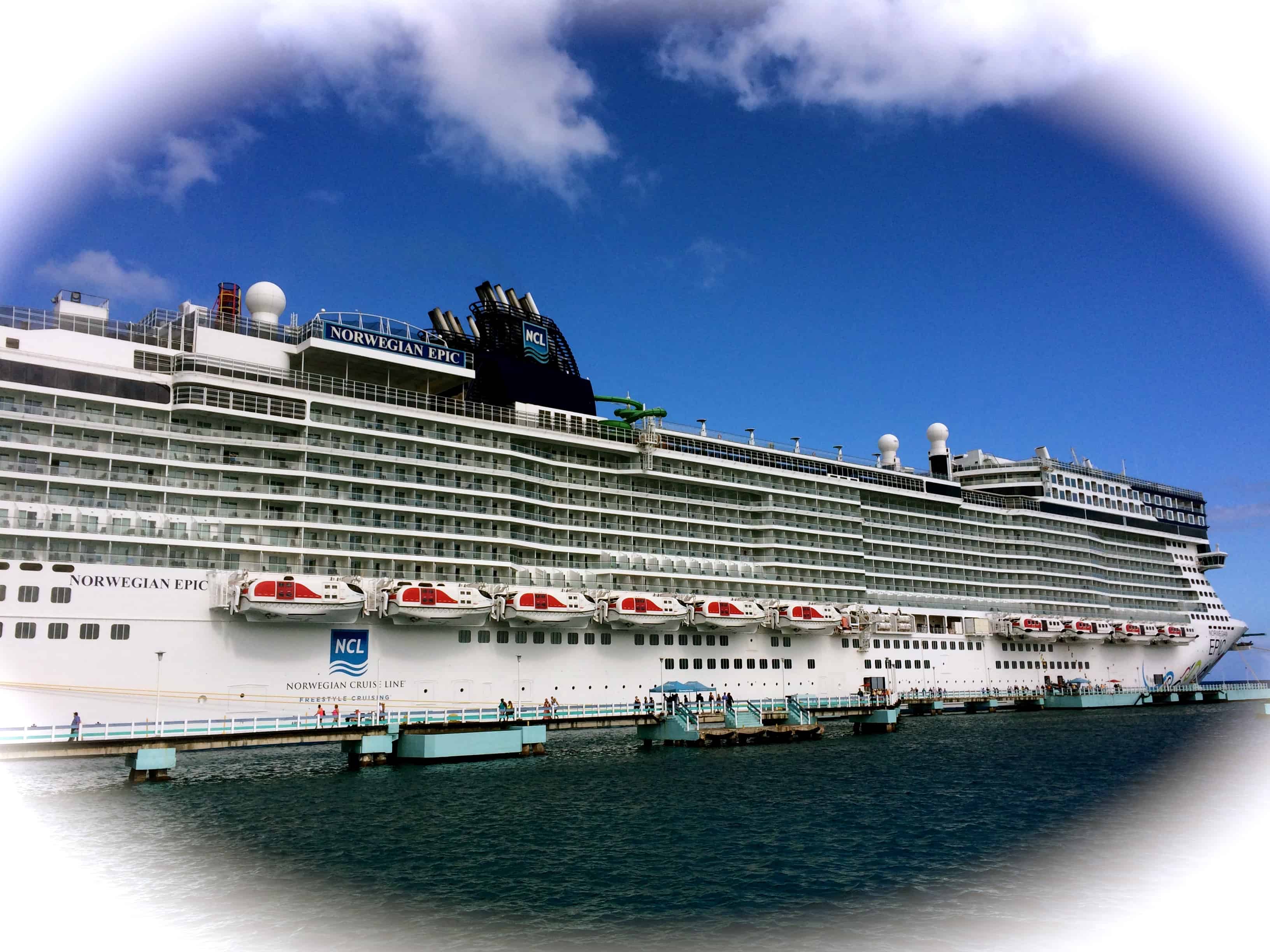
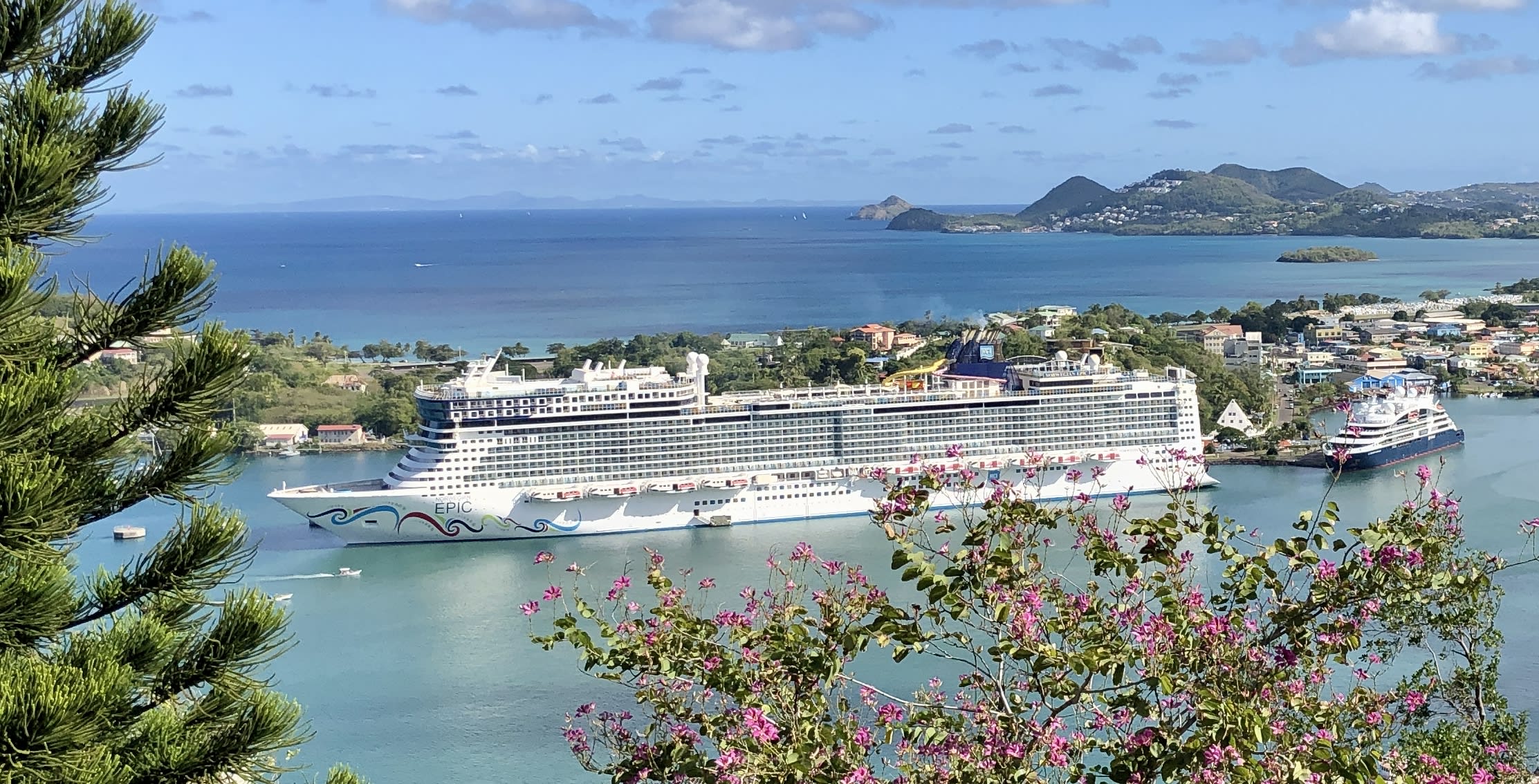
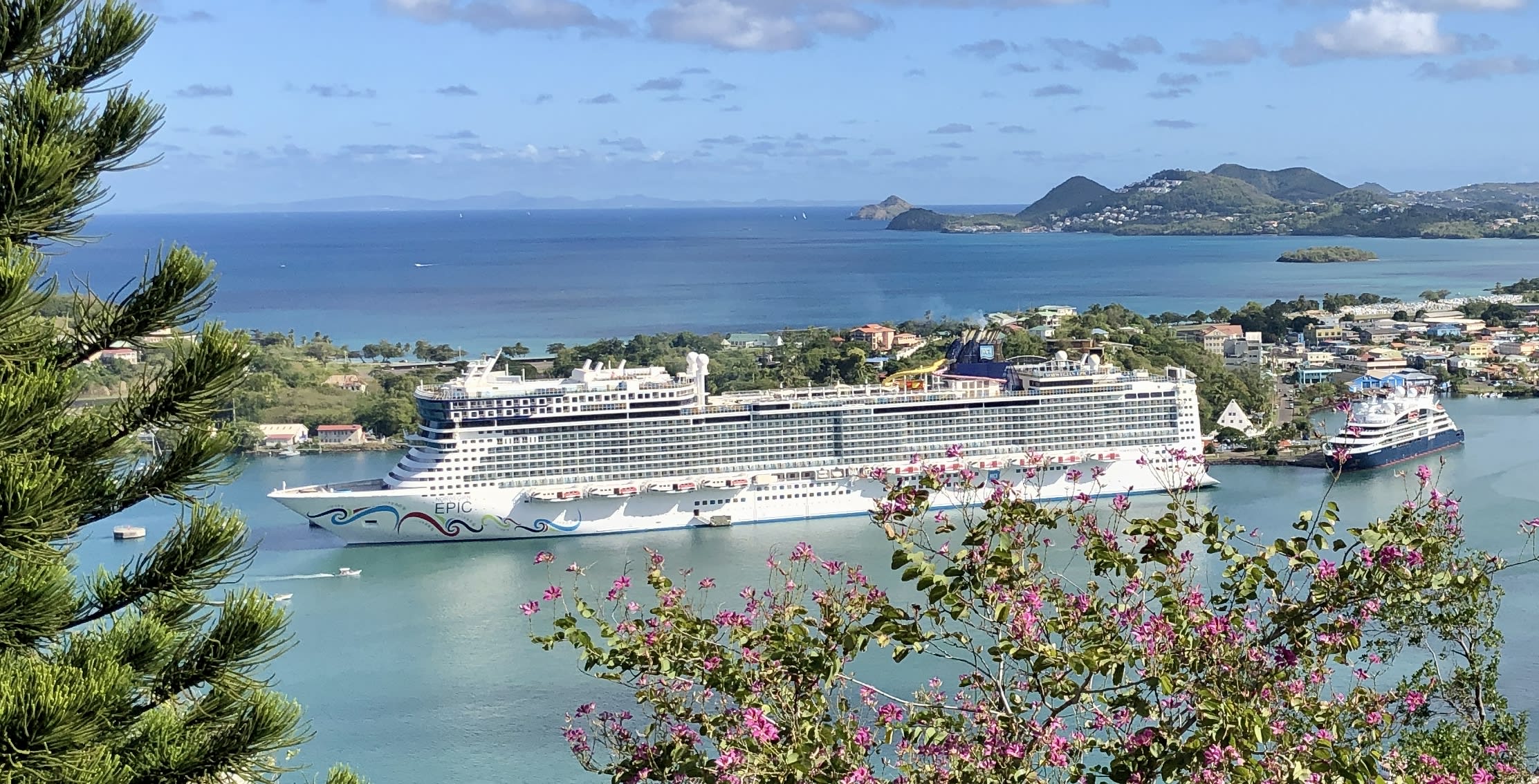
The Epic, a ghost ship. An Uber to the port cost eleven dollars; a taxi wanted thirty-five, the first of several lessons that Uber quotes you a fare while the taxis tend to forget they own a meter. At the pier they took our luggage and herded us onto a bus to a warehouse a few miles off, the kind that usually holds trucks, for the famous rapid test. Half an hour later we had the verdict: after three tests, still no COVID. It seemed, we thought, a touch overdone. Then back on the bus and aboard at last. The Epic normally carries about forty-two hundred passengers, but she had sat idle for sixteen months, and this was only her second sailing since the shutdown, so we had roughly a thousand of our closest friends aboard. We took to calling her a ghost ship: no lines, no waits, and all the food and drink anyone could want. We dropped our things in a balcony room and made straight for the whiskey bar and a proper bon voyage drink.
That night's show was Beatlemania, a tribute act that nailed every old song while the whole theater sang along. It tickled John, who had just been asked to write up a song from his youth and had chosen the Beatles' concert in Kansas City in September of 1964, on their first American tour. "Good thing we can look these things up," he said, "because my memory is not what it was."
St. Thomas. Our first stop, St. Thomas in the U.S. Virgin Islands, was merciful on the rules: masks inside the shops and taxis, but otherwise you could breathe the open air. A short ride dropped us at a little park near Charlotte Amalie, alive with dogs, chickens, and roosters, and on the far side, to our surprise, a cockfight already underway. A local told us five brother roosters live in the park and square off on a regular basis; this pair got serious enough to draw blood before a man jumped in to break it up. It is legal there, he assured us. No harm, no fowl. What stayed with us, though, was how many shops sat shuttered. We found two we loved, a jewelry store run by veterans, and a lovely clothing shop whose owner told us she would be closing for good by the end of the week. Hit first by a hurricane and then by COVID, leaning on a cruise trade that had all but vanished, and squeezed by the big outfits besides, she and her island had had a brutal run. We came away hoping they recover soon.
St. Maarten. We had last seen Philipsburg in 2014, and the place had boomed: a big new cruise port where several ships could dock, the old marina rebuilt, the town humming and far livelier than St. Thomas. We came back for one reason. Years ago we sailed an honest-to-goodness America's Cup race out of Great Bay, and in all our travels it is still the most fun we have ever had as tourists. The harbor outfit keeps a small fleet of the great twelve-metre yachts, including Dennis Conner's Stars and Stripes, the boat that won the Cup back for the United States in 1987. The twelve-metres carried the America's Cup for most of the last century, with their final hurrah in 1987, four years after the famous American defeat of 1983, when Australia II and its secret winged keel ended the New York Yacht Club's one-hundred-and-thirty-two-year winning streak, the longest in all of sport. Conner spent those four years plotting his revenge, and got it off Fremantle, beating the Australian defender Kookaburra III four races to none. In 2014 we crewed on that very Stars and Stripes against Canada II, every passenger handed a real job to do, and we won. We had bought crew shirts that day and worn them clean out over the years, so we stopped by the regatta shop for new ones. Then a water taxi back to the ship and an afternoon reading by the pool.
Antigua. At the port of St. John's there was not much ashore to tempt us. We walked the dock shops, half of them papered with "For Rent" signs, started toward a cathedral we had spotted from the ship, thought better of it when the streets did not feel safe, and turned back to spend the day enjoying the Epic.
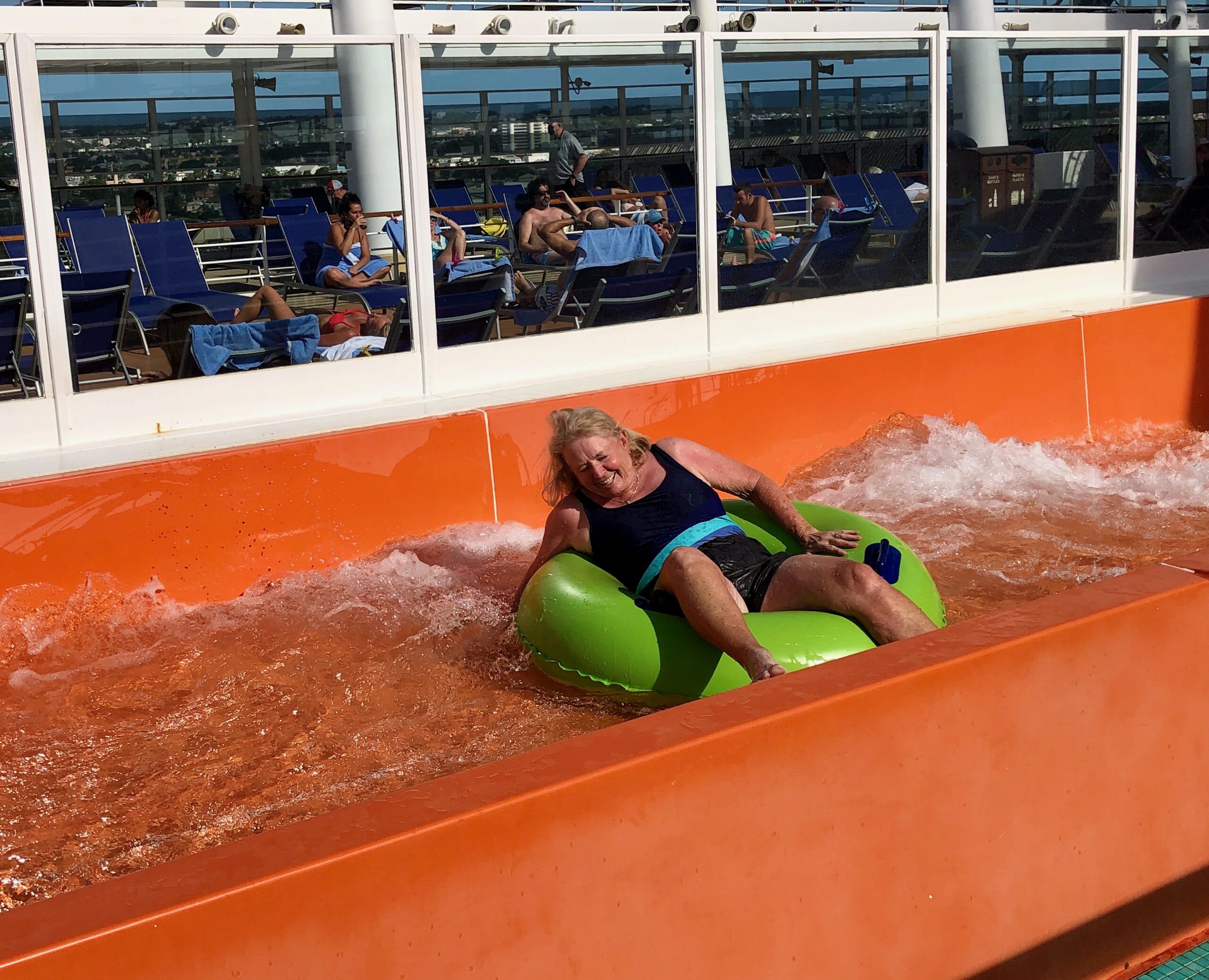
Barbados. We had looked forward to Barbados, which John remembered fondly, but it carried the strictest rules of the whole trip: no walking about on your own, an approved guide or an approved taxi to an approved and open destination, masks at all times. We decided a day aboard beat a chaperoned bus tour, and we will save Barbados for when the world settles down. Janice did conquer the big tube water slide, and near the bottom went around and around like the last swirl of a flushing toilet before being sucked down to the finish. She had a blast.
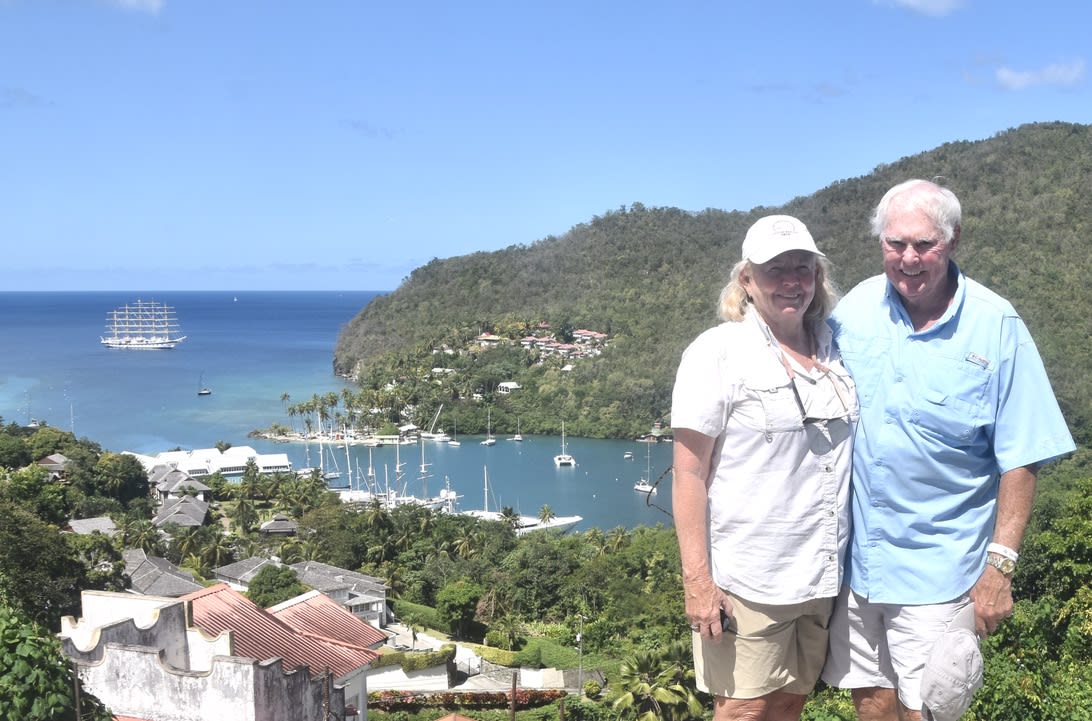
St. Lucia. We had a shore credit to spend, so we took the island's history tour. It carried us up to Morne Fortune, the "Hill of Good Luck," fought over for years by the British and the French, where an old military fort now houses the Sir Arthur Lewis Community College. Tiny St. Lucia has produced two Nobel laureates, about as many per head as anywhere on earth: Sir Arthur Lewis, who won the prize in economics in 1979 for his pioneering work on developing nations, and the poet Sir Derek Walcott, who took the literature prize in 1992. The college had been closed and fully remote since the outbreak, and you could see the grounds had gone untended; here is hoping it reopens soon. The island itself runs on bananas and cocoa. We learned that a banana plant, which is not a tree, dies once it fruits and leaves a young shoot to carry on the line, and that cocoa is a patient business: years for a tree to bear, thirty or so pods per tree, forty or fifty beans to a pod, and a whole tree's yearly crop for roughly a pound of chocolate. Which explained the seven-dollar candy bar in the plantation shop.
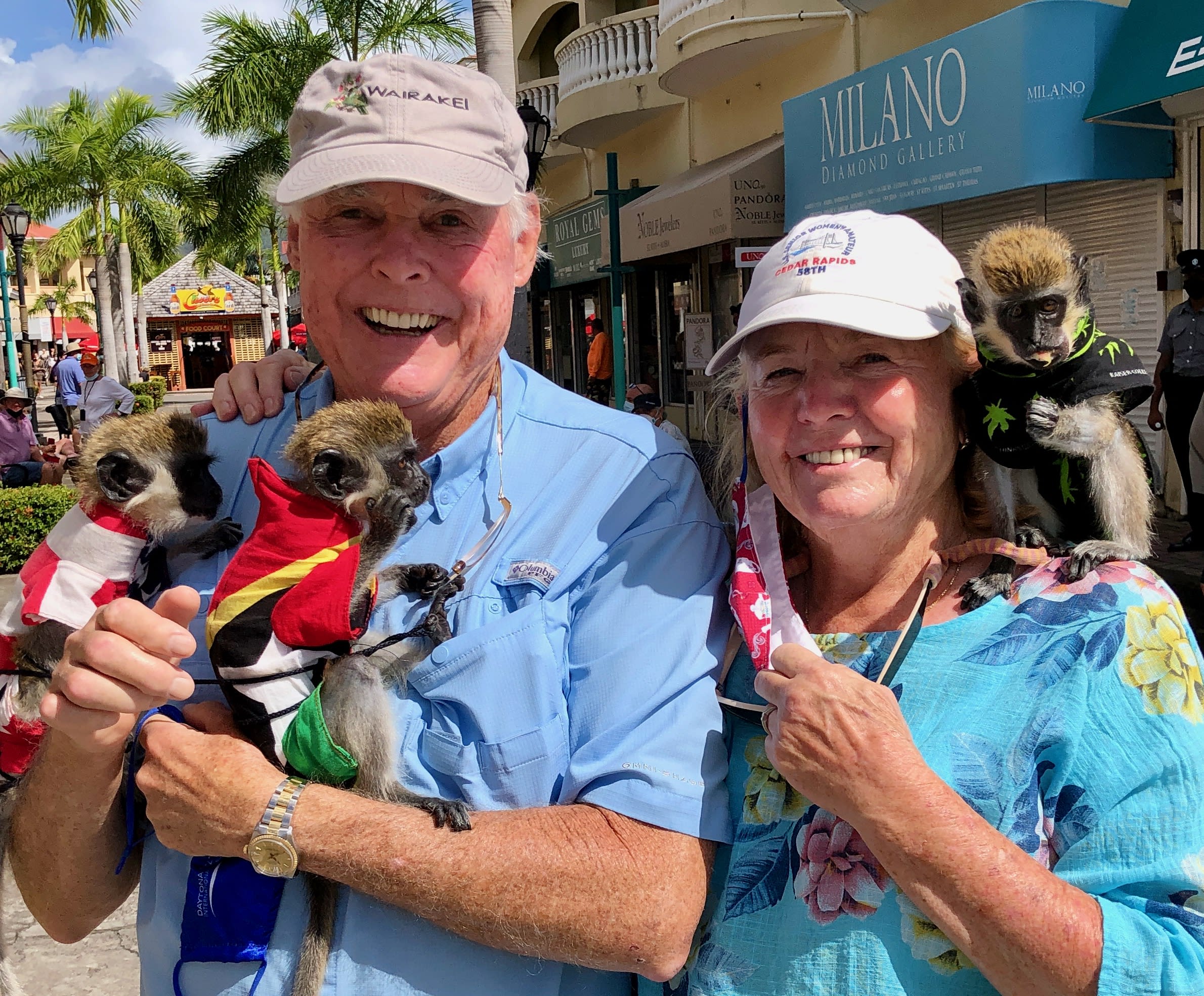
St. Kitts. Here, nothing was open, not even the museum, so we wandered out through the dock shops and back again, until we ran into a gentleman with three monkeys who would perch them on your head and in your arms for a picture. At twenty dollars a session, he plainly had the best business in town. Too much fun.
The crew, and home. The crew were a pleasure throughout, and proud to be back at sea. They told us how many of their friends were still out of work, and that any crew member who tested positive was quietly taken off and moved to another ship serving as a hospital. They worked beautifully while the kinks of getting back to sea got ironed out. Coming into San Juan at the end, the ship offered a bus to the airport for seventy-five dollars; our Uber, tip included, was eleven. It was a lovely trip all the same, and we came home hoping the islands, and the people who make them what they are, so many of them knocked flat by COVID, find their feet again soon. We are already looking ahead to the next adventure.