Dateline March 22-26, 2026, Bermuda
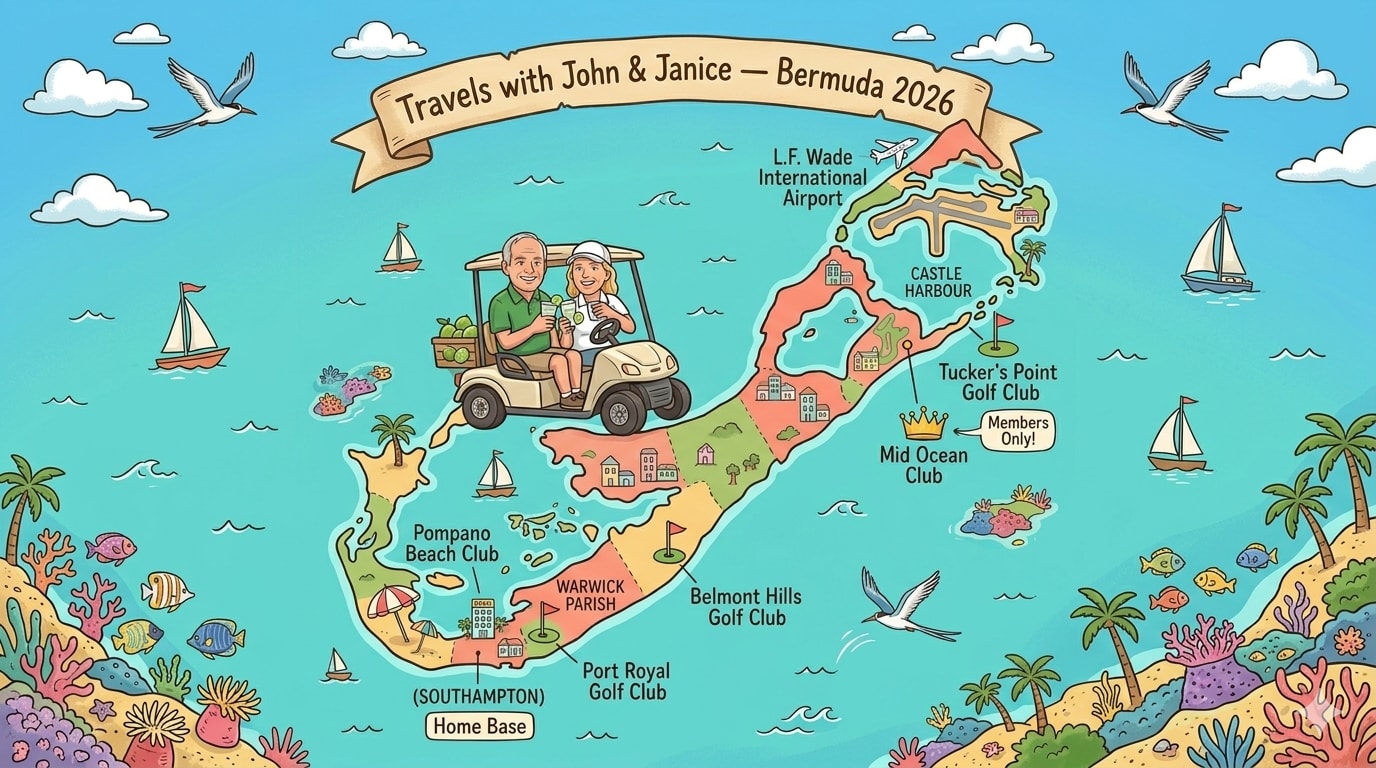
A couples' tournament, twenty years on. The Pompano Beach Club started a couples' golf tournament twenty-seven years ago, and it has run every spring since, with only COVID for an exception. It is a relaxed event, a different format each day across three different courses, and the best of it is the people, a big contingent from the States mixed in with golfers from all over. We first played it in 2006, in our pre-blog days, and this year we decided to come back after twenty years. The club calls it their twenty-seventh Spring Golf Tournament.
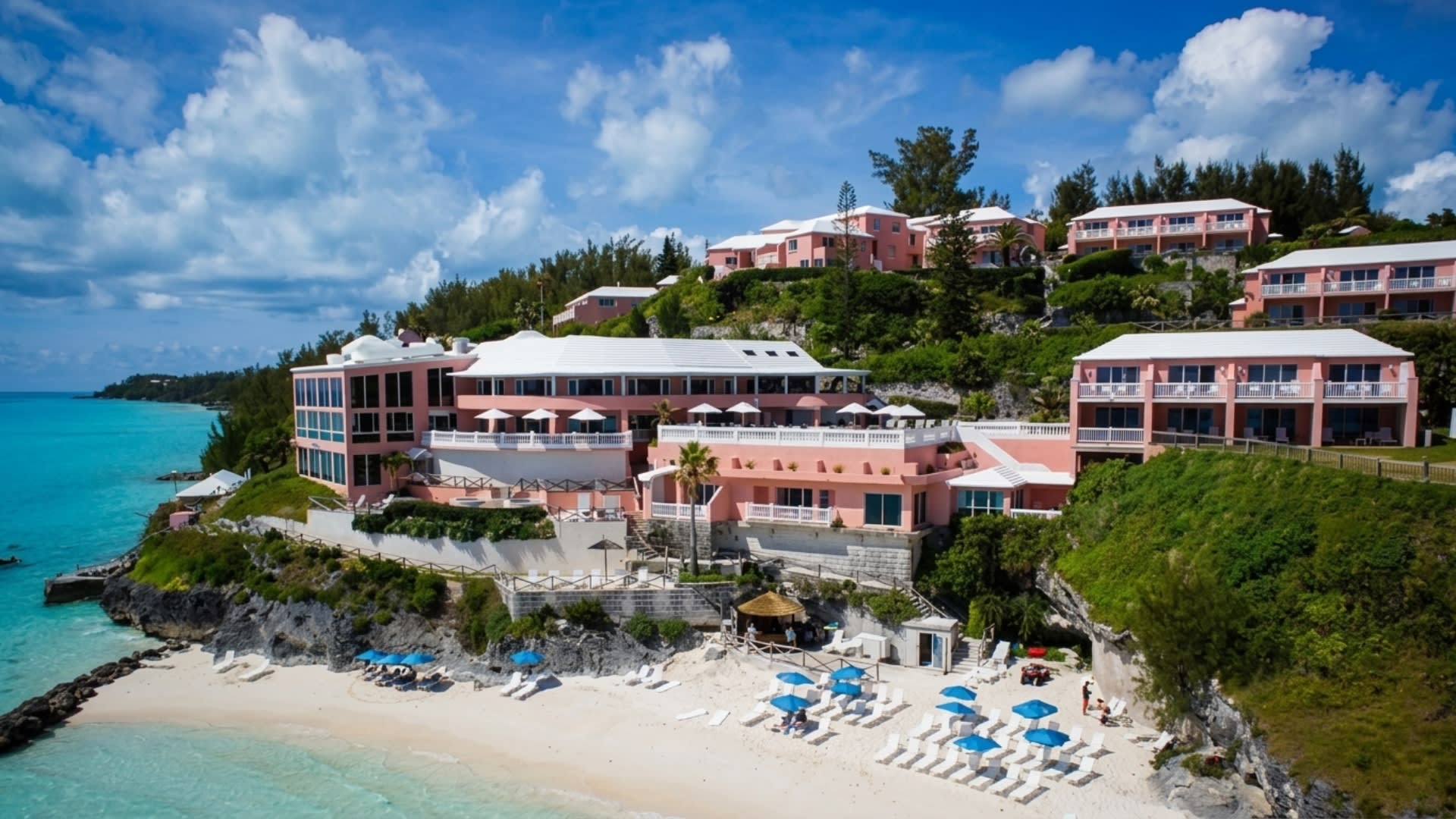
The story of the resort. Tom Lamb, from Waban, Massachusetts, fell in love with Bermuda on a string of vacations in the early 1950s. He went in with a Bermudian friend, Ewing Trott, and the two of them opened the island's first fishing club, named the Pompano for the fish that gather on the shallow sand flats right in front of where the resort stands today. In 1956 Tom bought the club outright from his partner, a sale made possible by something called the Pompano Act, passed by the Bermuda Parliament for the express purpose of letting full ownership pass from Trott to Lamb. It is hard to imagine a warmer endorsement of a man's love for a place. Tom and his wife, Jean, built the property into a small hotel through the late fifties and early sixties, and every guest building is named for a local game fish in tribute to those fishing-club roots. In 1989 the Lambs handed the resort to their three children, Aimee, Tom, and Larry, and it has stayed in the family for seventy years now. It sits about forty-five minutes from the airport.
Off we go. What a week to fly, with TSA troubles all over the news, but Wilmington is a small airport and we figured the lines would be short; still, we went early just in case. We had a six o'clock flight to Atlanta and an eleven-twenty connection on to Bermuda. A car service picked us up at half past three in the morning and dropped us at Wilmington just after four. The airport is under renovation, and hauling golf clubs and bags up the steep temporary walkway was no small thing, but a golf cart carried us up the hill and we dragged the clubs the rest of the way to check in. We were through by a quarter to five, and we had been right; with the airport so small there was no line and we sailed through security. Delta loaded us early because of weather bearing down on Atlanta, but not early enough. Atlanta got hit hard and shut down, and we sat grounded on the plane in Wilmington for about two and a half hours before we finally lifted off. The Atlanta-to-Bermuda leg was on time, and because our layover had been scheduled for three hours, we still made it. That flight had been booked to the last seat when we checked online, but with cancellations piling up in the blizzard across the country, we wondered how many would miss the connection. We took off only a third full; a lot of people never made it.
Landed in Bermuda. We touched down on time and shared a van with other couples headed for the tournament, a twisting forty-five-minute ride made livelier by everyone being on the left side of the road. Twenty years had changed the island; there was new construction everywhere we looked. Then we turned into the property, and the Pompano Beach Club had not changed at all, save for a new dining room where a deck once overlooked the ocean. The quaint charm we remembered was exactly as we left it. Our room was a cottage up the hill with a view of the sea, and we laughed about the shape we would be in after the long climb up the hill and two flights of stairs to the door.
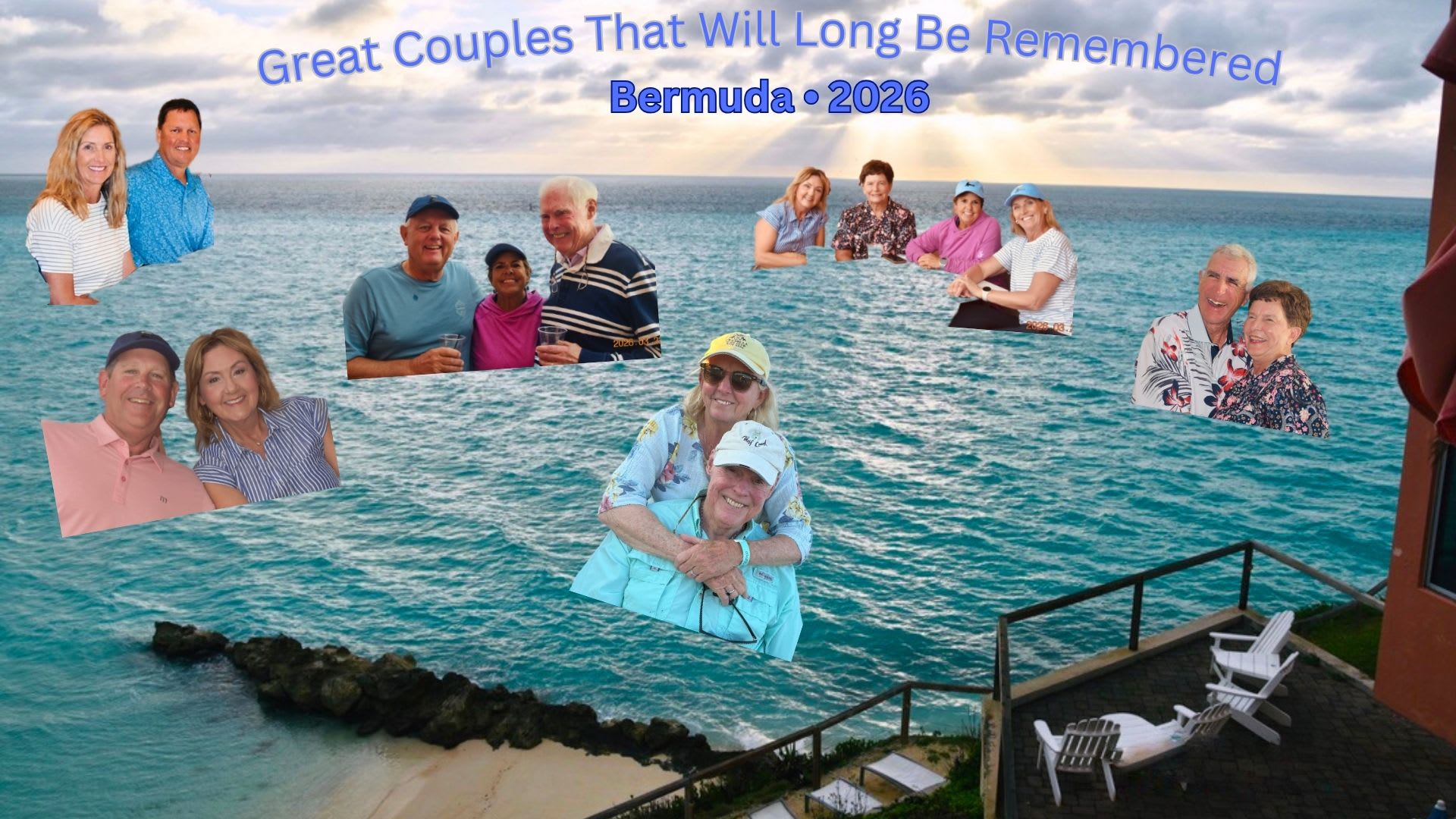
The tournament begins. The welcome cocktail party started at five, so we freshened up and headed down to the patio bar above the beach. Bermuda drinks were flowing, with special shots of Goslings Rum, an eighth-generation family business and the tournament's sponsor, and a fine spread of appetizers to go with them. Most of the talk was about how everyone had gotten to the island, and how some were still trying. We met a lovely group from Kansas and Oklahoma. One of the great pleasures of our first trip had been meeting so many new people all looking forward to a good week, and this was no different. Our hosts ran through the plan, how to learn our partners each day and the schedule of courses and tee times. It was only eight o'clock, but we could not keep our eyes open another minute, so we made the long walk back up to the room.
Tucker's Point, the first round. Our first round was at a course right beside the Mid Ocean Club, the bucket-list track John had heard about for years from friends who had managed to play it, a course nearly impossible to get onto. We were hoping for something just as good. The van took about an hour to get there because of a motor-scooter accident, and the lesson stuck: do not rent a motor scooter. Our clubs had been sent ahead and were waiting on the cart. We warmed up, teed off, and met our hills. It was sunny with winds of fifteen to twenty miles an hour, and we had been told the course was hilly, but nothing prepared us for how steep.
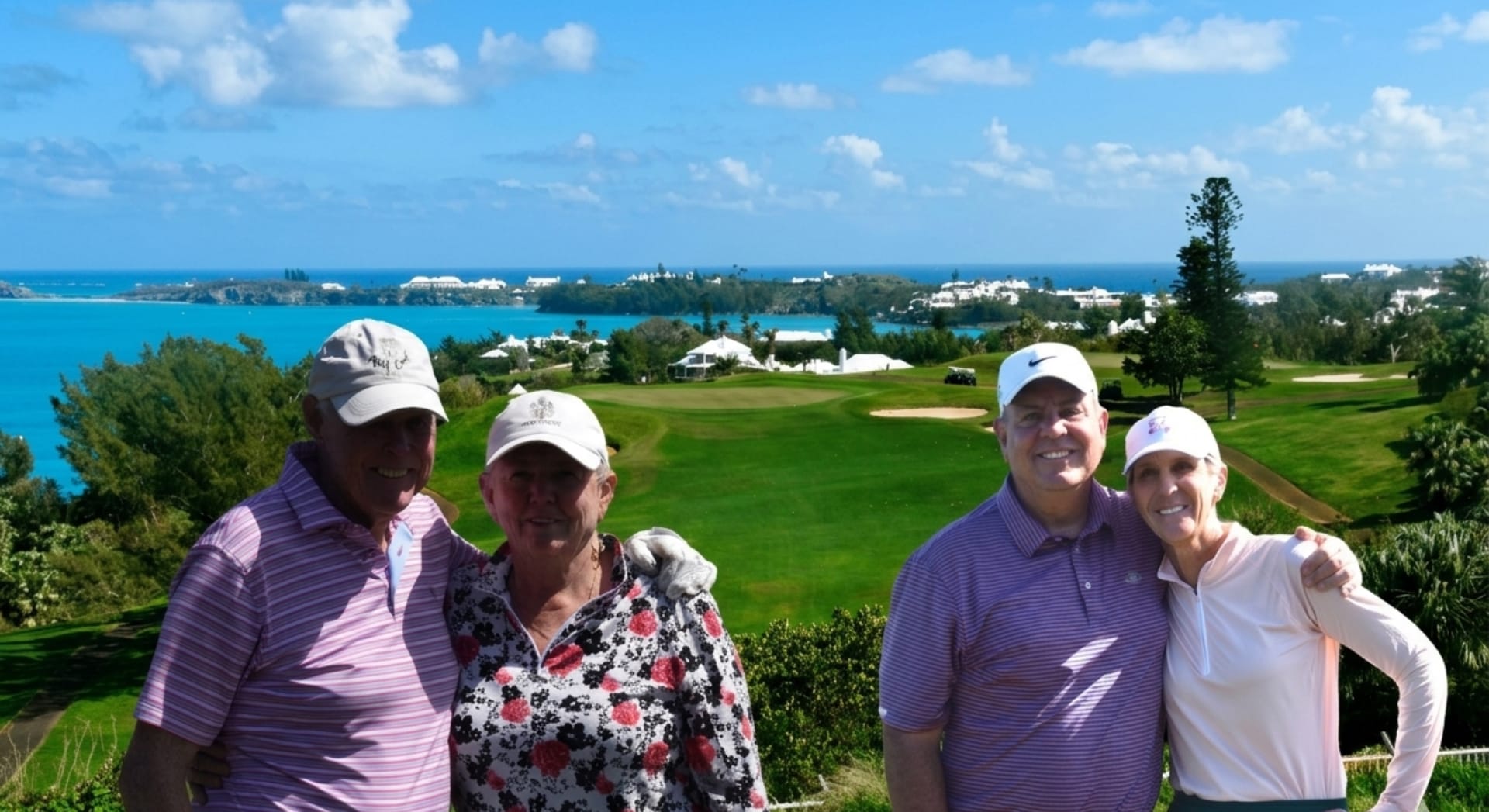
The carts ran on geofencing, a clever way to keep them out of protected areas, except there were no markings on the course and nothing on the cart's screen to show where those invisible lines were. Cross one and the cart simply stops, and you have to back out the way you came. We heard plenty of tales of golfers pushing their carts by hand to get free, which sounds about as frustrating as it gets. The format was a Modified Best Ball: both partners drive, the better drive is chosen, then each plays a ball into the hole and the better score counts for the team, with each player's drive required at least twice per nine. Practice does not make perfect. We shot a 46 on the front, steadied a bit, and came home in 38. The round ran about five and a half hours, but we had the good luck to play with a very nice couple, Rob and Patty Tykal, so the time between shots passed easily. Then it was back to the hotel for another round of cocktails.
Adopted by the kids. That Kansas and Oklahoma crowd asked us to join them, and then insisted we be part of their dinner reservation every night. We felt like the old folks adopted by the young ones; they were fifteen to twenty years our junior, right about the age we had been on our first trip. After dinner we stopped at the bar, where the bartender built us a Rum Old Fashioned that was so good it may just become our new drink of choice. We had spent every ounce of energy we had, and we were back in the room by half past eight and asleep by nine. A wonderful day, even if our golf left us near the bottom of the flight. Tomorrow, we hoped, would be better.
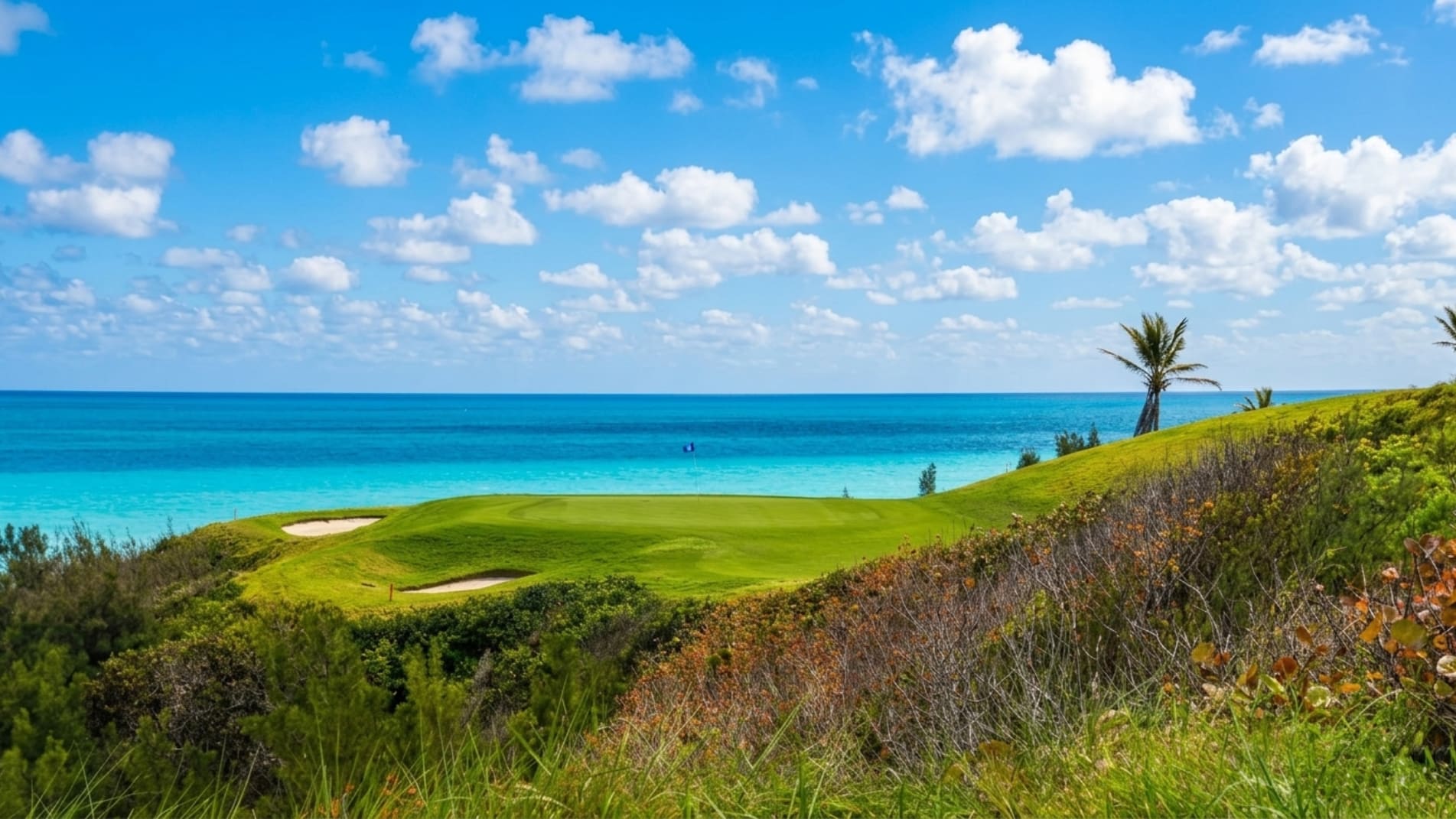
Port Royal, the second round. Port Royal is a Robert Trent Jones course, designed in the late 1960s and opened in 1970, and it is one of only two public courses on the island. Its 16th is one of the most photographed par 3s in all of golf. During the original routing a landowner refused to sell a crucial piece of ground, which forced Jones to rethink the hole, and his answer was inspired: a 235-yard par 3 with tee and green perched on cliffs above the Atlantic, a chasm between them where the waves break on ancient rock. Roger Rulewich, who had been on the original design team, updated the course in 2009, but he left the 16th exactly as it was.
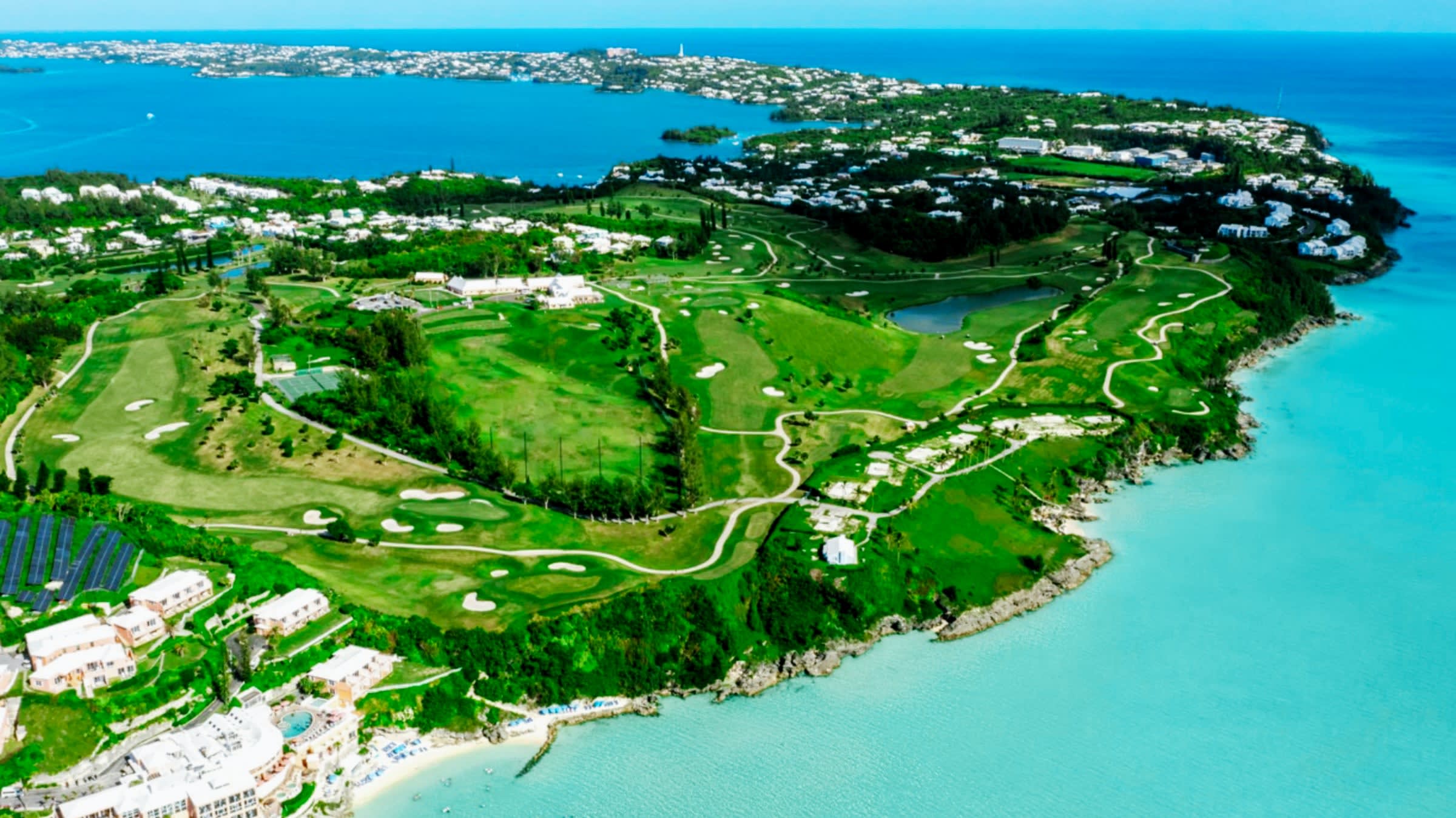
The PGA Tour makes a fall stop here in November for the Butterfield Bermuda Championship; the 2025 winner was Adam Schenk, a tour member since 2017. We were up early for the second round. The day's format was a scramble, using at least two drives from each of us per nine. We looked like champions on the first hole, lining up a birdie putt, and then it went downhill from there. We played with a couple from the Boston area, John Molinari and Andrea Dutile, who turned out to have a fifth wheel, so we swapped RV stories the whole way around. They were wonderful company.
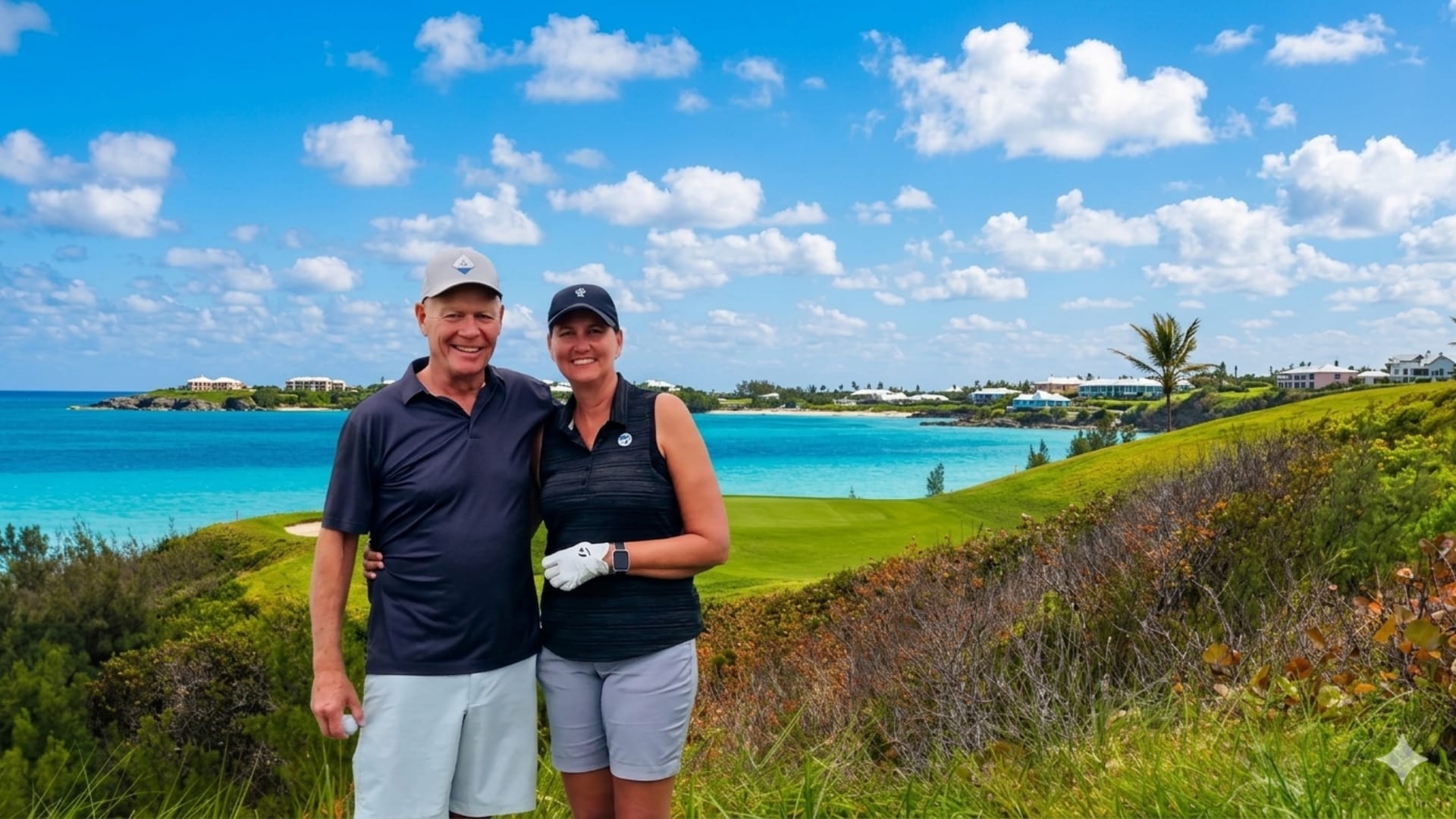
We moved a little quicker this time, five hours, and the course was in good shape for the season. The signature 16th was as beautiful and as daunting as promised, and it was easy to see why it gets photographed the way it does. Afterward we sat in the bar with a local IPA, and the shock of the day was the price; twenty dollars a beer, holy cow. When it was all over we had posted an 85 in a scramble, which earned us DFL net and next to last in gross. Two rounds left to redeem ourselves. The weather did not look promising, but the weatherman is wrong more often than not, so we held out hope.
A day washed out, and the Dockyard. The rain came, the courses soaked through, some greens underwater, and the competitive round was cancelled. You could still play in the rain if you wanted, cart paths only, or take the day off, and given how steep those hills were we decided we would rather not slide up and down them all afternoon. It looked like it might clear a little, so we set off for the Royal Naval Dockyard, where, as always, the history comes first.
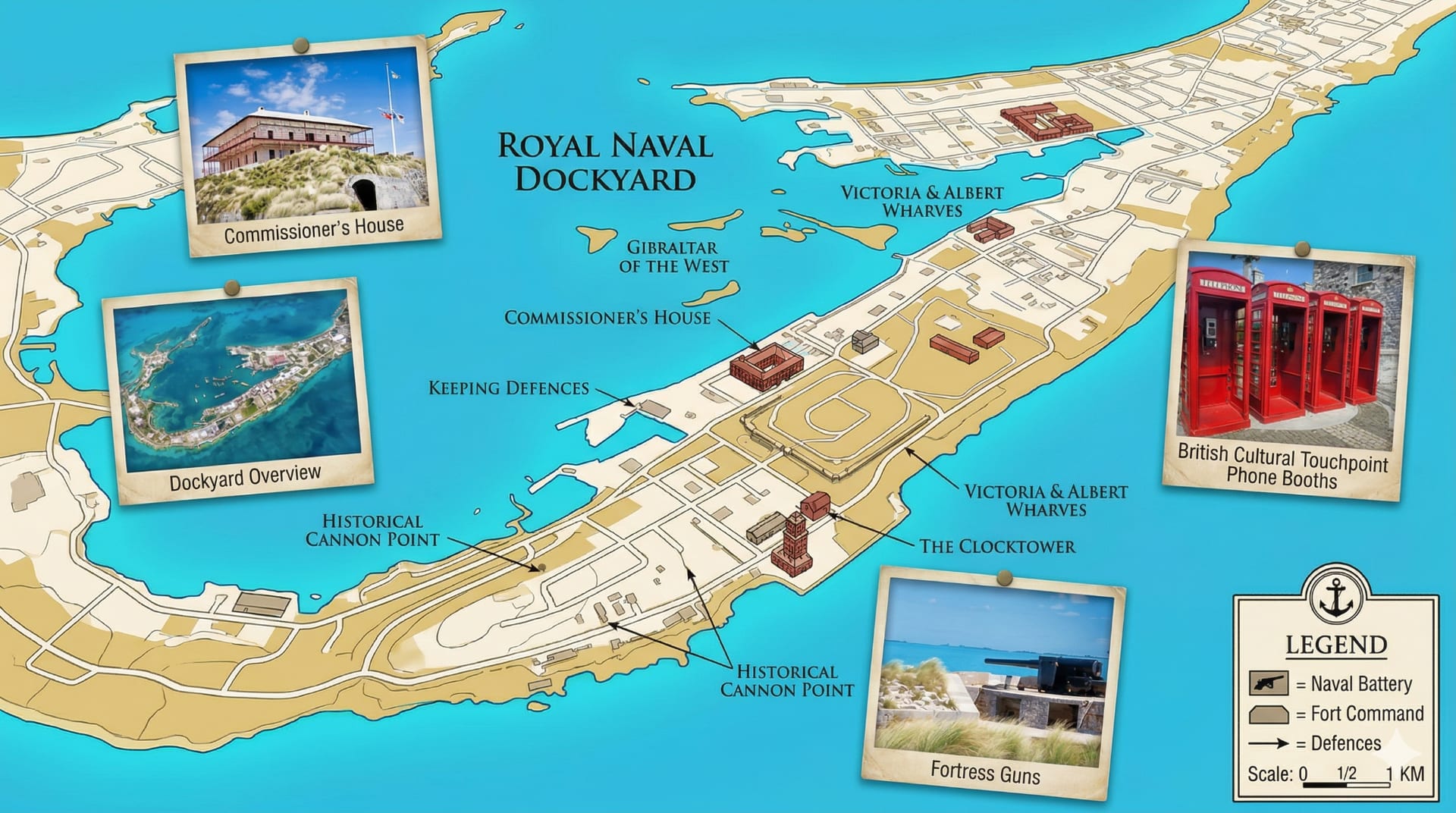
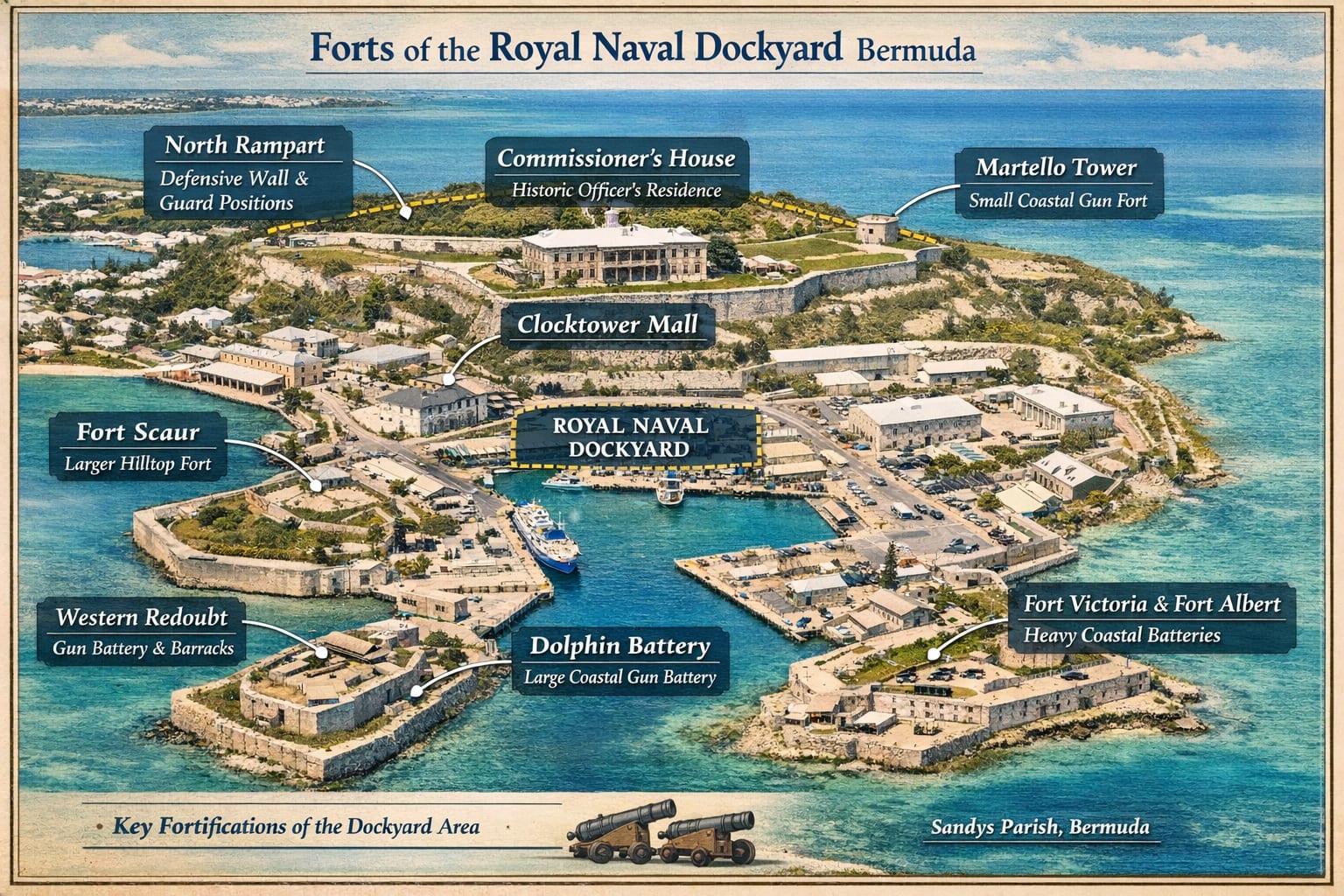
The Dockyard was built between the late 1700s and the early 1800s by the British, and the reason was simple. When Britain lost the Revolutionary War to the American colonies in 1783, it lost its bases on the United States coast as well. The British had held Bermuda since 1621, so they took a large stretch of land here from the English colonists for military use and built the Dockyard, set right in the middle of the major shipping lanes. It took about fifty years to finish, the work done by thousands of British prisoners, enslaved people, and some Bermudians, and it became a vital repair and supply hub for ships crossing the Atlantic, fortified so heavily that it earned the nickname the Gibraltar of the West. From here, in the War of 1812, the British launched their attack on Washington, and in the Second World War, with Britain and the United States on the same side, the Dockyard served as a critical Atlantic base, repairing hundreds of ships, shepherding convoys across the ocean, and helping to defend against German submarines. Most naval operations wound down beginning in the early 1950s, and the station closed for good in 1995. Recognizing what it meant, Bermuda began restoring the site in the 1980s, and it now stands as both a national museum and a preserved landmark of the island's seafaring past.
Commissioner's House. Commissioner's House has stood atop its hill in the Dockyard since 1827, raised by local and enslaved laborers and later by British convicts, its cast-iron frame shipped over from England, the first building of its kind anywhere in the world. It served its intended purpose for only a decade, housing the resident Commissioner of the Dockyard, before the British Army took it over for good, and from there it changed with the times: Royal Marine barracks, then Allied headquarters for intercepting submarine radio traffic during the Second World War, and at last abandonment in 1951. For more than twenty years it sat empty and weather-beaten until the Bermuda Maritime Museum took it back in 1975 and began a restoration that ran a full quarter century. The museum reopened to the public in 2000, and its floors now tell stories that reach far beyond the island. The ground floor holds the Defense Heritage exhibits, honoring the local lives lost in two world wars; the first floor is given over to Bermuda's part in the slave trade; and higher up, the exhibits trace immigration and tourism and the island's ties to the Azores and the West Indies, with a United States Navy Room on the top floor devoted to the long, shared history between Bermuda and America. The collection keeps changing, and the house that once served commissioners and soldiers now serves memory.
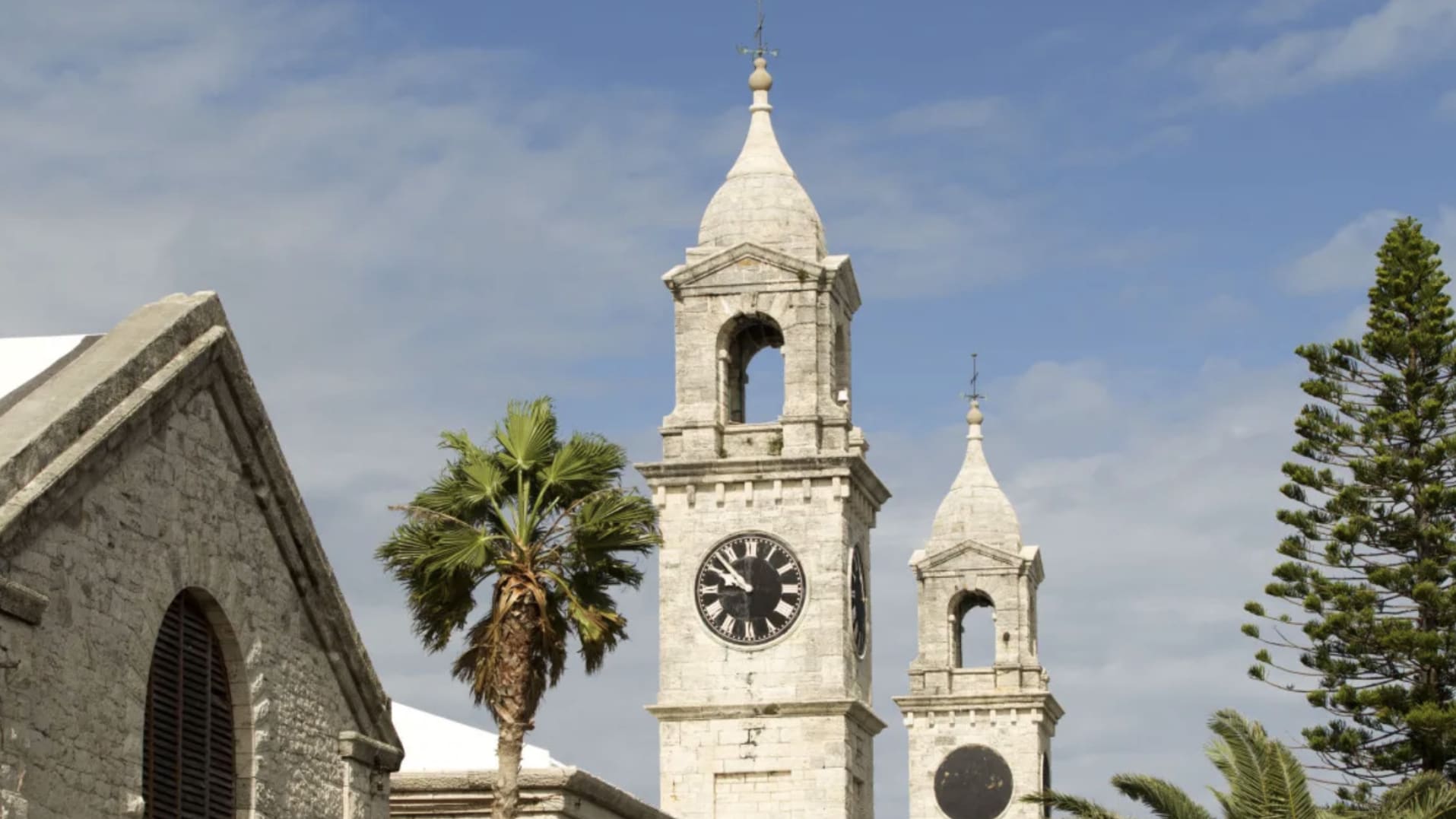
The clock tower and the forts. The clock tower went up in 1846 as part of the Dockyard, built in a Victorian style with a clock mechanism brought from England, and it kept time for sailors and stood at the center of naval life through the nineteenth century. Restored more than once over the years, it remains one of the island's enduring maritime symbols.
Five forts once guarded against any assault on the Dockyard. Fort Hamilton watched the main channel into the yard, Fort George anchored the center as the chief defensive and lookout post, Fort St. Catherine, the oldest of them, gave crossfire support, Fort Victoria added overlapping fire from the west, and Fort Scaur sat on a hill to the southwest, controlling the land approach. The rain was coming down hard, so we managed only a few of them, but it was a memorable afternoon all the same.
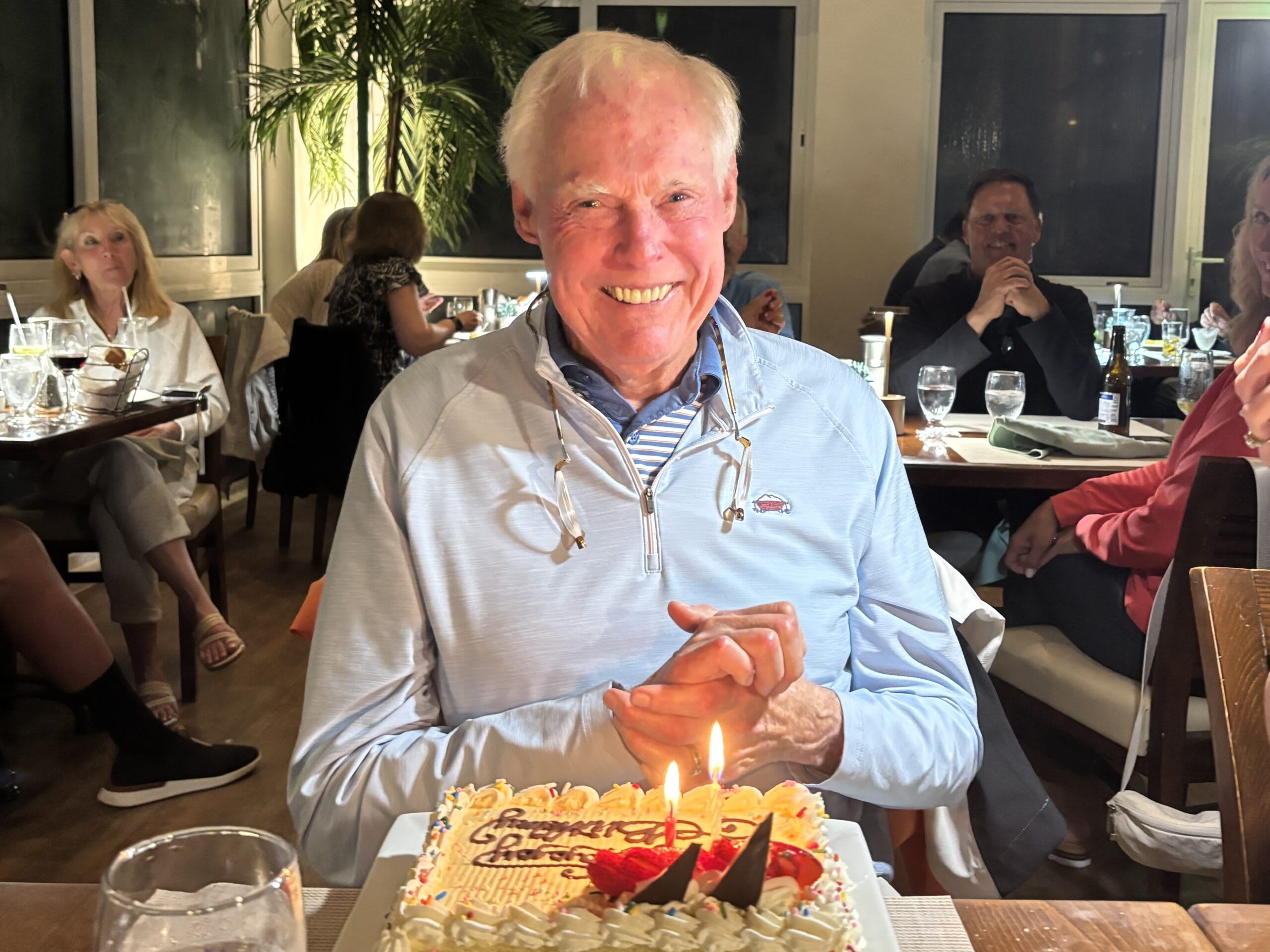
A birthday in the rain. Thursday was our day off from golf, set aside to explore the island, and, more to the point, it was John's birthday. We had thought we might head into town and down to the beach, but the rain kept on, the beach was out, the air had a chill, and we had seen the town on our last visit, so we settled for a lazy day around the resort, part of it spent working on this very blog. It was John's seventy-ninth birthday.
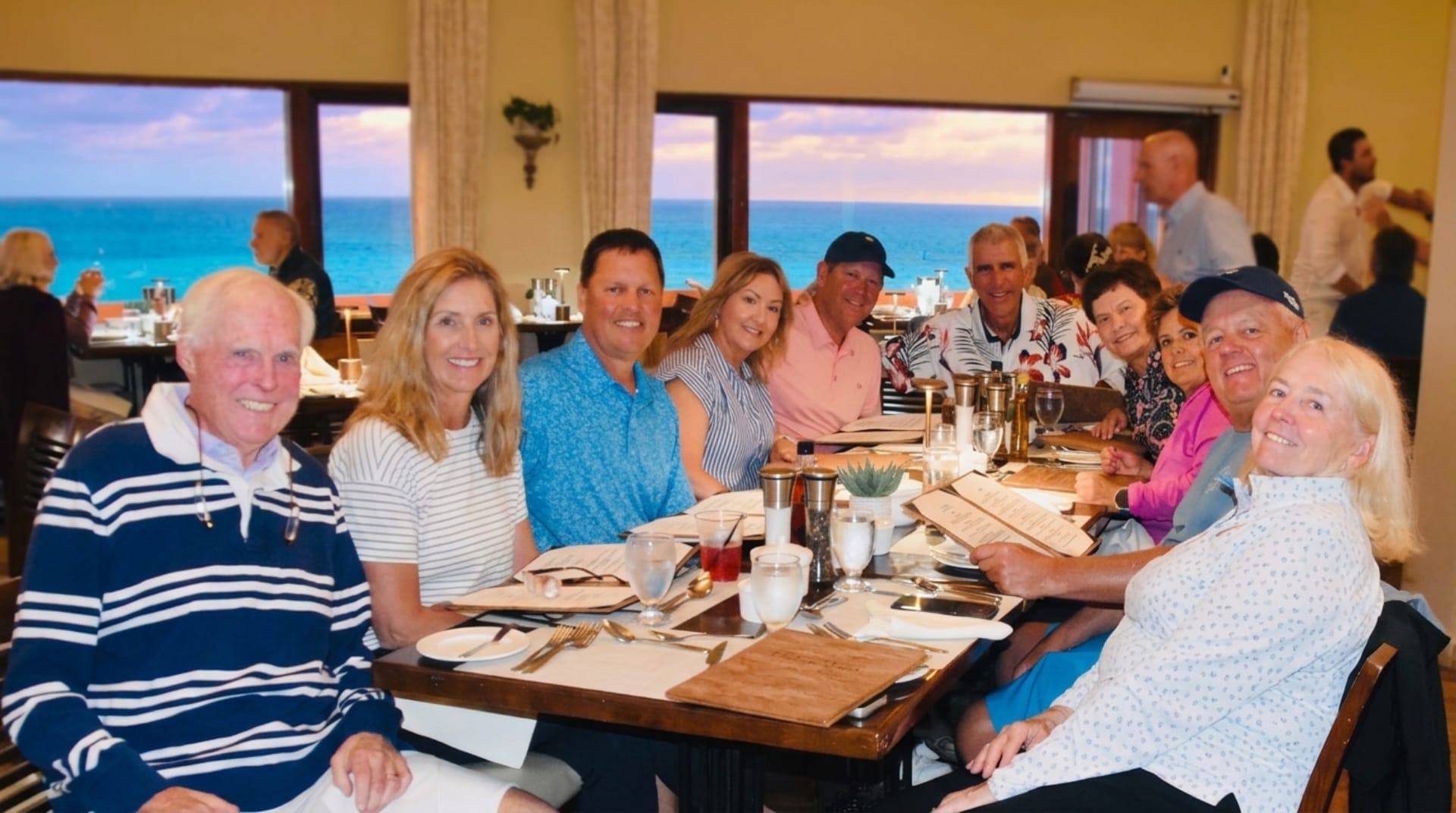
That evening we joined the gang that had adopted us for dinner and a proper celebration. It was a fine night, full of good stories and easy banter. Everyone was worn out, so there were no after-dinner drinks; we headed back to get ready for the next day's golf, the third round, still hoping to turn things around, and certain we would have fun either way.
Back to Port Royal. We were eager to redeem ourselves with some great golf, and it was not to be. The day was cold and windy, and Janice had perfected what we came to call the "kill the worms" shot. Our partners were not faring much better, so on the last three holes we made a match of it, which we should have done from the start; every shot got better the moment we did. Janice birdied that last uphill par 4 by knocking her third shot to less than a foot, and we cheered. Our score was pathetic and the round was pure fun, and the weather never cleared all day, but it will always be memorable golf.
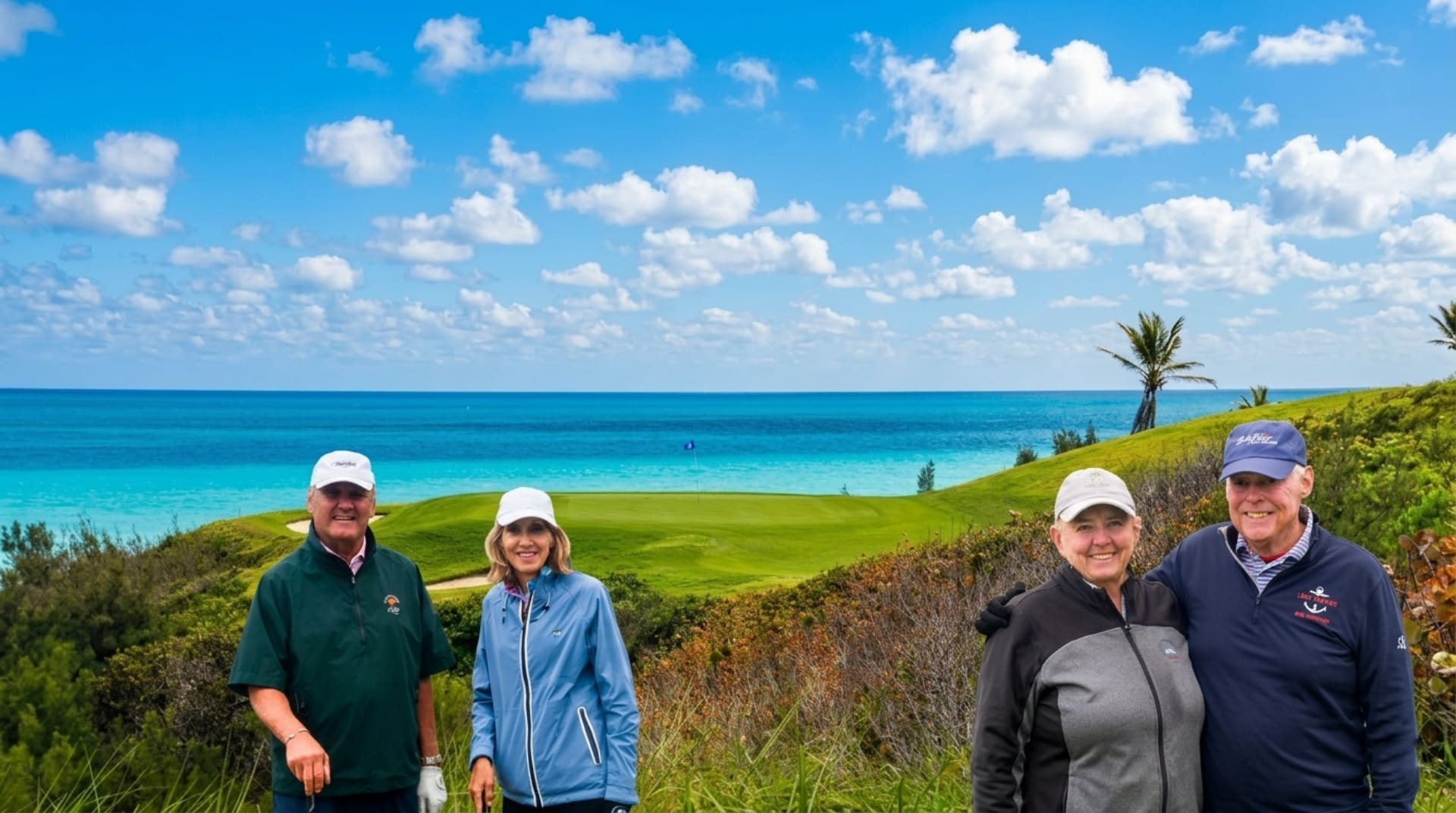
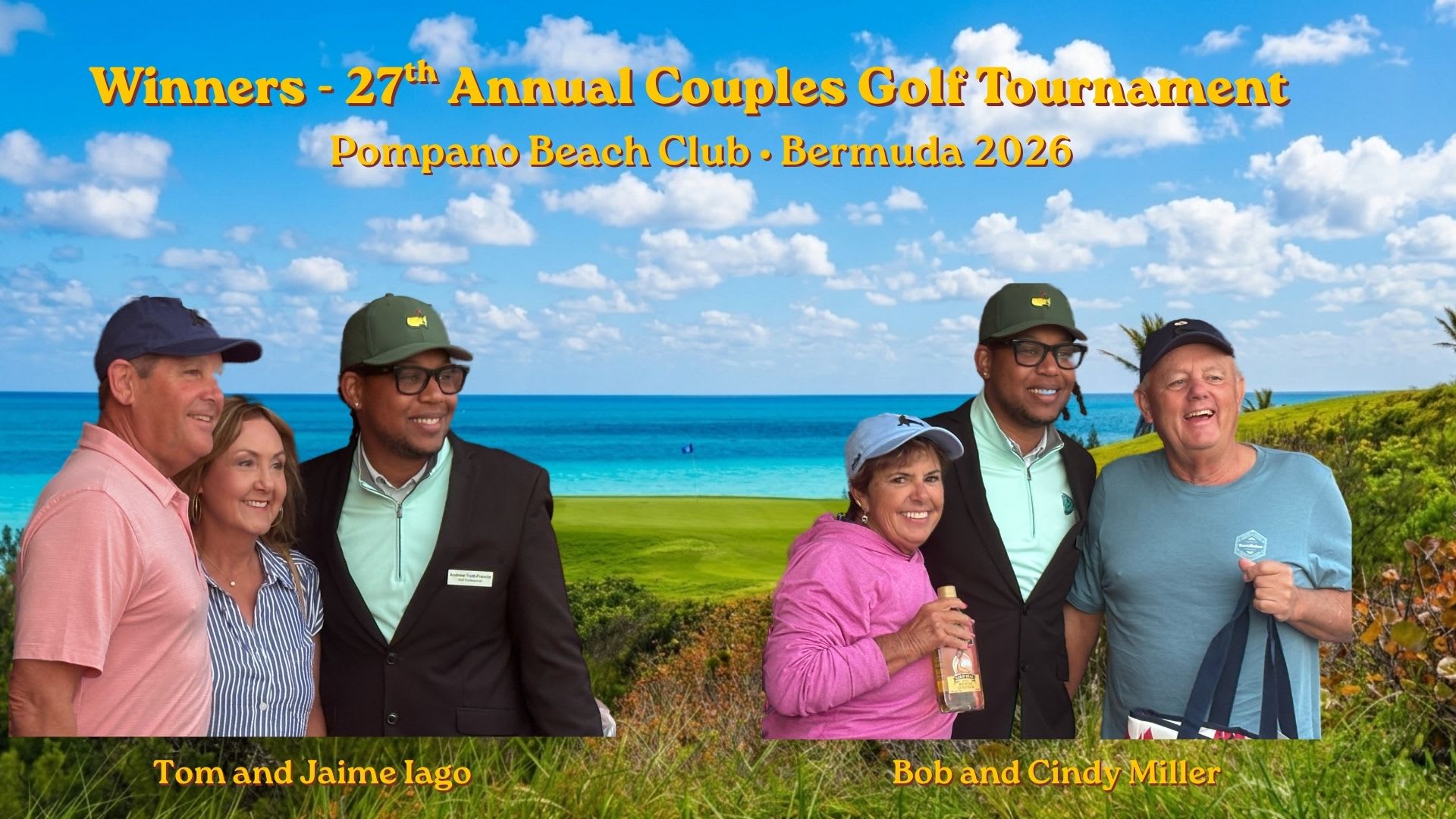
The winners, and a last night. The final evening brought a big cocktail party to announce the winners. We will own it: in our flight we finished DFL, dead last, in both net and gross, not our finest hour on a golf course, but the memories and the good times will stay with us for good. One of the couples we had run with all week took overall net for the event, which made it all the sweeter. Each winner had a photo taken with Stephen Lambert, the head pro at Port Royal, and once the announcements wrapped we went off to dinner with the gang one last time.