Dateline November 3, 2022, Petra, the Siq and the Treasury
After the ruins and castles of our first days, this was the morning we had been waiting for: Petra, the lost city. It is one of those rare places that lives up to every postcard ever made of it.
The Nabateans. Petra was the work of the Nabateans, a desert Arab people who turned a hidden canyon into the capital of a trading empire somewhere around the fourth century BC. Their real genius was water. In a bone-dry land they became master engineers, catching and holding every drop with dams, channels, and cisterns, and on the strength of that they grew rich brokering the caravan trade in spices, incense, silk, and much else between Arabia, India, China, Egypt, and Rome. The Greek geographer Strabo, writing of them, described a people ruled by a royal house but with a striking democratic streak, no slaves among them and the work shared out by all. At its height, around the first century, Petra held something like twenty thousand people. Then Rome annexed the kingdom in 106, the trade routes shifted, an earthquake came in time, and the city slowly emptied, until it was lost to the outside world for centuries, known only to the Bedouin.
Rediscovered. It came back to the West in 1812, when a young Swiss traveler, Johann Ludwig Burckhardt, fluent in Arabic and dressed as a Muslim pilgrim, talked his way in on the pretext of sacrificing a goat at the nearby tomb of Aaron. He could not linger or take notes for fear of being unmasked as a treasure-hunting infidel, but he saw enough to be sure he had found the fabled Petra.
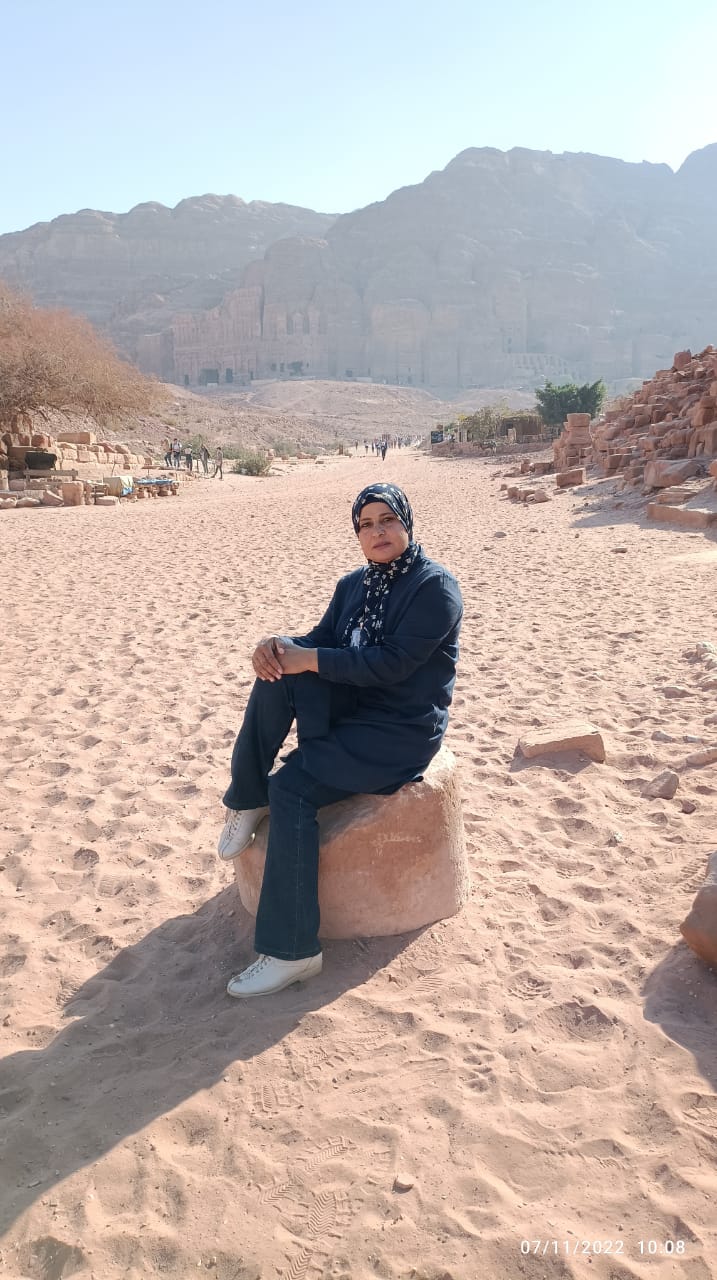
Our guide, Mariam. Our guide was Mariam, a Bedouin woman of about forty-five and a Petra story in herself. She was born in a cave on the south side of the ruins and lived there until she was eight, her schooling begun in that cave; she grew up playing in the ruins before the crowds came, set her heart on guiding, worked her way through school and college, which the job requires, and became the first Bedouin woman ever to guide at Petra. Her tribe has held this corner of Jordan for centuries and counts itself descended from the Nabateans. When Petra became a destination, the government moved some two hundred and fifty families, Mariam's among them, out of the caves and into housing at Umm Sihon above the site.
She told us about her brother, who married a nurse from New Zealand, Marguerite van Geldermalsen, known as Umm Rami, who lived with him in his cave for seven years, learning to bake bread on hot stones and to haul water up by donkey. Marguerite's lovely book about that life, Married to a Bedouin, is well worth seeking out.
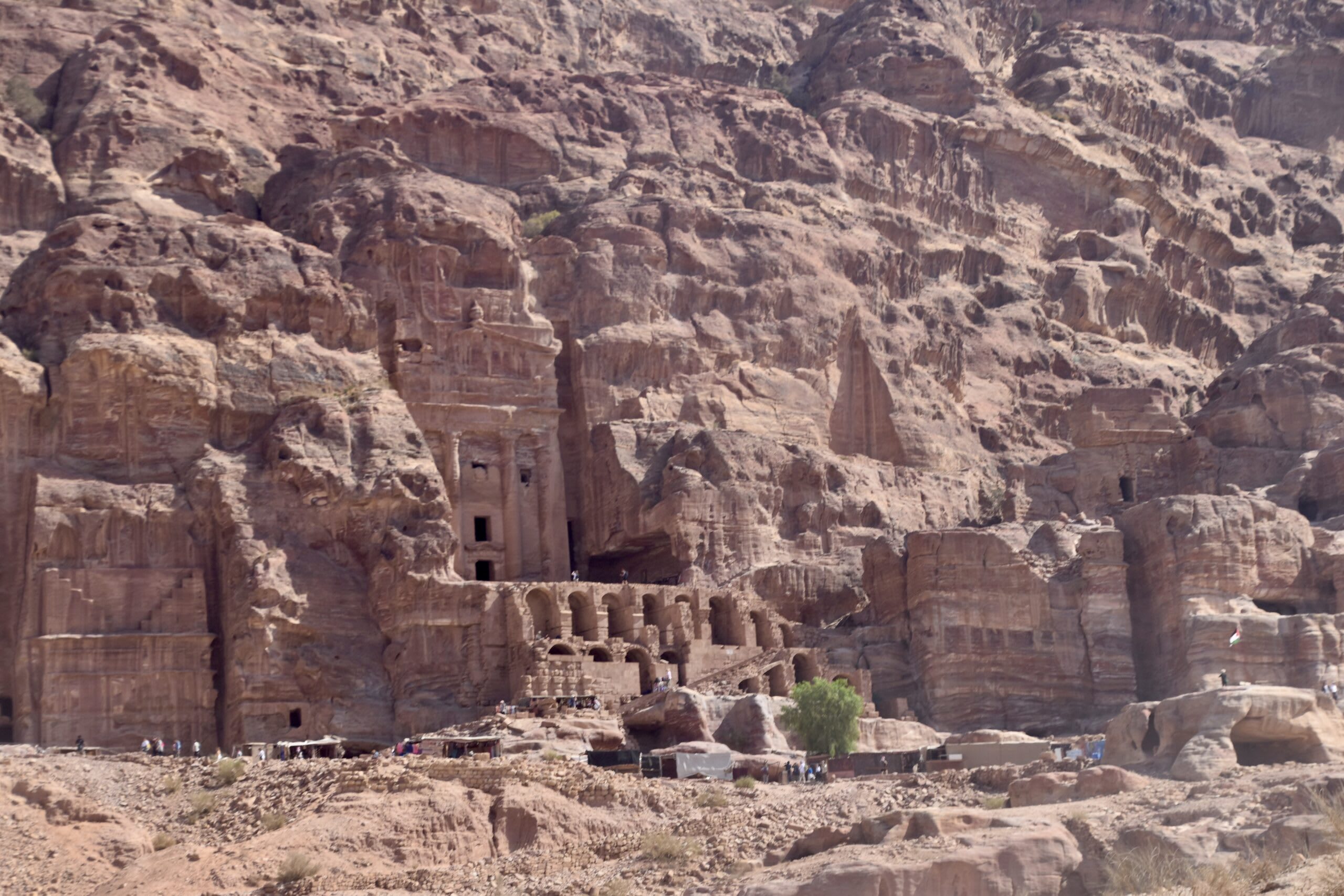
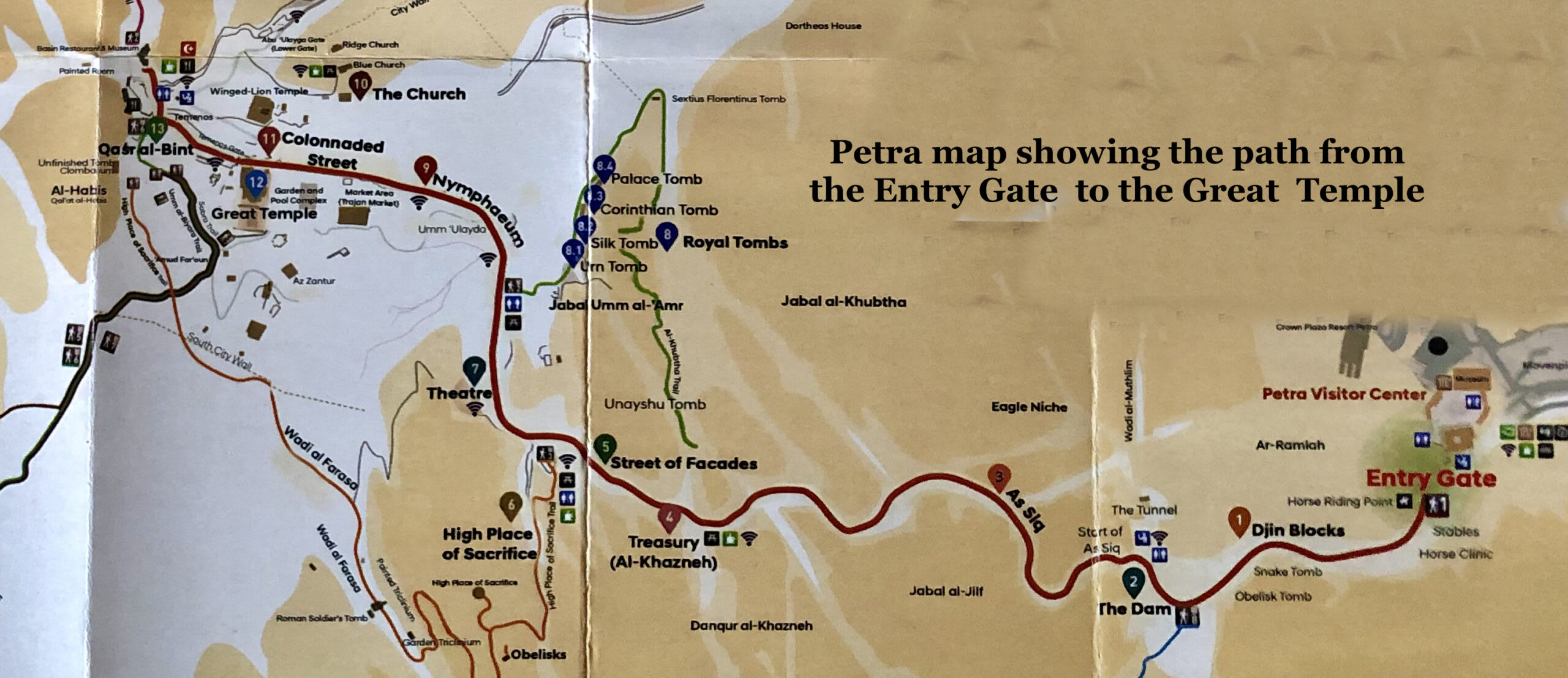
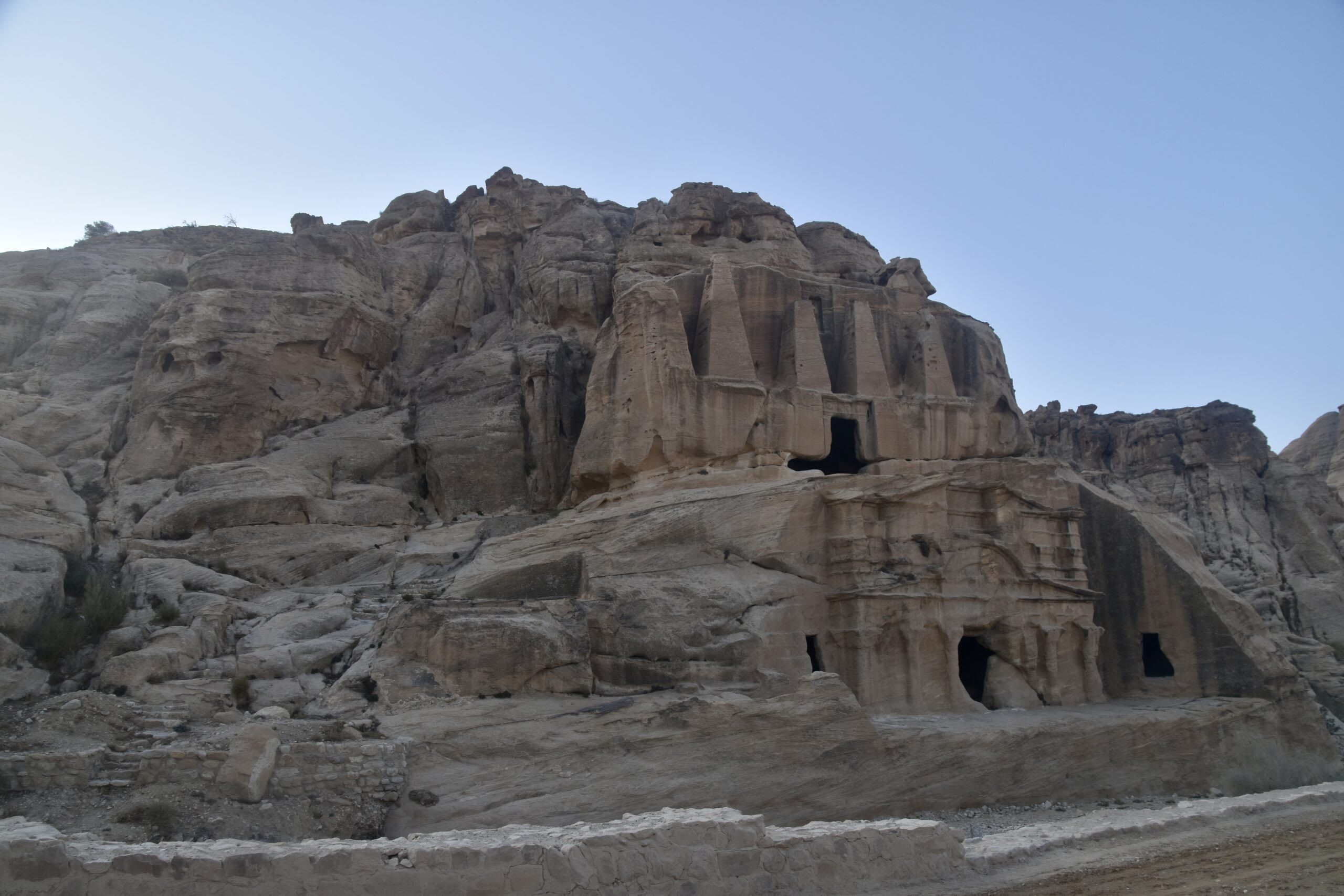
Walking in. We set out from the visitor center toward the entrance, passing tombs and carvings before we even reached the gorge, among them the two-story Obelisk Tomb.
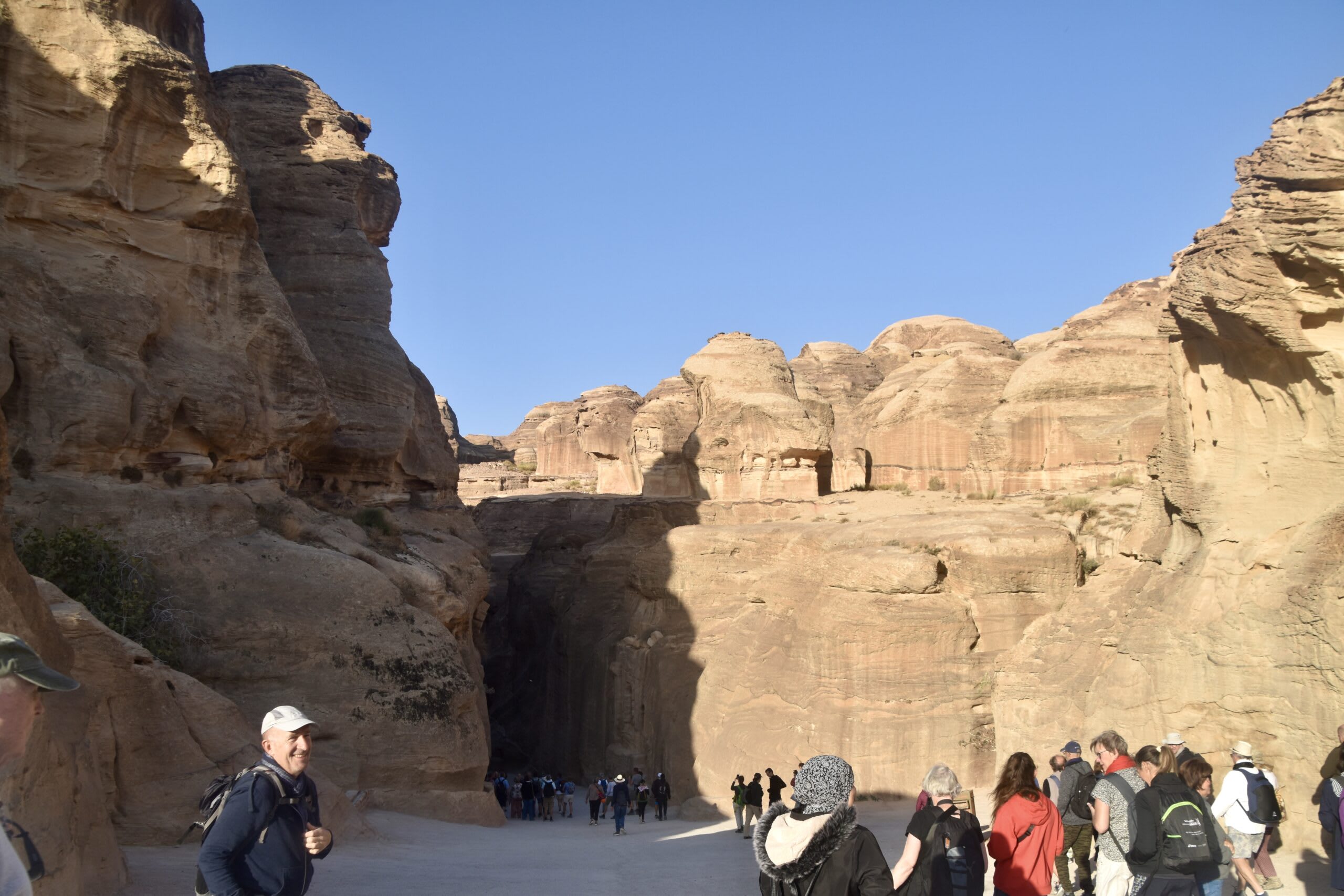
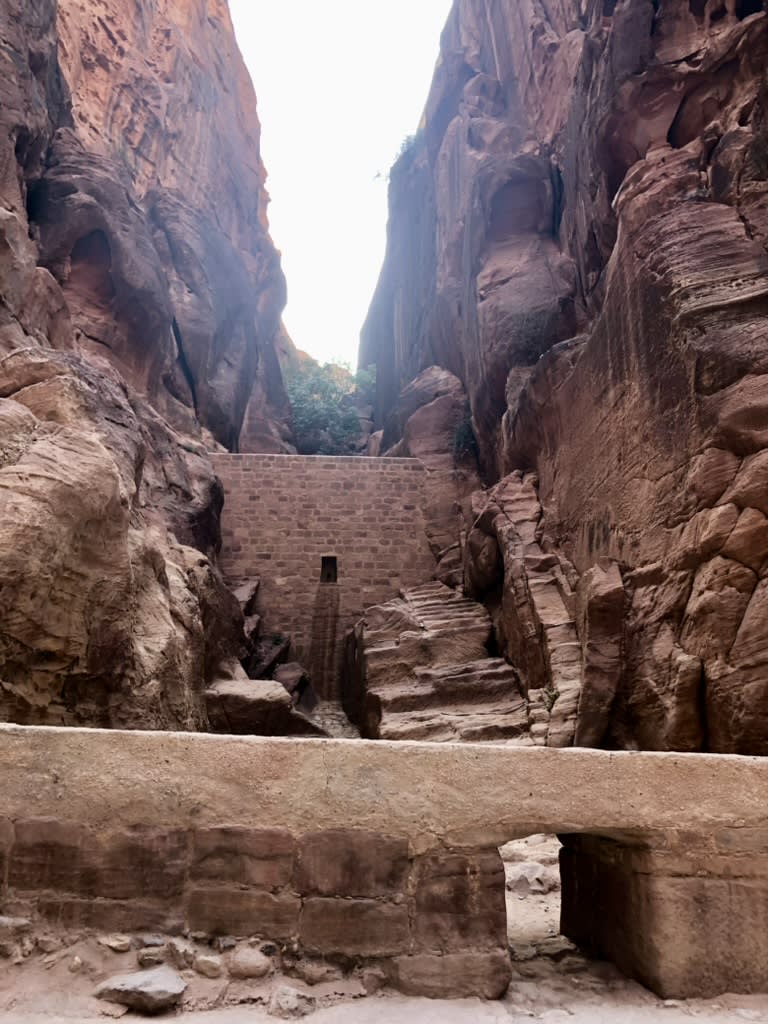
Down the Siq. The Siq is the heart of the approach, a narrow canyon a little over a kilometer long, part natural fault and part Nabatean cutting, that twists its way down toward the city. Along both walls run the waterworks, pottery pipes on one side and a rock-cut channel on the other, with dams to hold back the flash floods and feed the cisterns. The water came from Wadi Musa, the Valley of Moses, outside the walls.
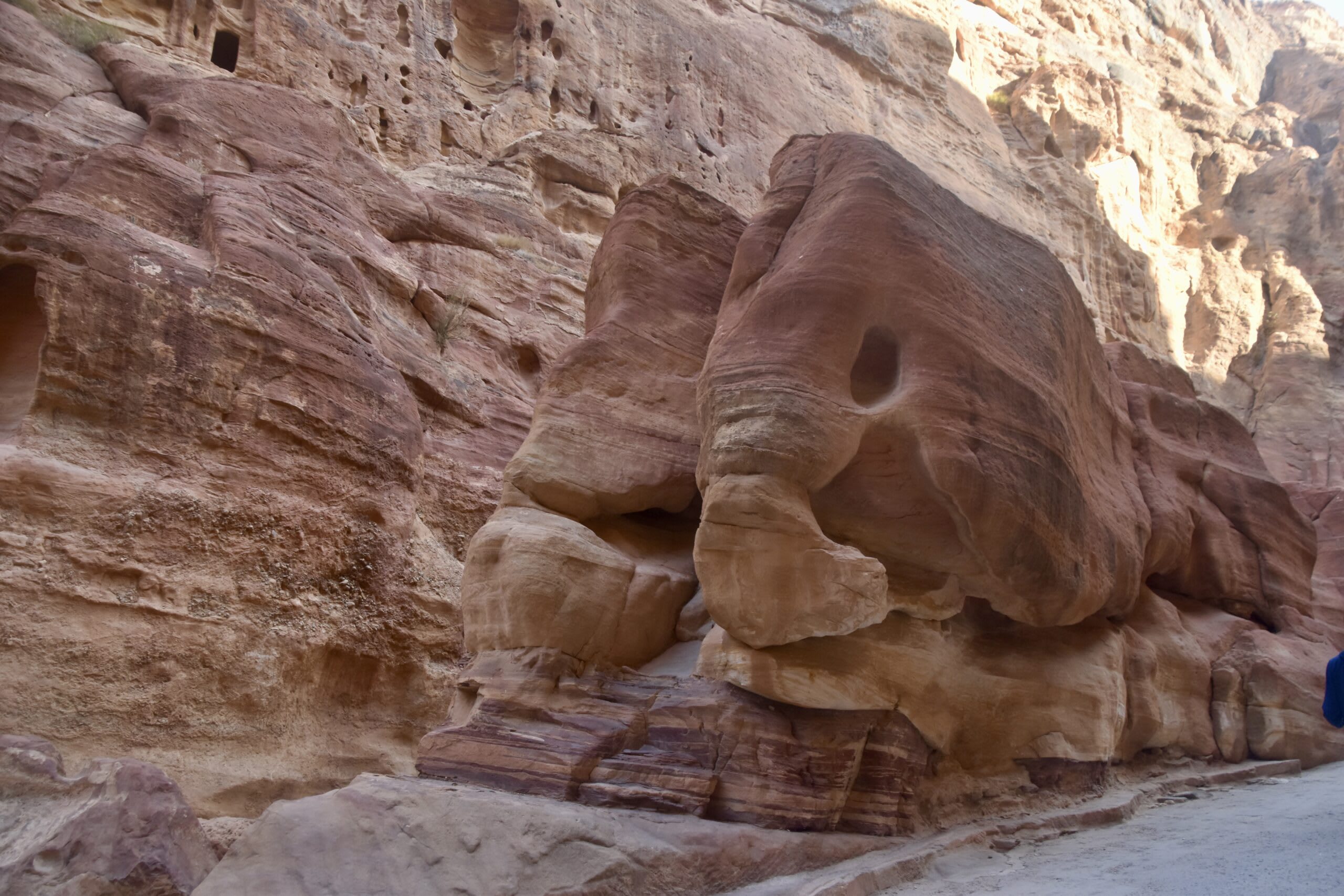
The rock itself is half the show, wind and water having carved the sandstone into shapes the Nabateans clearly saw as plainly as we did. Mariam pointed out the ones with names, the Elephants among them.
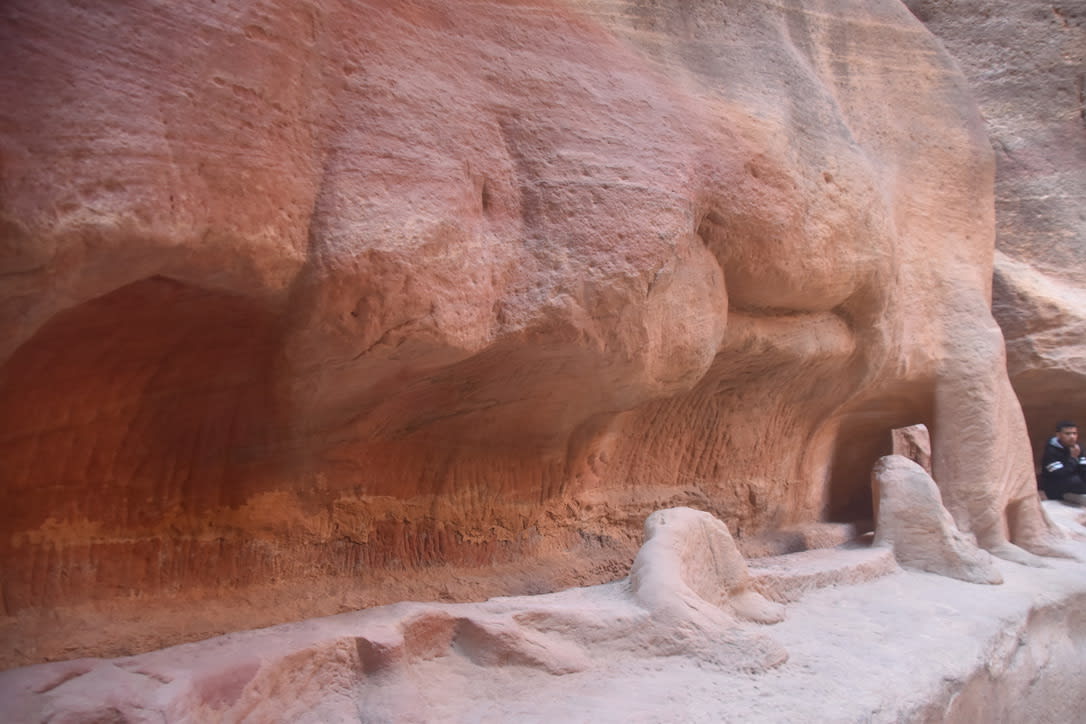
Set into the wall is the Caravan Relief, a carving honoring the camel trains the city lived by. When floods buried the floor of the Siq under feet of silt, they preserved the lower part of it, the men's feet and the camels' legs, while the rest wore away.
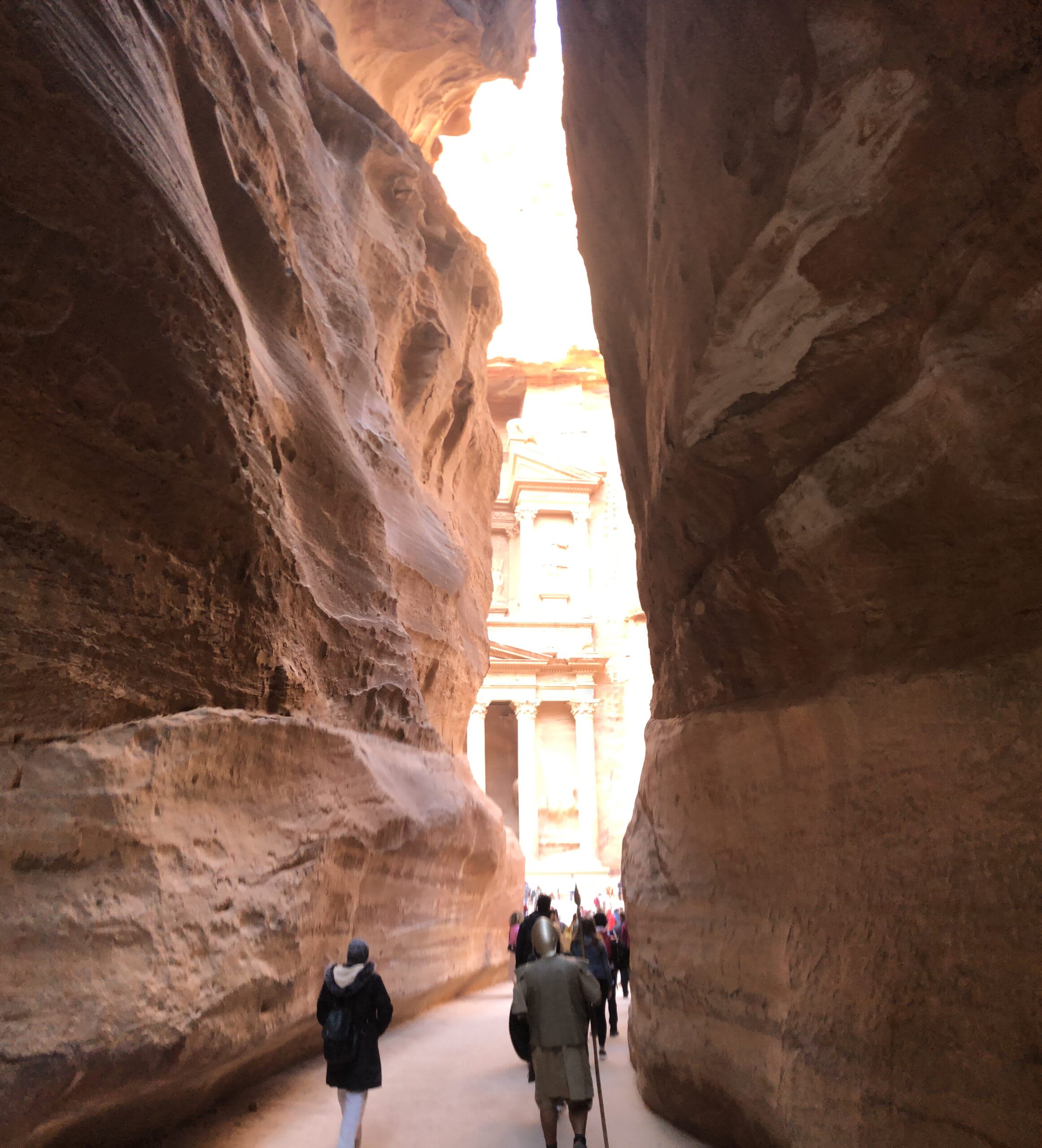
The Treasury. And then the Siq narrows to a slot, and through it, lit and framed, comes the first glimpse of the Treasury. Nothing quite prepares you for it.
Step clear of the canyon and it stands before you whole, Al-Khazneh, the Treasury, some forty meters of rose-colored facade carved straight into the cliff. For all the name, it is almost certainly a royal tomb, most likely that of King Aretas IV, who reigned in the city's golden age around the turn of the first century. The "treasury" is a Bedouin legend, that a pharaoh hid his gold in the great stone urn at the top, and you can still see where hopeful gunfire chipped at it over the years.
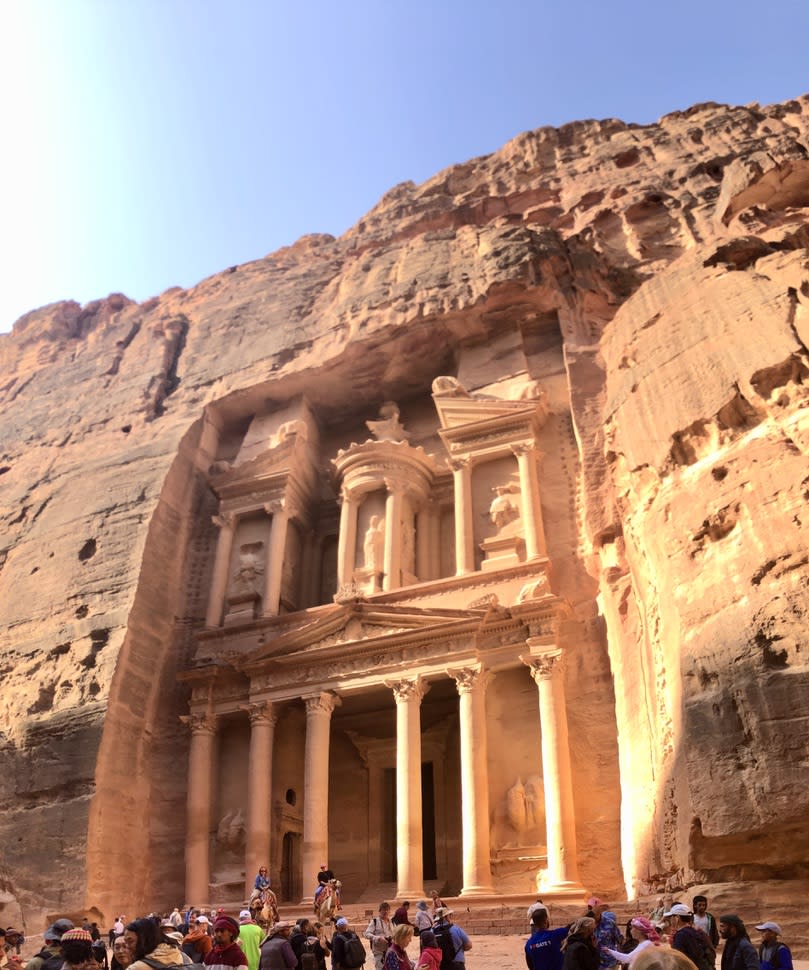
Indiana Jones. For a great many of us, this facade was our first sight of Petra, on a movie screen. In Indiana Jones and the Last Crusade, Steven Spielberg's 1989 film from a story by George Lucas, the Treasury plays the front of the temple that hides the Holy Grail at the end of the Canyon of the Crescent Moon. Only the outside is Petra; the chamber within is a plain, bare room, and the grail hall was a set built elsewhere. But the outside is more than enough.
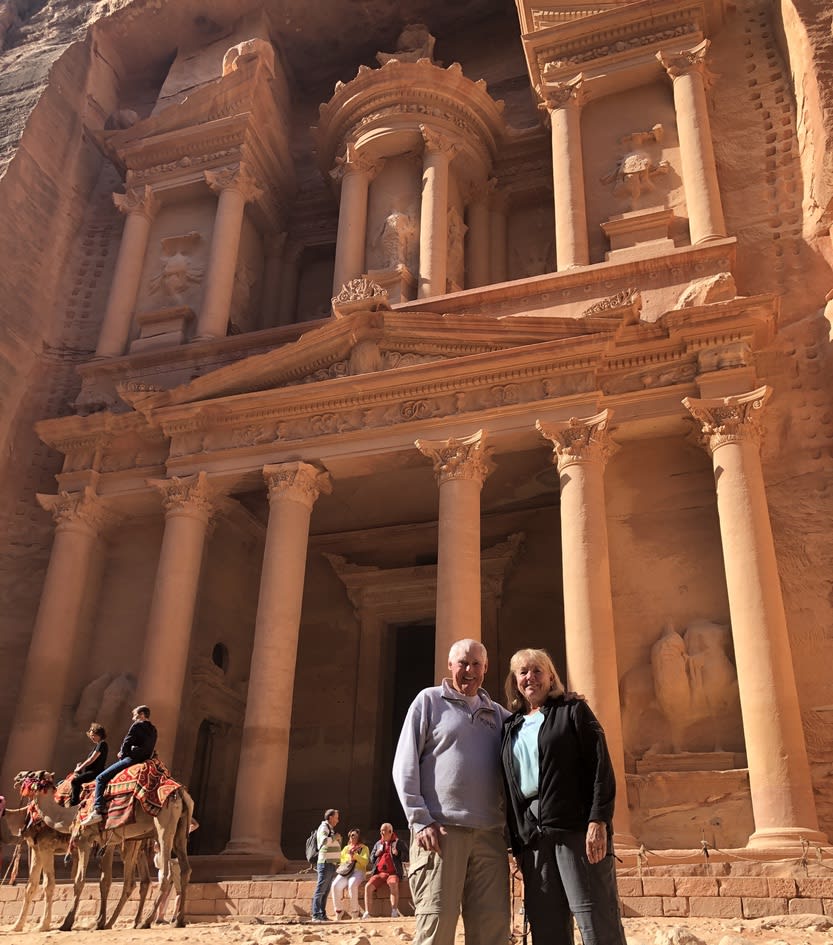
We stood a long while just looking at it. Then, with the whole of the inner city still ahead of us, we walked on past the Treasury and deeper into Petra.