Dateline November 6, 2022, Mount Nebo and Madaba, Moses and the Mosaics
The drive north from Wadi Rum took about three hours, and along the way Hasan told us why this part of the trip had nearly not happened. The road to Mount Nebo had been closed a few days earlier by trouble between two tribes, one of them aggrieved that a court had acquitted a man the other side held responsible for a crime. A third tribe stepped in to broker peace, the quarrel was settled, and the road was open again.
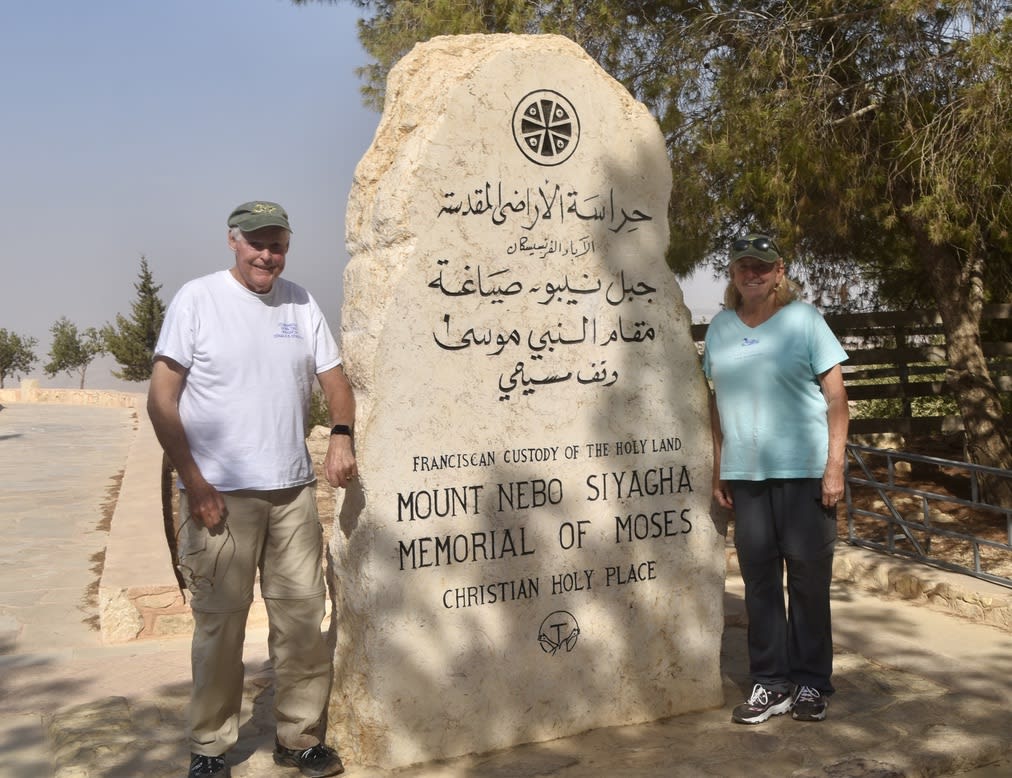
Mount Nebo, where Moses saw the Promised Land. Mount Nebo rises about 2,330 feet above the Jordan valley, and it is one of the most sacred places in the Holy Land. This is where, by long tradition, Moses came at the end of his life. Having led the people out of Egypt and through forty years in the wilderness, he was allowed to see the Promised Land but not to enter it. He climbed Nebo, and from the summit God showed him the whole of the land that would go to his descendants. Moses died there, at a hundred and twenty years, and Scripture says that even then "his eyes were not weak nor his strength gone." His burial place has never been known.
Why Moses was kept out. It is one of the harder passages of the Old Testament. The people were dying of thirst, and God told Moses to speak to a rock so that water would flow from it. Instead Moses struck the rock, twice, with his staff. The water came, but for failing to trust God and to honor Him as holy before the people, Moses was not permitted to cross into the land he had spent his life seeking.
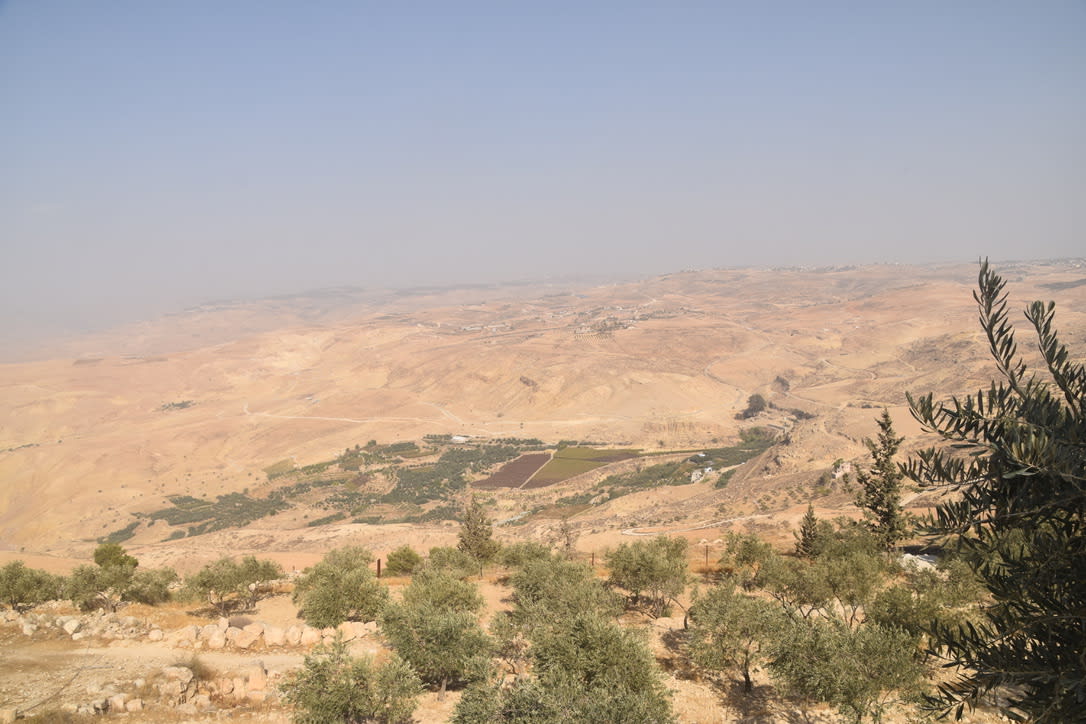
The view. From the top, on a clear day, you look out across the West Bank to Jericho and as far as Jerusalem. The valley below is freckled with small patches of green where springs rise, and the local people call them Moses's tears.
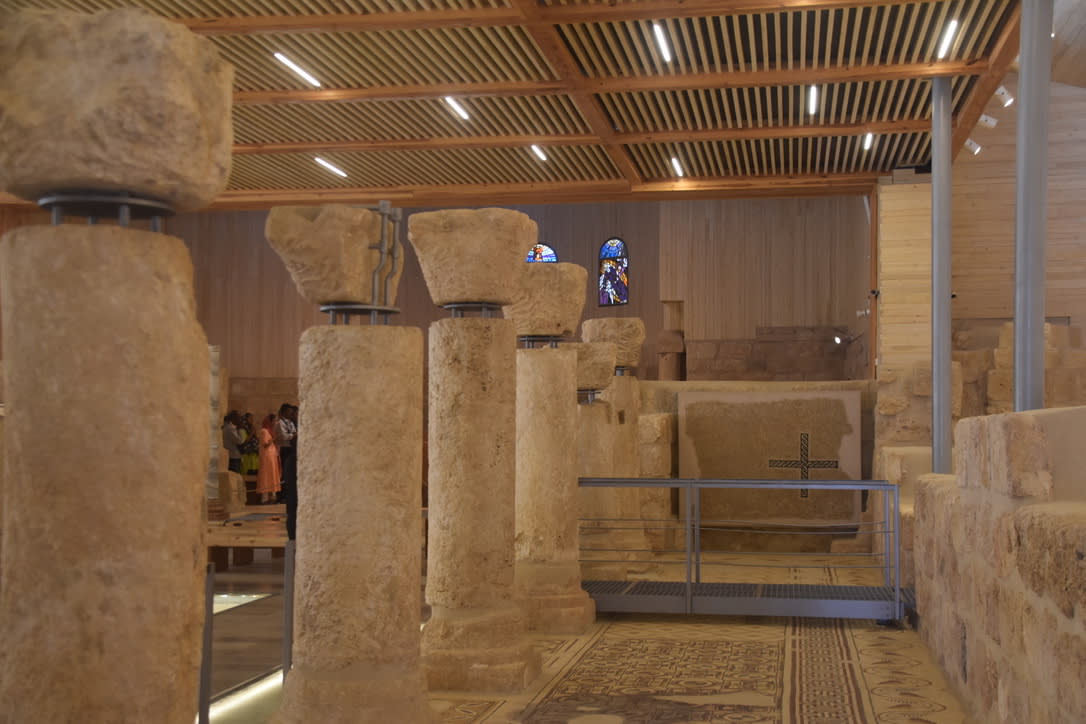
The Moses Memorial Church. A church was first raised here in the fourth century to mark the place of Moses's death, and over the centuries it grew into a basilica. Its floor mosaics, from around the year 530, have come down to us beautifully preserved, full of the wildlife and hunting scenes the Byzantine craftsmen loved.
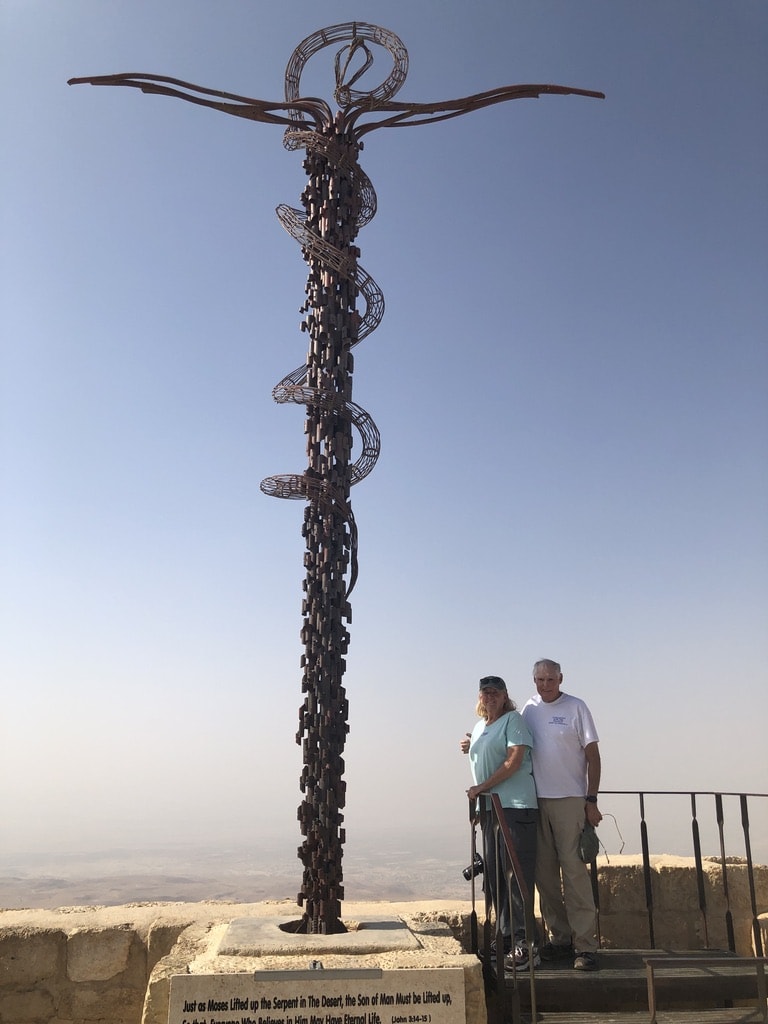
The serpent cross. Out on the terrace stands a tall bronze sculpture, a serpent coiled into the shape of a cross, by the Italian artist Gian Paolo Fantoni. It draws together two things: the bronze serpent that Moses raised in the wilderness, so that anyone bitten by the snakes God had sent could look on it and live, and the cross of Christ. It has become the symbol of Mount Nebo.
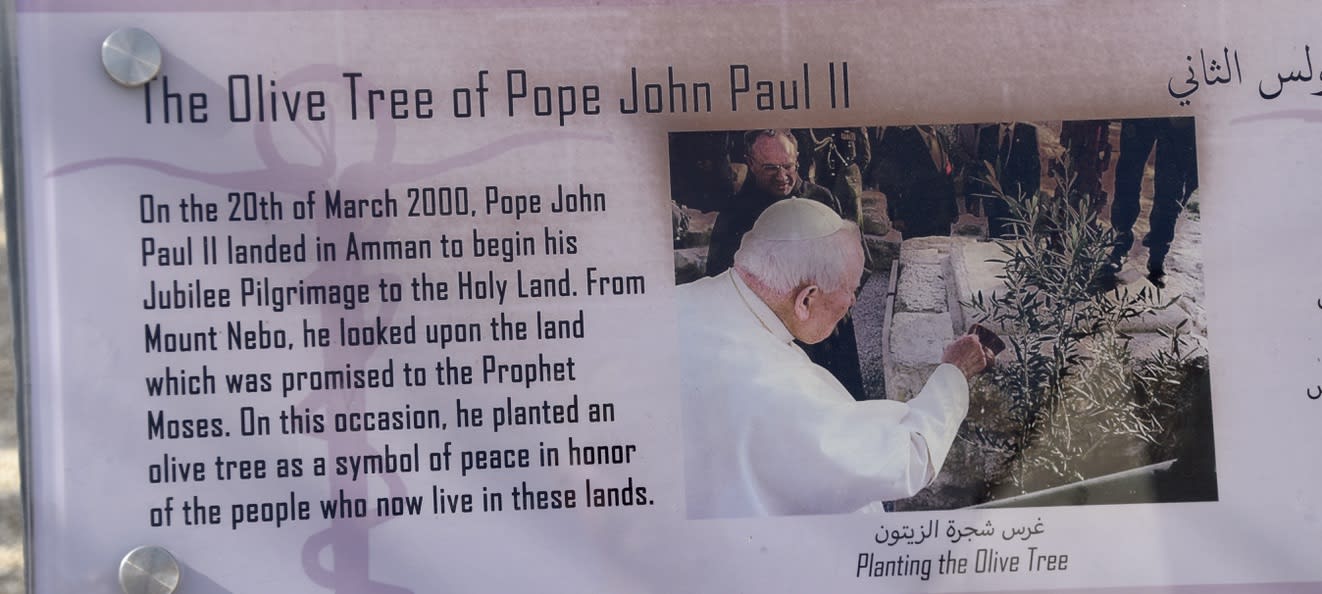
A pope's olive tree. This is a place that draws pilgrims of every kind. In March of 2000, Pope John Paul II came here on his pilgrimage to the Holy Land and planted an olive tree beside the old chapel as a sign of peace. It is a deeply peaceful spot.
We left Mount Nebo and drove on to Madaba.
Madaba, the city of mosaics. Madaba, a town of some sixty thousand, is famous above all for its Byzantine mosaics, and it reaches back to the Bronze Age. It sat on a contested frontier in Bible times, named in Joshua and Numbers, and changed hands more than once between Israel and Moab.
The Moabite Stone. That long tug-of-war is the backdrop to one of the more remarkable objects ever found here, the Mesha Stele, or Moabite Stone. It carries an inscription set down about 840 BC by Mesha, king of Moab, boasting of his victories over Israel and of the cities and cisterns he rebuilt. It is one of the earliest inscriptions outside the Bible to name Israel, and very likely the earliest anywhere to name Israel's God, which is what makes it extraordinary. The first written mention of "Israel" actually belongs to an older Egyptian monument, the Merneptah Stele, by some three centuries; but the Moabite Stone runs close behind and is far richer in detail. It was found at Dhiban, the ancient Dibon and once the Moabite capital, in 1868. The stone itself now sits in the Louvre.
The Church of the Holy Apostles. Our first stop in town was the Church of the Holy Apostles, a basilica whose mosaic floor was laid in 578 and rediscovered by Father Manfredi in 1902. At the center of the nave is a famous medallion, a woman rising from the waves to stand for the Sea, ringed by fish and sea creatures. An inscription beside it asks God, the maker of heaven and earth, to give life to three named souls, and signs the work with the name of its mosaicist, Salaman.
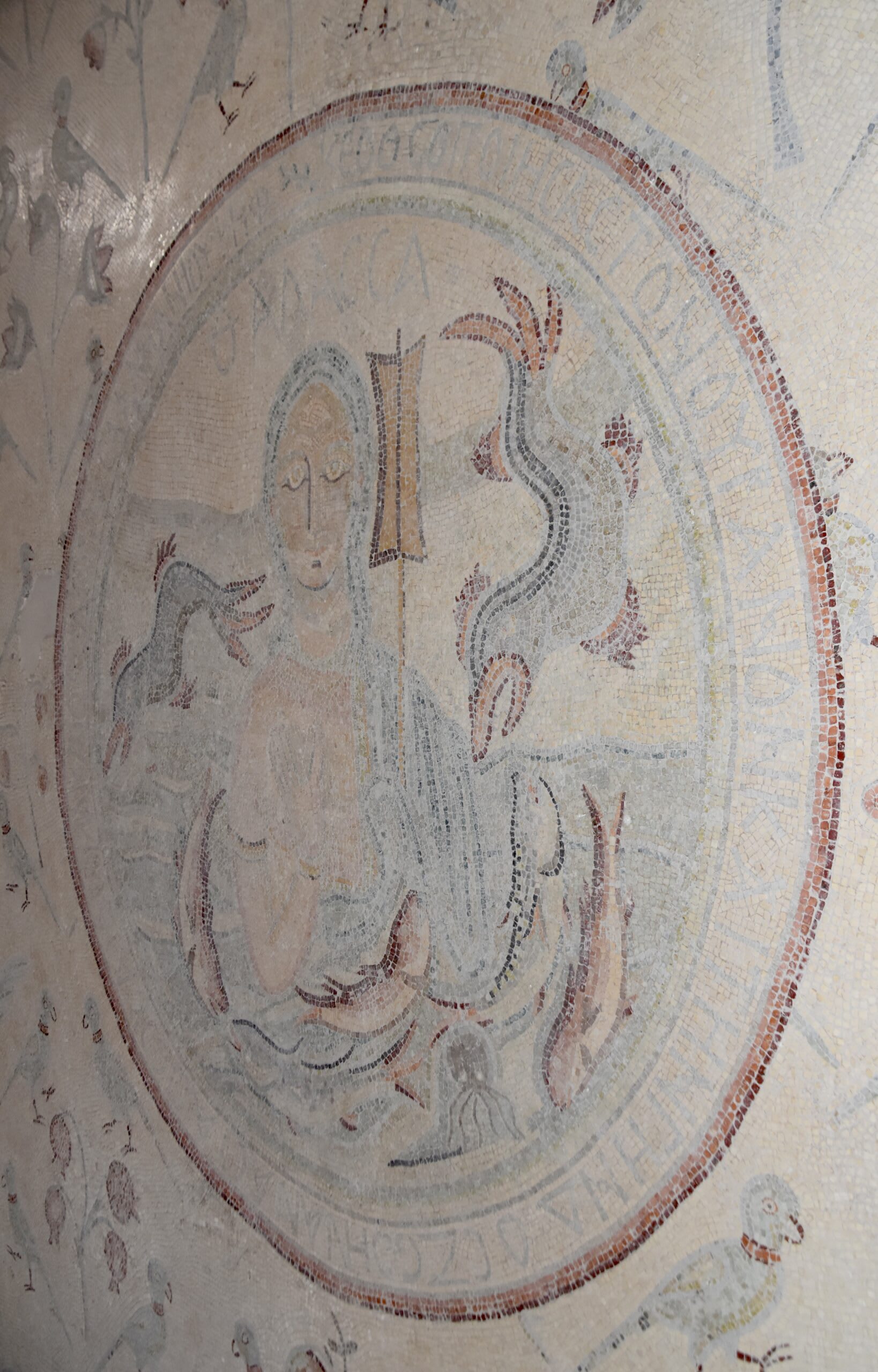
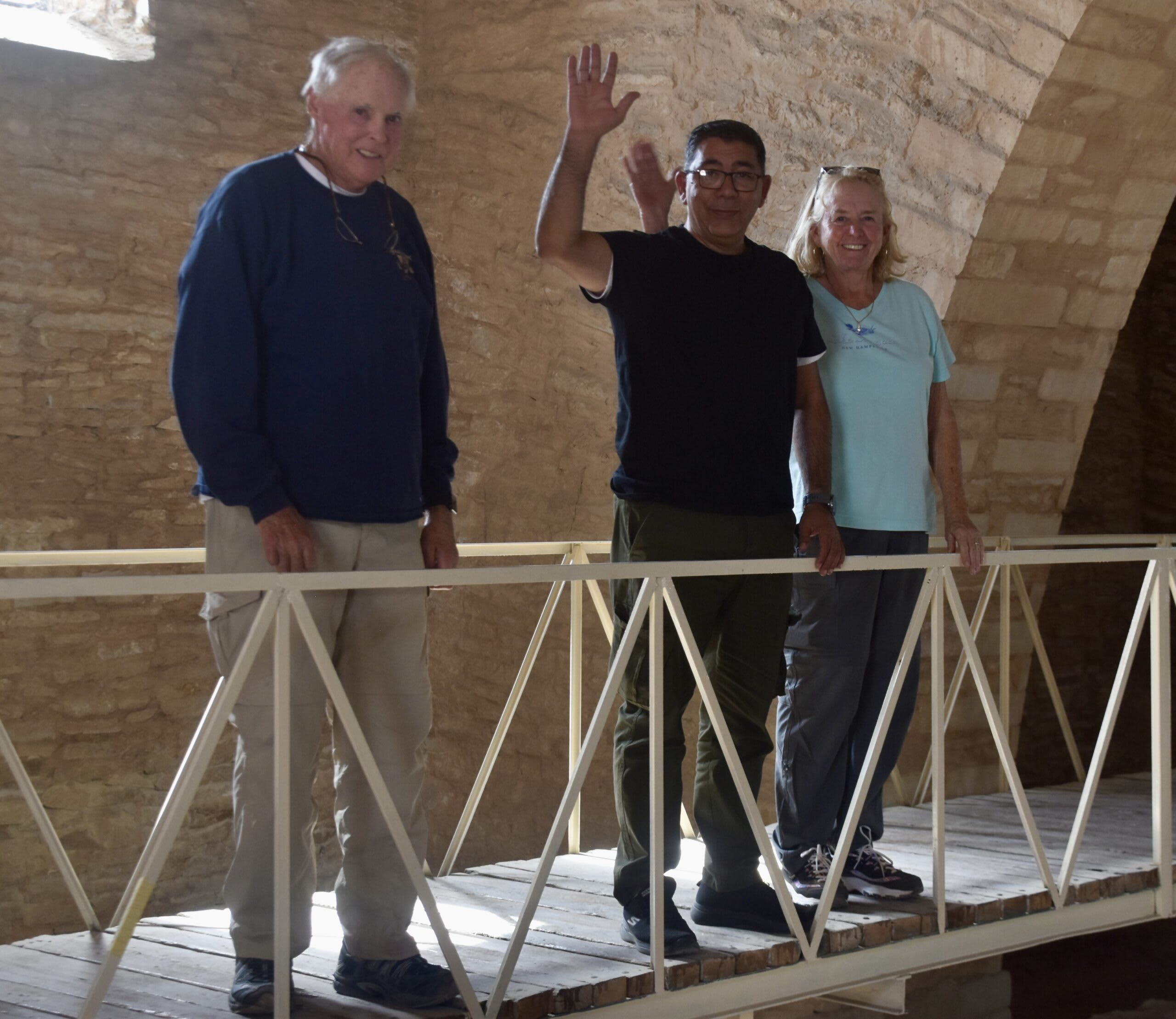
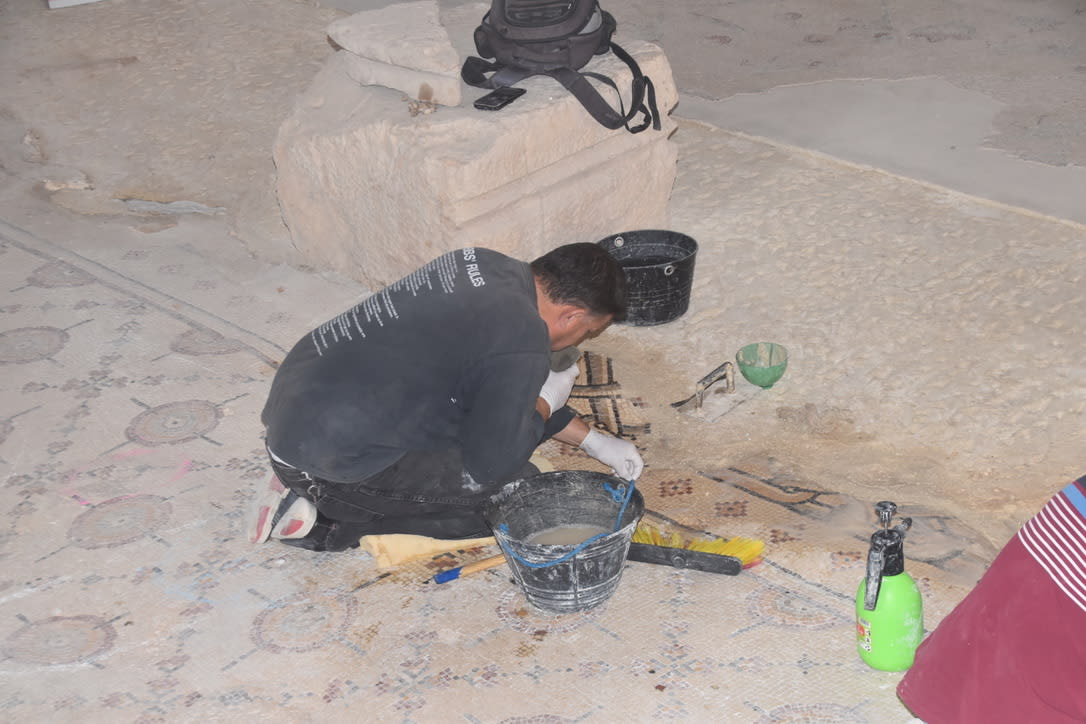
The church is being restored, slow and patient work, and the man in charge let us come down a ramp right over the floor to watch and to take pictures of the panels, some finished, some still under the restorers' hands. They hoped to be done by the spring.
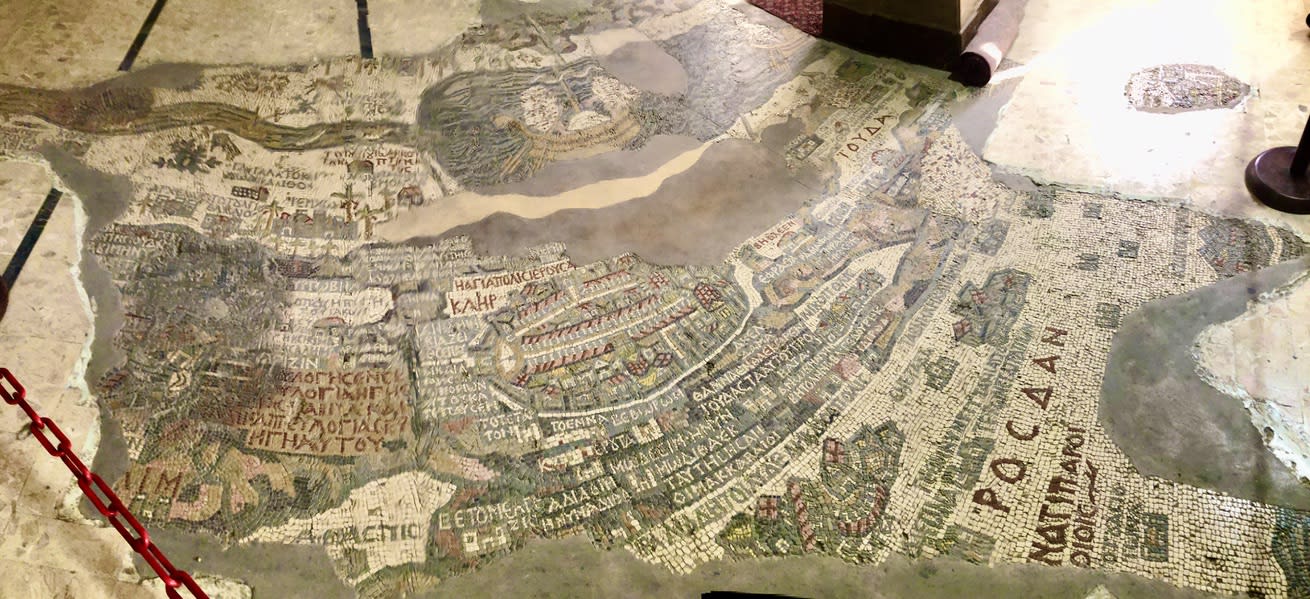
Saint George's and the Madaba Map. From there we went to the Greek Orthodox church of Saint George, which holds the treasure that gives Madaba its fame. Set into the floor is the Madaba Map, a mosaic map of the Holy Land made in the sixth century from some two million pieces of colored stone. It is the oldest surviving map of the Holy Land, and the oldest picture we have of Byzantine Jerusalem, the city's colonnaded main street and the Church of the Holy Sepulchre plainly marked. It stretches from the hills and valleys of the region all the way to the Nile delta. Scholars still argue over exactly why it was made; one idea is that it guided pilgrims to the holy sites. The church itself is lovely, and holds services to this day.
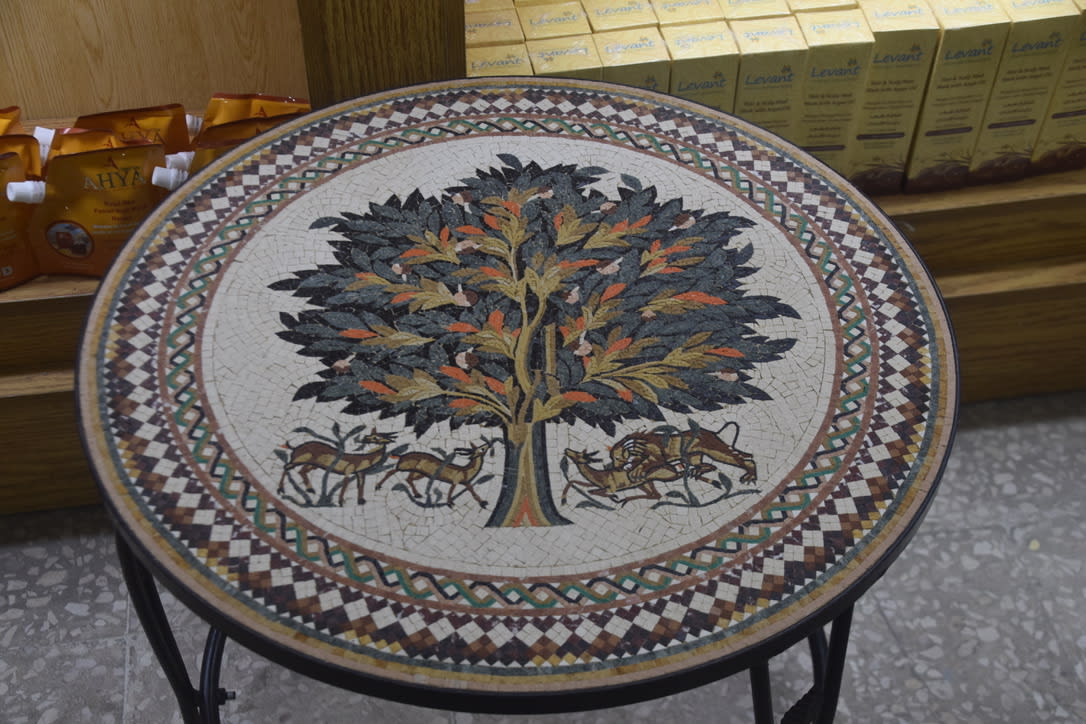
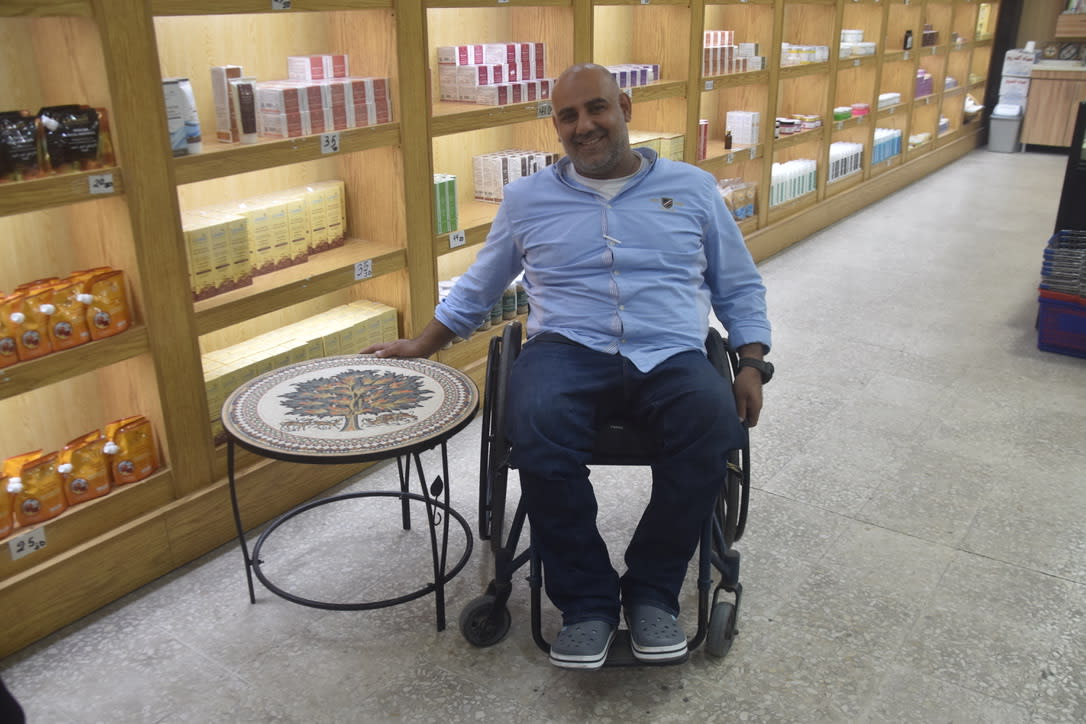
A table for home. On our way out of town Hasan took us to a workshop where mosaics are still made by hand. There were two shops, one selling the work of known artists, the other the work of local people, many of them living with disabilities, with the proceeds going to support the workers. We had meant to buy nothing, and then we saw a Tree of Life table and met the man who had made it. The table is on its way to our home in Pinehurst.
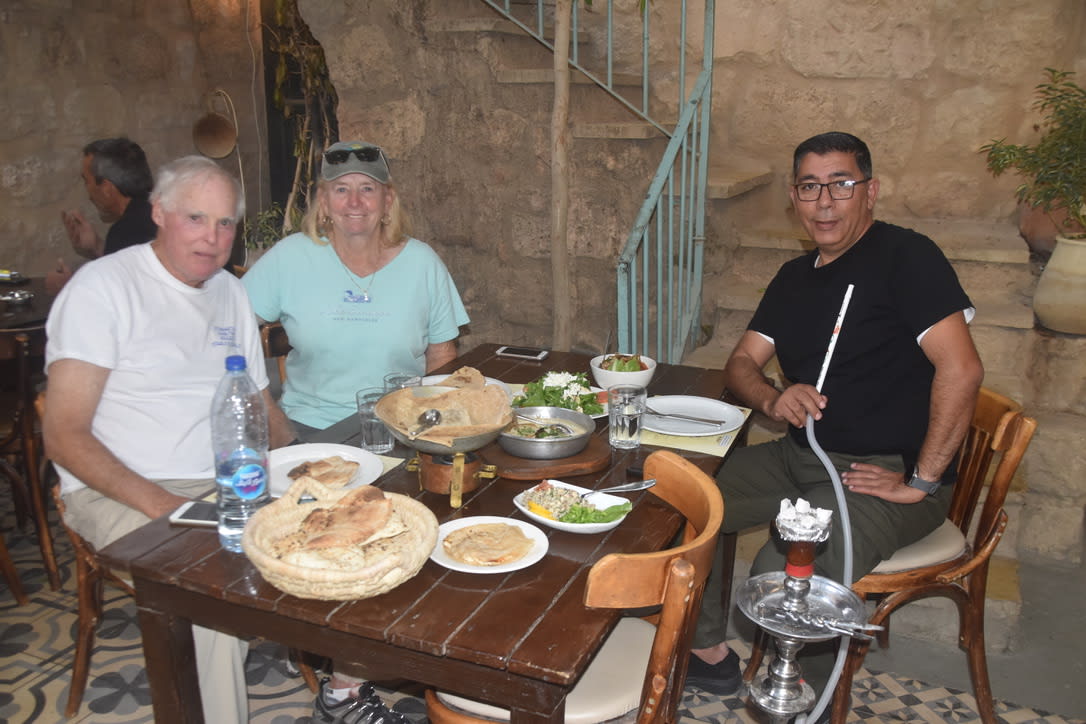
Goodbye to Hasan. We had dinner in Madaba, another feast in a place only Hasan would have known, and afterward he settled in with his water pipe and his apple-flavored tobacco. Saying goodbye to him at the end felt less like parting from a guide than from an old friend. The company he works with, Jordan Direct Tours, had built us a trip shaped entirely around what we wanted rather than handing us a canned itinerary, and it showed at every turn.
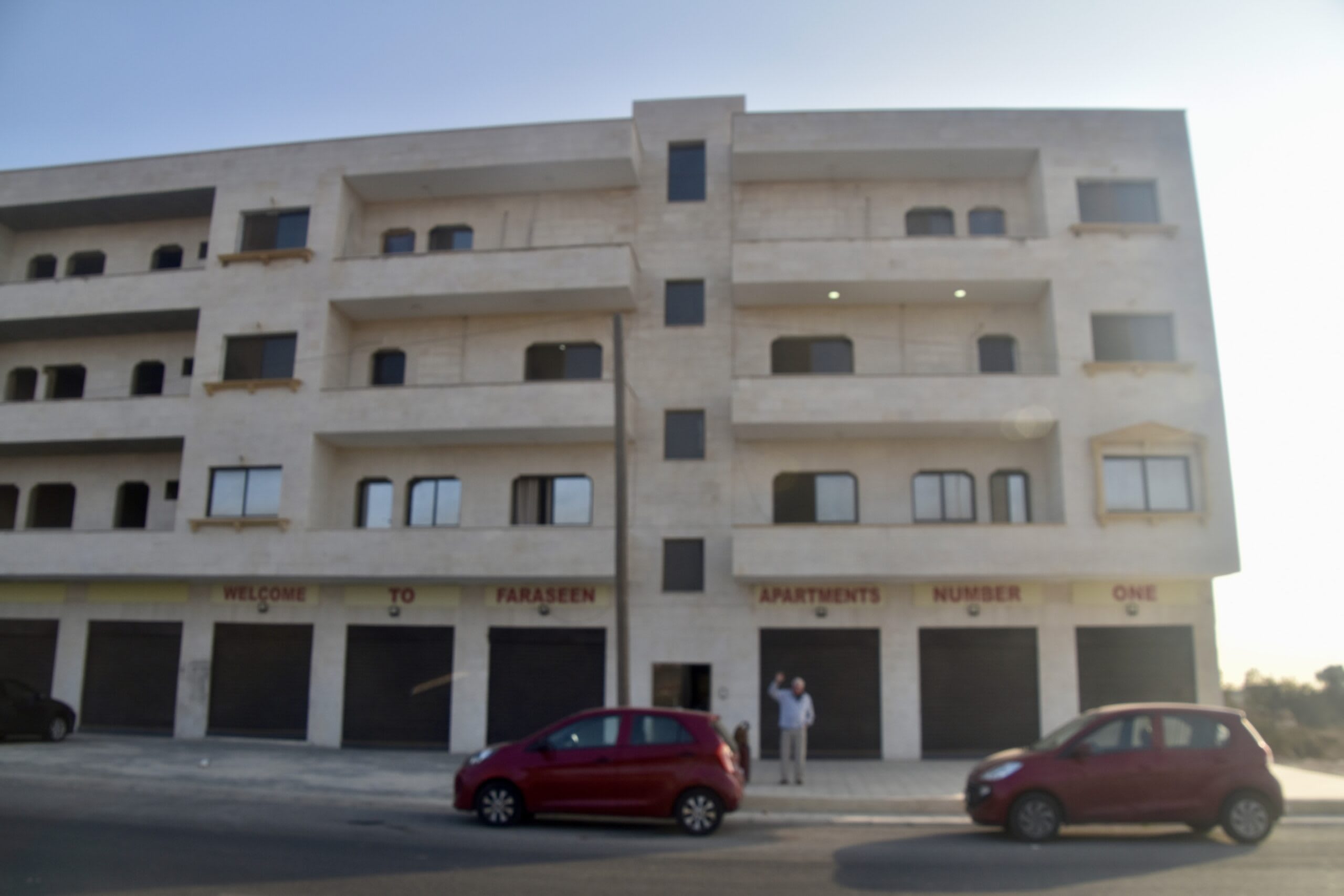
One last night. Hasan drove us to a place near the Amman airport, an apartment along the service road that took him a while to find, since it sat alone and half-built. We looked at each other, then went in to meet the manager, who showed us up to a brand-new flat so fresh the painter's tape was still on the trim. It was clean, the bed was fine, and we had a good laugh over the crooked balcony door before a decent night's sleep. You cannot judge a book by its cover, though Janice did observe that the building might not survive even a small earthquake.
The next morning Hasan dropped us off for our flight, and Jordan was behind us. He had made it one of the warmest experiences in all our travels. Ahead lay Egypt, and the pyramids.