Dateline November 27, 2024, Sintra, Roca and Cascais Portugal
After a good night's sleep we were ready for our tour to Sintra, a charming village about a forty-minute drive from our apartment in Lisbon. John, Janice, and Kieran met the operator and, with four others, set off in a roomy SUV toward the Pena Palace.
Stories from our guide. Along the way our guide told us gripping tales of Portugal's past, above all the earthquake and tsunami of 1755 that destroyed Lisbon. It was a trifecta of disasters, he said. First the ground heaved, and terrified survivors fled toward the riverbanks, where the water had mysteriously drawn back; thinking themselves safe, they were met by a tsunami that came roaring up the river and swept away everything in its path. Those who escaped the waves ran for the hills, only to find them ablaze, the fires set by the candles left burning for All Saints' Day. Somewhere between thirty thousand and fifty thousand people died, and eighty-five percent of Lisbon was lost. Even the monastery in Sintra was badly damaged.
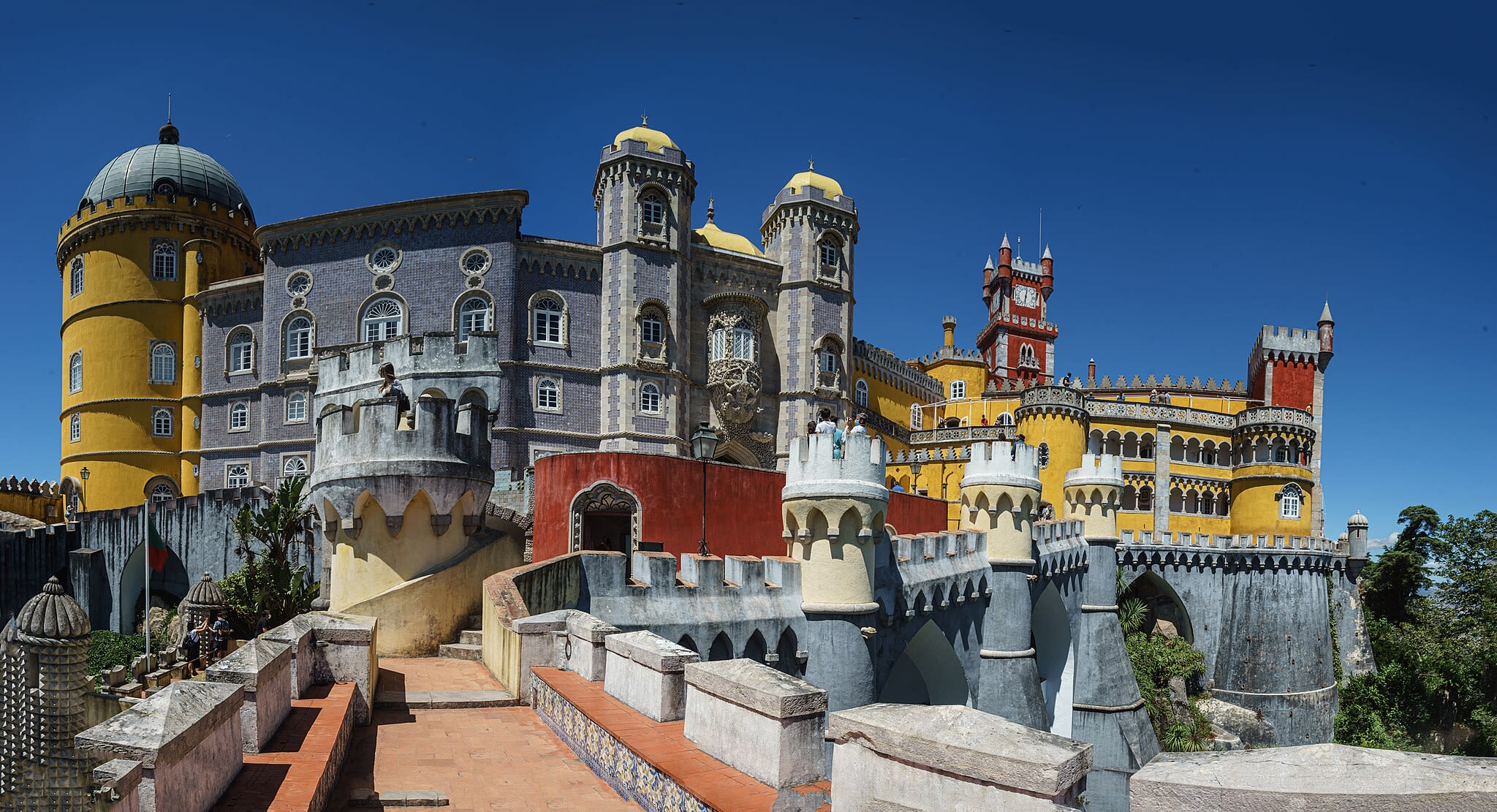
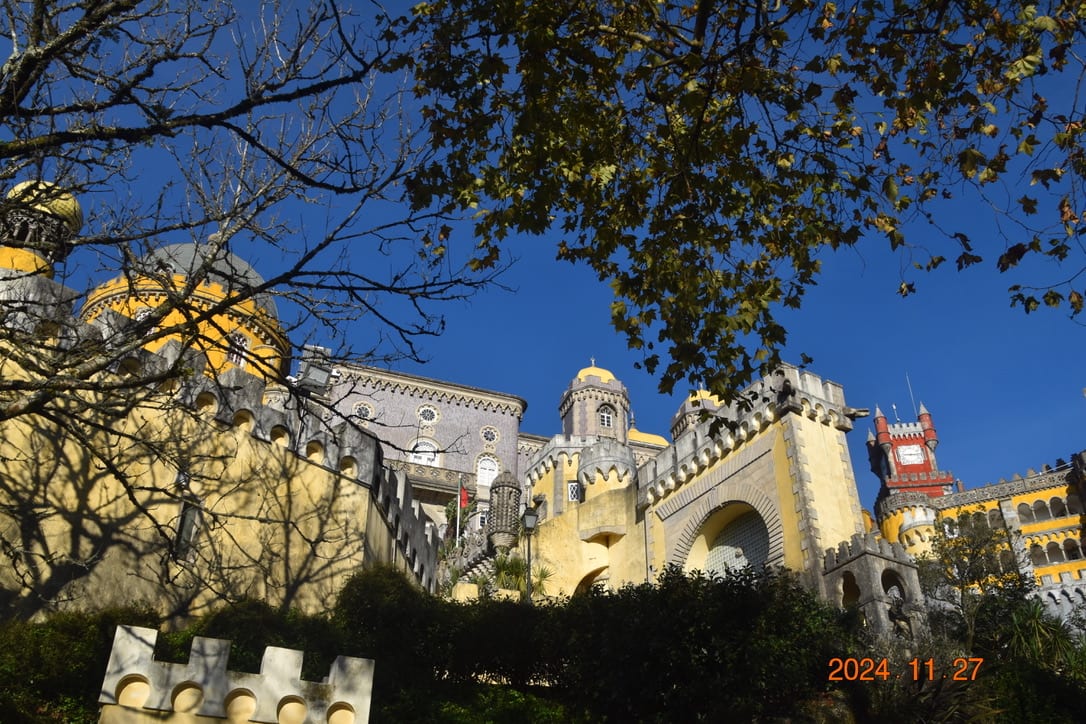
Sintra and Pena Palace. Sintra has been lived in since Roman times. In the eighth century it fell under Muslim rule, and stayed so until 1147, when King Afonso I took it for Christendom; by 1154 it was a chartered town. But it was after the 1755 earthquake that Sintra came into its own, as the Lisbon aristocracy began to retreat there. In the nineteenth century King Ferdinand II took a ruined Hieronymite monastery on the heights and made of it the Pena Palace, a summer home for the royal family. Under a German mining engineer, Baron von Eschwege, it grew into a fantastical thing, part Manueline and part Moorish, with watchtowers and tunnels and even a drawbridge, the whole of it like something out of the Thousand and One Nights. Our guide told us the bittersweet part too: Ferdinand built it in the years around the death of his wife, Queen Maria II, and after she was gone he married again, the Countess d'Edla, and built a smaller chalet nearby where the two of them actually lived, never really taking up the grand palace at all.
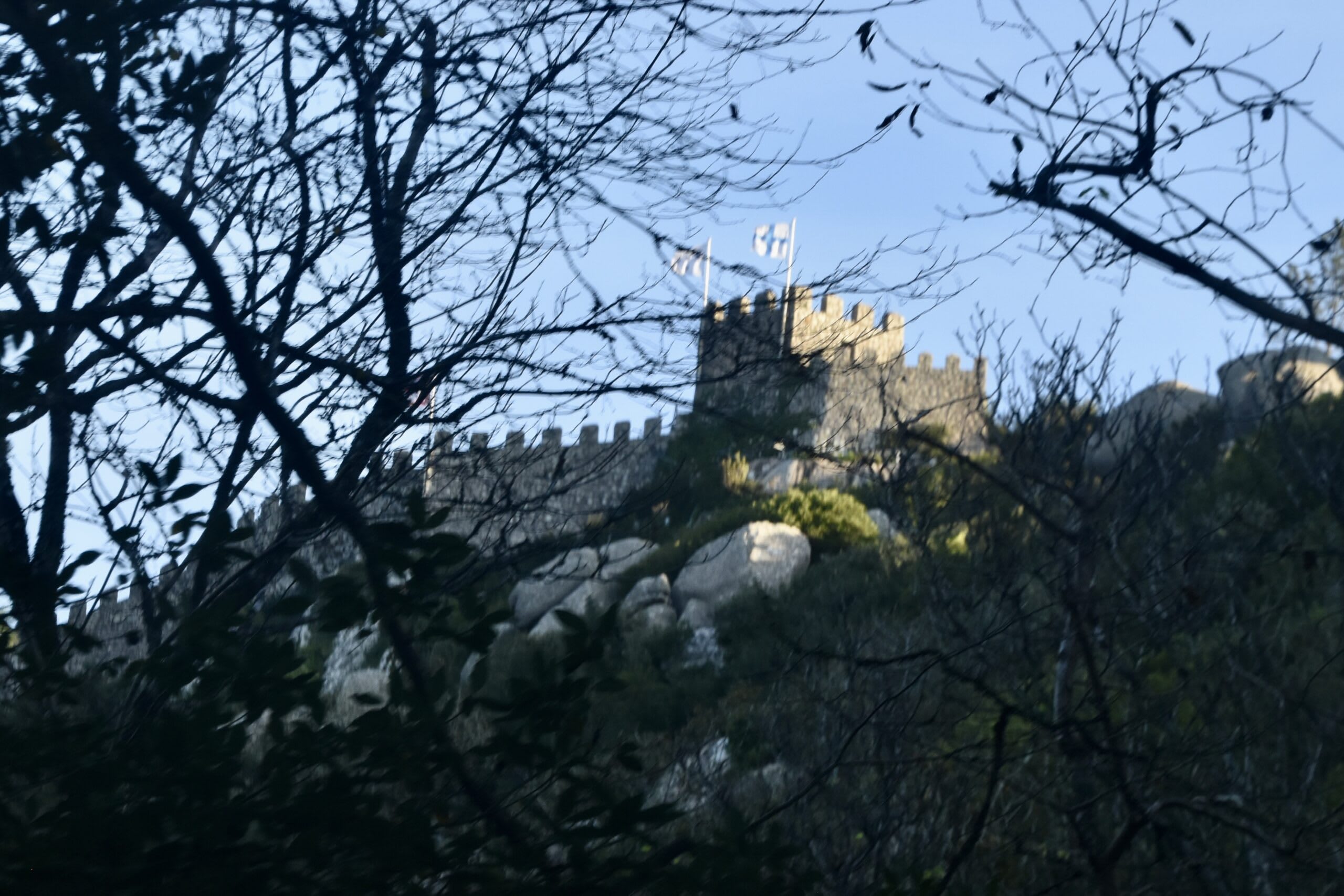
The Moorish Castle. Climbing toward Pena we passed the imposing Moorish Castle, raised in the tenth century during the Moorish hold on the peninsula. After the Christian reconquest it served as a fortress and even had its own church, but by the fifteen hundreds its usefulness had faded and people began living outside its walls. King Ferdinand II later restored it as part of his work to preserve Sintra.
Pena Palace. At the entrance our guide secured the tickets, and we faced a choice: hike the steep hill or take the bus to the top. After the previous day's climbs, John took the bus while Janice and Kieran walked up, taking photographs along the way.
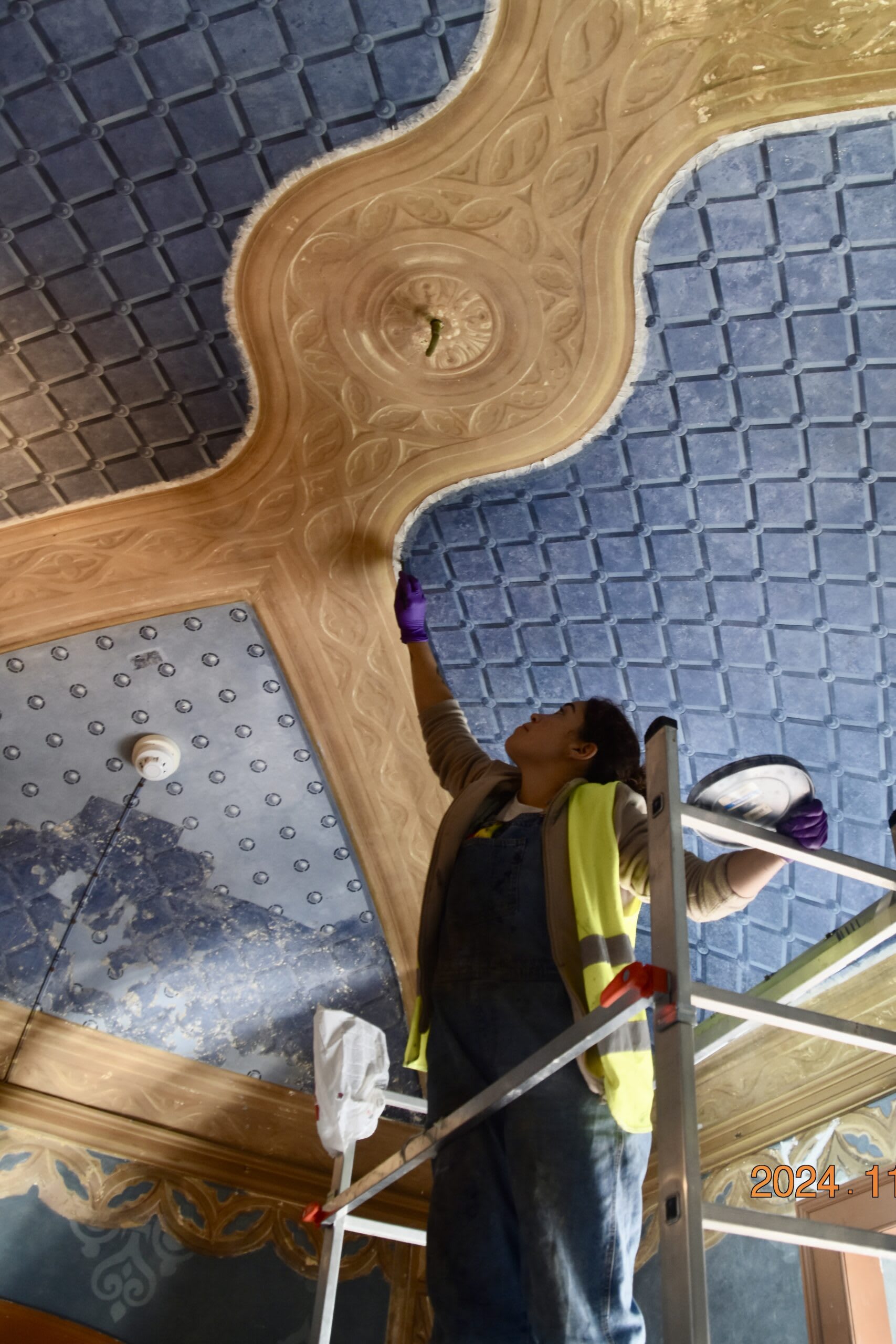
Inside, the palace was as grand as we expected, room after lavish room for living and entertaining and resting, a portrait of Portugal's regal past. We will admit that after touring so many palaces over the years, they begin to blend together; and there is always some restoration under way, inside and out. Here an expert was at work on a ceiling fresco.
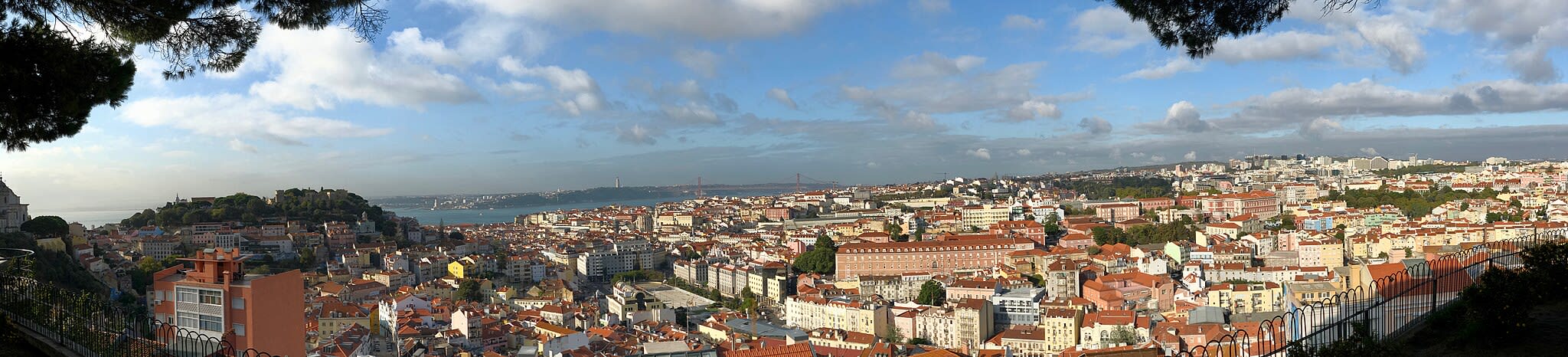
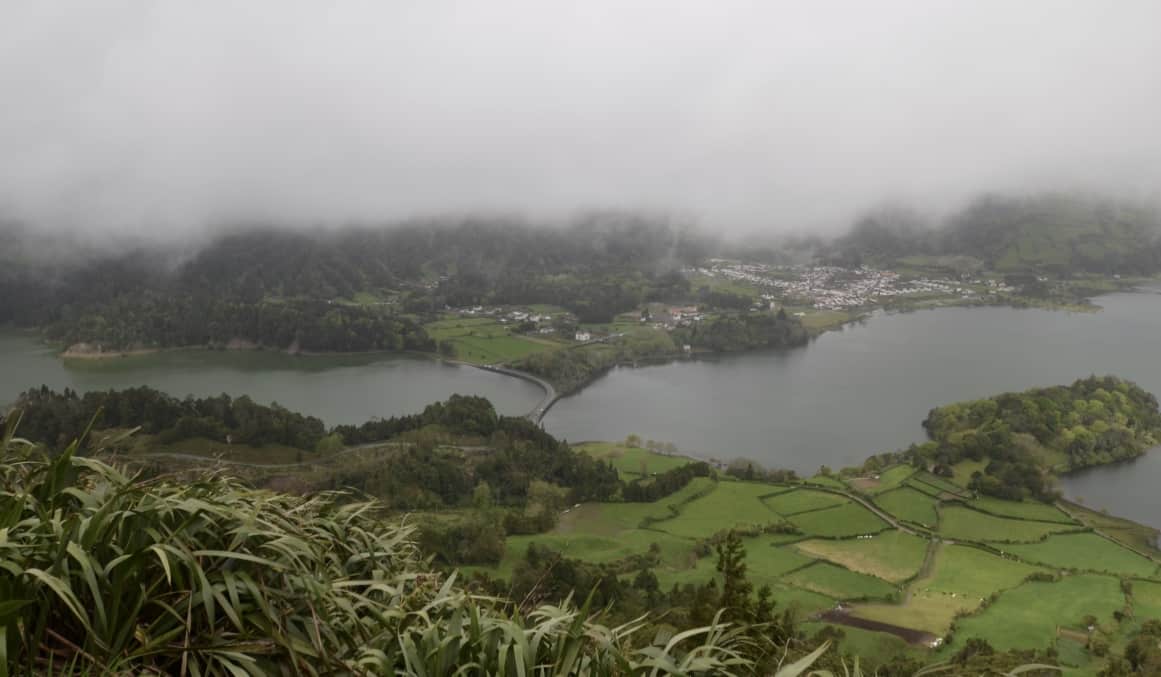
Outside, we were rewarded with sweeping views over Sintra's valleys and coastline. Our guide gave us the simple distinction between the two kinds of building we had seen: a palace is made for luxurious living and entertaining, a castle for defense.
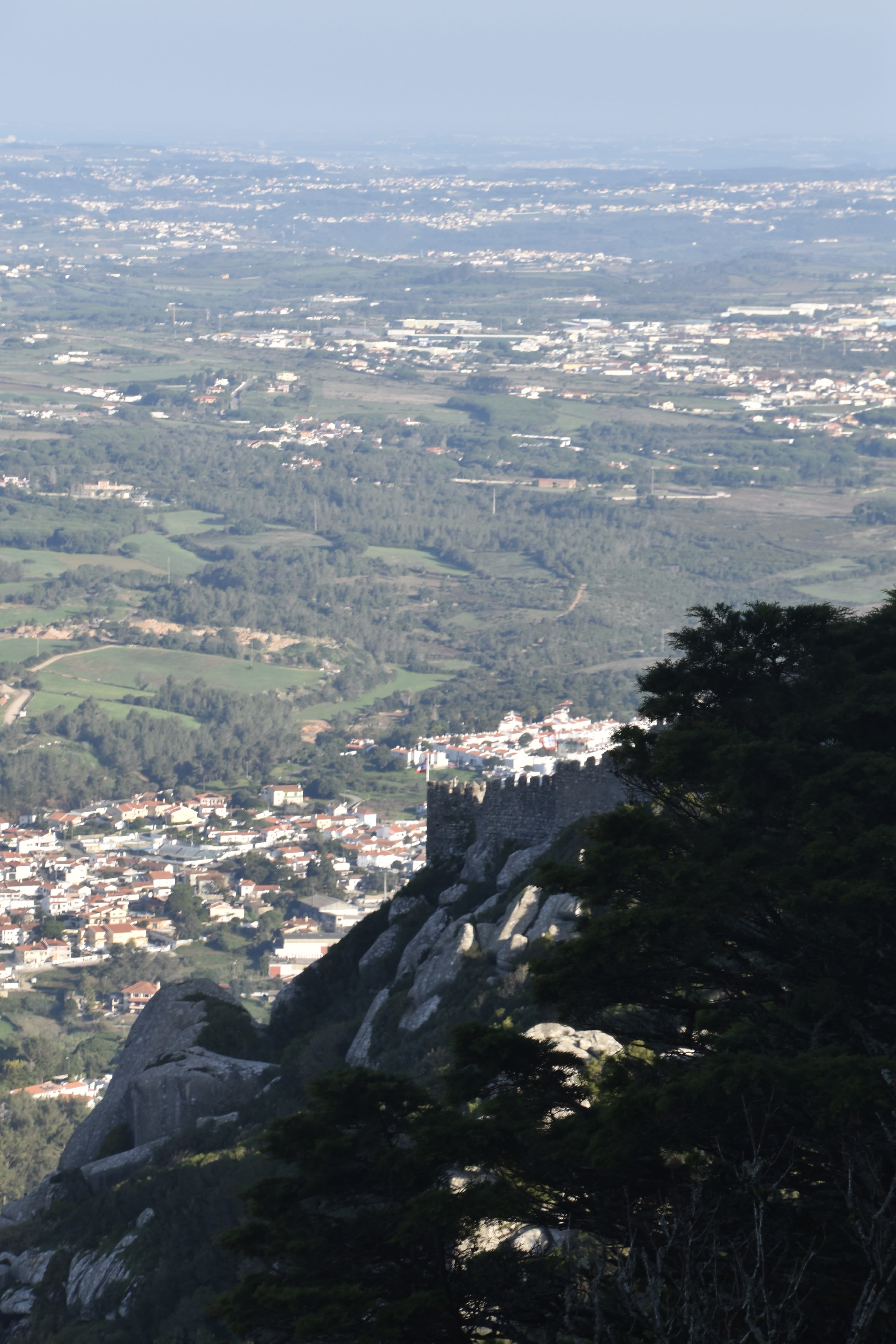
Through the village. We hiked back down to the SUV and rode into the village center, passing the Regaleira estate, which we decided to skip after the guide explained that a modern restoration in the nineteen nineties had altered much of its old character. We wandered the quaint streets and shops and then gathered at a café the guide knew for coffee and a snack, and got to know our fellow travelers. One, a Cuban, told us how he smuggles supplies home to his family, often disguised as ordinary belongings, and how little of the tourists' money ever reaches the local people; another, back from a long stint working abroad, spoke of how much it had taught him to value life in the United States.
Cabo da Roca. Next we drove to Cabo da Roca, the westernmost point of continental Europe, where rugged cliffs stand against the open Atlantic. The lighthouse there, built in 1772, still works today and is the second-oldest in Portugal.
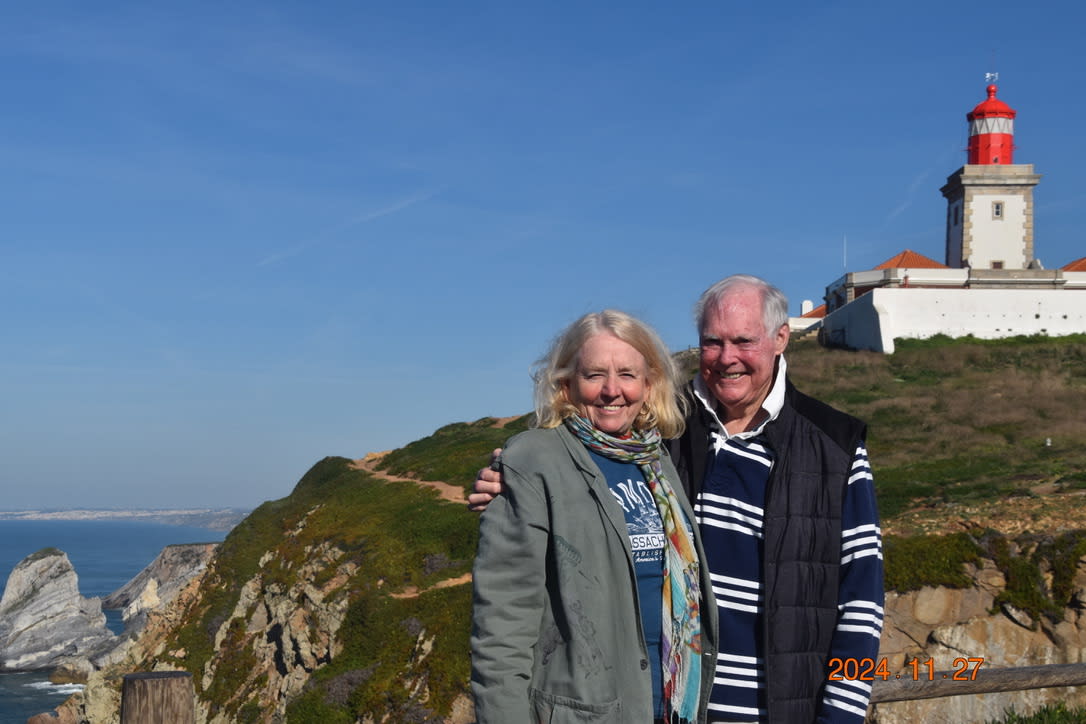
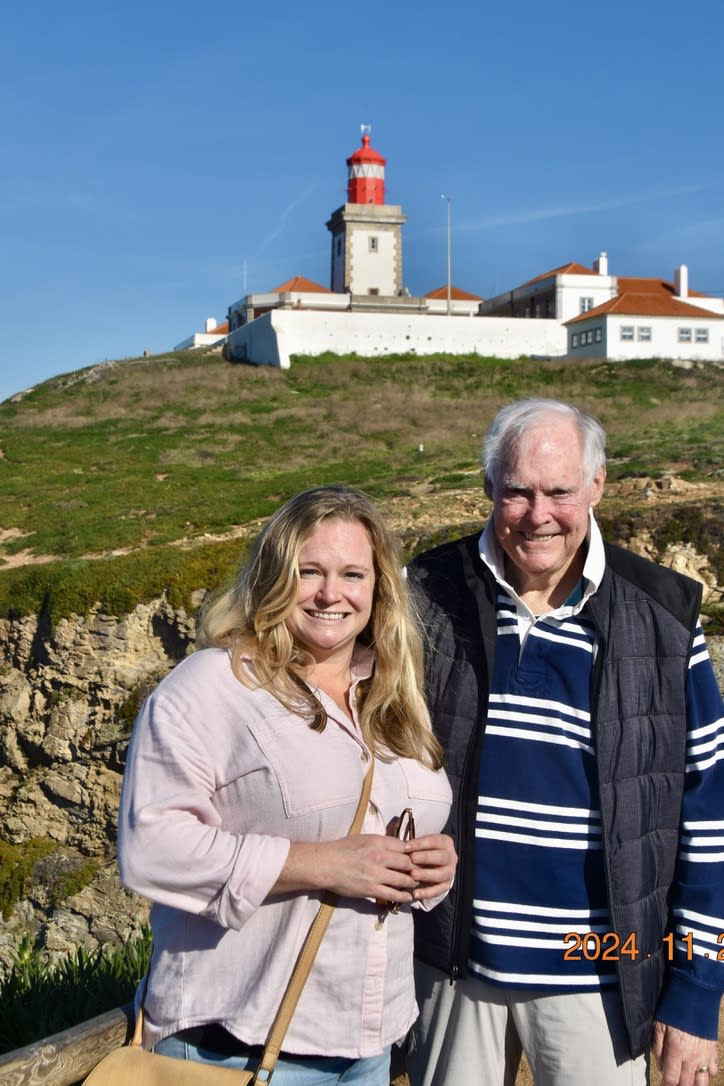
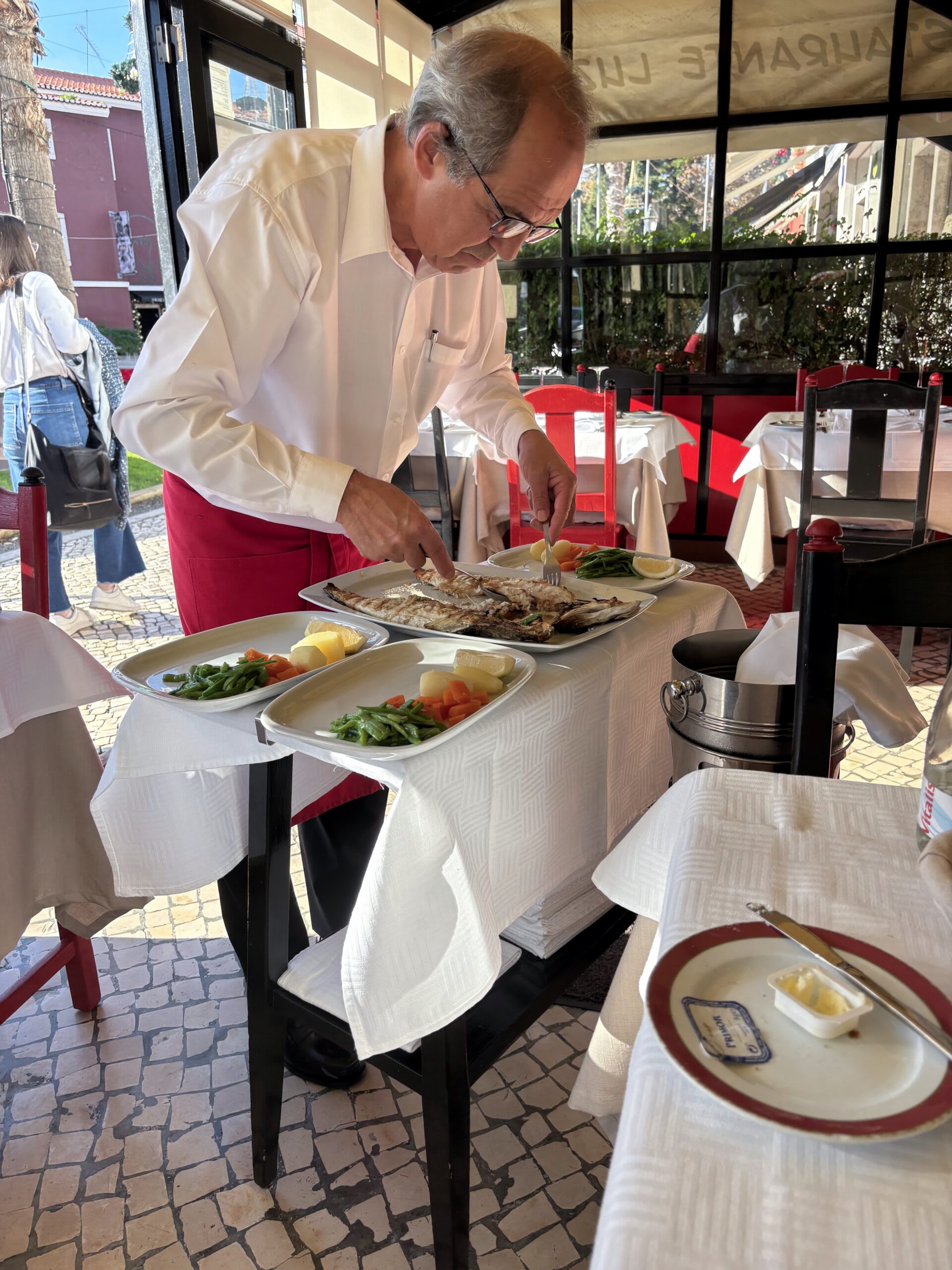
Cascais. From the cape we drove to Cascais, a wealthy seaside town and the jewel of the Portuguese Riviera. It became a summer retreat for Portuguese royalty, and today it is a blend of the old fishing village and the grand villas of those days. Our guide pointed out a fish restaurant as we drove in, Restaurante Luzmar, and left us to choose our own lunch with a time to meet a few blocks on.
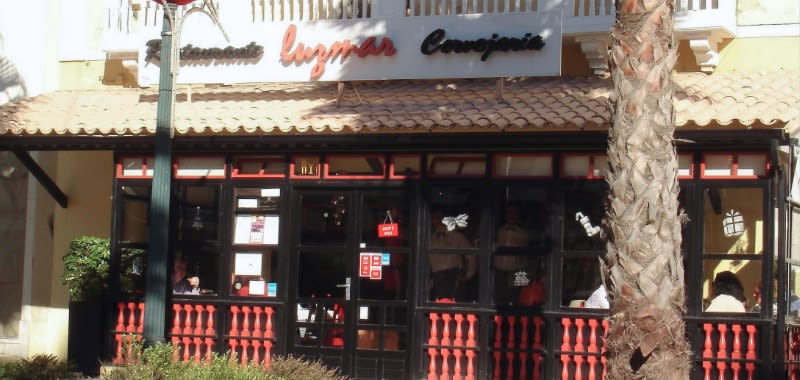
The three of us went for the fish place. The waiter steered us to a whole seabass with the proper potatoes and vegetables and a perfect white wine, and to start, fresh bread, sautéed octopus, and olives, with crème brûlée to finish. It was the best fish dinner we have ever had, so good that we lingered over it and had to hurry to meet the guide for the ride back.
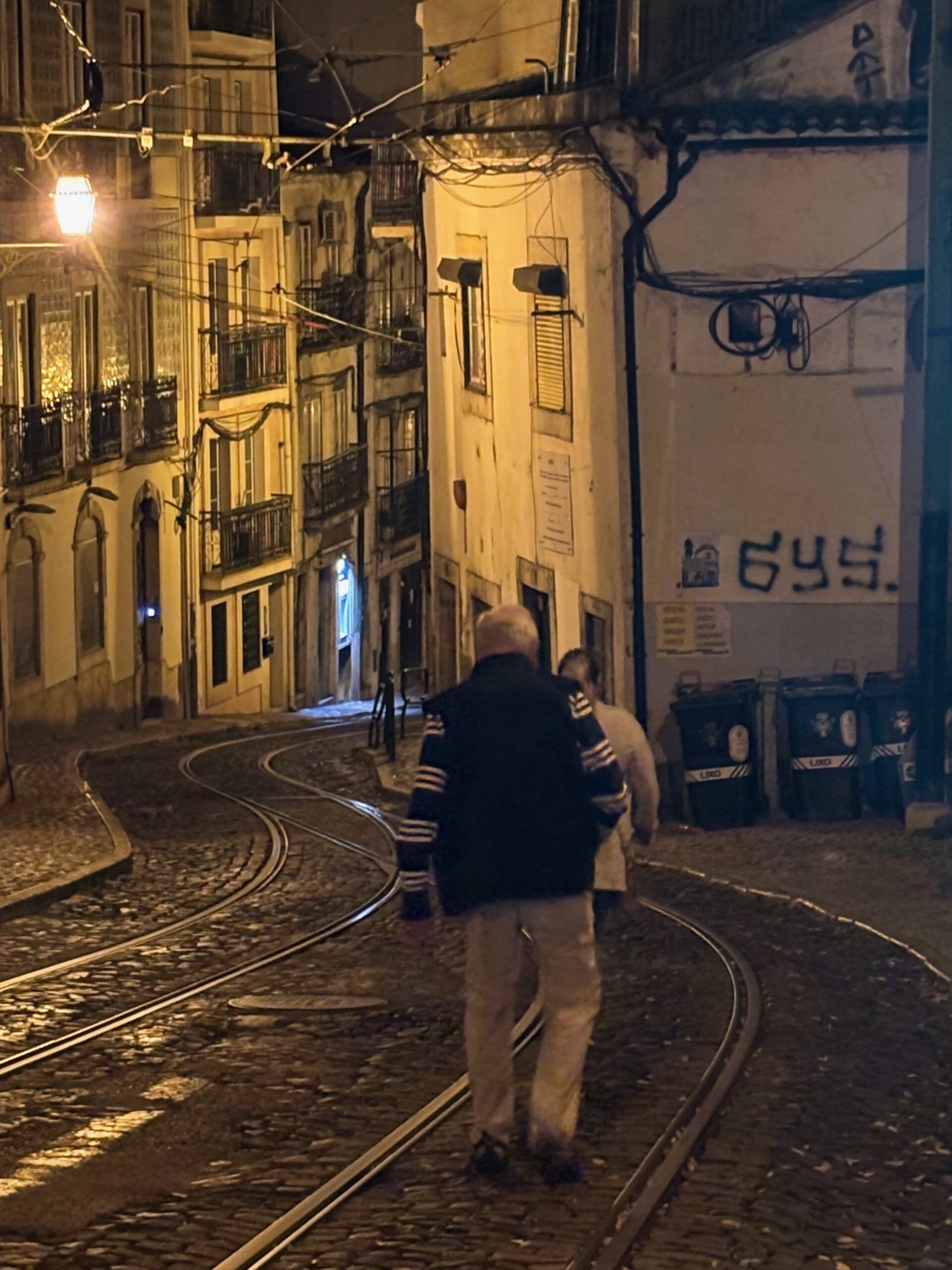
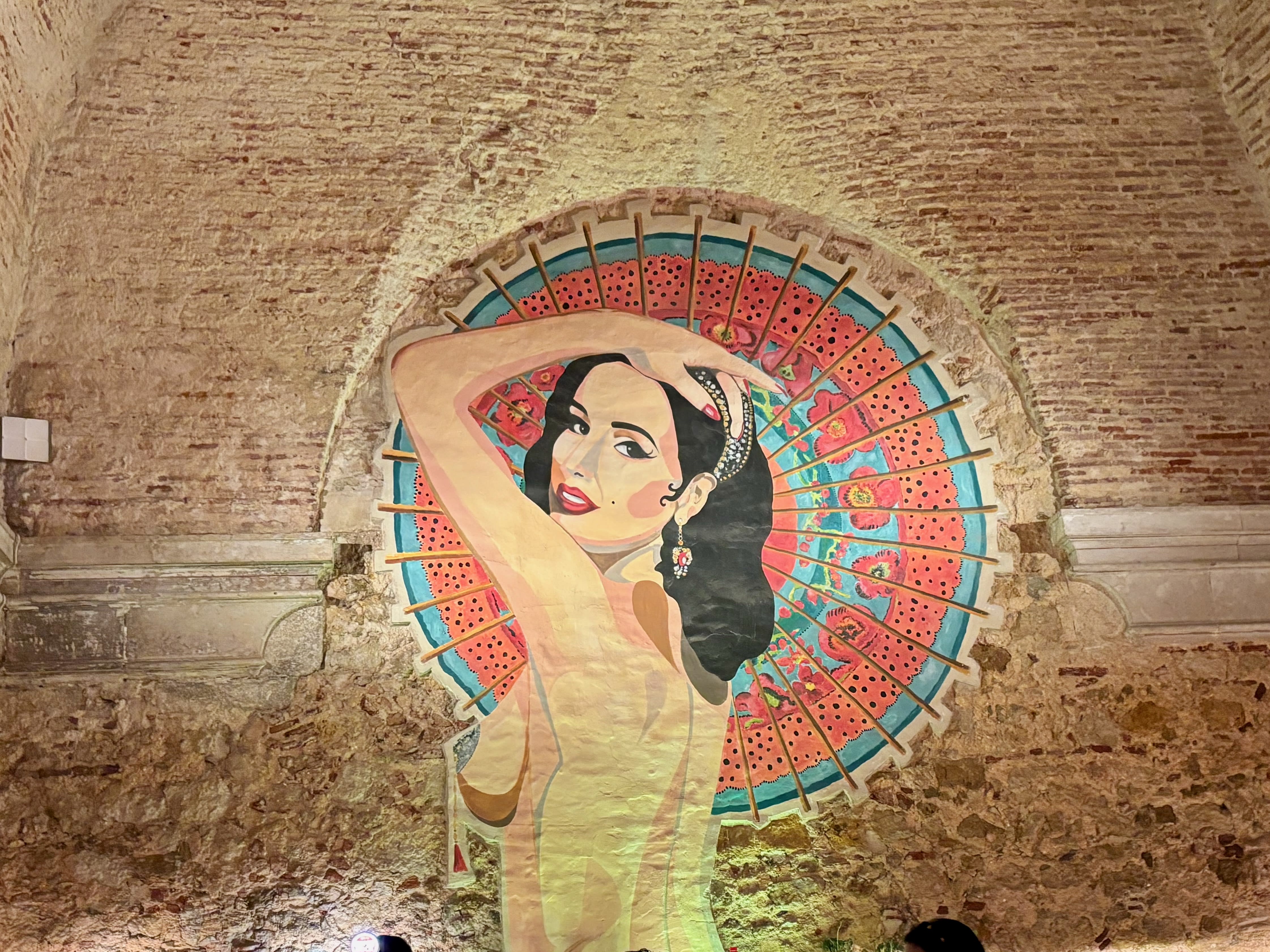
Dinner at the Mini Bar. The day was not done. The guide tried to deliver us to our door, but the hill defeated him, and we were dropped off to walk the last of the way up. We changed and went back out; Kieran had a friend's recommendation, the Mini Bar, down near the river, so we called an Uber. The entrance was a puzzle, a maze of several restaurants behind one sign, but we found ours, and it was a lovely room, with a mural over the bar and beautiful walls.
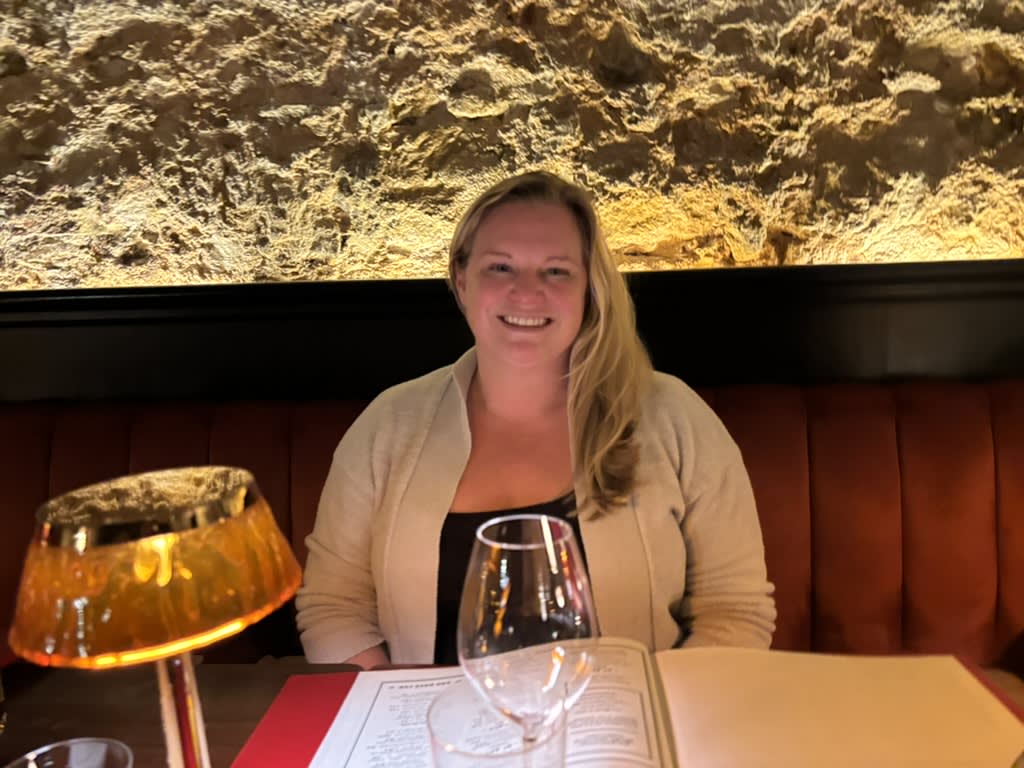
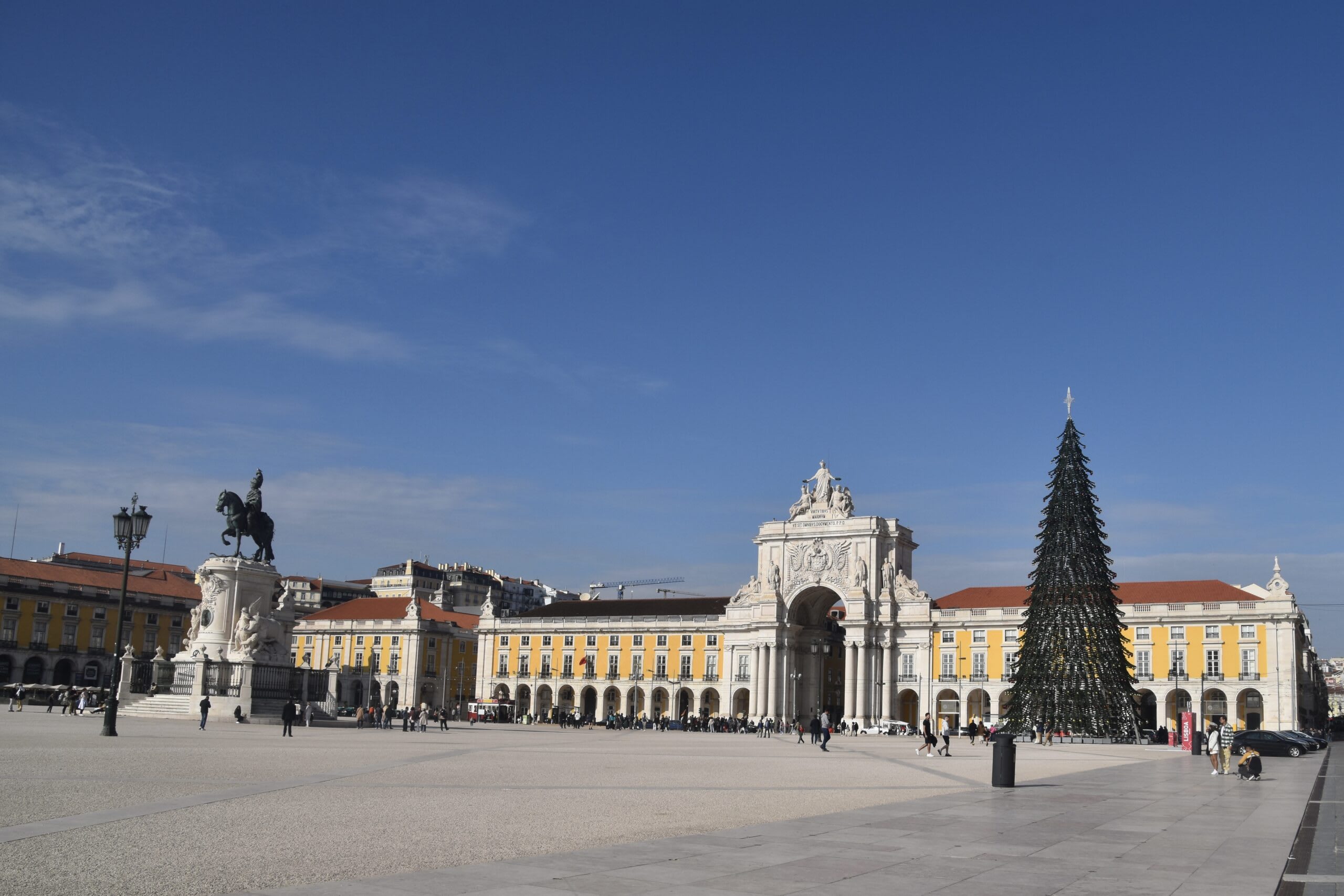
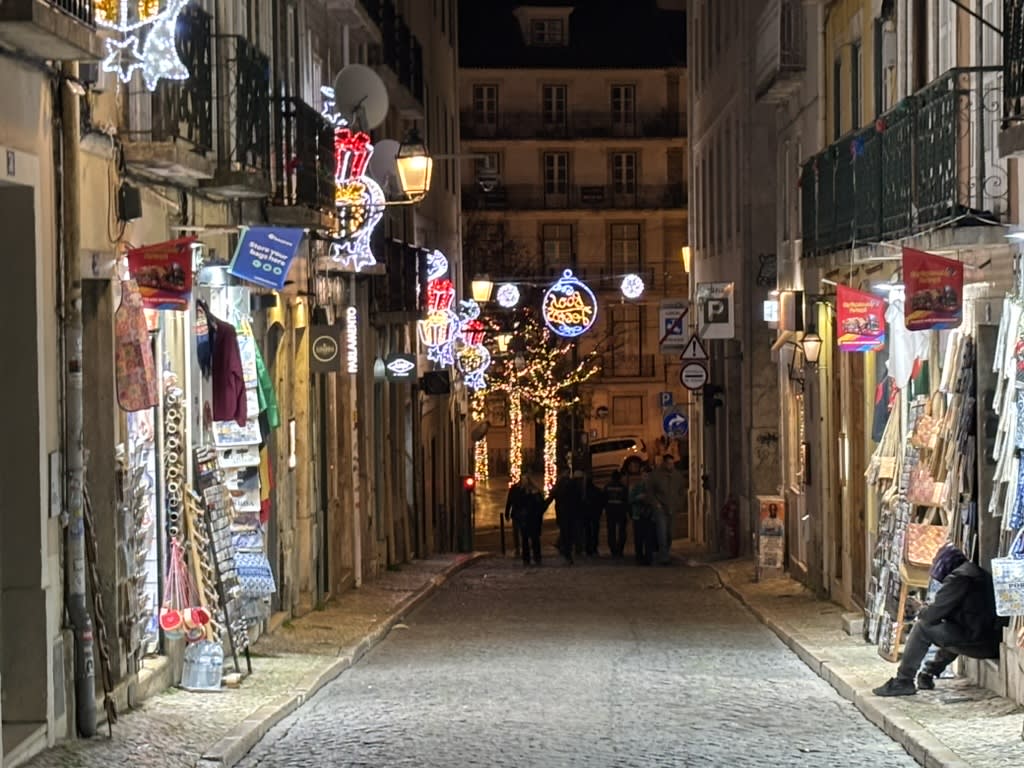
The food came in small portions but every bite was wonderful, a bit pricey and not to be missed. We asked the waiter where to go for port and dessert, and he sent us just down the street to a place called Grapes and Bites. Lisbon's Christmas lights were up across the streets and squares, and the walk over was beautiful.
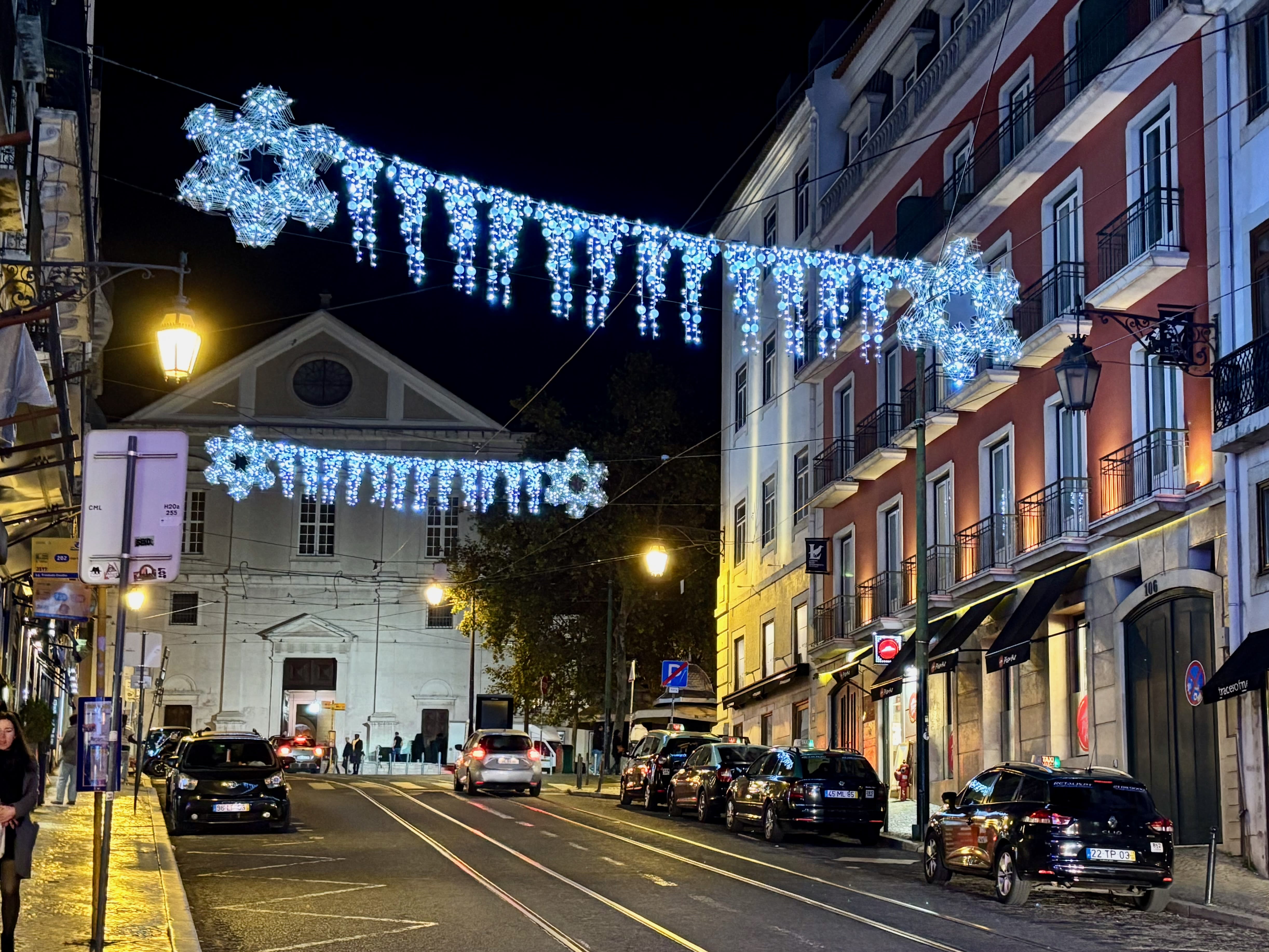
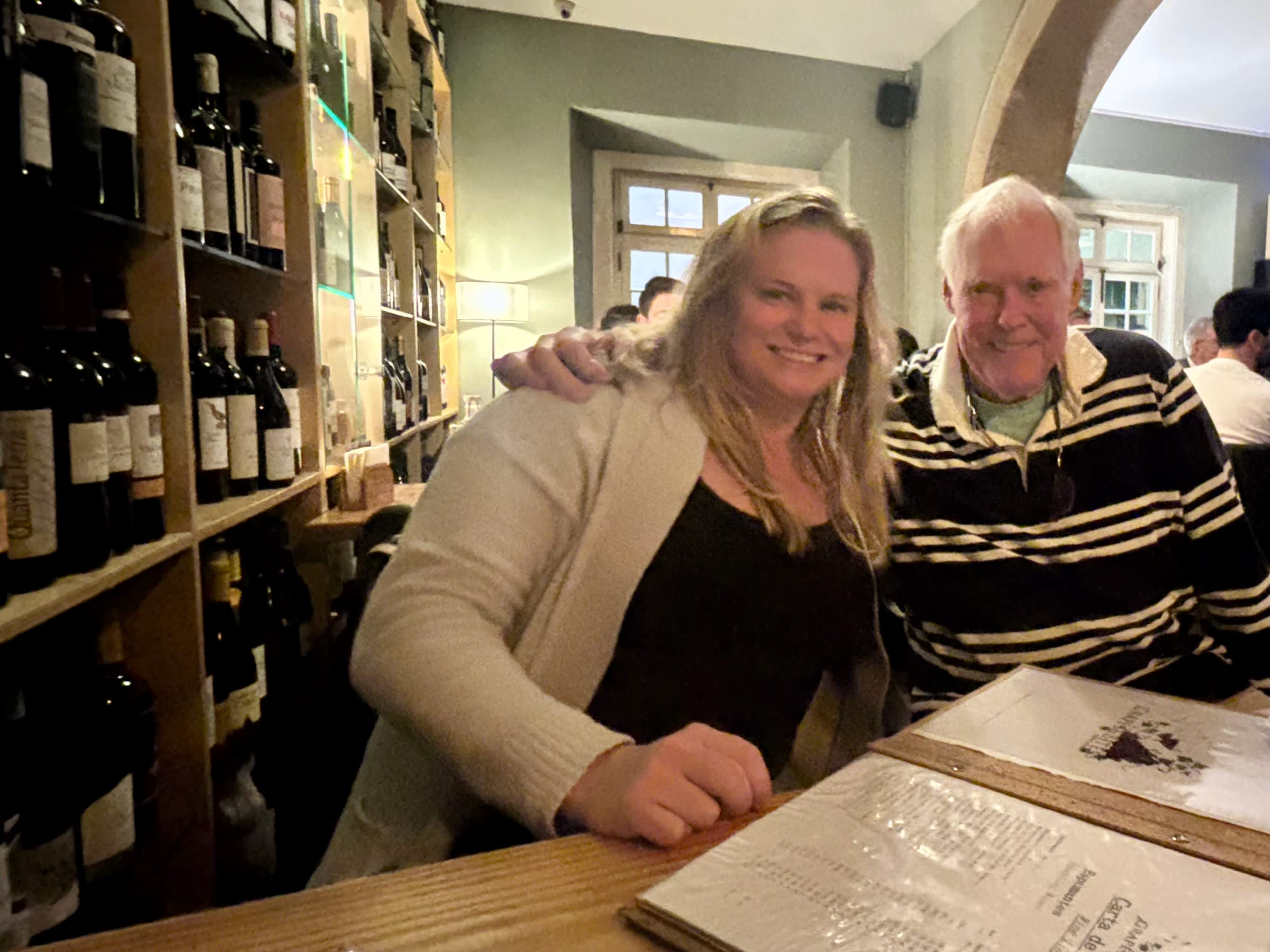
At Grapes and Bites we settled in over a lovely port and crème brûlée, a fine end to the day.
We called an Uber back, but the road up is closed partway and most drivers will not go farther, so down we went on foot to the apartment for the night. We had already settled on a plan for the next day: down to the bottom of the hill, by the museum where the Tuk-Tuks park, to strike a deal with one to carry us around to the places on our list.