Dateline November 28, 2024, Tour Lisbon By Tuk Tuk
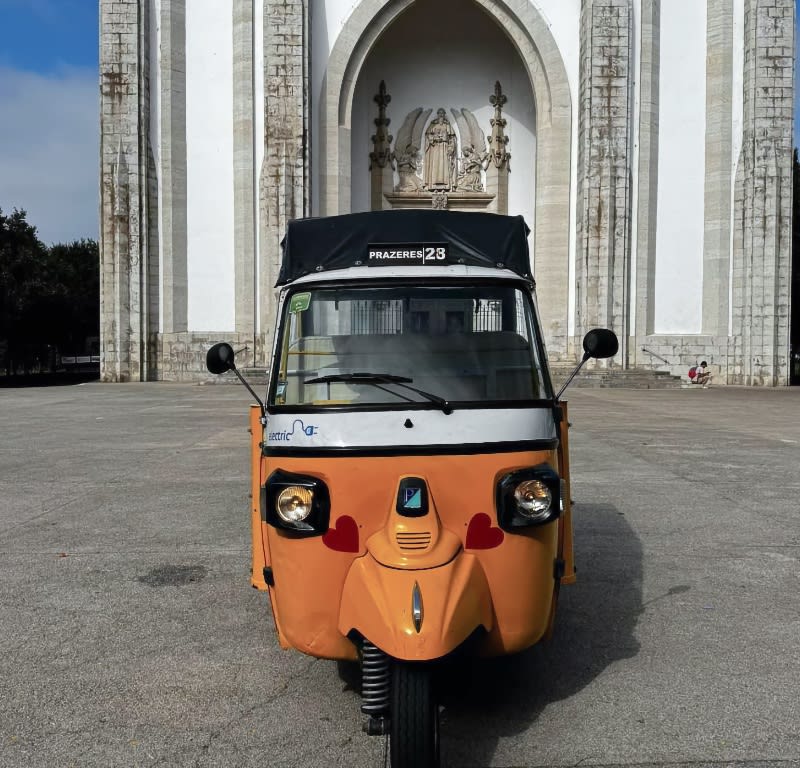
After a gentler downhill stroll than the days before, we reached the base of the Alfama, just below our apartment, and set out to see the city in a livelier way: aboard one of Lisbon's three-wheeled motor-scooter carts, the Tuk-Tuks, named for the sound of their little two-stroke engines.
Meeting Salvador. Our driver was Salvador, the charismatic owner of Tuk-U-Up, and you have to love the name. Janice's knack for finding unforgettable guides did not fail us. Salvador looked pulled straight from central casting and delivered line after line with perfect comic timing, and his wit and his deep love of Lisbon made him the ideal companion for the afternoon. We struck a deal for a tour of the oldest neighborhoods, above all the Alfama, where he claimed deep family roots, and off we went through its maze of narrow alleys and terracotta roofs.

The Alfama's long story. Salvador began with the neighborhood, one of the few spared by the 1755 earthquake. "This is Lisbon," he declared, "one of the oldest cities in Western Europe." It was first known as Ulissipo, he said, settled by the Celts and built up by the Phoenicians, then passed through Greek, Carthaginian, and at last Roman hands; the Romans renamed it Olissipo and made it part of the province of Lusitania. When Rome fell, Germanic tribes took over, and the kingdom of the Suebi ruled until 585. Then came the chapter that shaped the Alfama most, the Moorish hold from the eighth century on, which left its courtyards and its intricate tilework behind; even the name Alfama comes from the Arabic al-hamma, for the hot springs and baths that once dotted the slope.
He told too of 1147, when King Afonso I took Lisbon back from the Moors with the help of Crusaders during the Second Crusade. One gripping tale was of a Portuguese soldier who let a gate close upon himself to hold open a breach, so his comrades could storm the city from below while the Crusaders pressed from the hills; trapped, the Moors gave up the city and withdrew to Morocco.
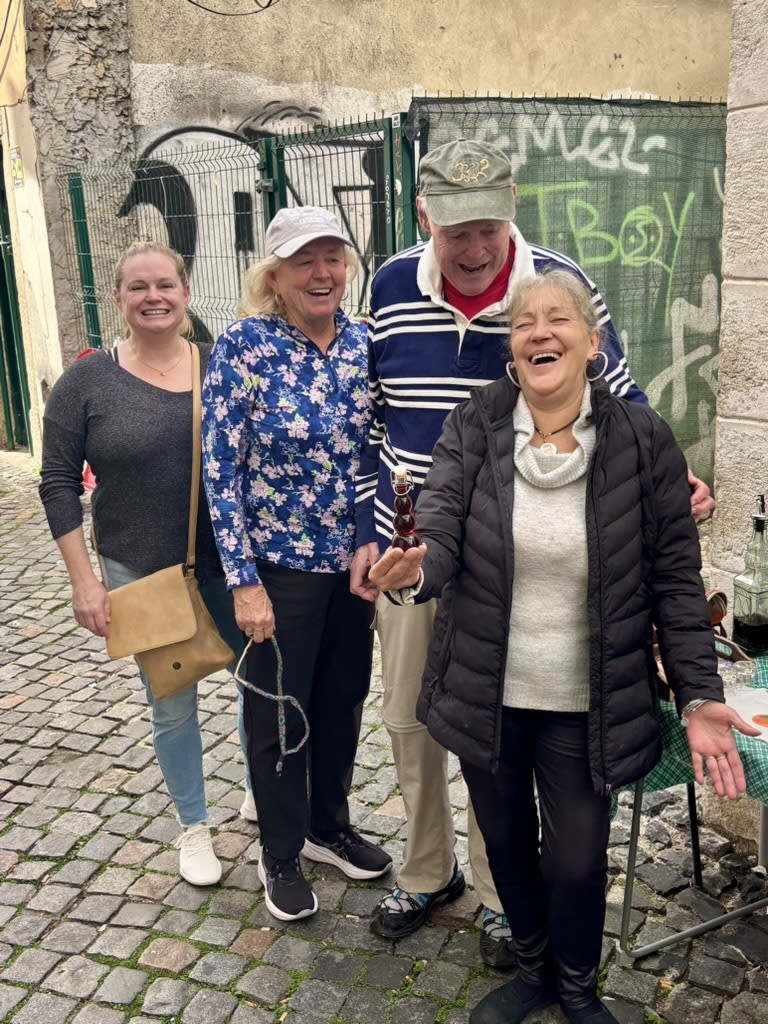
The Cherry Liquor Queen. As we wound through the lanes Salvador pointed out old Moorish gates and introduced us to his neighbors, and one stop we will not forget was the woman he called the Cherry Liquor Queen. He told us how he first met her, welcomed into her home, where she brews her own ginjinha, the traditional Portuguese cherry liqueur, and swears hers is the only truly handmade version around. With a warm smile she gave us each a little chocolate cup filled with it; a sweet, potent sip, and then you eat the cup, tradition and treat in one.
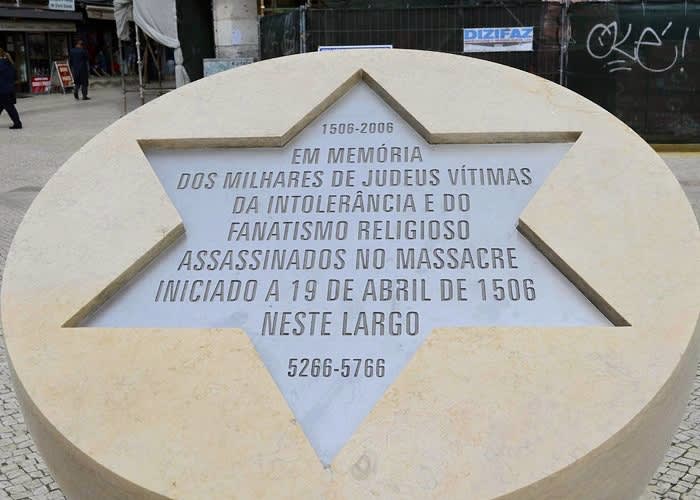
The old Jewish Quarter. A little farther on, Salvador gestured down the alleys to the left. We were passing through the Judiaria, he said, one of Lisbon's oldest and most significant quarters. The Jewish community here reached back to Roman times and grew through the Middle Ages until, by the fifteenth century, it was among the largest and most influential in Europe, woven into the city's trade and medicine and science and finance. Many of the great explorers of Portugal's Age of Discovery, he told us with pride, were financed by Jewish merchants, and their knowledge of navigation and mapmaking helped launch those voyages.
Then his voice grew somber. In 1496, King Manuel I decreed that every Jew in Portugal must convert to Christianity or leave. Some fled; others converted under duress and lived as "New Christians," many keeping their faith in secret, and many suffered in the Inquisition that followed, a long and bitter scar on the city's history. But today, Salvador said, pointing to a commemorative plaque, their contributions are remembered and their legacy honored; Lisbon would not be the same without the resilience and brilliance of its Jewish community.
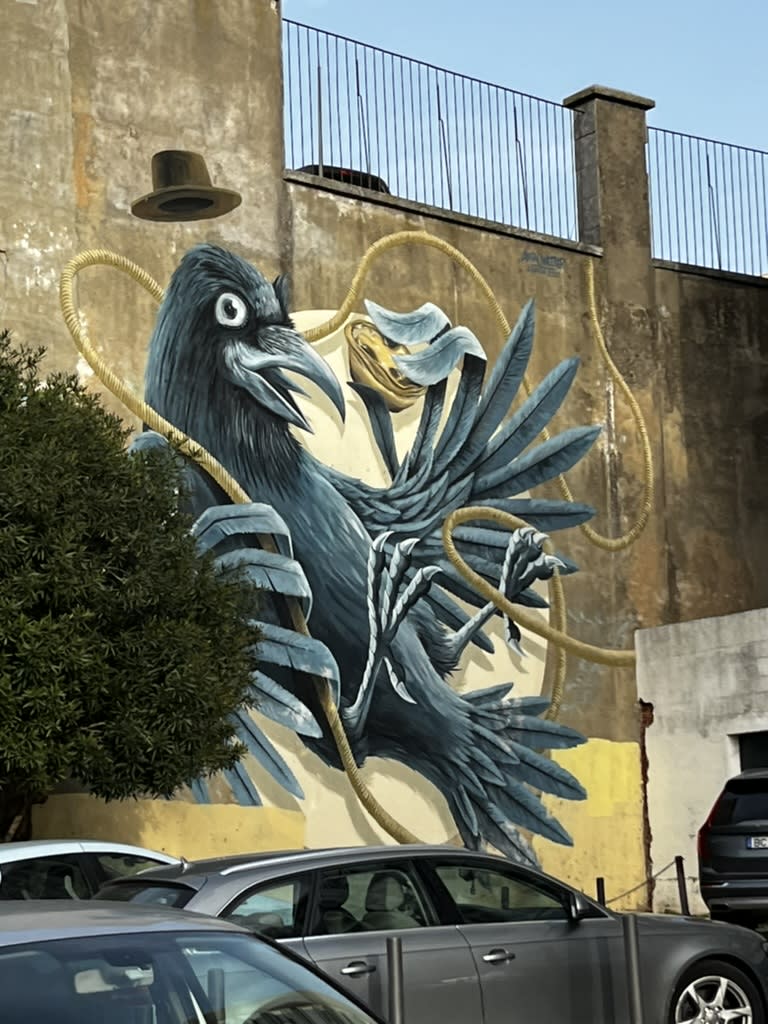
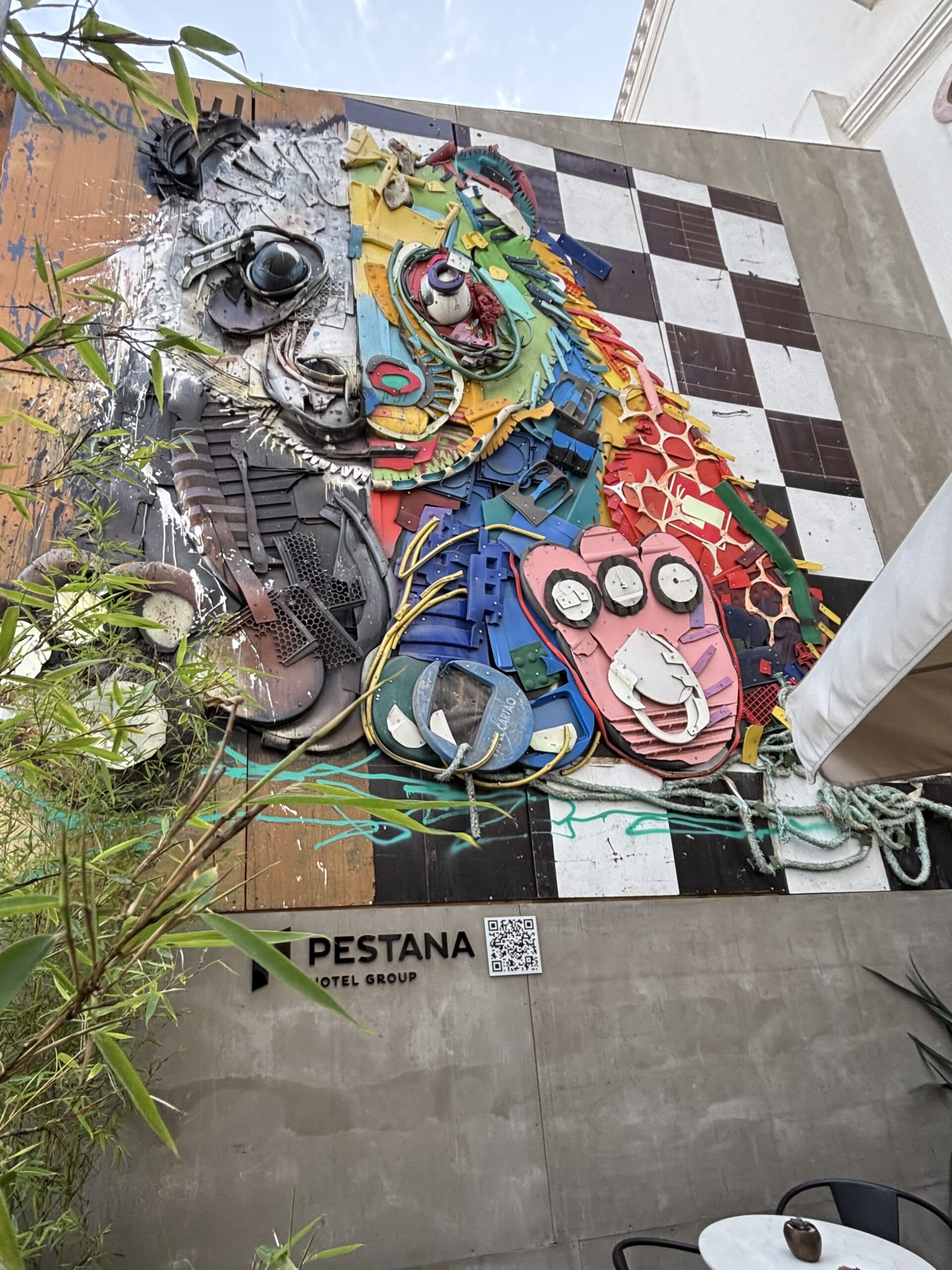
Art from castoffs. As we drove on he showed us the work of local artists around the city. Two pieces stopped us cold; both were made entirely from garbage, real garbage, and they were astonishing.
The highest view in Lisbon. Salvador drove us up the winding cobblestones, the route of Tram 28, which was not running that day, to one of the city's most breathtaking lookouts, the Miradouro da Senhora do Monte, the Our Lady of the Hill viewpoint. We stepped out into a panorama like a postcard come to life.
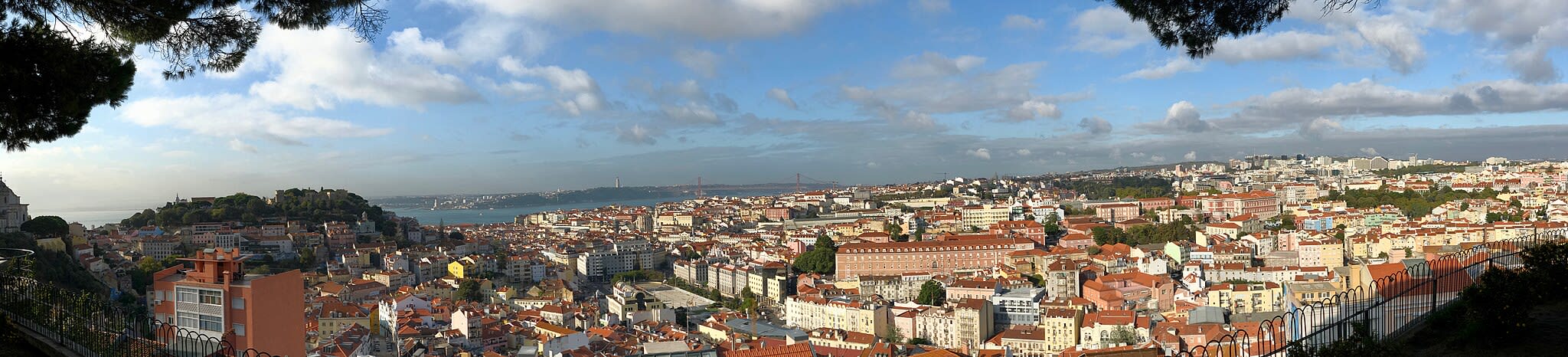
The whole city spread out below in a mosaic of red roofs, church spires, and twisting streets, with the top of the Alfama just beneath us, where Salvador said the Crusaders and the Portuguese had once closed in on the Moors. The São Jorge Castle stood proud on its own hill, and beyond it the Tagus shone, with the 25 de Abril Bridge and the Christ the King statue rising on the horizon. The viewpoint takes its name from a small eighteenth-century chapel, Our Lady of the Hill, where expectant mothers have long come to pray for a safe delivery, a tradition kept to this day.
Love, locks, and a legend. Along the iron fence hung a tangle of padlocks, fastened by couples as a sign of their lasting love, the keys thrown away, sometimes clear into the Tagus. Salvador, ever the entertainer, could not resist a twist: since Portugal's divorce rate, he assured us, is ninety-four percent, that meant ninety-four percent of the locks were already broken. He even showed us the figure on his phone. It turned out to come from a single year's count of divorces against that year's marriages, and the real rate is closer to one and a half percent, but Salvador truly believed the ninety-four, and that was part of his charm. As we climbed back aboard, another driver, a beautiful woman, stopped to give him a hug; an old girlfriend, it turned out.
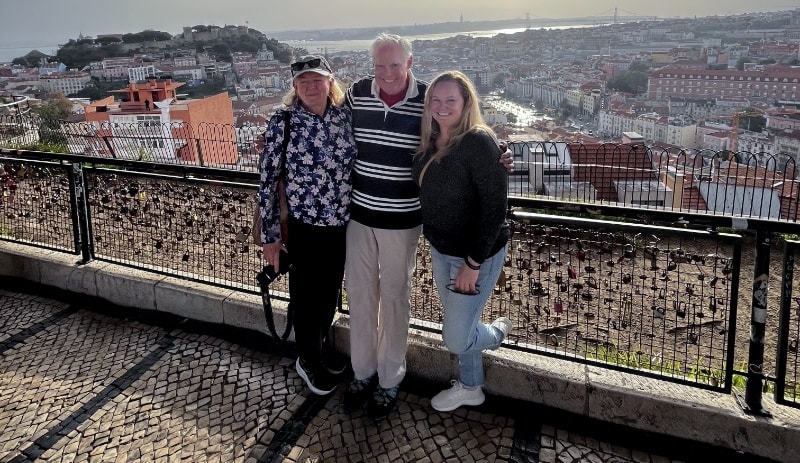
"You haven't truly seen Lisbon until you've seen it from here," he said, and then told us to hold on, and with the road clear he hit warp speed down the hill.
Farewell to Salvador. He carried us across to the Bairro Alto, where we could see the Senhora do Monte now in reverse, perched on its far hill, the city going dark and lighting up as we watched. It was the neighborhood of the night before, and Salvador wanted to send us to a small local place, cheap but very good, for dinner. We stepped into a narrow room, a counter on the right and eight tables on the left, a few locals watching soccer. The owner spoke broken English, his wife was cooking in a kitchen barely big enough to turn around in, and the short menu changed by the day with whatever was good at the Time Out Market. We picked three dishes to share.
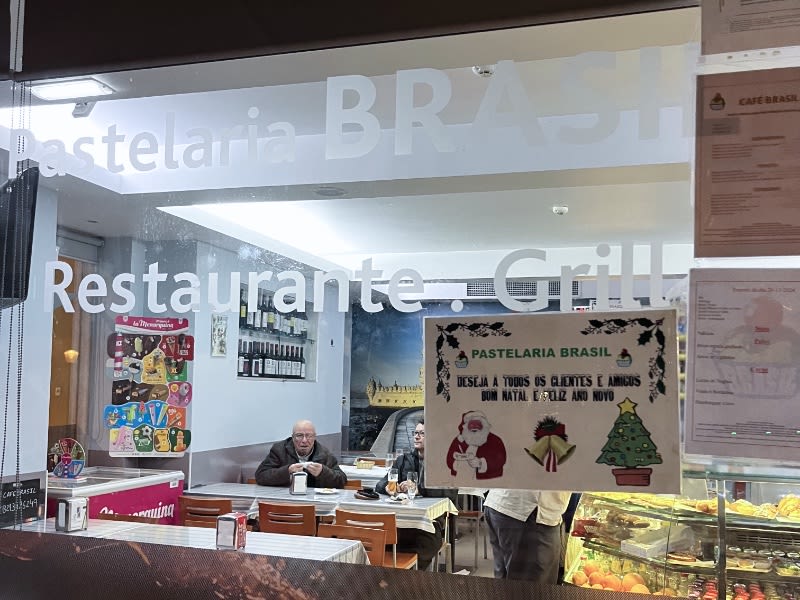
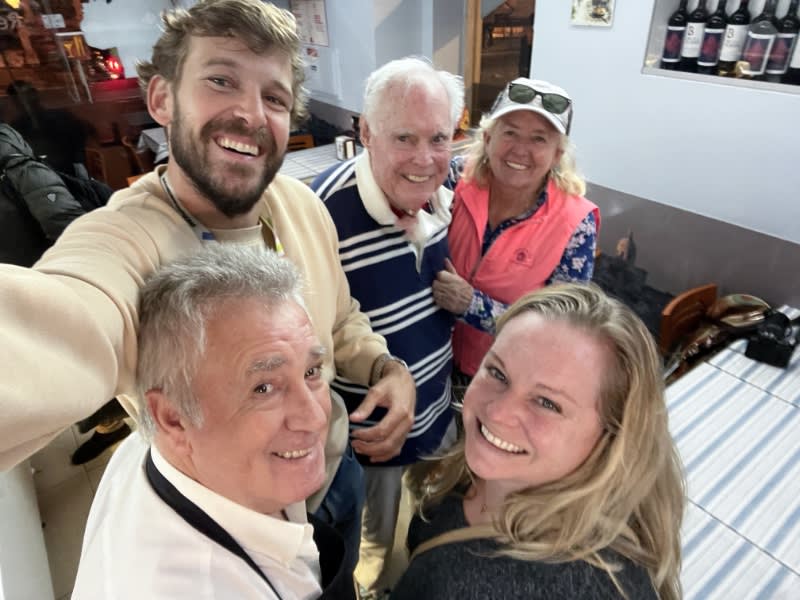
Then it was time to say goodbye. Kieran suggested a selfie, which the restaurant's owner happily joined, a perfect close to a day of stories and history we will not forget.
And so our days in Lisbon came to an end. In the morning we boarded our ship for the long voyage home across the Atlantic.