Dateline June 9, 2011, Valdez: A Picnic, a Glacier, and Jack Wilson's Salmon
We arrived in Valdez on Memorial Day. Our first stop was the visitors center, where the staff could not have been more welcoming. They invited us to a fresh halibut picnic that afternoon behind the high school, and we and several of the other Roadtrek couples went along.
It turned out to be one of those small-town events that you remember. The Coast Guard flew a rescue helicopter in from Cordova, and the kids took turns climbing through the cockpit. The Air Force flew a band in from Anchorage that played beautifully. Partway through the set, a seven-year-old girl walked up and sang with the group, so well that everyone in the crowd was wondering where Simon Cowell was. It was a wonderful afternoon, and free to anyone who showed up.
Between the picnic and the visitors center, we had a chance to meet a lot of locals over the course of the week. It is a close community. The largest employer is the Alaska Pipeline, which terminates in Valdez. Commercial fishing is second.
The 1964 Alaska Earthquake still hangs over the place. The shock was magnitude 9.2 and lasted about four minutes, the second-largest earthquake ever recorded and the largest in North America. A massive underwater landslide in Prince William Sound destroyed the original town and harbor, and a tsunami that followed carried thirty-three people to their deaths. The Army Corps of Engineers determined the original site was unsafe to rebuild, and Valdez was moved four miles to where it sits now. Many of the older buildings were physically moved across to the new town. The local museum tells the story well.
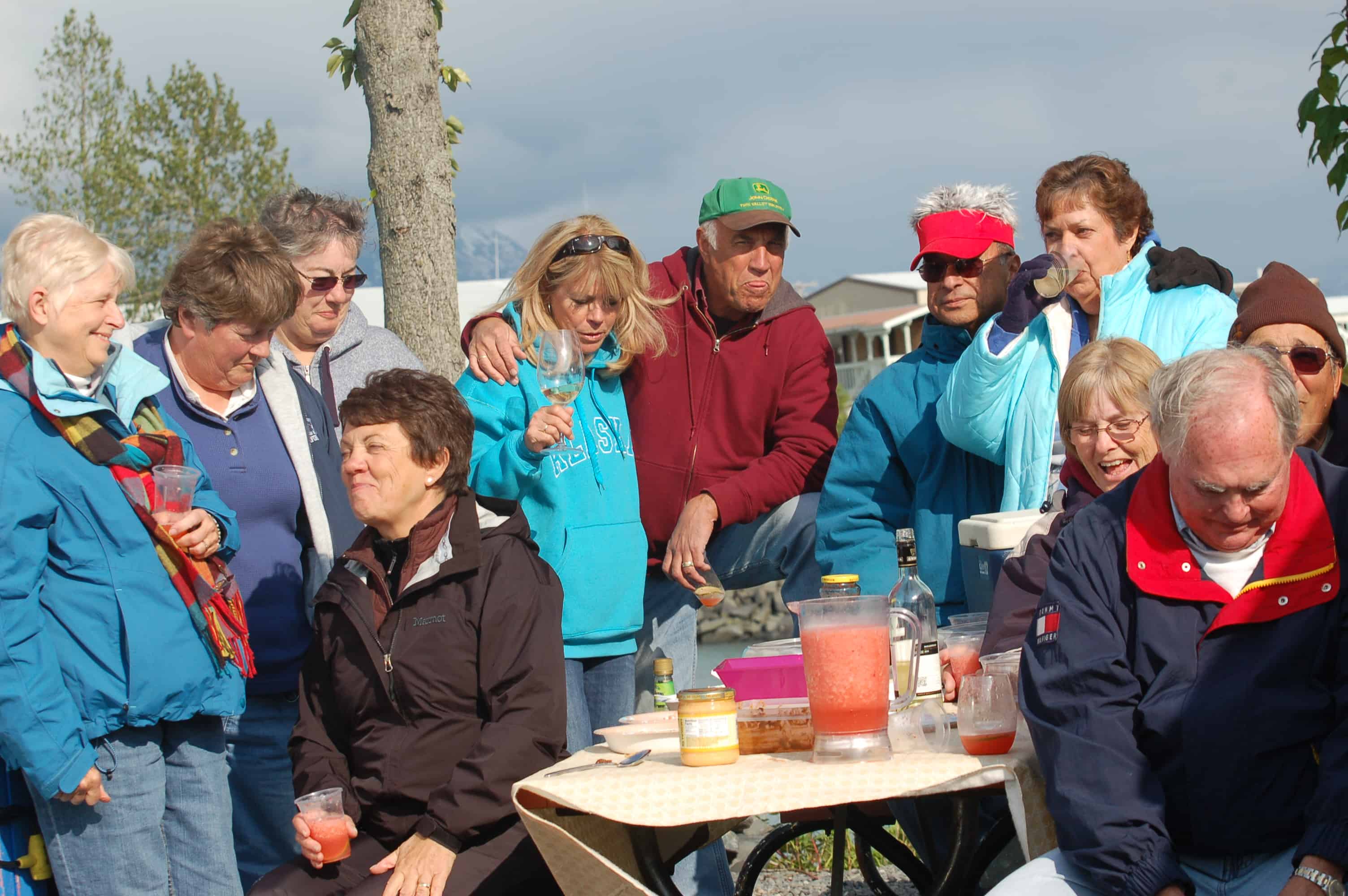
The Roadtrek group we had fallen in with declared Mexican night, and we threw a party. Pete handled the margaritas.
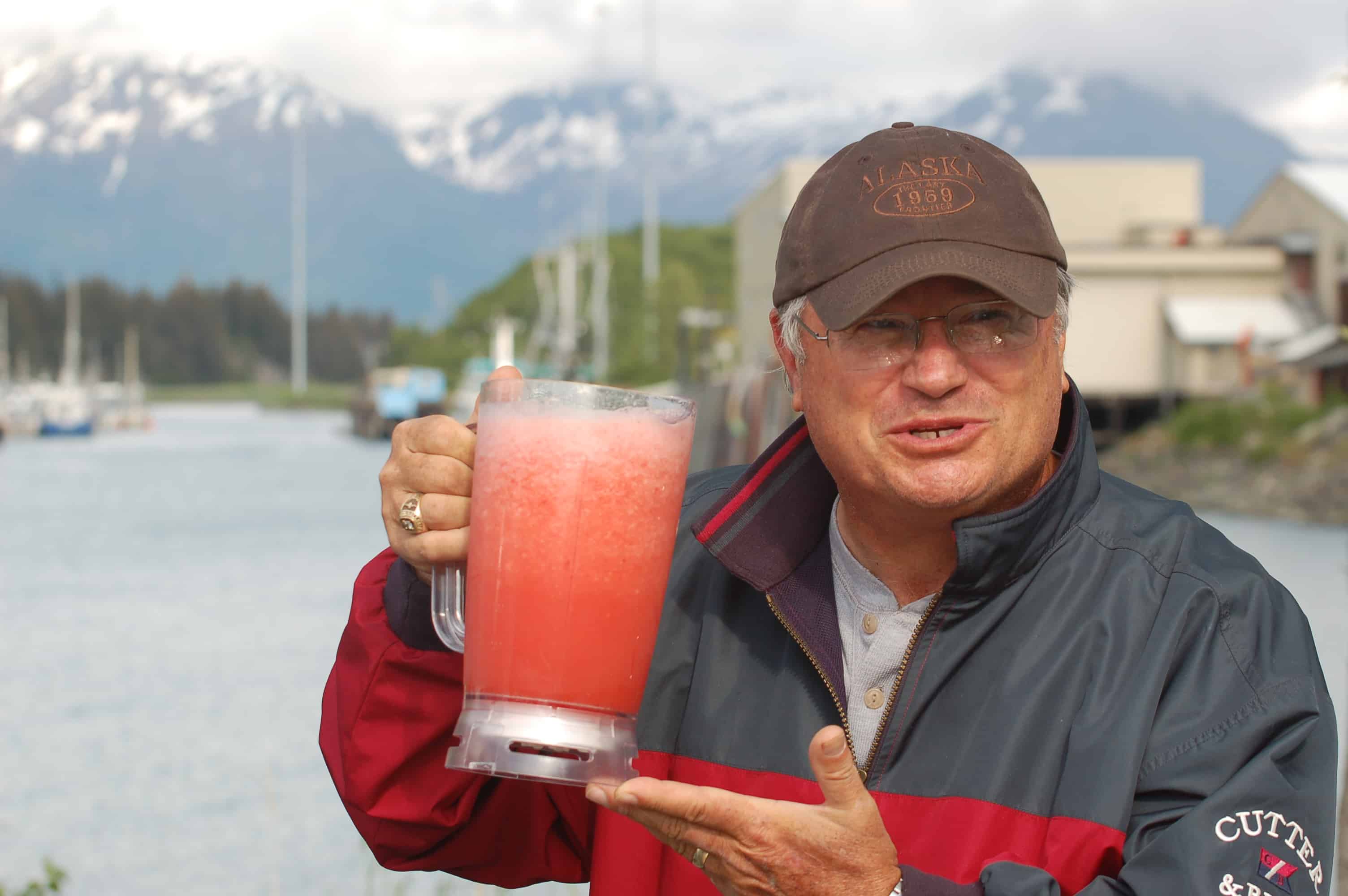
The rest of us made the tacos and quesadillas. Plenty of food, plenty of drink.
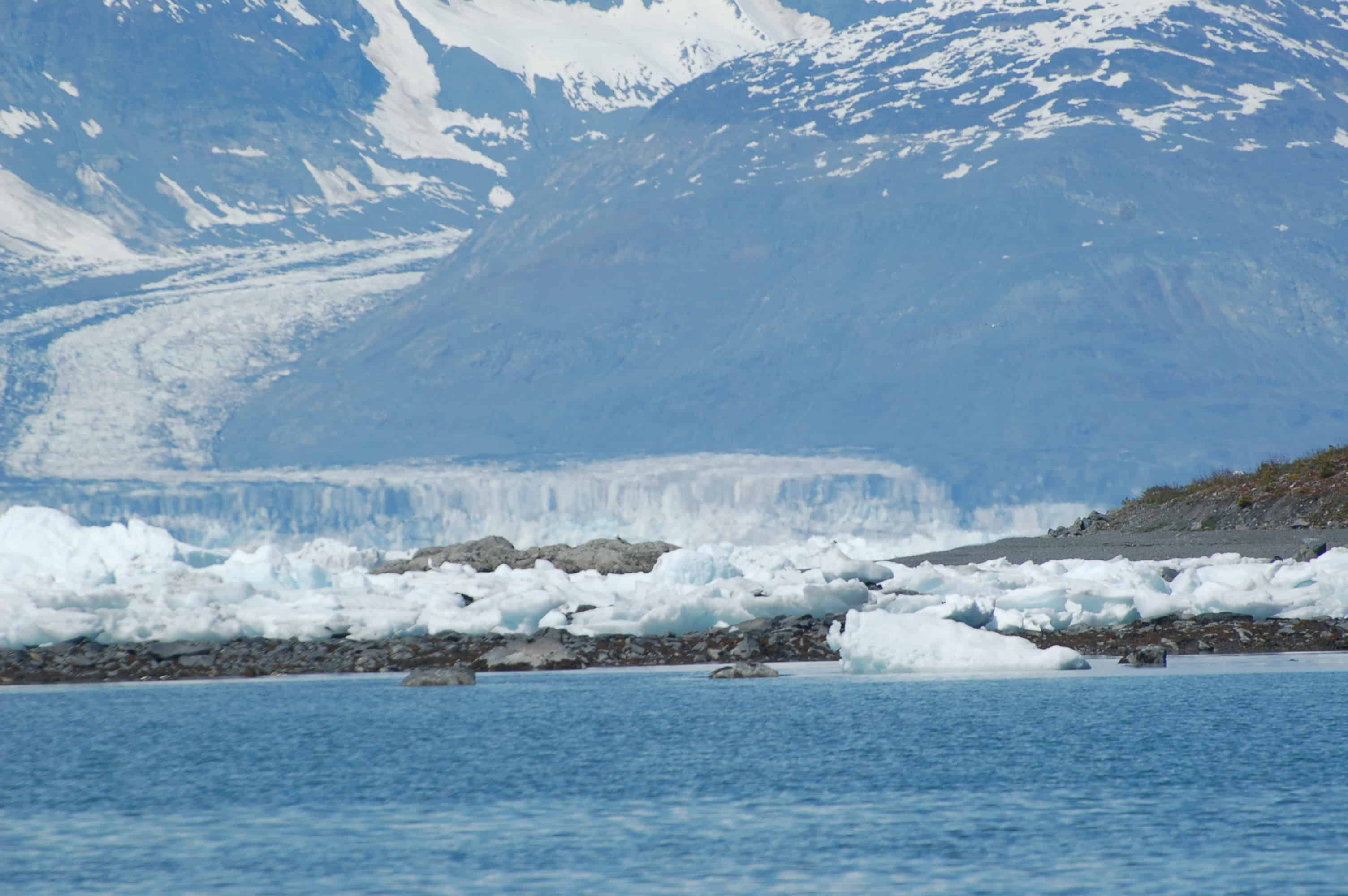
One of the highlights of the week was a cruise out to Columbia Glacier on a beautiful sunny day.
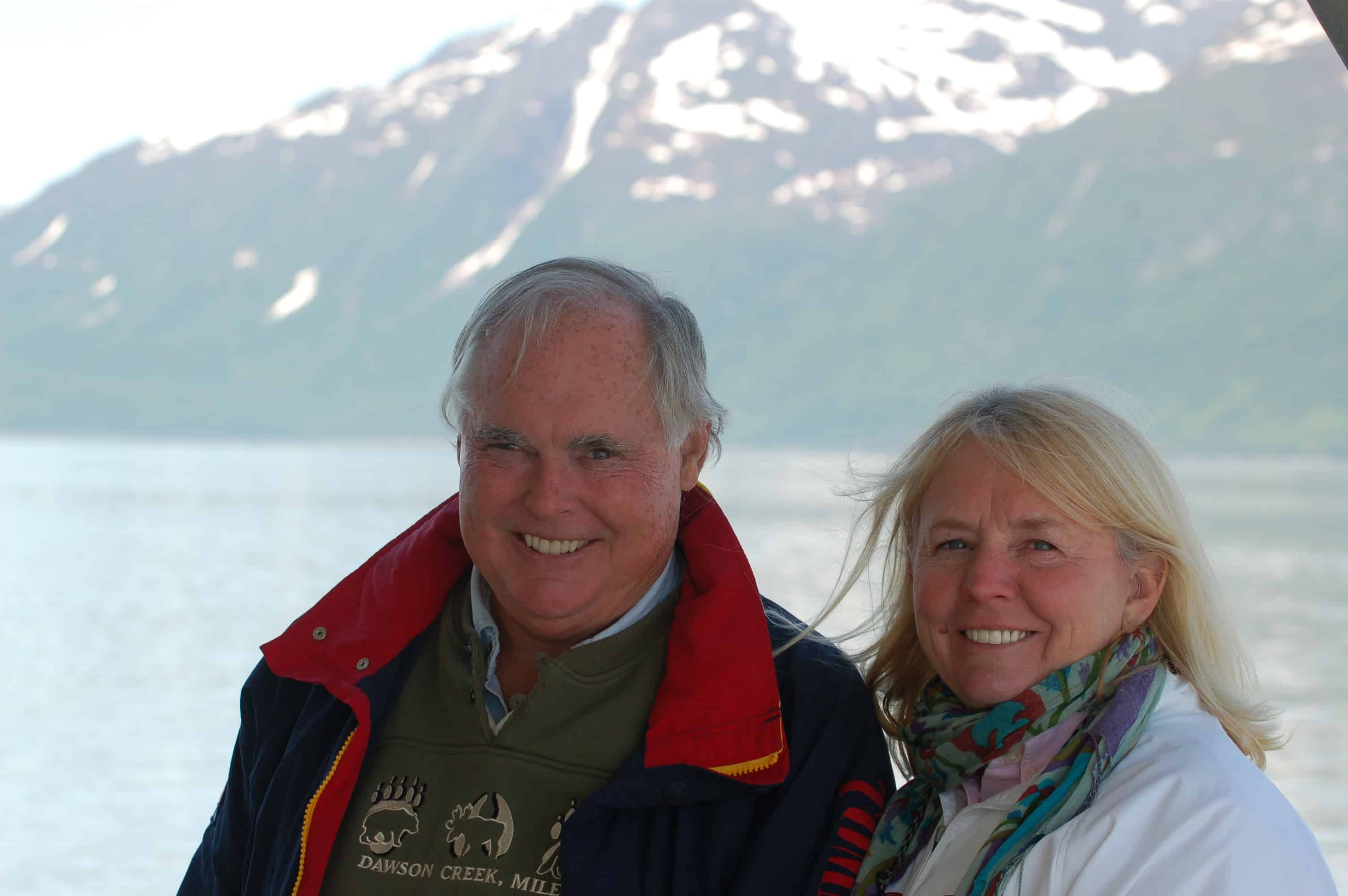
The ice flows are so thick that the closest you can get to the face is about eleven miles, and even at that distance you can feel the size of the thing. The glacier moves about a hundred feet per day. To watch a river of ice that fast carving valleys out of stone gives you a different sense of what "slow" means.
The trip out and back was full of wildlife. We came across a "raft" of sea otters, which is the actual term for a group of them.
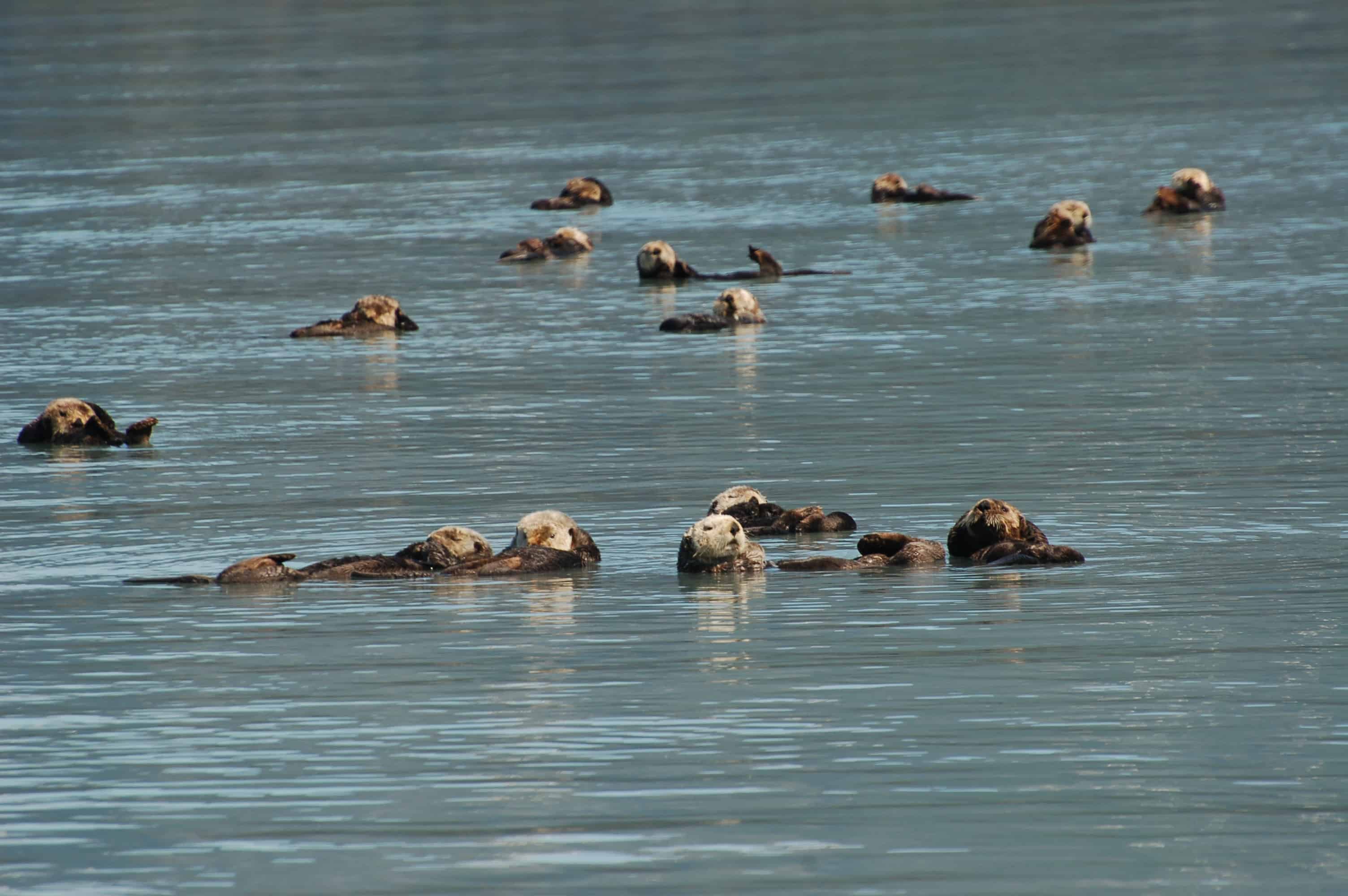
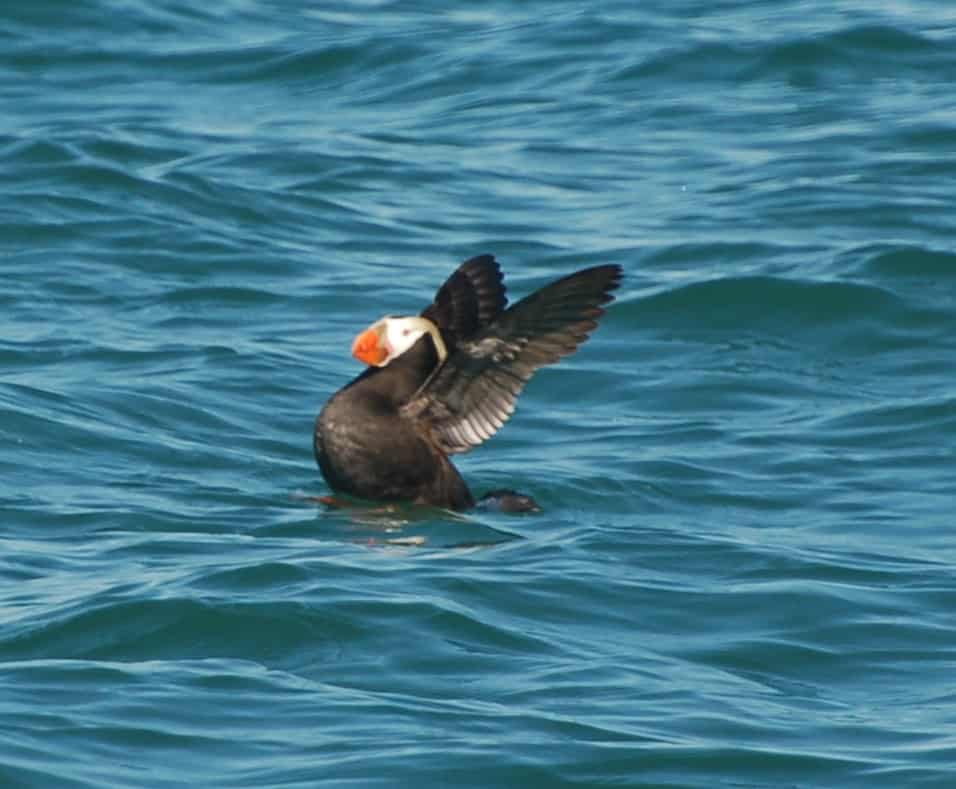
The captain counted fifty-two of them and said it was the most he had ever seen. They are funny animals. They lie on their backs as they float, and many carry a flat rock on their stomachs to crack open the shells of their food. We saw several whales too, although the captain called them "BTW, bad tourist whales," meaning they would surface just where we could not get the camera up in time. There was a puffin or two on the rocks.
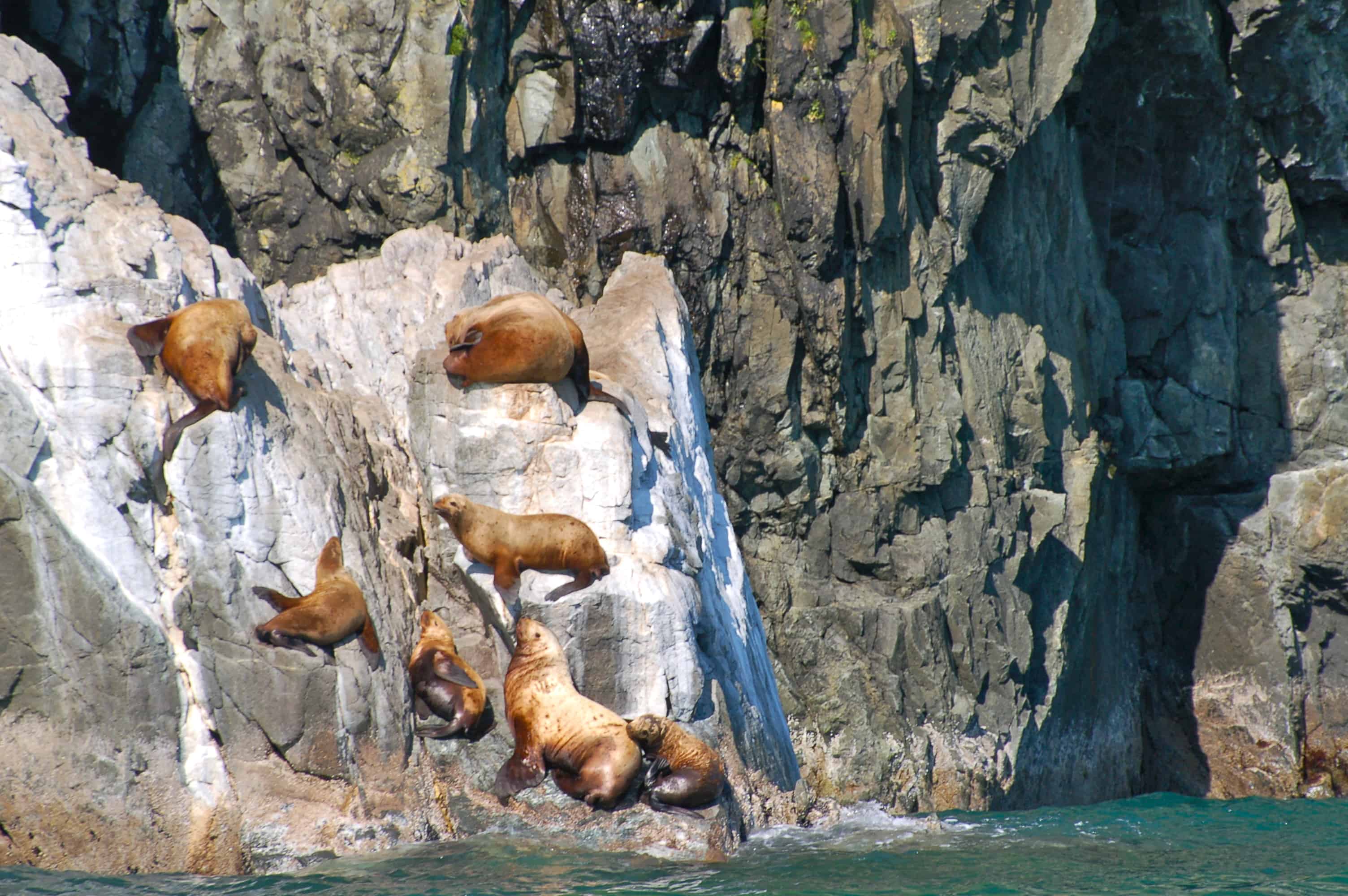
And the sea lions were everywhere, basking in the sun and putting on a show for every tour boat that came in close.
On the way back to Valdez we passed a few pilot porpoises.
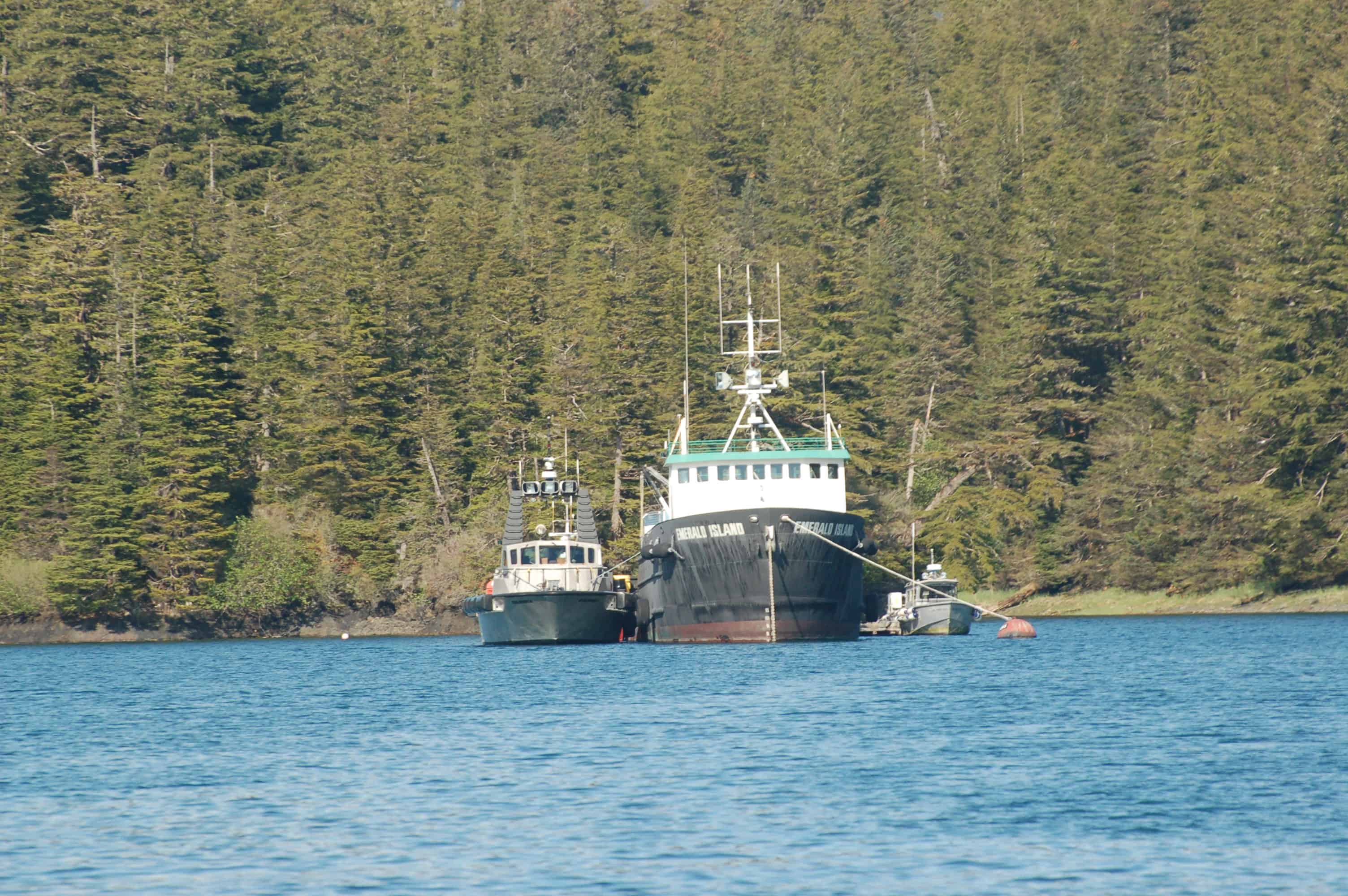
We came within thirty miles of where the Exxon-Valdez oil spill happened in 1989 and got an overview from the captain of the cleanup and the changes that followed. Tanker pilots now board the ships sixty miles out, rather than the thirty miles before the accident. The pilots work two-week shifts and live on a boat stationed about forty miles out, so they can switch on and off the inbound and outbound tankers without making the long trip back to town each time.
The next day we walked the city and spent more time with the locals. We drove out as close as we could to the pipeline terminus and stopped to take it in. On the way back into town we picked up six pounds of sockeye salmon at the Peter Pan cannery. We asked how old it was when we bought it. They checked the records and told us it had come off the boat the night before. Under nine dollars a pound. You cannot get fresher.
John's brother Will had just sent us their father's salmon barbecue recipe, the one we had grown up with. We mixed the marinade and soaked the salmon for the afternoon.
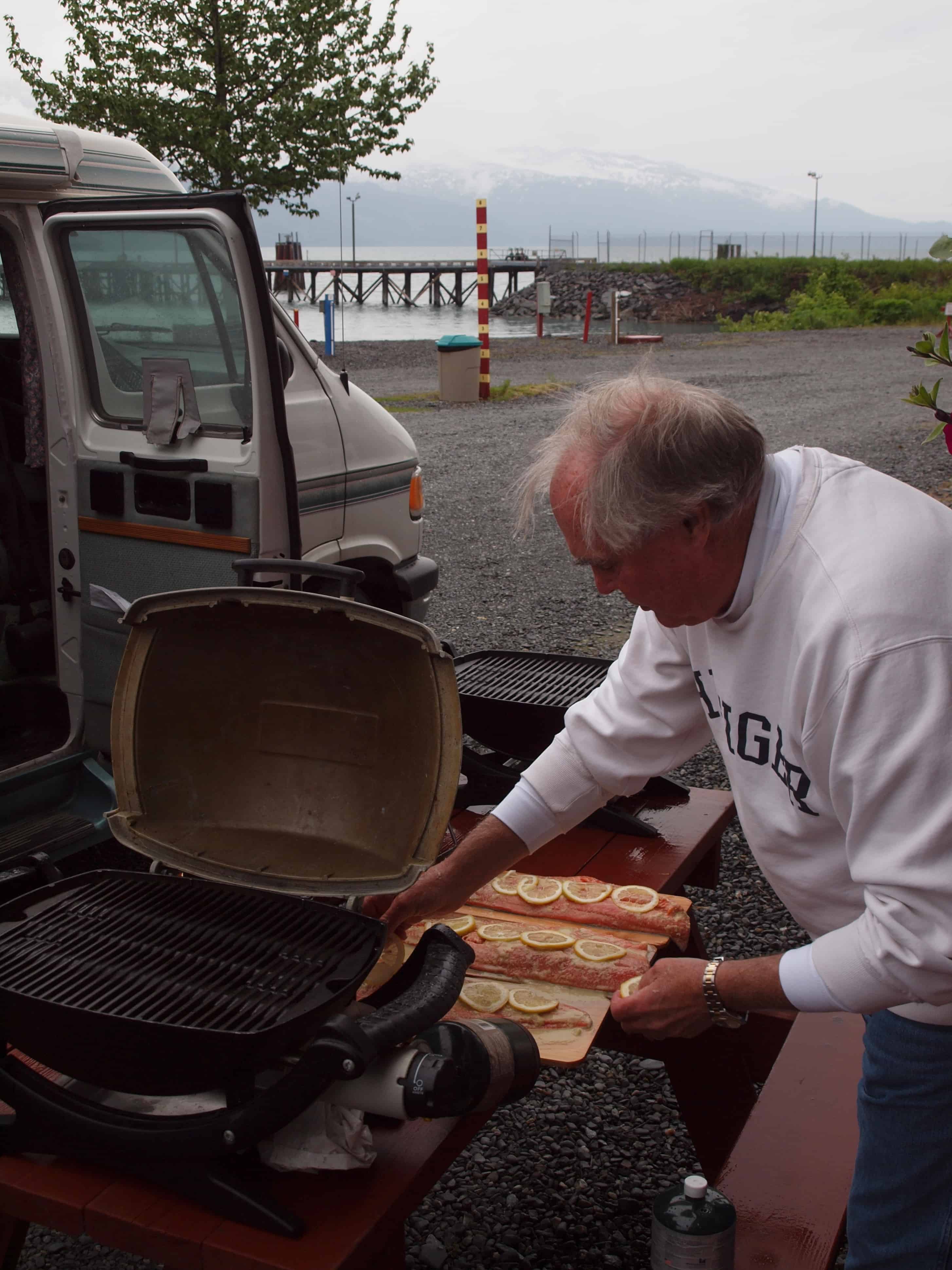
That evening we threw a barbecue with seven other couples, each bringing a side dish, and we cooked the salmon over cedar planks the way Jack Wilson had taught his sons. It was the best salmon any of us could remember. Several of the couples asked for the recipe, so here it is.
Jack Wilson's Salmon BBQ
Salmon, about six ounces per person. Use butterflied filets, fresh and not frozen, wild if you can get it. The best is Sockeye (red), then King (also red), then Silver (pink). All are good.
Marinade for 4 to 6 hours in the refrigerator. Ingredients:
- 1 medium yellow or sweet onion, minced
- 4 cloves garlic, crushed and chopped
- 4 lemons, two sliced, the other two juiced
- ¼ cup rice wine vinegar
- ½ cup olive oil (virgin is fine)
- 1 tablespoon dry mustard
- 4 dashes Tabasco
- 1 tablespoon soy sauce
- 1 tablespoon Worcestershire sauce
- Salt and pepper to taste
Blend all the ingredients except the sliced lemons. Put the salmon filets in a large plastic bag, add the marinade, and refrigerate. Turn the bag hourly for at least four hours.
Before cooking, cut cedar boards (1 by 6 inches) to the length of the filets. Soak the boards in water for at least four hours.
Light the BBQ to high heat. Lay each salmon filet on a cedar board, skin side down. Top with marinade and a few lemon slices. Place on the grill and close the lid. There is no need to flip the salmon. Cook until the meat in the center is pink. If it is still red, keep cooking. Depending on thickness, the cook time runs from ten to twenty minutes.
Keep a spray bottle of water handy to put out any flames on the cedar.
Serve with rice and vegetables. A good red wine holds up well with salmon.
A contemporary version based on Jack Wilson's original salmon BBQ. Contributed by Will Wilson, Freeland, WA, June 2, 2011.