Dateline July 14, 2012, St. John's, Cape Spear, Signal Hill, and the Screech-In
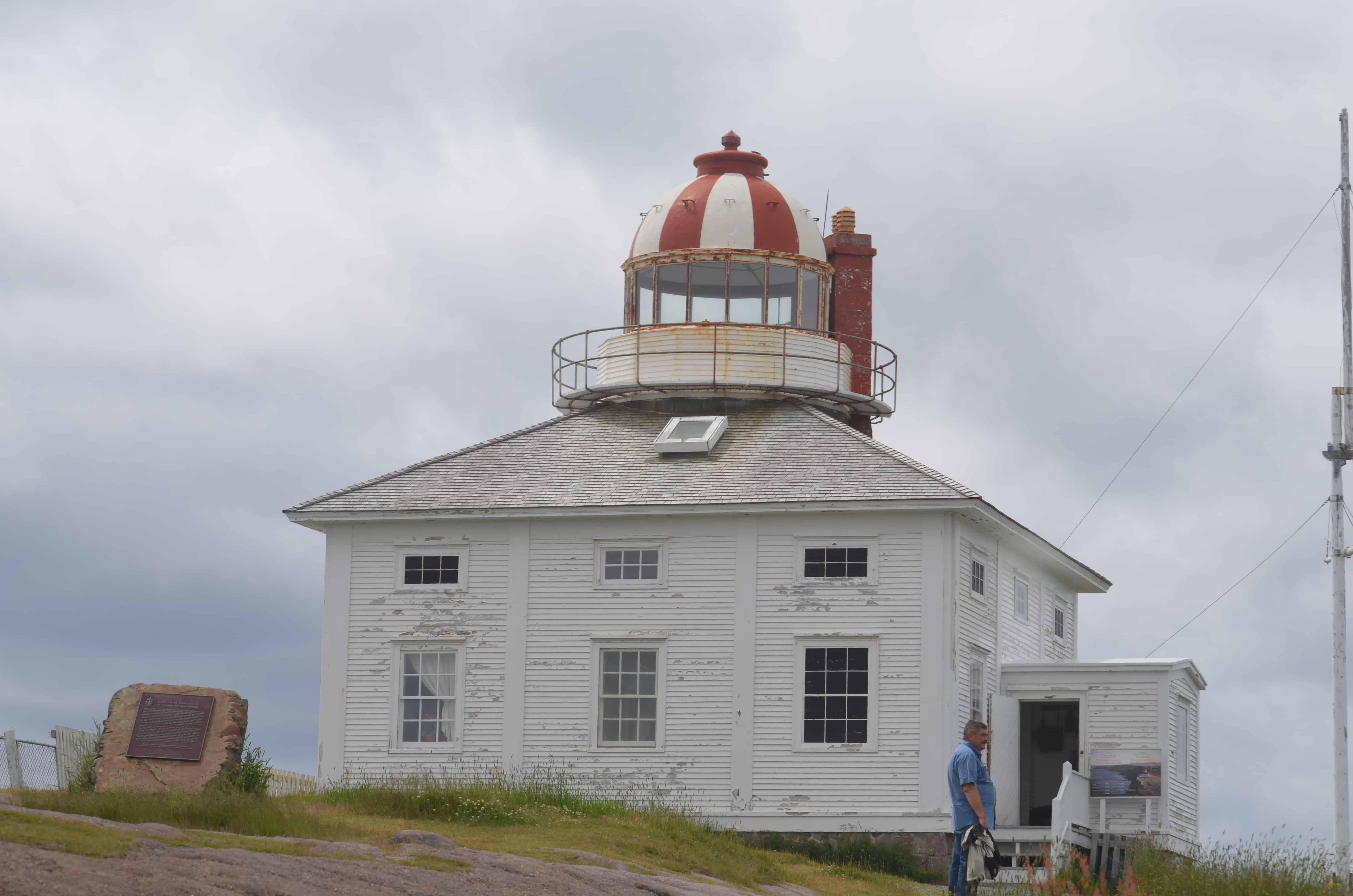
Stand here with your back to the sea, and the entire population of North America is to the west of you. Face the sea, and the next stop east is Ireland. Perched on the rugged cliff at the continent's most easterly point is Cape Spear Lighthouse, the oldest surviving lighthouse in Newfoundland.
Built in 1836, the Cape Spear Lighthouse is a fine example of British lighthouse construction of that era, the stone light tower wrapped inside the lightkeeper's residence. In 1955, a new lighthouse tower was built nearby, and the active light was moved from the old tower to the new one. The original structure remains, preserved.
The human story of Cape Spear is the Cantwell family. Generations of Cantwells lived at the cape and kept the light burning for over 150 years, work that mattered every night to mariners on this stretch of coast. While we toured, we also explored the remnants of a World War II coastal defense battery. The big guns were made in the United States in 1894 to guard the harbor at Philadelphia, then moved in 1941 to Fort Cape Spear, where Canadian and American soldiers stood watch together against German U-boats lurking off the coast of Newfoundland.
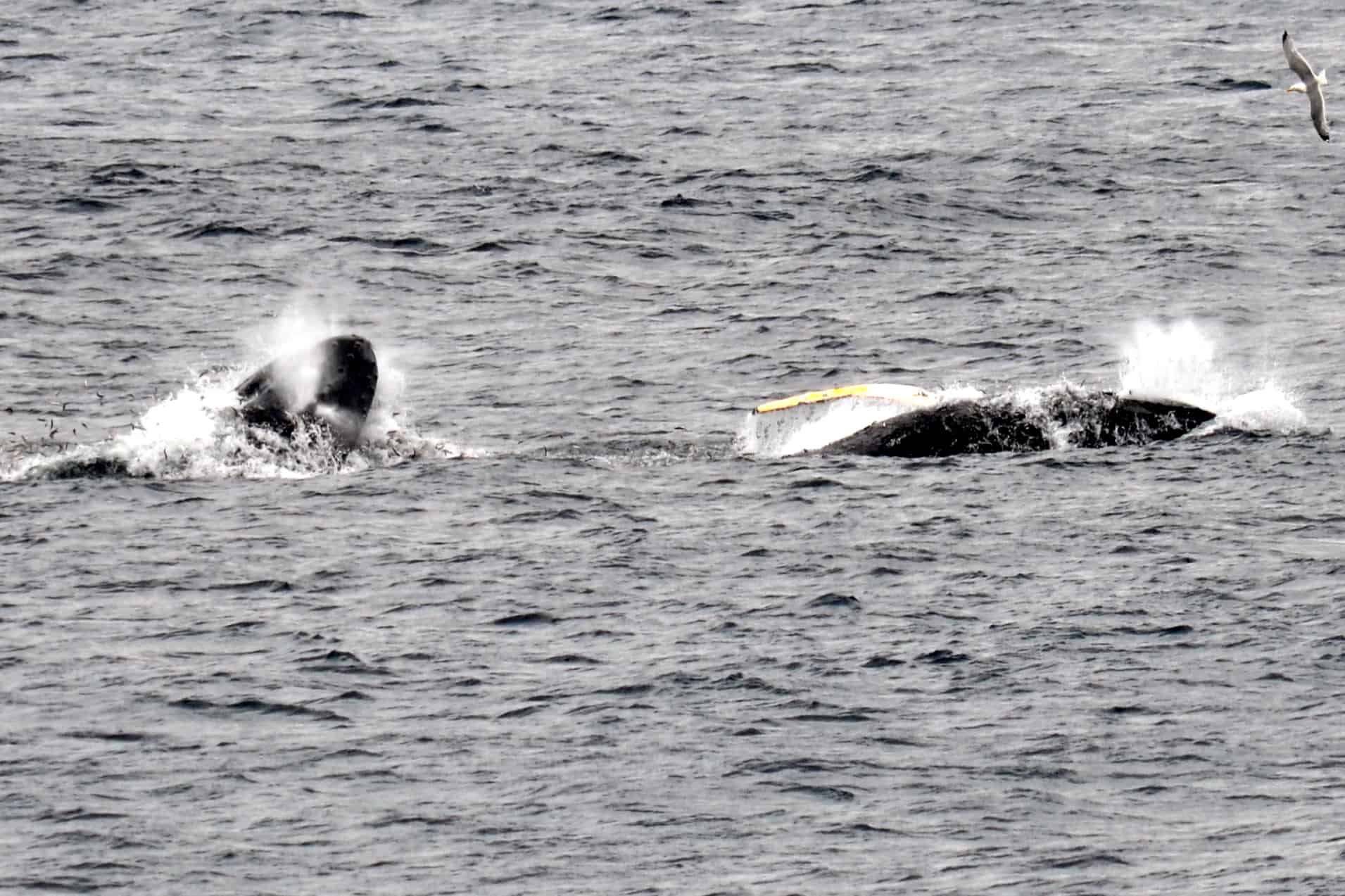
The ocean vistas, the crashing waves, the whales feeding offshore: all of it was breathtaking. We watched two whales at a time playing in the Atlantic right in front of us.
Back into St. John's, then up to Signal Hill and Cabot Tower. Construction of the tower began in 1898 to commemorate the 400th anniversary of John Cabot's voyage to Newfoundland.
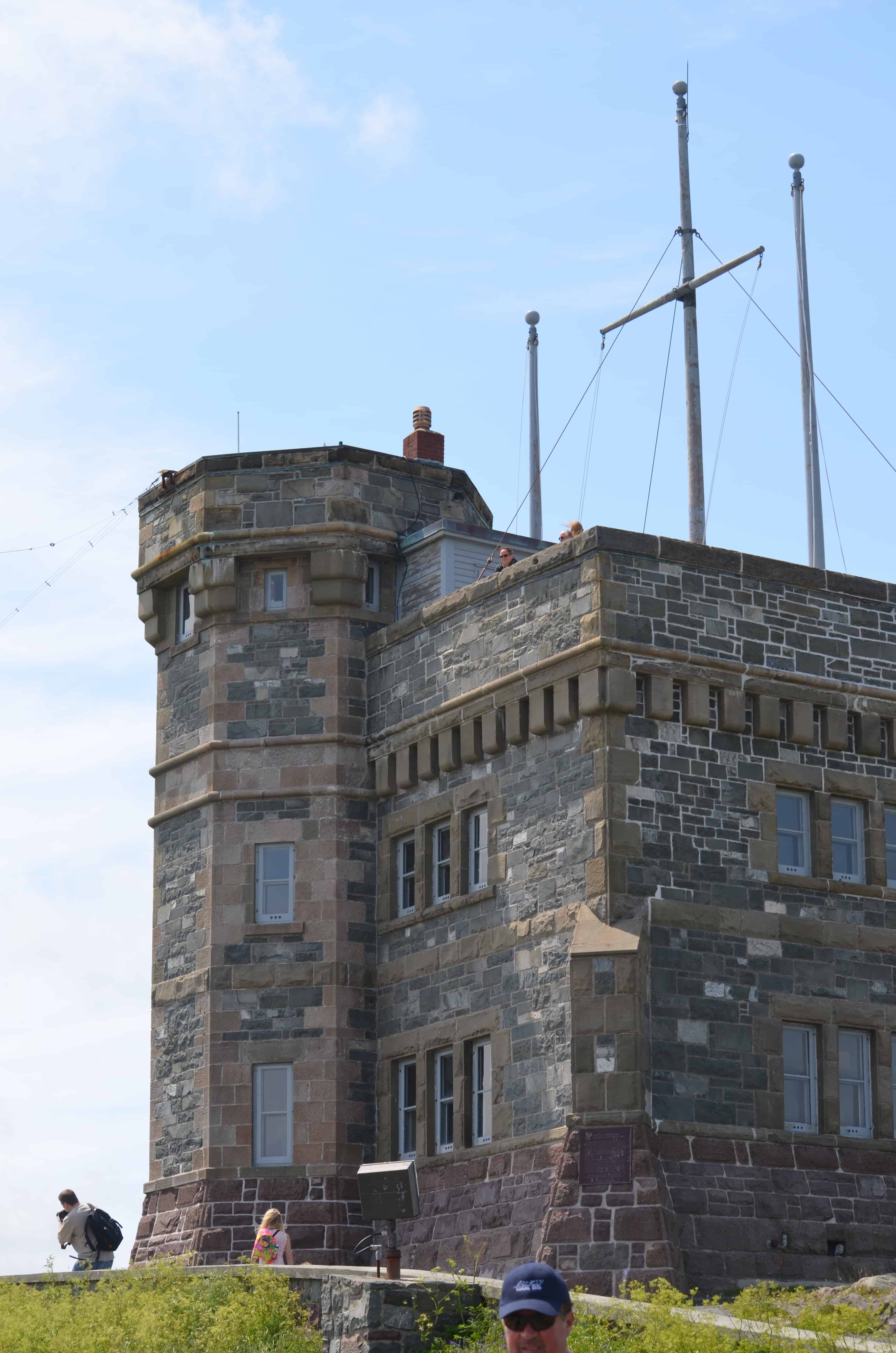
The rangers had a line about Signal Hill: standing here, let your soul be stirred by the crack of muskets and the roar of cannon fire. Discover the story of how British and French soldiers fought to control this strategic ground. Explore the iconic Cabot Tower and take in a view of St. John's and the North Atlantic that is genuinely spectacular. They were right.
As the name suggests, for centuries before ship-to-shore radio existed, signalmen perched on this hill watched the ocean for incoming ships and flew flag signals down to the merchants on the harbor front to let them know which vessels were coming in.
A few days before, on Cape Breton, James Charlong at the Marconi National Historic Site at Glace Bay had told us the story of Marconi's first transatlantic signal in December 1901. Signal Hill is where that signal was received. The Cornwall transmitter sent it. The Glace Bay station was built afterward, in 1902, as the first permanent transatlantic radio facility. We had just been standing at one end of that 1901 wireless circuit, and now we were standing at the other. Interestingly, there is very little Marconi material on display at Signal Hill itself. The full history we now had came from Glace Bay.
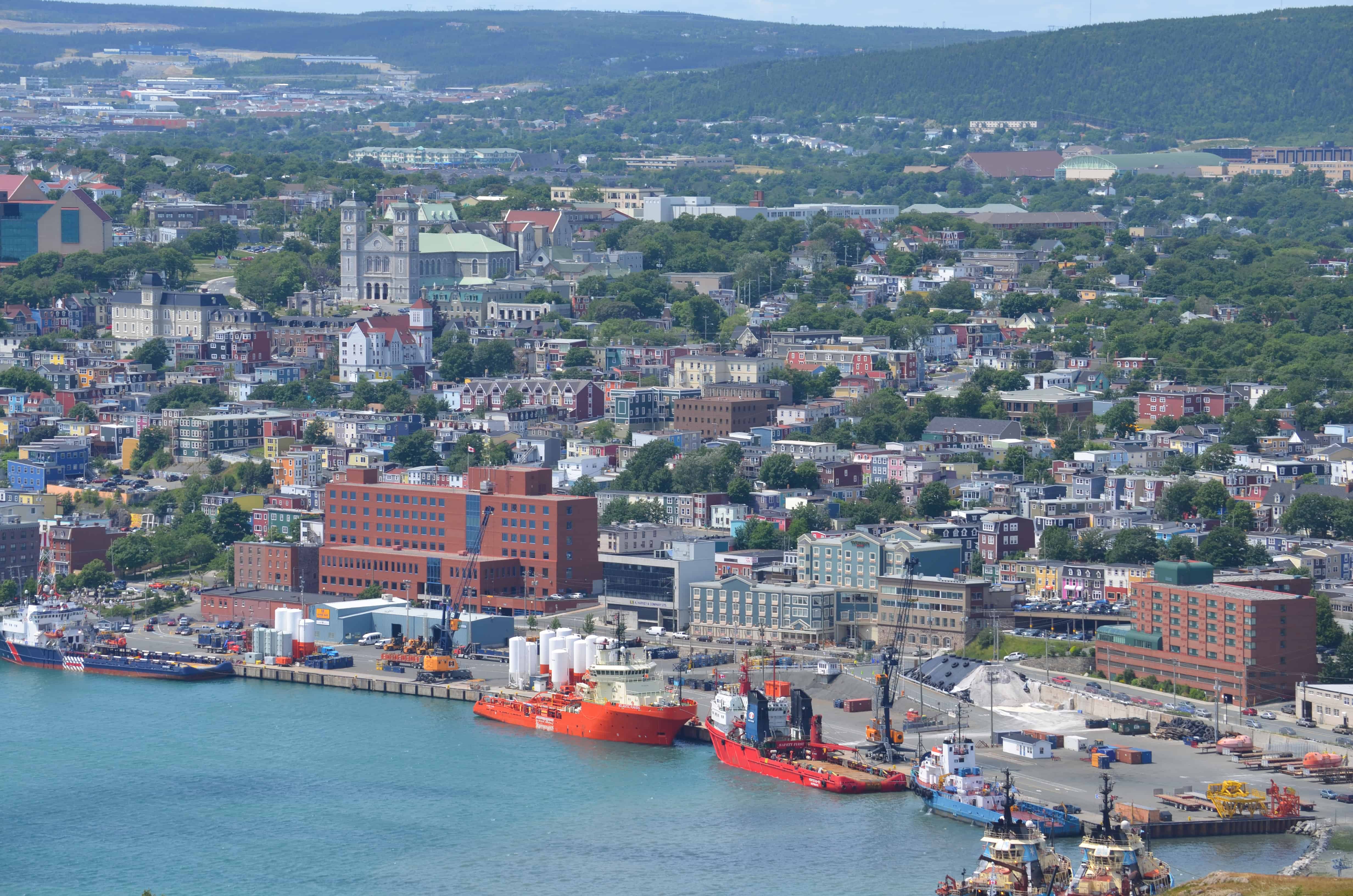
The views down to St. John's harbor and out to the Battery at the harbor mouth are outstanding.
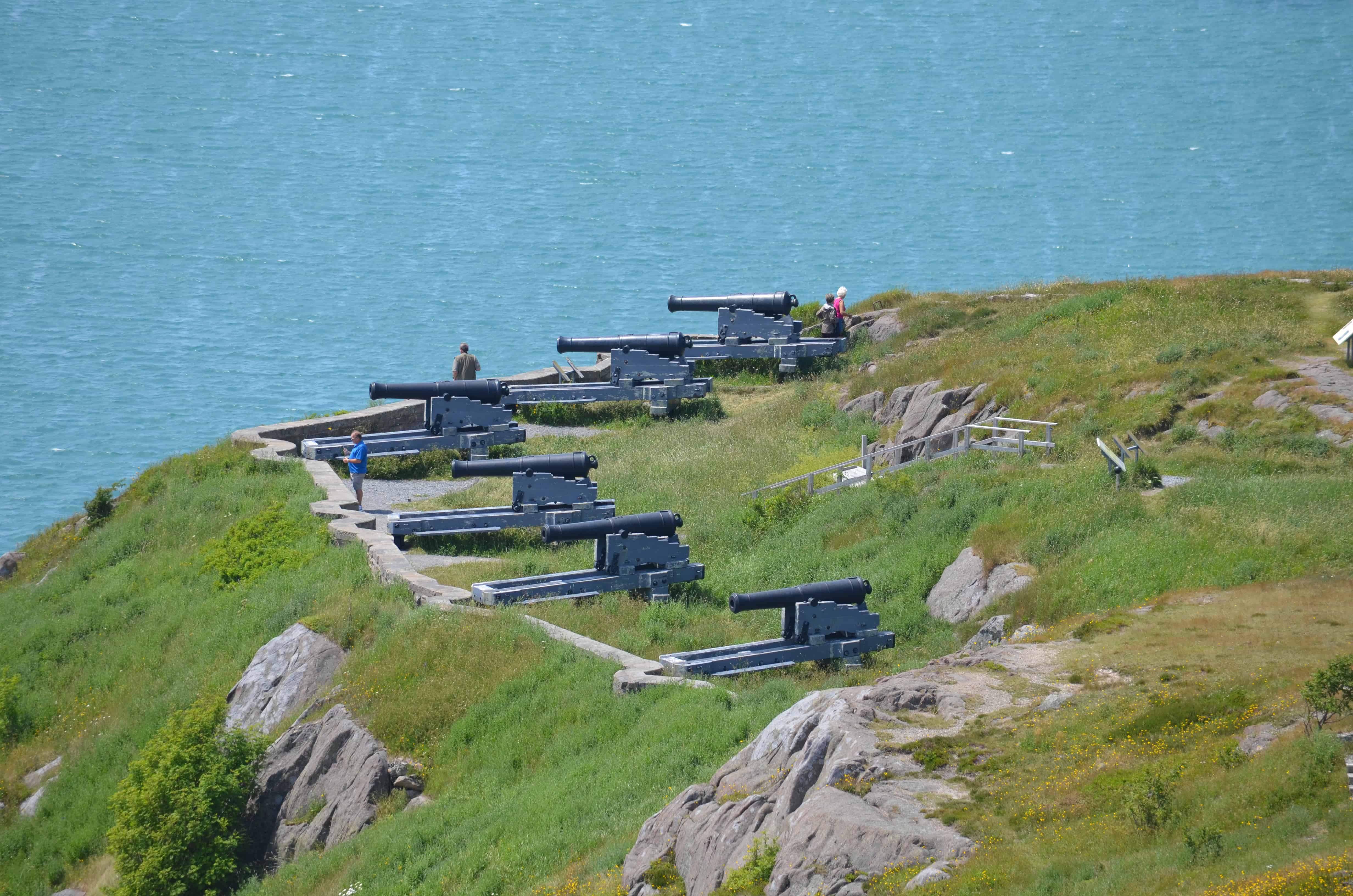
Down below where the army had been stationed over the years, there are batteries of cannons still facing out over the entrance.
After Signal Hill we drove back into St. John's looking for parking, found none, drove around for a while, and went back to Pippy Park, our campground, until about 6:00. Then we decided it was time to head back to the old town and George Street, the famous pub strip. We got lucky and found a spot near the action. We walked the length of George Street and chose a pub to step into. It was the kind of old, slightly dingy bar you find in working towns everywhere, and the people inside could not have been friendlier. We had a beer and moved on.
One thing we did not commit to in full is called Screeching.
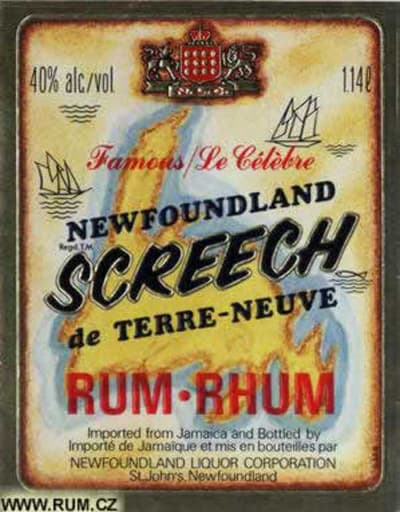
A little background. During World War II, the Americans set up bases in Newfoundland. One night, an American serviceman went out drinking with some locals. Eager to try the traditional drink of the province (the rum is sourced from the West Indies), he took a shot of the unnamed stuff. When he was able to breathe again, he let out a noise that the locals later described as a horrible screech. The name stuck to the drink.
The Screech-In Ceremony. Every Newfoundlander knows what a Screech-In is. It is the only way for someone not born here to come as close as possible to being a Newfoundlander without having to die and be reincarnated as one. Those who survive the ceremony are forever known as honorary Newfoundlanders.
Requirements:
- A natural-born Newfoundlander to perform the ceremony.
- A real fish (traditionally cod, but since cod is hard to find these days, any whole fish will do).
- A sou'wester.
- A bottle of Screech.

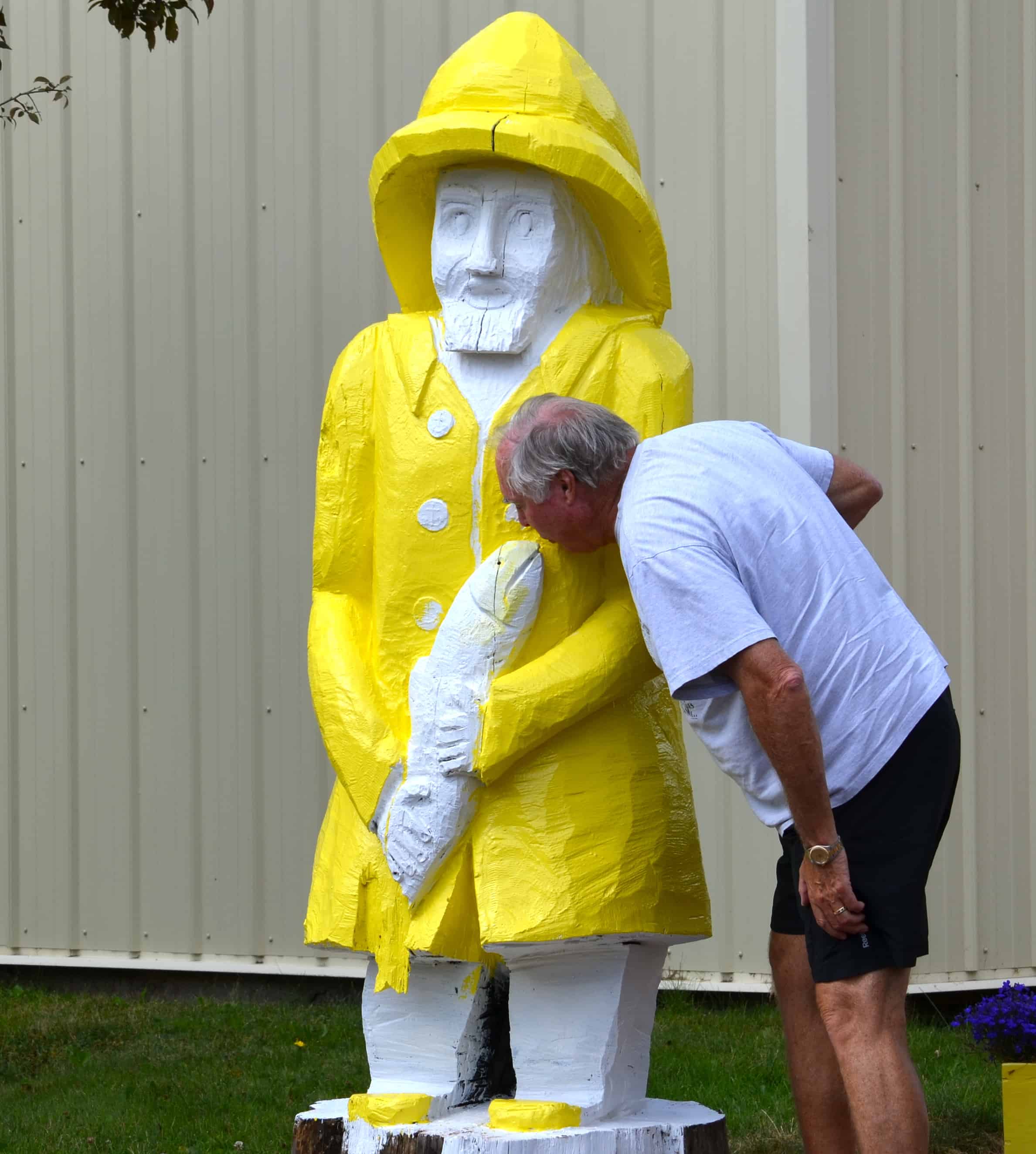
The host (the natural-born Newfoundlander) has the candidate stand in front of a group of witnesses, wearing the sou'wester. The host then holds the fish up to the candidate, who has to kiss the fish on the lips. (The host and witnesses have final say on whether the kiss is sufficient. In some cases, more than one kiss is required.)
Next, the host gingerly pours a full shot of Screech. The candidate has to recite the following before drinking it, glass held high:
"Long may your big jib draw."
After the shot, the candidate receives a Screech-In certificate and is welcomed into the Royal Order of Screechers.
We passed on the actual screeching. But John felt he still needed to kiss a cod.