Dateline July 11, 2012, Halifax, the Tattoo, and Cape Breton
The drive to Halifax was short, and we headed straight to (what else) the info center. From there we went to the Maritime Museum because both of us find the Titanic story interesting.
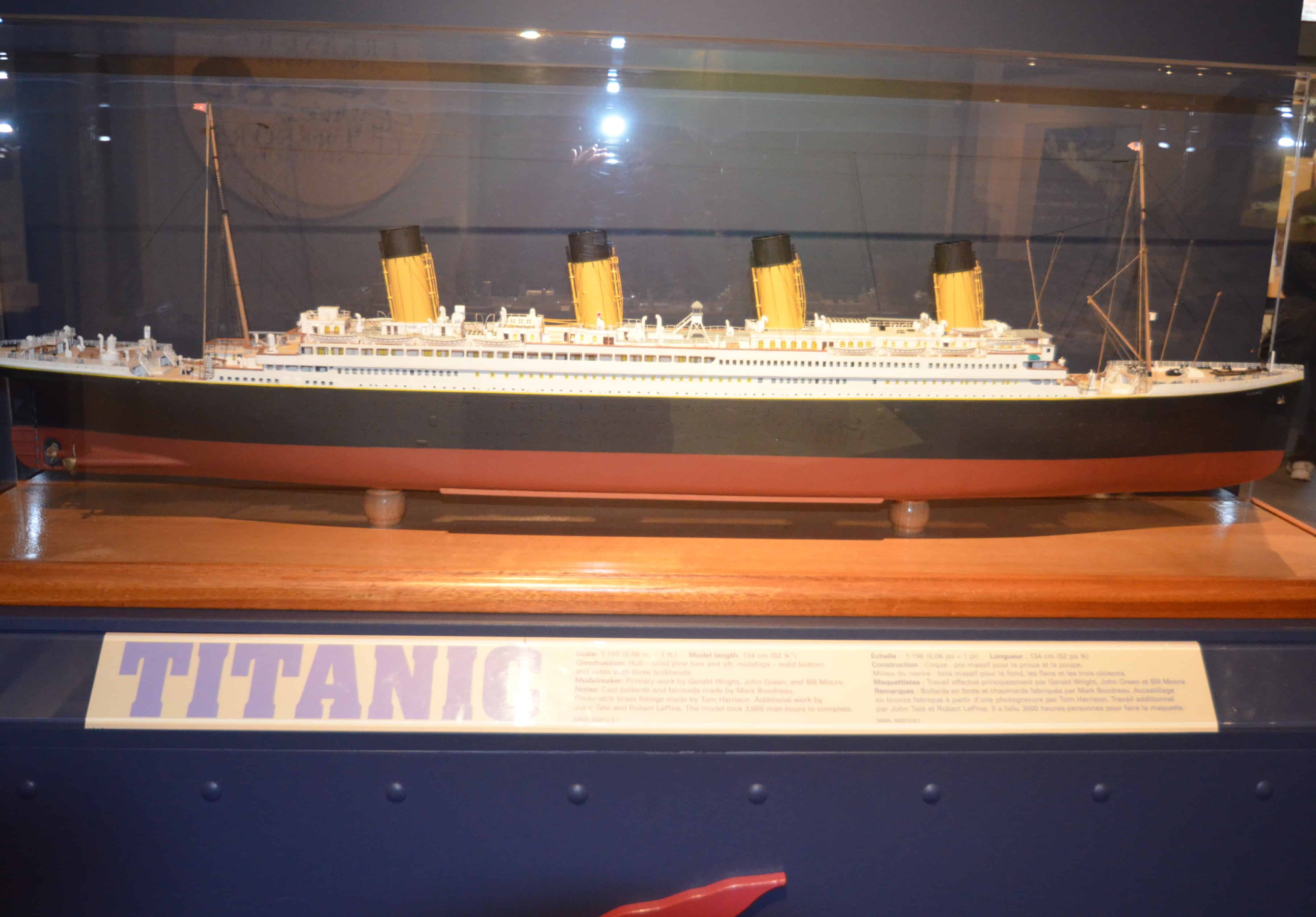
Halifax was the port that received the bodies recovered from the sinking. Most of the dead, 209 in all, were brought ashore here for identification, and many are buried in Halifax cemeteries to this day. The museum tells the story well, with displays that include parts of the ship raised from the wreck in the North Atlantic.
We drove out to our campground for two nights and caught up with Ann and Ruth, who had just arrived in Nova Scotia. We have no proof they were actually with us, because we forgot to get a picture. (This violates Ruth's rule from Alaska: if you do not have the picture of the bear, you did not see the bear.) We enjoyed a cocktail or two and had a good time catching up.
The whole reason for the get-together was the Halifax Tattoo on Saturday afternoon, which we all had tickets for.
A bit of history. The Tattoo is presented annually by the Royal Nova Scotia International Tattoo Society, with support from the Government of Canada, the Province of Nova Scotia, the Canadian Forces, the Royal Canadian Mounted Police, the Halifax Regional Municipality, and the corporate community.
Where does the name "Tattoo" come from? In 17th-century Dutch villages, drummers marched through the streets summoning soldiers back to quarters from the local taverns. The drumbeat told innkeepers to doe den tap toe, "turn off the taps," which got shortened over time to "tap toe," and then "tattoo." The word now stands for the kind of show we were about to see, hundreds of musicians and acrobats and dancers, marching bands, military competitions, the works. The Royal Nova Scotia International Tattoo claims to be the world's largest annual indoor show.
The Nova Scotia version was first held in 1979 to mark the visit of Her Majesty Queen Elizabeth The Queen Mother to Nova Scotia for the International Gathering of the Clans. It has been held every year since. The Queen granted it Royal Status in 2006, on the occasion of her own 80th birthday.
This year's show had three themes: the RMS Titanic at one hundred years, the Queen's Diamond Jubilee, and the War of 1812. The playing of the 1812 Overture with full cannon fire and military bands was stunning. There was also a moment that was not on the program. A Canadian woman who works on the Tattoo had met a German musician in the Tattoo's brass band two years earlier, also during the Tattoo. They had decided to get married this year, also during the Tattoo, and the ceremony actually happened on stage during our show. It is hard to describe the Tattoo in a way that does it justice. It was one of the greatest shows we have ever seen.
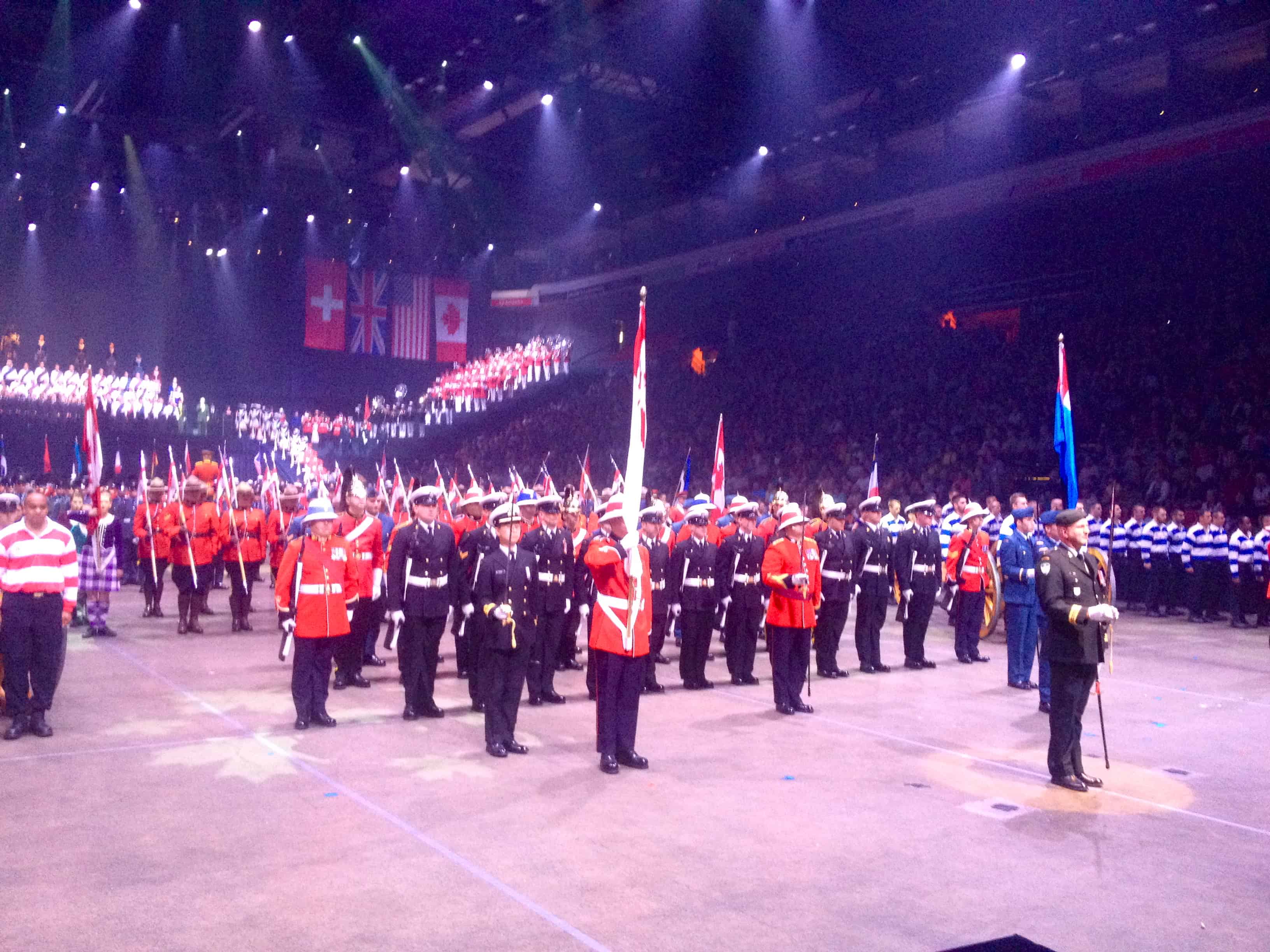
If you are ever planning a trip to Halifax, do it during the week of the Tattoo.
We said goodbye to Ann and Ruth and headed out first thing in the morning for Cape Breton. The island has a long, layered past. Before Europeans arrived, the Mi'kmaq were its people. John Cabot, who was likely the first European to come ashore, claimed it for England in 1497. The French, the Scottish, and the Irish all settled different parts of the island, and ownership traded hands frequently between the French and the British. The French built the Fortress of Louisbourg to protect their interests. Even though it was twice captured by the British, it remained part of the French colonies until being ceded to Britain in the Treaty of Paris in 1763.
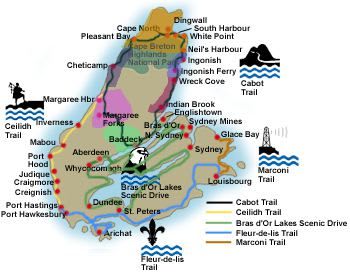
We headed first up the Ceilidh Trail, with great views of small harbors and shoreline. We stopped in Mabou and had a wonderful fish and chips lunch at the Red Shoe Pub.
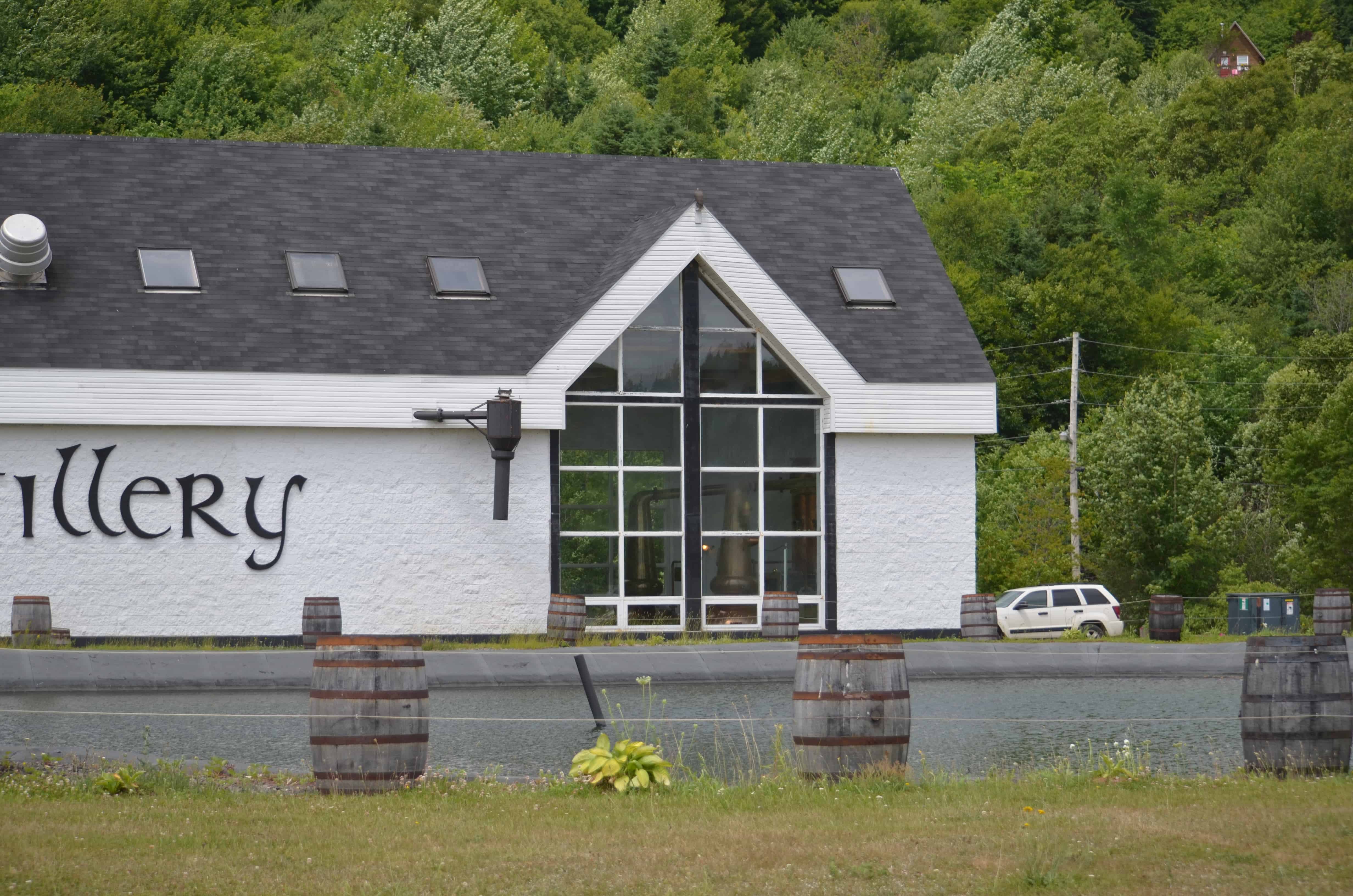
The Red Shoe is owned by the Rankin family, one of Canada's most loved folk singing acts. The pub is worth the stop just on its own. A few miles up the road at Glenville, the Glenora Inn and Distillery is worth another stop, for a shot of single malt whisky and a tour. They claim to have been the first single malt distillery in North America.
After that small warm-up, we got on the Cabot Trail.
There are some wonderful coastal vistas along the way.
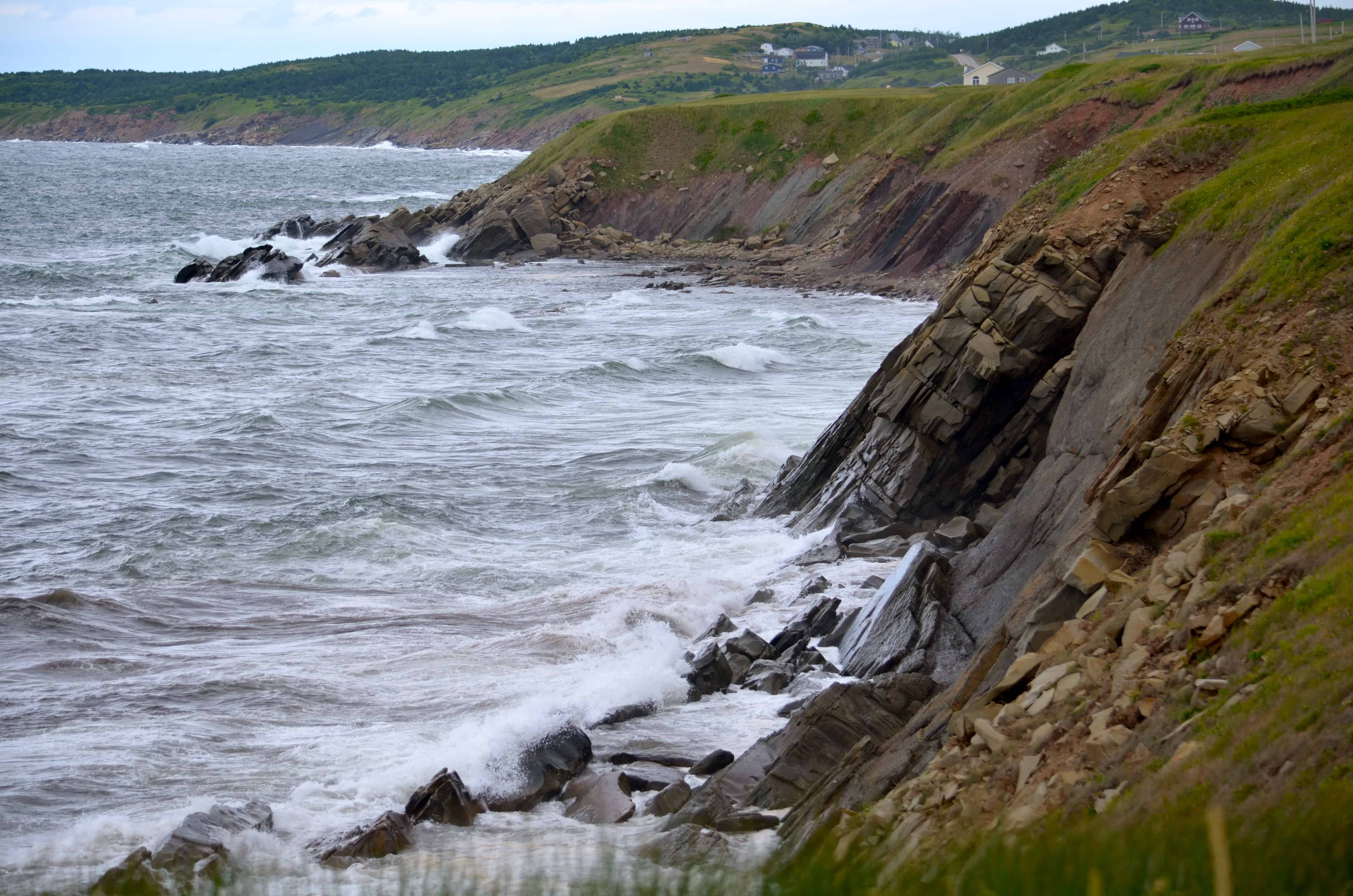
We may be a little jaded, having been lucky enough to travel some of the world's most dramatic shorelines: Alaska, Cape Town in South Africa, the Great Ocean Road between Melbourne and Adelaide in Australia. We kept looking on the Cabot Trail for the one magical moment that surfaces in all those places, and never quite found it. We might have been just as happy crossing directly over to the Sydney side. The trail ends at Englishtown, where a small cable ferry takes you across the inlet to the road on the other side.
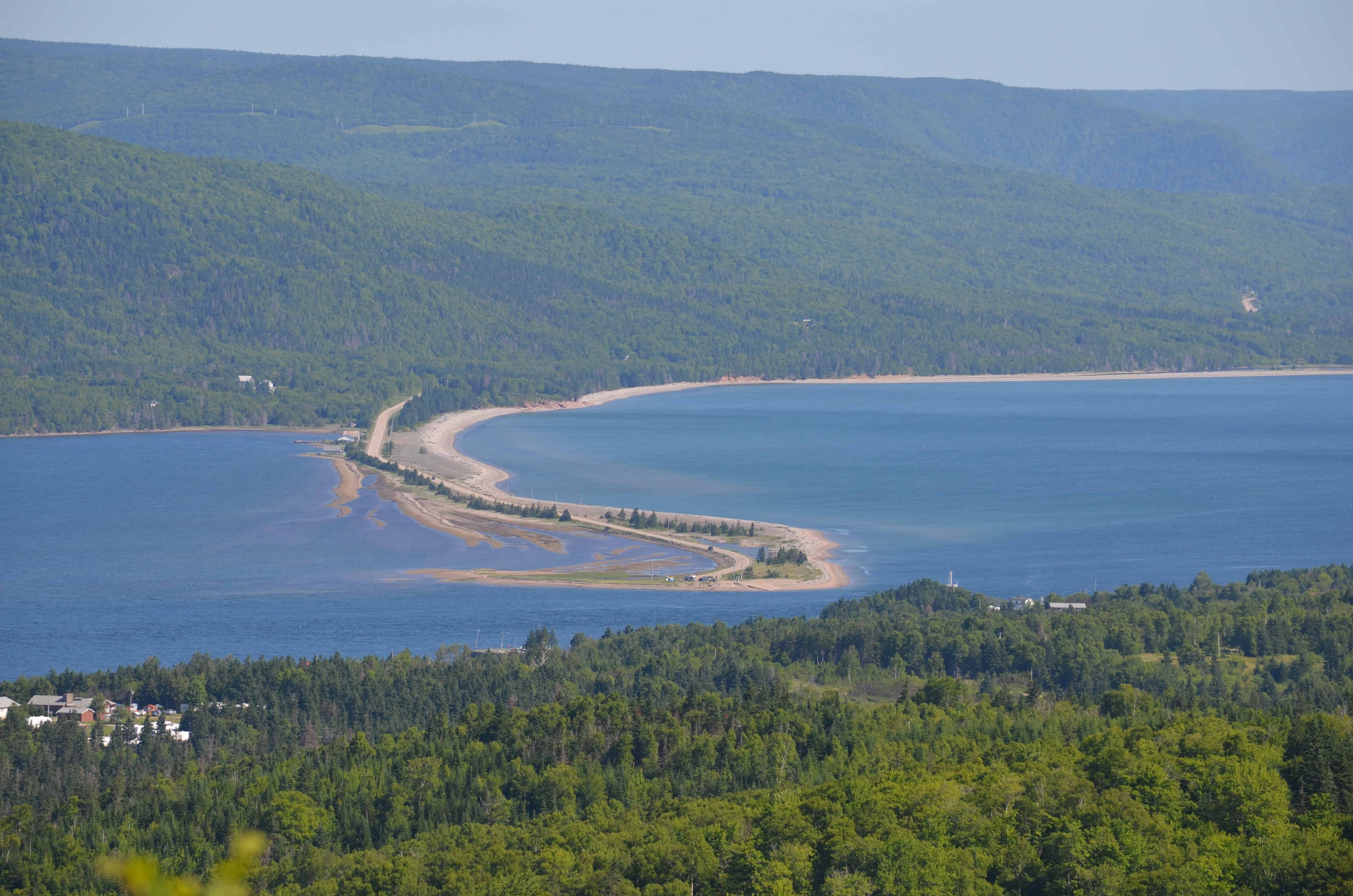
We spent the night at the Englishtown Ridge Campground and continued into North Sydney the next morning.
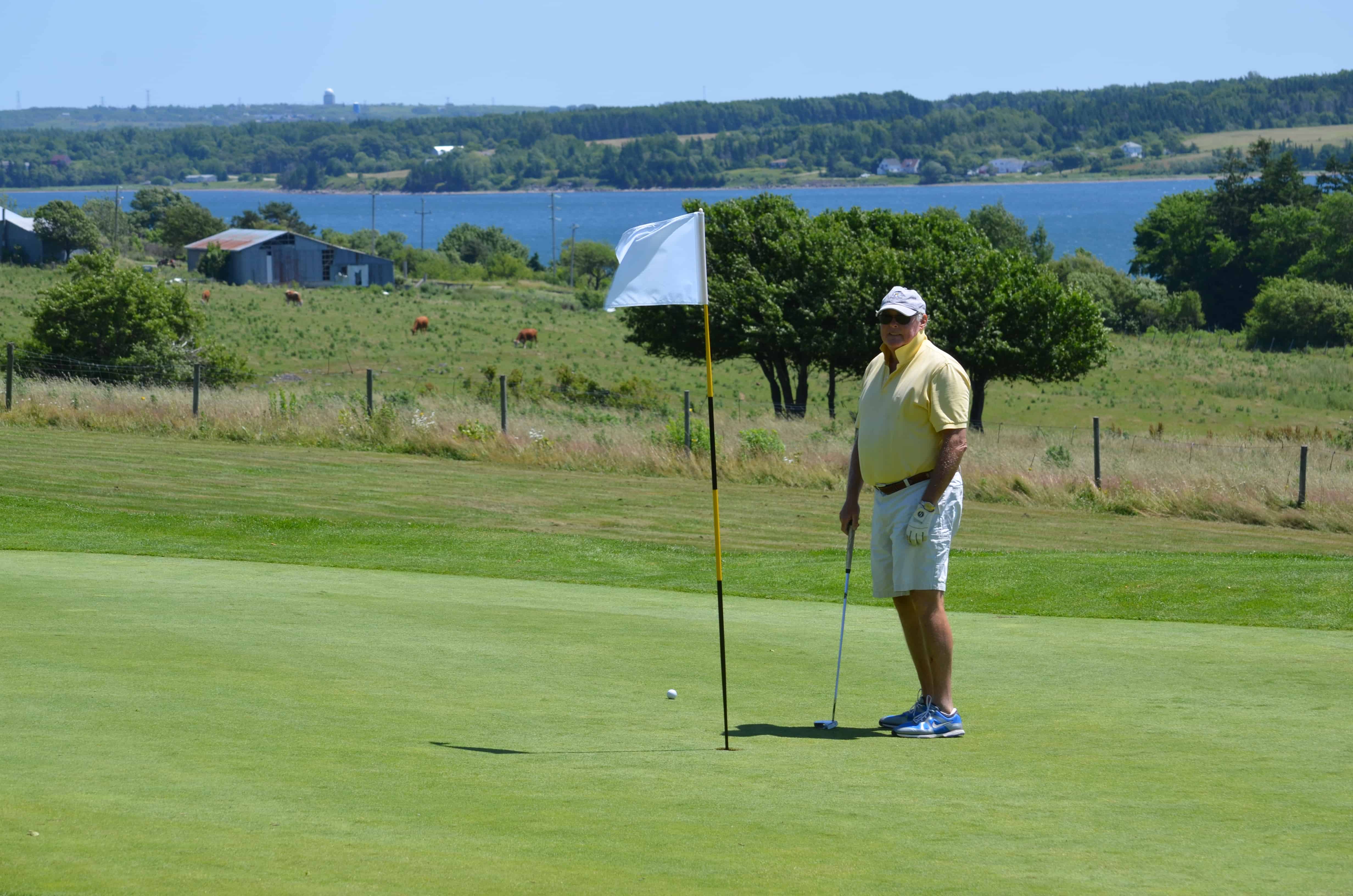
A lot of people will tell you about the golf on Cape Breton. There are several excellent courses. We chose Seaview Golf and Country Club in North Sydney, which is on the list of the ten best courses in Nova Scotia. A wonderful eighteen holes of grand views, challenging holes, and small greens that rolled beautifully. We teed off around 12:30 with the course to ourselves, and were around in just over three hours.
Our last day on Cape Breton was the Marconi National Historic Site of Canada, on Table Head in Glace Bay.
Many people contributed to wireless communications, but the most famous is Guglielmo Marconi. In 1895, on his family's estate near Bologna, Italy, Marconi demonstrated the transmission and reception of wireless signals over a distance of about a mile. He was twenty-one years old. He moved to England in 1896 and set up a company there in 1897 to manufacture and lease wireless equipment.
This was wireless before electronics. The transmitter used the electrical impulses produced by a high-voltage spark, hence the name spark transmitter. The receiver detected the radio signal with a primitive device called a coherer, with no way to amplify the signal electronically. Despite the simplicity of the system, it worked, and over the next several years it was developed into reliable communications over distances of a hundred miles and more. Wireless was especially useful at sea, where distress calls from sinking ships eventually saved thousands of lives.
The next goal was worldwide wireless communications, and the first step was to bridge the Atlantic Ocean. In December 1901 Marconi received a test signal at St. John's, Newfoundland, that had been transmitted from his station at Poldhu, Cornwall. The company that operated the transatlantic telegraph cable threatened legal action if he continued, because the cable company held a monopoly on telegraph operations in Newfoundland. Rather than wade into a legal fight, Marconi left Newfoundland and sailed for North Sydney on Cape Breton. Canadian officials persuaded him to build a permanent station there, in Glace Bay, and in 1902 he built it. In December of that year he transmitted Morse code messages from this station to Cornwall, and the transatlantic wireless link was a working thing.
John spent a long career ago working for the Army Security Agency, in communications security operations. Part of the job was reviewing both voice and Morse code messages. So it was a meaningful place to stand. What made it even more so was meeting James Charlong, a retired ham radio operator with the call sign VE1ALI, who keeps the lights on at the site.
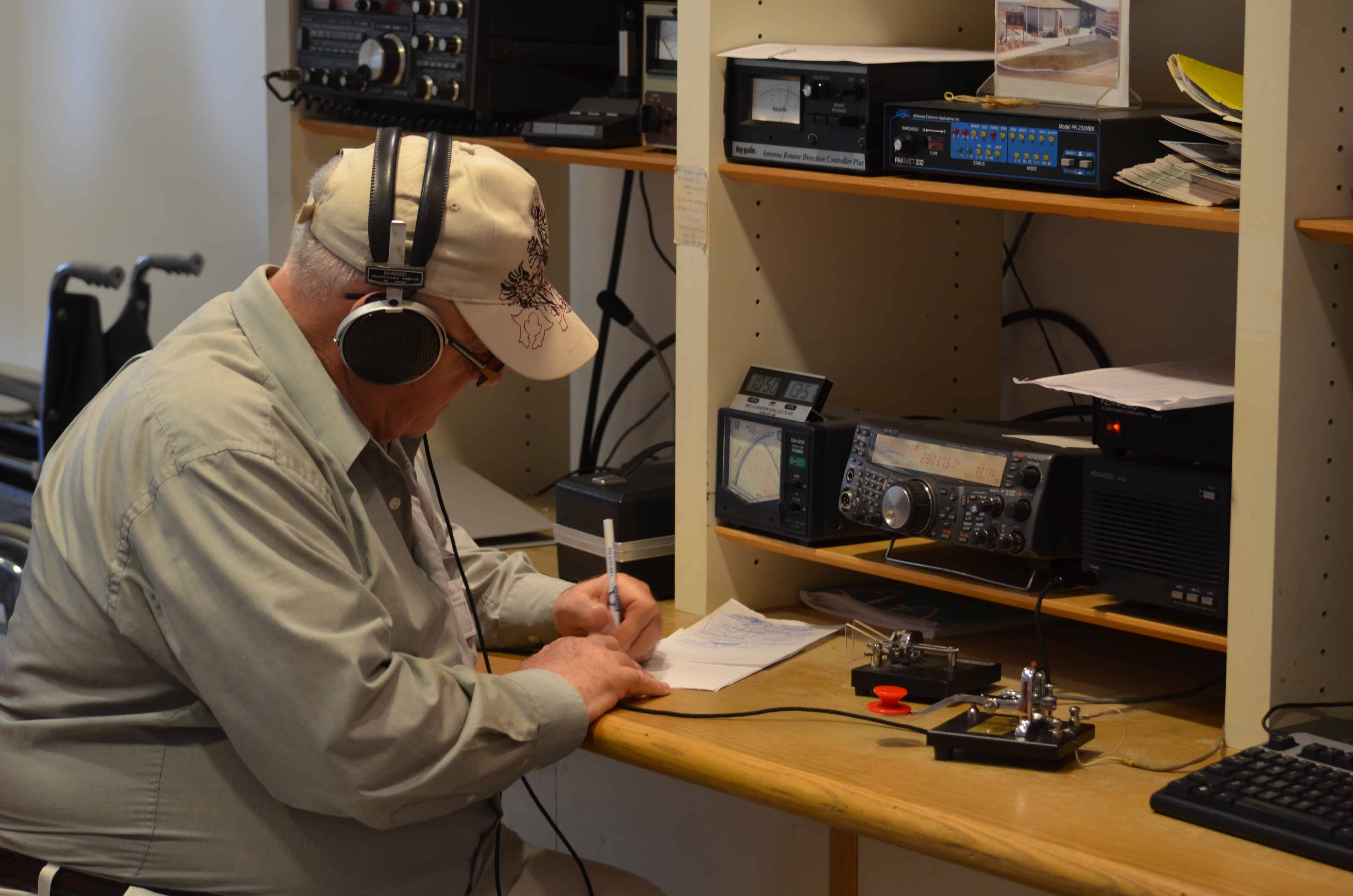
James spends every day the museum is open, seven days a week, communicating around the world in Morse code from inside the site. He logs his radio contacts. They run into the thousands over a summer. We introduced ourselves and he insisted on giving us a tour of the ruins of the original transmission facility. There is not much left, mostly concrete foundations, but James brought it back to life with his explanation of how the whole thing worked. His tour turned out to be one of the highlights of our trip through the Maritimes.
Time to say goodbye to Cape Breton and take the ferry to Newfoundland.