Dateline February 18, 2015, Robe and Port Fairy, Australia
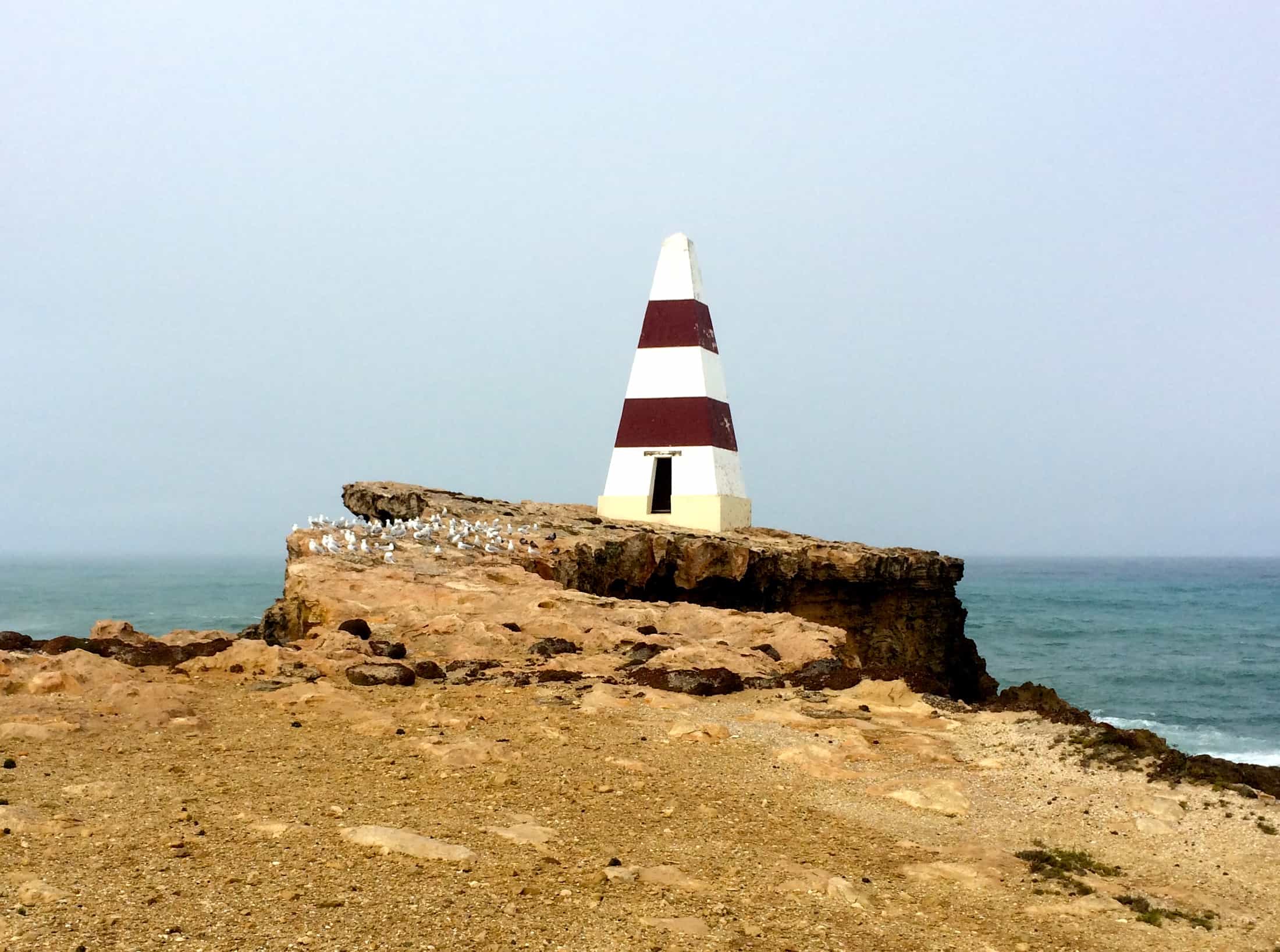
Six hours to Robe.
We drove almost six hours to get to our next destination, Robe. It is a quiet fishing village with much history. Robe is one of the oldest towns in South Australia.
Robe is situated on Guichen Bay, about 350 km south-east of Adelaide. Nicolas Baudin, a French explorer, first viewed the bay in 1802. The township of Robe was settled in the 1840s, and Guichen Bay was named in honor of Admiral de Guichen. Surveying by Governor Robe in April 1846 resulted in the county of Robe being proclaimed. Pastoral pioneers legalized their claims, and the first sale of building allotments took place in Adelaide.
In 1847 Robe was declared a port and wool began to arrive for shipment. A pioneer agent named George Omerod established himself as Robe's shipping agent, and by 1856 Robe was the second major colonial out-port. Hearing of Robe's prosperity, the town attracted many settlers and merchants, arriving by sailing vessel, bullock wagon, or on horseback. In 1857 the Land of Cakes sailed into Robe's Bay with 264 Chinese passengers. The numbers swelled to 17,000 Chinese staying briefly in Robe to avoid the Victorian poll tax, before paying local guides to take them 150 km to the unguarded border, and another 400 km on to the Victorian goldfields.
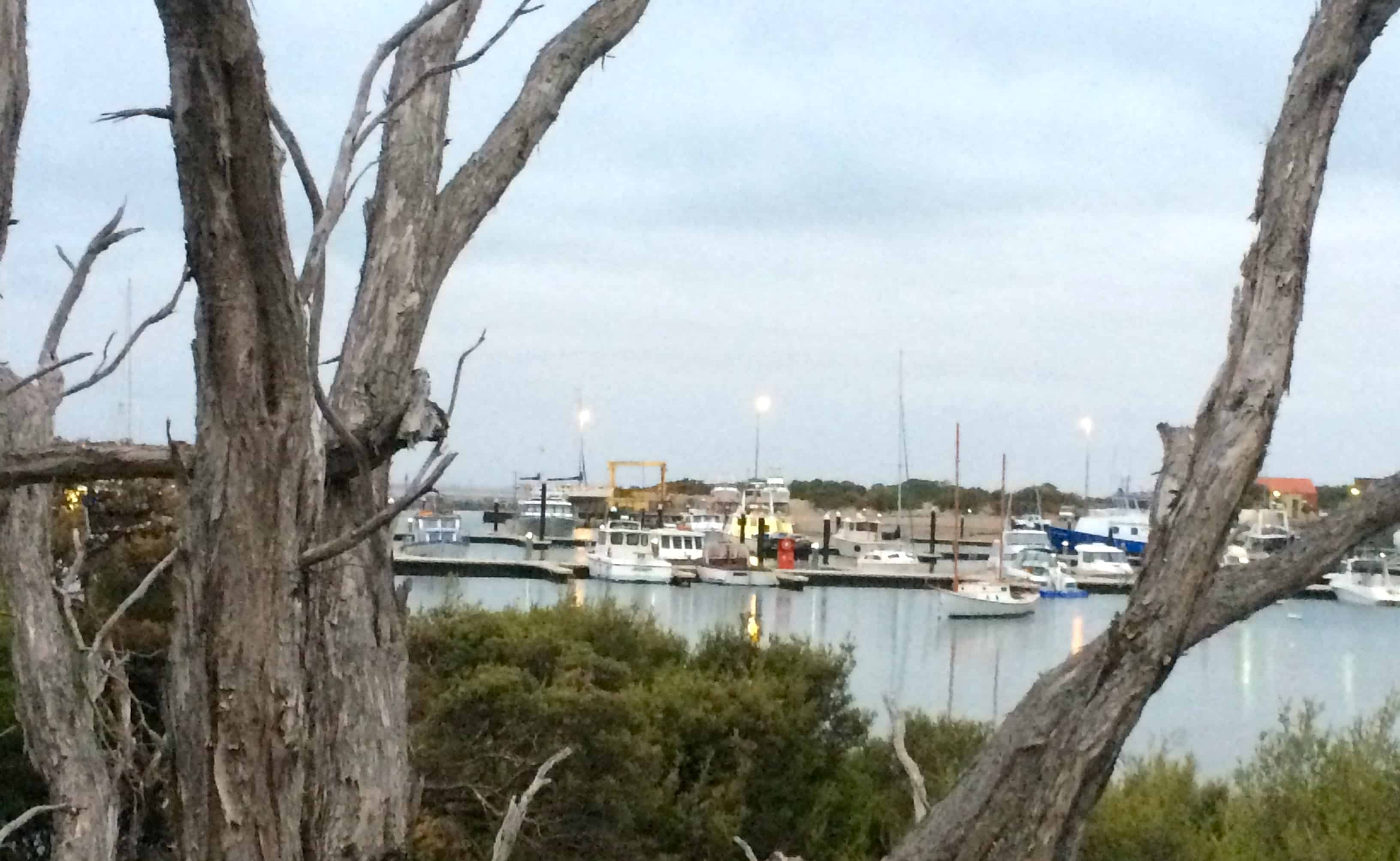
The Harbour View Motel.
We checked into the Harbour View Motel overlooking the harbor and the walking path. It was an easy walk down to the village for dinner. The owner, Robbie, met us, told us about the rooms, and then offered us an "upgrade" at a discount, a harbor-view room on the second floor. The room was lovely, but we decided an extra hundred dollars for one night was not necessary, so we stayed in our assigned rooms. The originals were perfectly nice, and we settled in for cocktails before dinner.
The Caledonia and Sails.
Pete and Bunny decided to forgo a full dinner, so we made plans to stop at the Irish pub in the Caledonia Hotel, built in 1858, for a few cocktails before proceeding to the best restaurant in town, and arguably in the province, Sails. The drinks were fun and the dinner was delightful. We think this is where we ate four years ago on our previous stop in Robe.
The cliffs at dawn.
We got up early the next morning to take the walk along the cliffs by the lighthouse.
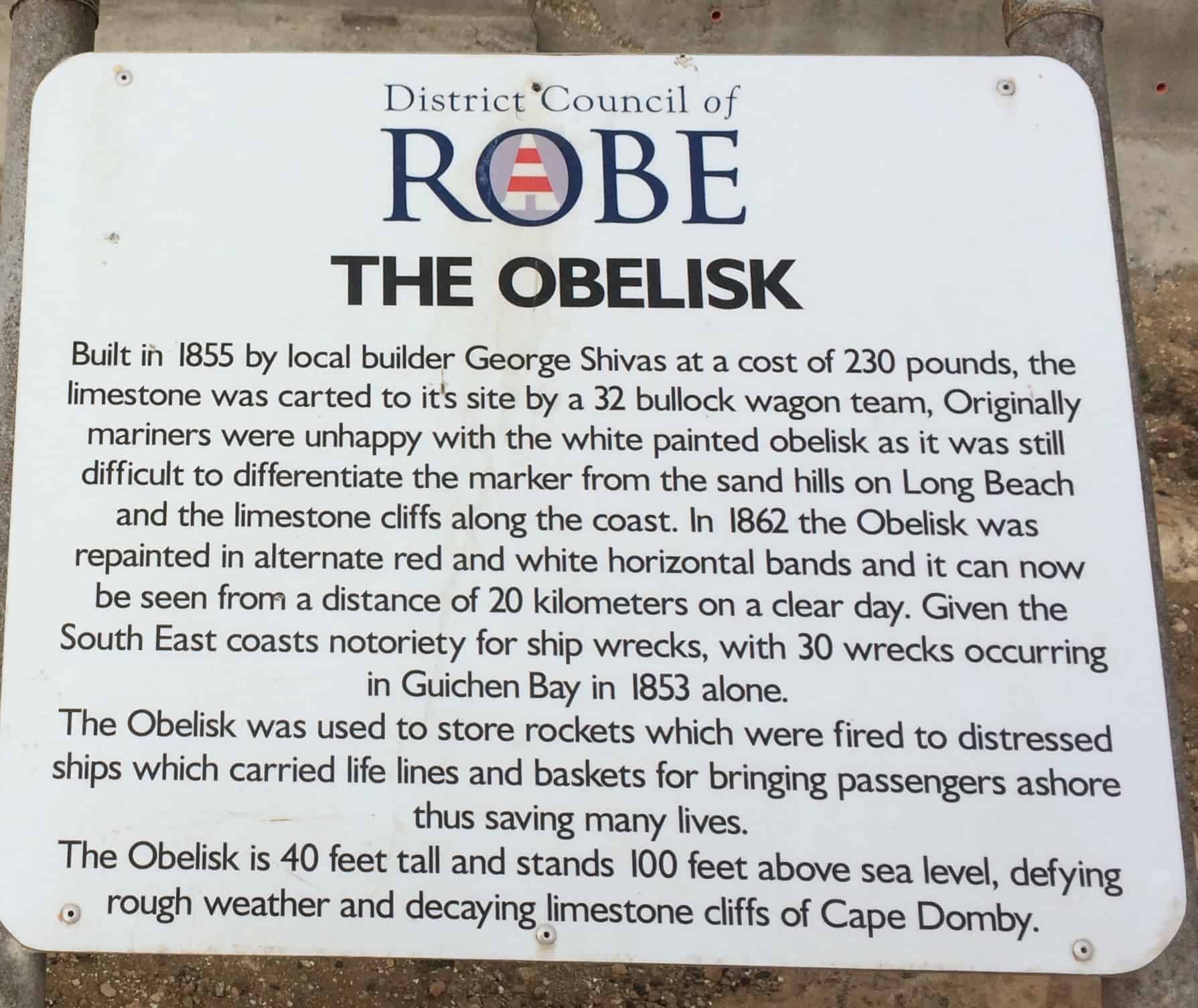
Breakfast, and lobster.
We had breakfast near the harbor at the Marina Cafe, which was very good, and the staff could not have been nicer. We then made a stop at a fish market for cooked, cleaned lobster, on Robbie's recommendation. The plan was to find somewhere good for lunch.
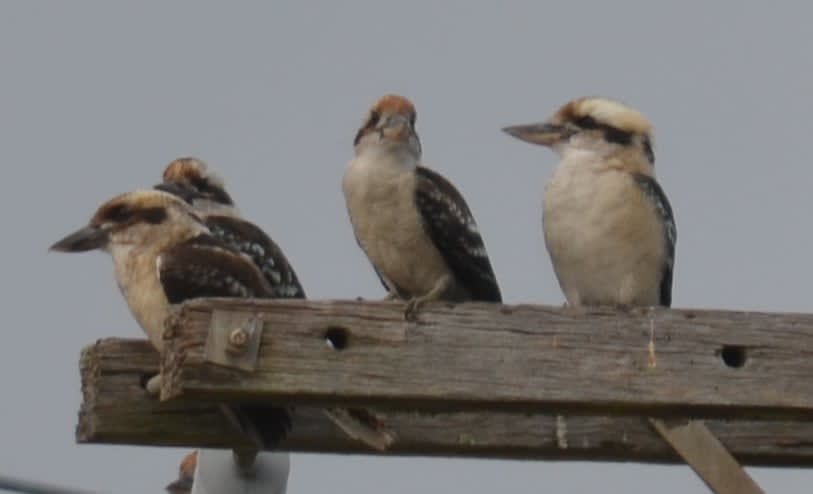
We found a cute town near Cape Bridgewater with picnic tables on the harbor and stopped to enjoy the lobster with a bottle of Lambert Estate sparkling wine. It was a super nice lunch with birds visiting us on occasion. It might have been our favorite lunch of the trip.
Quamby Homestead.
We arrived in Port Fairy around four, with reservations at a B&B called the Quamby Homestead. The volunteer at the information center (every town in Australia has an "i" booth) talked to us about the area and told us we were fortunate to be staying at a "true Australian home," but it would be about thirty minutes out of town. We followed the GPS and then began looking for the address. Lost again. We backtracked and went to a local bar for directions, and yes, they knew exactly where we needed to go: about five minutes more up the road, and we would not miss it on the left.
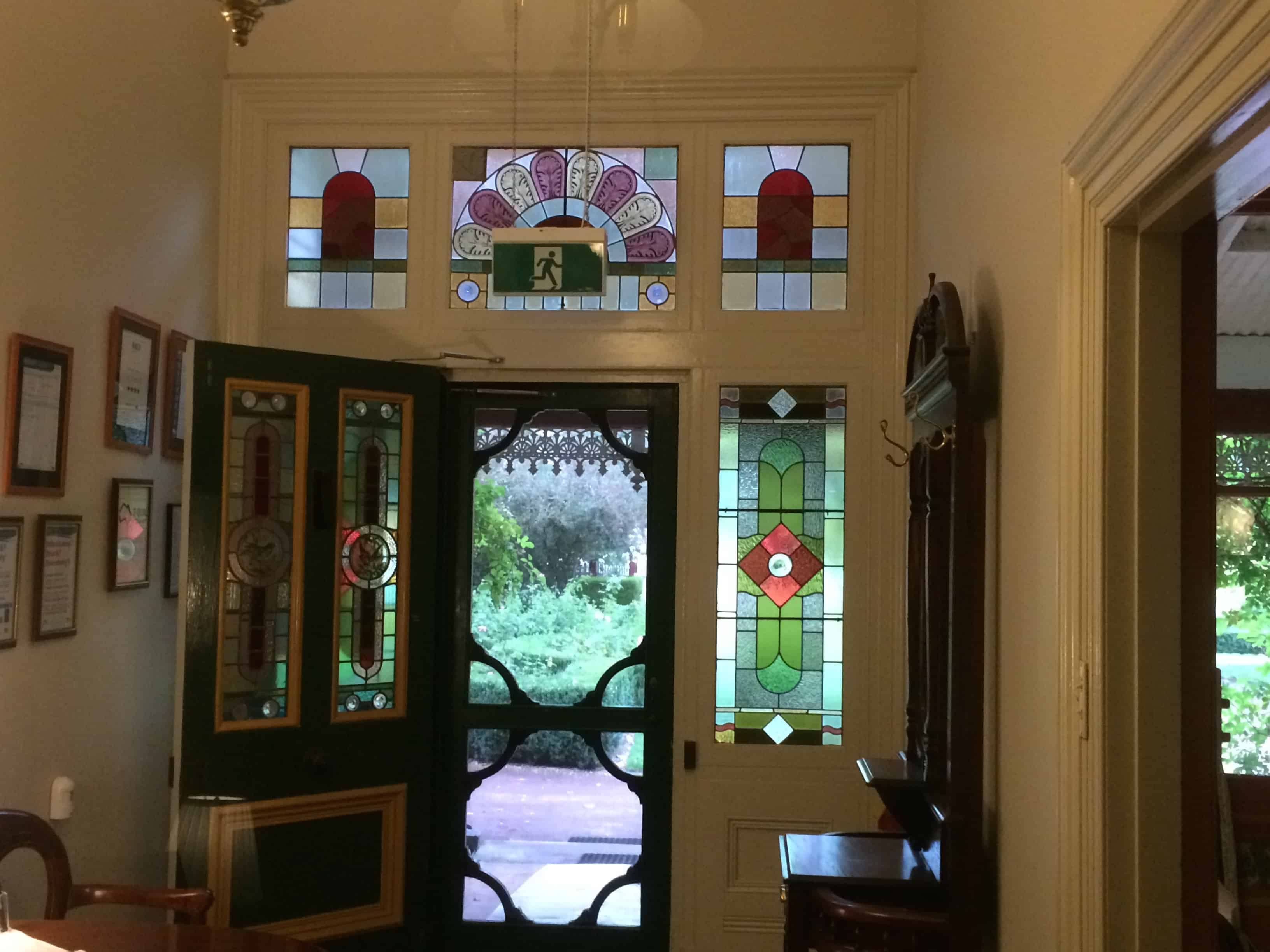
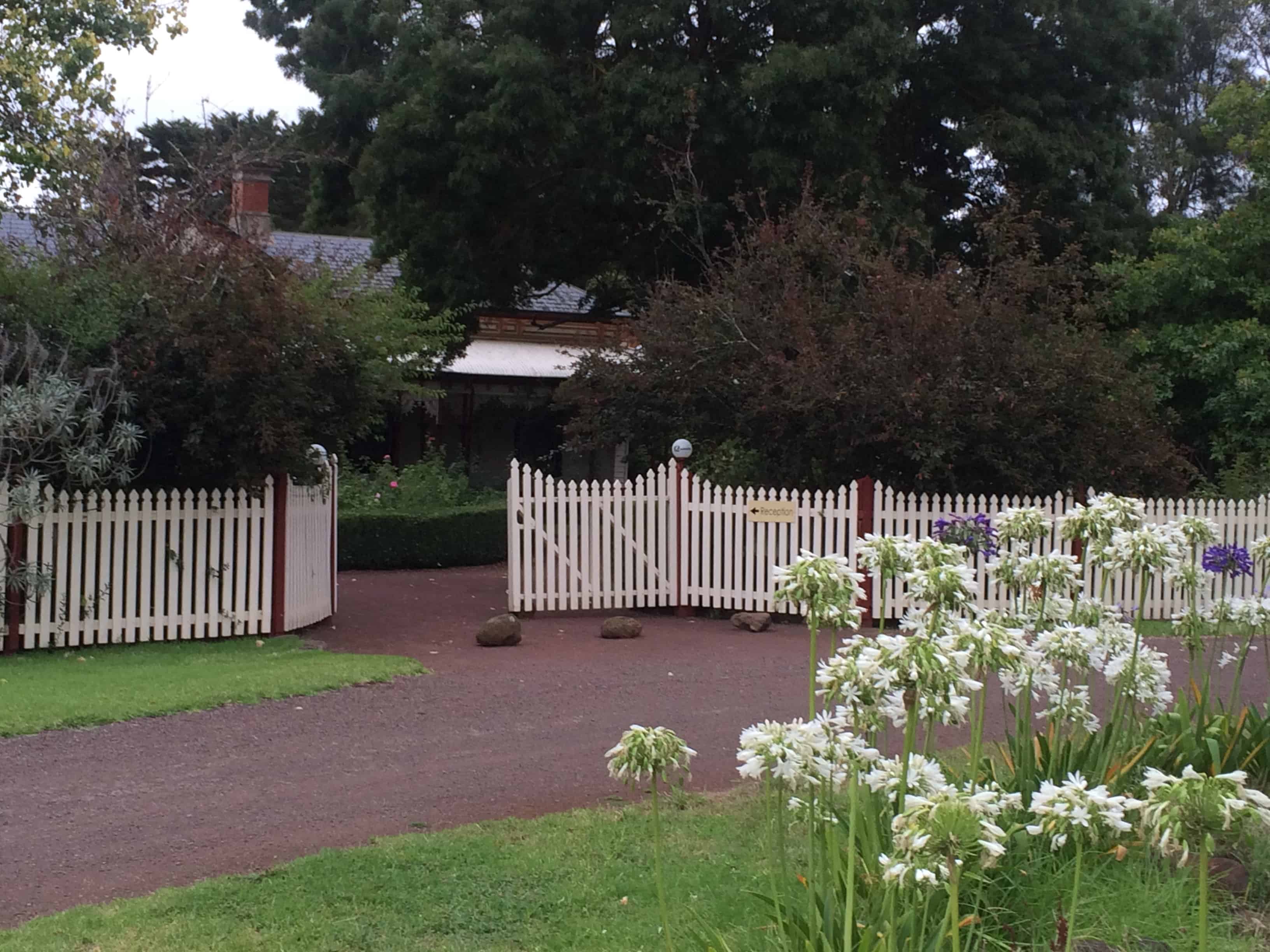
Since 1888, Quamby has been known for its lavish hospitality and welcoming ambience, a tradition still carried on by William and Ailsa today. The Quamby run has played an important role in the development of the Western District of Victoria. It was first taken up by Messers Mussle, Brown, and Wickham, and was very rough terrain, heavily timbered and swampy. The property passed to George Youl in 1848. Quamby was gazetted in February 1849 and covered approximately 25,000 acres. The splendid botanic gardens of Quamby Homestead also have a strong history, having been designed as a private commission by William Guilfoyle (1840-1912), former curator and director of the Melbourne Botanic Gardens (1874-1909). Guilfoyle was described as "the master of landscaping."
With three acres of historic plantings and "rooms" in the style typical of Guilfoyle, the gardens are perfect for guests to enjoy: wander, sit, relax, or play a game of pétanque.
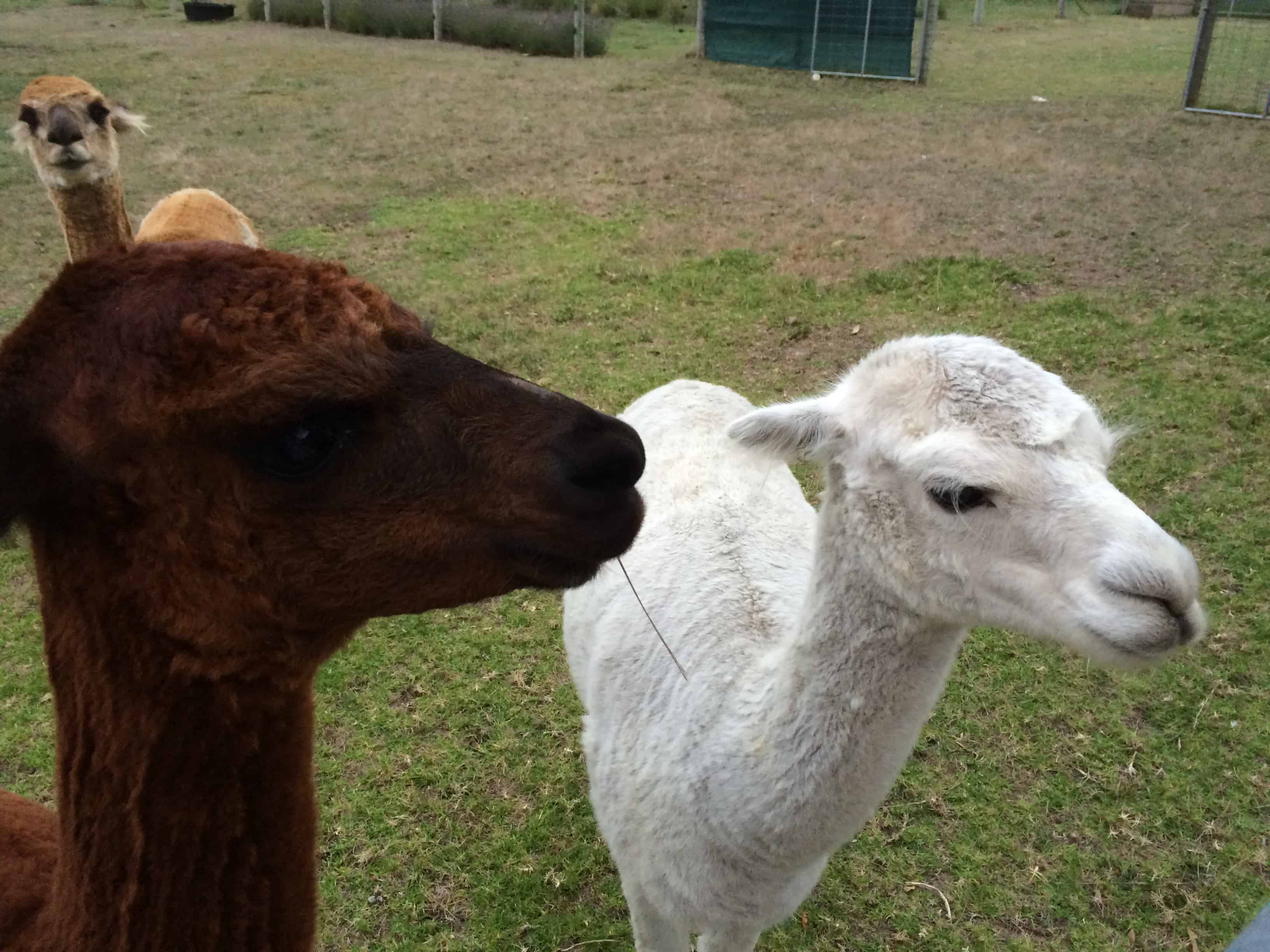
The homestead owned a goat and two alpacas, so Janice went out to meet them after breakfast.
Breakfast was beautiful, and William could not have been nicer. We did not see Ailsa that morning; the twins were taking their time getting ready for school.
Port Fairy Golf Club.
We packed up our things (we had reservations in town for the next evening) and headed to the Port Fairy Golf Club for our 8:30 tee time.
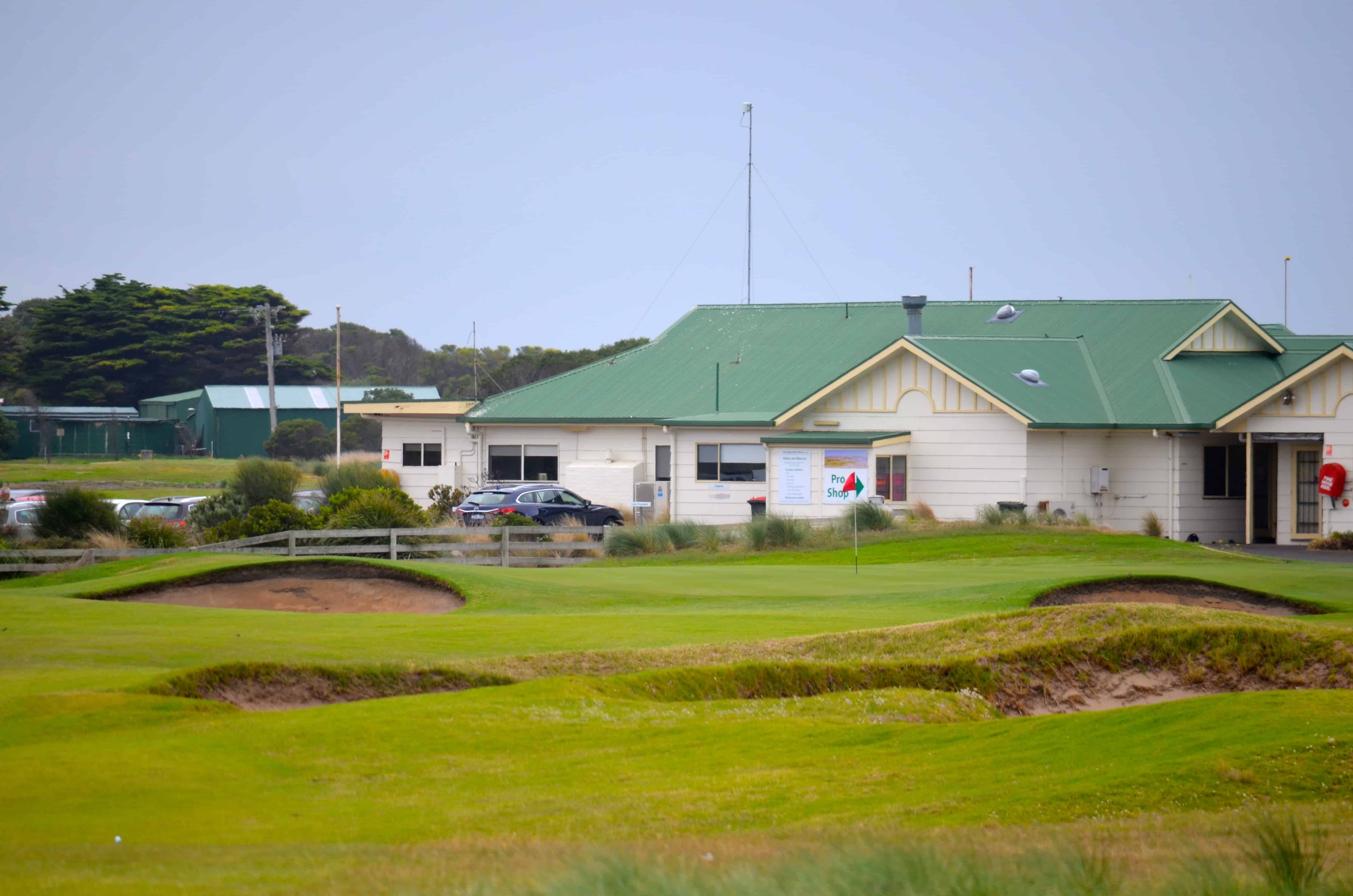
Port Fairy Golf Club had been on our list since our last trip. We had happened by it then and thought it was a lovely oceanside course. We were also amused, on that earlier visit, by the cars in the parking lot with trailers used for personal golf carts.
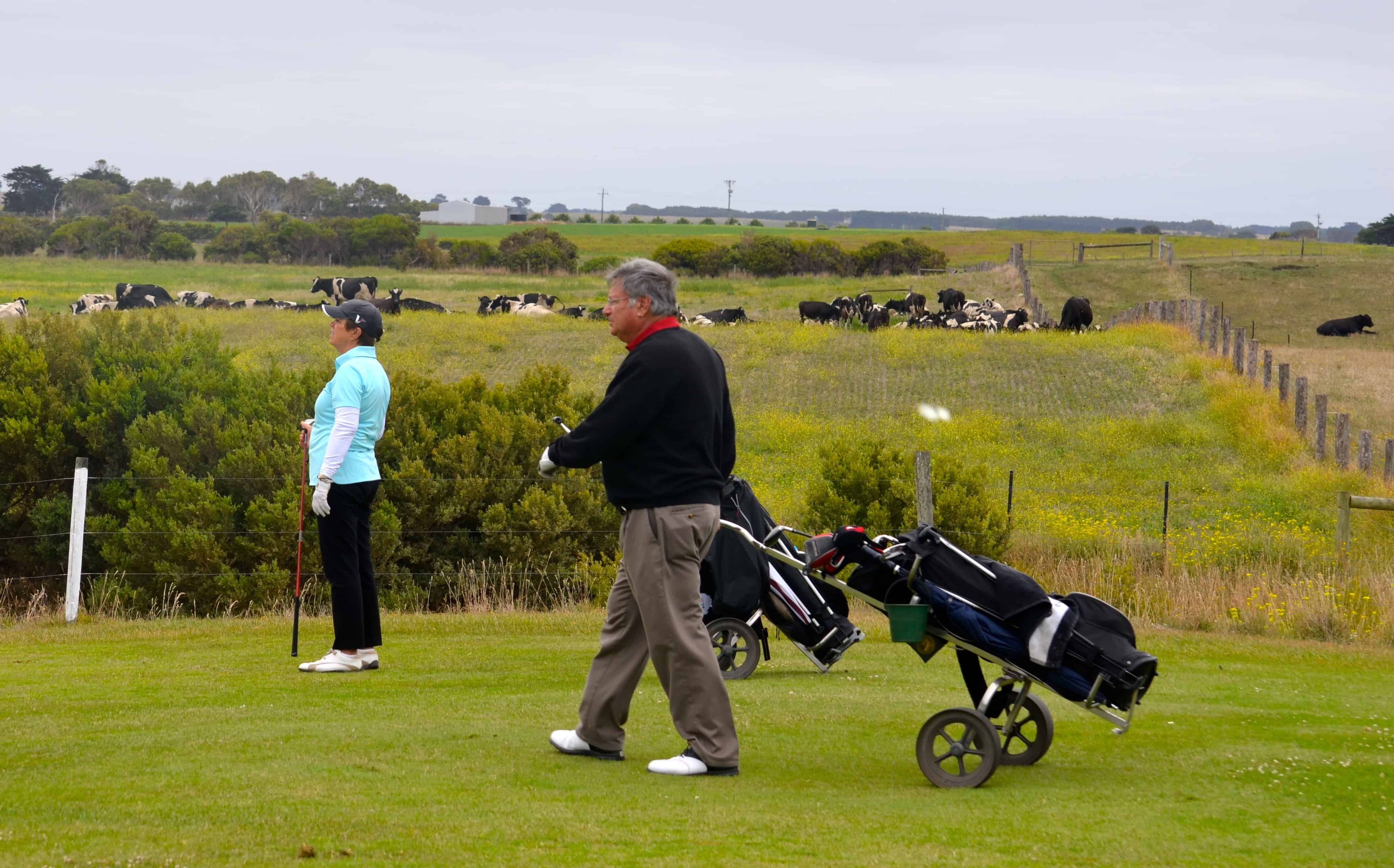
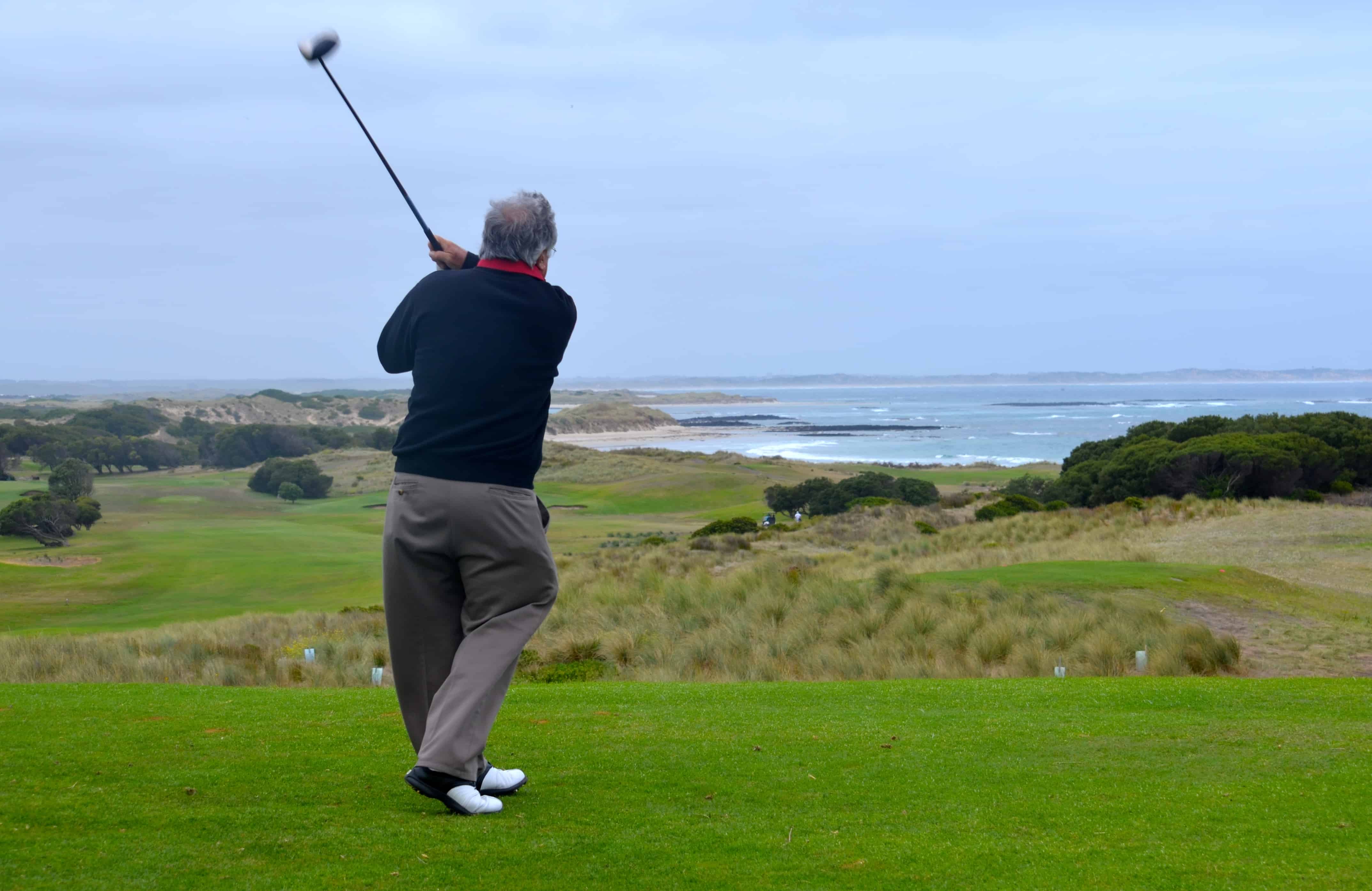
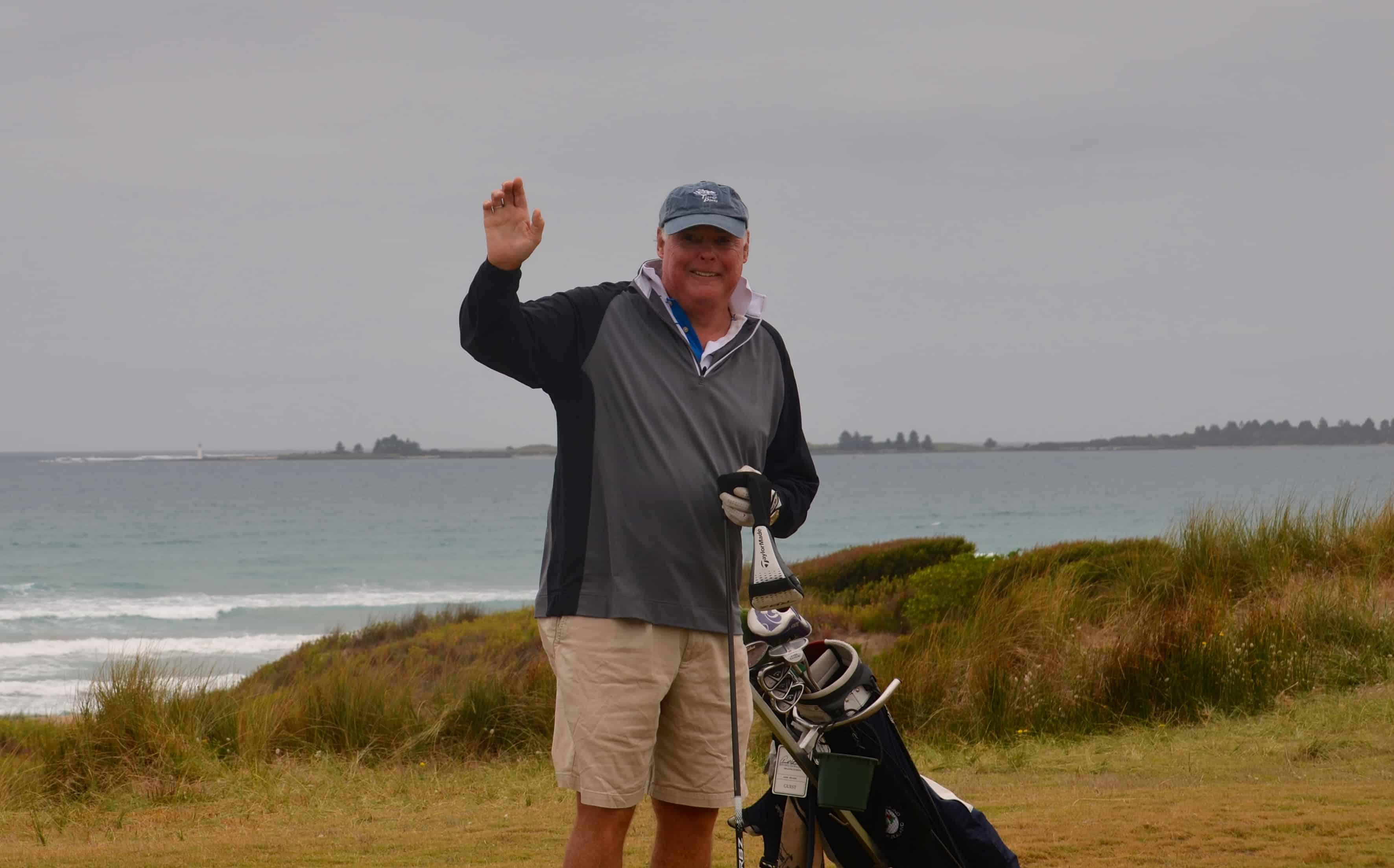
We arrived at the club and asked for carts. Unfortunately, they were all reserved. We rented handles for push carts and off we went. It was not a difficult course to walk, and some of the vistas were wonderful.
A note about snakes.
A challenging but fair course. We finished in about four hours and headed directly to the bar for a beer. We had heard that Australia is home to the top ten most poisonous snakes in the world, but being oceanside we had not thought it was a problem. Thank God we were finished. The lady serving us beers showed us pictures of a tiger snake she had recently found in her house. Very deadly. She then told us about the abundance of copperheads on the course. We were glad we had not run into one of those critters.
Griffiths Island.
We drove into town and had a relaxing lunch. A walk around Griffiths Island had been suggested by a local, so off we went on a two-hour trek around the island.
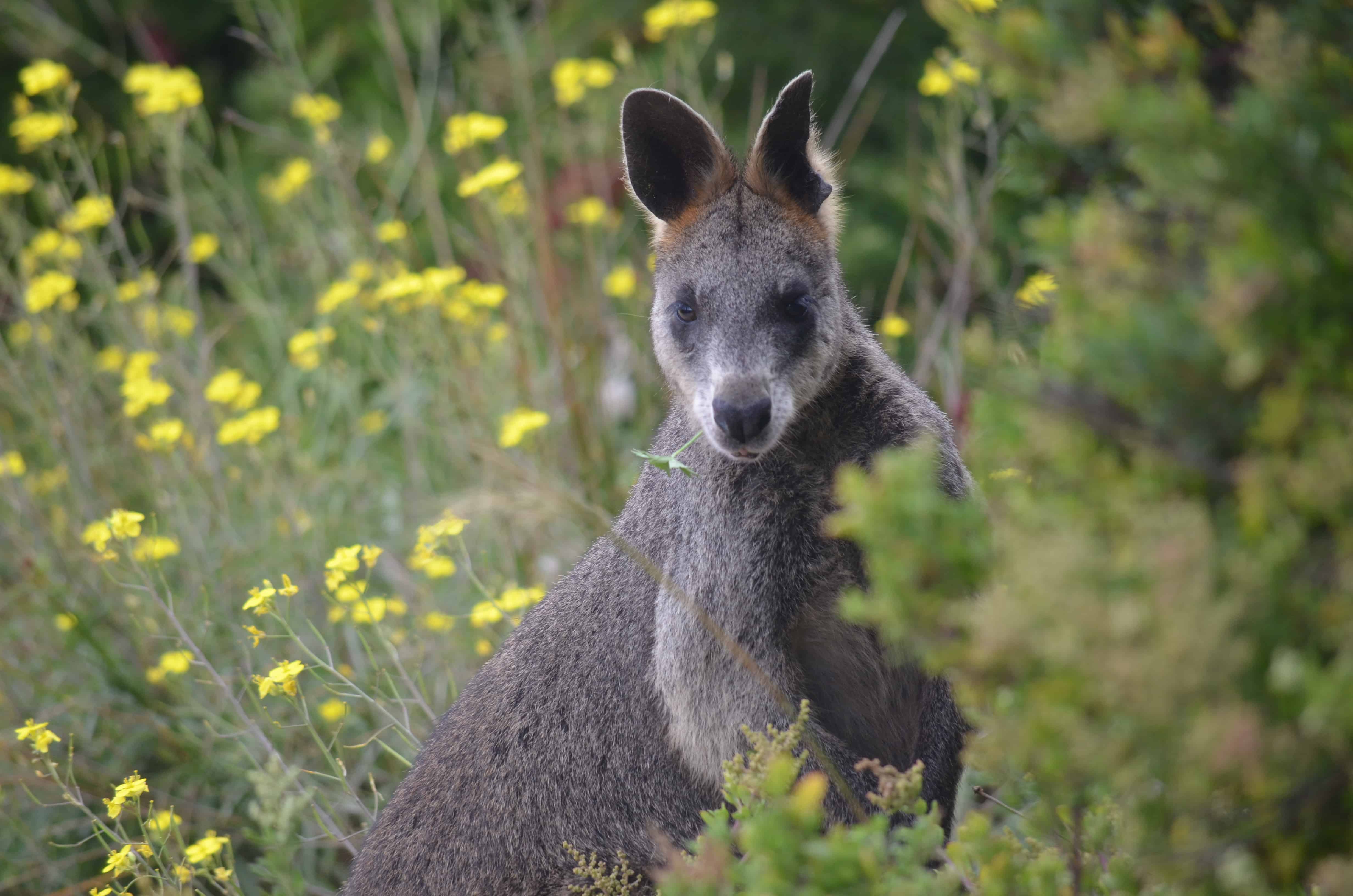
Accessed by way of a picturesque walk alongside a busy yachting marina, Griffiths Island is a must-visit if you are in Port Fairy. It takes about two hours at a steady pace to walk around this wild, windswept place. A colony of black wallabies roams the island, and we did indeed glimpse two or three appearing from time to time out of the long grassland. There is a superb panoramic beach and huge waves, complementing a blue sky punctuated by wispy clouds. Griffiths Island is a photographer's delight.
We were lucky and almost immediately ran into our first wallaby. They are much smaller than their brother the kangaroo, but cute as can be.
Clonmara.
We headed off to find our B&B for the second night, Clonmara Cottages. We arrived and were handed the keys to a two-bedroom cottage up the road.
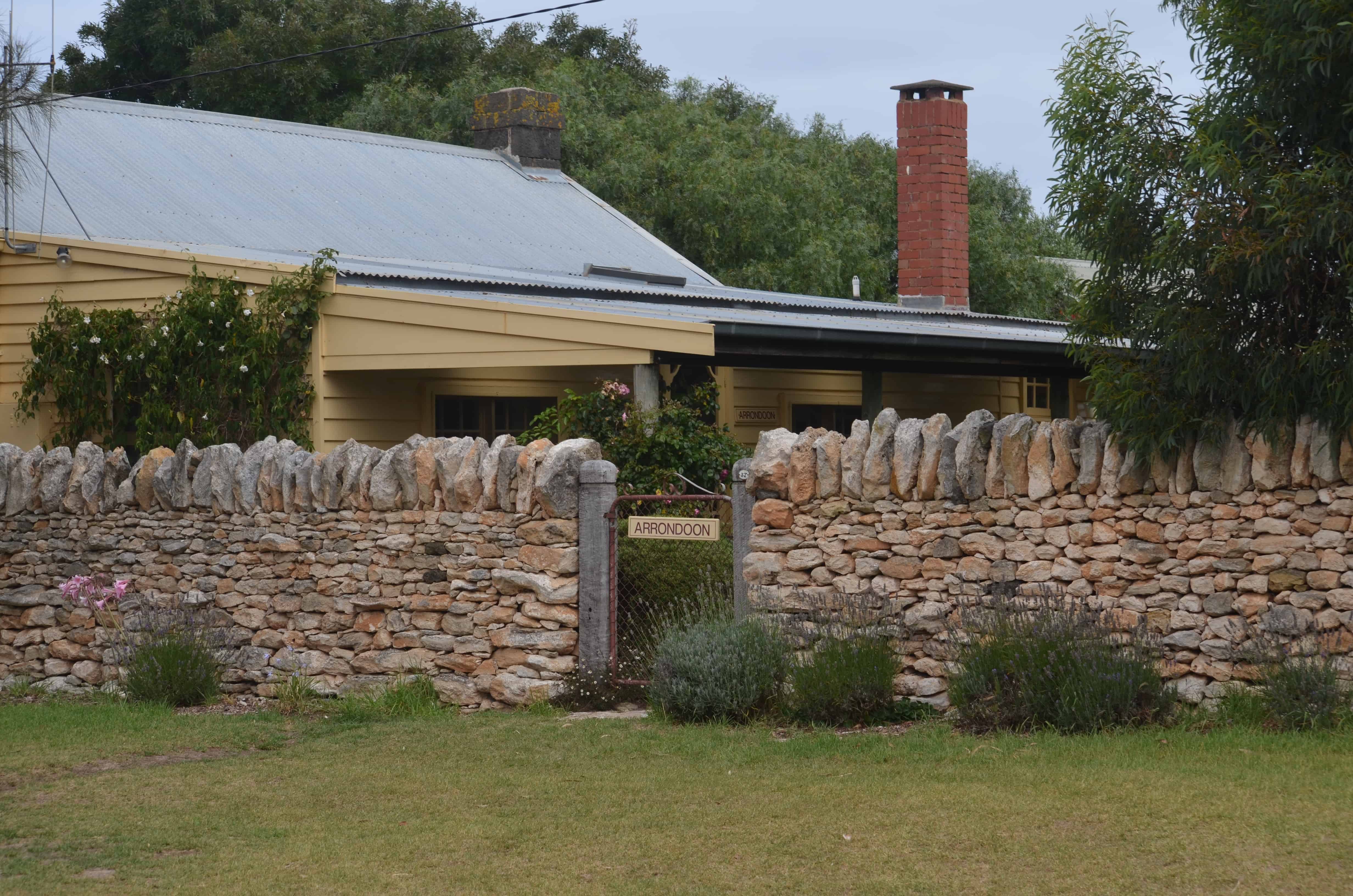
What a cute old home, with a kitchen and a place to sit outside for drinks and food. The house was interesting: there was one bathroom, located off the kitchen rather than near either bedroom, but we did just fine sharing it.
Onward.
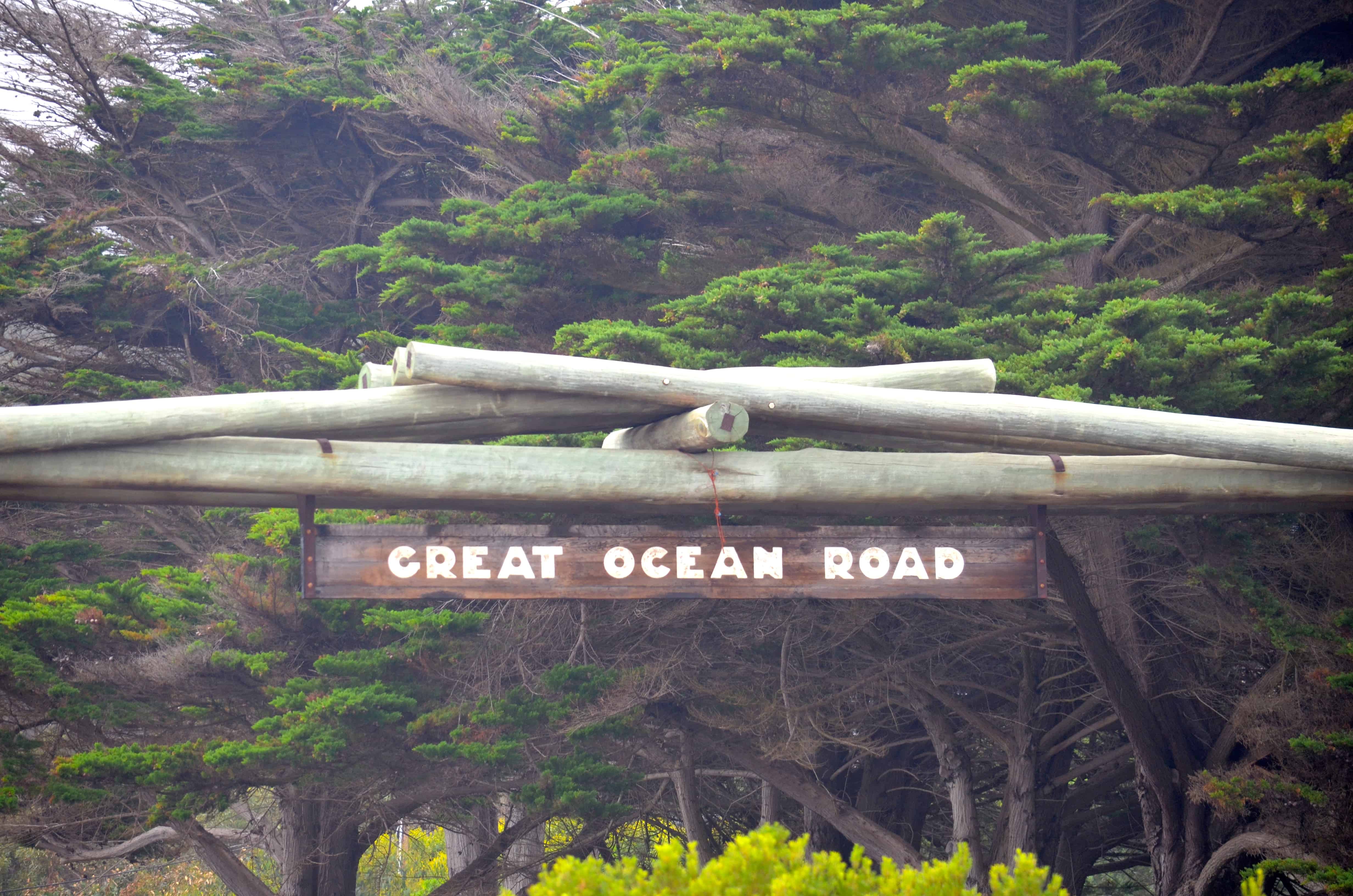
We had breakfast in Port Fairy at Rebecca's and drove out of town for the Great Ocean Drive.