Dateline June 7, 2016, Sorrento and the Amalfi Coast
From Florence we rode south, through Rome and on to Naples, where we changed trains for Sorrento. The Italian first-class cars were a treat, as comfortable as a good airline seat and with free wifi. The local line that carries you the last stretch, the Circumvesuviana, is another matter, think of the oldest New York subway car you can picture, covered stem to stern in graffiti. The first rule there is to keep a hand on your bags; the Naples station has its share of professional pickpockets, mostly well-dressed men very eager to help you. Right.
Sorrento. We stepped out of the station to our first look at this sensational town above the water, and set off after our flat. The phone map kept steering us to the edge of a cliff, with the road we wanted some two hundred feet below and a long staircase down to it. That being a non-starter with our bags, we asked inside a restaurant, and they pointed us to a public elevator a few blocks off, a euro to ride down and a euro-eighty to ride back up. You would have loved it. Down at the port we hauled the suitcases around one beach path after another until we found the building, and our host, Pamela.
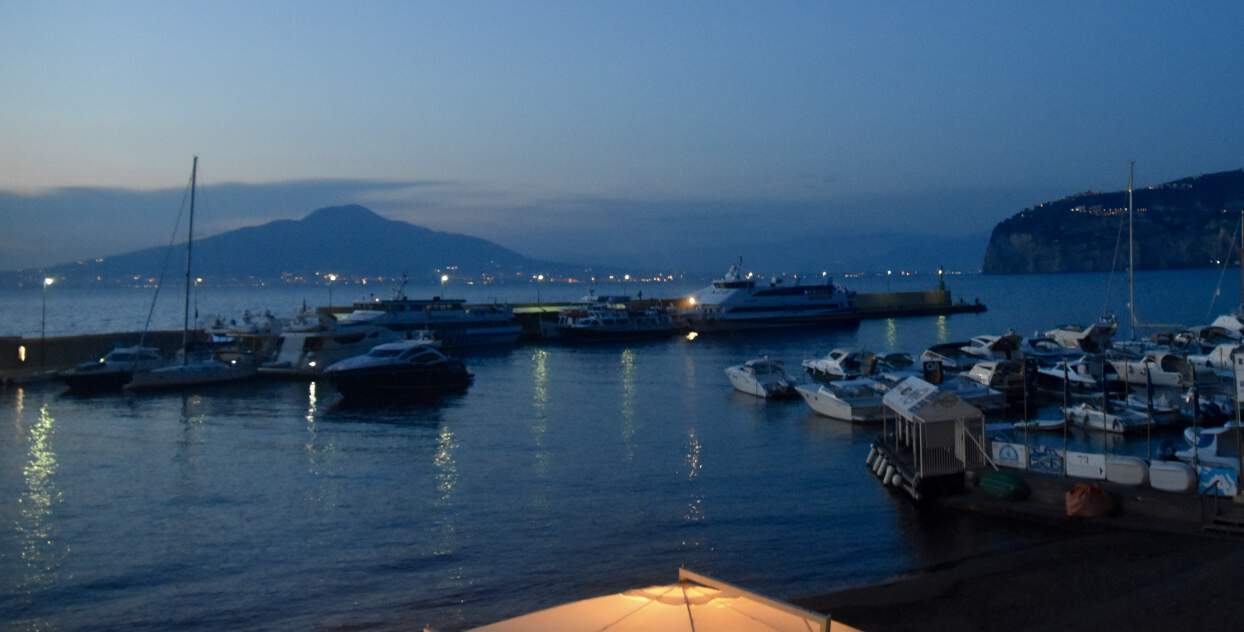
The place was fantastic, right on the beach with a clear view across to Mount Vesuvius. Pamela settled us in and told us all about the apartment and the neighborhood.
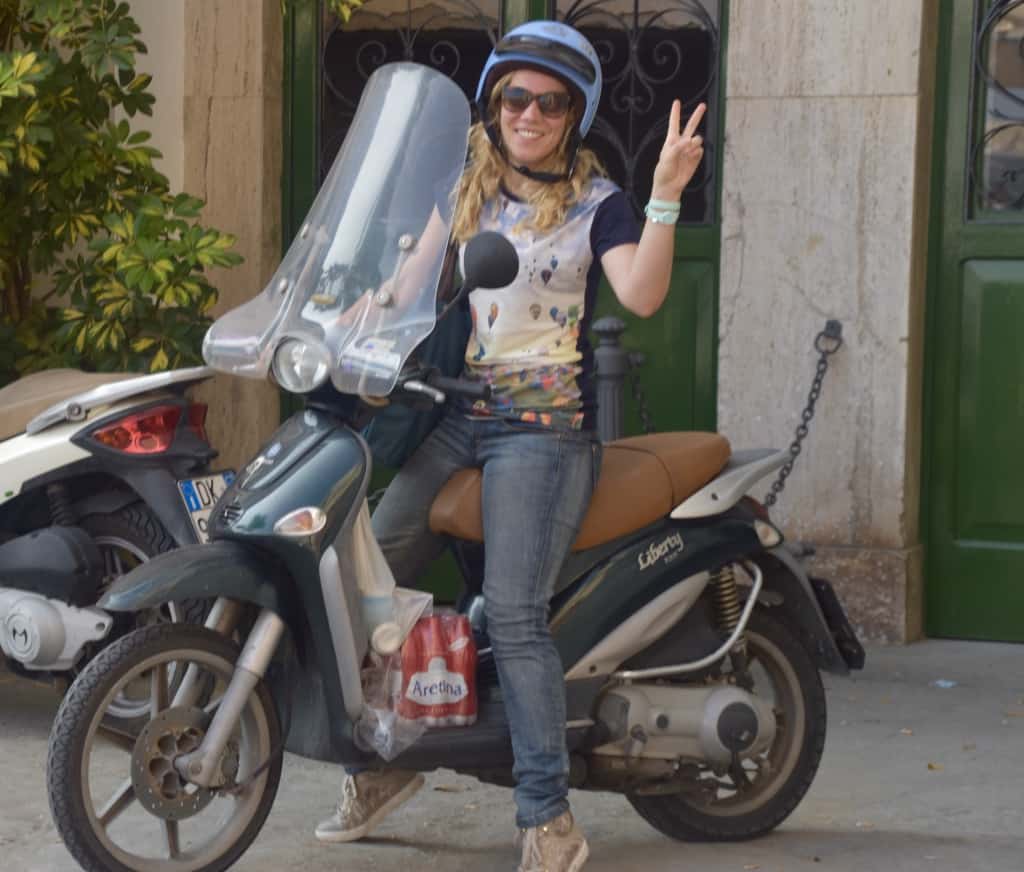
We had a fine dinner in the port and turned in early, because the next day we gave entirely to Pompeii and Herculaneum, and that one has a page to itself.
The Amalfi Coast. For the coast we had a car and a guide, Julia, who turned out to be terrific. The Amalfi Coast is a fifty-kilometer ribbon of cliffs and pastel fishing villages along the Sorrentine Peninsula, and the road that threads it is all switchbacks and blind corners, far too tight for the big buses, with stretches so narrow the cars take turns to pass. Our first stop was Positano.
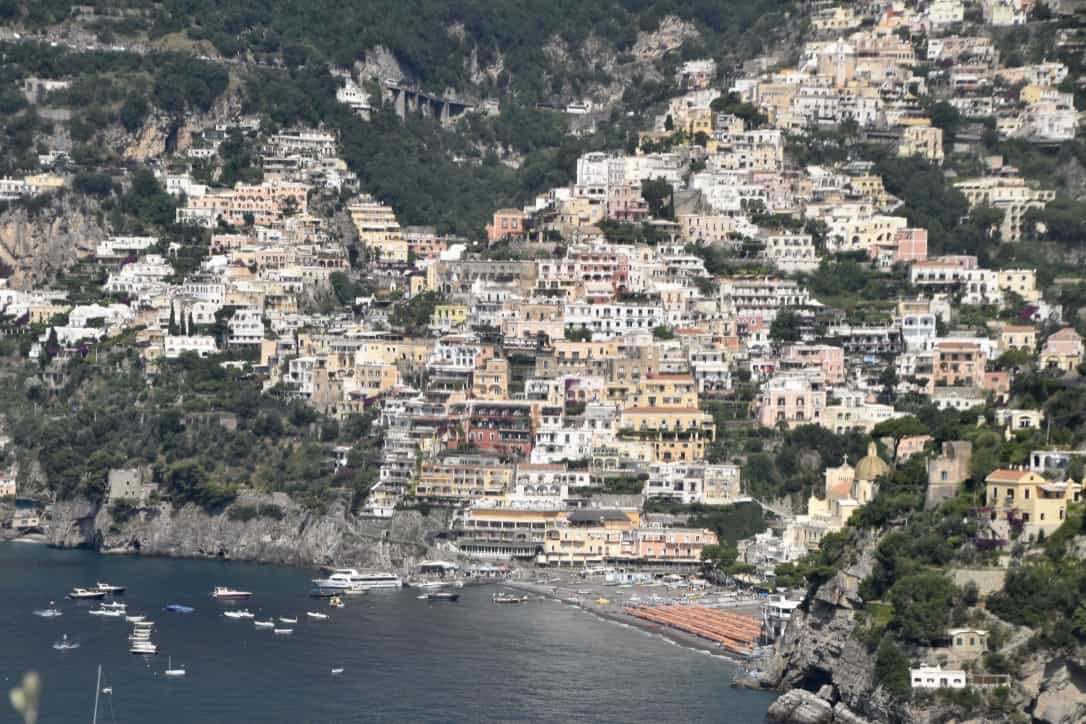
Positano had been a port of the old Amalfi Republic, rich in the sixteenth and seventeenth centuries and then so poor that more than half its people sailed off to America. We walked down through the town to the beach, past the lovely church of Santa Maria Assunta, with fine views back up the cliffs the whole way.
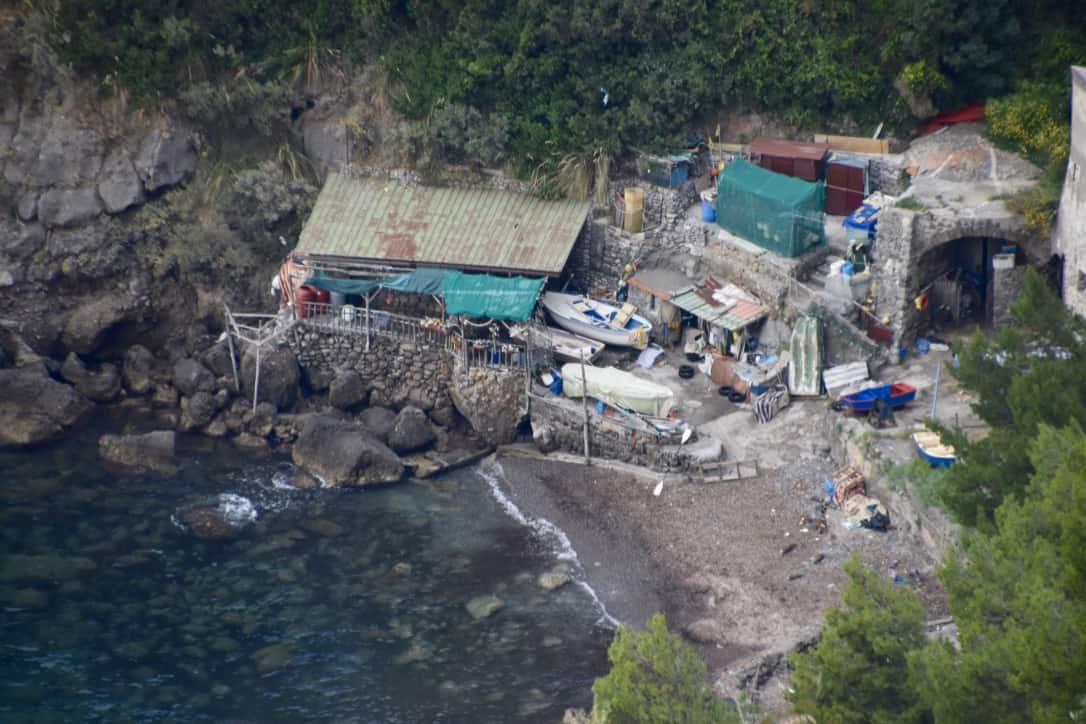
From there we carried on to Ravello, lovely and worth a wander, with the Villa Rufolo that a wealthy patrician built back in 1270, and a pottery shop where we bought a few handmade pieces to ship home. All along the winding road we passed miniature towns that the local churches had built by hand, little marvels. Then it was down into Amalfi itself, to the square and its Saint Andrew's Cathedral.
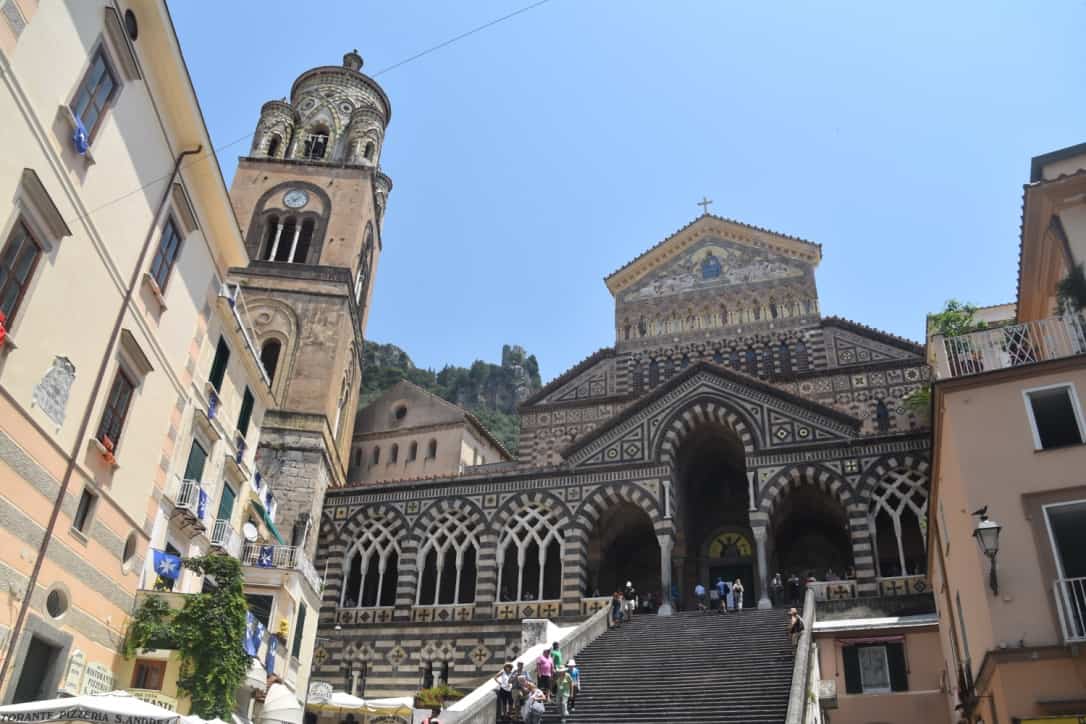
We sat at a cafe for lunch and a half-liter of wonderful wine. Julia had timed the whole day perfectly; by two in the afternoon we were heading north for home while the southbound traffic sat backed up for miles. Back at the port we had a last half-liter with our friend Gabriella, the cafe host who served our breakfasts, a young woman from Poland who now lives outside Sorrento with her little boy and rides an hour each way to work.
The next morning we left Sorrento by hydrofoil. Pamela came down to walk us to the ticket window and help with the bags, a wonderful young woman, and we would tell anyone bound for Sorrento to stay with her. It was forty-five minutes up the coast to Naples, where we caught a taxi to the train. The morning was too foggy to see much along the way, but our train to Rome was waiting, and off we went to the next adventure.