Dateline June 11, 2016, Rome
Rome was the grand finish to our weeks of Italy by rail. We came in at the station, took the metro to within a few blocks of our apartment for the next three nights, and were met by our host, Antonio, gracious and helpful, who showed us around and handed us maps of the area.
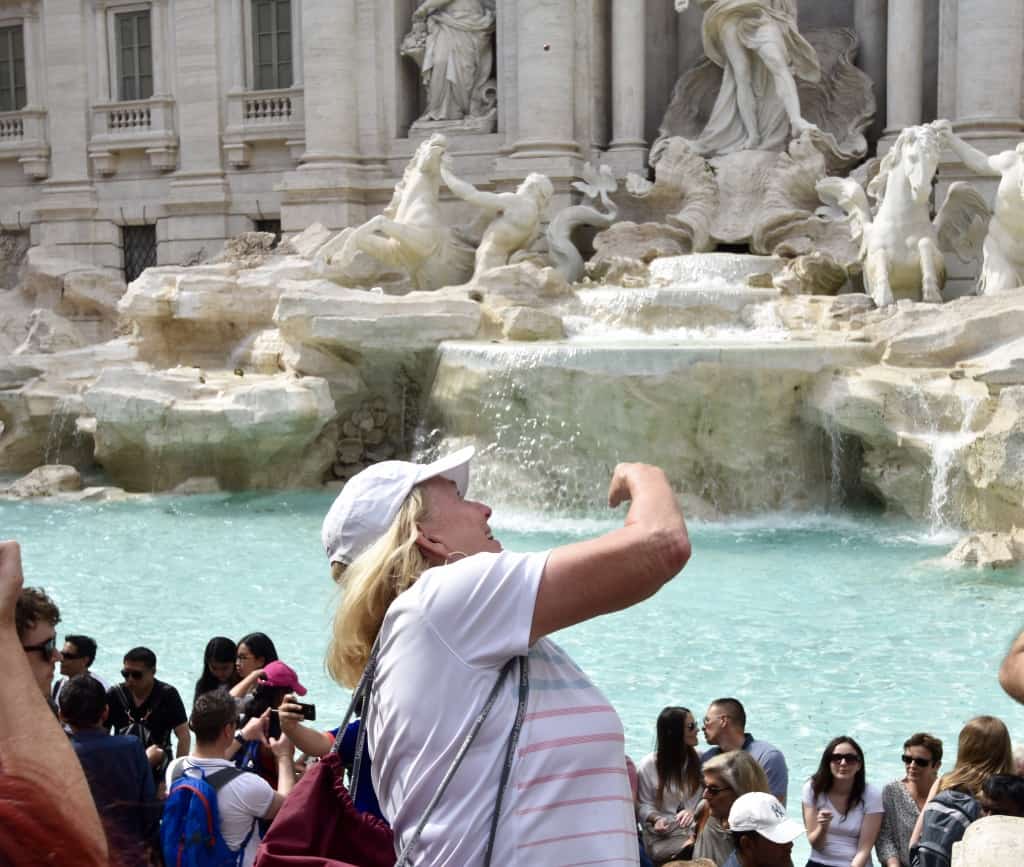
The Trevi Fountain. Rather than lose the rest of the day, we headed straight out, stopping for a lunch and a glass of wine before going on to the Trevi Fountain. It was gorgeous, and it carried us straight back to the old movies filmed there. They had just finished cleaning it, so the marble shone a brilliant white.
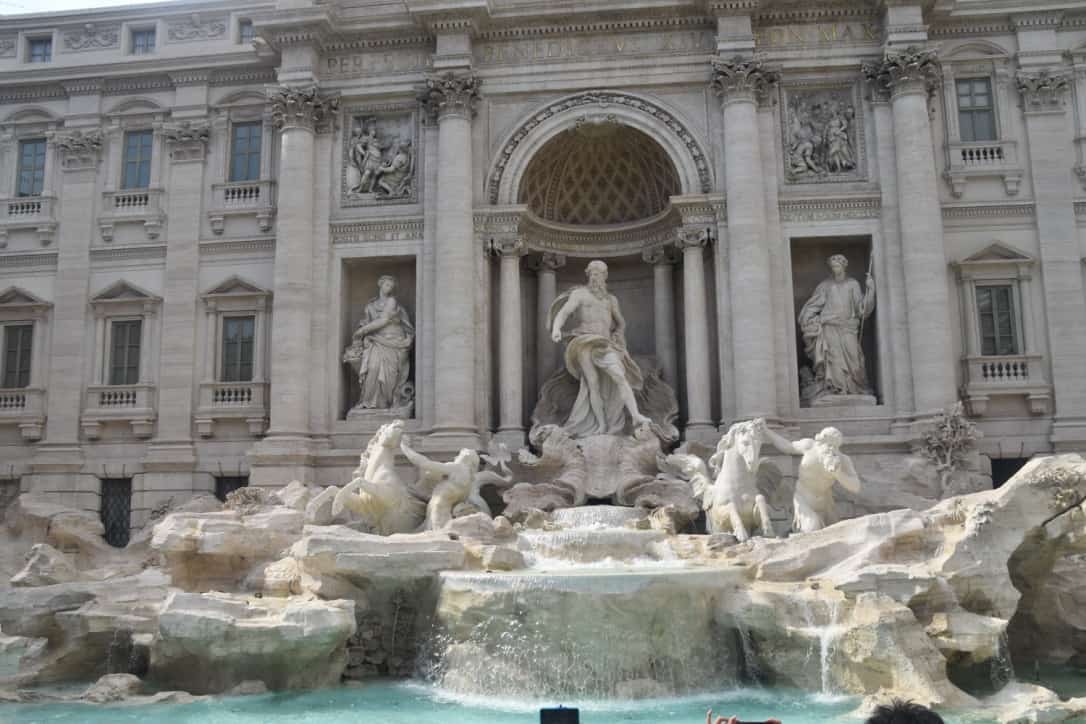
And of course we had to throw our coins in.
The restaurant Antonio had recommended turned out to be closed for good, he does not live in that neighborhood, so we got on Yelp and picked one about fifteen minutes off, the Osteria del Cavaliere. We wandered the streets sure we had made a mistake, and then there it was, and what a find. The mother was the chef and the daughter ran the front, with room for maybe thirty people, and the food and the house wine were so good we booked a table to come back on our last night.
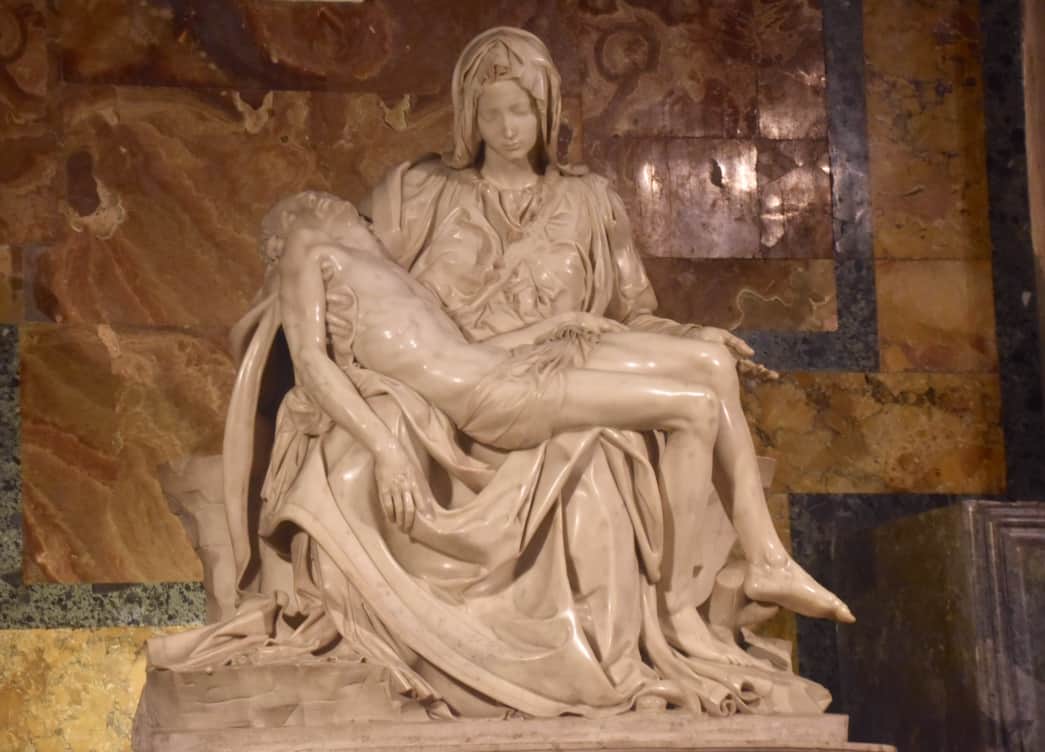
The Vatican. The next day we rode the metro to the Vatican and met our small group, only about fifteen of us, right at the entrance. We were among the first in, which made all the difference. The history of the place is so rich, and the rooms and paintings and sculptures with it, that we could not begin to do it justice here. One of the most beautiful things we saw was another Michelangelo, the Pieta, carved when he was barely past twenty, in 1498 and 1499. It shows the body of Jesus across his mother Mary's lap, and it is the only work Michelangelo ever signed.
Then came the rooms of Raphael, and the Sistine Chapel, where no photographs are allowed. The ceiling is beyond belief, an experience of a lifetime, and the paintings along the walls, by the artists who came before Michelangelo, let you watch art change as it moves toward him. It was a tour we will never forget.
The Colosseum, Forum and Palatine Hill. We left the Vatican for the Colosseum, having bought our tickets online before the trip, and found old ruins scattered all along the walk. Near the Colosseum a young woman offered us a guided tour of the Forum, the Colosseum and Palatine Hill for a fair price, so we joined her and about eight others.
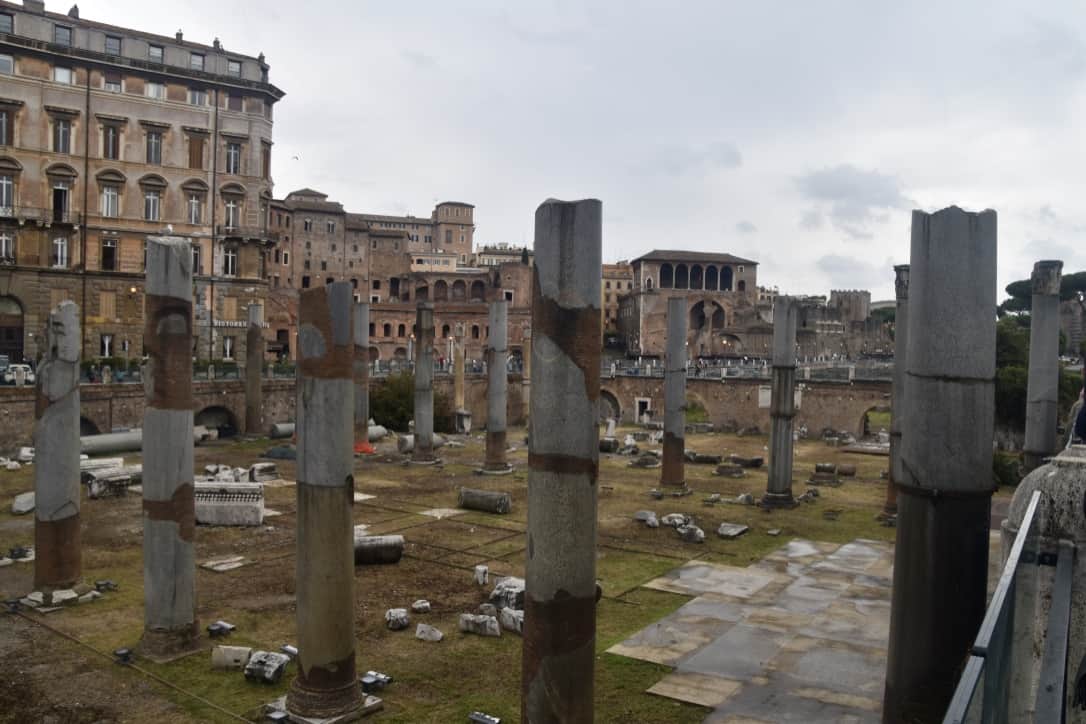
First was the Forum, for centuries the beating heart of Roman public life, the place for triumphal parades and elections, for great speeches and trials and even gladiator fights, and the center of all the city's business. Statues of Rome's great men once stood here; the few that remain are worn down by the centuries, missing arms and faces.
Next was the Palatine Hill, where Rome began. People have lived up there since the tenth century BC, and the first Romans made it their home. The views of the Forum from the top are remarkable, and there is work going on now to restore what is thought to be the house of the wife of Augustus.
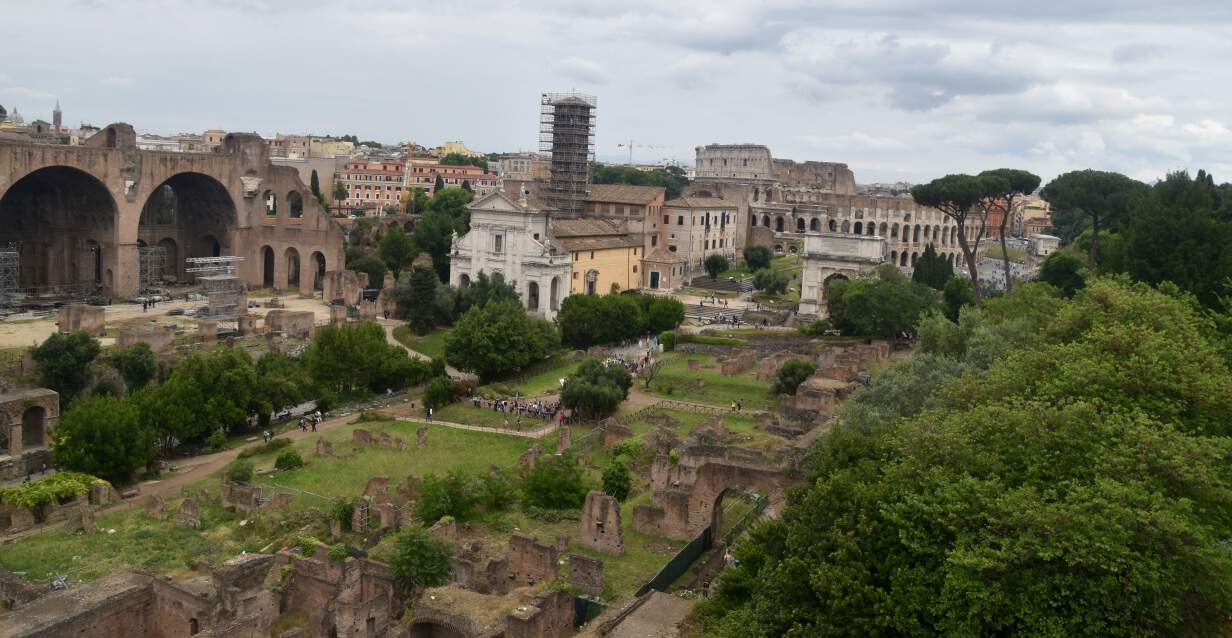
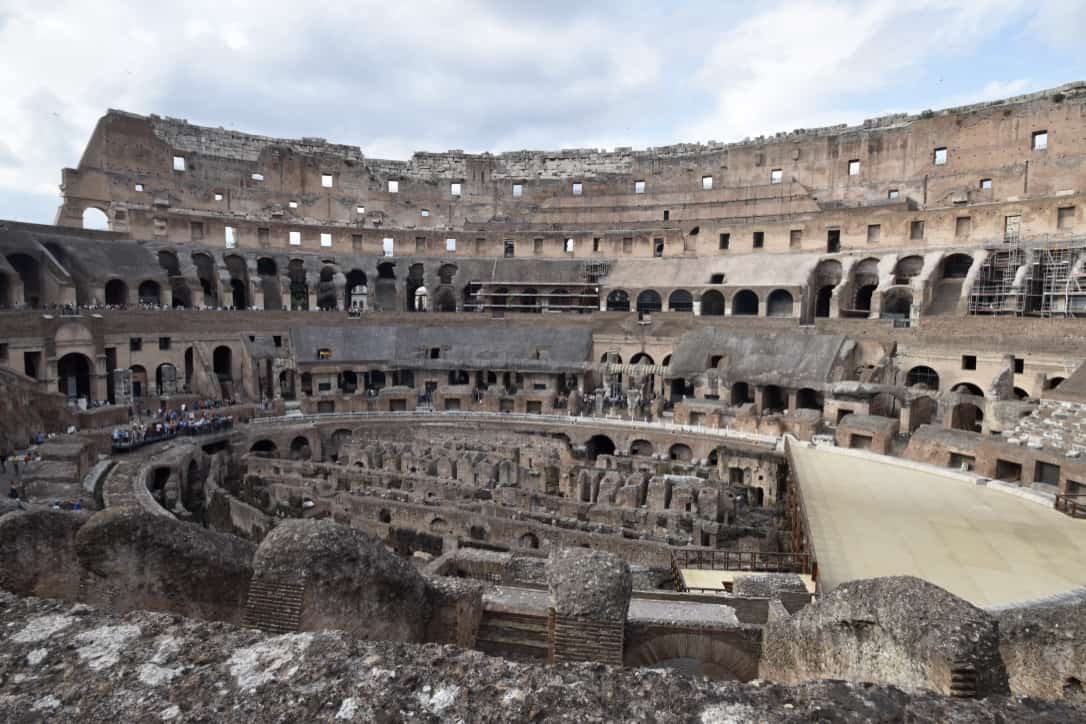
Last was the Colosseum itself. Much of what you see is restoration, but you can look up to where the seats rose and down into what lay beneath the arena floor, a two-level maze of tunnels and cages where the gladiators and the animals waited their turn.
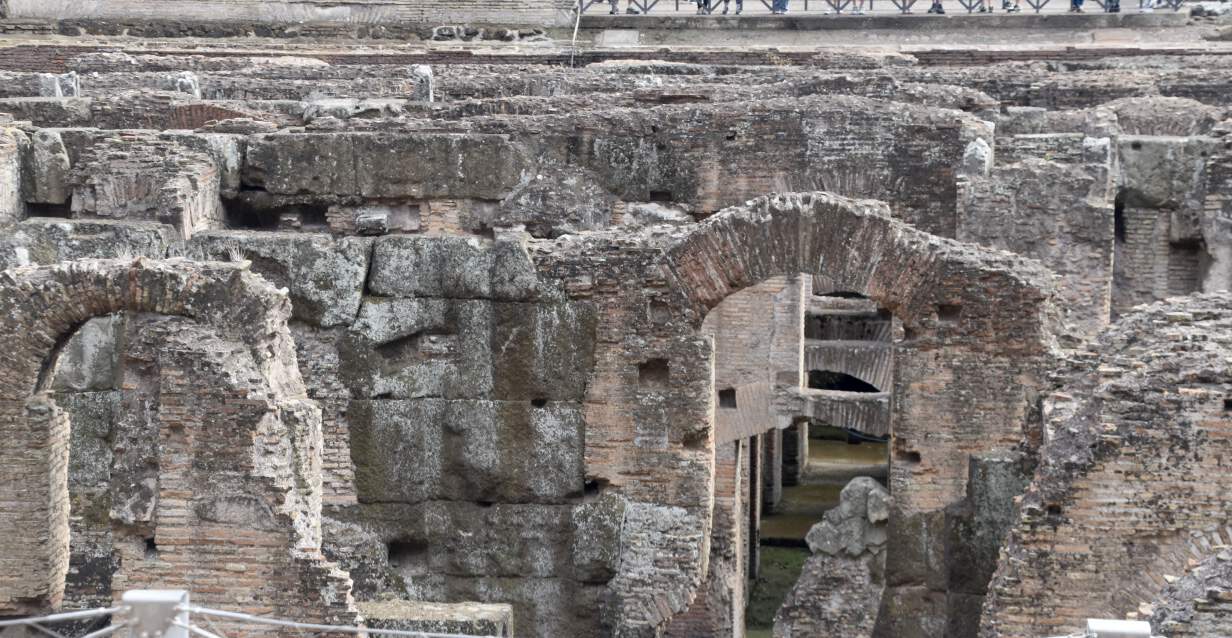
Dozens of shafts and hidden lifts once carried them, and the scenery, up into the arena, some of the lifts big enough for an elephant. Standing above it all, you can almost see them.
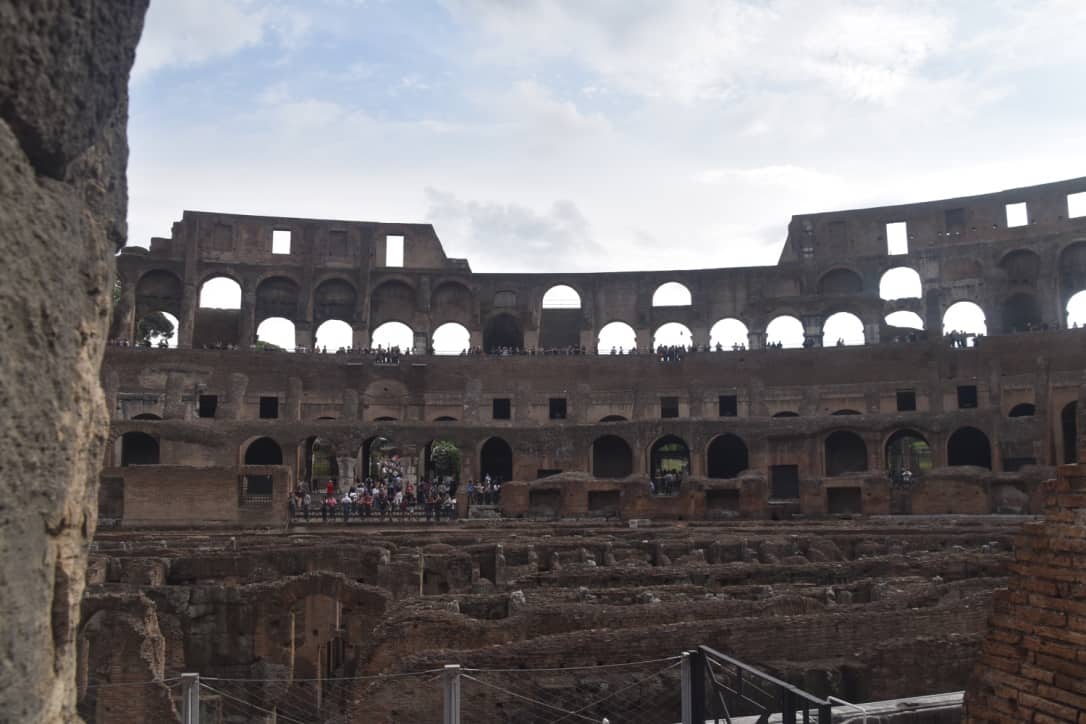
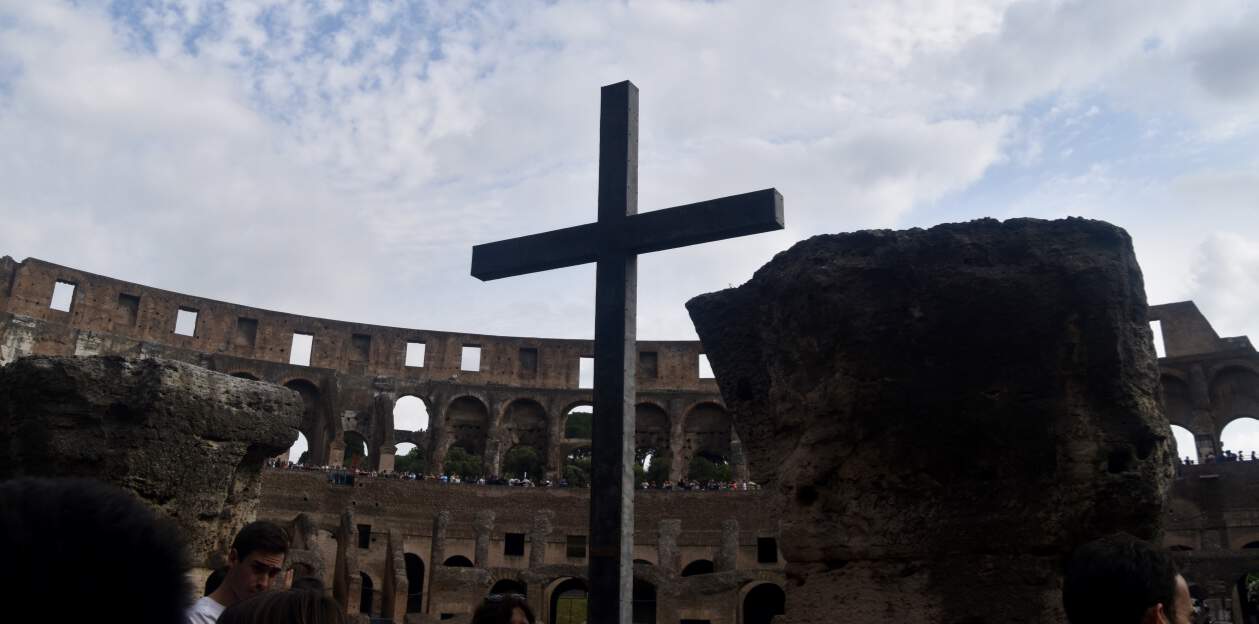
There is a cross set at one side of the arena, thought to mark where the ruler once sat. We were told that once a cross stands in a place, it becomes a church, and a church cannot be torn down.
Worn out after a twelve-hour day, we headed back and grabbed a bite down the street at a place full of young people having a fine time. It was Friday night, after all.
San Giovanni and the Pantheon. The next morning we set out for the cathedral up our street, the Basilica of San Giovanni in Laterano, St. John Lateran. We were lucky; the bishop was just beginning a special service, and we slipped in with the congregation.
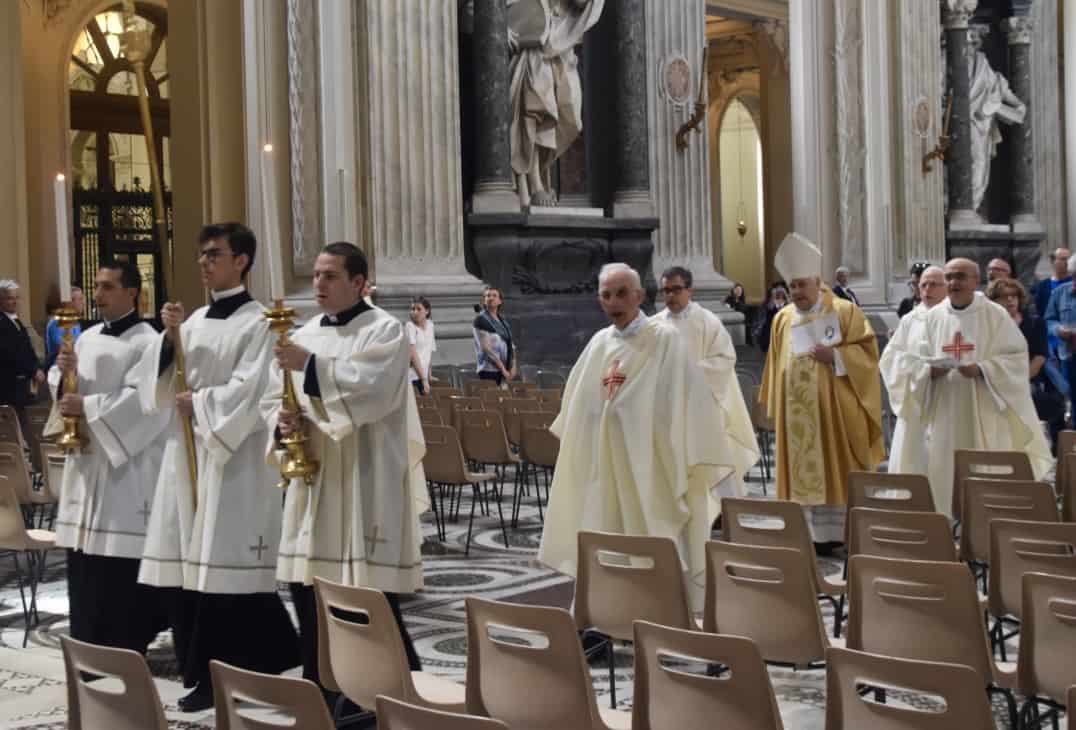
We did not join the service, but toured the rest of the basilica. When you think of churches in Rome you think of the Vatican, but San Giovanni is actually the oldest of them all, the mother church of the city, ranking ahead of the rest. It began as the palace of Constantine, was remade as the pope's own church, and serves today as Rome's official cathedral, dedicated to St. John the Baptist.
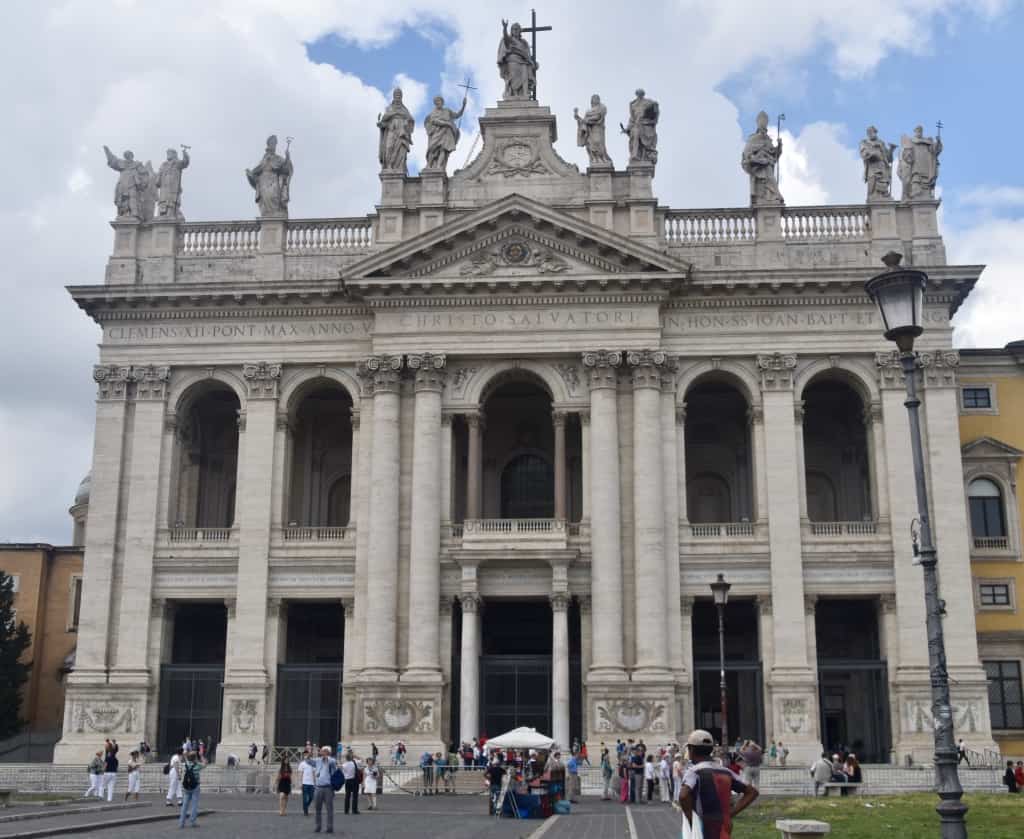
From there we walked to the Pantheon.
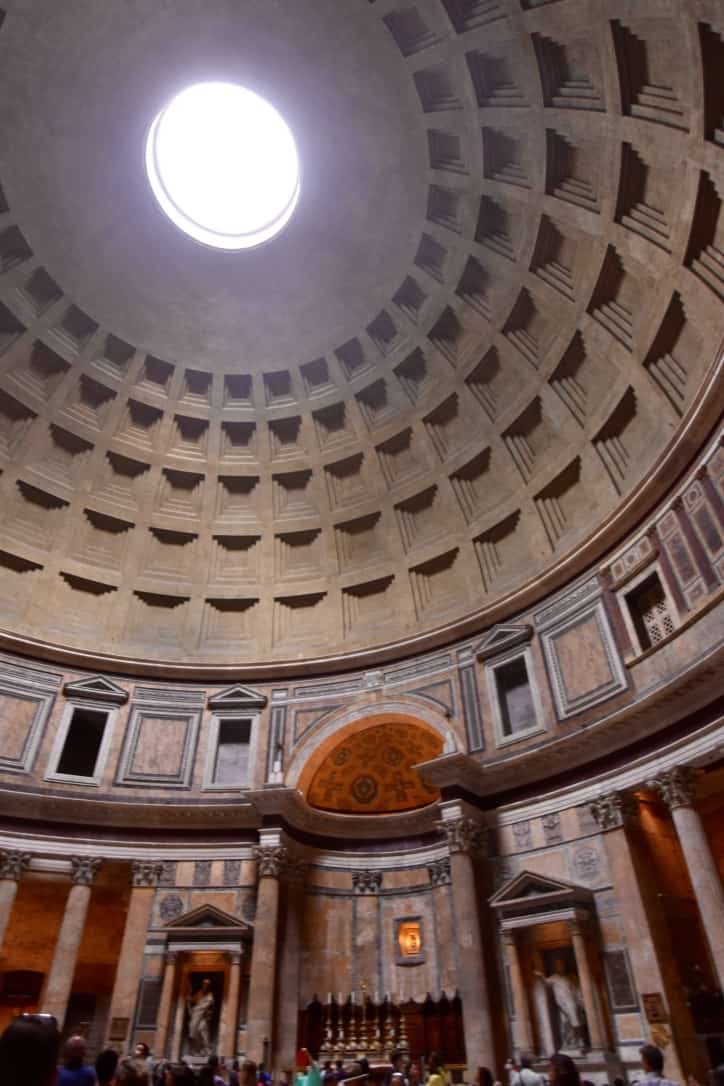
It stands on the site of an earlier building from the time of Augustus; the one you see was finished by the emperor Hadrian around 126 AD, and it is among the best-preserved of all ancient Roman buildings, in good part because it has never gone out of use. The great artist Raphael lies buried inside it.
That evening we went back to our little restaurant and were not disappointed, the food and wine every bit as good as before. John had his picture taken with the owner's daughter and the other server.
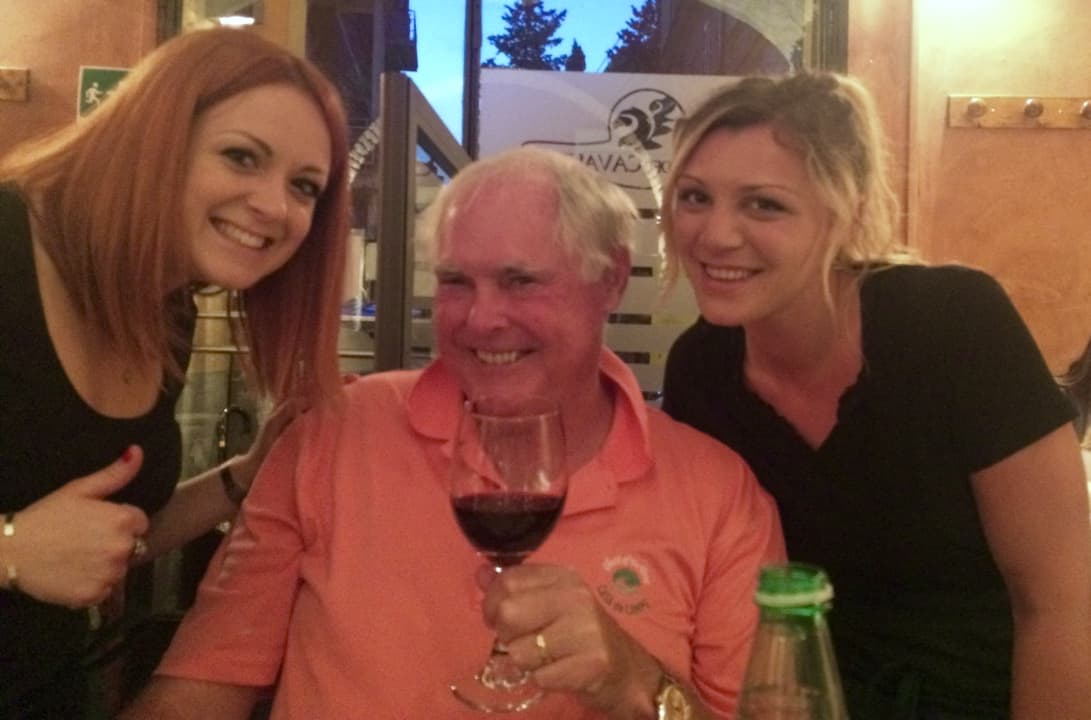
It does not get any better. On to Athens in the morning.