Dateline June 19, 2016, Jerusalem, the Old City
Our last full day in Israel was the one we will carry the longest. Our guide met us early at the hotel, and we set out on foot into the Old City of Jerusalem.
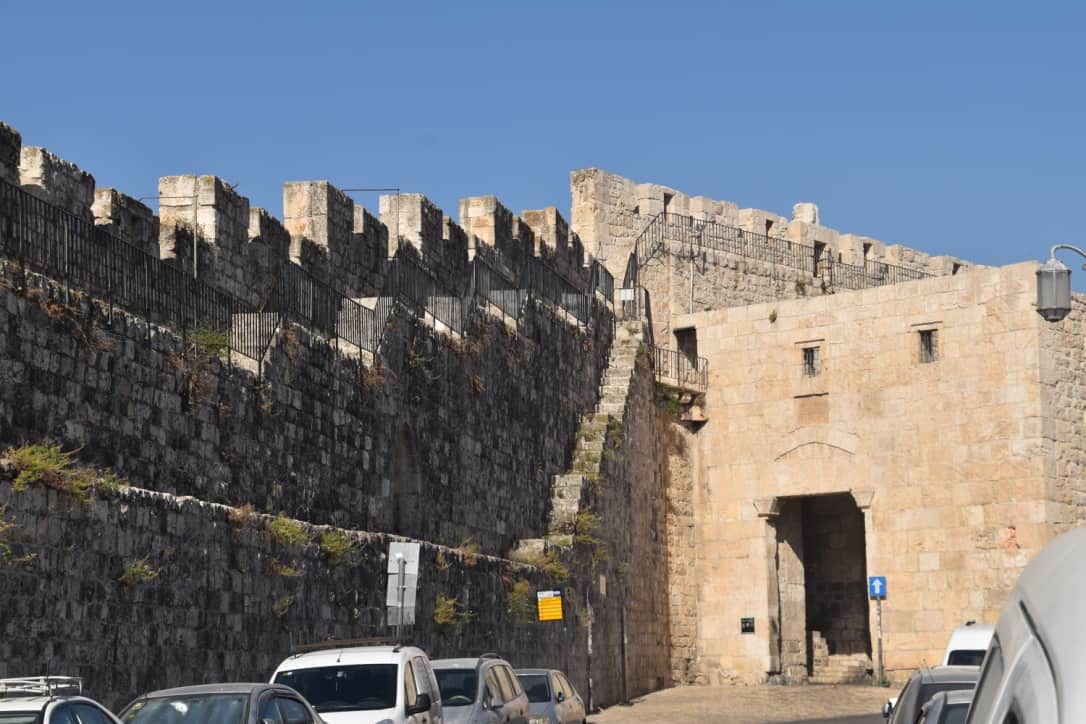
The Zion Gate. We walked up past the Zion Gate, where you get a real sense of how high and how strong these old walls are.
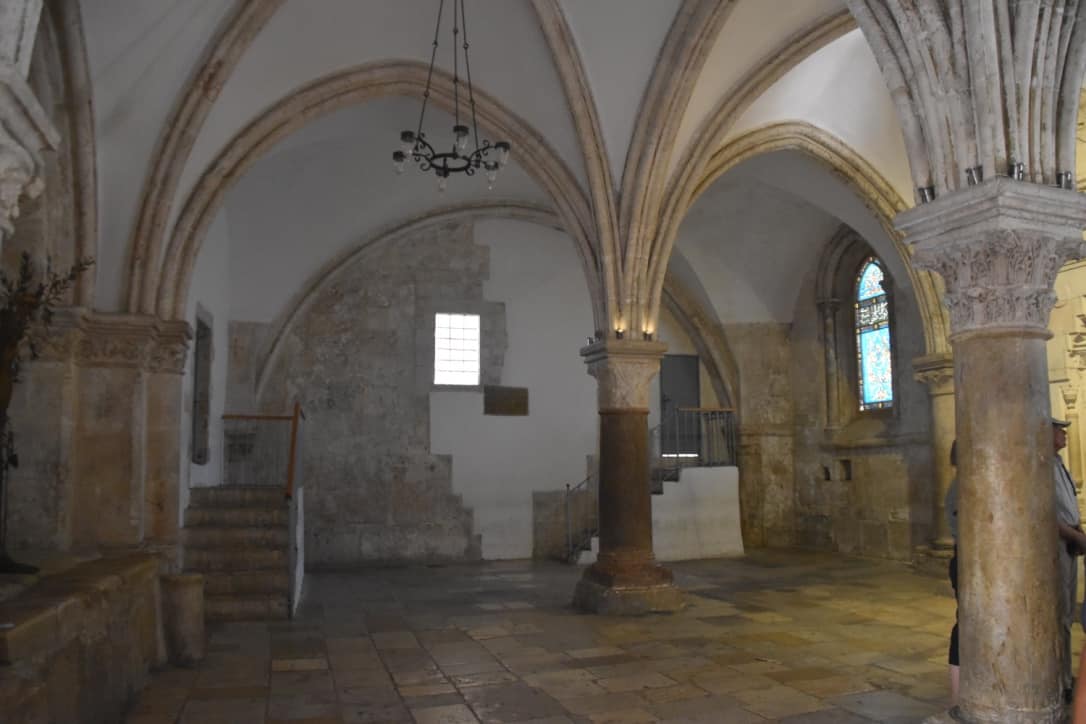
The Last Supper room. From there we climbed to the room where, by long tradition, Jesus and the apostles sat for the Last Supper. A sign beside it is honest about what it is: a hall built in the Middle Ages to mark the place where, as Christian tradition holds, Jesus shared the Passover meal with his disciples just before the crucifixion. That is the truth of much of the Old City; most of what stands here dates not to biblical times but to the Crusades, raised on the best understanding of where these things happened.
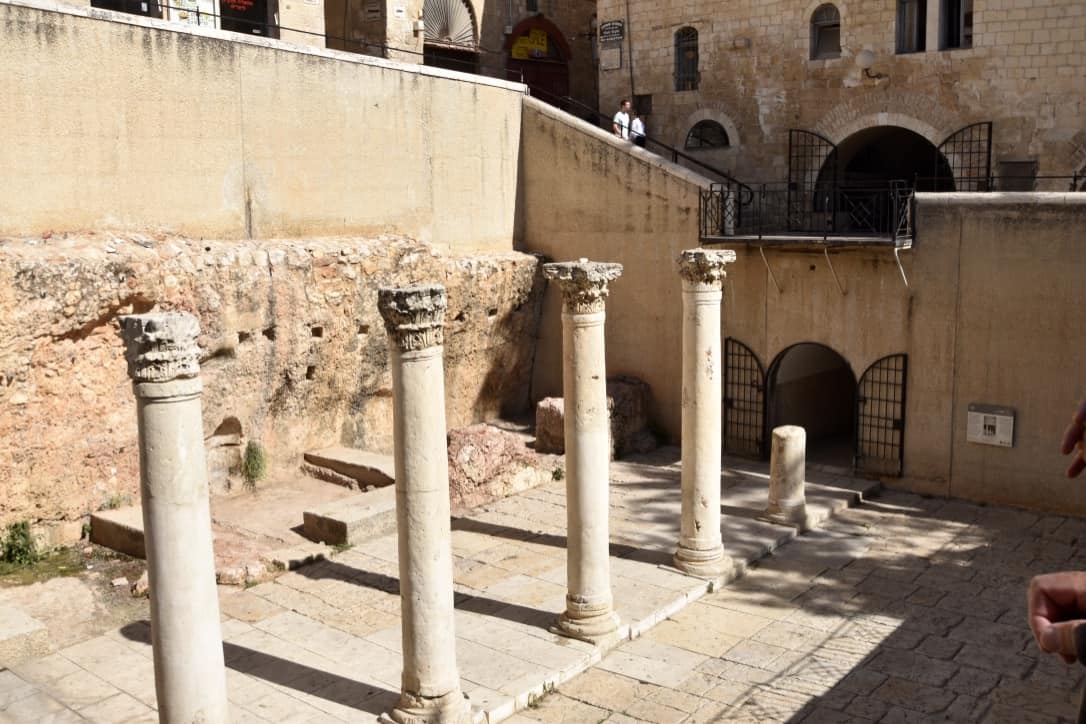
The Cardo. Walking out through the heart of the Old City, we came to the Cardo, an old Roman street that has been dug out and laid open. The Cardo was the main north-south road in Roman towns and camps. Around the corner stood the great Hurva Synagogue, built long ago in an Ottoman style that makes it look almost like a mosque. It has been destroyed more than once, last in the 1948 war; after Israel took the Old City in 1967, a plan was approved in 2000 to rebuild it as it had looked in the nineteenth century.
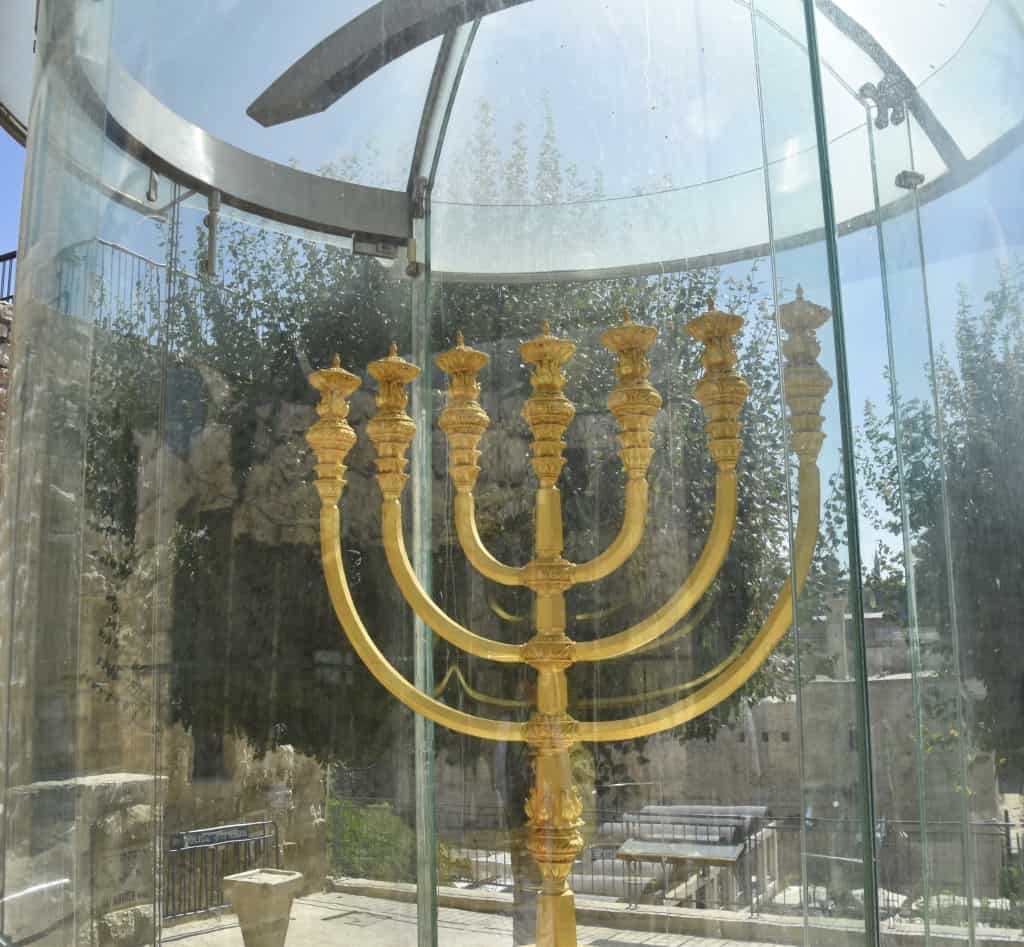
The golden menorah. We passed the golden menorah, forty-five kilograms of twenty-four-karat gold behind glass in the Jewish Quarter, set above the stairs that lead down to the Western Wall plaza and the Temple Mount. It was built through the gift of Vadim Rabinovitch, a leader of Ukraine's Jewish community.
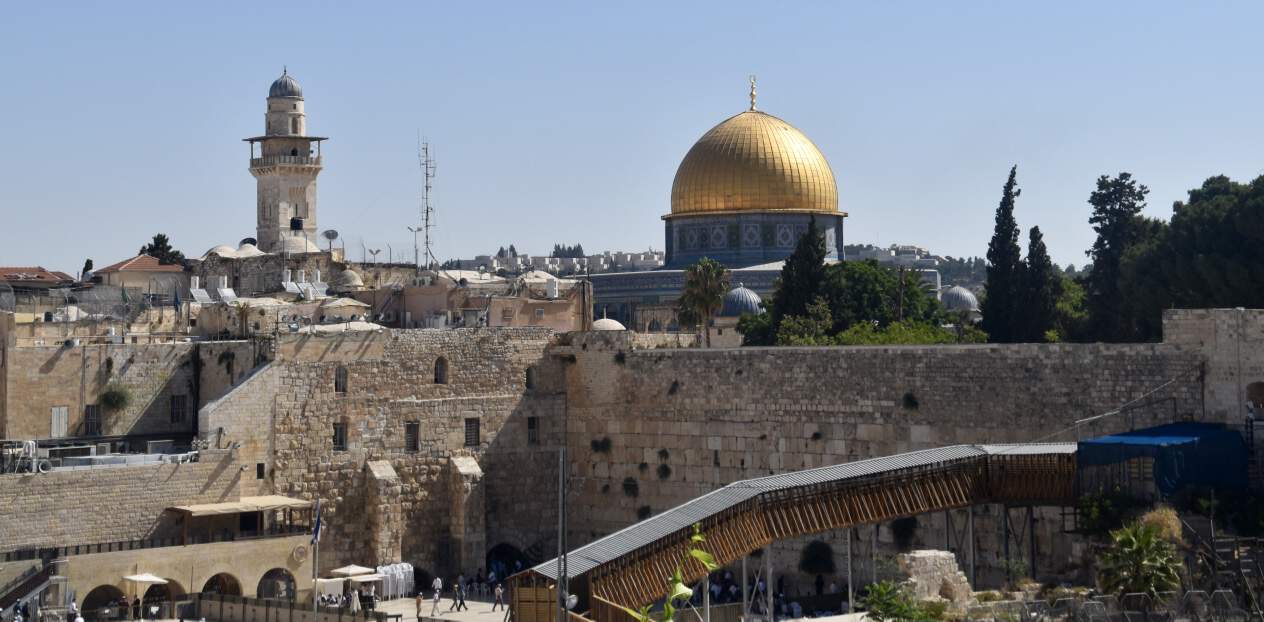
The Temple Mount. The views of the Temple Mount are stunning. The hill is one of the most revered places on earth, held holy for thousands of years by Jews, Christians, and Muslims alike. Three great structures stand on it today: the al-Aqsa Mosque, the Dome of the Rock, and the Dome of the Chain. It can be entered through eleven gates, ten for Muslims and one for everyone else, with Israeli police posted near each. After the Muslims came to Jerusalem in the seventh century, the Umayyad Caliph Abd al-Malik ordered the Dome of the Rock raised on the site of the old Temple, and it has stood there since the year 691. The al-Aqsa Mosque dates from about the same time.
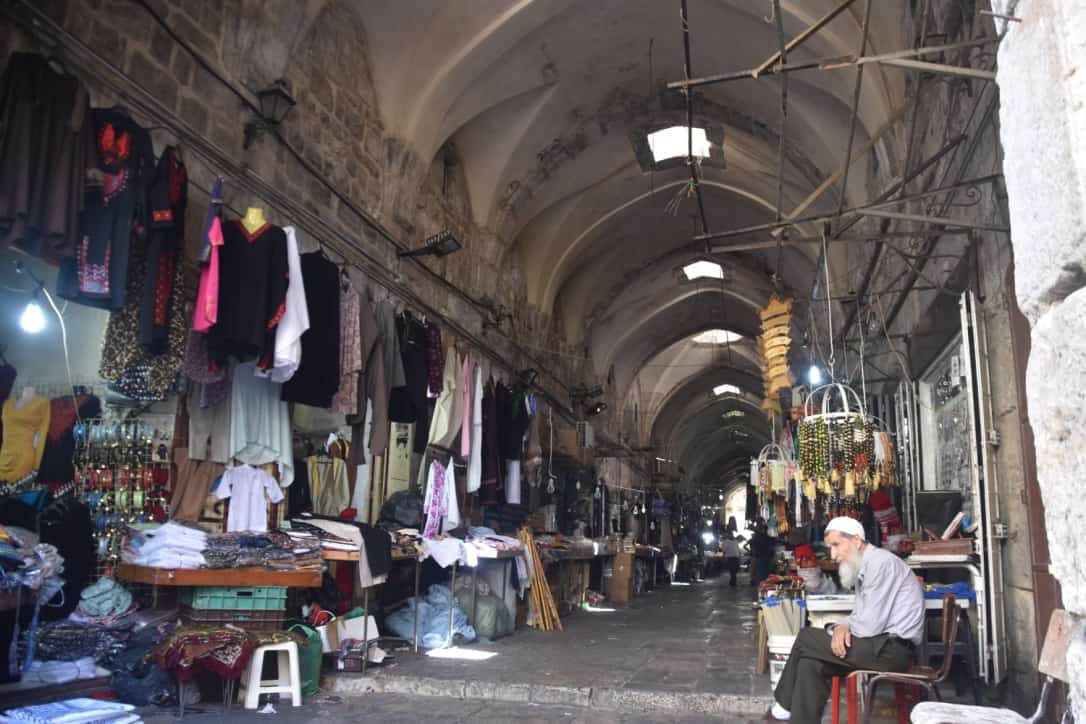
Our guide tried to walk us up the stairs at the end of the market to one of the gates, just to take a picture, but it was Ramadan, and we were turned back before we even reached the top step.
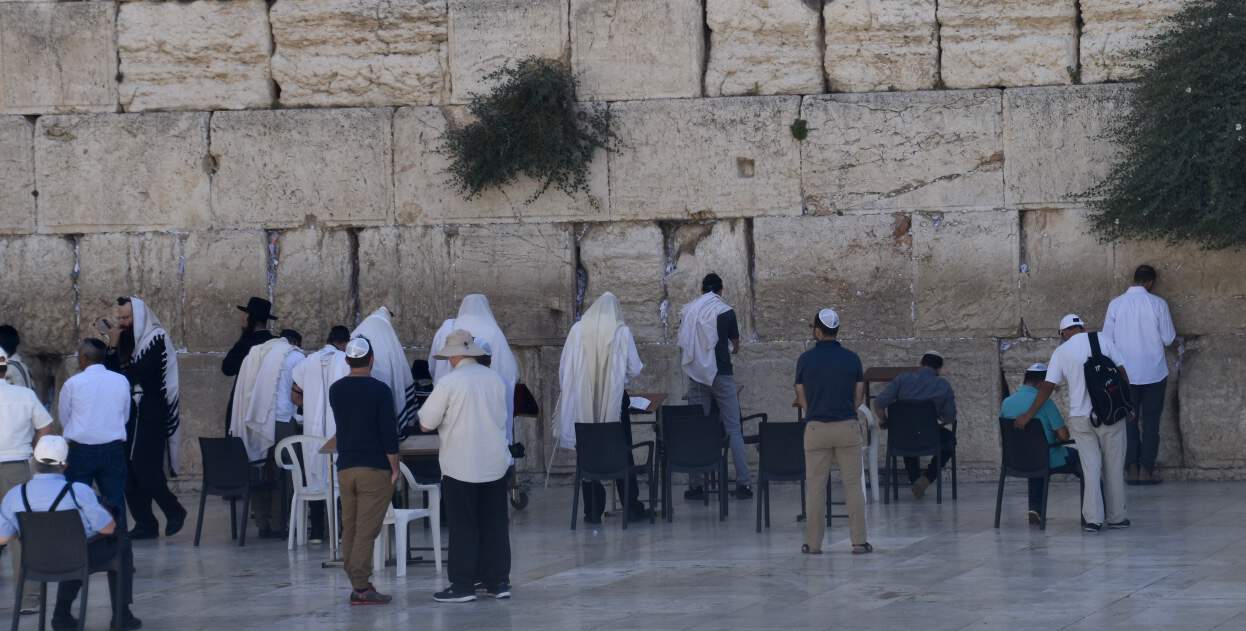
The Western Wall. We carried on down to the Western Wall Plaza, which was thick with people, visitors and locals alike, many of them praying. The plaza was opened up after the 1967 war to make room for the crowds. The Western Wall, the Kotel, is the holiest site in Judaism, the surviving stretch of the great retaining wall Herod raised around the Second Temple. Europeans long called it the Wailing Wall, for the centuries of Jews who came here to mourn the temple that was lost.
Toward the cross. We pressed on into the market in the Muslim Quarter to find the start of the Stations of the Cross.
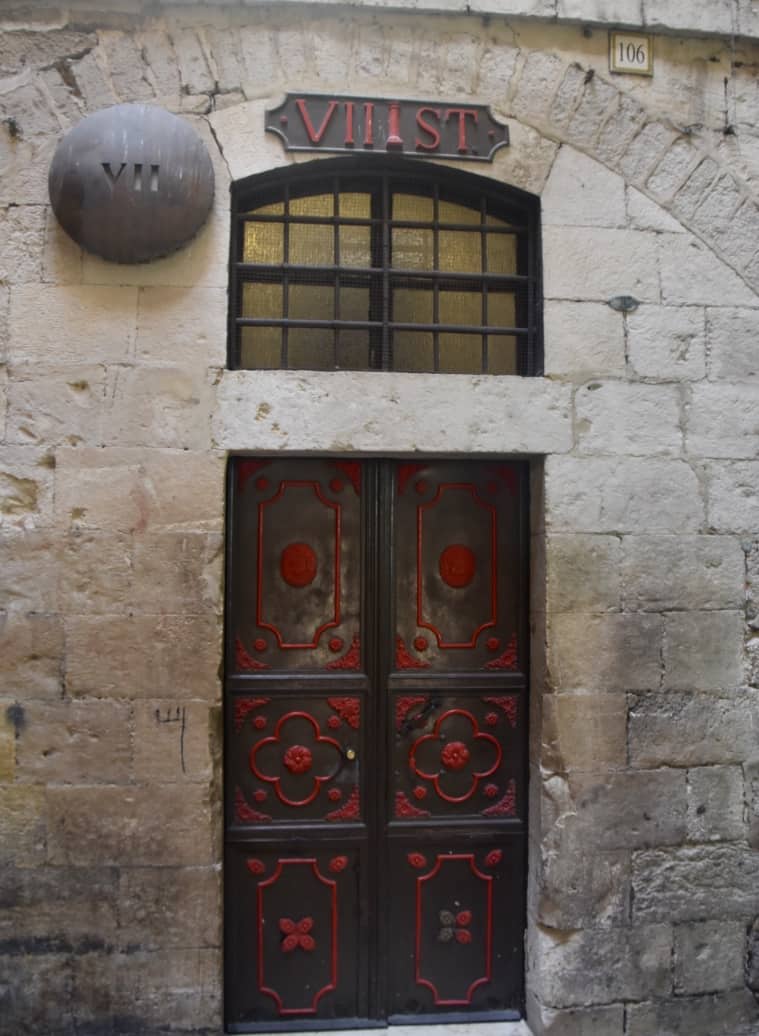
We had wanted to walk the Via Dolorosa, the Way of Suffering, the route many believe Jesus took as he carried his cross to the place of crucifixion. We picked it up at the third station, where he is said to have fallen the first time, and followed it on toward the end, each station marked along the way. It sends a chill down your back to walk it.
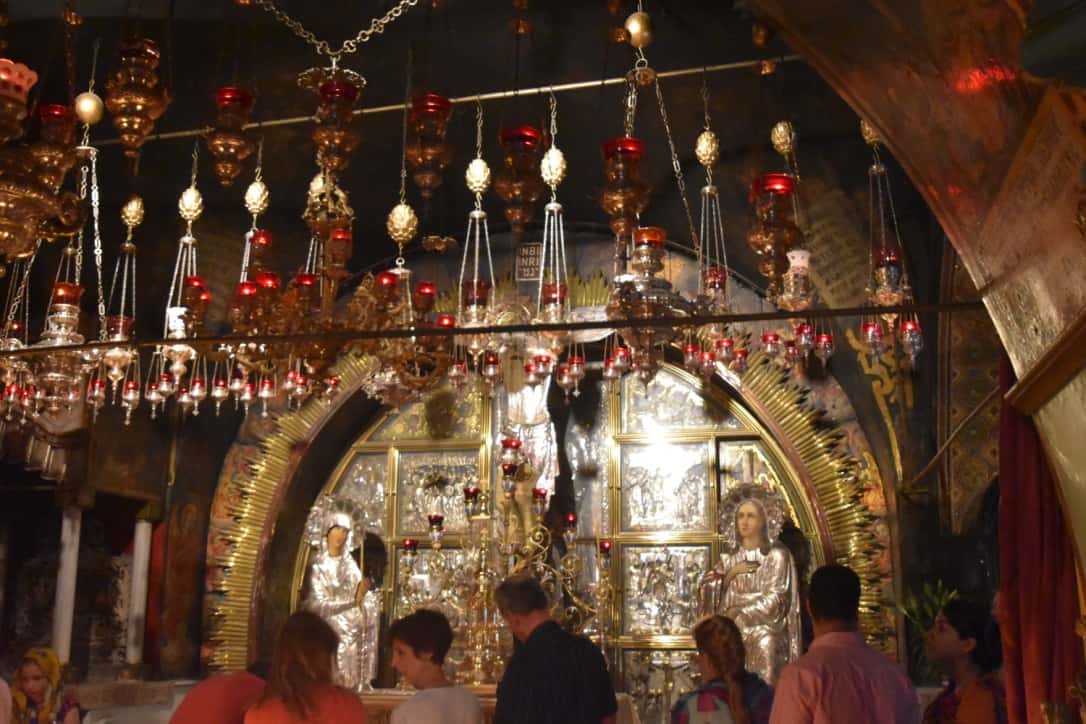
The Holy Sepulchre. The path ends at the Church of the Holy Sepulchre, which you enter by passing first through the Ethiopian and Coptic monasteries. Inside are three chapels, for the Catholic, Coptic, and Orthodox churches. There is none for Protestants, who hold that Jesus was not buried here but at the Garden Tomb, a rock-cut grave in a quiet garden outside the walls, north of the Damascus Gate. At the center of the church stands the tomb where, by tradition, Jesus was laid after the crucifixion; it was under restoration when we were there. For many years it was a Muslim family who held the keys and opened and closed the great doors each day, a peace-keeping arrangement born of old quarrels among the Christian sects, though that has changed in the last few years. It was, simply, a moving place to stand.
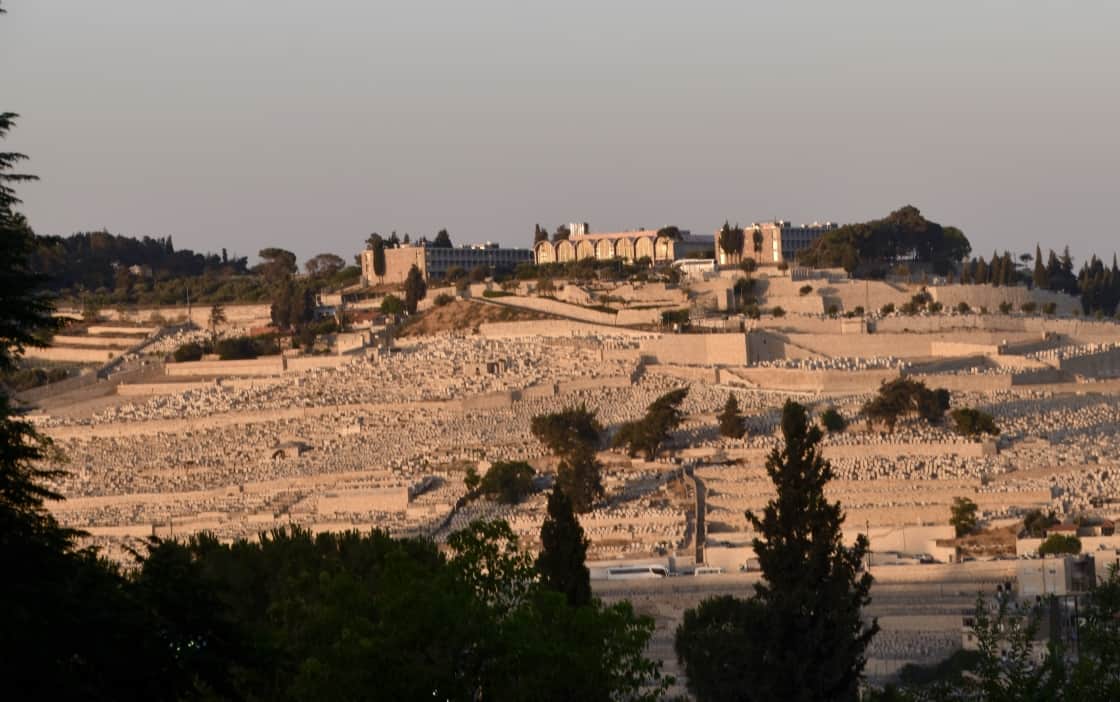
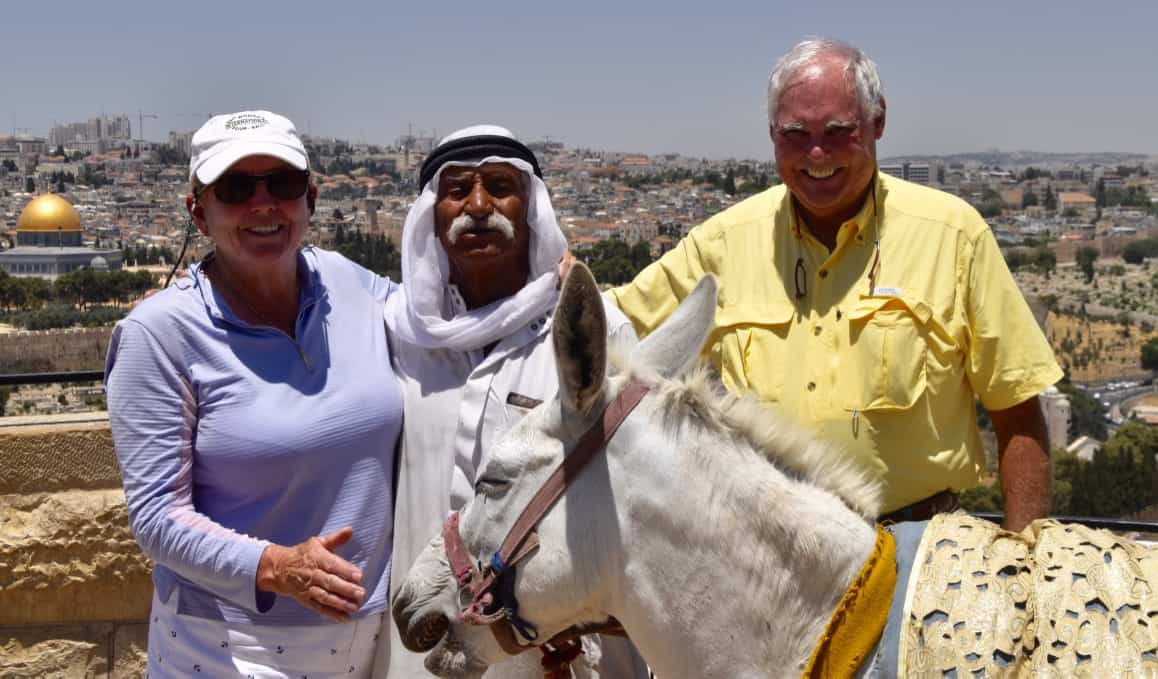
The Mount of Olives. From there our guide drove us up to the Mount of Olives, which is given over mostly to a vast Jewish cemetery. At the top we came on an old man and his donkey, near the end of his working day, and had our picture taken with the two of them. There is a line from the Book of Judges that came to mind, about those who ride on white donkeys and those who walk by the way.
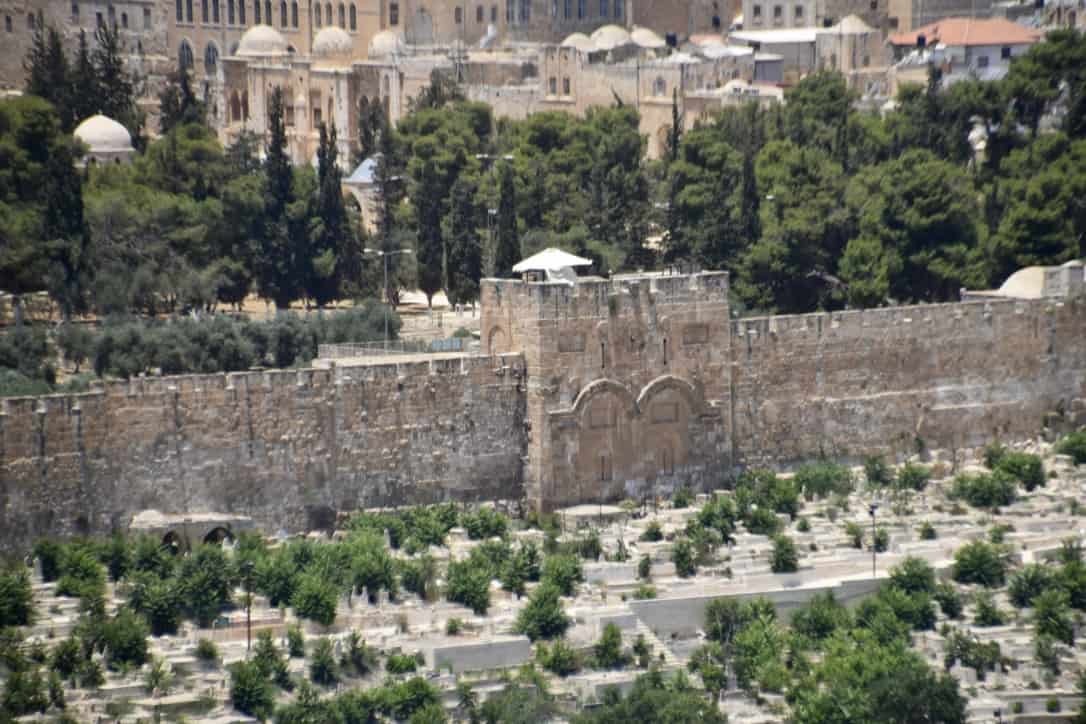
The Eastern Gate. From the Mount there are wide views across to the old city, and to one wall in particular, the one with the gate that has been sealed shut. This is the Eastern Gate, walled up by the Ottoman Turks back in the 1530s. As we understand the story, many believe it was closed to keep the Jewish Messiah from entering through it, as old prophecy foretold; the prophet Ezekiel had spoken, centuries before, of this gate being shut. The belief holds that one day the Messiah will come to the Mount of Olives and pass through the Eastern Gate into the Temple grounds. We make no claim to settle any of it. We only stood and looked, and felt the weight of how many people have looked at that same sealed gate and seen something different in it.
From the Mount of Olives our guide turned us toward Bethlehem, just across the line on the Palestinian side, and that is where the day, and the next post, takes up.