Dateline November 16, 2022, Haifa and the Suez Canal
We had been to Israel before, on an earlier journey through the country's deep history and holy places, but we had never looked around Haifa, so this stop was new ground.
Haifa. John's daughter-in-law Amanda had told us not to miss the Bahá'í Gardens and to see Rosh Hanikra. We boarded a tour bus, which we seldom do, and set off for the gardens, the great terraced slope on Mount Carmel that climbs to the golden-domed Shrine of the Báb. We had been looking forward to walking them, and arrived to find them closed; the tour company had not checked. Everyone was let down.
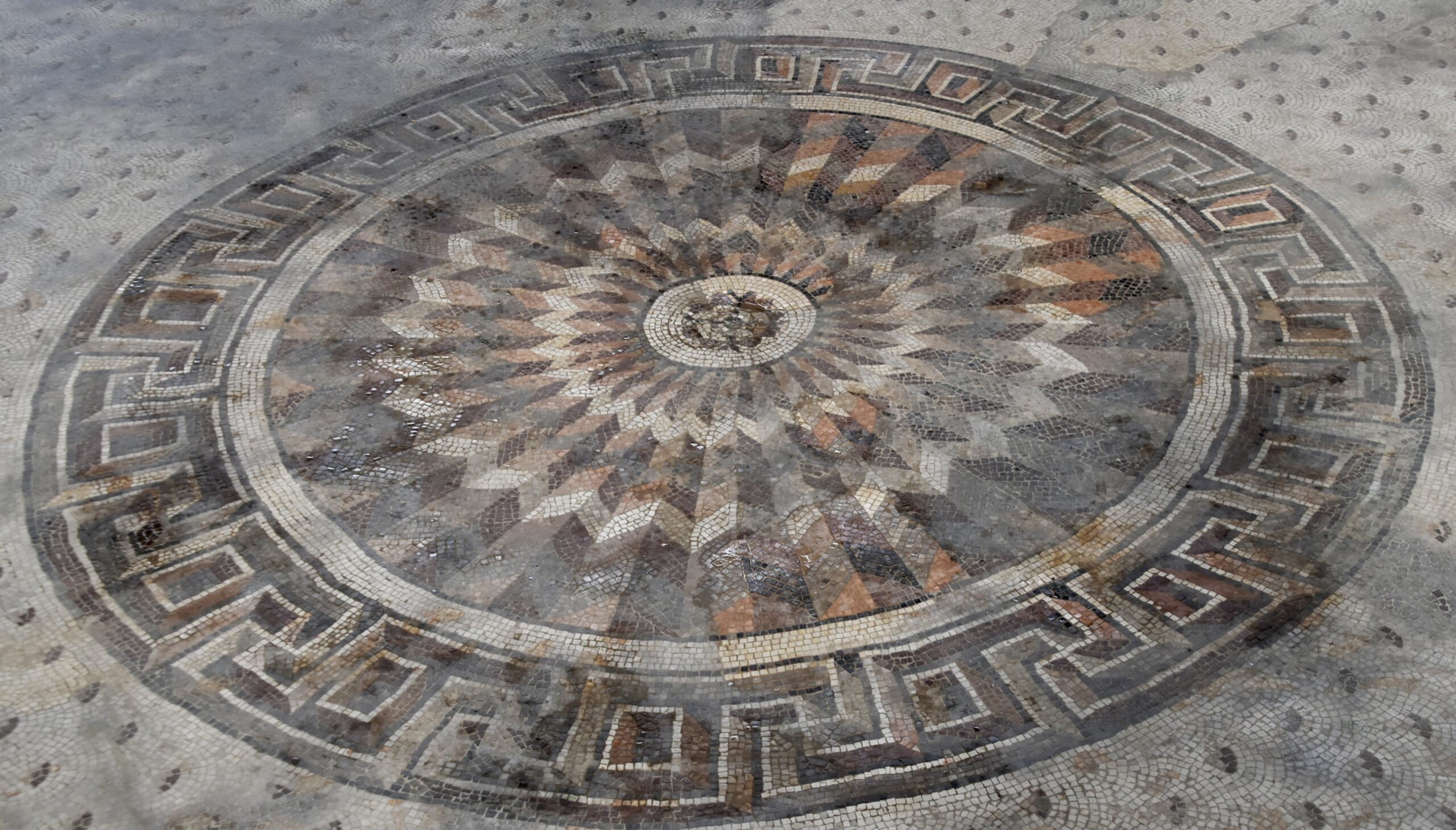
The mosaics at Shavei Tzion. Our guide made up for it by taking us to an old Byzantine church at Shavei Tzion, where beautiful mosaic floors had been uncovered. It is remarkable what the old craftsmen could do with small stones. The church was excavated in 1955, and the floors date it in two stages, the first to about the year 485, the second to the sixth century.
Rosh Hanikra. Then on to Rosh Hanikra, at the very northwest corner of Israel, hard on the Lebanese border. You ride down to it in what is billed as the world's steepest cable car, a sixty-degree drop toward a cluster of sea grottos.
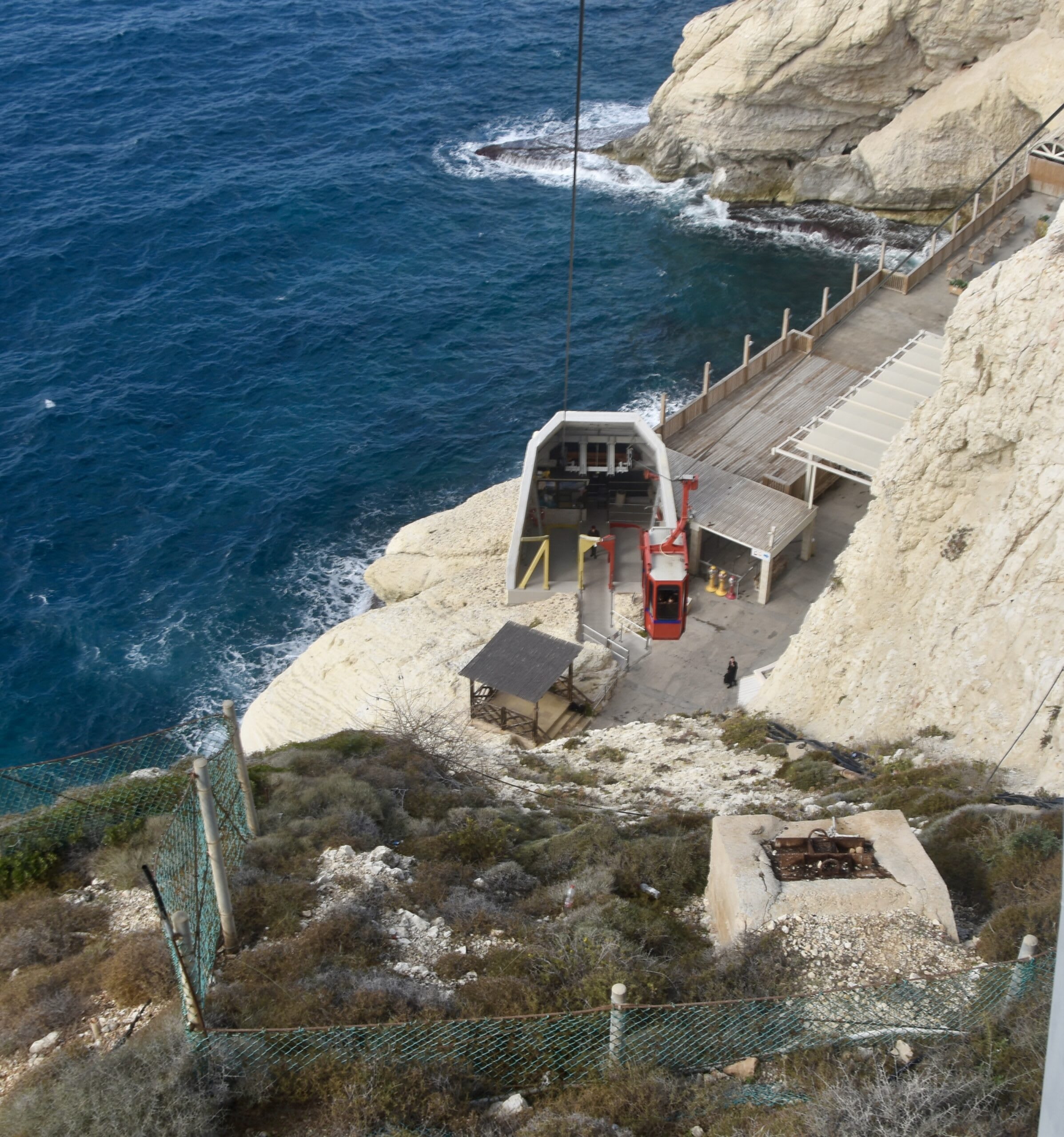
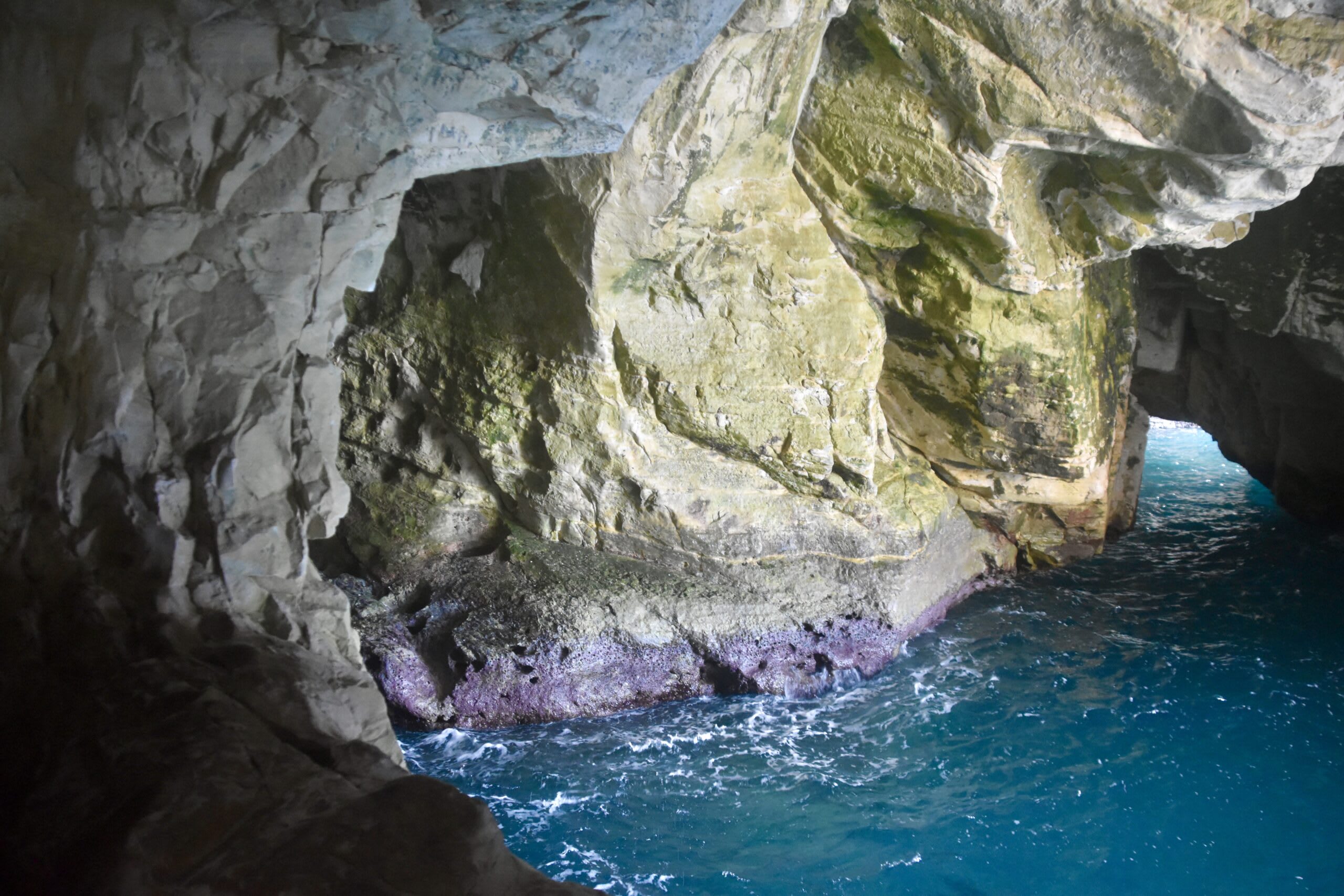
We walked the tunnels among the grottos, where the Mediterranean has hollowed the soft white rock into caverns. Up top the views over the sea were lovely, and sobering, for this is the Lebanese border, with ships watching the water between the two countries and a gate where, behind a blinded door, a soldier stands. It is hard to picture that kind of border from home.
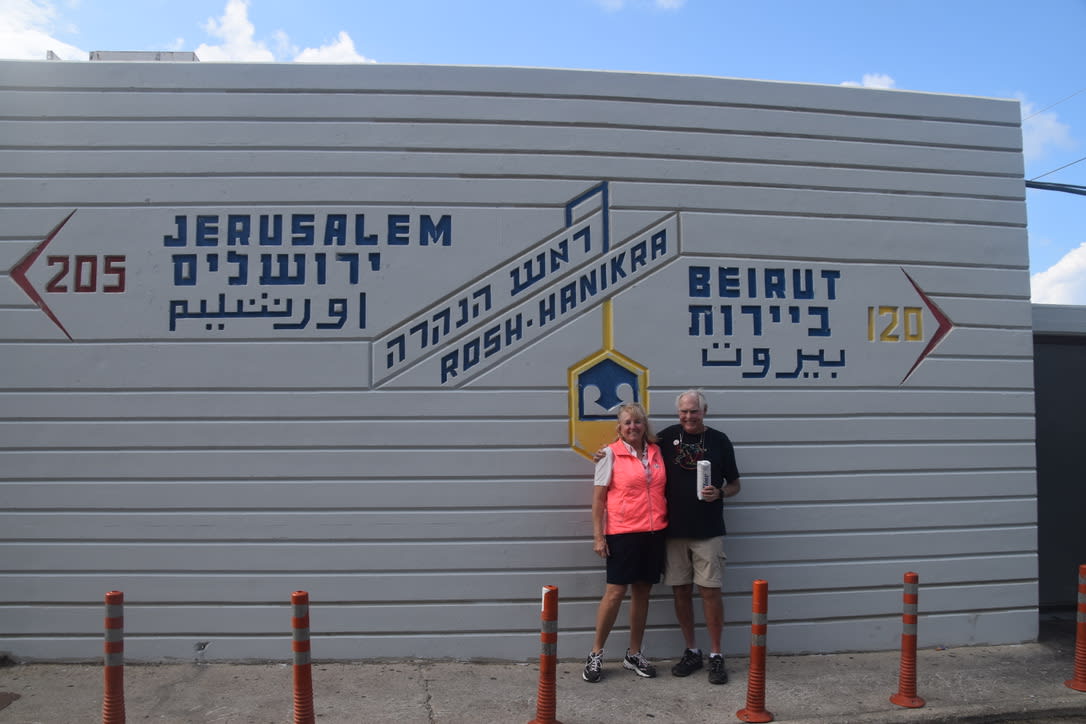
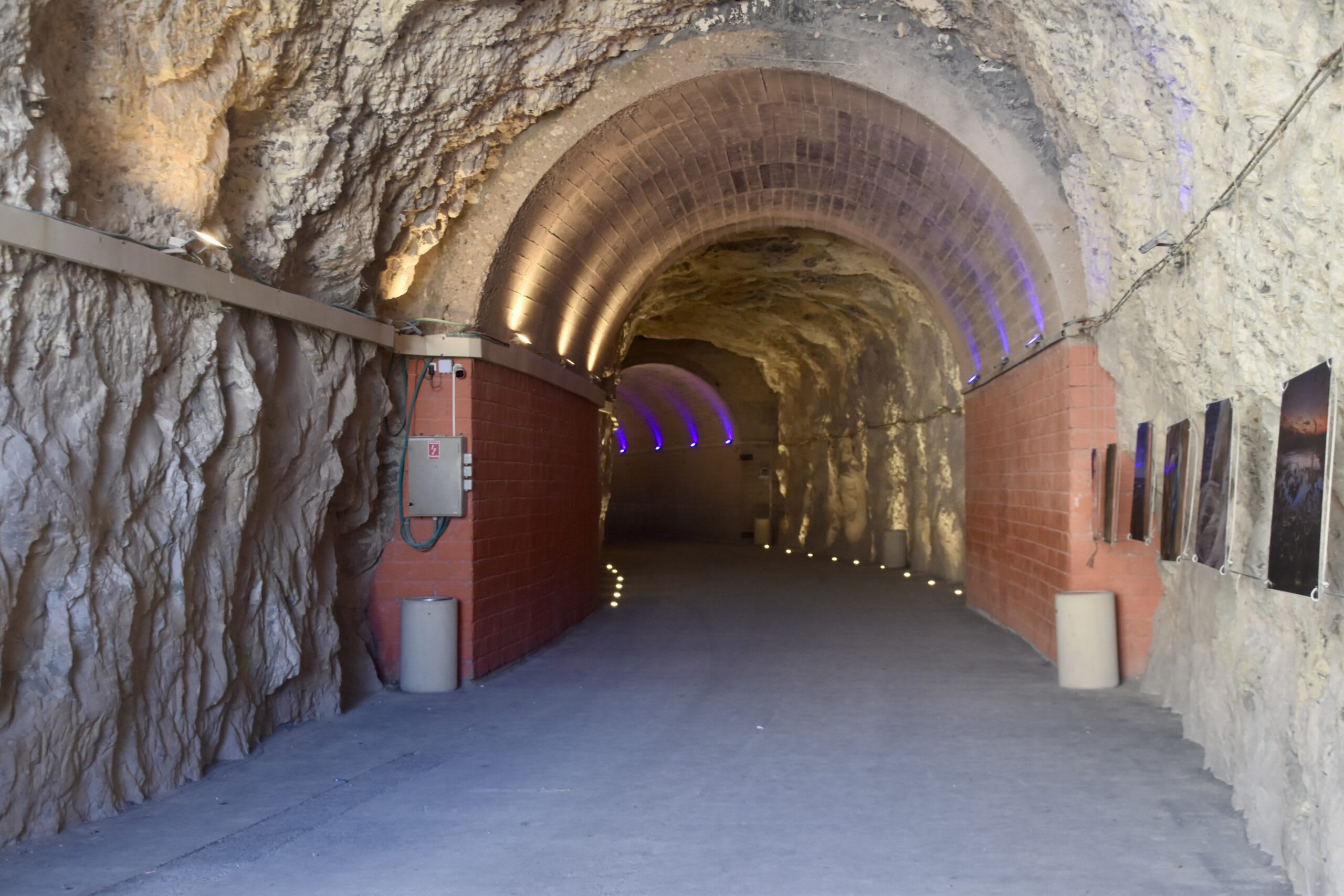
The railway tunnels. The grottos connect to old railway tunnels with a history of their own. In the Second World War, South African engineers blasted tunnels through the Rosh Hanikra cliffs and the British built a bridge here, part of a wartime coastal rail line running from Haifa up to Beirut and on toward Egypt. The line carried troops and supplies, and other passengers besides. In February 1948, as the British prepared to leave and the State of Israel was about to be born, Jewish fighters blew the railway bridge to keep Lebanese arms from reaching Arab forces. The line was too costly to rebuild, and the tunnels were sealed for good.
John's leg. We had meant to take the train into Jerusalem the next morning, but John's leg, skinned back in Wadi Rum, had gone from bad to worse, and walking hurt. The ship's doctor confirmed it was infected, gave us antibiotics and a cream and bandages, and told John to stay off it. So we kept to the ship. We had had our days in Jerusalem on an earlier trip, in 2016, and we held those memories close. The leg was mending by the time we sailed on.
Into the Suez Canal. From Israel we made for Egypt and the Suez Canal, entering at its northern end at Port Said. The schedule had us pausing an hour there before going in, but Janice was up at half past three to watch us slip in, winding between the buoys and then straightening into the canal, the Port Fouad Mosque lit on the far bank.
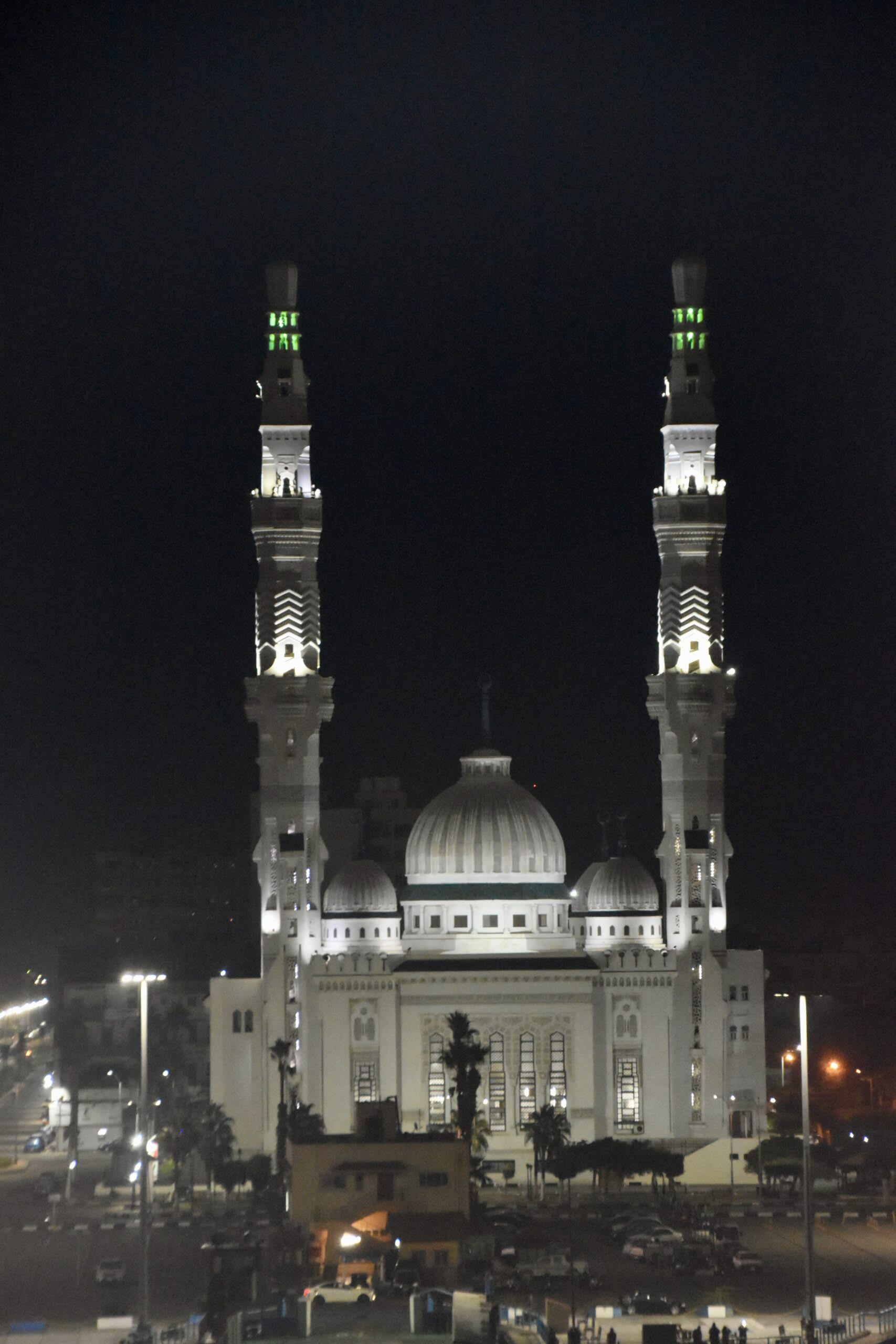
A pilot boat came alongside, and an electrician's launch, and two men climbed aboard; we never did learn why, but the ship moved steadily on. The canal opened in 1869 as a one-way passage, ships taking turns north and south; a major widening in 2015 added a long parallel channel and deepened the old one, so that part of it now runs both ways and takes bigger vessels.
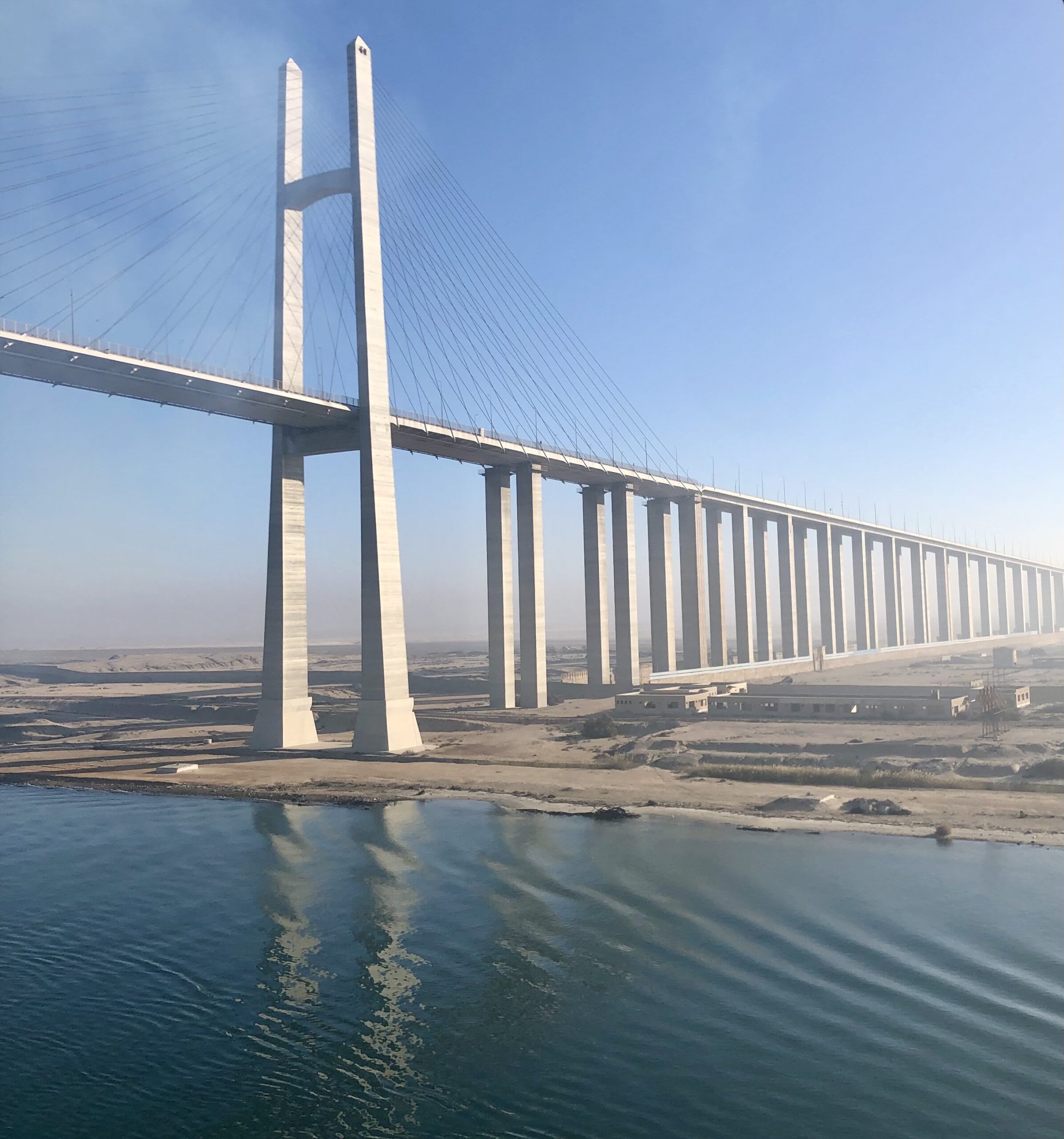
The bridge to Sinai. Partway down we passed beneath the great Suez Canal Bridge, the Egyptian-Japanese Friendship Bridge, which carries the road from mainland Egypt across to the Sinai Peninsula and joins, in its way, Africa to Asia. The Sinai has a hard name for danger, and passing under the bridge was as near to it as we cared to come, but the span itself was magnificent.
It was a long day's sail down the waterway, past memorials and new construction, among them the monument the canal authority raised in 2017 to mark the new channel. Between this and the Panama, we have now sailed the two most famous canals in the world.
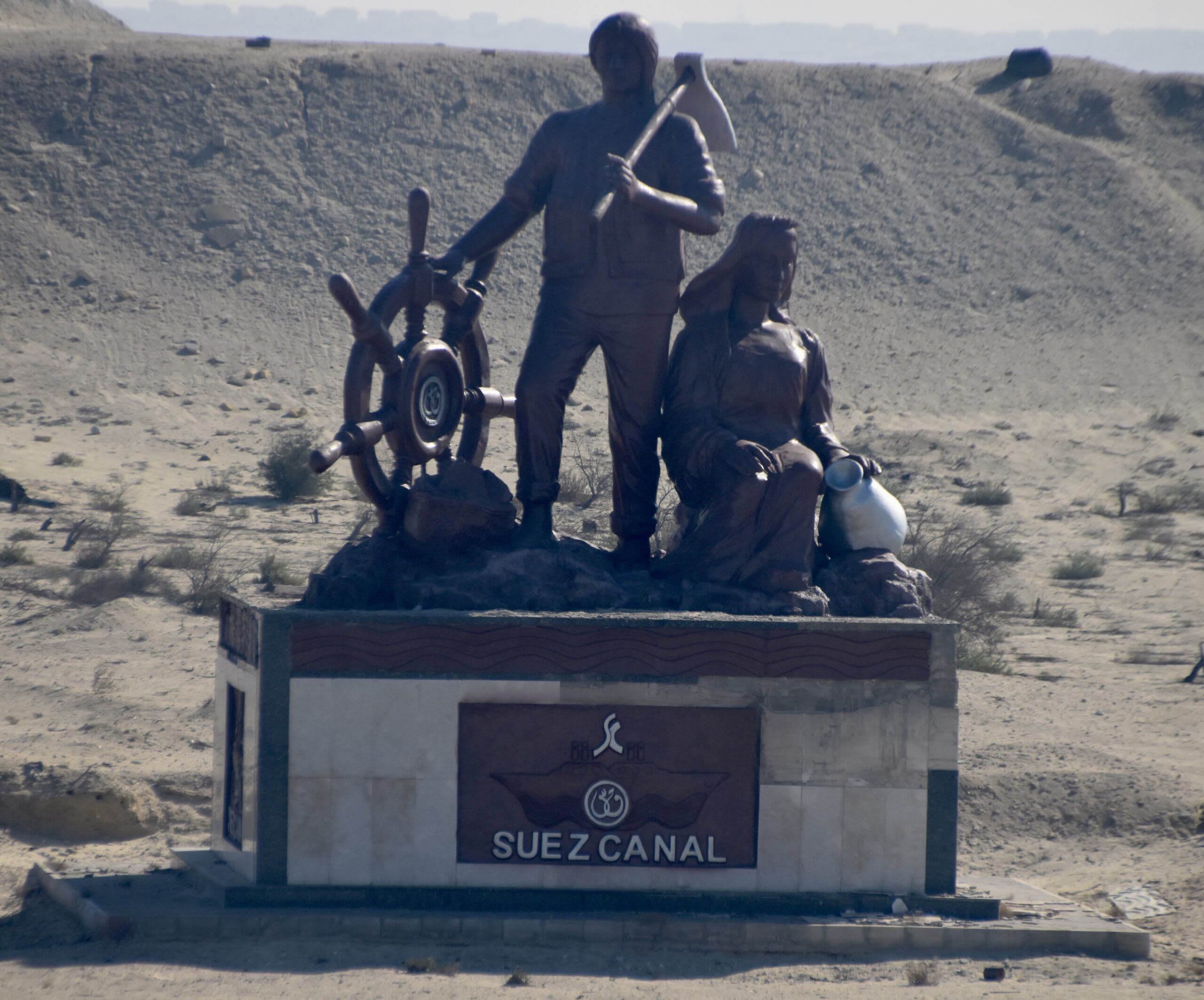
With Egypt's great canal behind us, we turned south down the Red Sea, bound for Safaga and a day we had been longing for, Luxor.