Dateline June 25, 2016, Istanbul and the End of Ten Weeks
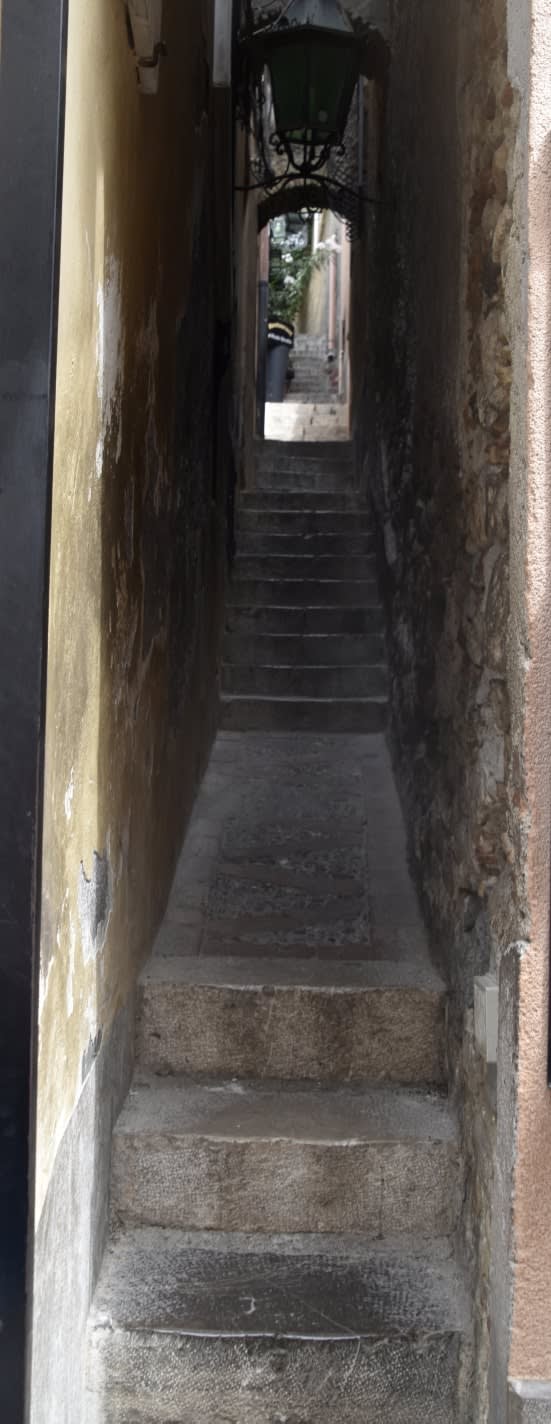
After a day at sea we came ashore in Taormina, Sicily, a place we had always wanted to see. We set off with Gordon and Karen to walk the streets, past one beautiful shop after another, and past the narrowest street in the world, or at least in Italy, the Vicolo Stretto. Pretty cool.
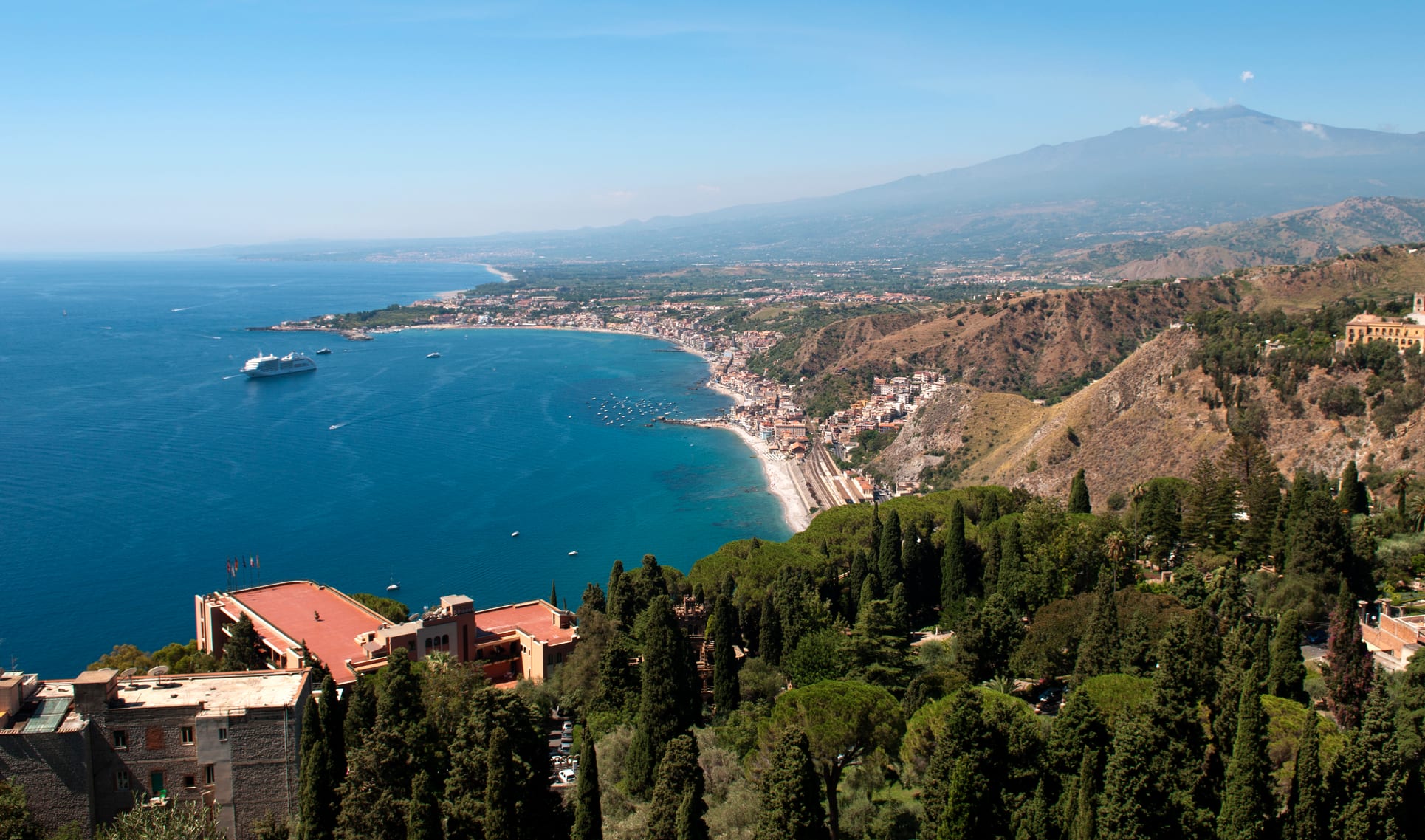
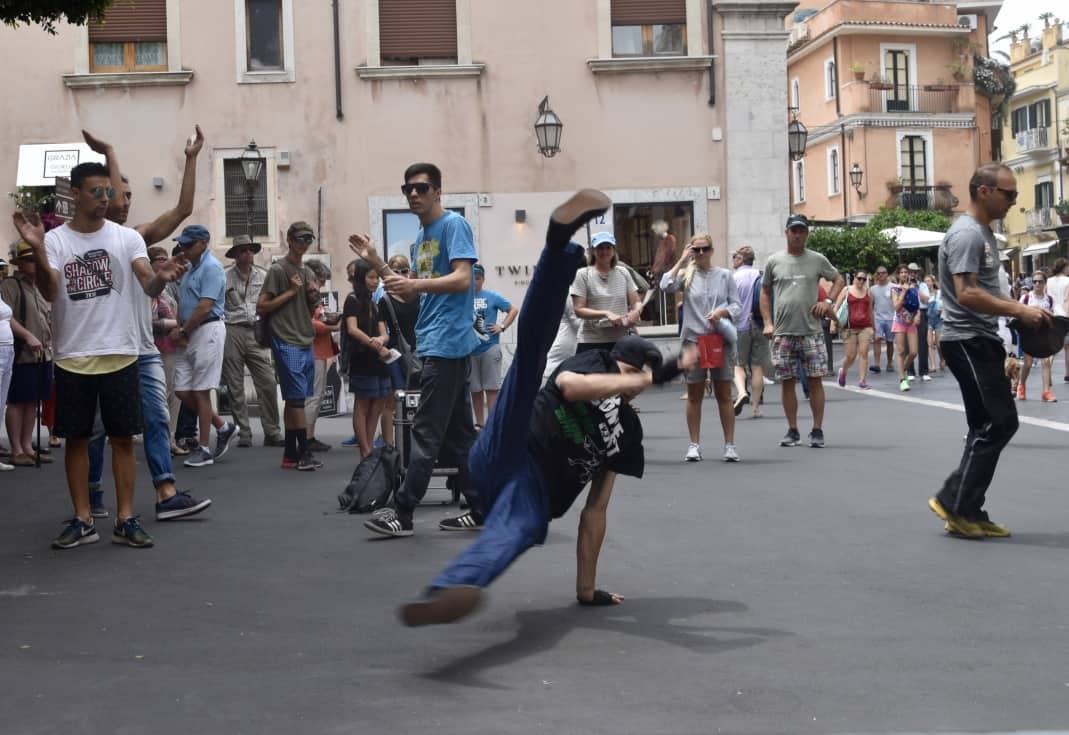
We poked into a good many shops, bought nothing, and then it was time for lunch. We found a corner pizza place and settled in with pizza and wine while local musicians played and children danced for the tourists. It was a wonderful afternoon on a beautiful day.
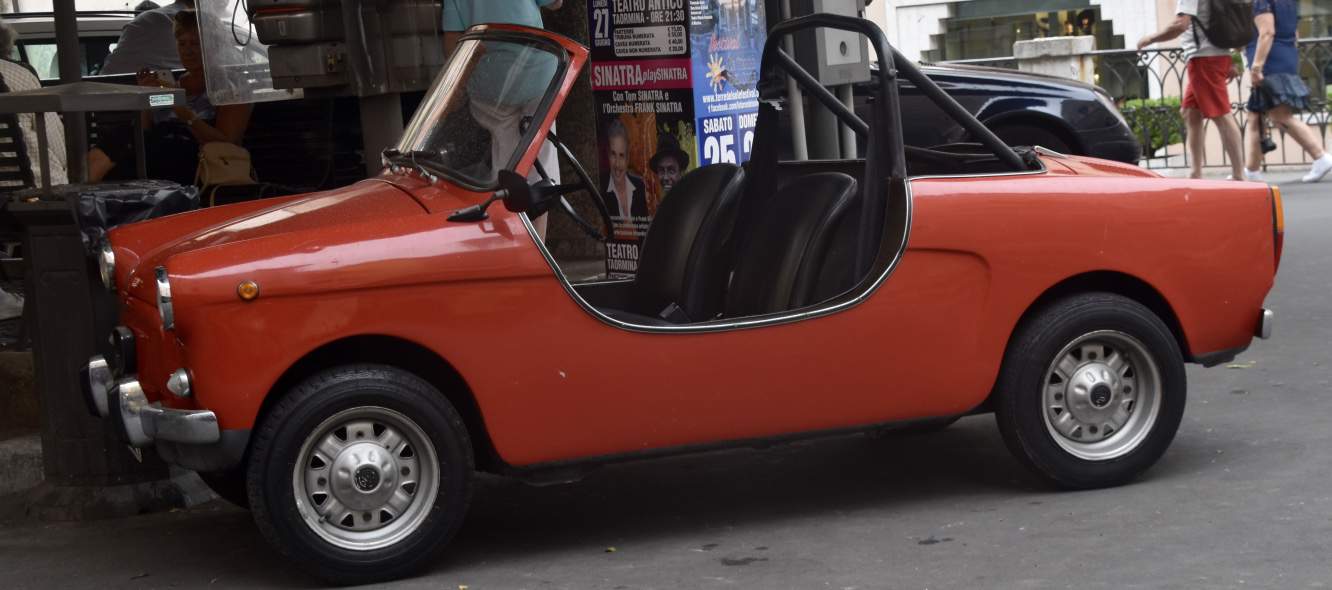
As we sat there, a local businessman pulled up in a tiny red car, about the size you need for these narrow roads, though not for the Vicolo Stretto. We had a fine day on our feet and an excellent lunch, and then headed back to the ship. The cruise was bound for the port near Rome, our last call and the end of the line.
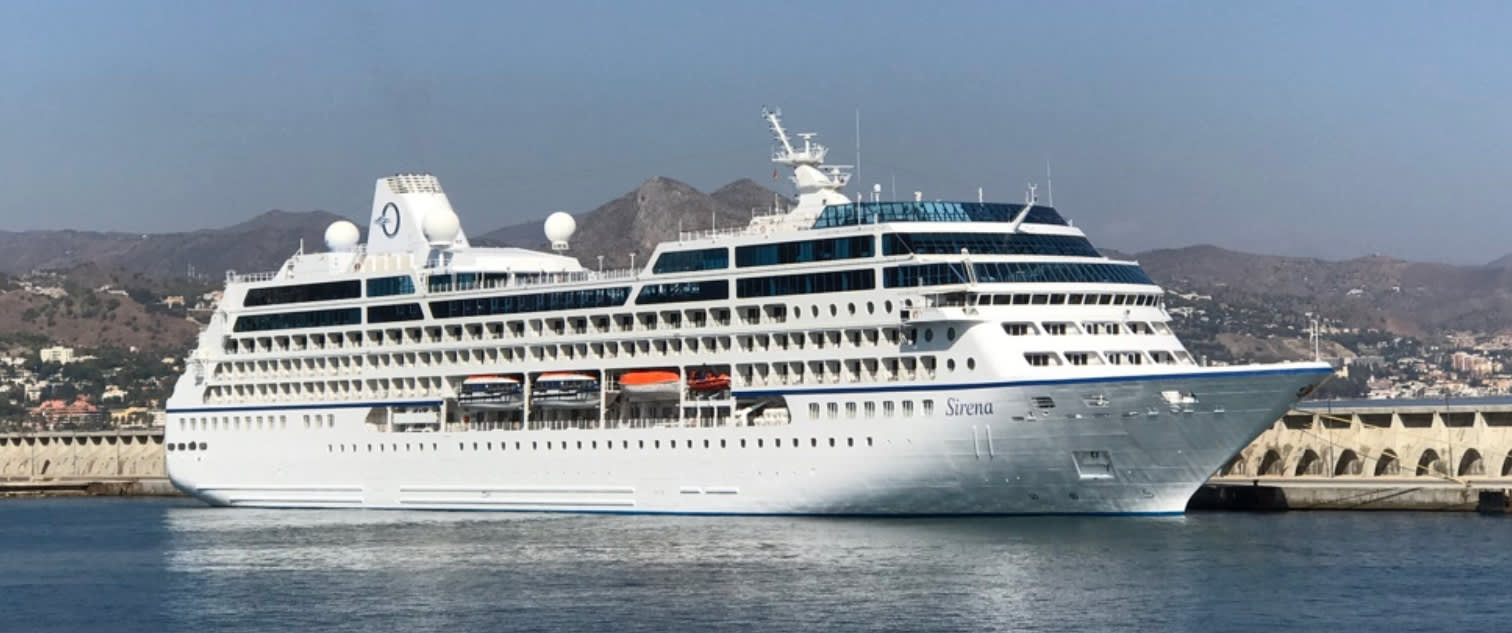
The farewell. We met Gordon and Karen for the final dinner aboard and lingered afterward in the little piano bar in the ship's lounge. In the morning, with the ship in at the port outside Rome, we ran into the friends we had made over the past two weeks and said our goodbyes. Gordon and Karen arranged a car service, and the four of us rode together to the Rome airport.
We have to say a proper word about Gordon and Karen. They are two of the finest people we have ever had the good fortune to know, and they are the real souvenir of this cruise. They are engaged, and we hope to be there when they marry. We have promised to visit them in Arizona, and they have promised to come see us in Florida, and we mean to hold each other to it. Our thanks to them for turning a cruise into a friendship.
Our flights home had been booked out of Istanbul all along, since the cruise was first meant to end there, so from Rome we simply bought tickets to Istanbul and carried on to our last stop.
Istanbul. We landed at the Istanbul airport around 2:30 and a driver took us through a maze of narrow streets to the Blue Istanbul, a small neighborhood hotel on the historic peninsula, the heart of the old city. They met us at the door and helped us up to our room, then told us we had about forty-five minutes before the Grand Bazaar closed for the night, and that it would not open again the next day, a Sunday.
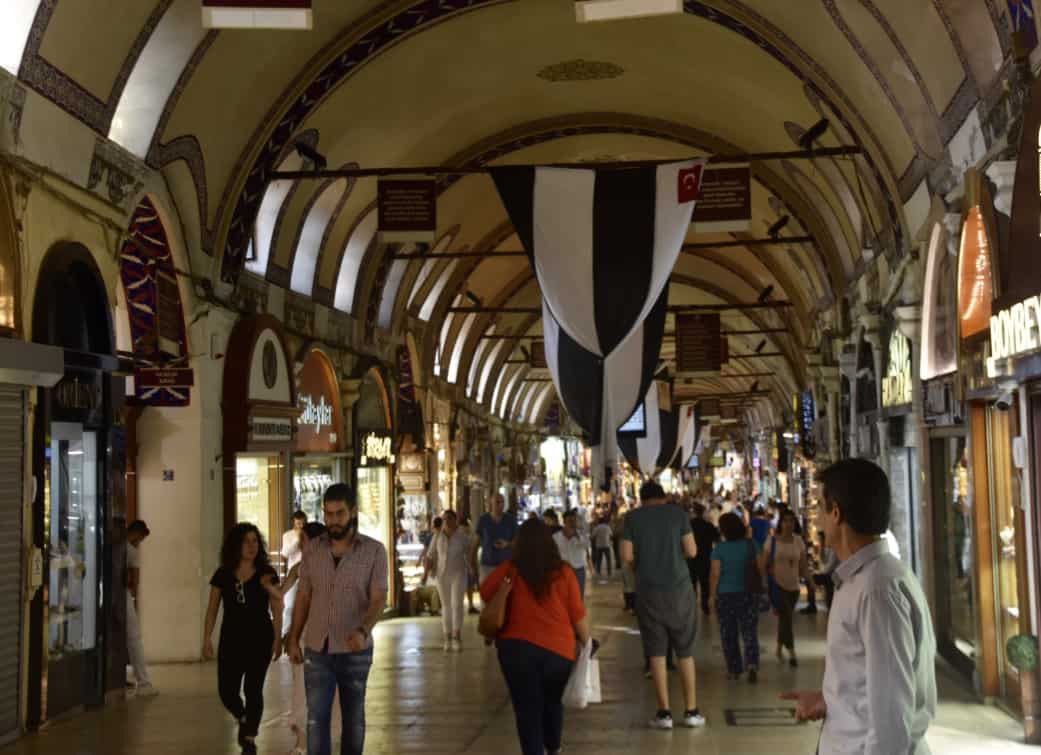
The Grand Bazaar. We dropped our bags and ran. With maybe twenty minutes before closing, we rushed through a few of the aisles, just enough to see how enormous it is, before they began shutting it down and we headed back toward the hotel.
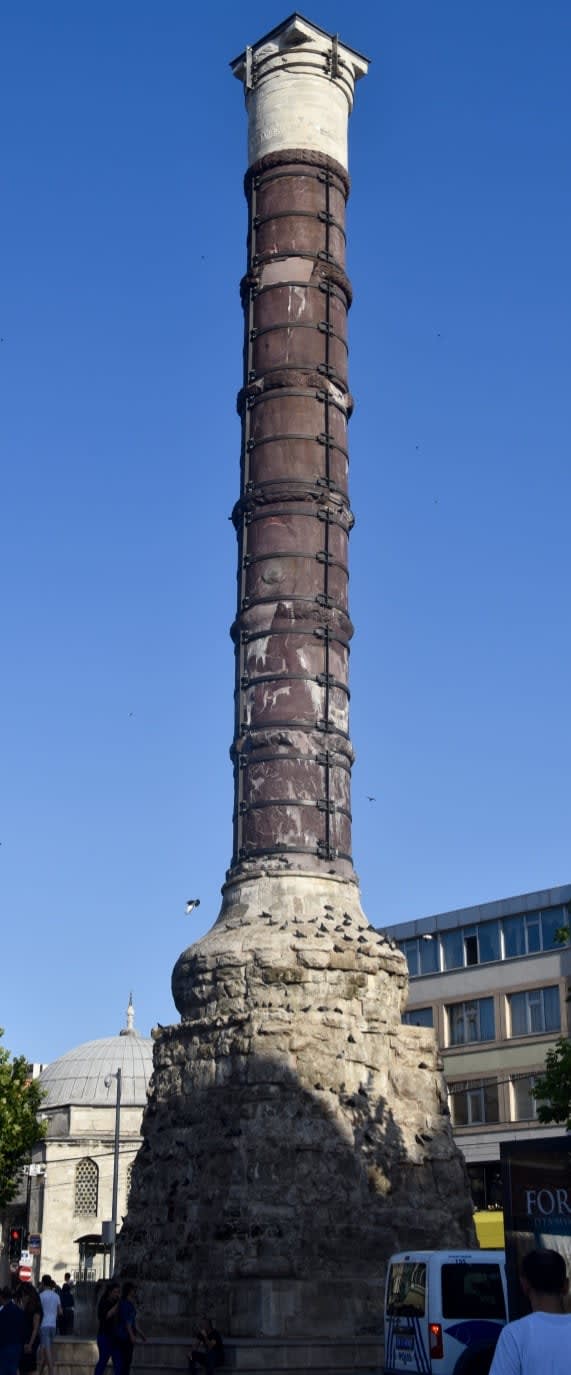
On the way we passed the Constantine Column, raised in 330 AD when the city was dedicated as the new capital of the Roman Empire. It once stood at the center of the Forum of Constantine, topped by a statue of Constantine in the guise of the sun god, and it was taller then than it is now. People also call it the Burnt Column. It was restored between 1955 and 1975.
The hotel pointed us to a good restaurant just up the street, so we went out around 8. It was Ramadan, and the local people fast until sundown, near 8:30, so we arrived just ahead of the crowds. The food was wonderful, Janice with lamb kebabs and John with the Istanbul kebabs. No alcohol is served, so we had water, apple tea, and, at the end, Turkish black tea. A lovely dinner.
A Muslim country. This was our first time in a Muslim country, and the call to prayer was new to us, strange and interesting both, sounded five times a day. There are something like five hundred mosques in Istanbul, each broadcasting the call over loudspeakers, and twice in the night, at 11 and again at 3:30, it woke us for ten minutes or so. We had no idea what was being said. It made us wonder what it must be to grow up with that as the heartbeat of every single day. In general people were very kind, though a few looked at us sideways, perhaps for our shorts, perhaps for eating in the daylight while everyone else was fasting. Most of the women wore long dresses or pants and always a headscarf, and the men wore long pants, no shorts.
We did some reading to understand a thing that struck us while we were there. Istanbul was once Constantinople, and for more than a thousand years it was one of the great capitals of the Christian world, alongside Rome, Alexandria, Antioch, and Jerusalem. Hagia Sophia, just up the way from the Blue Mosque, was the largest church on earth and the seat of Eastern Christianity until the city fell to the Ottomans in 1453, after which it was turned into a mosque. Under the Ottomans, Christians lived as dhimmi, a tolerated but second-class people, taxed for their faith and, in the earlier centuries, subject to a levy that took Christian boys into the sultan's service; over time many converted. As recently as 1914, Christians were perhaps a quarter of the population of this land. What reduced them to a fraction of a percent came in the last century: the Armenian, Greek, and Assyrian genocides during and after the First World War, the forced population exchange with Greece in 1923, a wartime tax aimed at non-Muslims, and the 1955 riots against Christians in this very city. Today Christians are about two-tenths of one percent of Turkey. It is a sobering thing to stand in the old Christian capital of the East and see how completely that has turned.
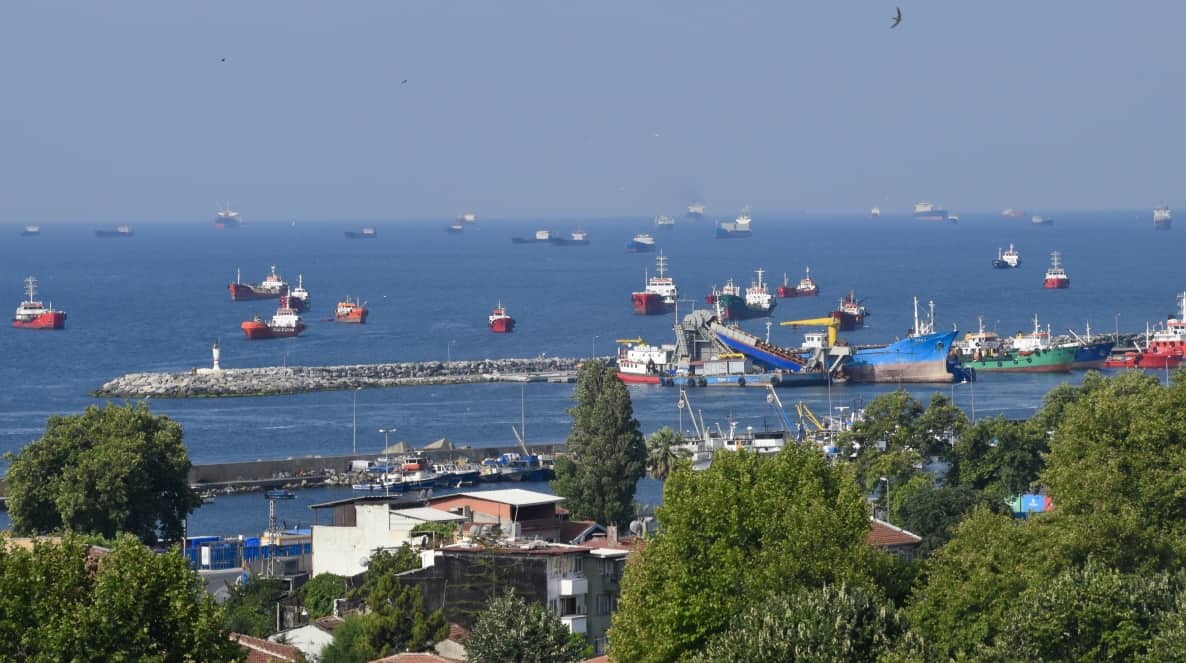
The Blue Mosque. In the morning our windows looked out toward the port, where fifty to a hundred ships lay waiting; we asked, and were told they all sit there waiting on clearance, which can take a long while.
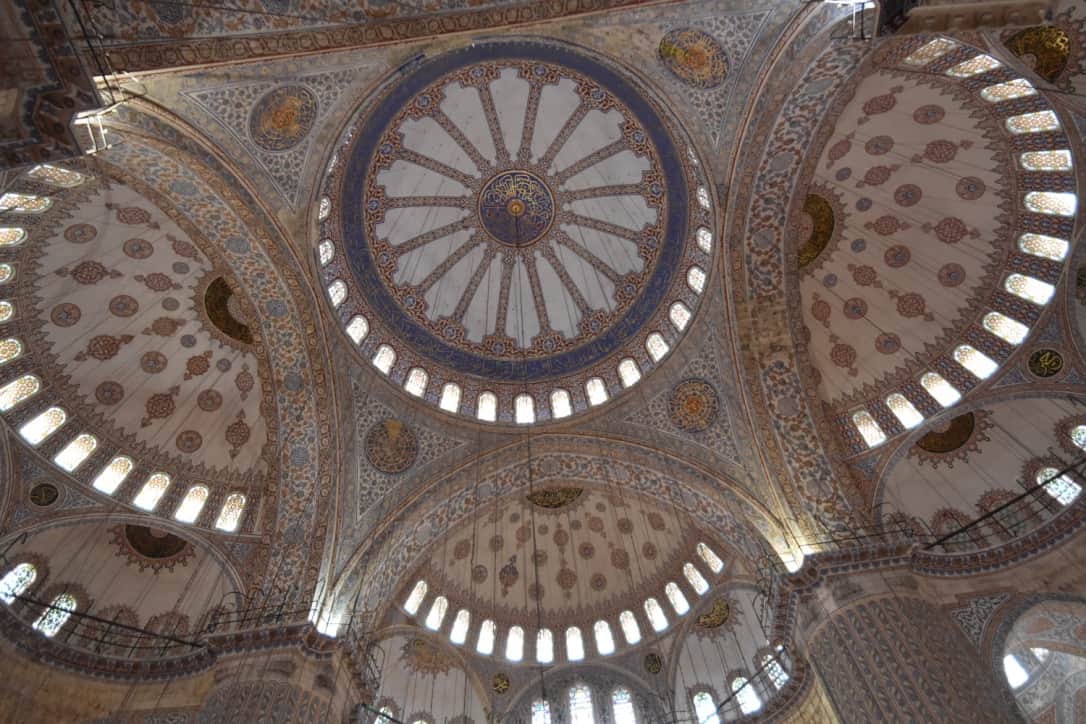
After a good breakfast of meats and cheeses and an egg pie, we walked to the Blue Mosque. Properly it is the Sultan Ahmed Mosque, built between 1609 and 1616 under Ahmed I. The tourists named it for the blue tiles that line the ceiling inside, and the name stuck because it is easier to say. Like many mosques it holds the tomb of its founder, along with a religious school and a hospice, and it has been open to the public since the middle of the last century.
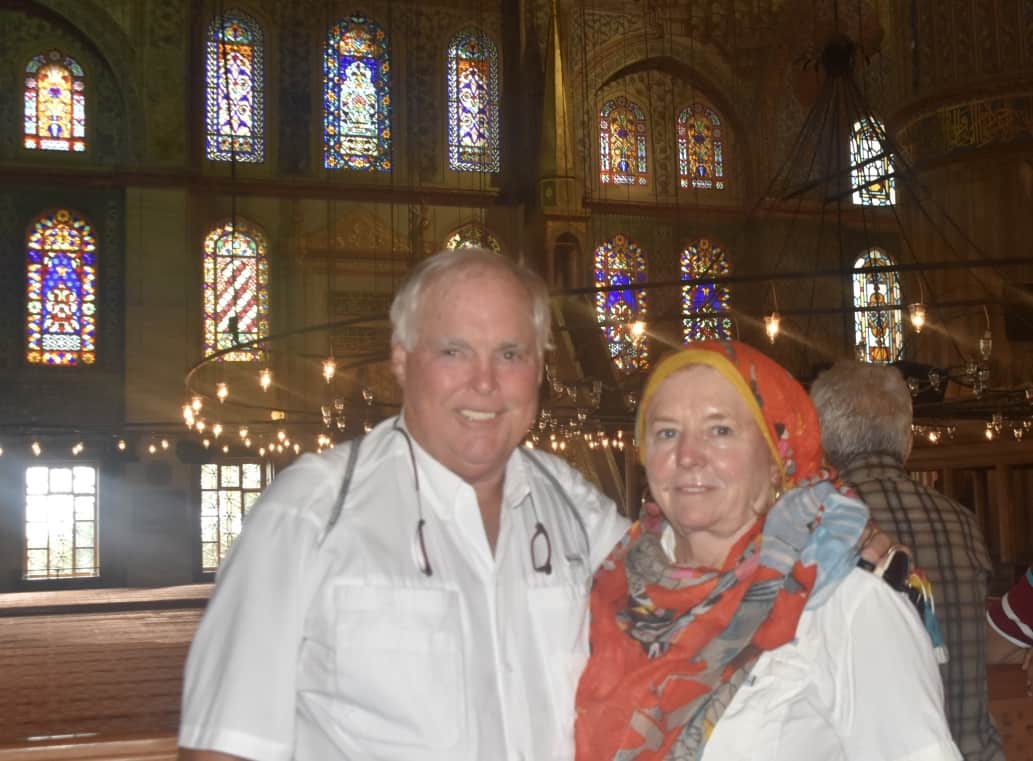
They let us in for a short while just before the next prayer. We had come dressed properly, John in long pants and Janice with a scarf; for those who had not, they lend skirts and scarves at the door, free of charge, and everyone takes off their shoes before going in. It felt like a real privilege, since the mosques in Jerusalem had been closed to non-believers, as many are around the world, and all the more so during Ramadan.
Afterward we spent some time in the Turkish rug market, looking at beautiful handmade rugs. The owners sat us in a studio and brought out rugs to match the answers we gave to their many questions. We bought two, to be shipped home to Florida, and the quality was excellent. A pleasant afternoon.
Topkapi Palace. From there it was a short walk to Topkapi Palace, begun in 1459 by Sultan Mehmed the Conqueror, six years after he took Constantinople. They first called it simply the New Palace; the name Topkapi, meaning Cannon Gate, came later. For four centuries it was the seat of the Ottoman Empire and the home of its sultans, until the empire ended in 1923 and the palace became a museum the year after.
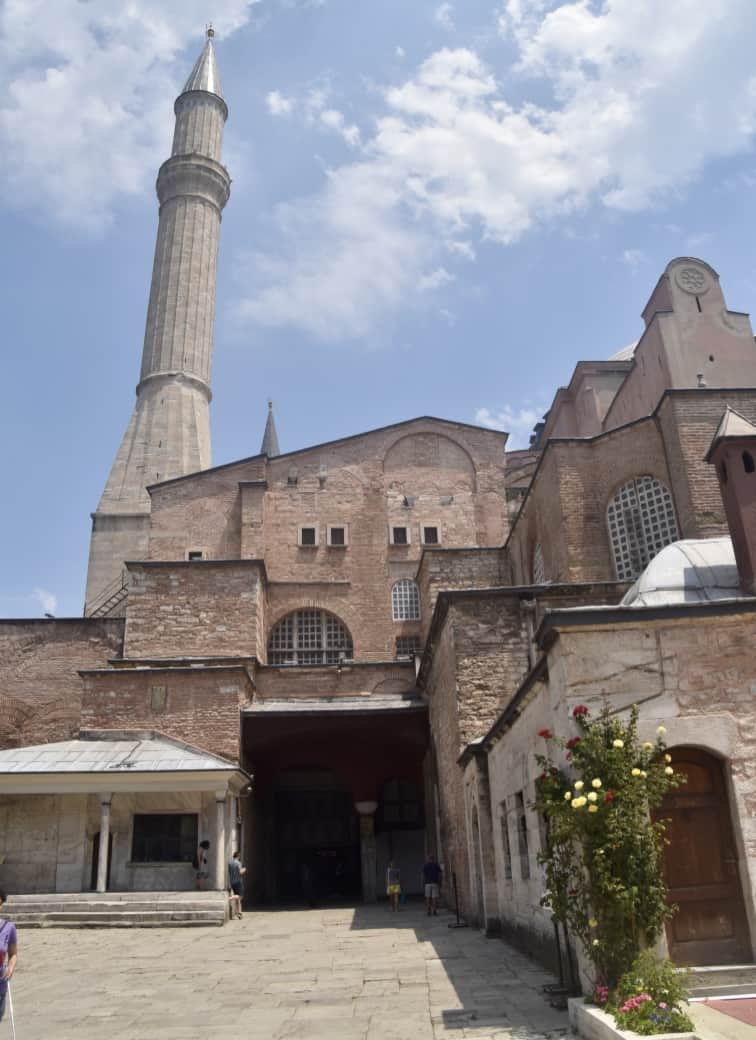
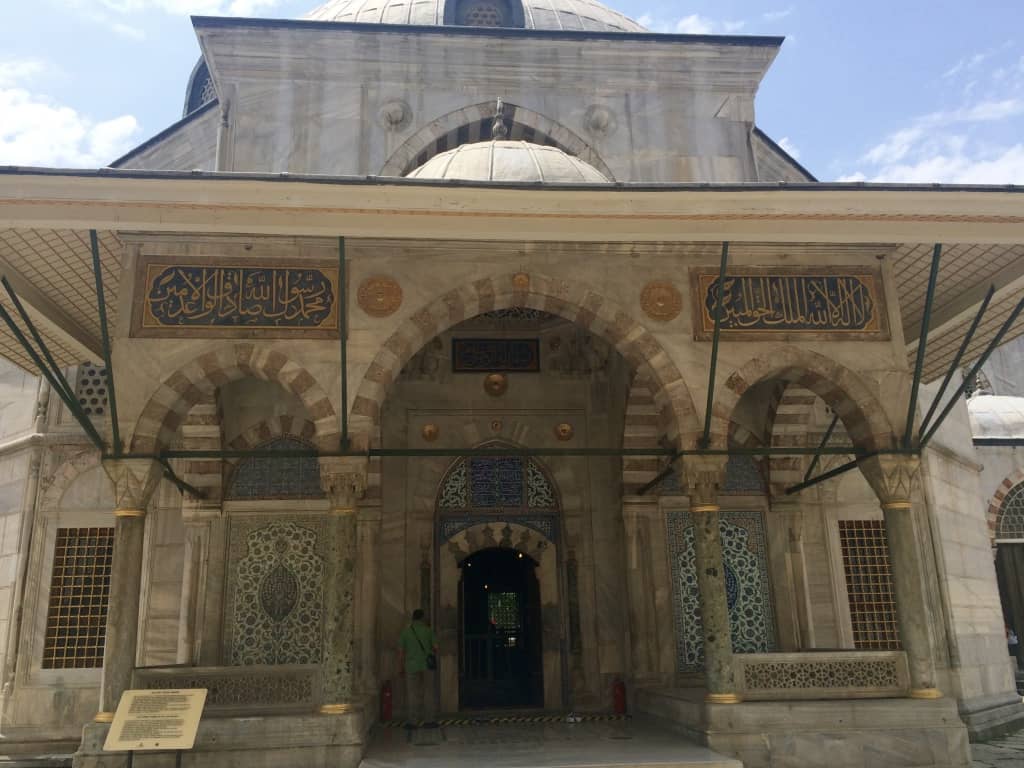
Around the many courtyards stand a number of buildings, several of them holding the tombs of sultans and their families.
The spice market. We walked down to the waterfront and found a lively outdoor restaurant for lunch near the spice market, full of people in animated conversation. One waiter was deep in talk with a few English-speaking guests about the terrorist attacks around Istanbul over the past months, telling them the city was very unstable and that they expected something big to happen soon. We did not give it much thought at the time.
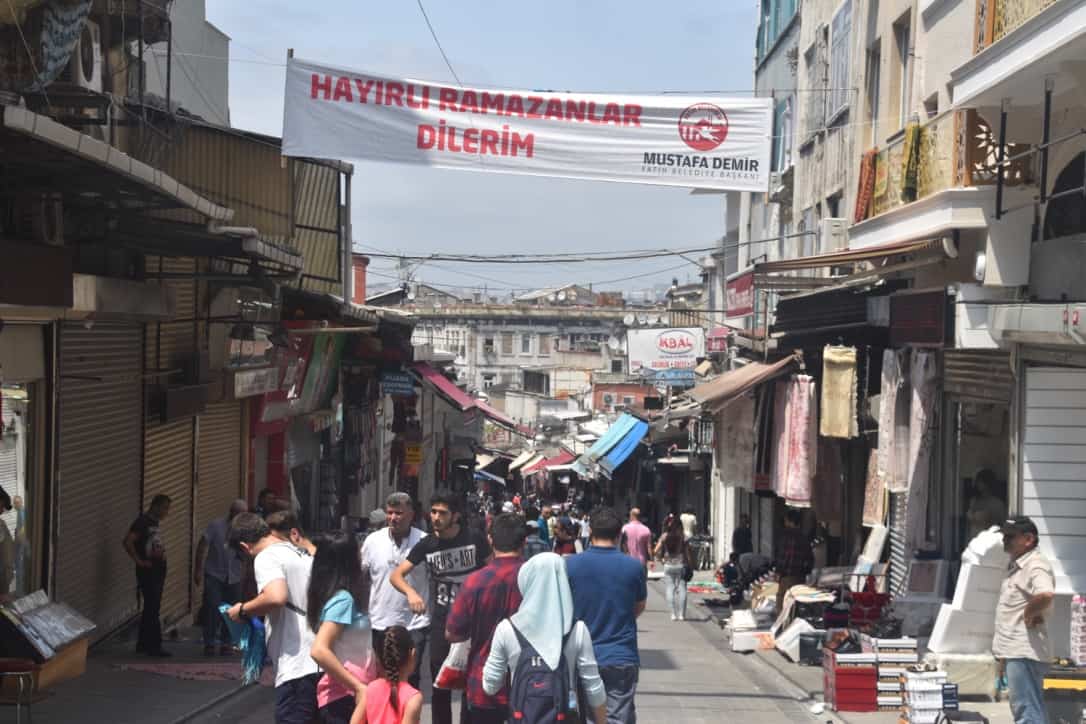
After lunch we walked over to the spice market itself, hundreds of shops, and lost ourselves happily among the spices and dried fruits. We found a shop that sold only spices and came away with blends for meat and rice, more Turkish black tea, lemon salt, and apple tea. Istanbul was built on seven hills, and the climb back up to the hotel in the heat left us soaked through by the time we reached the door.
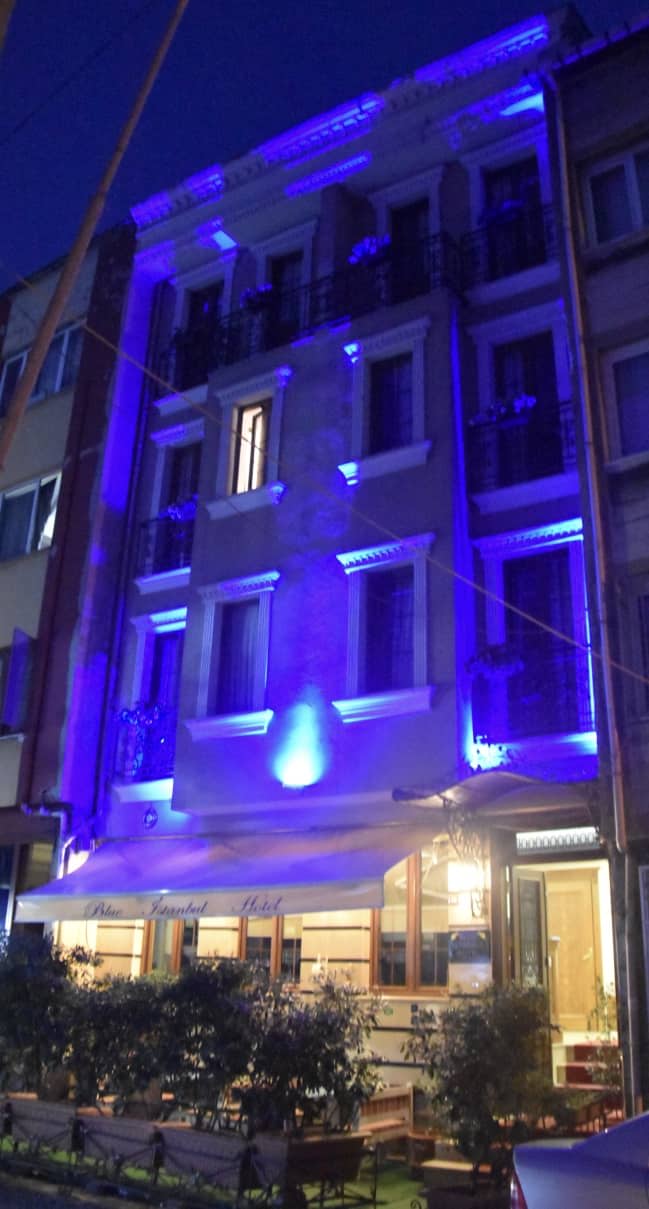
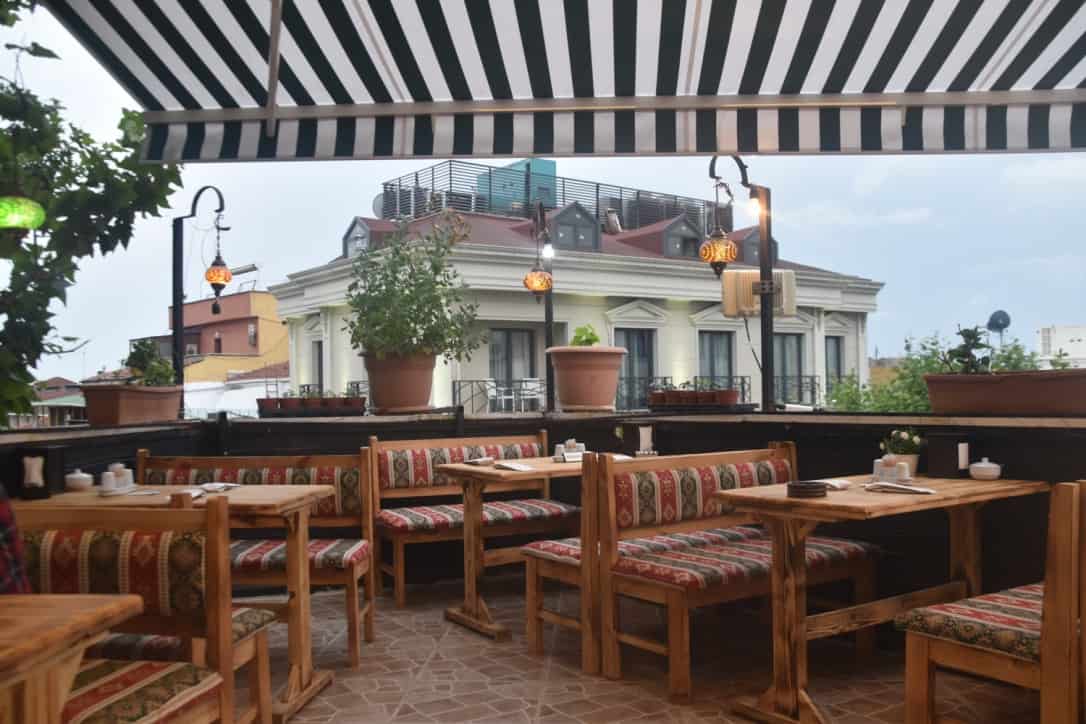
After a rest we went back to the same restaurant for a second night, this time up on the third floor with the sea below us. It was a lovely evening, all the sounds of the neighborhood drifting up, and we made an early night of it and headed back down the hill to the hotel.
The checkpoint. A car came for us at 3 in the morning to carry us to Ataturk Airport for a 6 o'clock flight, on to Amsterdam, then Atlanta, then home.
Here is the part that still gives us chills. On the night of June 28, 2016, three attackers struck the international terminal at Ataturk Airport with guns and suicide bombs, and dozens of people were killed. That terminal stands apart from the others, with security right at the doors as you go in, and we had stood at that very checkpoint, in the small hours, barely a day before. We dodged it. It was not our time. It brought back the waiter and his warning. Would we go back to Istanbul? Not right away, not as things stand, but it is a fantastic city and worth seeing if you ever have the chance.
What a trip. It is hard to put ten weeks into words. We covered thousands of miles by cruise ship, by train, and by plane, and we visited seventeen countries, from Bermuda to the far north of Norway to the depths of the Middle East. We saw things we had only ever imagined, and they will stay with us for the rest of our days. We have been blessed to see so much of this world across seventeen years of marriage, as of this July 3rd. Thank you for coming along with us.