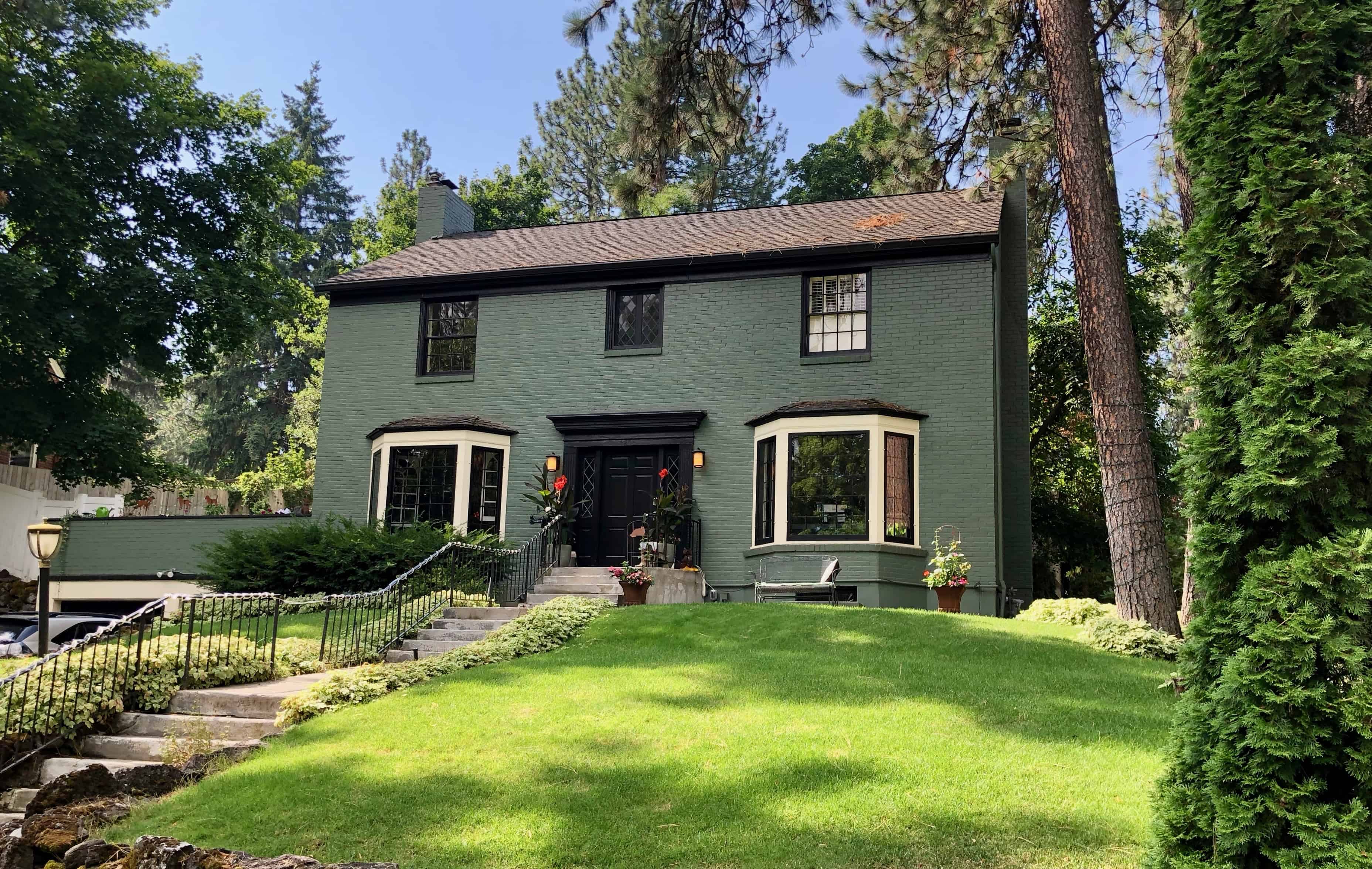
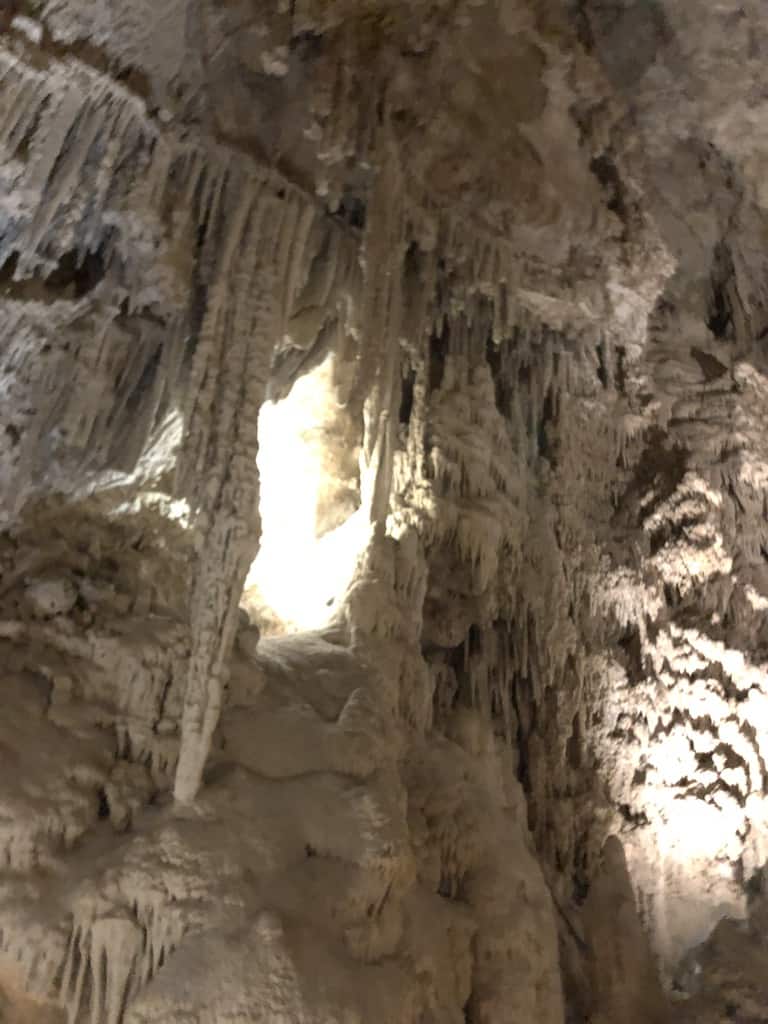
Dateline July 10, 2019, Beckley and the Coal Mine
We had so enjoyed the Soudan Underground Mine in Minnesota last summer that, finding ourselves between two state parks in Georgia and West Virginia, we could not pass up the chance to go underground again. We had read about the town of Beckley, West Virginia, and its tour of a genuine, restored, turn-of-the-century coal mine and the village that grew up around it.
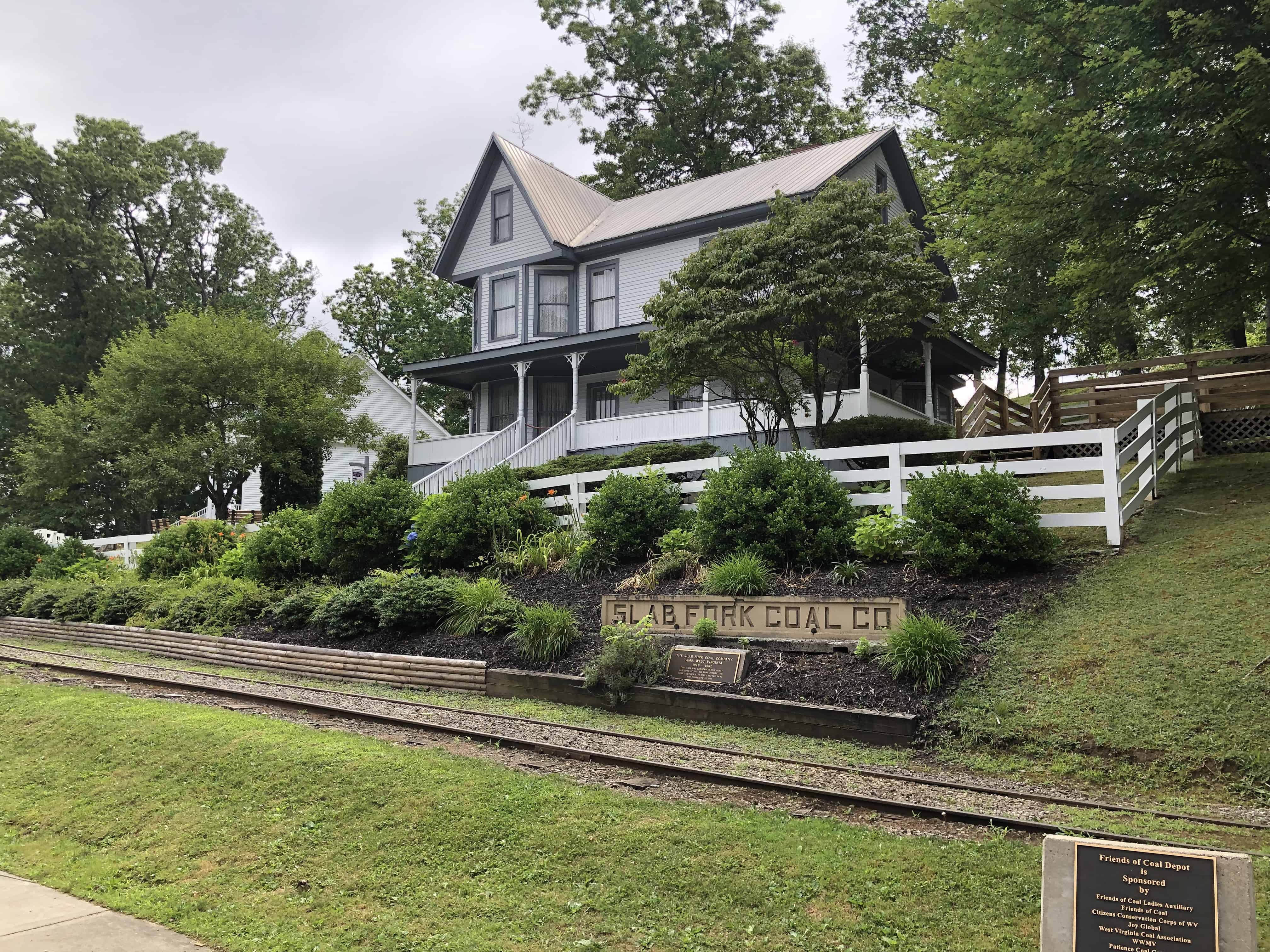
The Exhibition Coal Mine, with its coal camp and youth museum, is built on the old Phillips-Sprague Mine, first opened late in 1889, though it did not begin mining coal in earnest until 1906. It was a drift mine, the kind where you reach the coal seams through horizontal tunnels bored straight into the hillside rather than down a shaft. The restoration runs to some fifteen hundred feet of passageway with three thousand feet of vintage track, and the village beside it is made up of homes, a school, and a church carried in from other small mining settlements around the region.
Into the mine. A little train called a mantrip, an underground carrier built to haul men and their gear safely in to the working faces, took us about five hundred feet into the mountain.
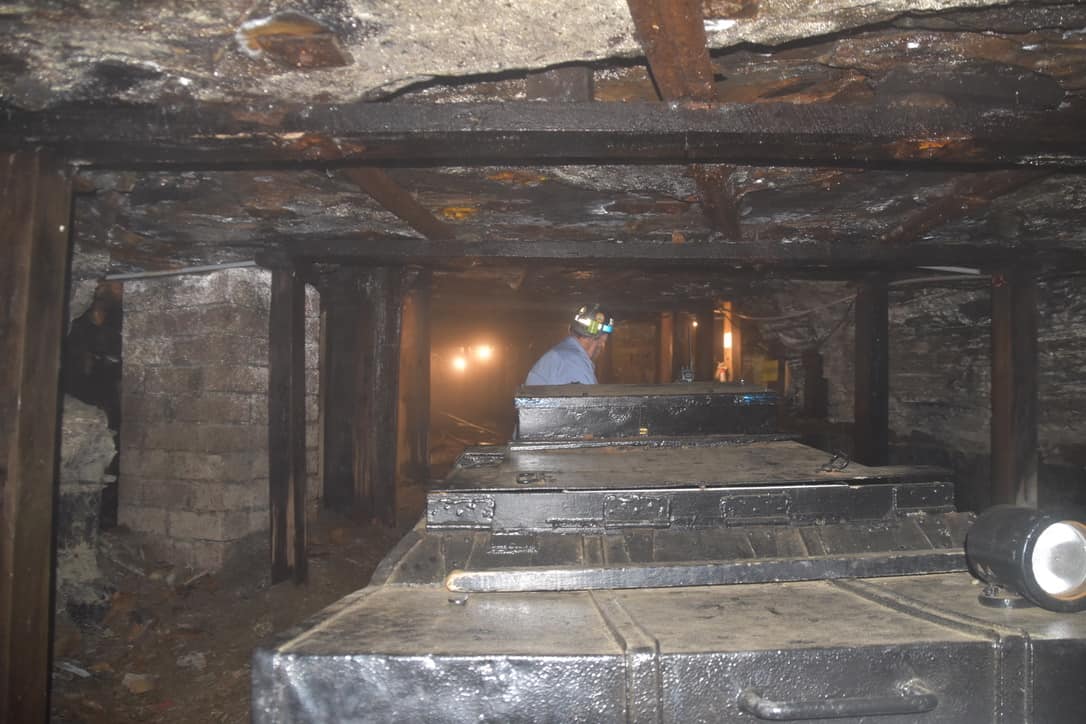
Our guide had spent better than twenty years as a coal miner himself, at another West Virginia mine, and as he towed us along the tracks he stopped here and there to tell us about the place and the men who had worked it. Our ride in was the height of luxury next to how the miners themselves traveled, flat on their backs on what amounted to a lay-down skateboard, lunch bucket and tools strapped on alongside.
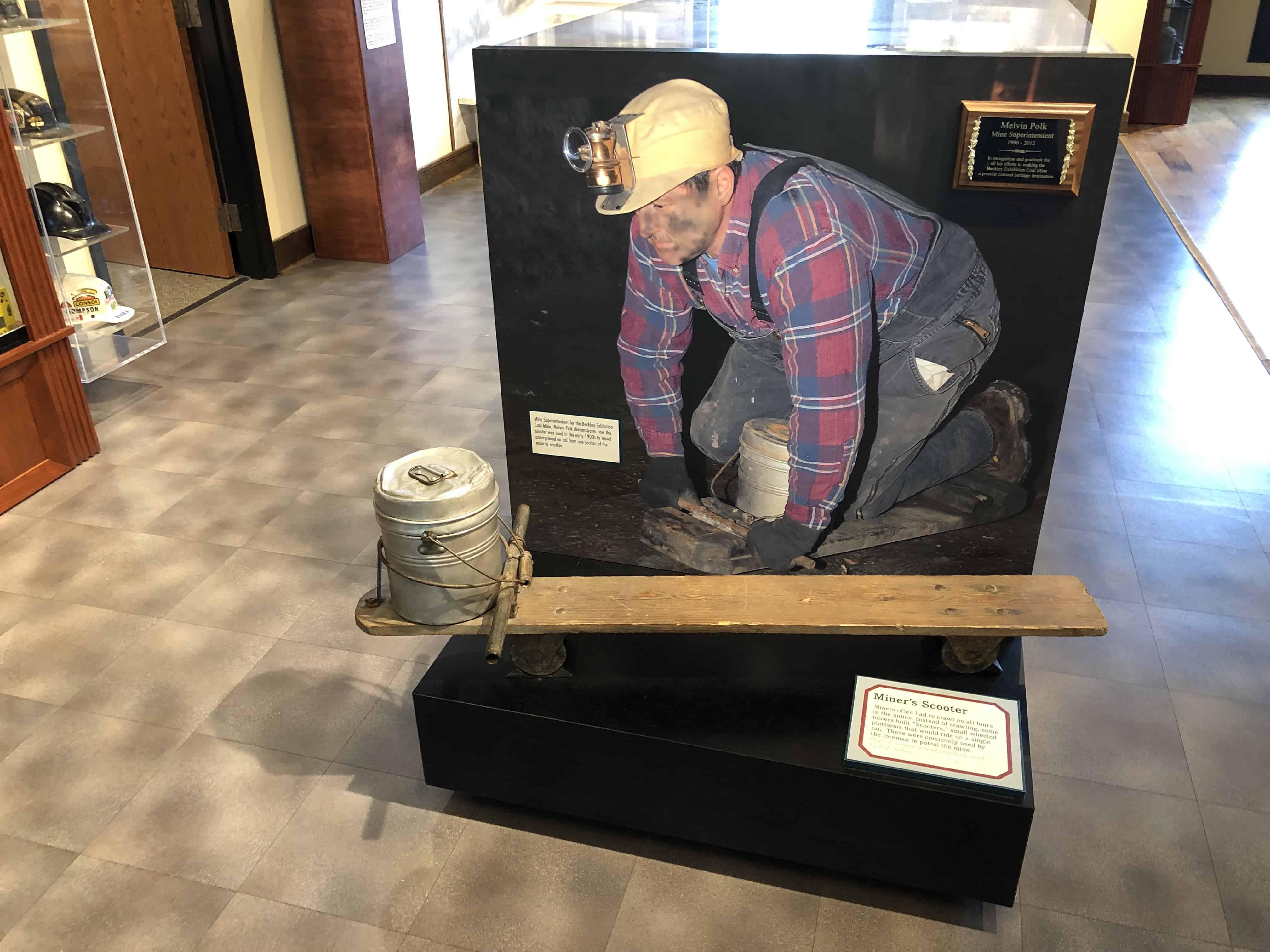
That lunch bucket was a clever bit of tin, built in layers with water in the bottom, since whatever a man carried in had to last him a twelve-hour shift. The mine holds a steady fifty-eight degrees the year round. And there were rats down there, plenty of them, which our guide told us was good news to a miner: so long as the rats were thriving, a man knew the air was safe to breathe.
A miner's pay. In the early nineteen hundreds the work was a solitary business, each man laboring his own assigned spot, twelve hours a day, six days a week, and nobody said a word about vacation. He was paid twenty cents for a ton of coal.
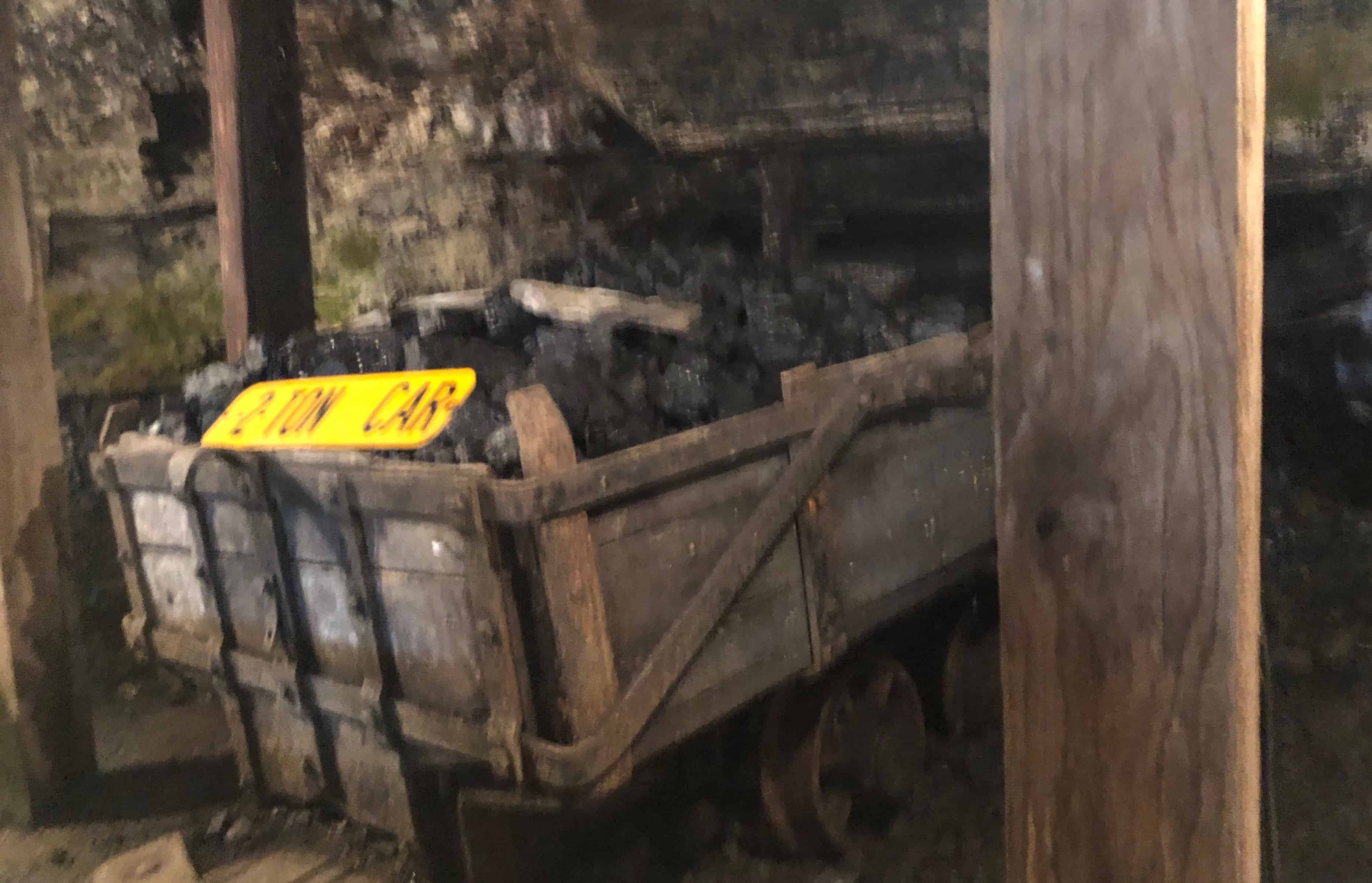
The load was measured against the rim of the wagon and looked over for any stone mixed in, and a man was docked for stone, or for coming up short of the mark, so that he often made less than his twenty cents. Across a shift he was expected to bring out six tons, which came to a dollar and twenty cents for the day.
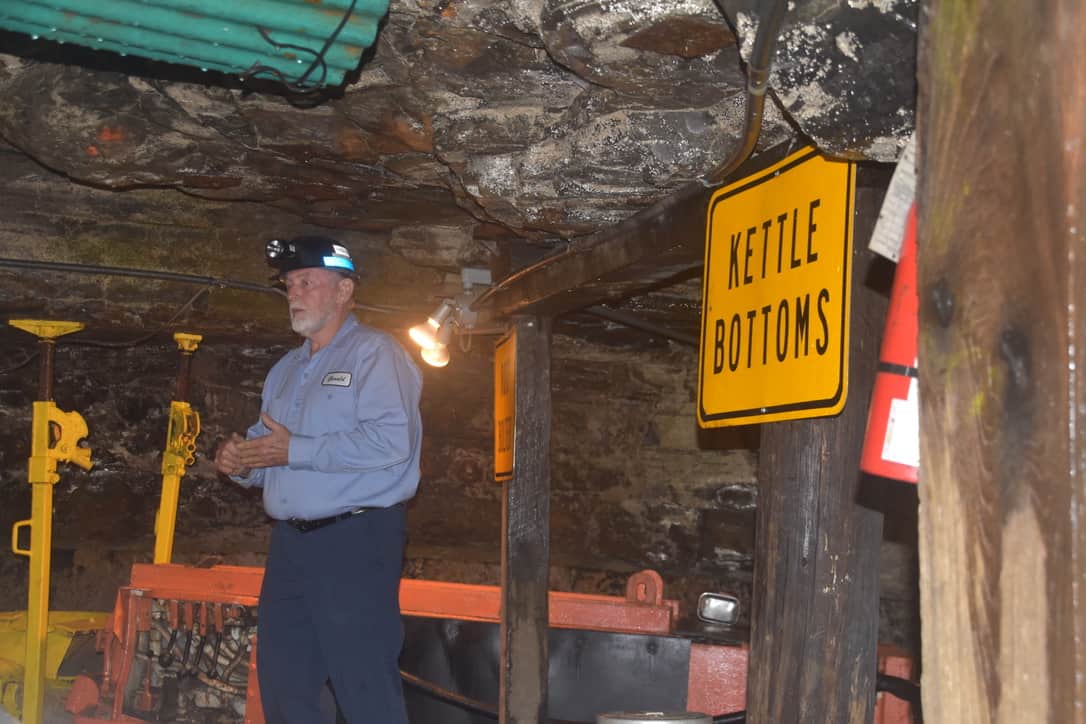
The coal seam he worked stood all of thirty inches high, with hard stone pressing down above it. Our guide put it plainly: imagine spending your whole day on your knees under a kitchen table. Down there a man undercut the face by hand, bored the holes for his blasting, set the charge, then dug and loaded the coal himself, stacking it onto a car to be dragged out by mules. The car carried a board with his number on it, for he was paid by the ton and the company meant to know whose coal was whose.
For light he had only the lamp on his helmet. At first that was a little oil pot with a wick, to be refilled in the dark every hour. After the turn of the century came the carbide lamp, which mixed calcium carbide with water to make acetylene gas and burned a clean white flame. Our guide told us the new men would practice at home in the dark, learning to get the water and carbide just right.
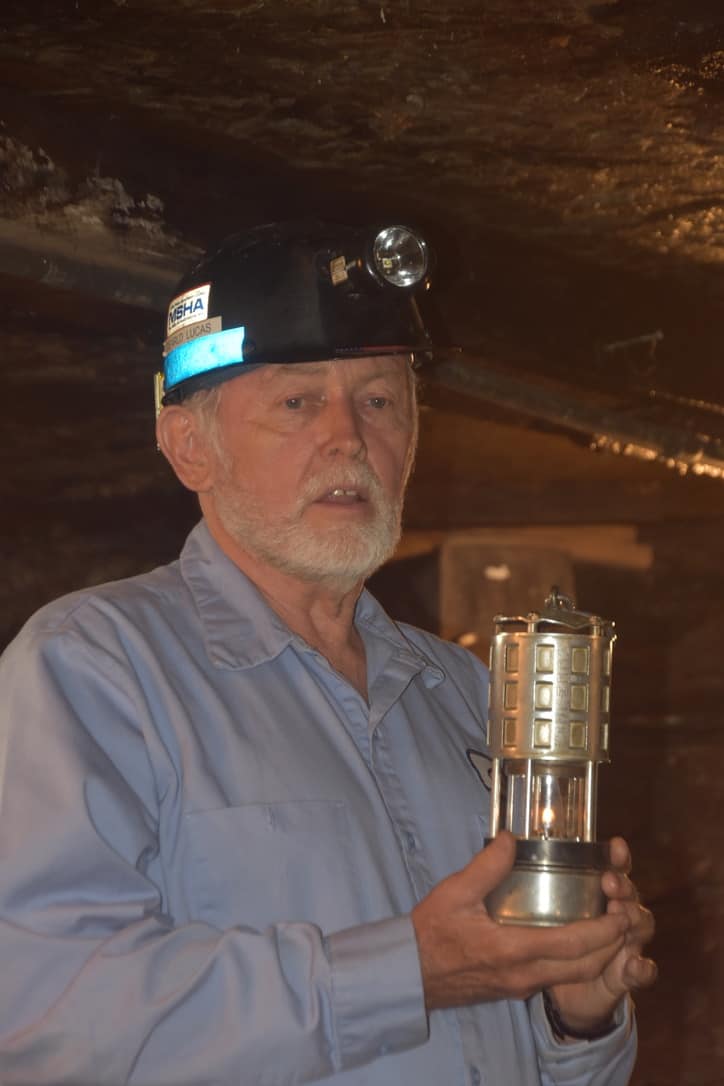
The Company was the village. Above ground we walked through the rebuilt camp, and it is here you understand that the company was not just the mine but the whole of a man's world. Beckley has done a fine job of it, tracking down houses and schools and churches in other mining areas, taking them apart piece by piece, and setting them back up here.
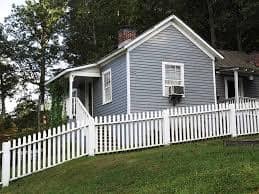
The Company owned the houses and rented them to its men. A bachelor could have a small ten-by-ten room with a bed and a stove and an outhouse shared with the others.
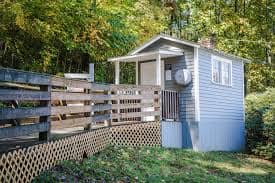
A family took a one or two bedroom house, according to what they could afford.
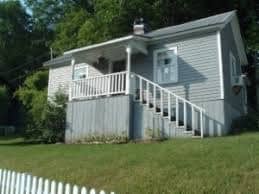
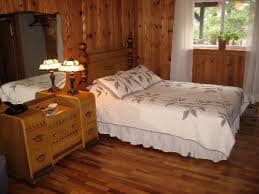
Inside, the rooms were plain and close, a bed, a few sticks of furniture, and not a great deal more.
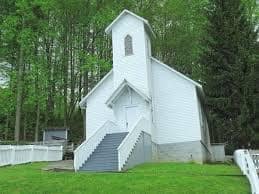
The superintendent, who was well paid, lived in a mansion of many rooms set well apart from the mine, while the village kept its own church and its own rhythm. Everything else, the groceries, the doctoring, every supply and service, came from the Company Store, and was charged against a man's pay.
If that arrangement sounds familiar, it is the very thing Merle Travis wrote about in "Sixteen Tons" back in 1946, a song drawn from life in the coal camps of Muhlenberg County, Kentucky, that Tennessee Ernie Ford carried to the top of the charts a decade later. The heart of it is a miner who only sinks further into debt with every ton he loads, his soul all but signed over to the company store, and standing in that rebuilt village you could see plainly how a man might end up there.
The schoolhouse. The school was divided in two, one room for the children up through the fifth grade and another for the sixth through the eighth.
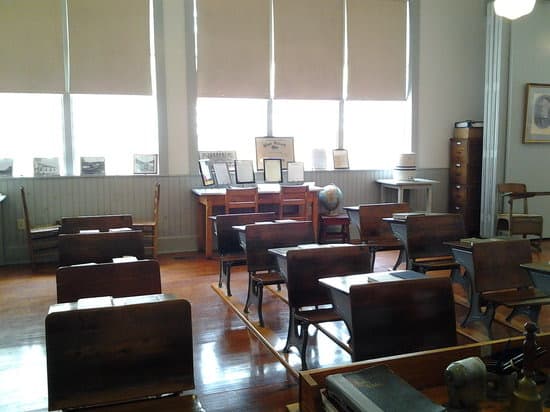
After the eighth grade the boys went down into the mine and the girls married and began families of their own, and so it went, one generation of miners after another, in so many corners of the country.
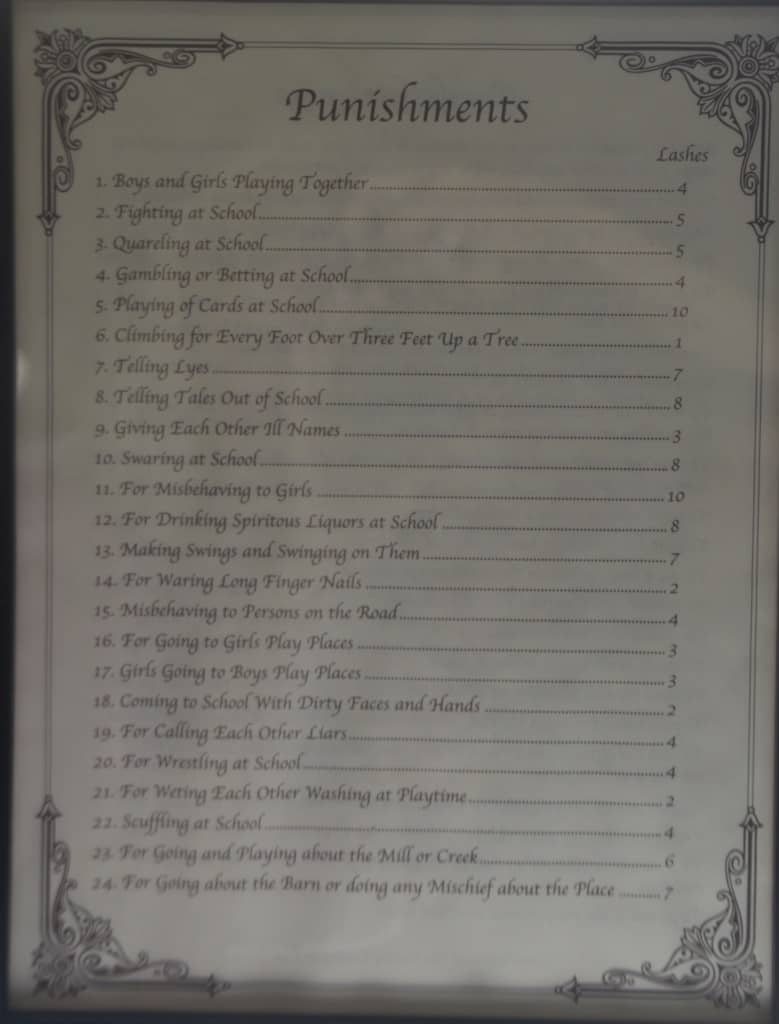
There was a list of punishments for children who misbehaved, depending on the offense, and the practice carried on into the 1960s before the state put a stop to it. Schools all across the country kept discipline much the same way back then, a ruler across the knuckles, a spell in the corner, all of it meant to see that a child learned the rules and his responsibilities. You can read the rules they posted and decide for yourself how they would go over today.
These were hard-working Americans, hewing the fuel that ran the country. The work goes on still, with somewhat better tools, a bright battery lamp on the hat in place of the old oil pot, though it is sobering to stand down there and remember how few lights there are in the dark even now.