Dateline November 5, 2022, Wadi Rum, a Night in the Valley of the Moon
From Petra we turned south, deep into the desert, for a night under canvas in Wadi Rum.
The Valley of the Moon. Wadi Rum, the Valley of the Moon, lies in Jordan's far south on the western edge of the Arabian desert, some seven hundred square kilometers of red sand and rose-colored sandstone, roughly the size of New York City. People have lived and crossed here for thousands of years. Its springs made it a natural stop for the caravans moving between Arabia and the Levant, and the Nabateans, the same people who built Petra, left their mark here too, some say even before they built Petra itself.
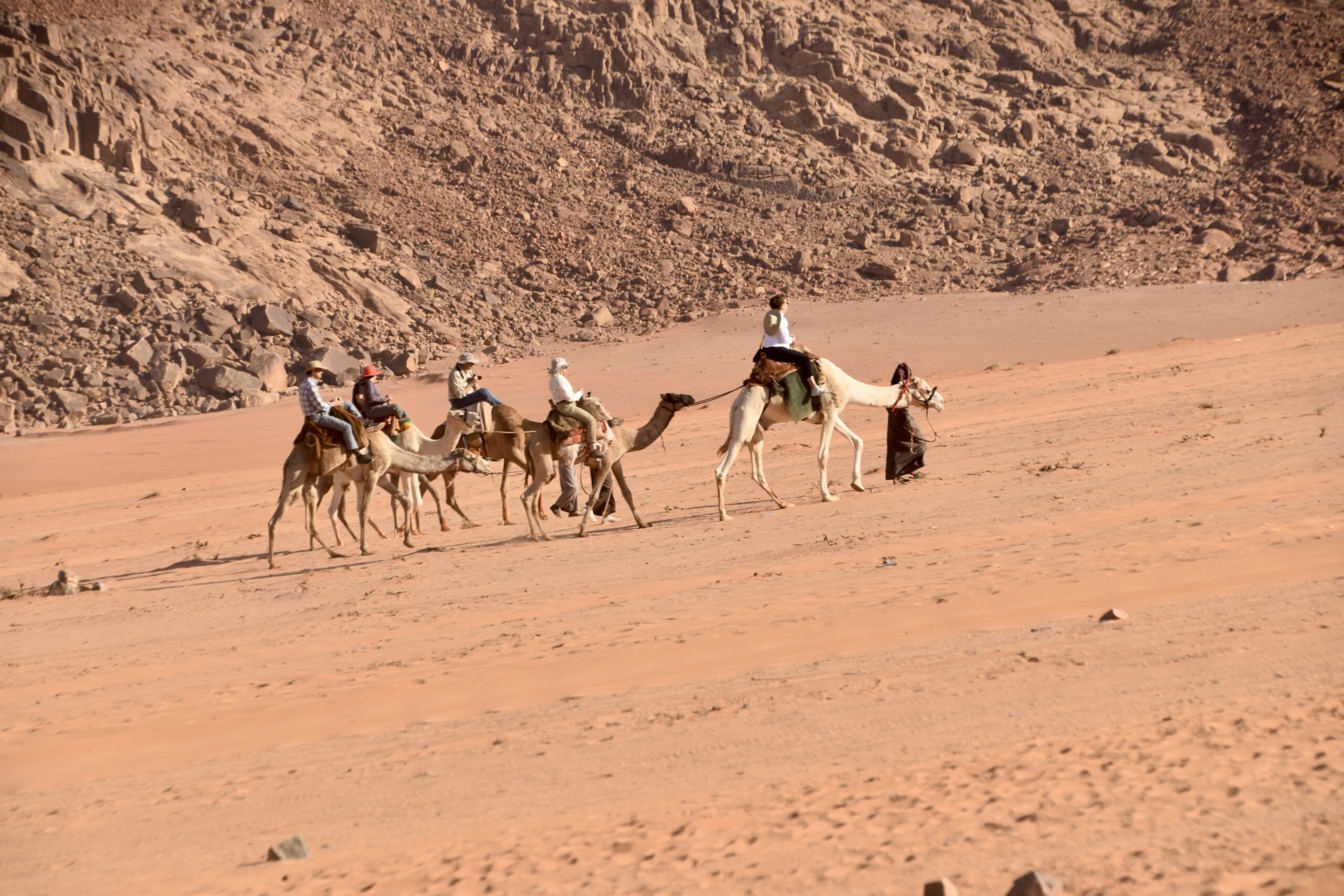
Into the desert. We had booked the overnight on our own, so Hasan delivered us to the meeting place, a dusty drop-off point that turned out to be a scene of pure confusion. Thanks to him we found our guide, climbed up into the bed of a 4x4 pickup, and went flying off across the sand, passing a caravan of tourists who had chosen to come in by camel.
Khazali. There are several stops on the way to camp, many of them covered in ancient writing. The richest is Khazali, a narrow cleft in the rock where water gathers, which made it a holy place from antiquity onward. Its walls hold thousands of years of human hands, inscriptions in old desert scripts layered over petroglyphs of people, animals, and even the soles of feet.
A skinned leg and two good Samaritans. Every one of our adventures seems to come with its moment, and here was this one's. We pulled up at a tall sand dune; one look at the top and we agreed the climb was not happening, so we wandered the short end, took it in, and came back to the truck. The driver waved us off, busy with another guide and their phones, so we went to climb back into the bed, and John slipped and tore most of the skin off the front of his leg. Blood everywhere. When Janice asked the driver for a bandage, he looked at her as though she had three heads.
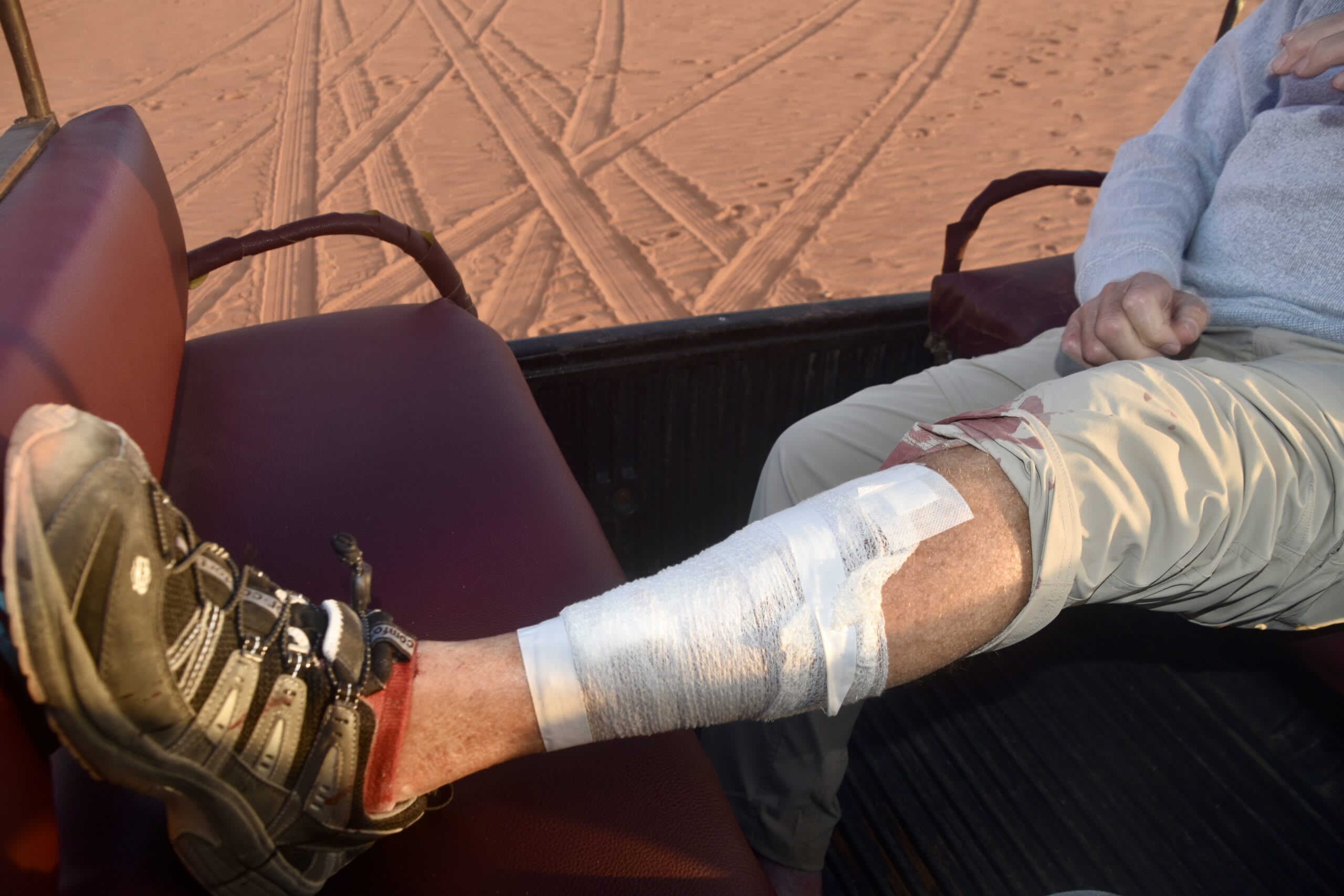
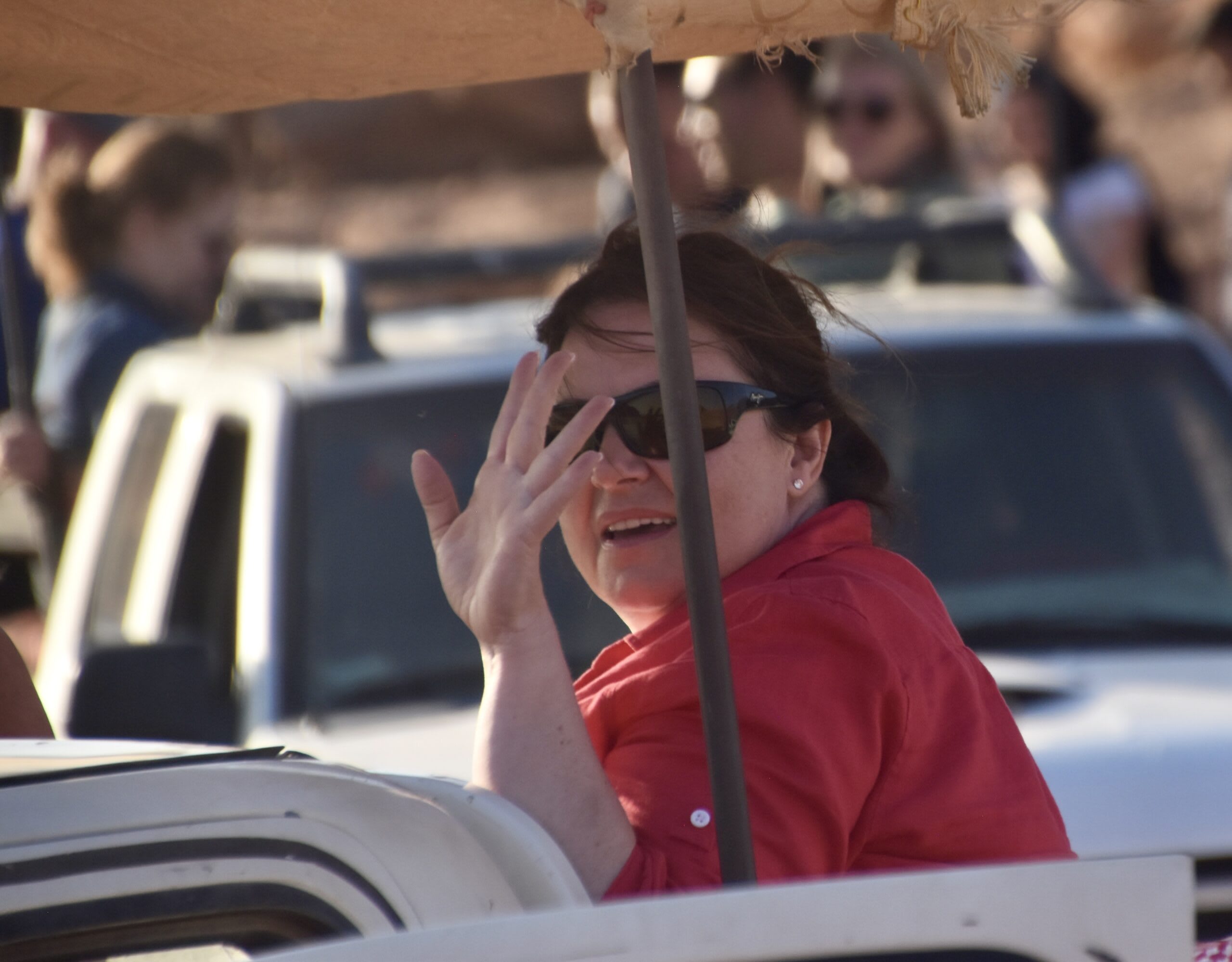
We were rescued by another guide, Sam, and his traveler Joan, who between them turned up enough gauze and tape to get John patched and the bleeding stopped. A fair crowd gathered to watch the operation, and John announced that he was the afternoon's entertainment. We asked the driver to call his company and have proper bandages waiting for us at camp.
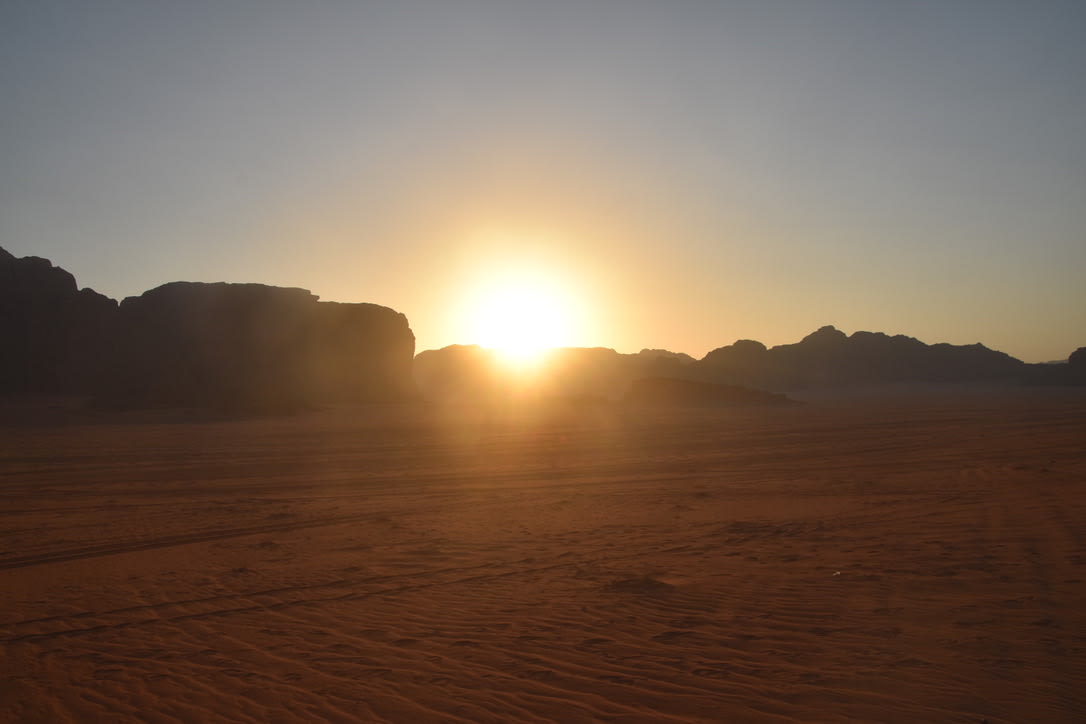
Sunset, and a cold tent. It was too early to head in, so we drove out to the gathering point to watch the sun go down with the other trucks and their drivers. It was a fine sunset, though, if we are honest, no better than a good evening over Florida.
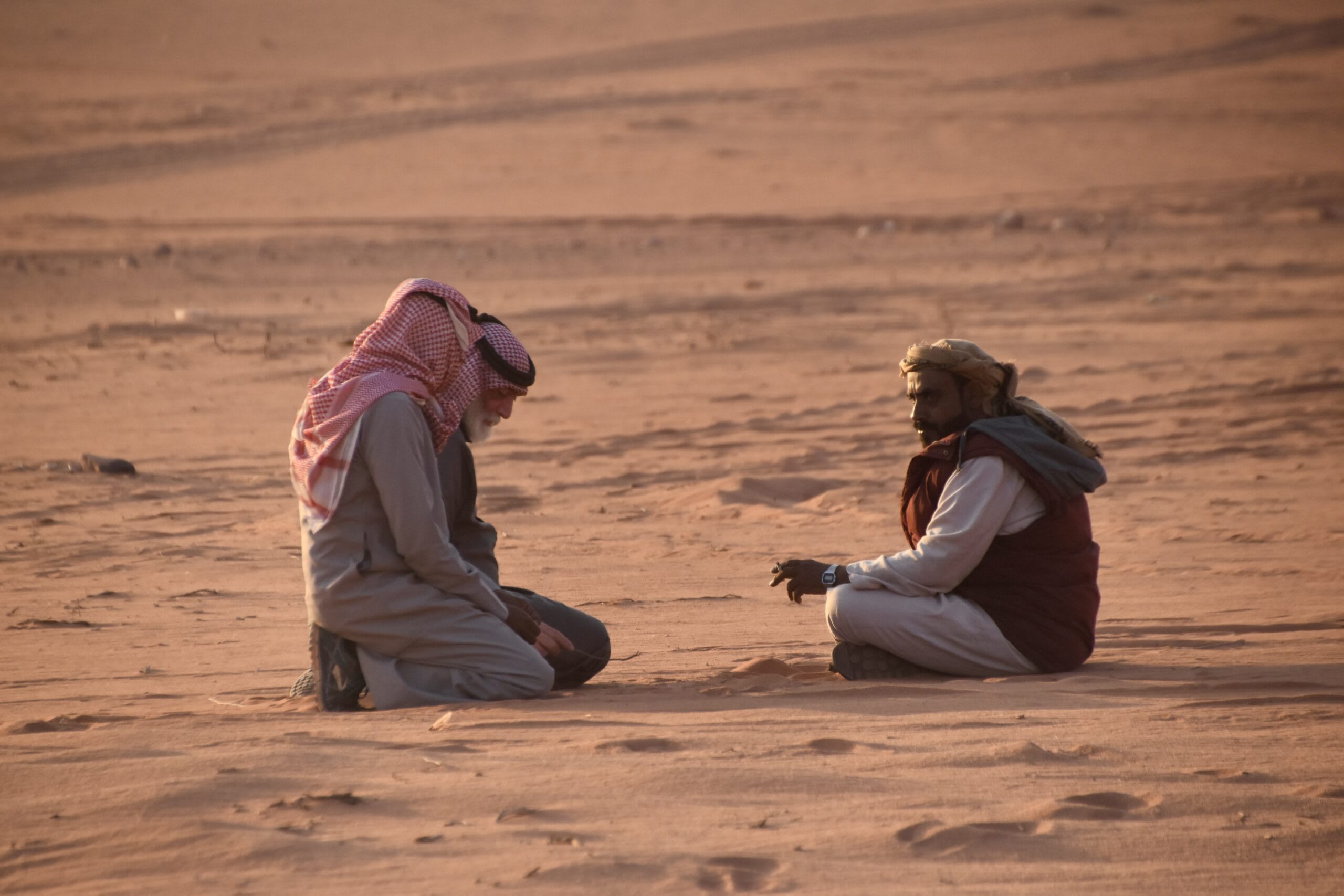
At camp we expected our bandages; instead the head of the company handed Janice a few pills, told her to give them to John, and said he did not need bandaging at all. With no antiseptic to be had, Janice made do with what Sam and Joan had given us and hoped for the best. It was the next afternoon before we got our hands on a proper dressing. The camp itself surprised us, marble tile floors where we had expected sand, two twin beds pushed together into a queen, spotless restrooms close by, even a heater in the room.
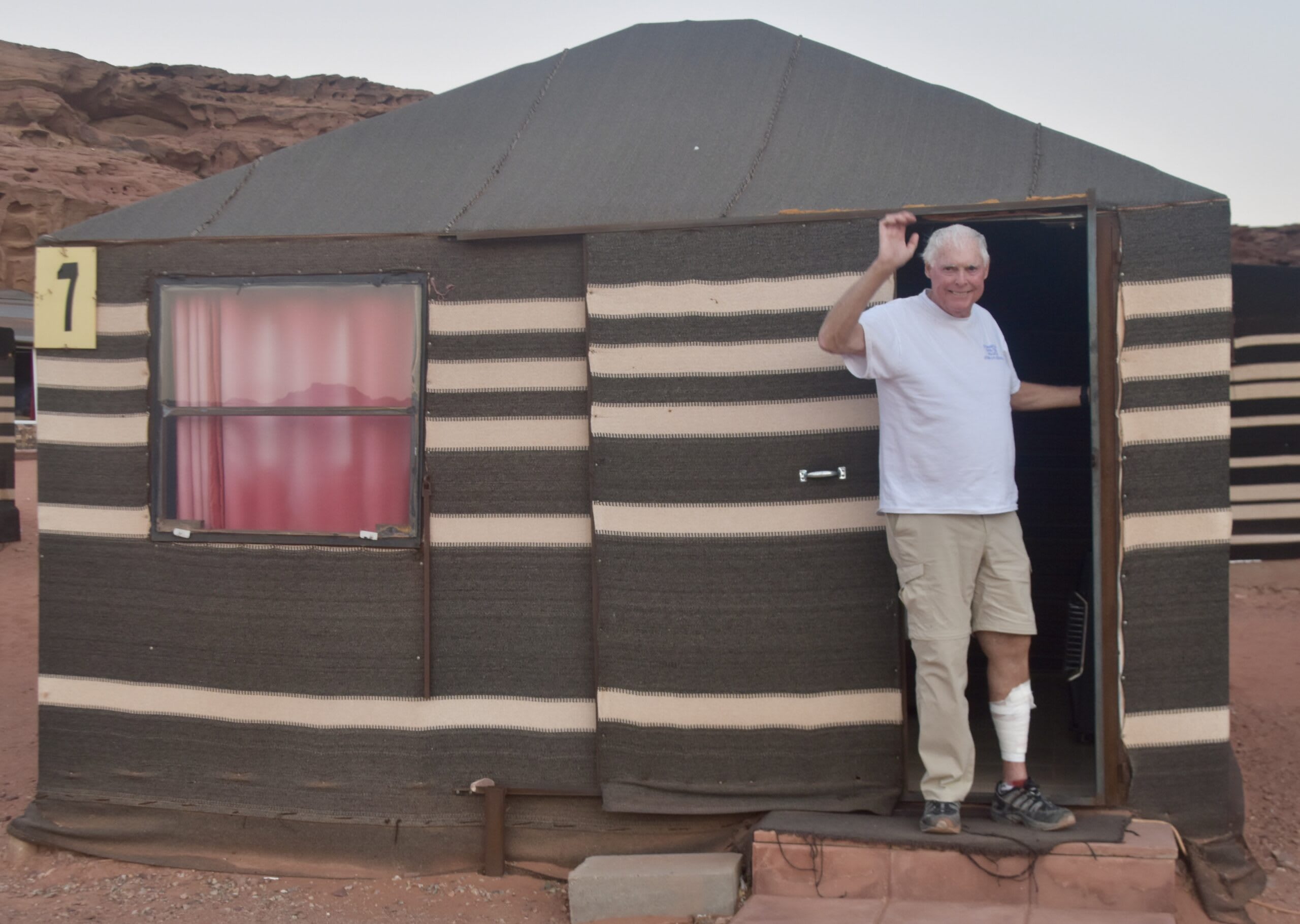
By the fire we met the others. One was a Dutch diplomat, an immigration officer at the Amman embassy, traveling with a longtime colleague; he was good company on history and the wider world, though our talk of it was not to everyone's taste. At dinner we sat with a young German couple, weeks into a holiday and bound for Saudi Arabia, and traded travel stories. The meal, chicken and vegetables cooked in a pot buried in the sand, was fine if not up to Hasan's tables.
We were worn out and turned in early. The temperature was dropping fast, so Janice went to light the gas heater and was told, with great apology, "no heat until next month." She managed to borrow one thick blanket, which proved a mercy, because the night fell into the forties. Somewhere in the next tent a champion snorer kept Janice awake half the night; John, who could not hear a thing, slept the sleep of the just.
Morning. We were up by six, washed as best we could, and went over for omelets, cheese, and pita that set us up nicely for the day. Others came in grumbling about the cold, and we began to suspect we had been handed the only spare blanket in camp. A truck ran us back to the meeting place, where Hasan was waiting. We told him every last story, and he admitted he had stayed at a camp nearby himself, not quite sure about the outfit we had chosen. We laughed the whole thing off and set out for Mount Nebo and Madaba.