Dateline November 10, 2022, Saqqara, Memphis, and the Tomb of Teti
After Giza, Sam drove us a little to the south and a great deal further back in time, to Saqqara.
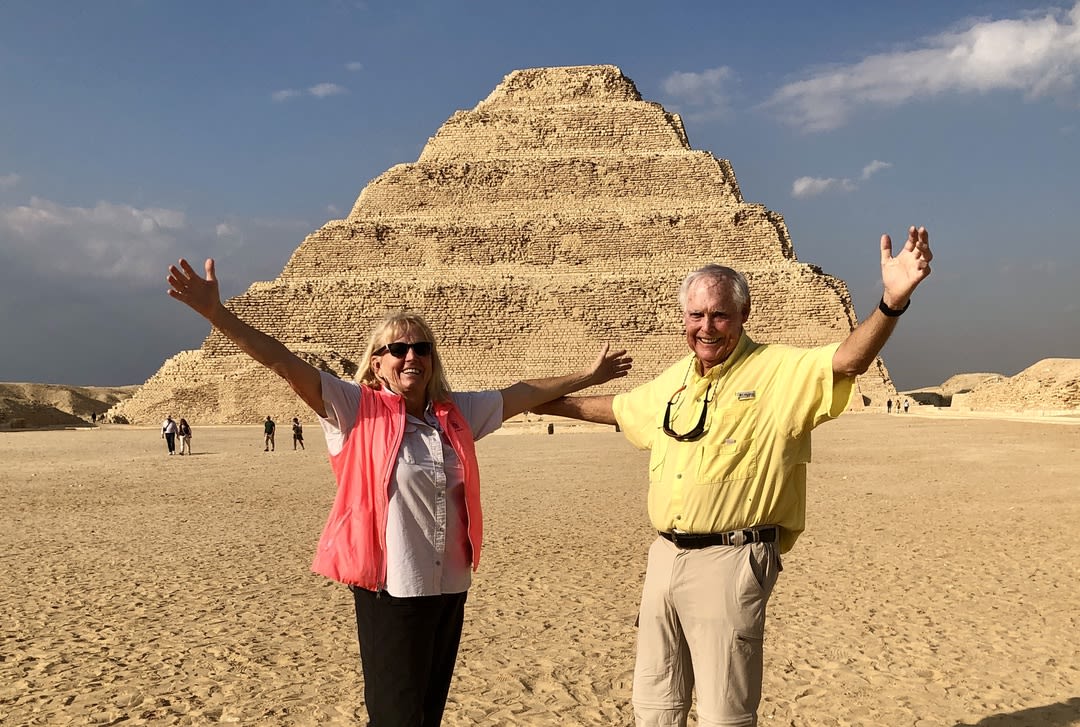
Saqqara. Saqqara holds the oldest complete stone building complex known anywhere, the Pyramid of Djoser, raised in the third dynasty. Sixteen more Egyptian kings built pyramids here, now in every imaginable state of ruin.
Teti's pyramid. We came first to the pyramid of Teti, first king of the sixth dynasty, who reigned around 2330 BC. It once stood some hundred and seventy feet tall, smooth-sided and cased in fine limestone; when the casing was robbed away in later ages, the loose rubble core slumped, and today it looks more like a low hill than a pyramid.
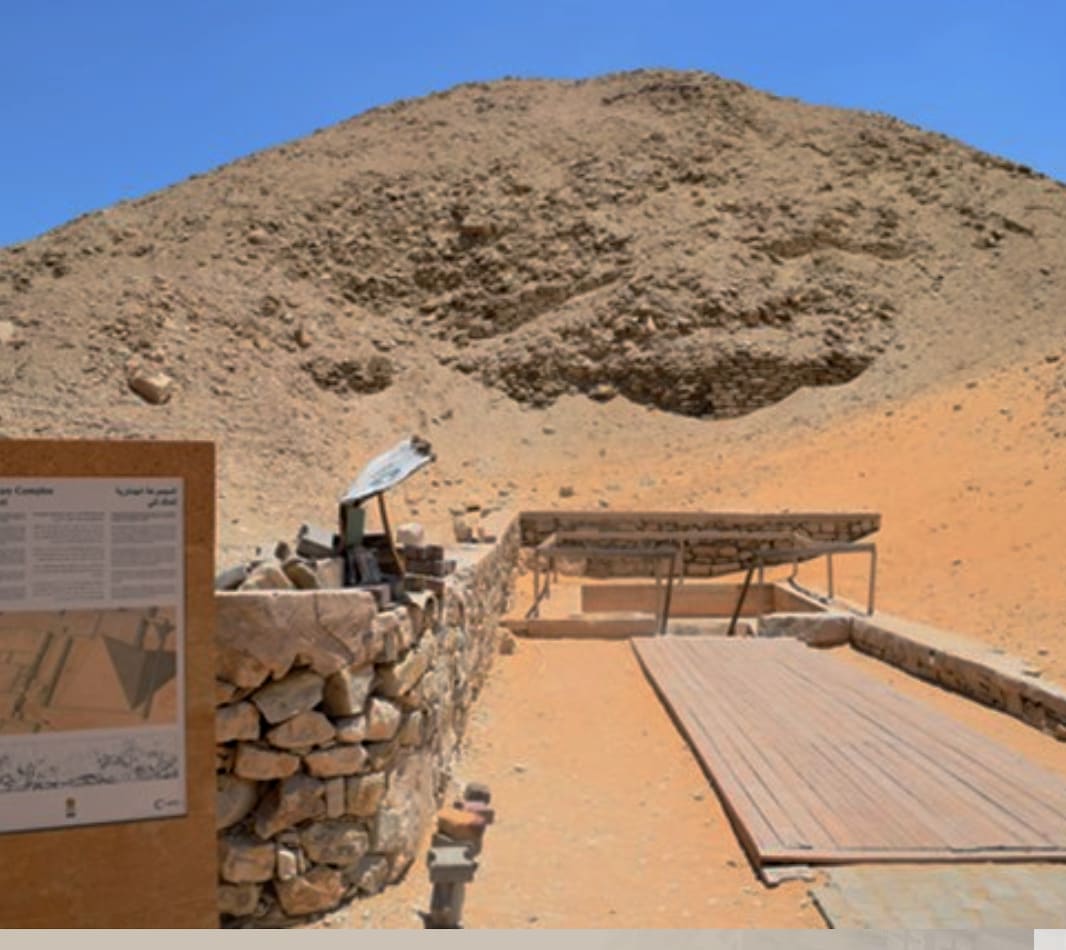
What makes it remarkable lies inside. It is one of the earliest pyramids carved with the Pyramid Texts, the spells and recitations meant to carry the king safely into the afterlife, its burial chamber ceiling painted with gold stars on a deep blue sky, the tomb made a little model of the heavens.
Down into the tomb. The passage was open, and there was a decision to make: go down, or not? A ramp ran steeply down, fitted with small wood cleats so you would not slip, the ceiling barely four feet, so you went bent double at the back and the knees.
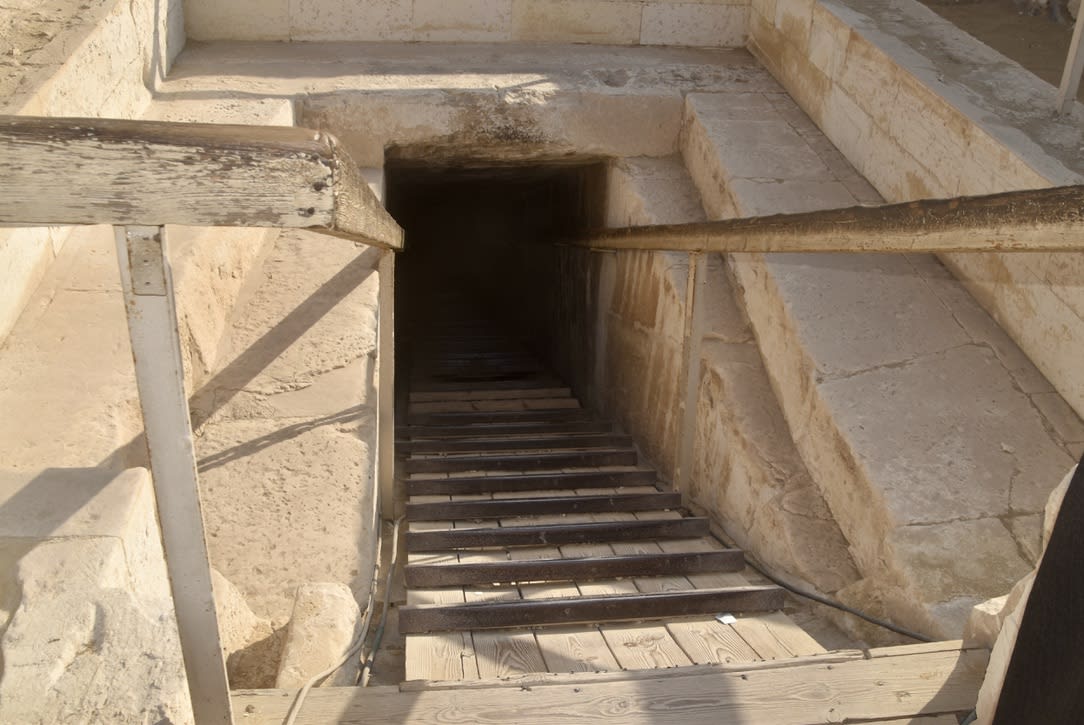
We went for it. Sam came along too, which he told us he rarely does.
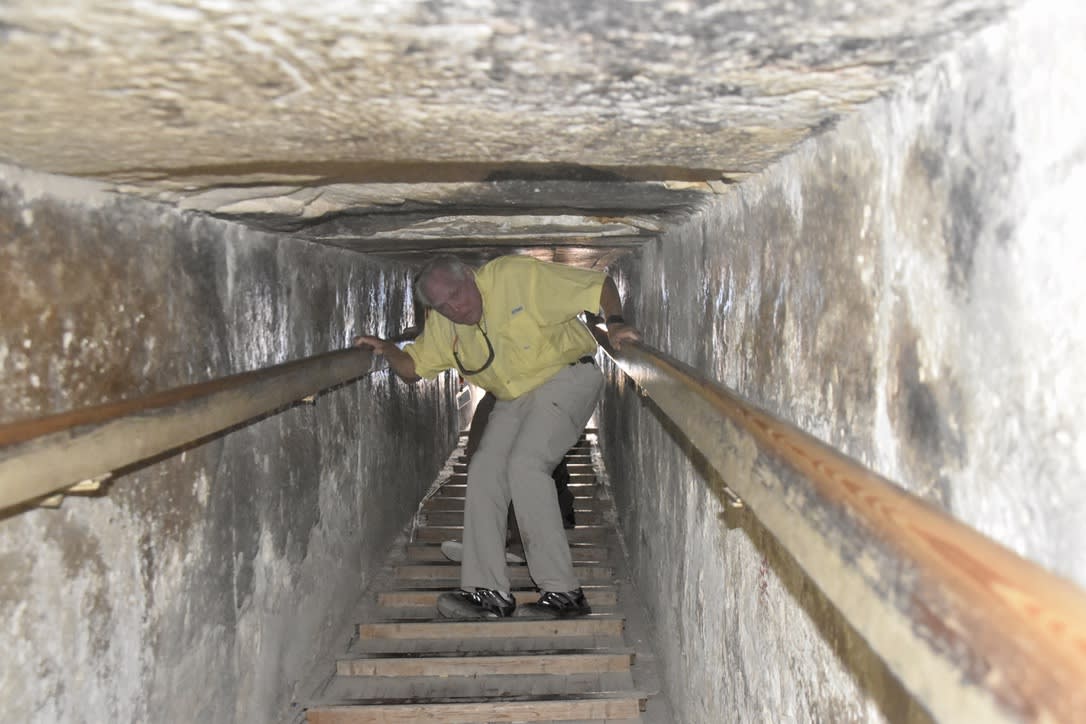
At the bottom a second tunnel, lower and narrower still, led on to the tomb itself, and there at last we could stand. We looked back for Sam, who arrived with a great grin and, we then learned, no small effort: he is claustrophobic, and that descent had cost him dearly. For us it was pure wonder.
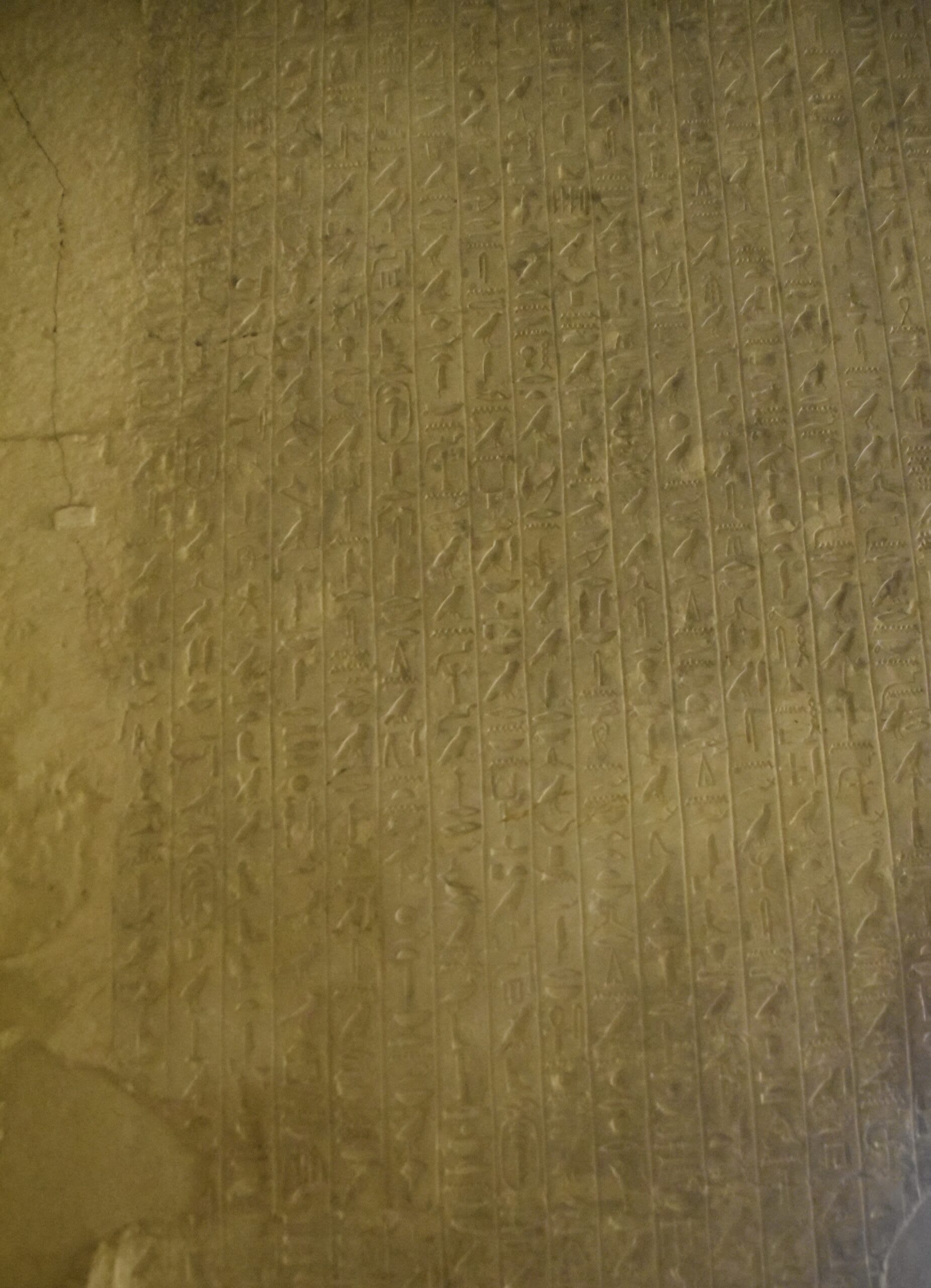
The walls were carved with stars and column after column of Pyramid Texts, several chambers in all, and the room that had held the king's sarcophagus.
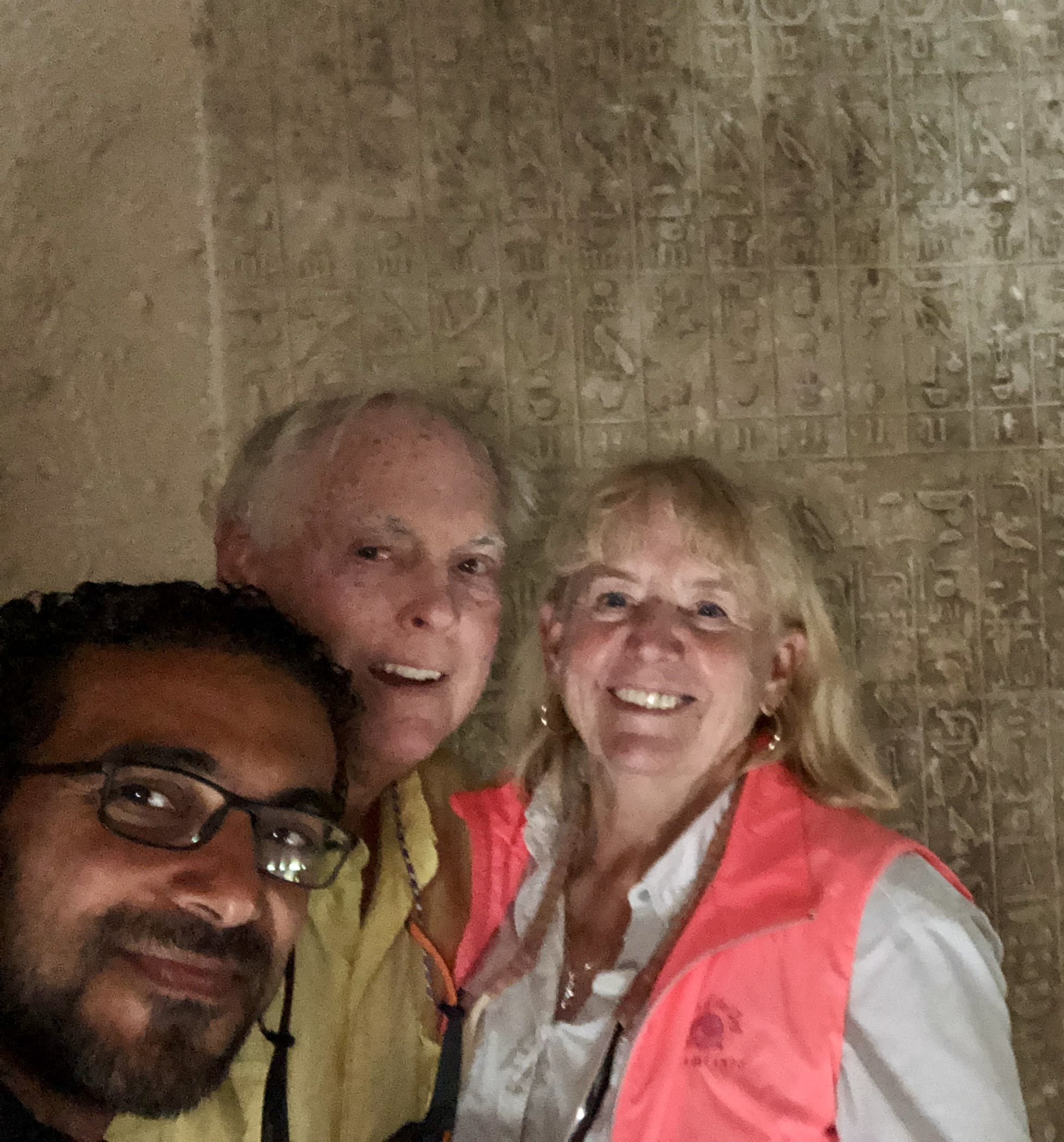
Coming back up, with people trying to pass us going down in a space made for no such thing, was slow going, and everyone behind us was patient. At the top, Sam summed it up: "Praise to God we made it." It was the experience of a lifetime. Afterward he took us to lunch at a favorite spot of his, a simple mixed grill with good sauces and salads, plenty of honest local food.
Djoser's Step Pyramid. Back within the Saqqara complex we came to the Step Pyramid of Djoser itself, entering through its great colonnade.
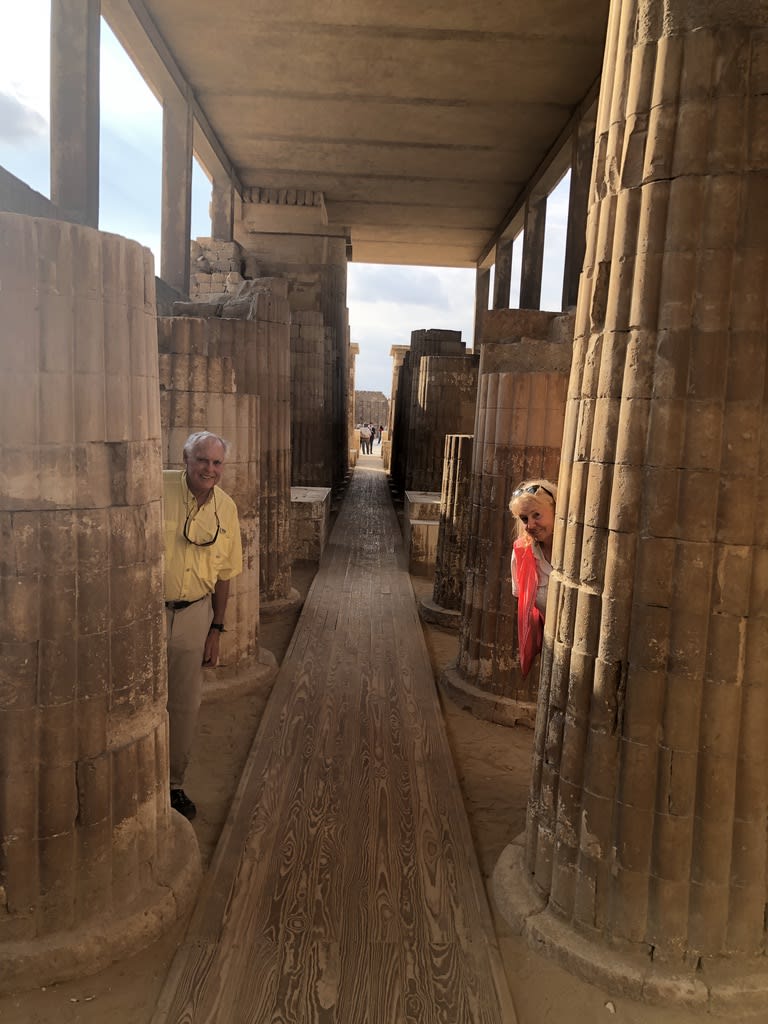
The corridor is flanked by forty limestone columns, each near twenty feet tall and shaped like bundled reeds, holding up ceiling blocks carved to resemble palm trunks; off to the sides, two dozen alcoves once held statues of the king. Beyond lies the South Court, the broad forecourt of what is, in effect, a royal palace rebuilt in eternal stone, where the king would have made his ceremonial appearances. A pair of crescent-shaped stones at its ends stood for the northern and southern bounds of Egypt.
Memphis. All of this, Giza and Saqqara alike, belonged to Memphis. Founded around 3100 BC by King Narmer when he joined Upper and Lower Egypt, Memphis was the first capital of a unified land, and it held that place through the whole of the Old Kingdom. After the Arab conquest it was pulled down, its stone carried off to raise Fustat, the first Muslim capital, which in time grew into Cairo.
The open-air museum at Mit Rahina. Where Memphis once stood there is now an open-air museum, and the first thing to meet you is the Alabaster Sphinx.
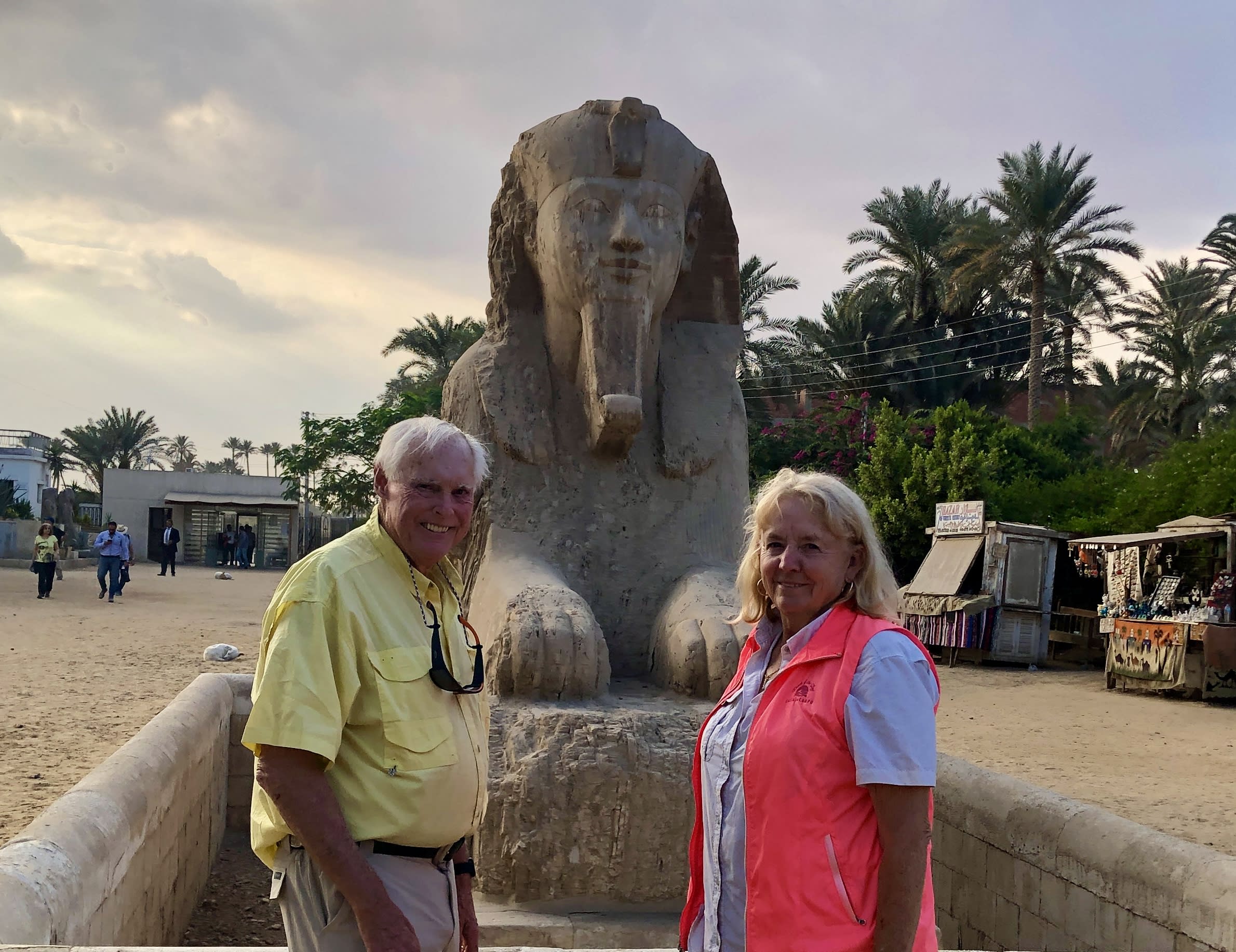
Carved from a single eighty-ton block of calcite, it is the largest such statue ever found. No one knows which pharaoh it honors; there is not an inscription on it to say. The best guesses put the carving somewhere between 1700 and 1400 BC.
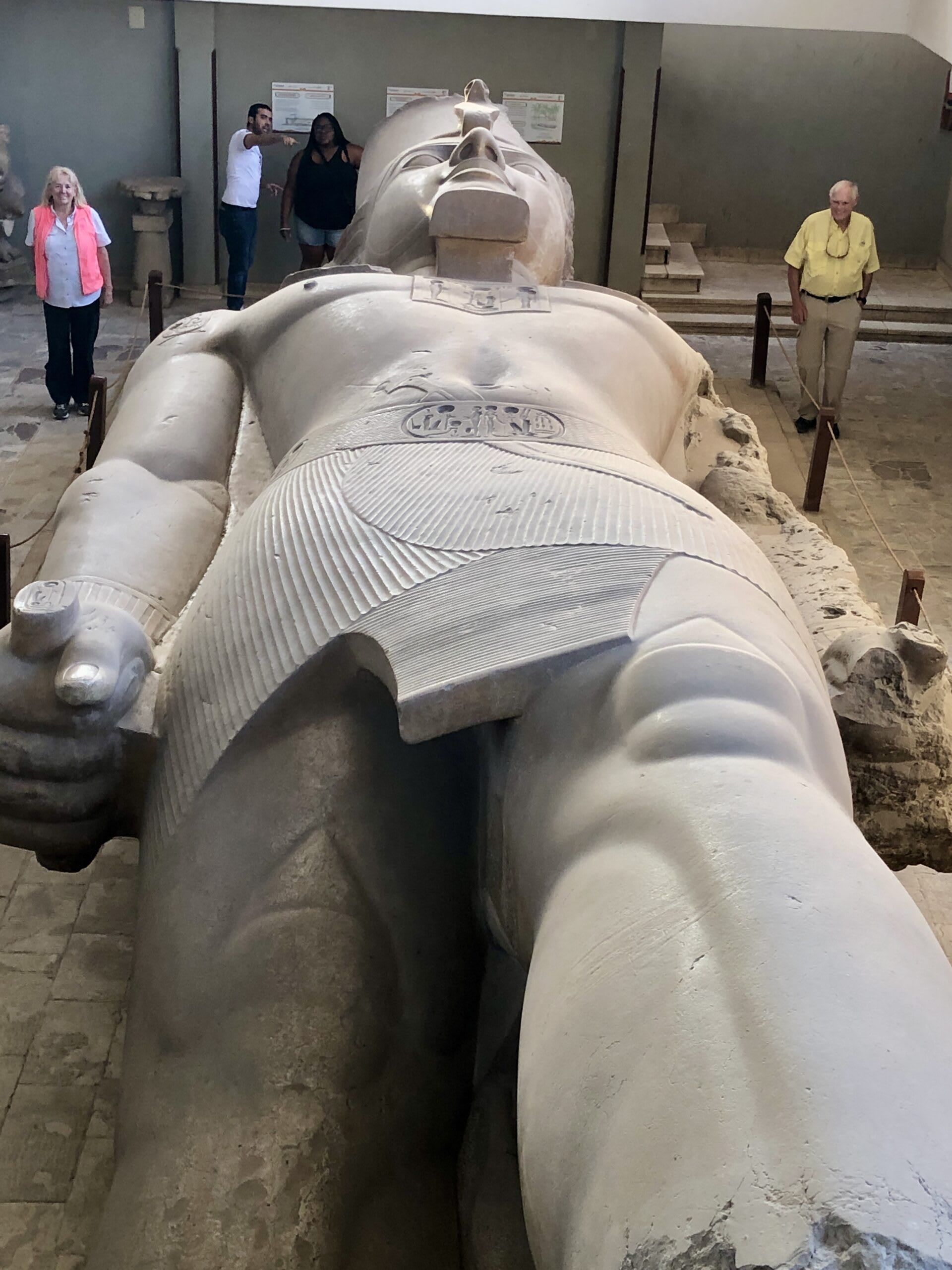
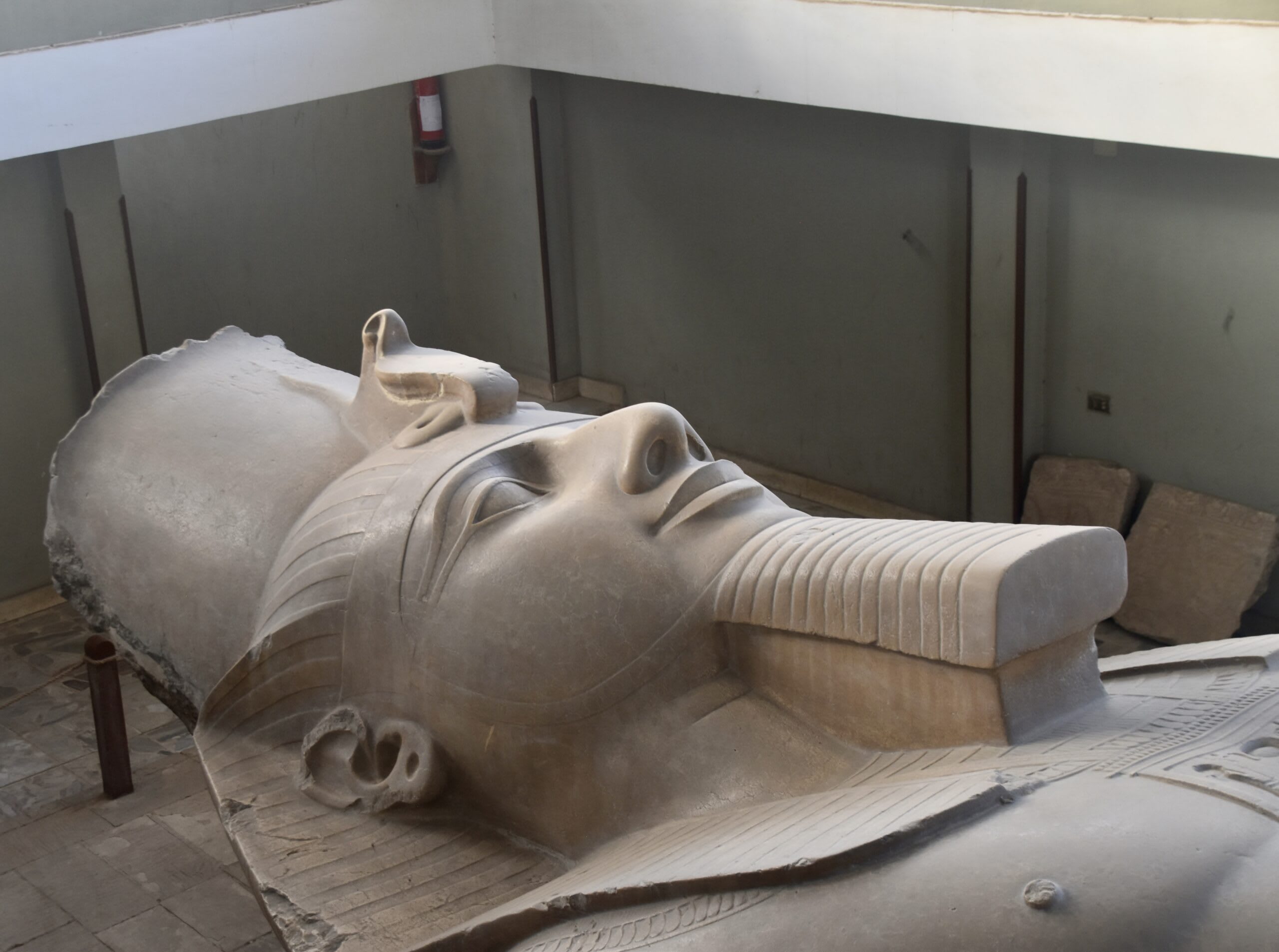
Inside the small museum lies a fallen colossus of Ramses the Great, cut from one block of limestone around 1200 BC. An old earthquake took its feet and part of a hand, but it is magnificent still, about ten meters as it lies, and after some three thousand two hundred years the hieroglyphs across it are as crisp as the day they were carved.
We were booked that evening for the sound-and-light show at the Great Pyramid, but the government called it off for the night, with no reason given. Sam only shrugged: it just happens, that's Egypt. We went back to the hotel for a rest, ate again at the place we'd had lunch, and fell into bed exhausted, and full of one of the great days of our lives.