Dateline November 20, 2022, Luxor and the Valley of the Kings
The Jade put in at Safaga, and from there we set off after a day we had looked forward to as much as any on the whole journey, Luxor.
Getting there. Sam, our guide from Cairo, had arranged for a friend of his, Mario, to take us in hand at Luxor. The drive was a white-knuckle two hours, our man doing ninety on a winding road, but Mario was worth it, an Egyptologist who had studied alongside Sam, lives in Luxor, and seems to know every soul in the city. Luxor today, Waset to the ancient Egyptians and Thebes to the Greeks, was once home to forty thousand and the capital of Egypt through the Middle and New Kingdoms, from about 2050 to 1100 BC.
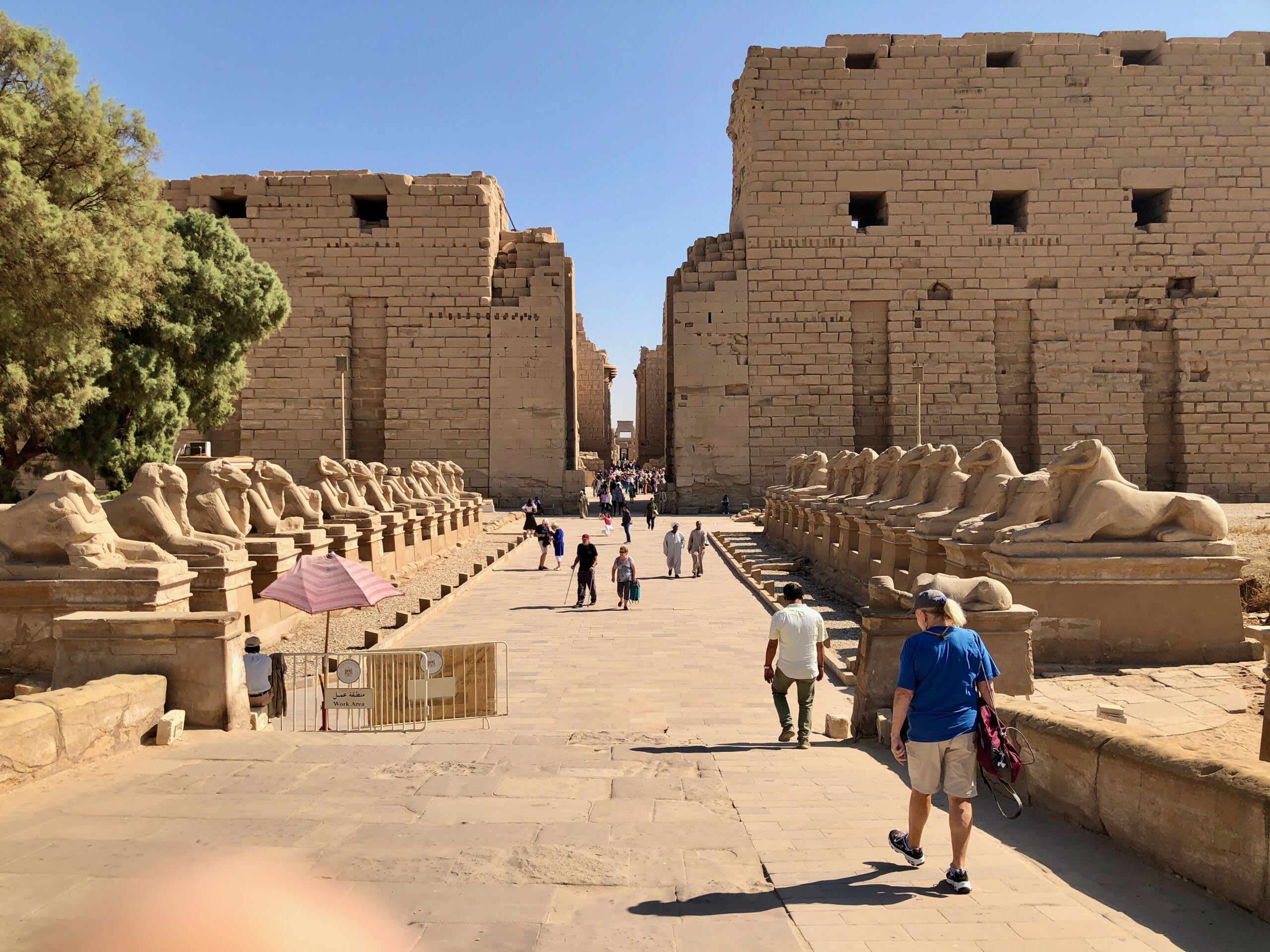
Karnak. Our first stop was the temple of Karnak, whose name means, fittingly, "fortified village," for it is less one temple than a whole walled town of them, raised over two thousand years by some thirty pharaohs. We walked in along an avenue lined with rams, the ram being a sign of the god Amun, who here merged with the sun god Ra to become Amun-Ra. Only one precinct, that of Amun-Ra, is open; it is reckoned the second-largest religious site of the ancient world, after Angkor Wat in Cambodia, and the oldest work in it goes back some thirty-seven hundred years.
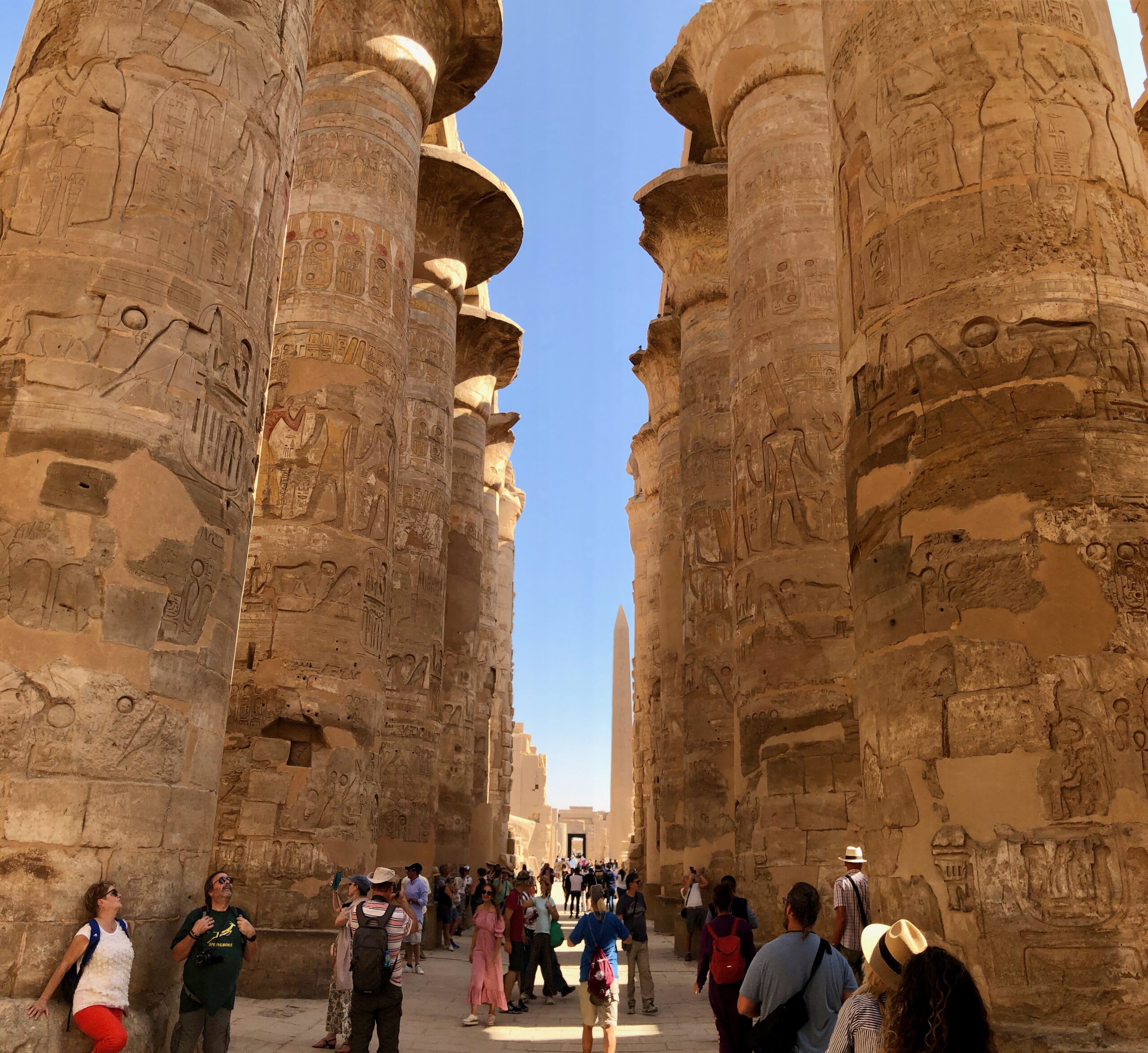
The Great Hypostyle Hall. At the heart of Karnak stands the Great Hypostyle Hall, the work of the pharaoh Sety I some thirty-three hundred years ago: a stone forest of a hundred and thirty-four columns, the tallest near sixty-five feet, that once held up a high roof. It covers a full acre, and there is nothing quite like it anywhere in Egypt.
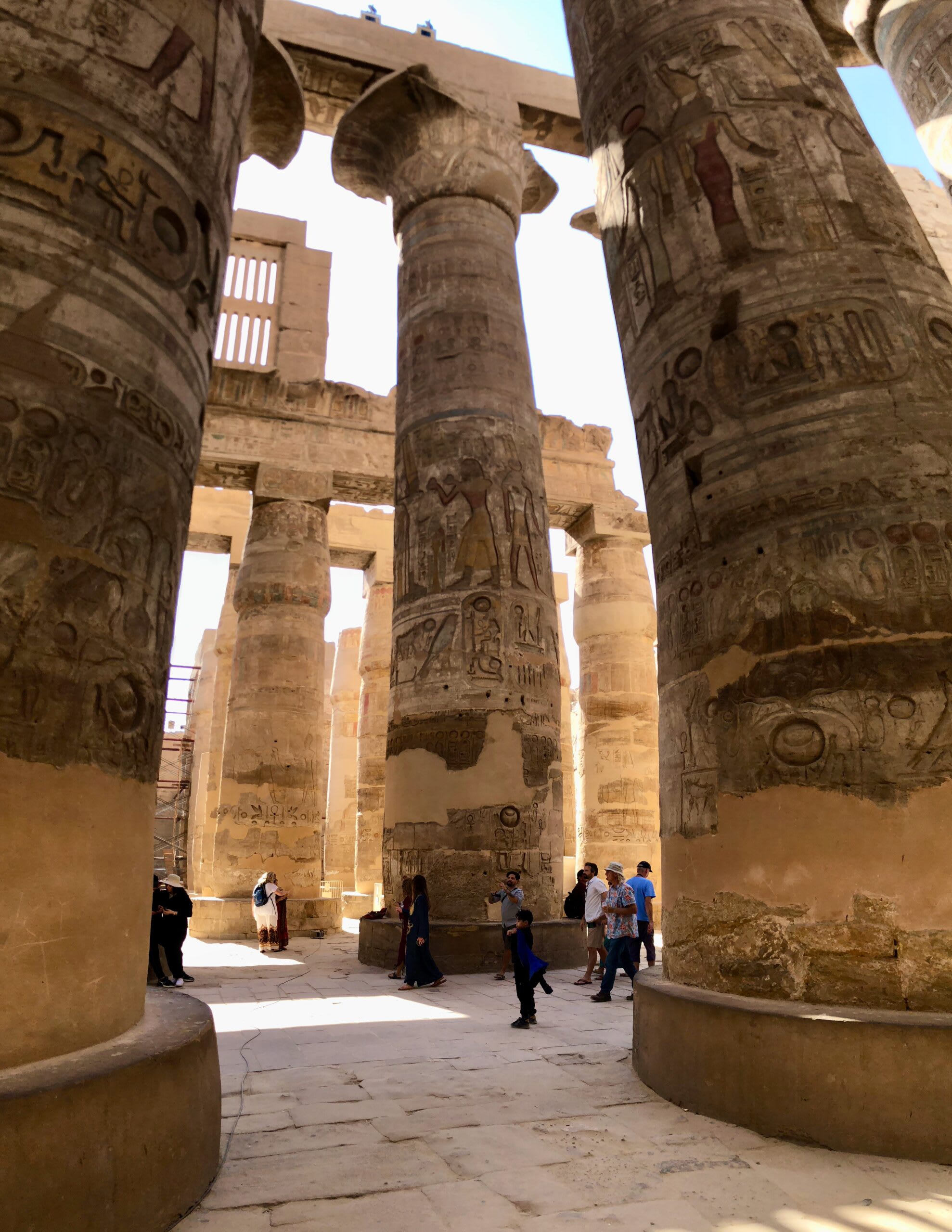
Every surface, column, wall, and beam, is carved, the work of pharaoh after pharaoh, with Roman emperors and ordinary Egyptians adding their own marks down the centuries.
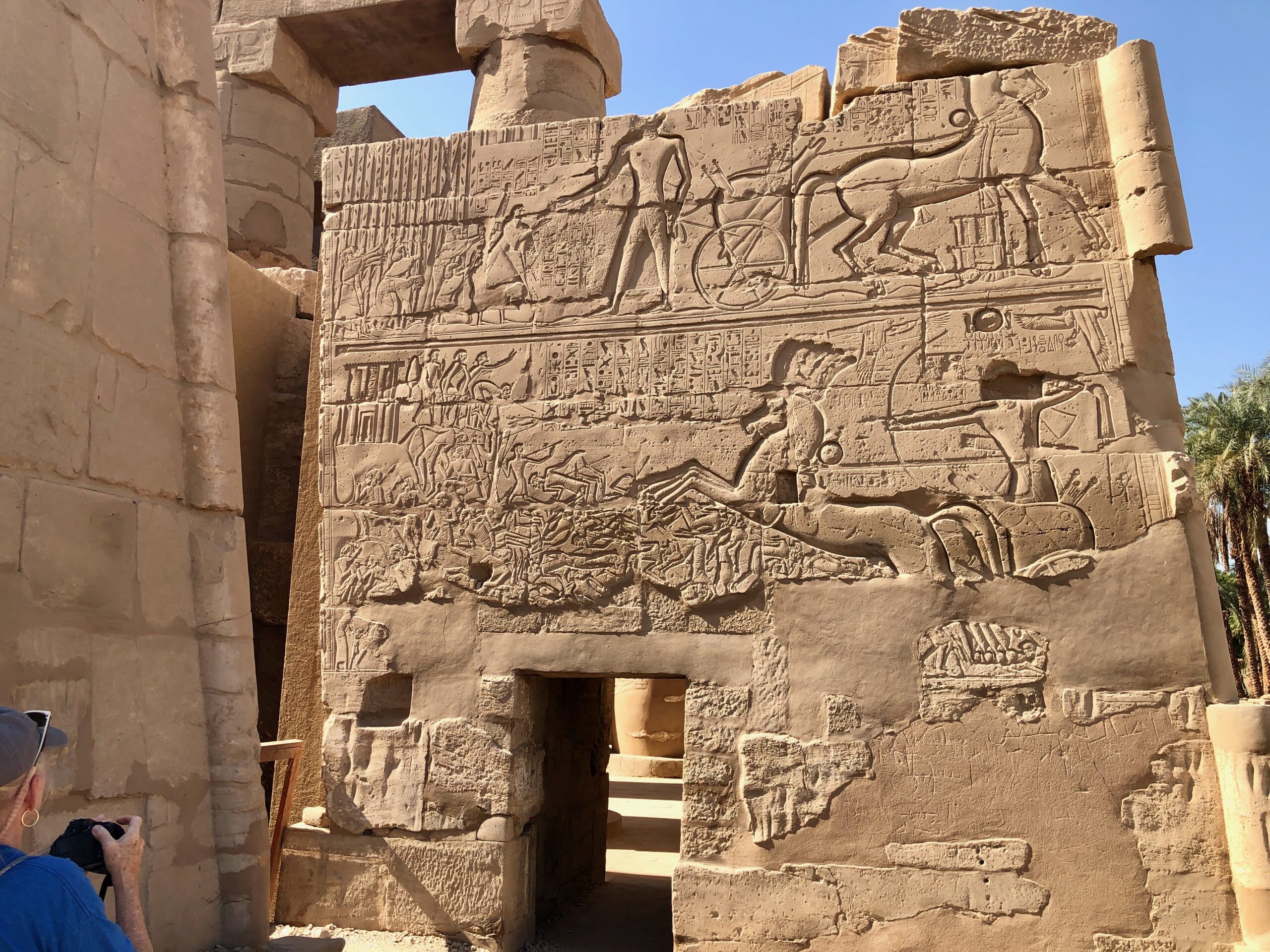
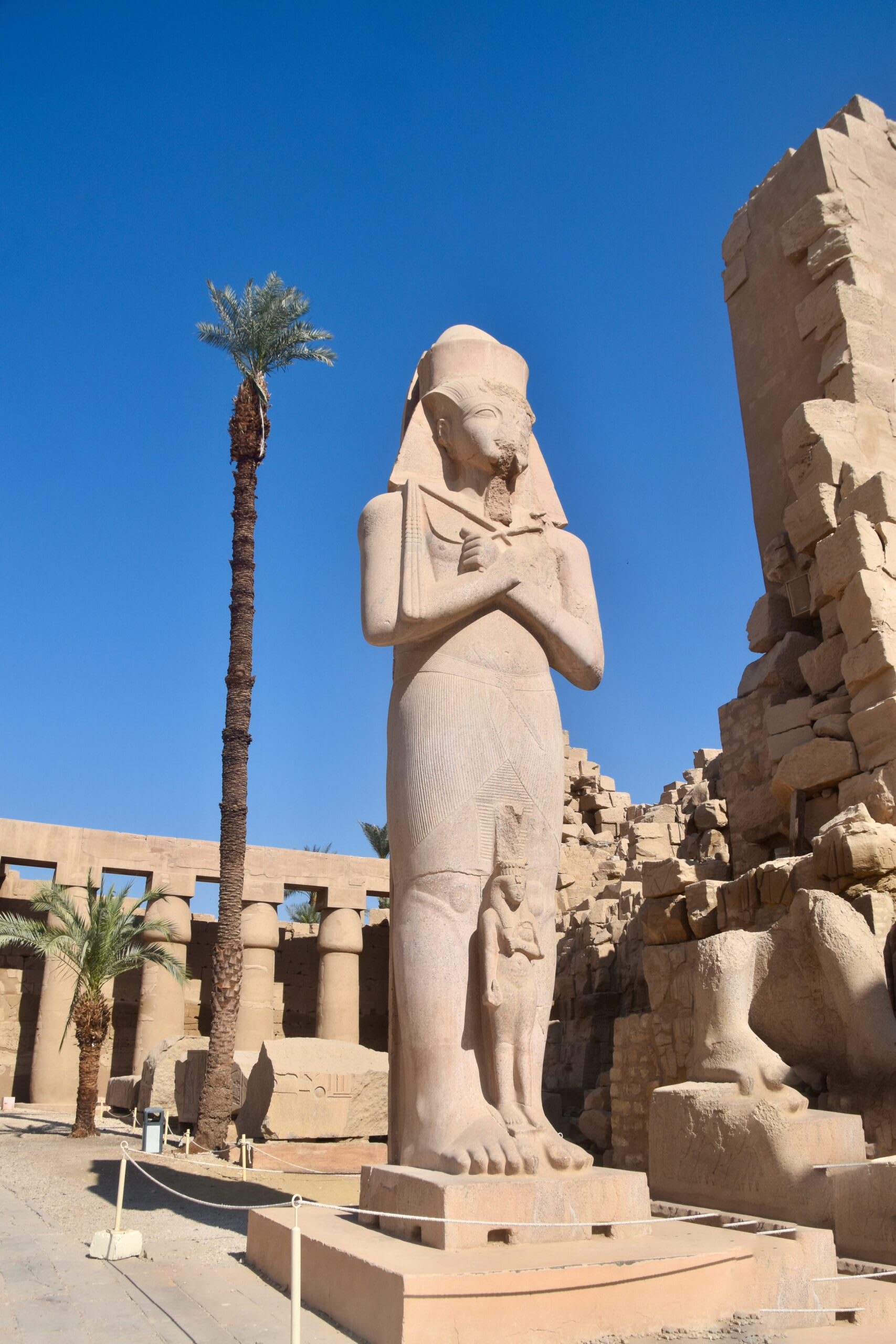
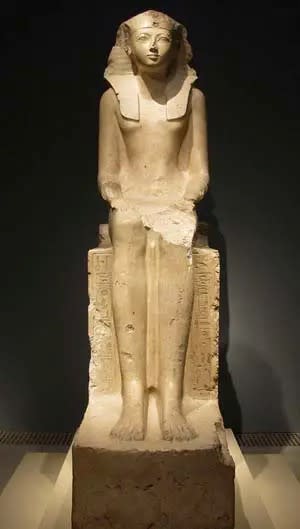
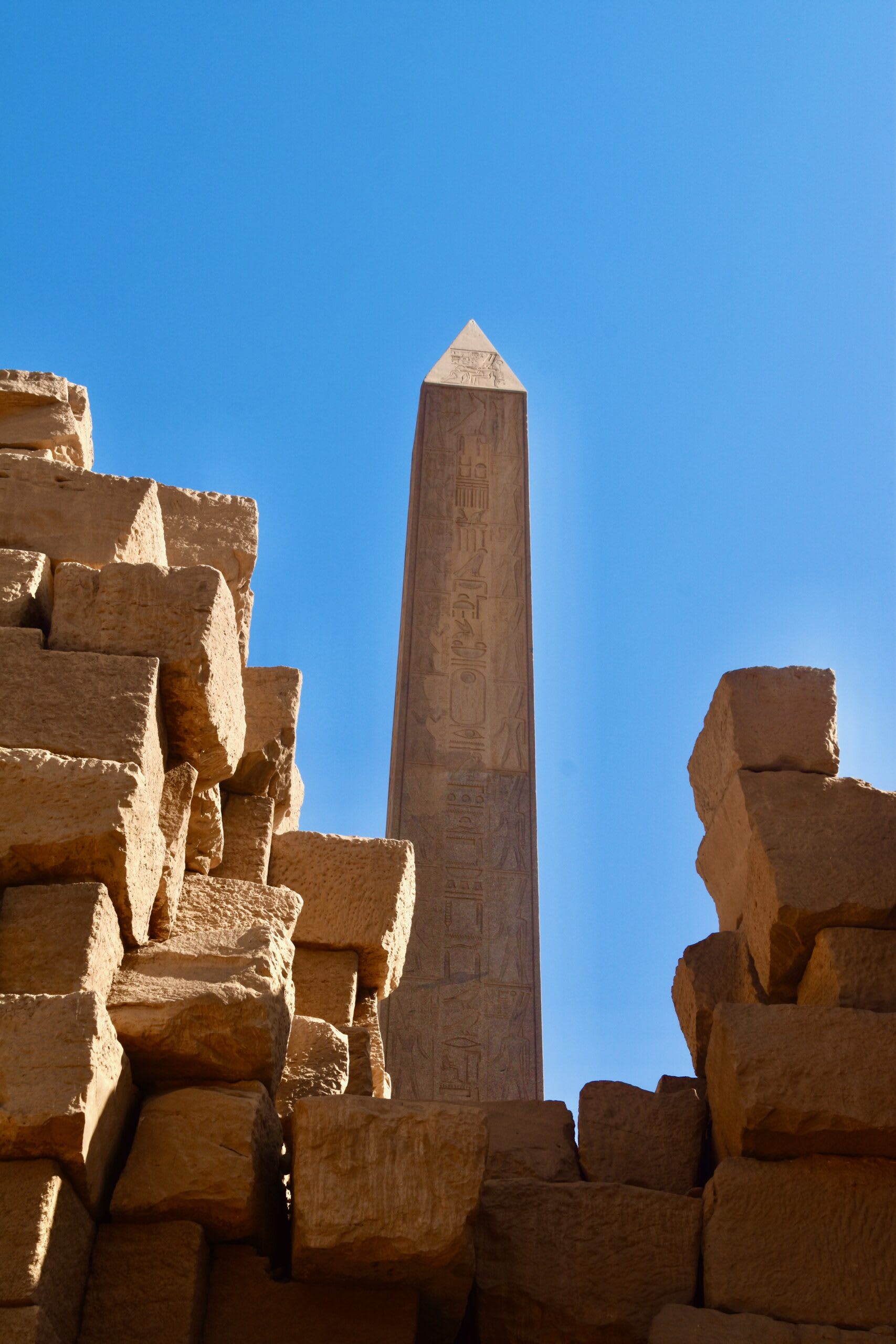
Hatshepsut. Of all the stories Karnak holds, the one that stayed with us was Hatshepsut's. She was one of the very few women ever to rule Egypt outright as pharaoh, in the eighteenth dynasty, around 1500 BC. Married to Thutmose II and stepmother to the boy heir Thutmose III, she took the regency when her husband died and then, within a few years, the throne itself, the supreme power in the land, and held it for some twenty-one years. Hers was a golden time. She began turning the great temples from mud brick to stone and raised pairs of red granite obelisks, one of which still stands, near a hundred feet tall, the tallest left standing in all of Egypt.
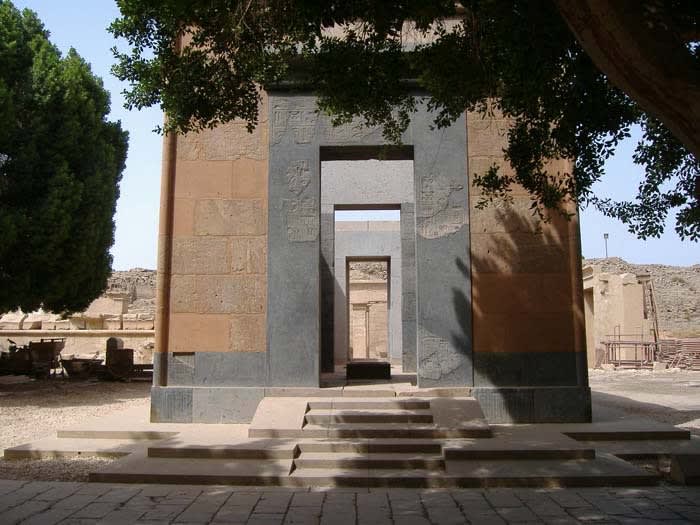
She built a Red Chapel here to shelter the sacred barque of Amun. After she died, her stepson Thutmose III pulled it down and set about erasing her from the record, hacking out her name and her image across Karnak; the chapel was pieced back together in our own time from its scattered blocks. As we say, payback can be a hard thing.
Mario took us to lunch over the Nile, a fine meal and a rest before the afternoon.
Across the Nile. The Valley of the Kings lies on the west bank, and to drive there over the bridge would have cost us an hour we did not have. Mario, who knows everyone, arranged a boat instead, ten minutes across the water, and so we finally had our ride on the Nile, which we had somehow missed in Cairo.
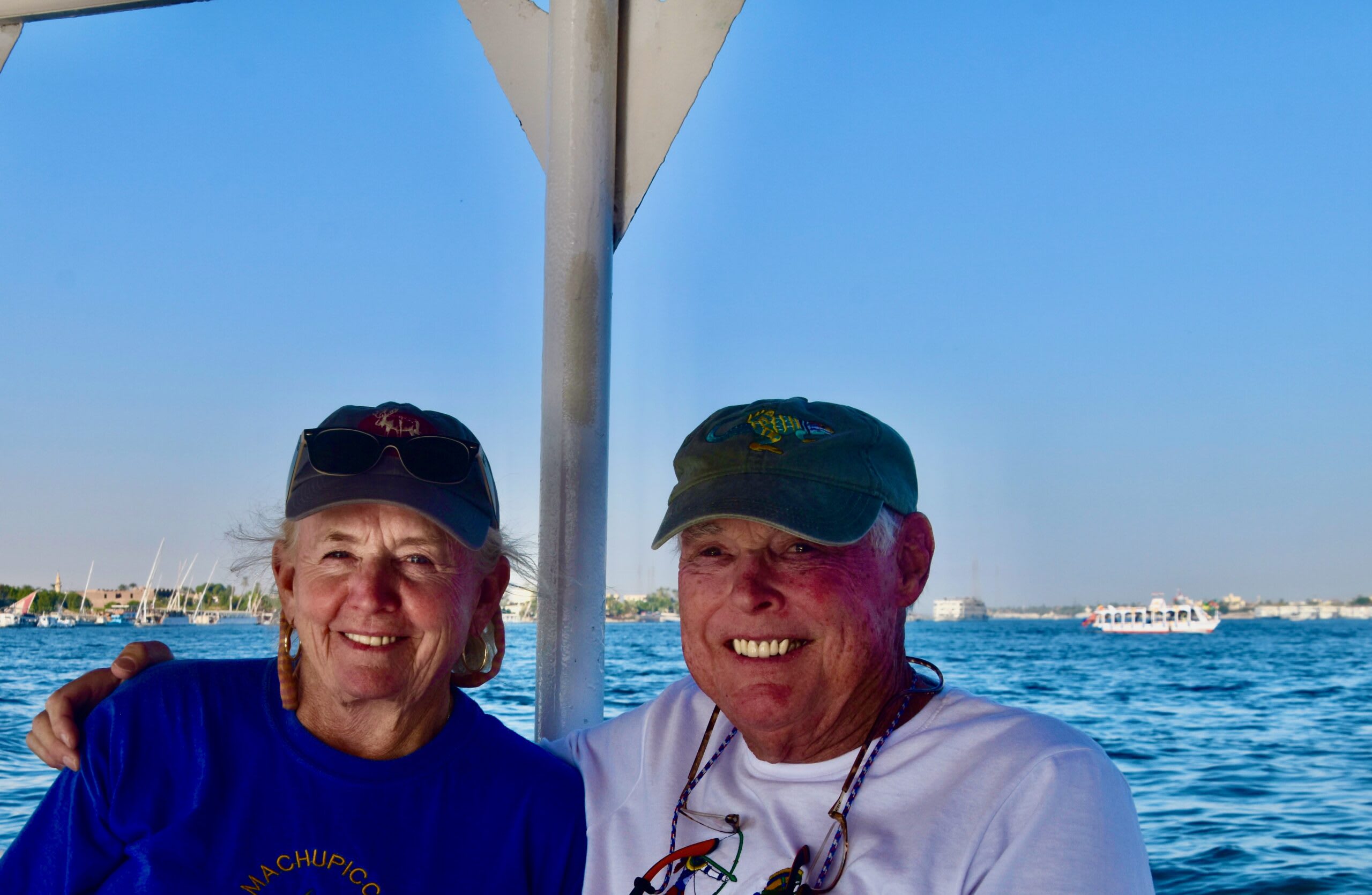
From the river we could see still more ruins along the banks, a reminder that only a small part of all this has ever been uncovered; new finds turn up in Egypt all the time.
The Valley of the Kings. The pharaohs of the Old Kingdom built pyramids near Memphis; the kings of the New Kingdom, their capital here at Thebes, chose instead to be buried out of sight, in tombs cut deep into a desert valley on the west bank. Of the sixty-odd tombs found here, about twenty belong to kings and queens, the rest to nobles and royal kin, and only a handful stand open at a time. The most famous of all, Tutankhamun's, was the one tomb found nearly untouched by robbers, its entrance hidden for ages beneath the tomb of Ramesses VI; his treasures now fill a hall of the Cairo museum.
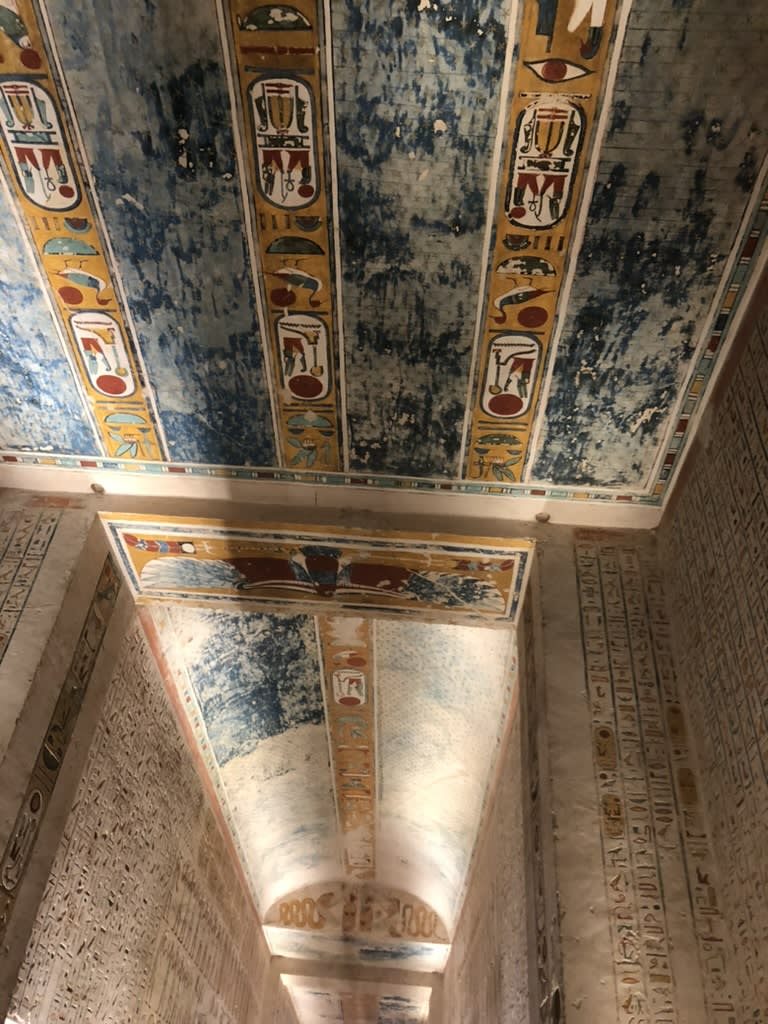
We went down first into KV1, the tomb of Ramesses VII, and it took our breath away, the color and the carving as crisp as if cut yesterday, all down the long sloping passage to the burial chamber.
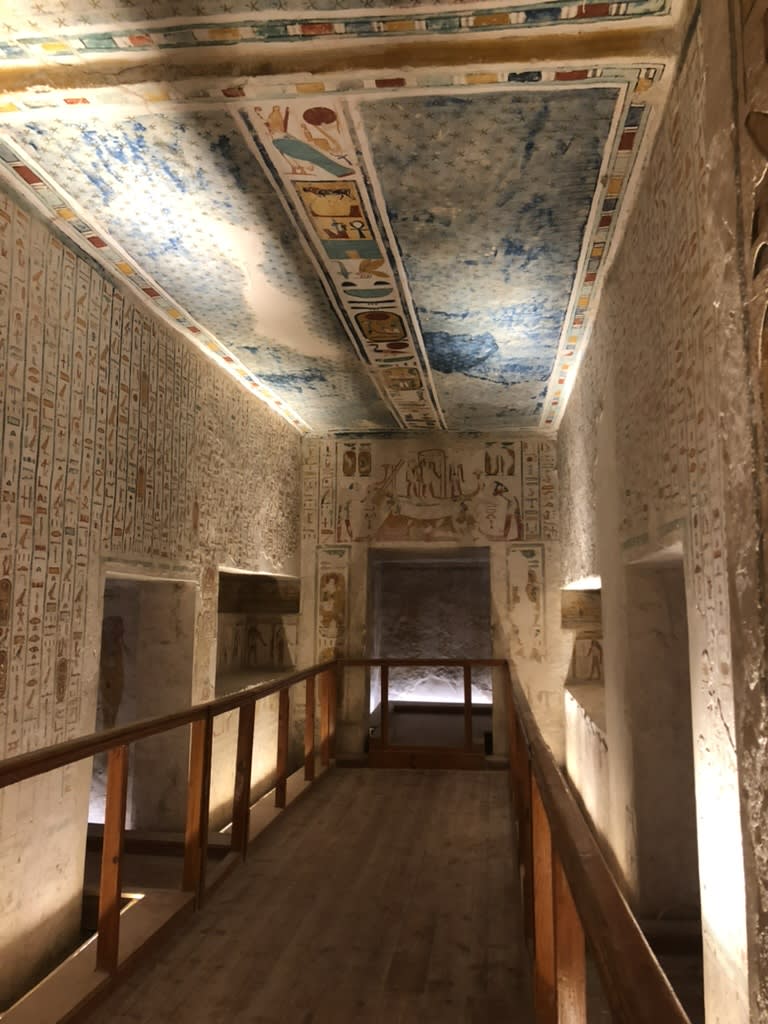
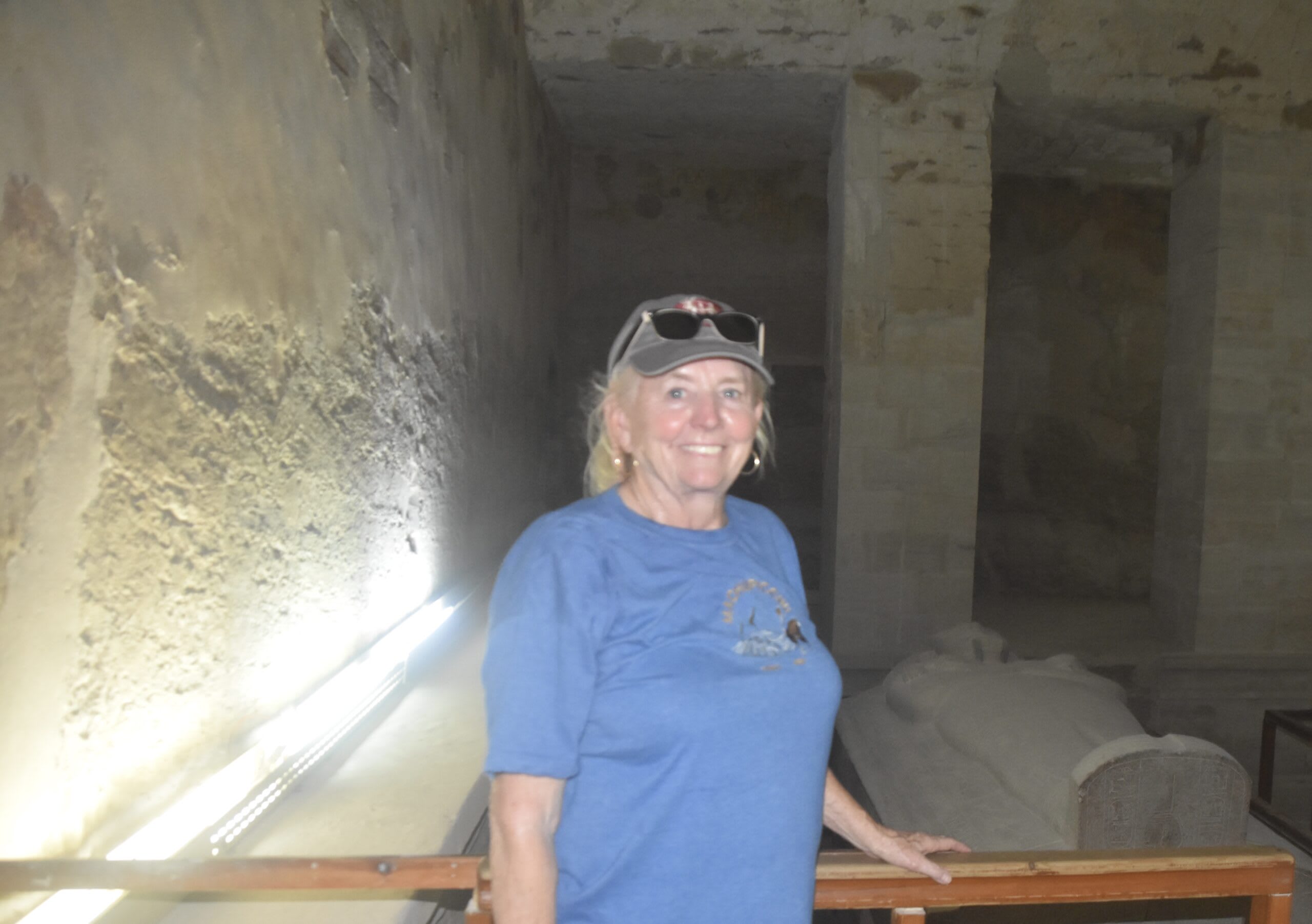
John had walked enough by then and sat with Mario over a soda while Janice went down alone into KV8, the tomb of Merneptah, a steep descent, not as bright as the first but wonderful all the same.
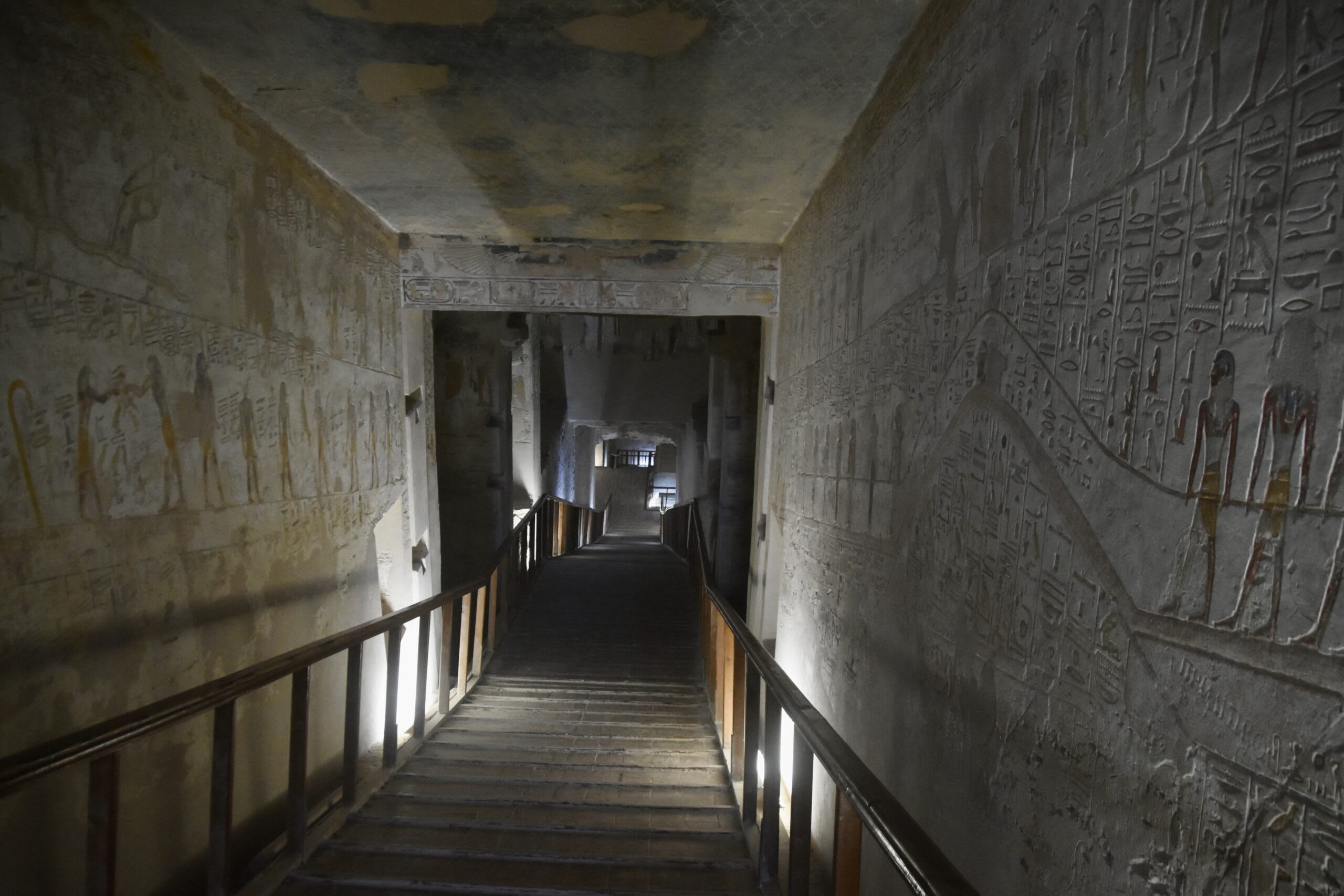
At the bottom she found herself alone but for the guard, who offered to let her step out along a narrow ledge to where the sarcophagus once lay. It was a thin and slightly frightening perch, and a fine memory.
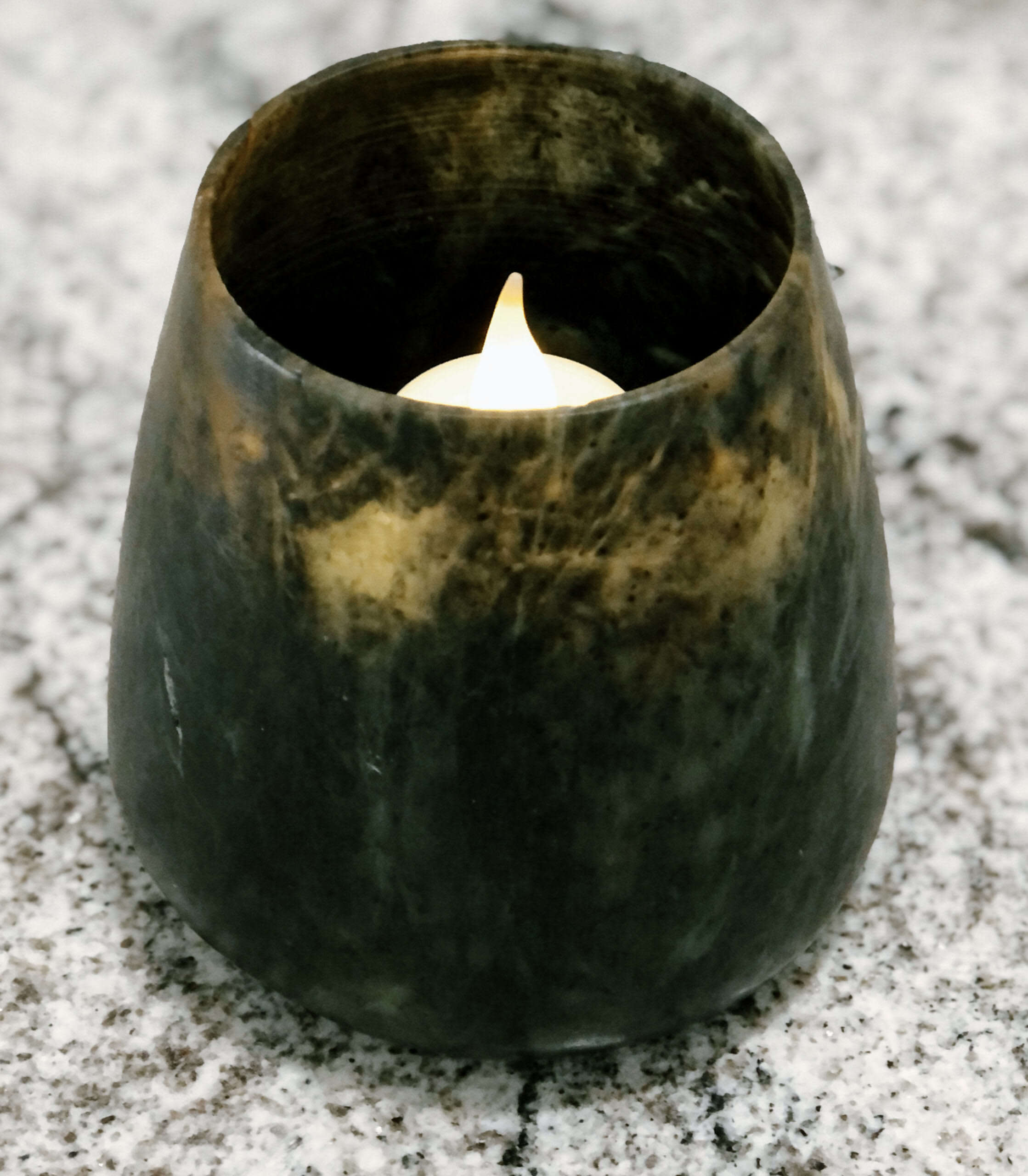
The way back. On the road back to Luxor we stopped at a workshop where they carve alabaster, and watched a demonstration outside before a young man showed us in. He asked us all about America, about life in the small towns away from the big cities, with real warmth for our country; it was a pleasure to talk with him. Janice found an alabaster candle holder for the mantel.
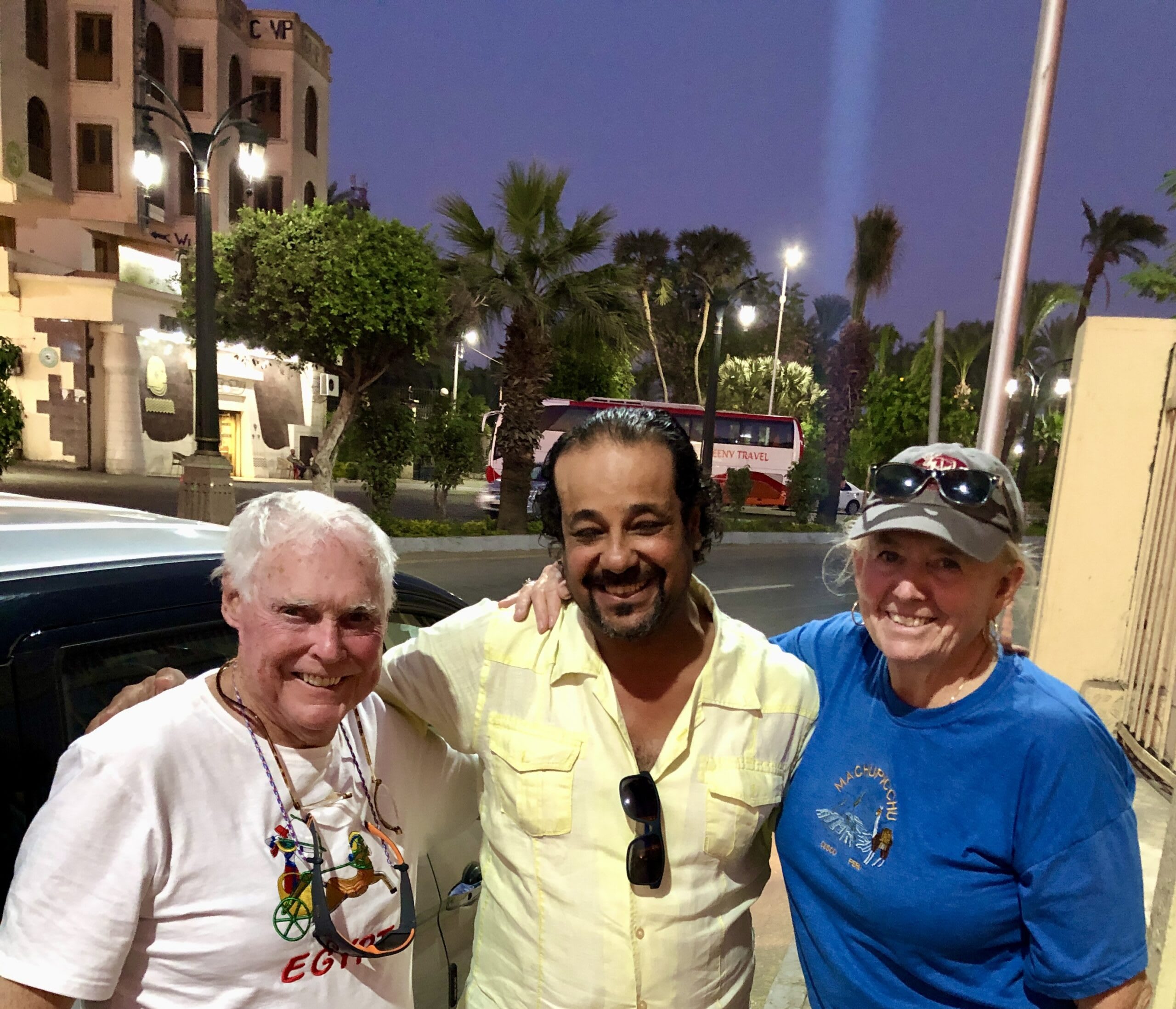
We could not thank Mario enough; he had packed a great day full and made every bit of it easy.
We hurried back toward the ship, for tourists are not allowed on those roads past a certain hour, and there are police checkpoints along the way where the driver must show his papers. Back aboard the Jade, we sailed on, full of the wonder of ancient Egypt.