Dateline December 3, 2022, Alexandria
With the cruise behind us and a few days in Egypt still to come, we flew from Dubai back to Cairo, glad after all that we had given up the extra days in Dubai. We had not come all this way for new buildings and gleaming towers; we had come to see the beginnings of civilization. At the Conrad on the Nile we opened a long-unused rewards account, and were handed a suite looking straight down the river. Nothing beats luck.
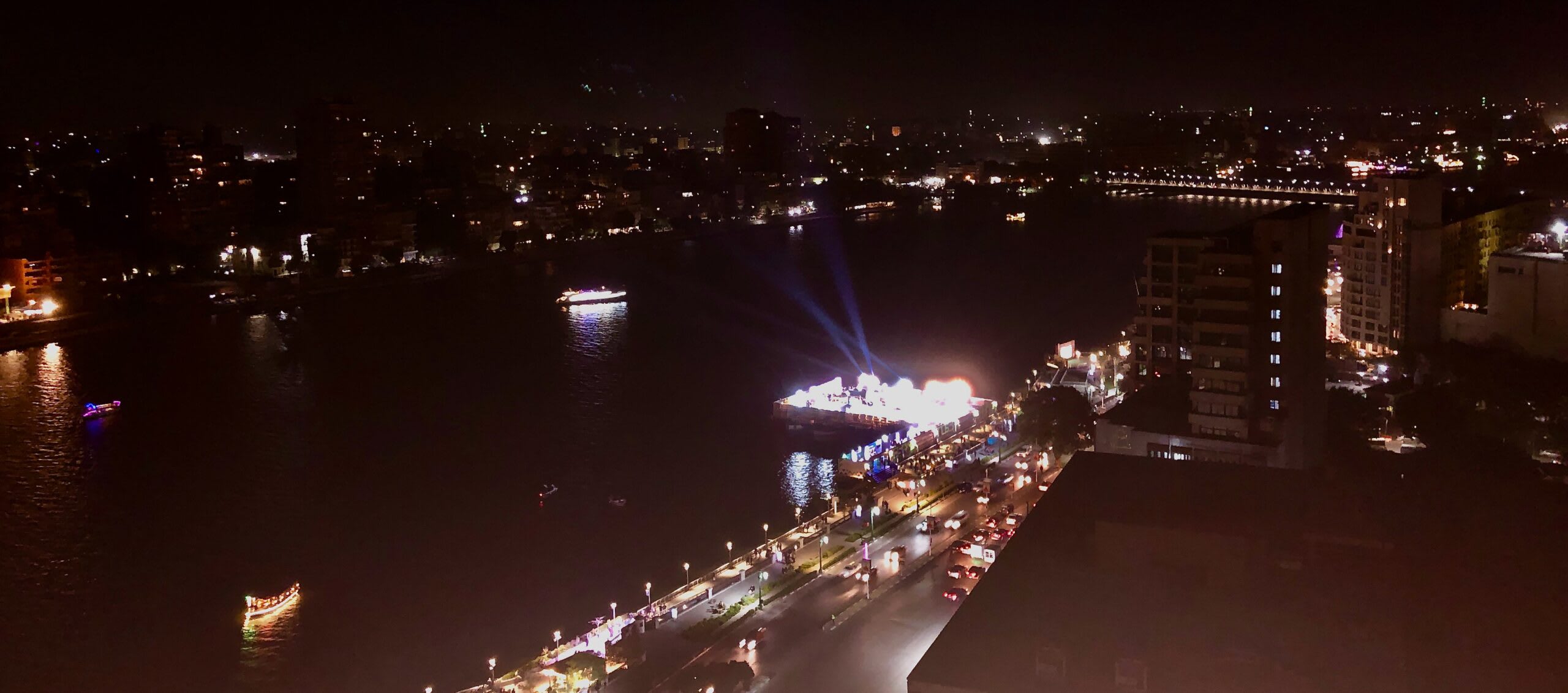
The road to Alexandria. Sam, our guide from the Giza days, had the next two days planned, and we met him at half past seven for the drive north. It took several hours, with little to see but the road itself, which was adventure enough: our new driver bore down on a car in our lane at perhaps seventy miles an hour, Janice ducked, and he stood on the brakes. When Sam asked what on earth he was doing, he said he had expected the other fellow to move over. Sam, who we suspect was rattled too, decided he had better watch the road and talk to us less. Driving in Egypt is a thing unto itself.
The Paris of antiquity. Alexandria has worn three cultures at once. Alexander the Great founded the city in 332 BC, a long line of Greek rulers followed, and in 31 BC the Romans took it and added their own ways. That mingling of Egyptian, Greek, and Roman gave the place its old nickname, the Paris of antiquity, and nowhere is the blend plainer than down in the catacombs we had come to see.
The catacombs of Kom el Shoqafa. There is no grand building over them, only a small covered shaft, which is why a visitor might walk past; that would be a mistake. They are counted one of the Seven Wonders of the medieval world, and they came to light by pure accident in 1900, when a donkey hauling a cart of stone put a foot wrong and dropped clean through a hole into the dark.
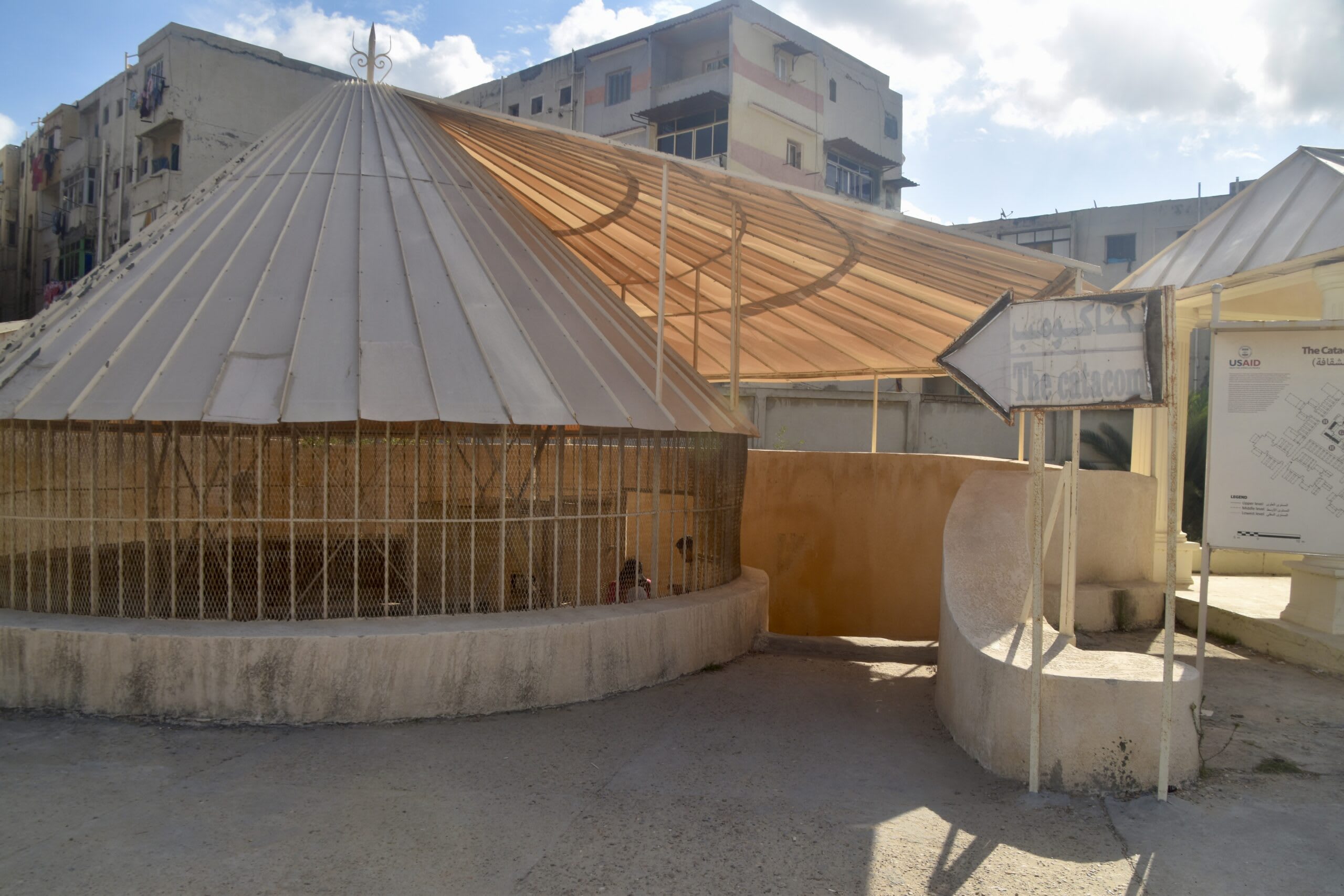
A spiral staircase of ninety-nine steps winds down around a wide shaft, the same shaft once used to lower the dead on ropes, with slits cut in the rock to let a little daylight onto the stairs. The name Kom el Shoqafa means "mound of shards," after the broken pottery left behind by mourners who would not carry home the vessels they had used at the graveside.
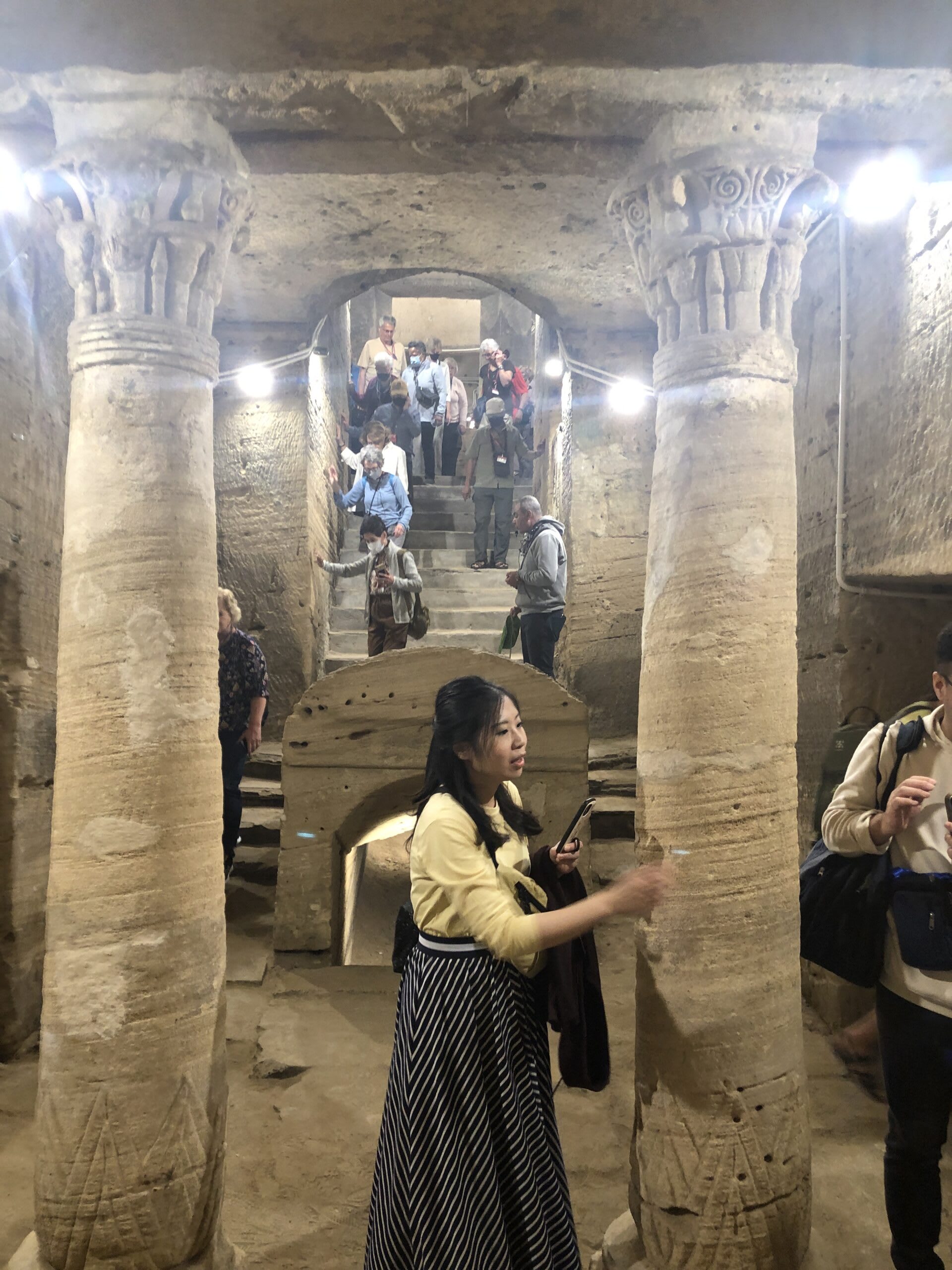
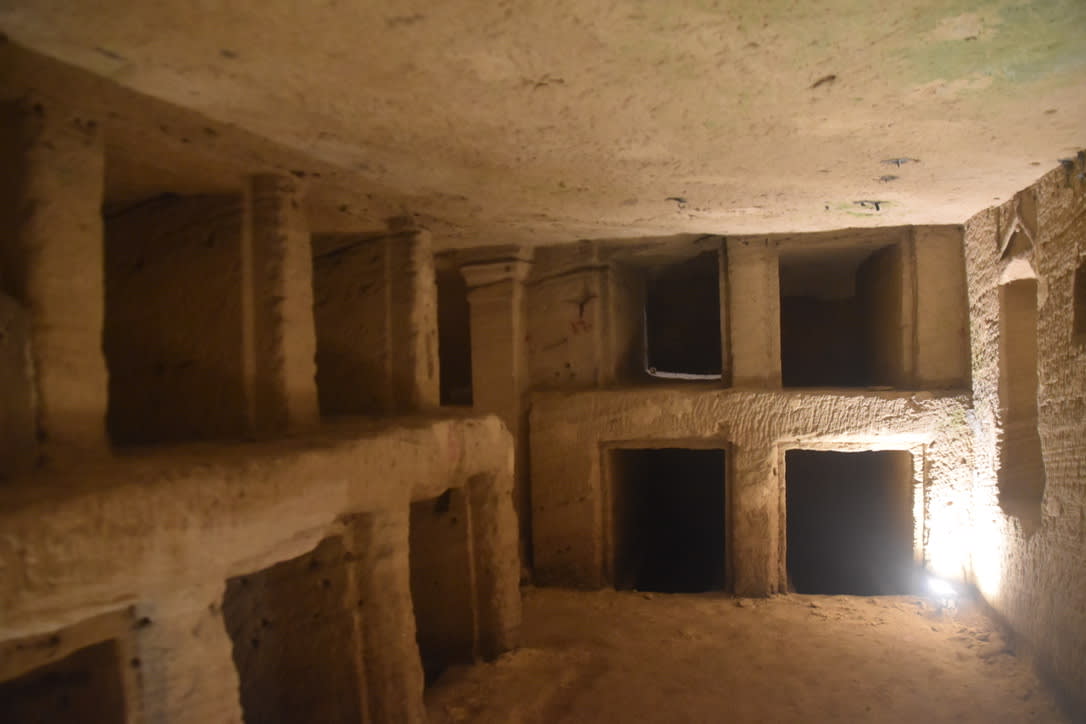
A wealthy family cut the first tombs here in the second century. Somehow it grew into a burial place for hundreds, run, it is thought, rather like a company, with dues paid to keep one's people interred and remembered. Over two centuries it filled with more than two hundred and fifty tombs.
Three cultures in one stone. The carving is where the blend shows. In the main tomb stand statues of a man and a woman, their bodies in the stiff old Egyptian pose, but the man's head cut in the lifelike Greek manner and the woman's hair dressed in the Roman fashion.
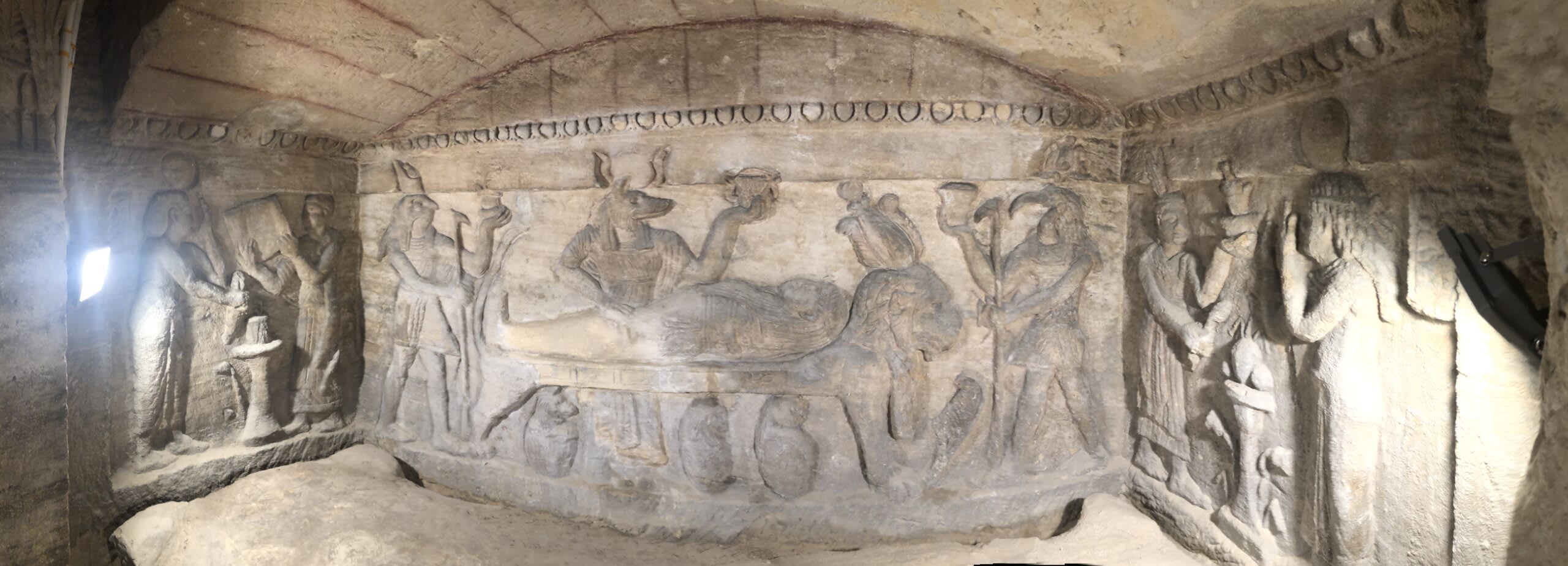
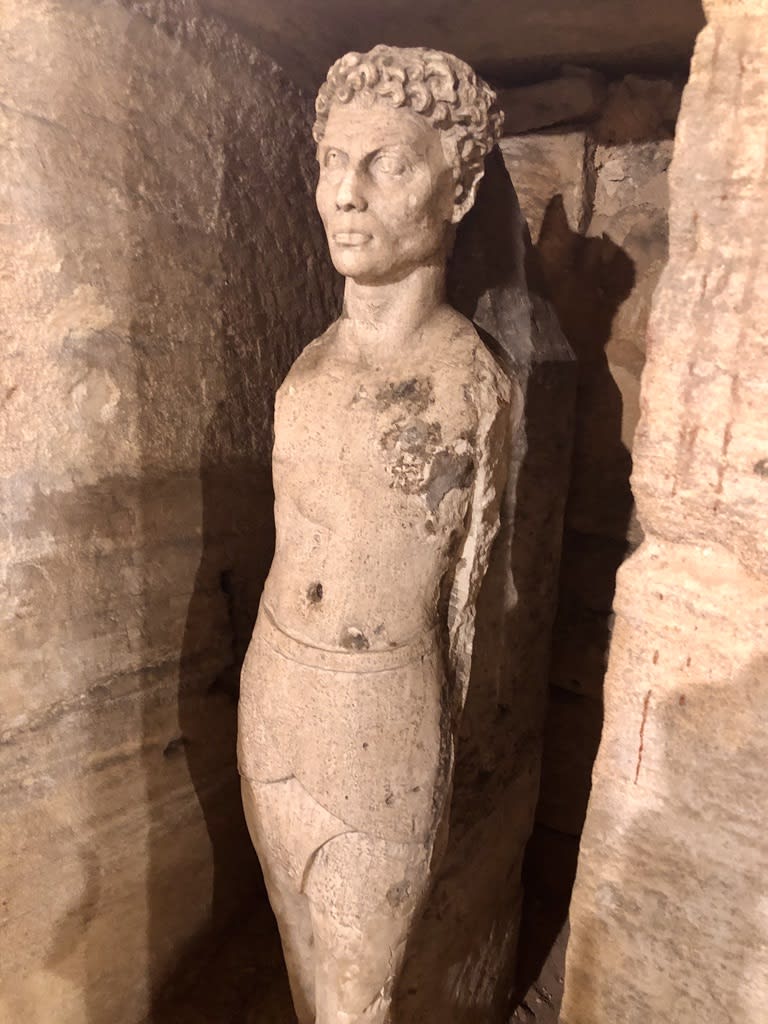
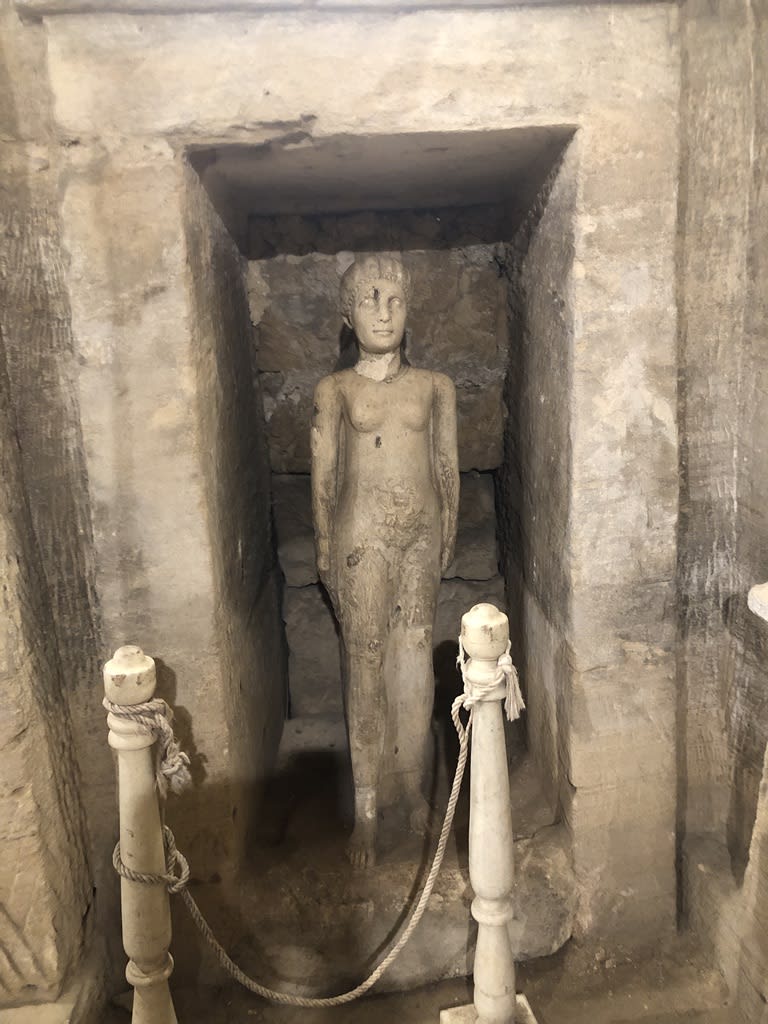
By the doorway two serpents stand guard, Greek good-spirits wearing the double crown of Egypt, each carrying a Roman staff and a Greek one, with Greek shields above them bearing the face of Medusa to frighten off intruders. One writer called the whole place visible proof of an age when three cultures, three arts, and three faiths lay one atop another on Egyptian soil. Off the rotunda opens a darker chamber, the Hall of Caracalla, holding the bones of men and horses; it takes its name from that emperor's massacre of Alexandrians in 215, though no one can say the bones are truly its own.
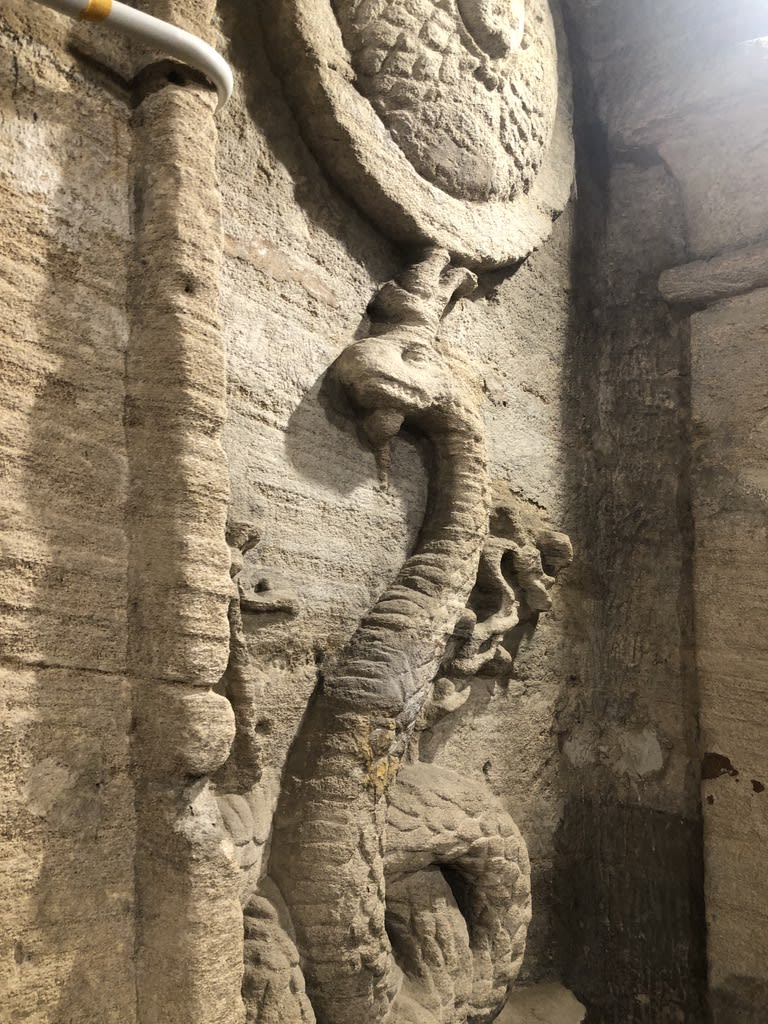
A little creepy, and amazing.
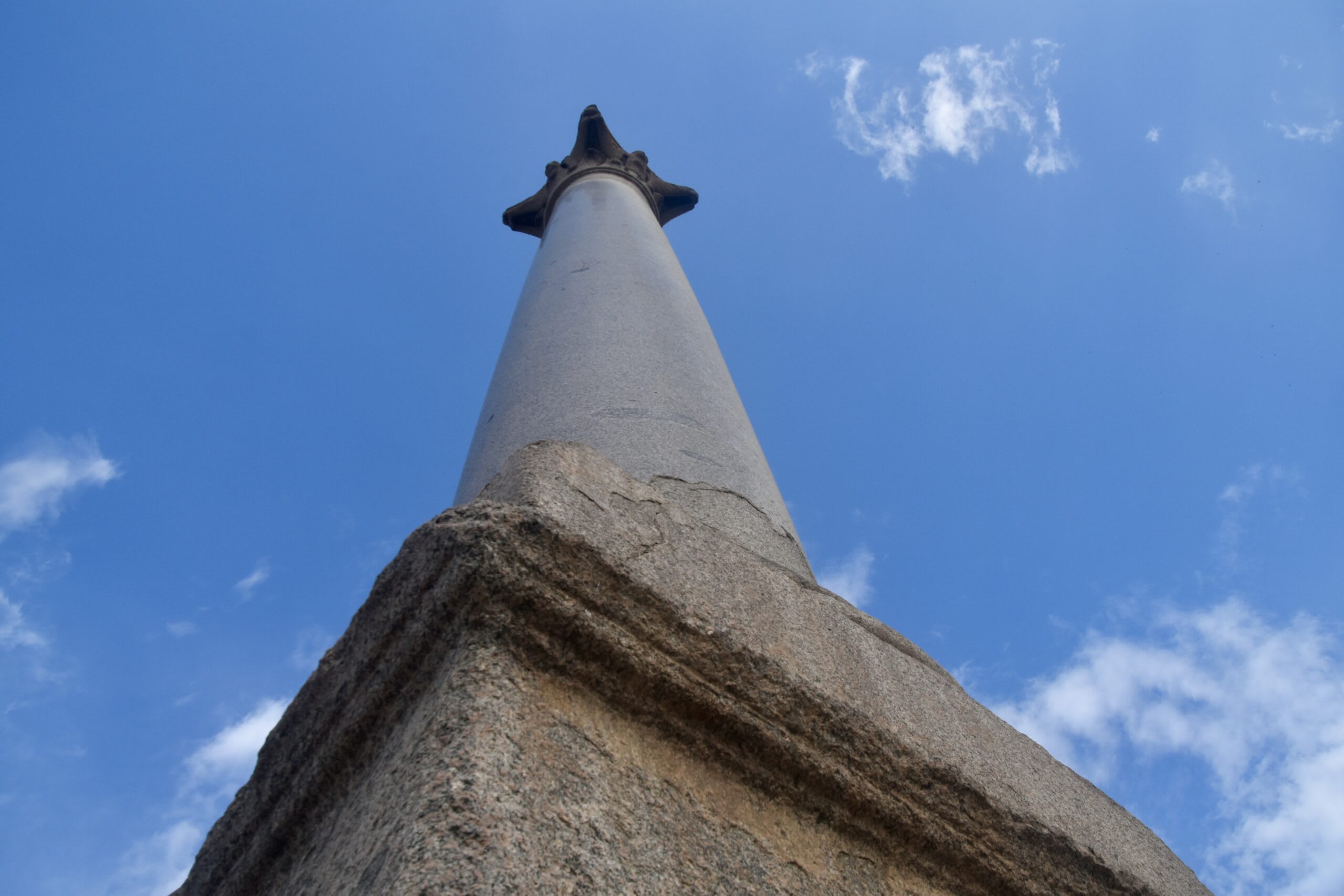
Pompey's Pillar. Back in the daylight we went to Pompey's Pillar, a lone granite column and one of the few Roman works in the city to outlast the centuries. The name is a mistake. Crusaders fancied that the head of the Roman general Pompey lay buried beneath it, but Pompey had been killed in 48 BC, and the column was in fact raised in 292 to honor the emperor Diocletian, in thanks, the story goes, for grain he sent during a famine.
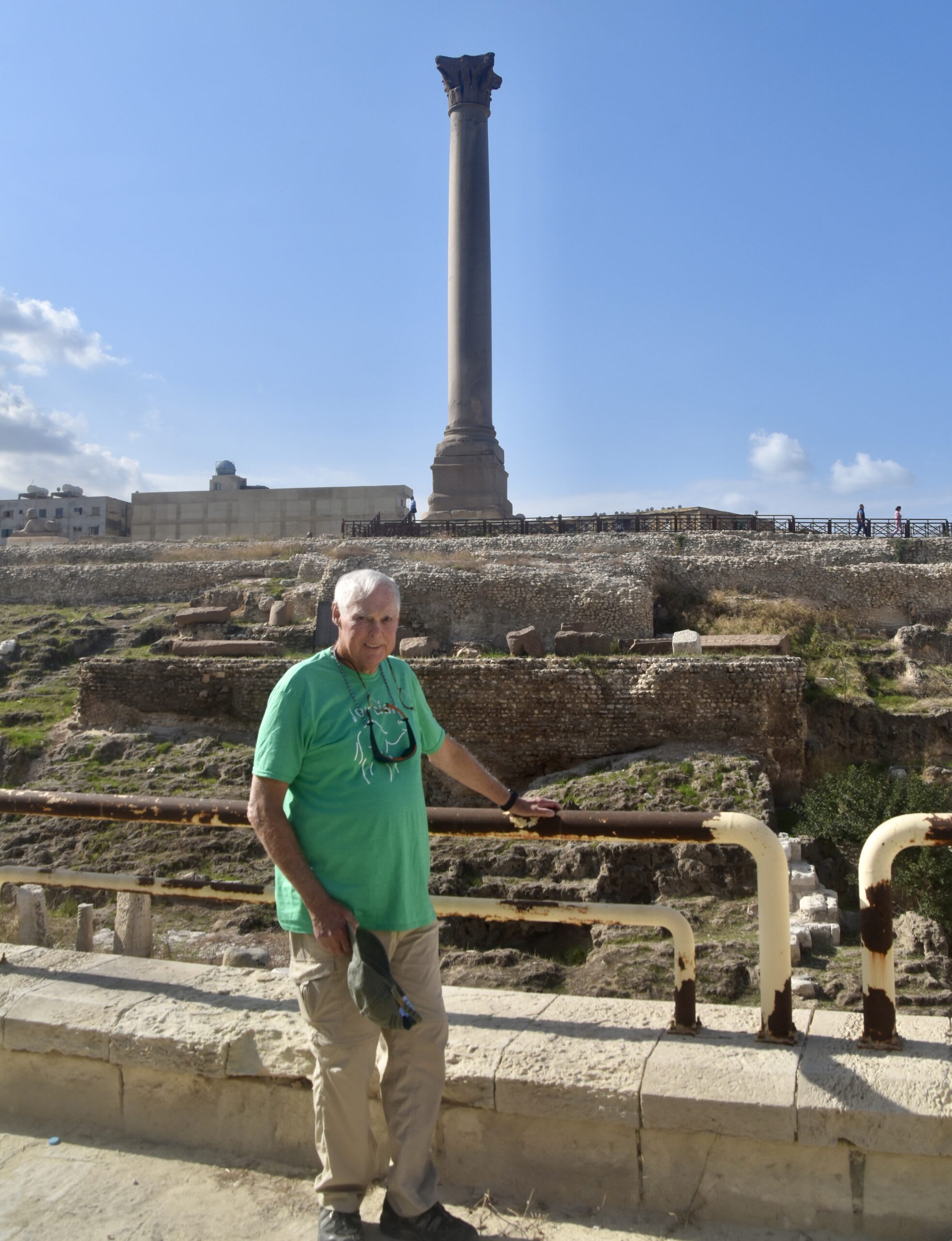
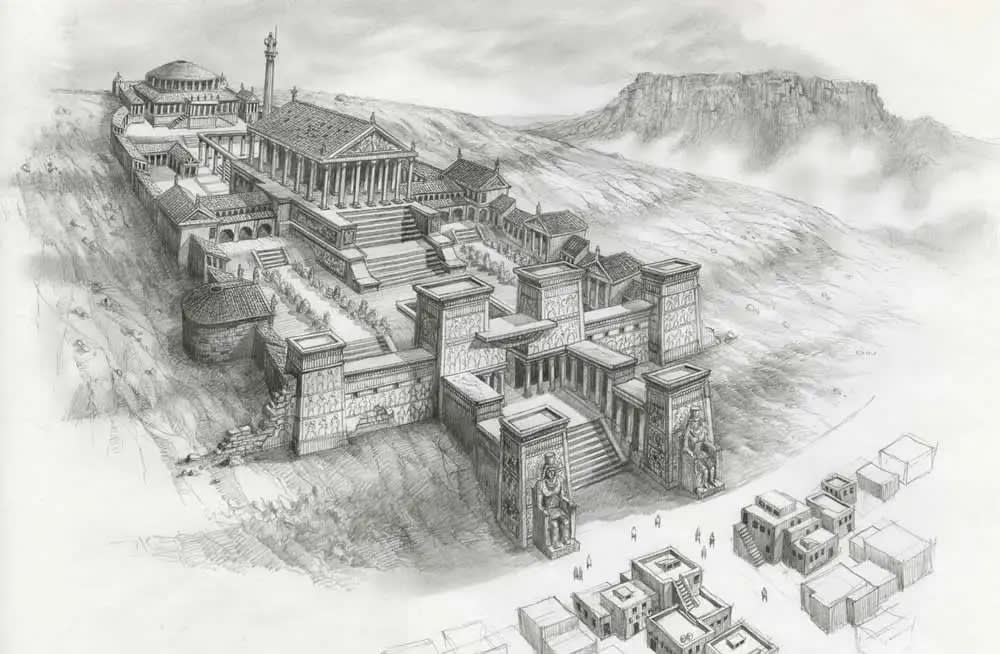
It stands about eighty-five feet now, taller still when its statue crowned it, cut from a single block of rose granite hauled from Aswan, more than five hundred miles up the Nile. When Christianity took hold, a mob led by the bishop Theophilus pulled down the great pagan temple that had stood here, the Serapeum, in 391; the pillar alone was left.
The library, old and new. Last we came to the library. The ancient Library of Alexandria, begun in the fourth century BC, was for some six hundred years the mind of the Hellenistic world, holding by some accounts half a million scrolls, Plato and Aristotle and Homer and Herodotus among them, with scholars who measured the earth and mapped the stars. How it died is still argued, fire, earthquake, Caesar, or zealots, but by the fifth century it was gone, and barely one scroll in a hundred survived. So much learning had to be won all over again.
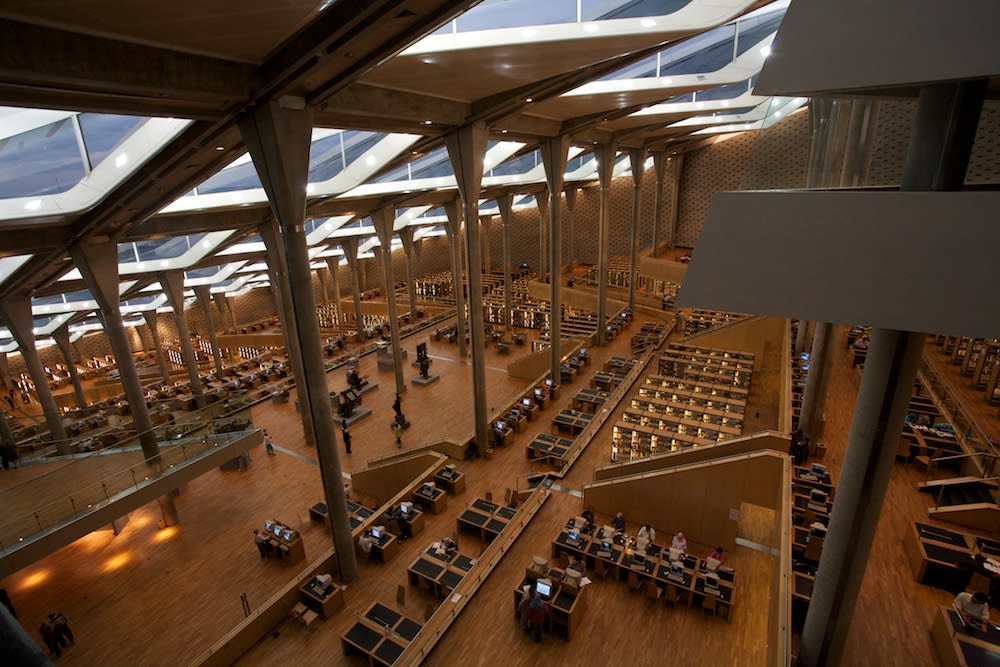
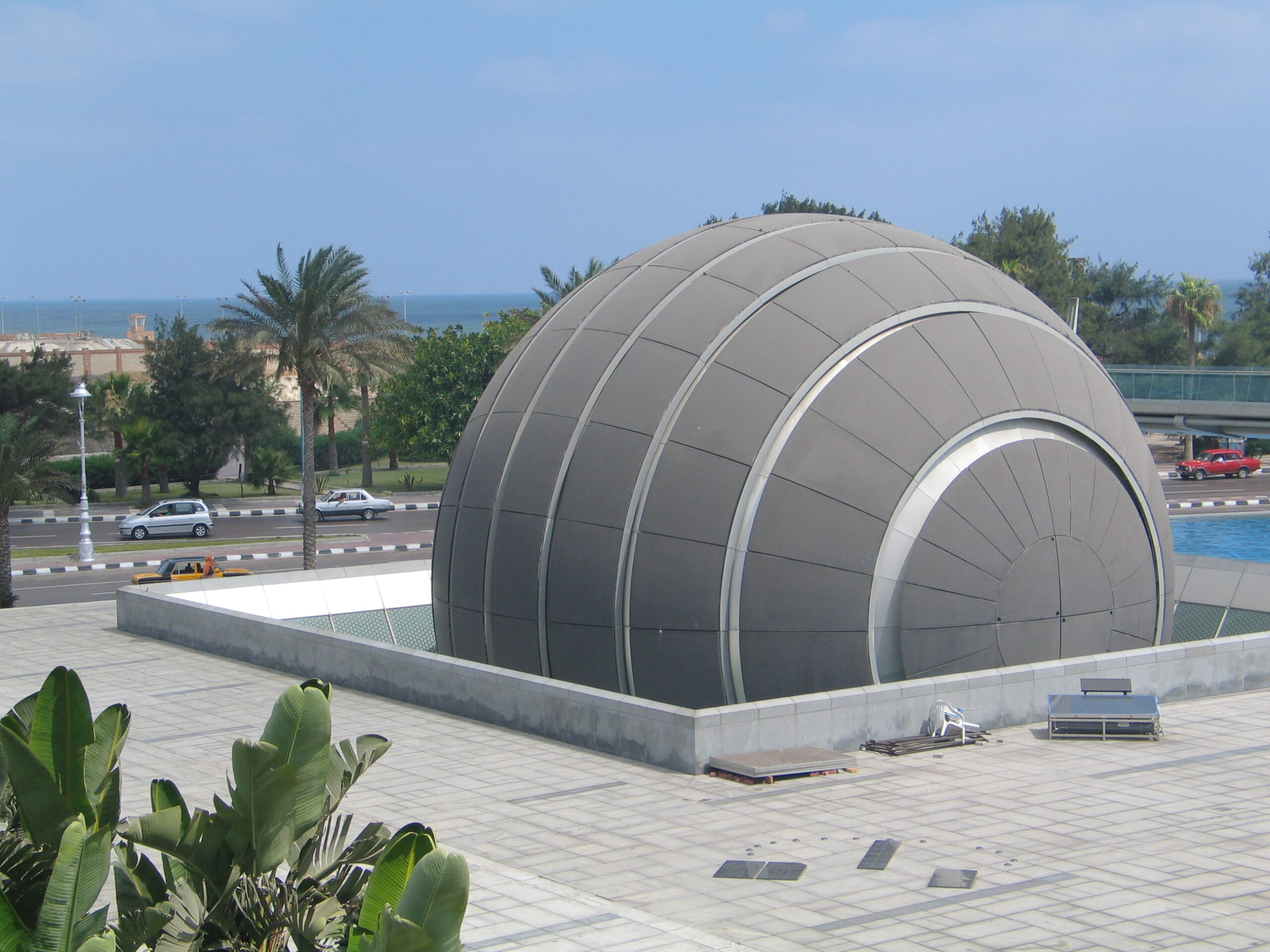
Near the old site stands its modern tribute, the Bibliotheca Alexandrina, opened in 2002, a great tilted disc designed by a Norwegian firm, its outer granite wall carved with the scripts of the world.
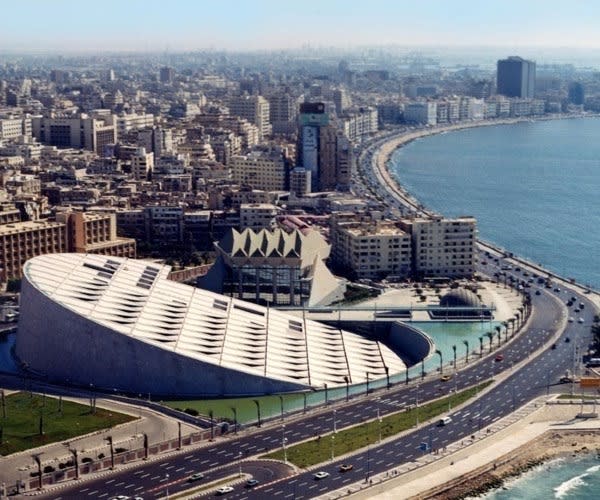
A guide from the library walked us through, since no outside guides are allowed, and we looked down over its terraces of reading rooms. It holds a million and a half books already, with room for many millions more, and museums and a planetarium besides. Of all the libraries we have ever stood in, this one moved us most.
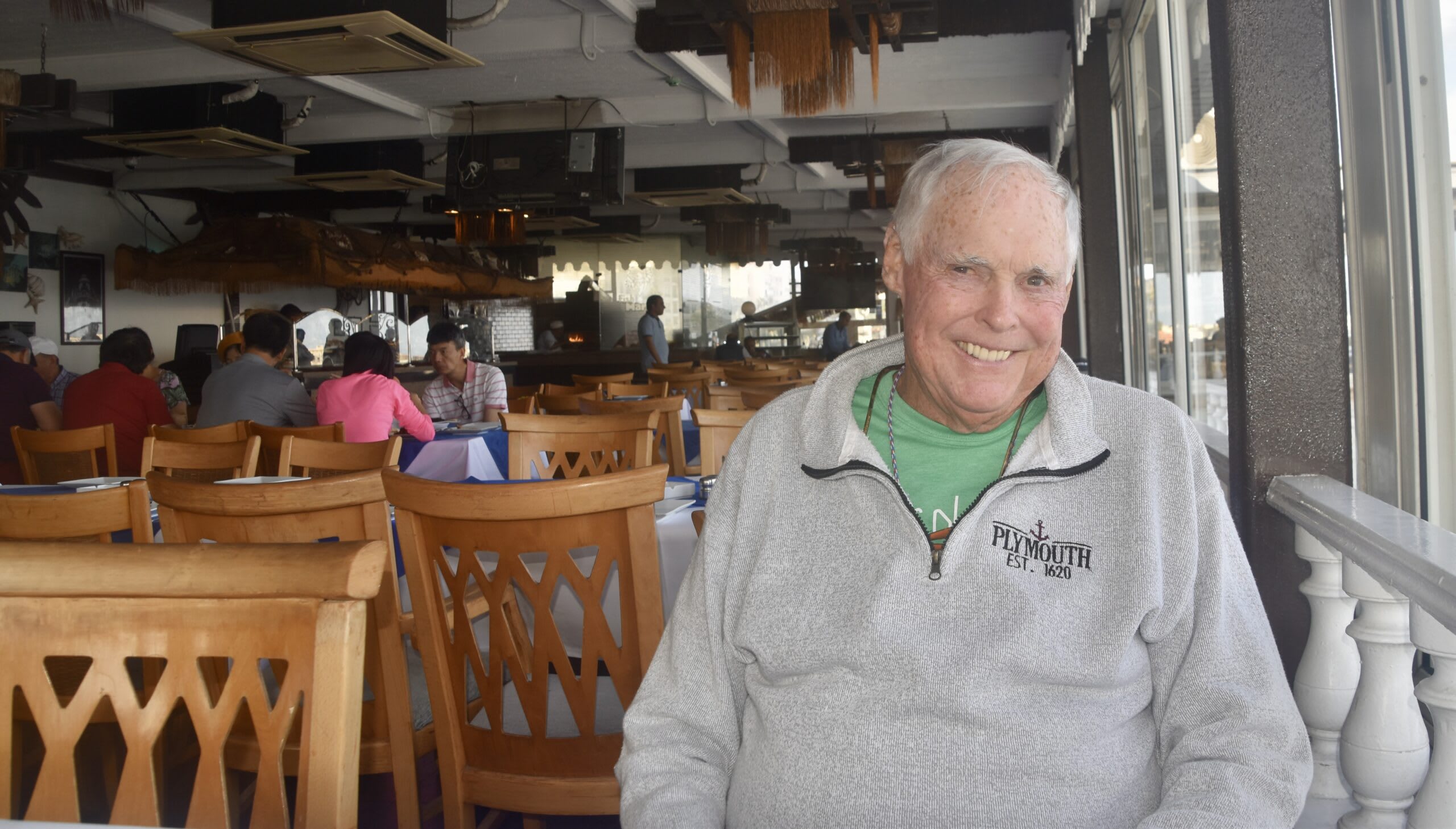
Along the harbor. We finished with a fine seafood lunch over the harbor, and then drove back to Cairo for the last day of our journey.