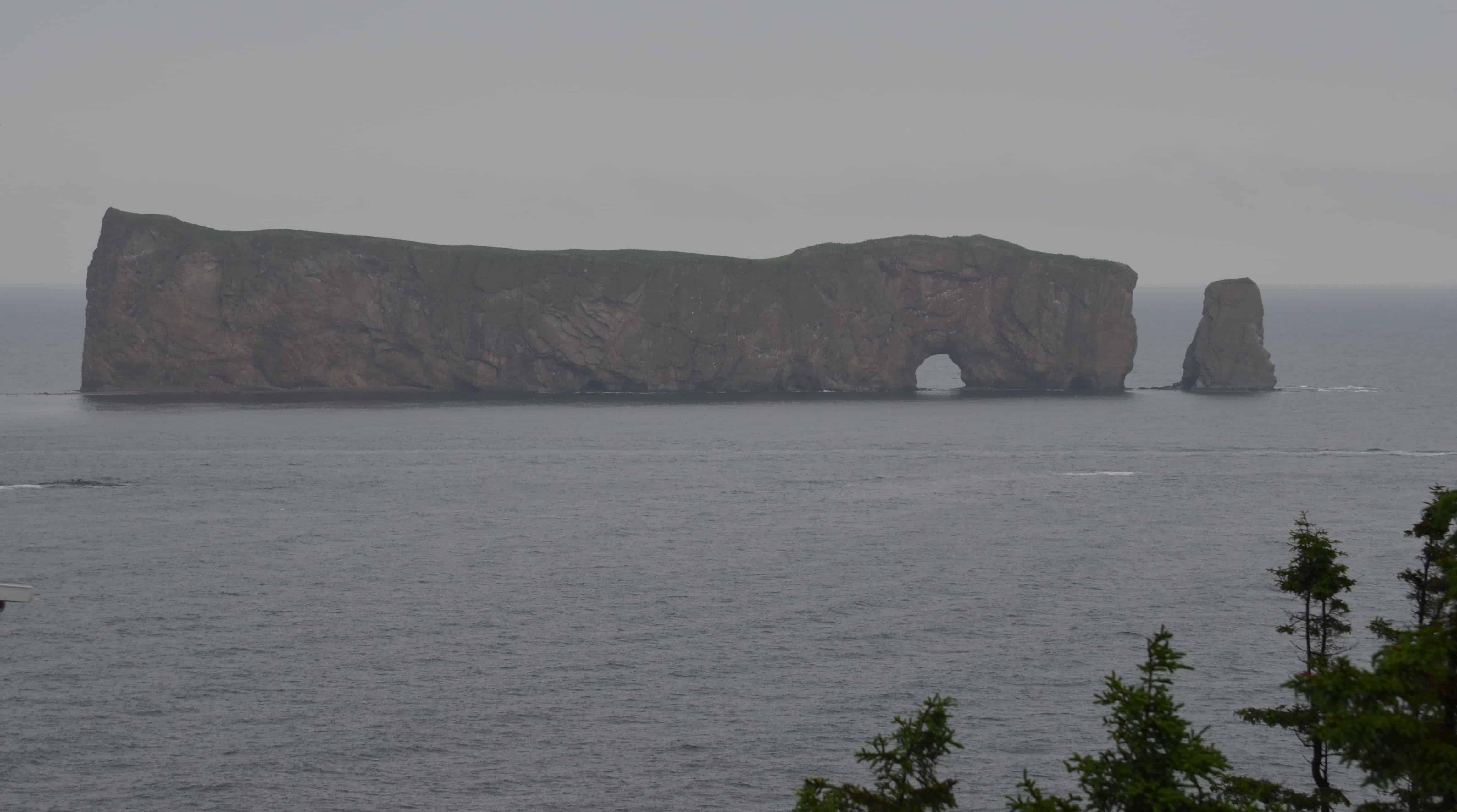
Dateline July 22, 2012, Back to the Bay of Fundy on the North Side, Nova Scotia and New Brunswick
Off the Newfoundland ferry at North Sydney, we headed out for Truro, Nova Scotia, to see the tidal bore, a must-see on everyone's list. The Bay of Fundy is famous for its bores. A tidal bore is what happens when the leading edge of an incoming tide forms a wave traveling up a river against the river's current, sometimes reportedly as high as 14 feet. We arrived an hour early and waited on the banks of the Little Salmon River. People wait hours for these; there are only two a day, and our scheduled one at 12:57 PM was the only daylight bore of the cycle.
The moment arrived. A small wave of water, about the size of a small boat's wake, came moving up the river toward us. The crowd that had been standing in silent anticipation broke into a chorus of Peggy Lee's "Is That All There Is?"
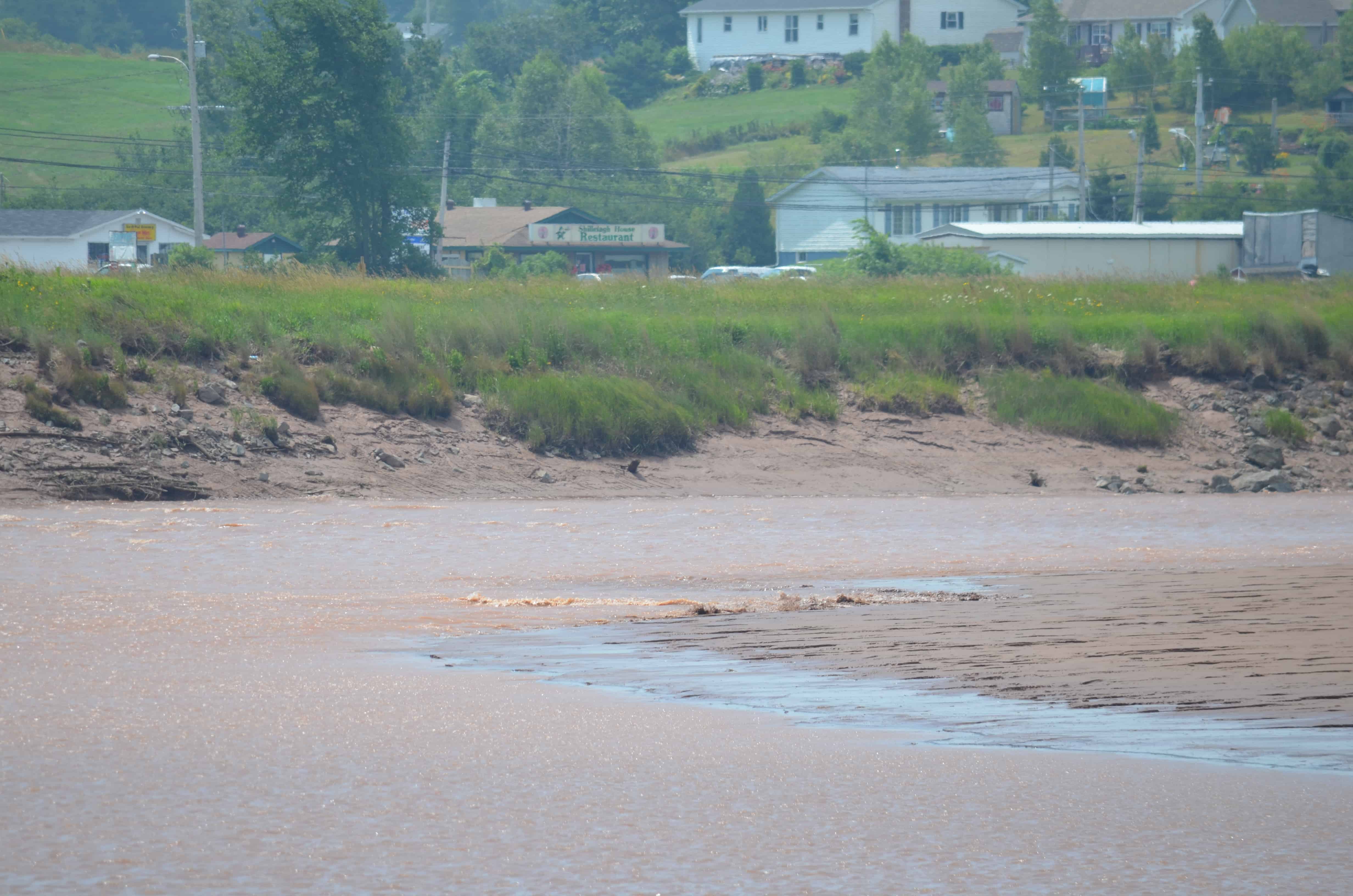
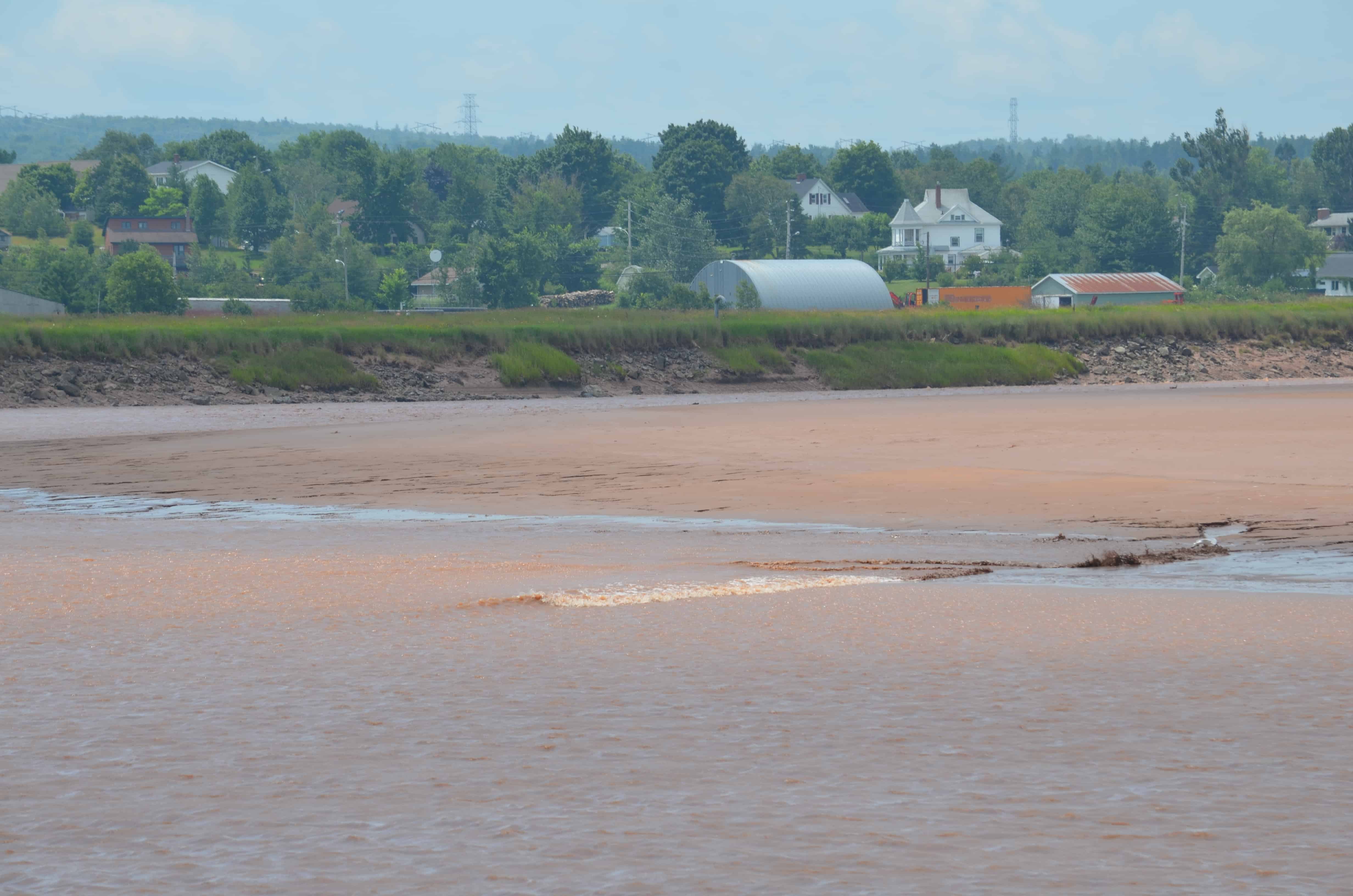
For the record, the Bay of Fundy genuinely is amazing, and it does have the greatest tides in the world. Per the Guinness Book of World Records (1975): the greatest tides on Earth occur in the Bay of Fundy, where Burntcoat Head in the Minas Basin has a mean spring tidal range of 14.5 meters (47.5 feet) and an extreme range of 16.3 meters (53.5 feet). The tidal bore on this particular Sunday afternoon was just having an off day.
We moved on to Five Islands Resort and RV Campground in Five Islands, Nova Scotia.
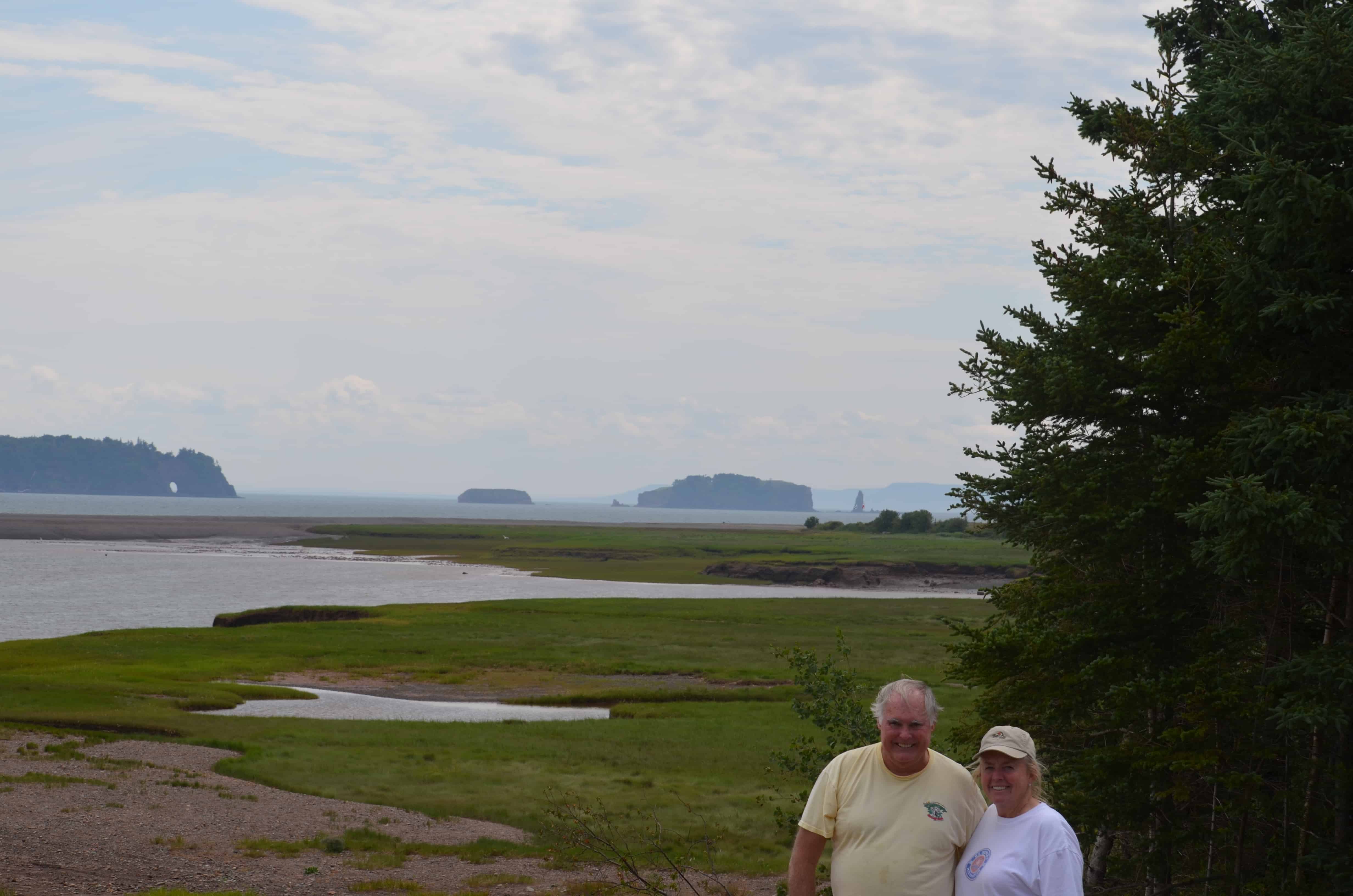
This was, without question, the most beautiful campground of the trip so far. The tides here, whether in or out, were sensational, and our site sat at the end of the campground, fifteen feet above the beach. We watched the commercial clam diggers working the beds in front of us.
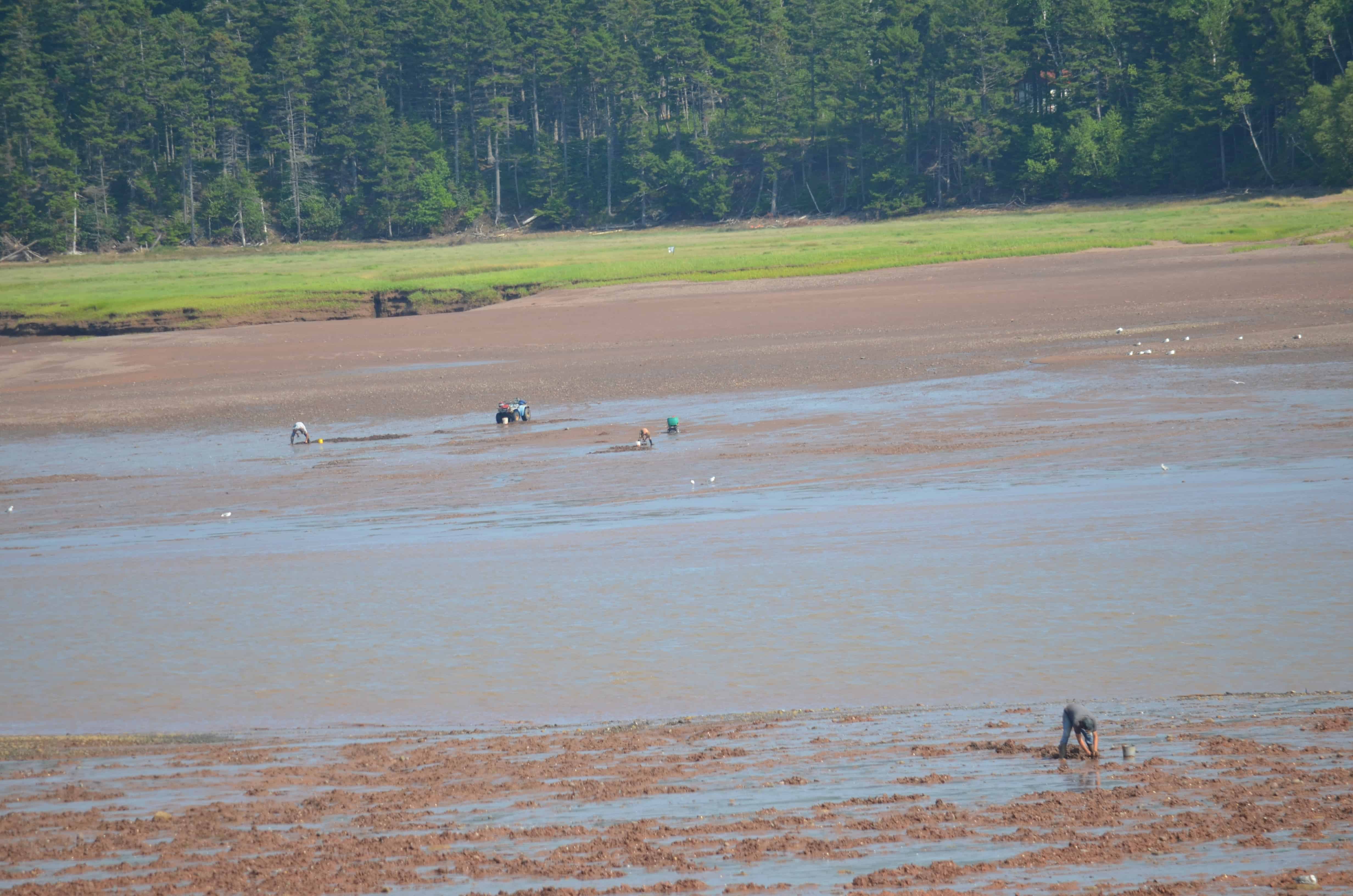
We watched, and we enjoyed our rum drinks. The Five Islands themselves were directly in front of the campsite, and they were absolute jewels as the sun went down. We drove to a small fish store about a mile west of the park and bought fresh clams and flounder for dinner, reasonably priced, took them back to camp, and ate at our table.
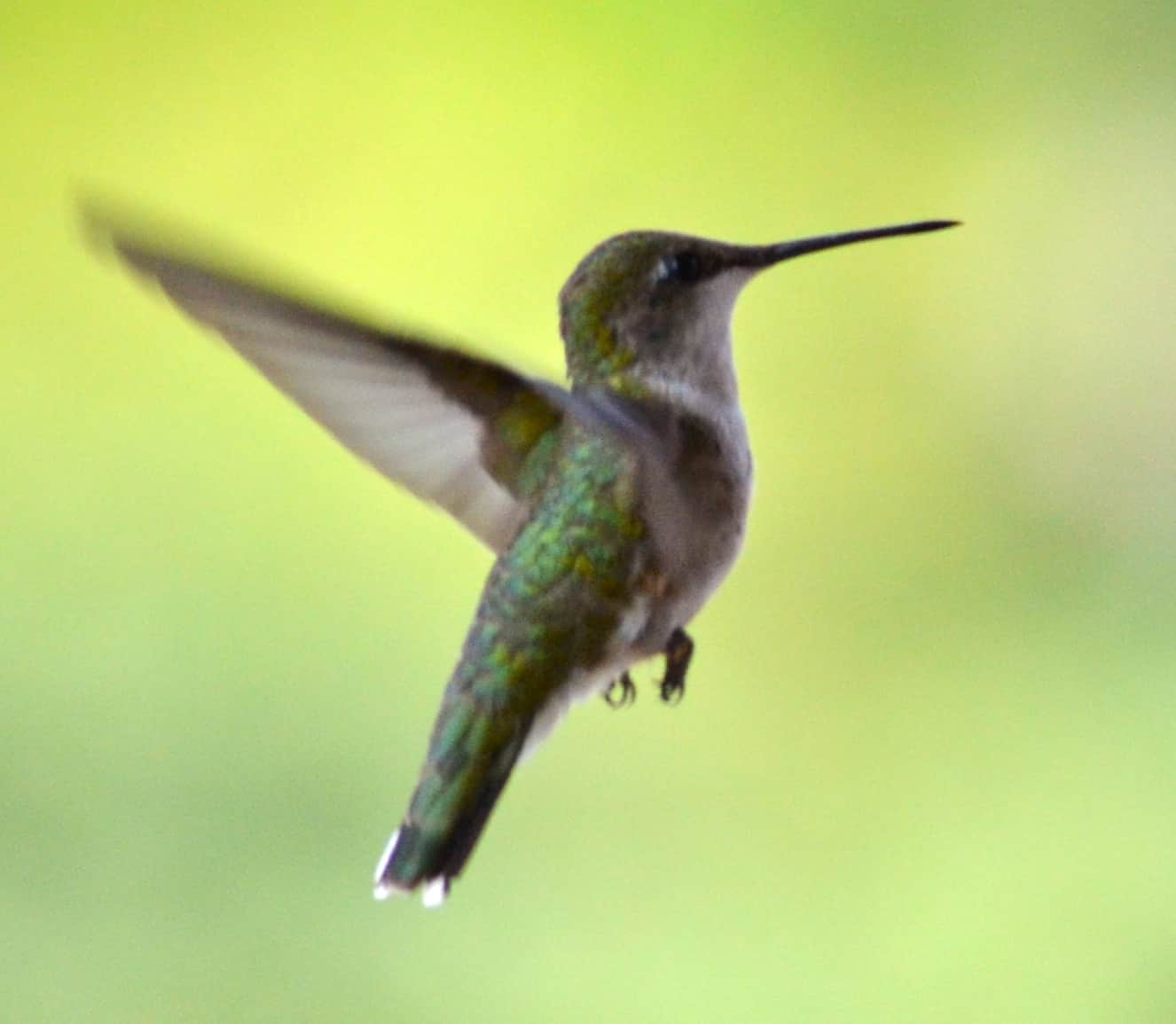
In the morning, we stopped back at the fish store for more flounder. The store's porch is a hummingbird situation.
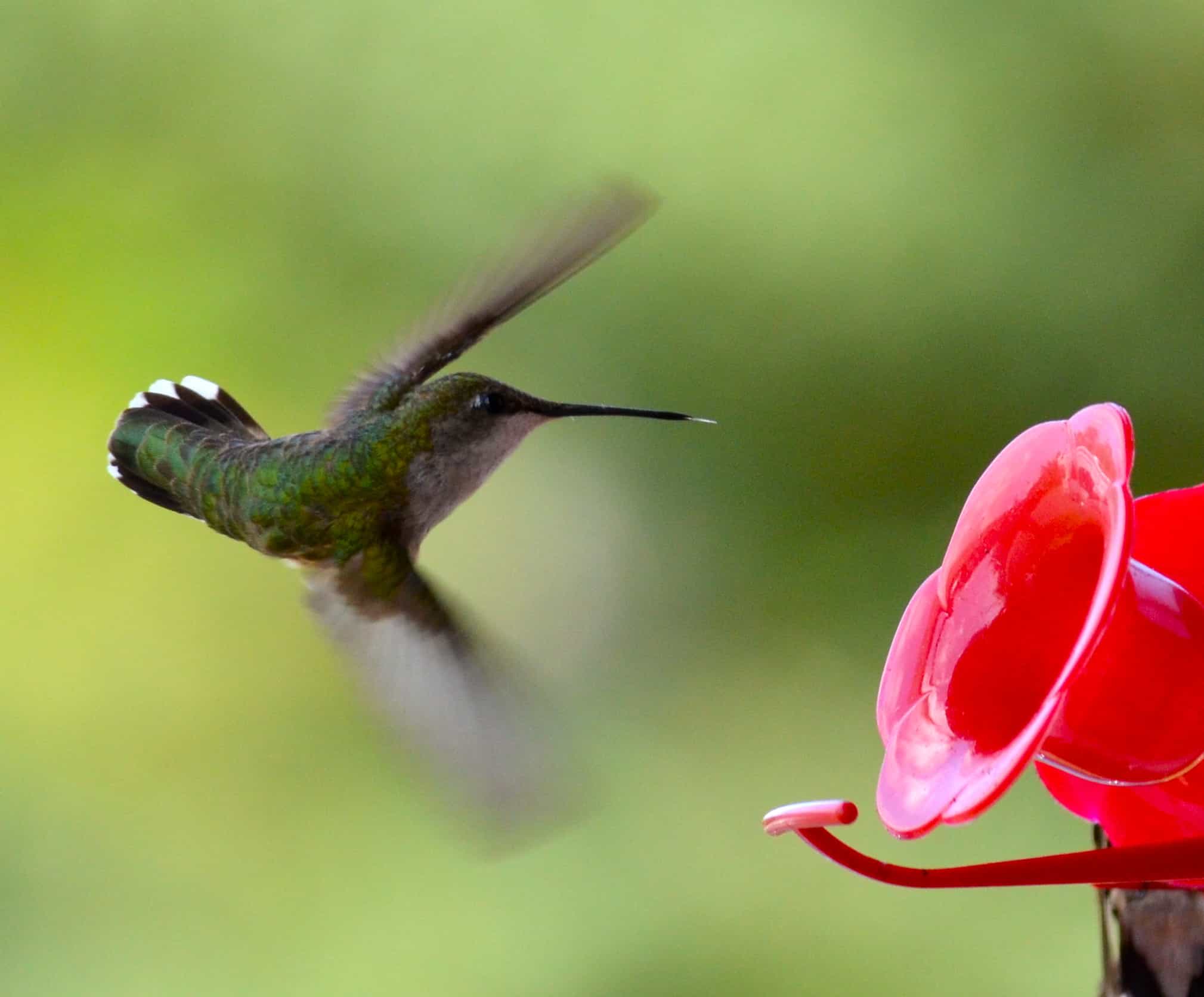
Janice could not help herself. The hummingbirds were everywhere.
We continued into New Brunswick and stopped at the visitor center. They told us not to miss the Hopewell Rocks at Hopewell Cape, also known as the Flowerpot Rocks. The walk out to the beach is about three-quarters of a mile, ending in stairs that take you down to the shore. The tide was out, exposing the formations. The rock is a dark sedimentary conglomerate and sandstone, with grass, flowering plants, and trees still growing on top.
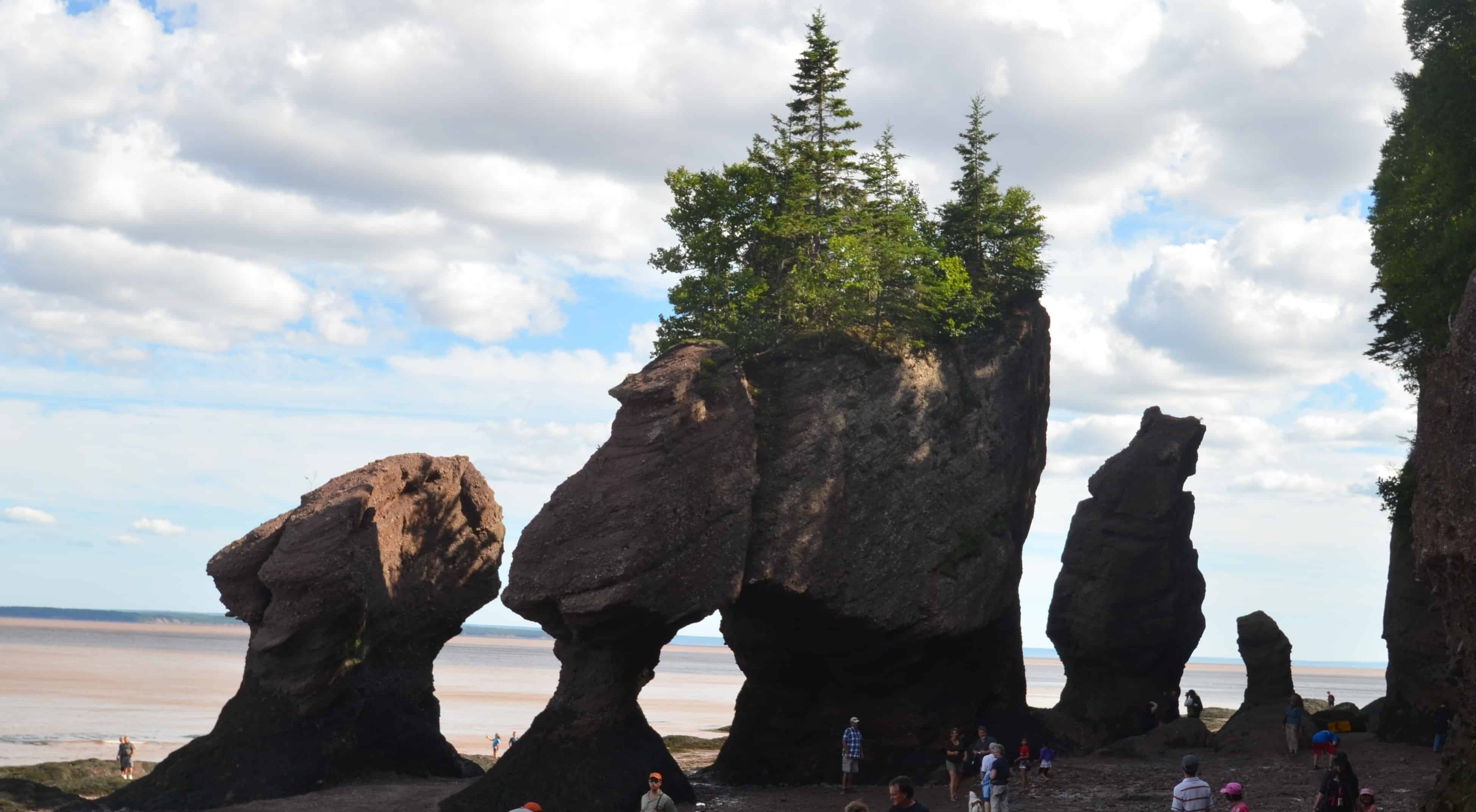
The Bay of Fundy's huge volumes of incoming and outgoing water have shaped the entire region. After the glaciers retreated, surface water filtering through cracks in the cliff face eroded and separated these formations from the rest of the cliff.
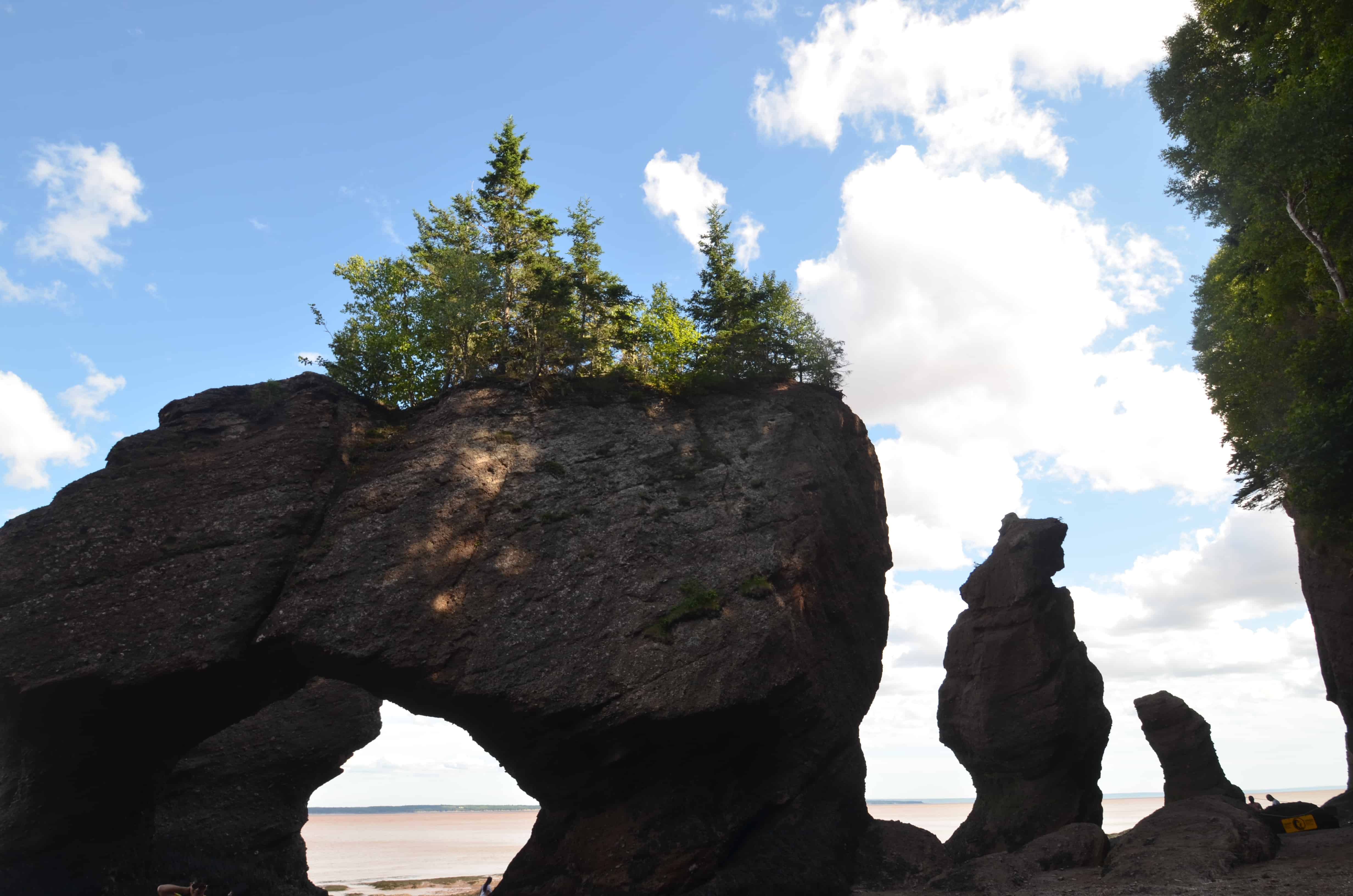
Meanwhile, the advancing and retreating tides and their waves have eroded the bases of the rocks much faster than the tops, which is what gives them the flowerpot shape.
From there we drove to Saint John, New Brunswick, passing through the village of Alma at the entrance to Fundy National Park. Kelly's Bakery in Alma is famous for cinnamon buns. We picked some up. We had been told about a great seafood store somewhere nearby, but couldn't remember the name, and so asked at the bakery. The young woman behind the counter mentioned a few, including the one we had heard about. We asked which she would recommend. She said she shouldn't tell us, but the one we had heard about was her uncle's. We told her we would let him know she sent us, and quite embarrassed she thanked us. On to Butland's Seafood. They had fresh just-cooked lobster and bay scallops. The woman working the shop was funny and regaled us with stories about Alma. We bought a two-pound lobster, the best we had on the trip, and a bag of bay scallops to cook for dinner that night.
From the seafood store we drove through Fundy National Park on a family mission. John's brother Will has been working on the family ancestry for some time, on the Fairweather side, our mother's family. (The Wilson side were horse thieves.) Will had identified a few Fairweather relatives buried in the Saint John area, and we drove inland to Sussex, New Brunswick, to find them.
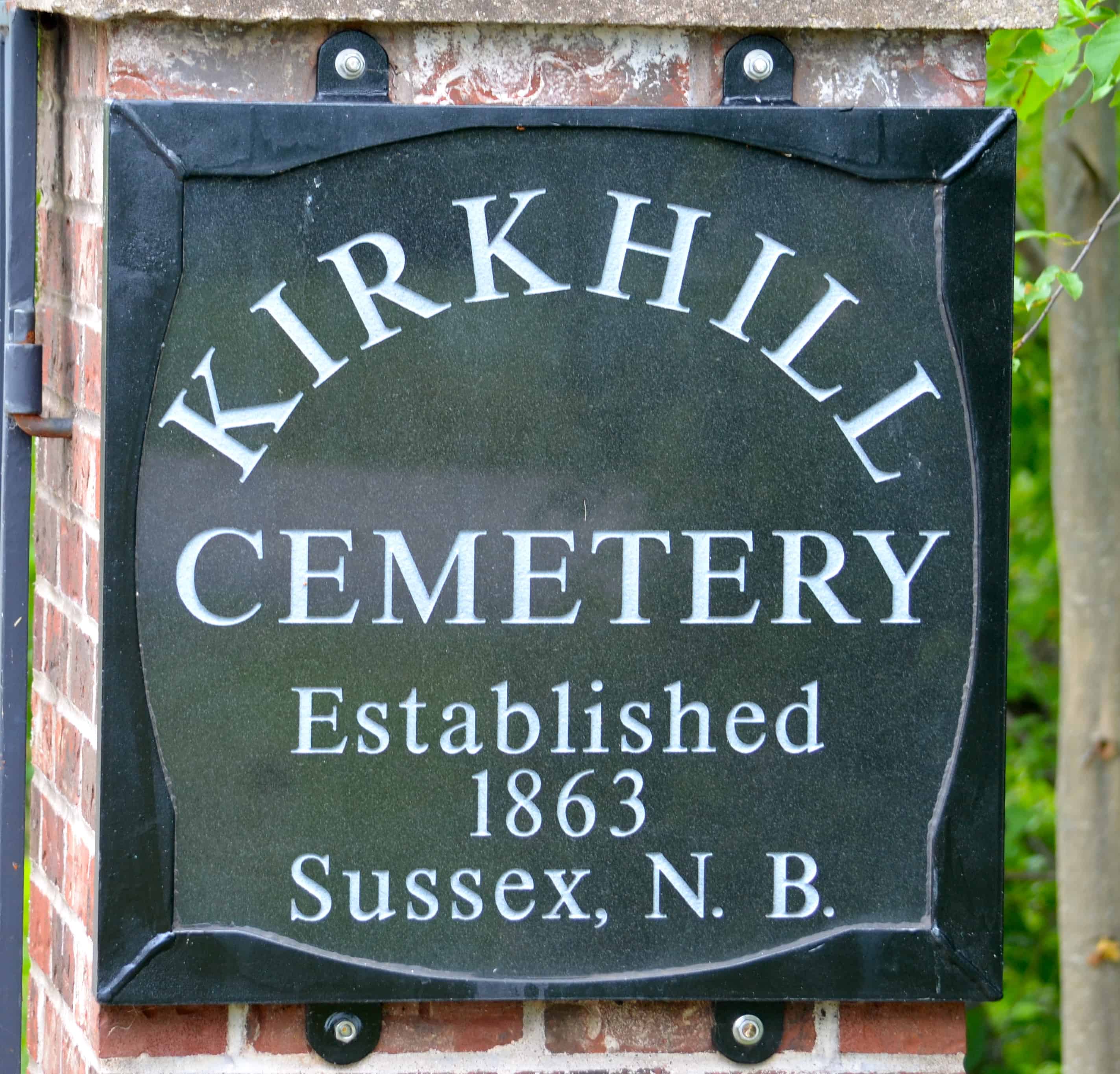
We started at the Kirk Cemetery in Sussex with no idea where the graves were located. We stopped in at a local funeral home, where they gave us the name of "the person with the map," who in turn told us exactly where to look. We took the Roadtrek into the cemetery and found the graves of Edmund Fairweather and his young son Hanford.
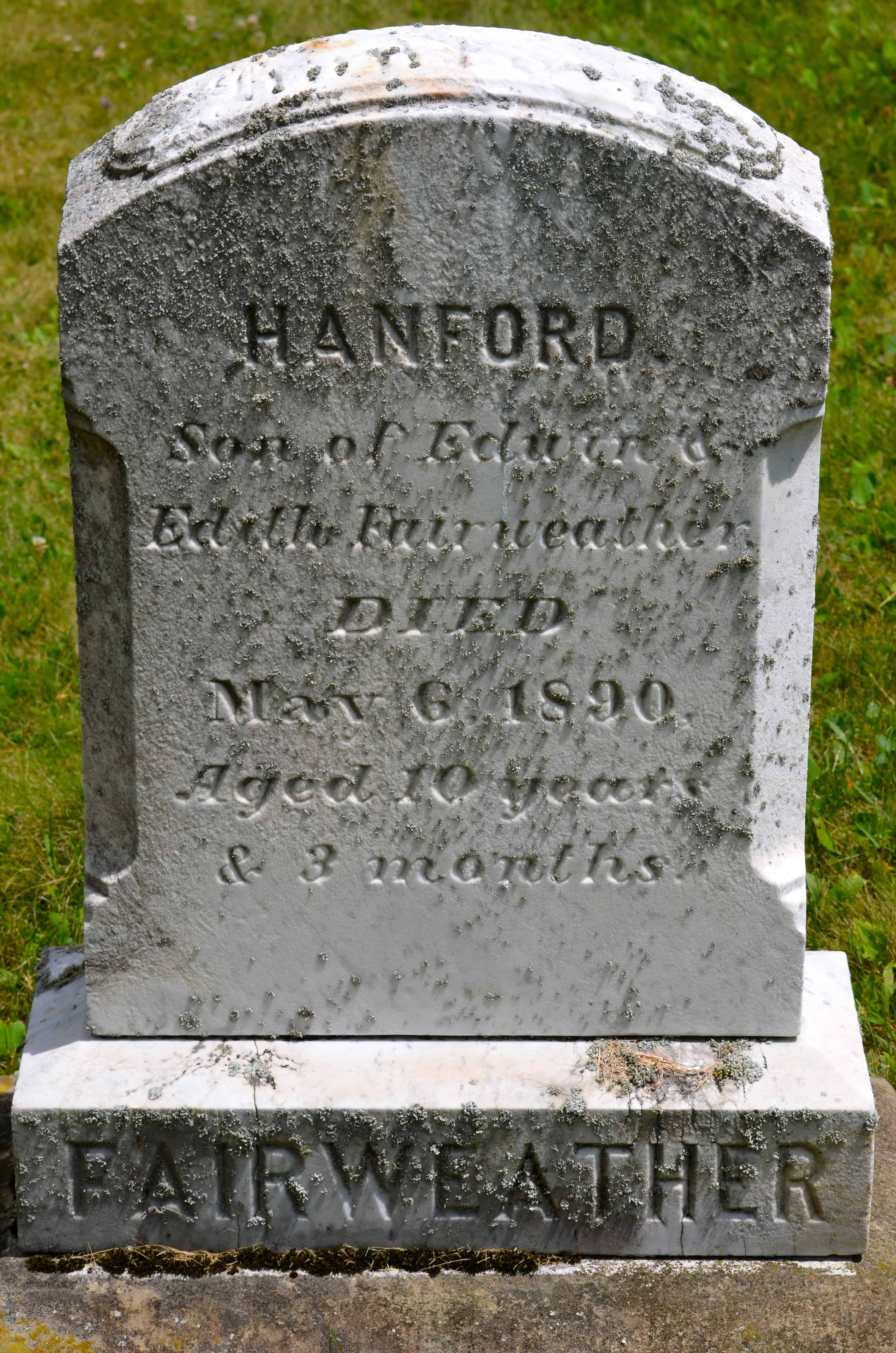
Hanford Fairweather died at the age of ten. John carries the name as his middle name. Standing at the gravestone of a great-uncle or great-great-uncle who never grew up, who lent his name to John more than a century later, was a quiet thing.
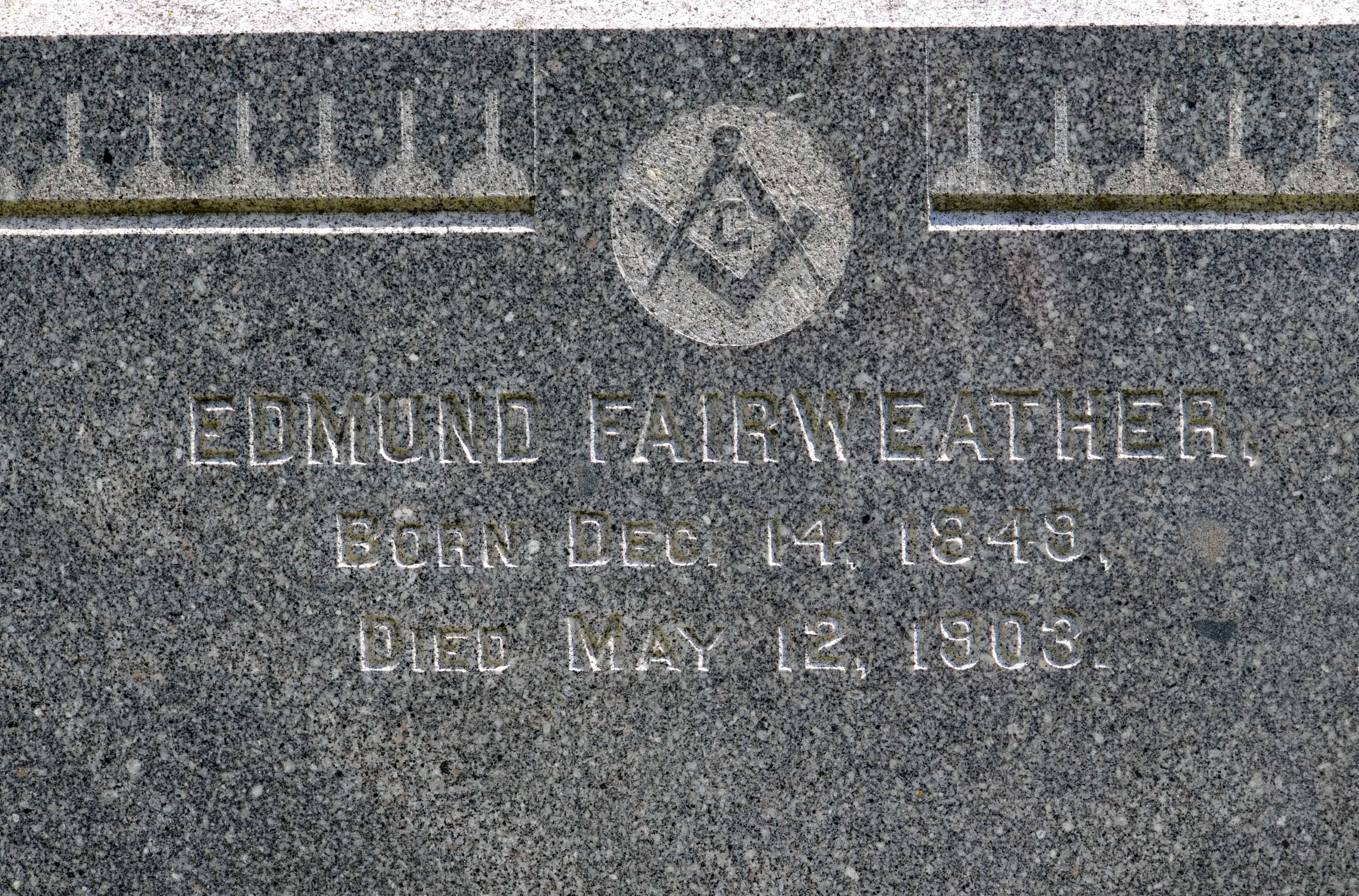
It turned out, when we got the photos back to Will, these were not quite the relatives he had been expecting to find here. Family trees rarely lay themselves out the way you think they will.
We photographed the stones, took down the name of the church we were trying to follow, and drove on. About twenty miles later we found a small Baptist church and stopped to ask. A nice gentleman who lived next door came down the hill and offered to help. He had mowed the grass at the nearby Union Cemetery for many years, and thought he remembered seeing Fairweather stones there.
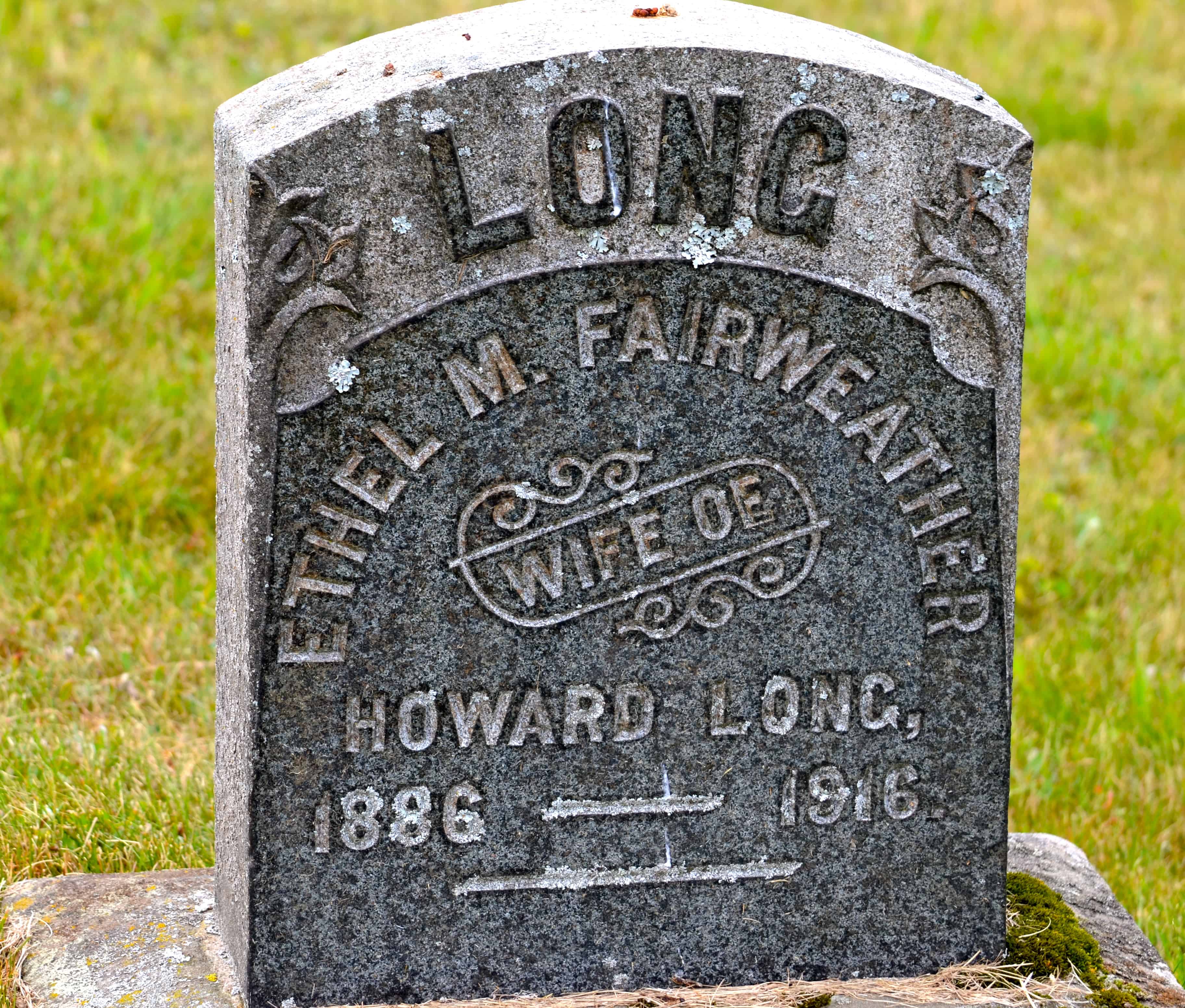
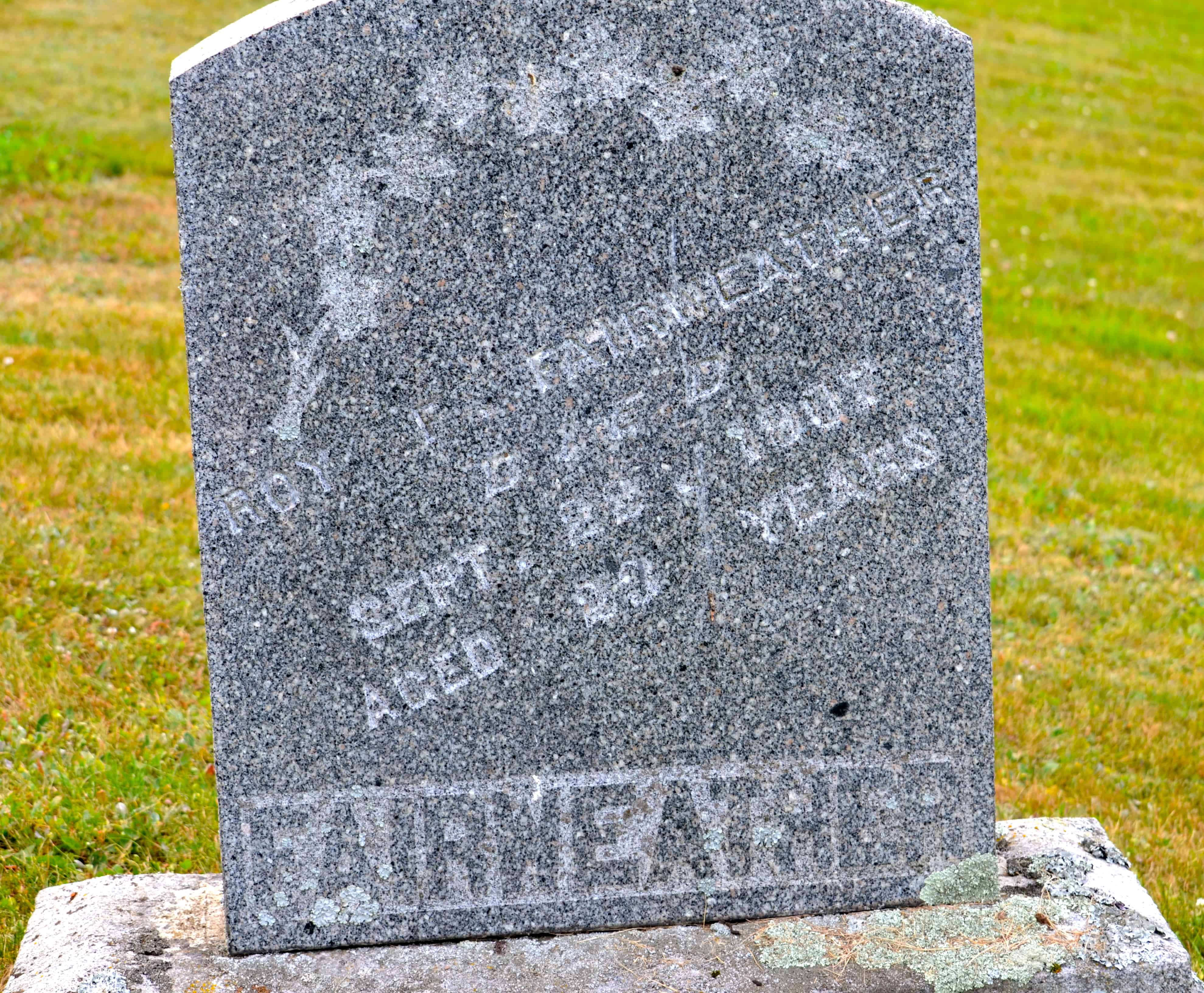
We drove the three blocks over and found two more: Ethel Fairweather, married to Howard Long, and Roy Fairweather.
We tried the Anglican cemetery in town as well, but no Fairweathers there. Mission accomplished. We sent all four sets of photos back to Will. He added four more people to the family tree on Ancestry.com. As it turns out, they were all interrelated, and the Fairweathers had migrated to New Brunswick from Connecticut a few generations back.
Family research complete, we headed down to Saint John. There is a great city park called Rockwood, only five minutes outside the city center. We set up camp and Janice shelled the morning lobster for lobster rolls the next day. We opened a nice bottle of wine and cooked the scallops. The fish-store lady had told us bay scallops and lobster were the best local seafood, and she was right. The scallops were fantastic. A beautiful evening on the porch of the RV.
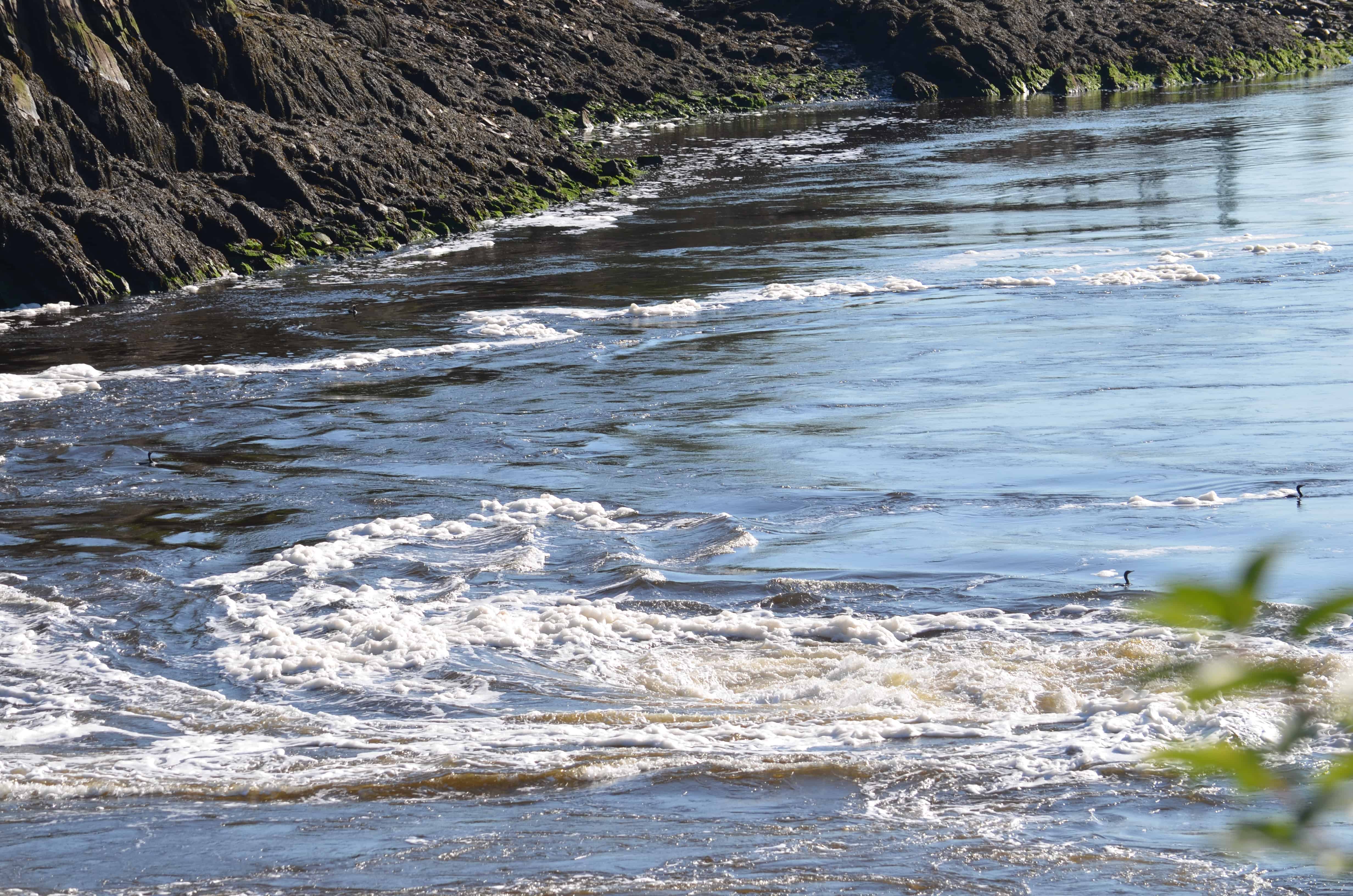
In the morning we drove into Saint John to see the sights. One of the most interesting results of the Bay of Fundy's tides is the Reversing Falls on the Saint John River, where the inflowing tide is strong enough to actually push the river's flow backward, upstream.
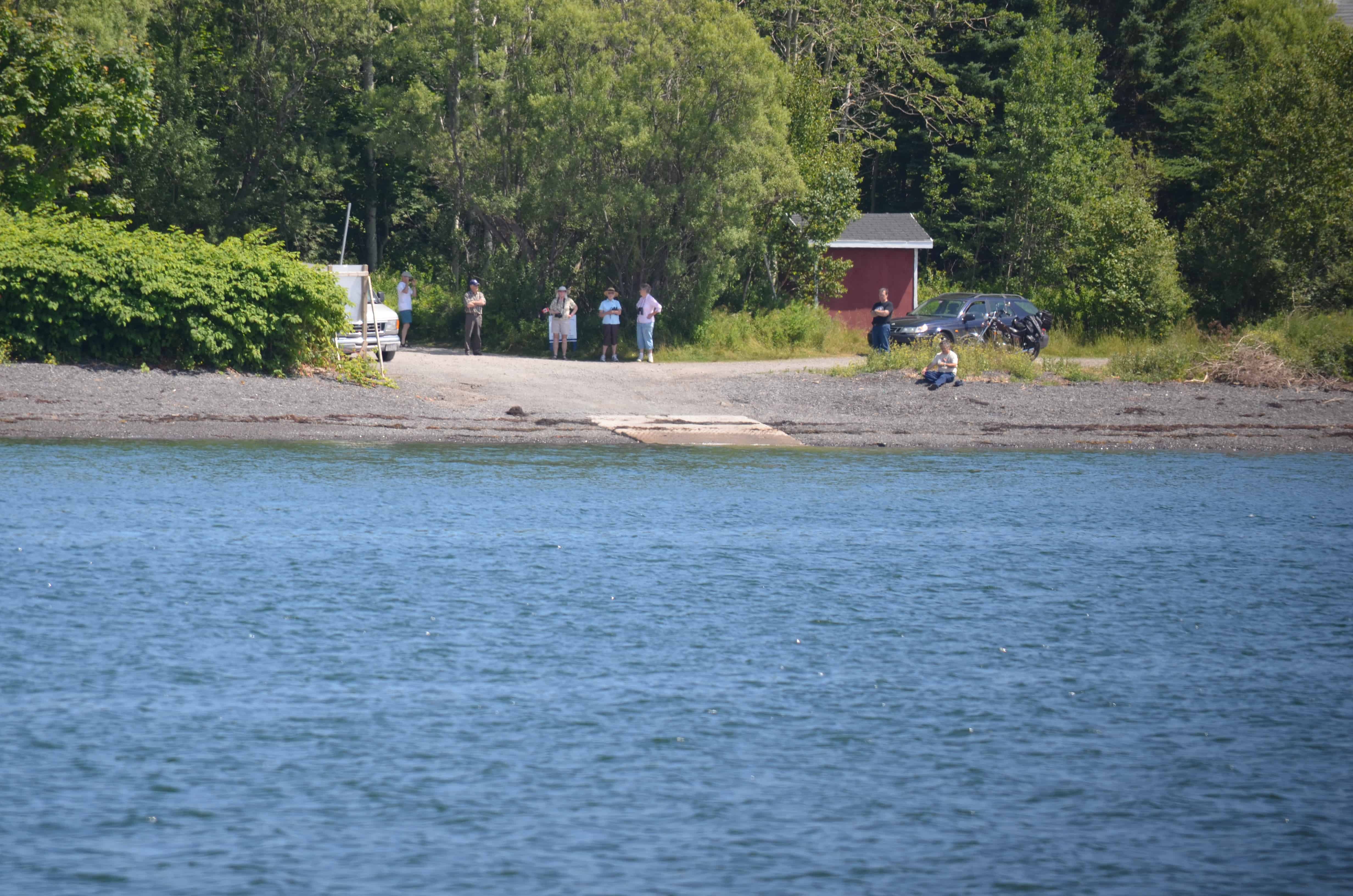
We headed southwest out of Saint John to catch the ferry to Deer Island, and from there to Campobello, a Canadian island just off the Maine coast. At the southern end of Deer Island we found the ferry to Campobello, and laughed when we got to it. It was a barge with a tug strapped to it, and it loaded directly off the beach. We wondered if the RV would make it from the gravel onto the deck. Of course it did. The crossing took us out into the bay, with the Maine coast on our right, and the barge ran right up onto the beach on the Campobello side.
Campobello was the summer home of the Roosevelt family.
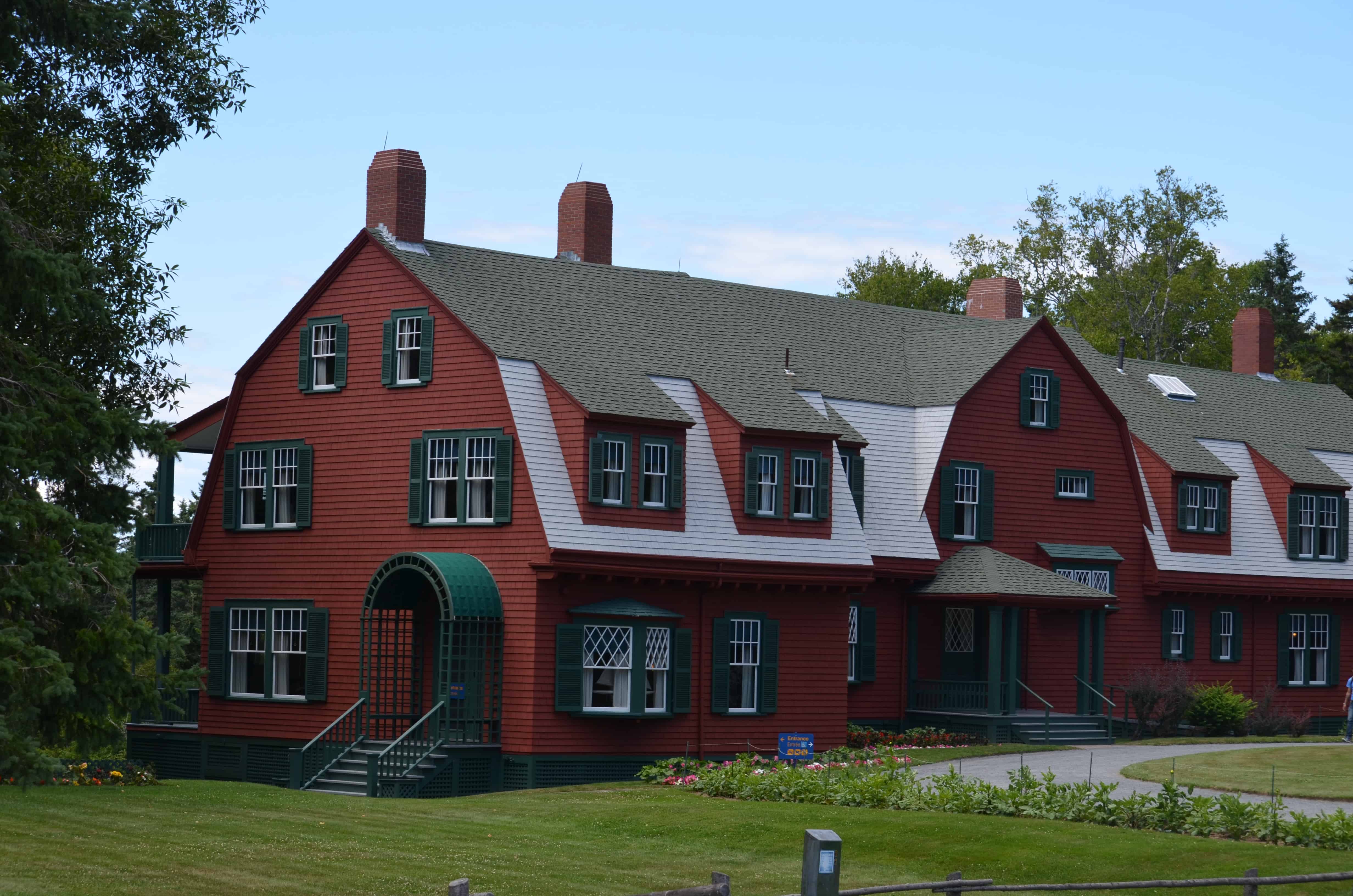
The island had been a beautiful summer retreat for the family for decades. From 1883 onward, the Roosevelts made Campobello their regular summer place. Their son Franklin would summer here from the age of one. As an adult, he eventually acquired a separate larger property, a 34-room "cottage" that became his own family's summer place until 1939. It was at Campobello, in August 1921, that FDR fell ill with a paralytic illness, long thought to be polio, which left him permanently paralyzed from the waist down. Over the next seven years he worked hard to try to recover the use of his legs, but he never walked unassisted again.
We toured the cottage. The estate has been an international park since 1964, run jointly by the US National Park Service and Parks Canada. Half the staff are American, half are Canadian.
From the FDR cottage it was a short drive to the southern end of the island and the Franklin Delano Roosevelt Memorial Bridge, which crosses to Lubec, Maine.
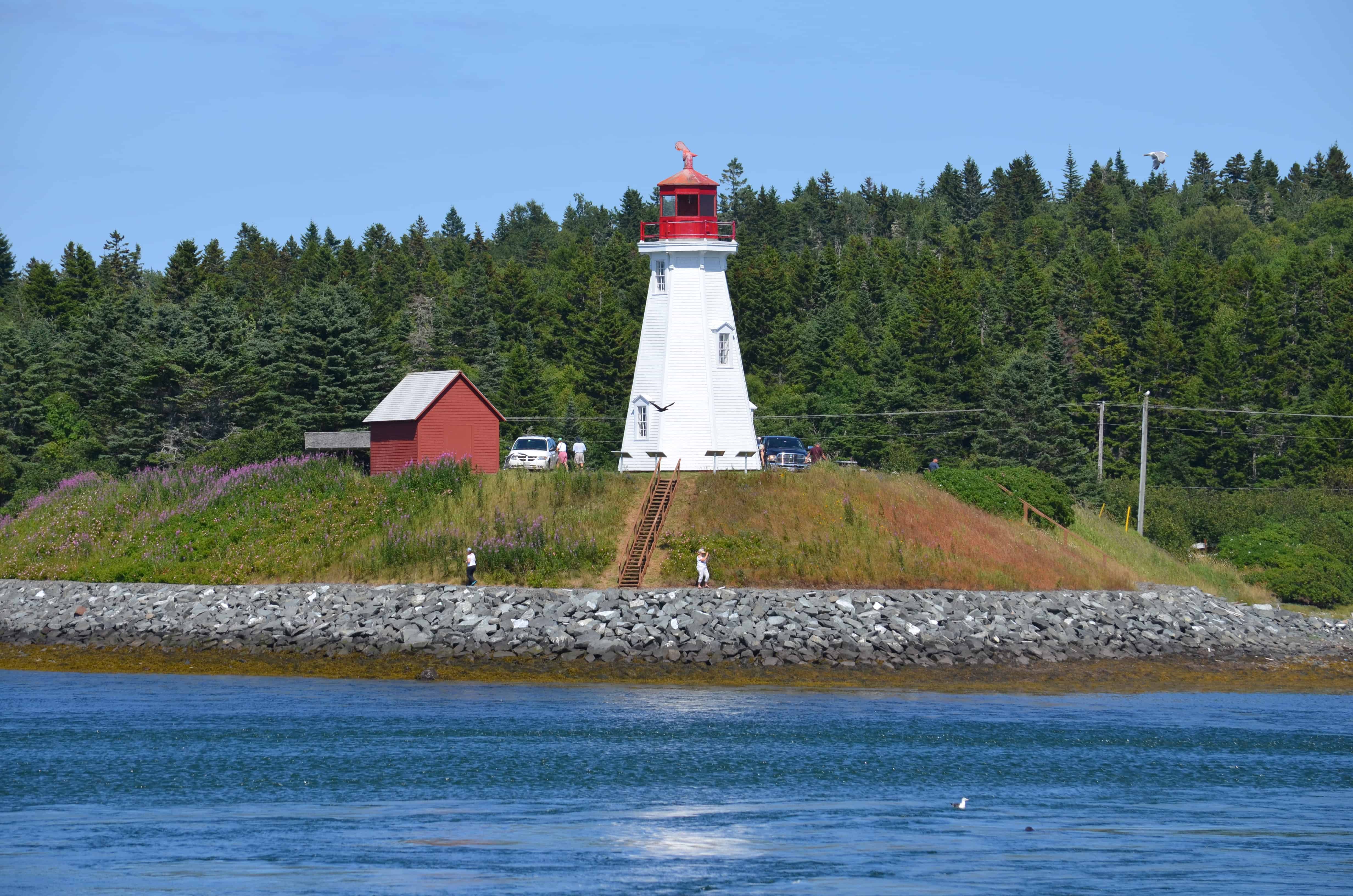
Back in the USA.