Dateline May 19, 2016, Berlin
When we were young, there was a part of the map you simply did not go. Winston Churchill gave it its name in 1946, in a speech at a small college in Fulton, Missouri: "From Stettin in the Baltic to Trieste in the Adriatic, an iron curtain has descended across the continent." For the next forty-five years the Soviet Union sealed itself and its satellite states off from the West, and the countries behind that line became, to us, a blank space full of things we were not allowed to see.
The overland half of our journey took us straight into that blank space, by train, through Berlin, Prague, Warsaw, Krakow and Budapest. Twenty-five years on from the breakup of the Soviet Union, there is still a different feel to these places, in the people you meet on the street, in the way the food is set down in front of you, in trains run half by smartphone and half by hand-torn ticket, and in a fierce love of histories that reach back long before the wars that tried to erase them. It was one of the richest things we have ever done. We started in Berlin, and spent nearly all of our time on what had been the East side.
Getting there. We landed about half past four on May 19 after a quick hop from Copenhagen. The odd thing was that from the ticket machine to the gate to the baggage claim in Berlin, not one person ever asked either of us for identification. After a lifetime of TSA lines it felt strange, and, we admit, a little unnerving, to think you can buy a ticket and fly across Europe without ever showing who you are.
We chose adventure over ease and took public transit instead of a taxi. The information desk told us which bus to the subway and which subway to within three blocks of the hotel, and we managed it with great skill, apart from our luggage rolling loose around the bus and causing general chaos, hauling the bags up and down stairs, and arriving at the wrong Winters Hotel, which happily turned out to be only seven blocks from the right one.
The International. One of our camera lenses had been failing since Tallinn, so we found a big electronics store at the Berlin mall, the German cousin of a Best Buy, and bought a new one at a fair price. That finished the job the Norwegians had started. A body bought in Aalesund, a lens bought in Berlin, and our old American glass still on the front; we have called it "The International" ever since.
Dinner at Stadtklause. For dinner we did what we usually do, hunted Yelp for somewhere cheap, local and well-reviewed, which tends to land us far from the tourists. Stadtklause, a ten-minute walk away, was small and family-run, and the owner simply told two German businessmen to slide over so we could sit. The food was wonderful, but the evening was made by the two men. They worked together, one raised in the East, the other, Eugen, in Frankfurt in the West, and you could read the difference in them across the table, the easterner more reserved, Eugen warm and full of talk. We drank beer and a few shots of plum snaps that went down like fire water, and we traded email addresses.
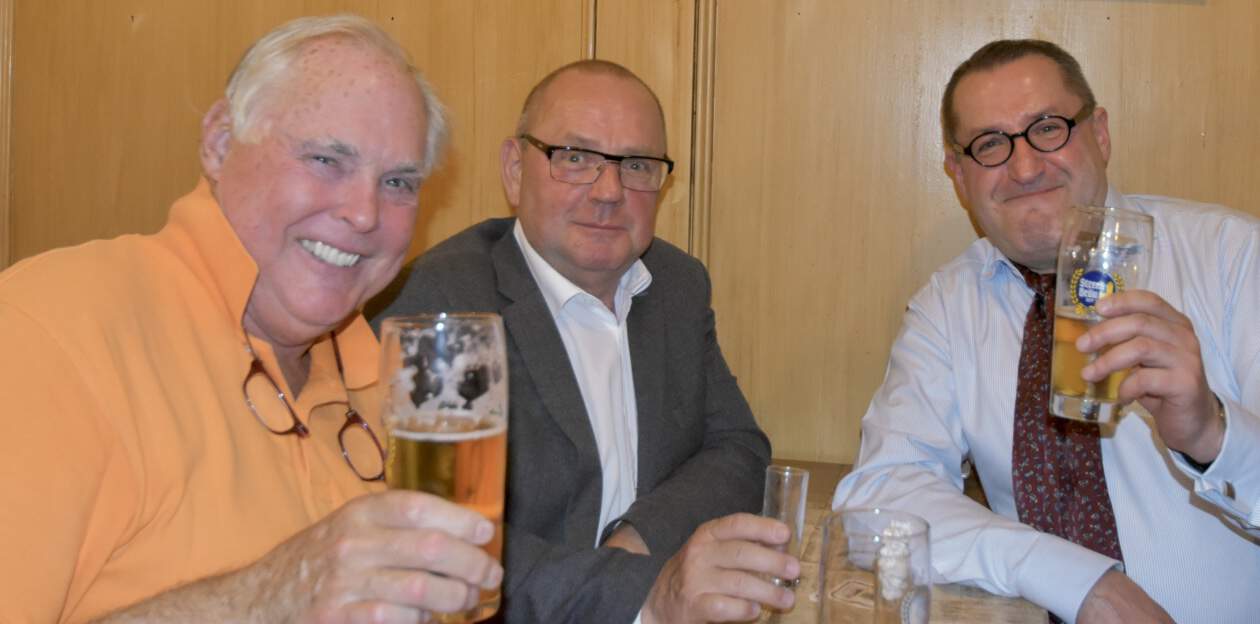
The last thing Eugen said to us as we left was, "Please make sure America takes care of us." The next morning an email from him arrived, thanking us for the evening and saying it once more: please make sure America takes care of us. We have thought about that line many times in the years since.
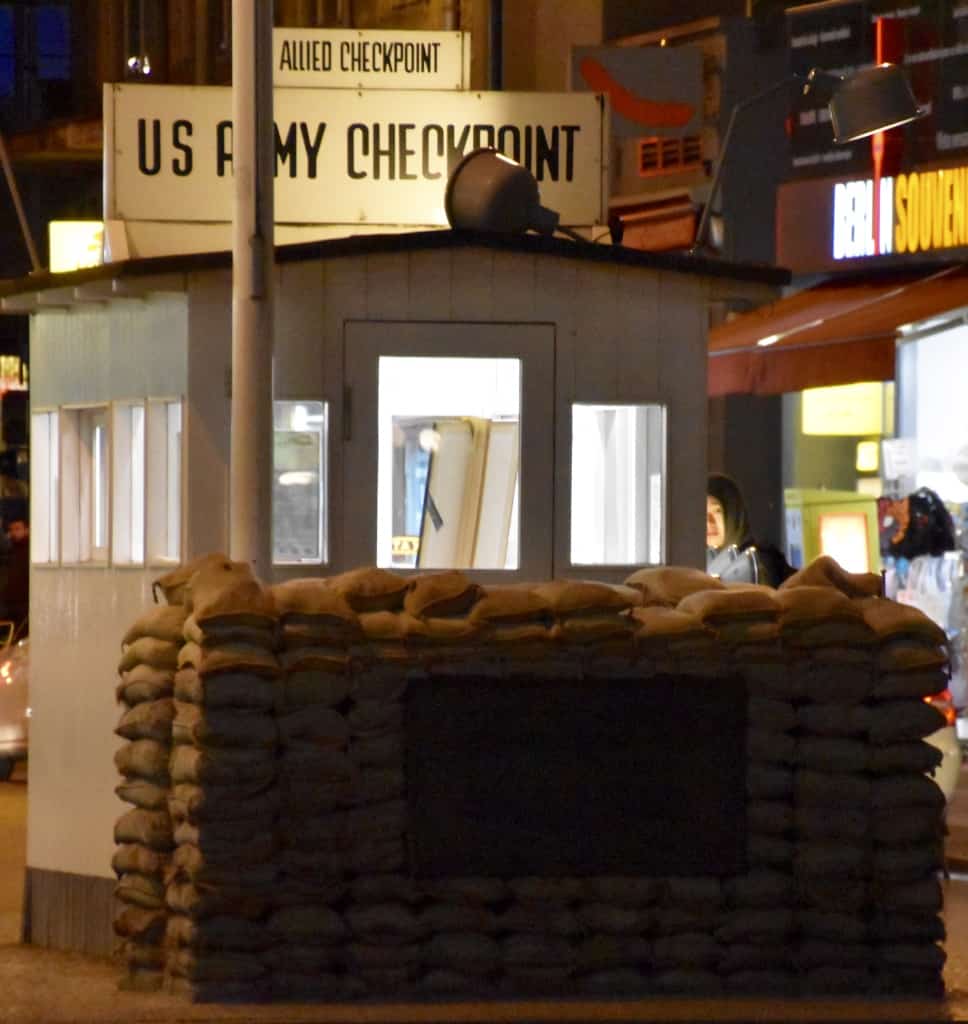
Checkpoint Charlie. On the walk back we passed a replica of Checkpoint Charlie, with actors dressed as American soldiers, standing about half a block west of where the real crossing had been. John had seen the actual Checkpoint Charlie in 1970, on temporary assignment in Berlin while he was stationed in Frankfurt. It was the most famous gap in the Berlin Wall, and the cheerful stand-in for it made a strange kind of bookend.
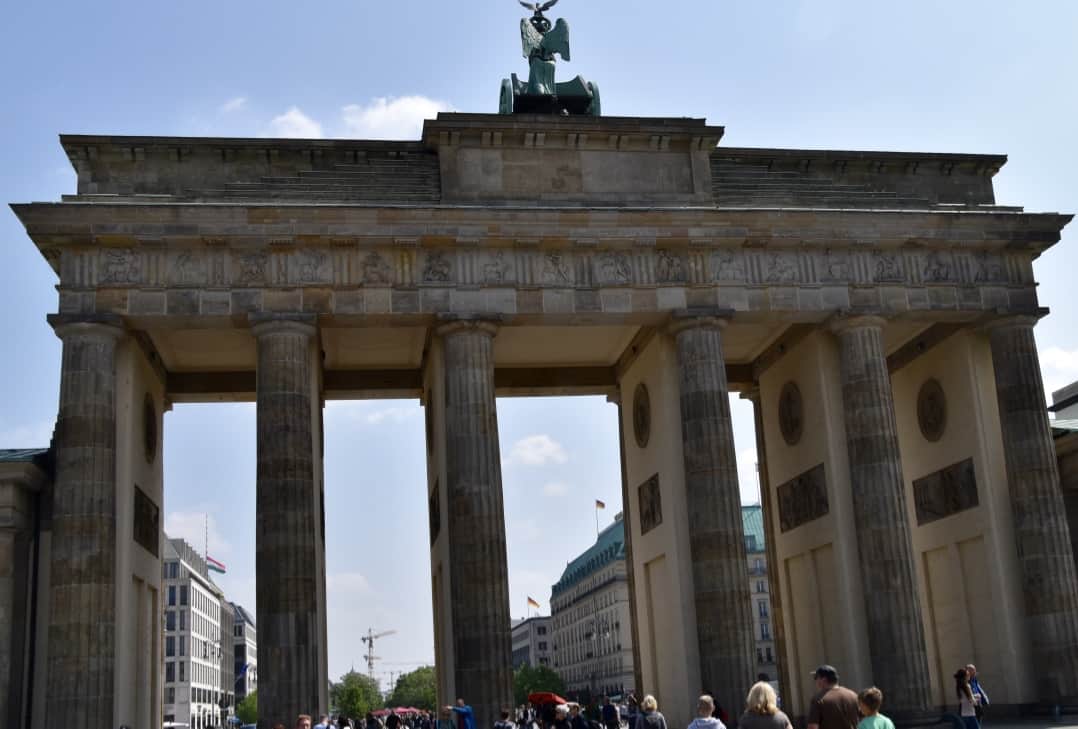
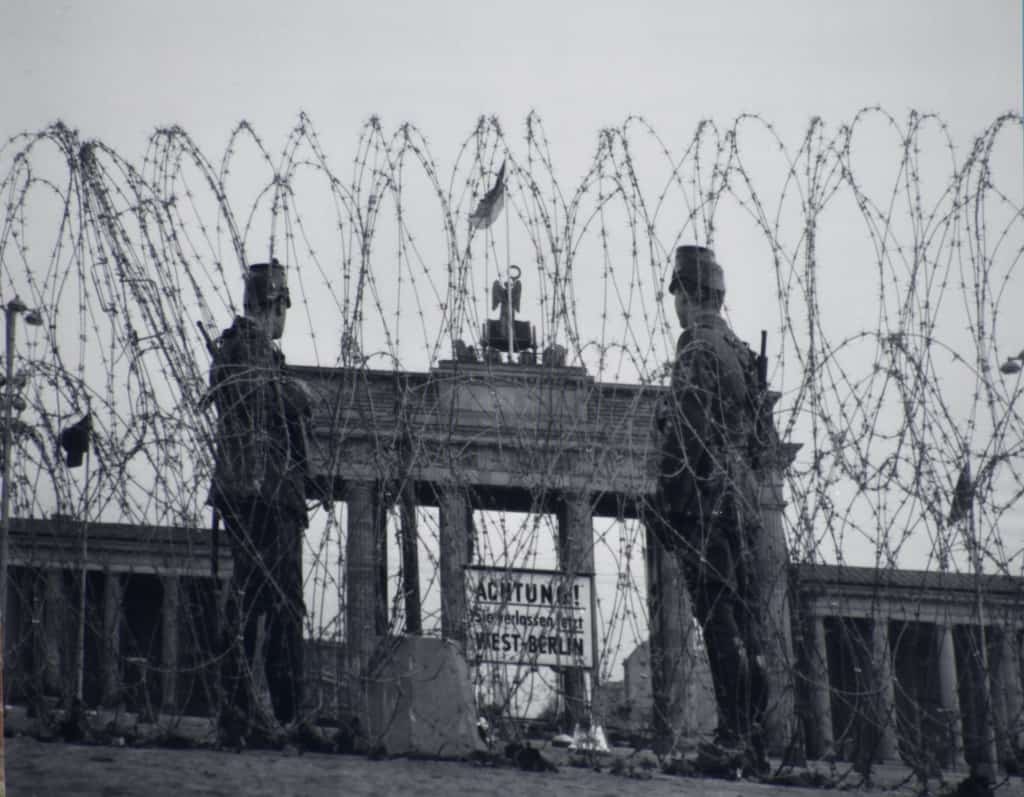
The Brandenburg Gate. The next morning we caught Bus 100, a double-decker that runs right along the path of the old Wall, and got off at the Brandenburg Gate. It was built between 1789 and 1791, twelve Doric columns forming five passageways, with a chariot and four horses on top driven by Eirene, the goddess of peace; it was first called the Peace Gate. Ordinary citizens were once allowed to use only the outermost passage on each side. When the Wall came down the gate was where the leaders of East and West Germany met, and it has stood for the reunited city ever since.
With only one day, we joined a free walking tour at the gate, two and a half hours that showed us things we would never have found on our own.
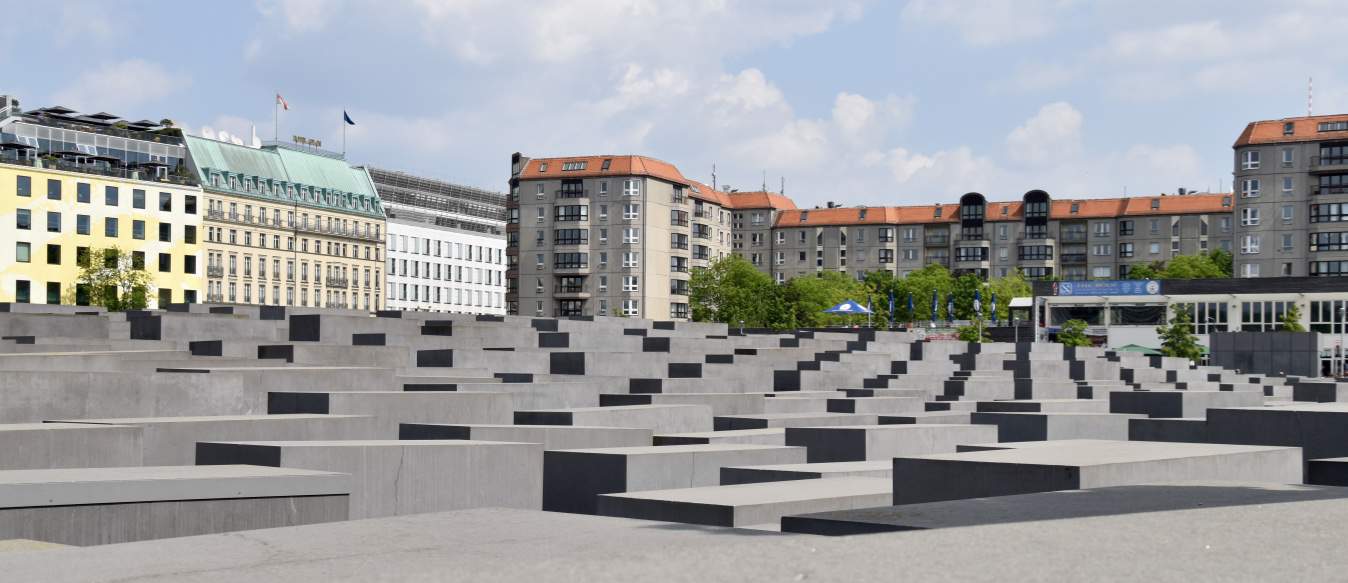
The weight of it. A short walk away is the Memorial to the Murdered Jews of Europe, 2,711 concrete slabs, or stelae, set in a grid across a sloping field. Our guide said the number stands for the communities the victims came from. There are no names anywhere. You simply walk into it in silence.
From there it was only a few steps to an ordinary parking lot. Beneath it lies what was left of Hitler's bunker, mostly undisturbed until the late 1980s, then largely destroyed during reconstruction. The site stayed unmarked until a small plaque went up in 2006, and German law forbids building anything there that might turn it into a shrine. A parking lot, our guide said, says it all.
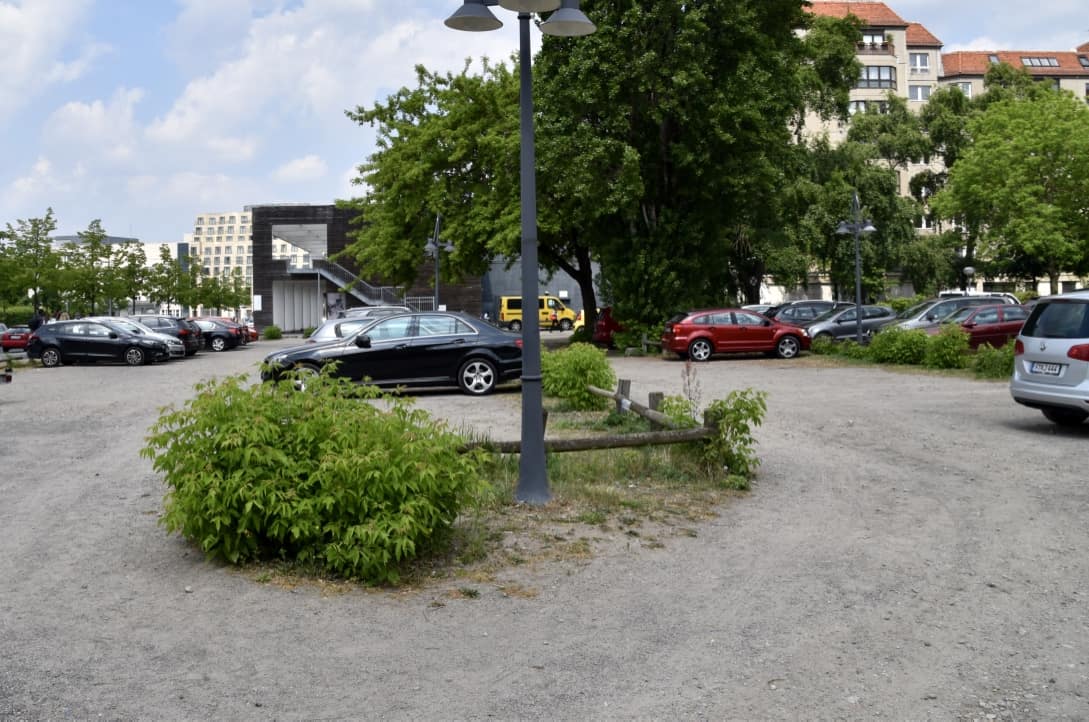
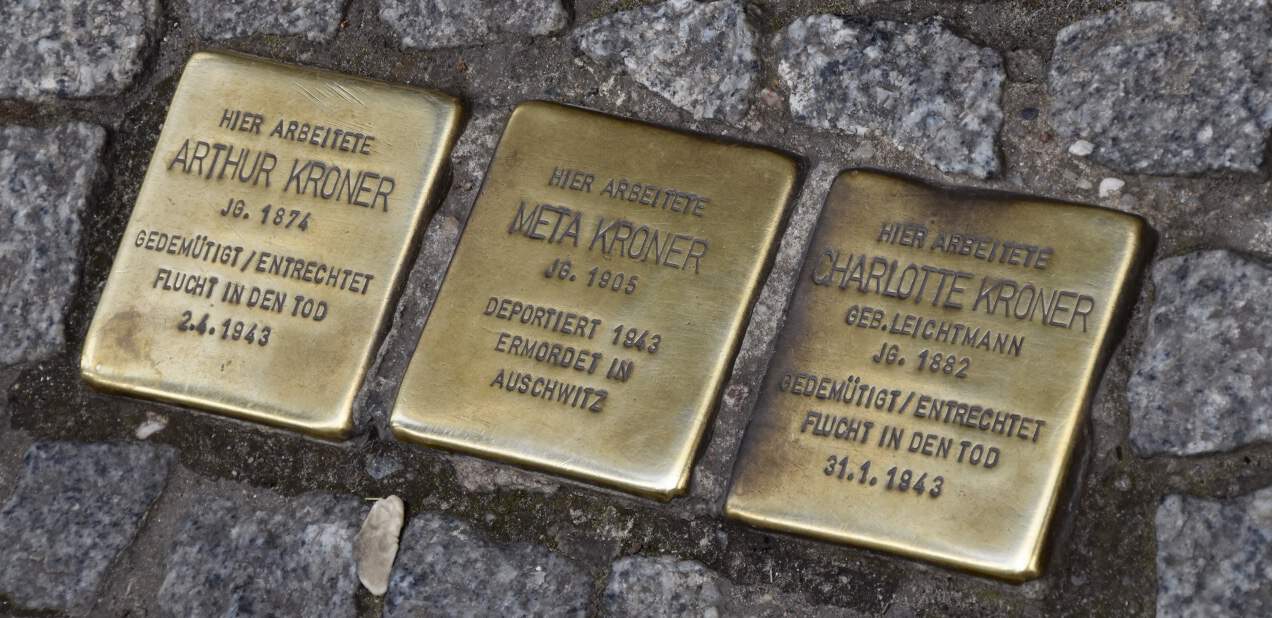
All through the city a line of markers traces where the Wall once ran, and set into the pavement are small brass plaques, each one in front of a home from which a Jewish family was taken; we were told they are all over Europe now.
We stopped at one of the only buildings in the area to survive the war, part of a triangle of structures the Allies had used as a reference point for their bombing. On one wall the Soviets had commissioned a cheerful mural showing how happy everyone supposedly was under their rule.
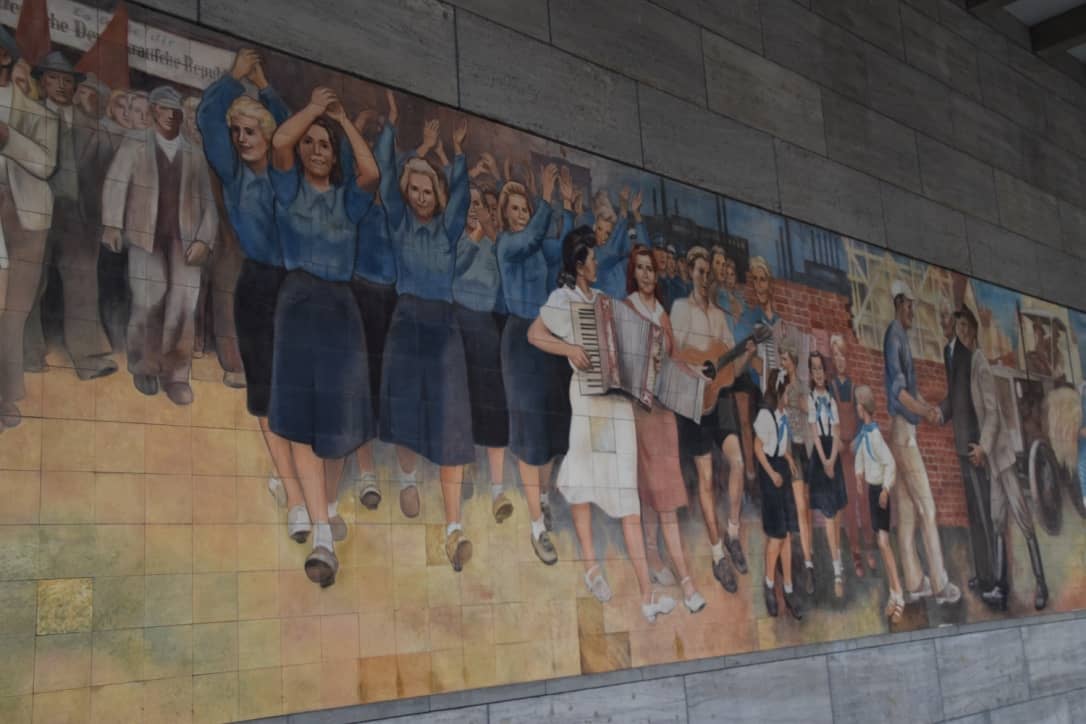
After the Wall came down, a row of real photographs was set up in front of it, showing what life in East Berlin had actually been.
Gendarmenmarkt. The tour ended in Gendarmenmarkt, laid out in 1688 and one of the loveliest squares in Berlin. A concert hall, home to a Berlin symphony, stands in the center, flanked by two nearly identical cathedrals, one Lutheran and one for the French Calvinists.
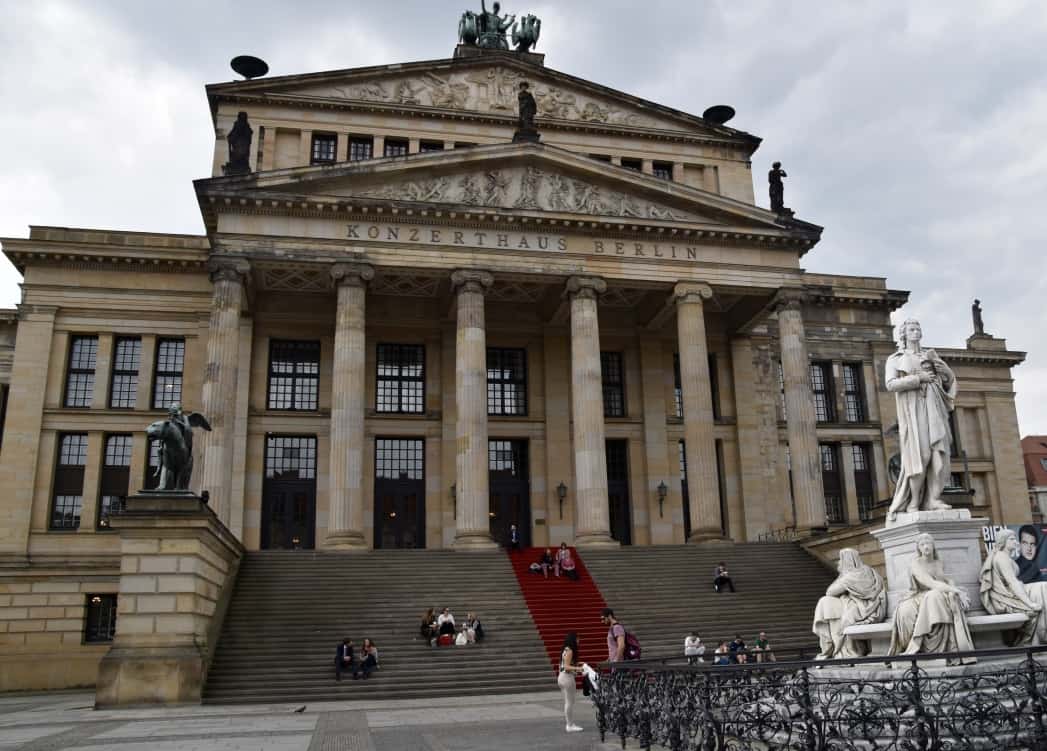
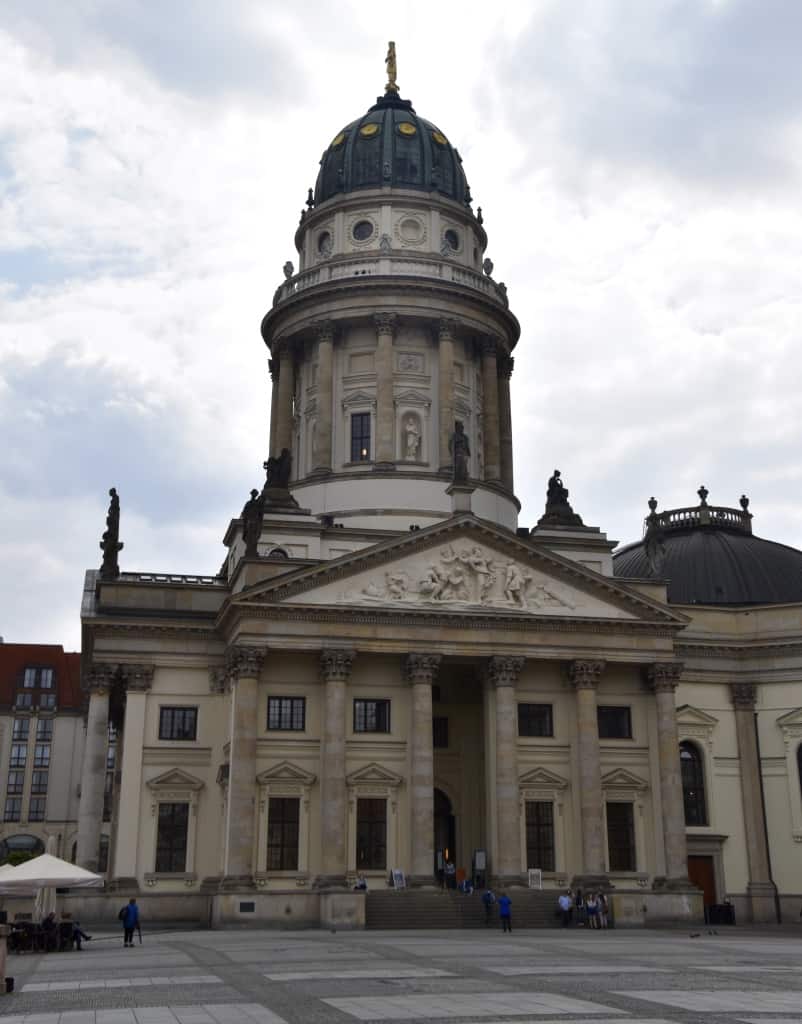
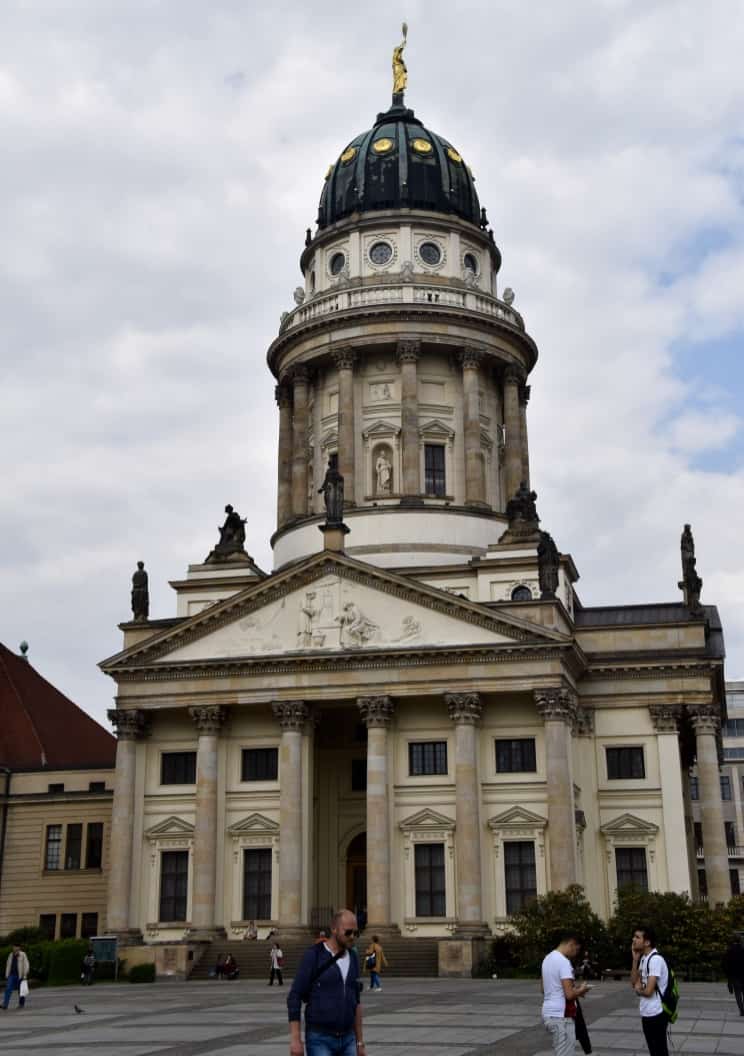
The guide told us the French church went up first, which so annoyed the Germans that they built theirs to match, only a few centimeters taller.
For dinner we found Weingalerie und Café NÖ, which pours its own white wine, and were seated with a gentleman from Munich named Oliver. He had built a career in computer security, so John had plenty in common with him, and we passed a happy evening over wine and beer hearing about his work and his seven-year-old twins and the summer they had ahead.
In the morning we were up early for the train to Prague.