Dateline May 24, 2016, Krakow
Our train south to Krakow gave us one of the conversations we will remember longest. An older Polish woman, well into her seventies, sat with us and spoke her mind plainly about Eastern Europe today and her hope that Poland would hold on to its patriotism. She told us what life had been like under the Soviets, and how much better she found it now. We listened a long while.
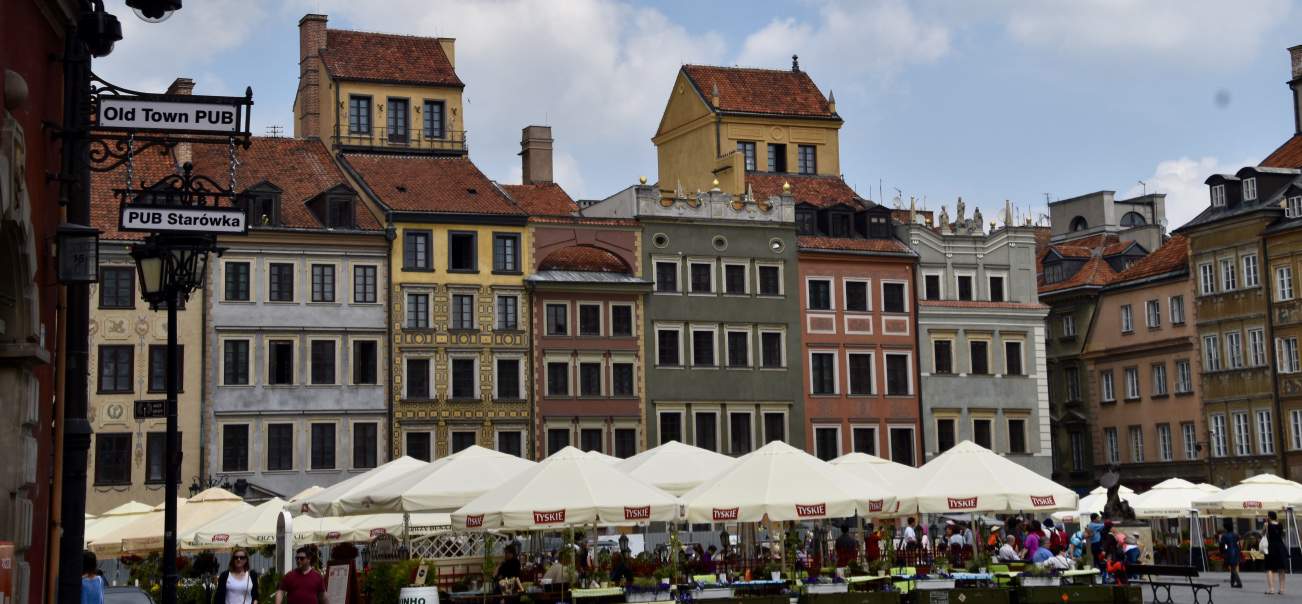
Into the old town. We took a taxi from the station to our flat, where our host, Jamie, had left such good instructions that nothing went wrong; the place was outstanding. We set out on foot toward the river and across it to the edge of the old town and the castle. Along the way we stopped in a square ringed with food booths and shared some kielbasa and a few beers, a lunch of about six dollars that hit the spot.
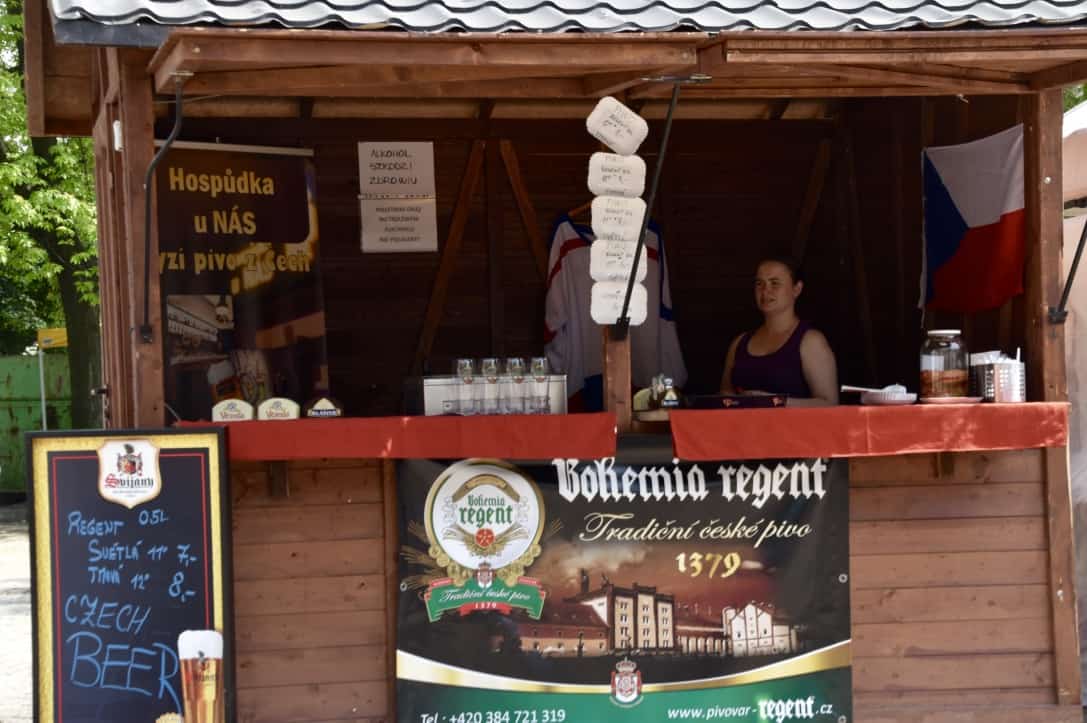
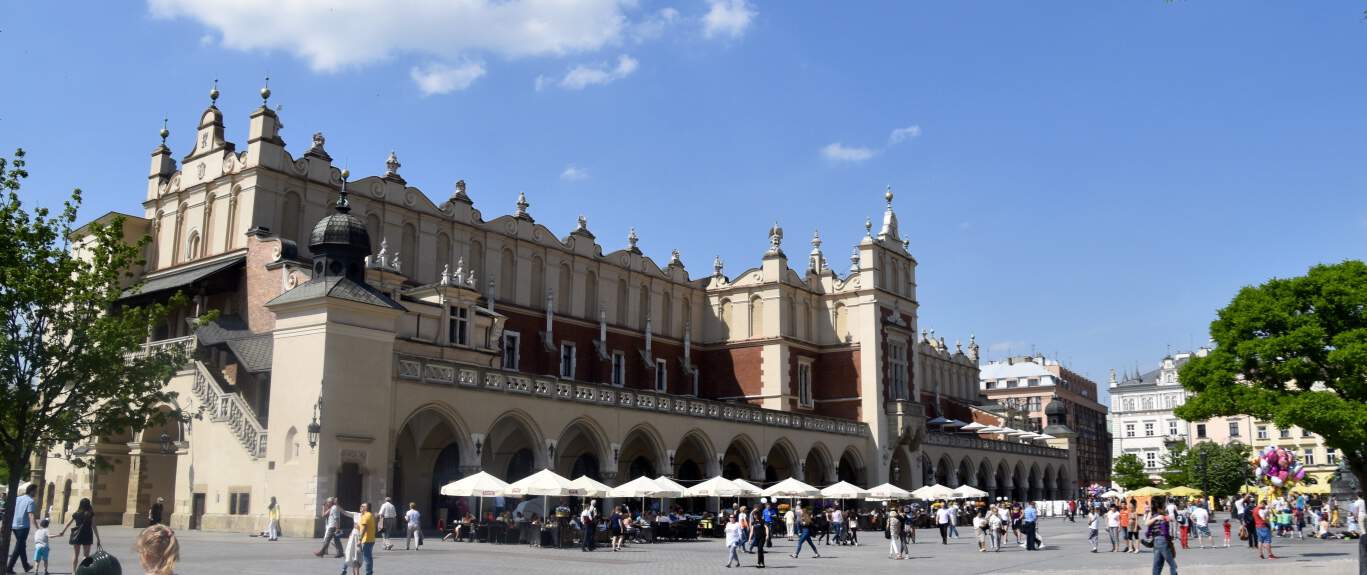
From there it was the final mile into the old town, whose center holds a vast covered market hall dating back to the 1300s. You can see at the top of the page just how big it is.
St. Mary's. At one corner of the square stands St. Mary's Church, and we nearly missed it. When we arrived it had been cleared out for a bomb scare, and the ticket window was shut. We started to walk away, then watched the emergency vehicles pull out one after another, went back, and found ourselves among the first allowed inside.
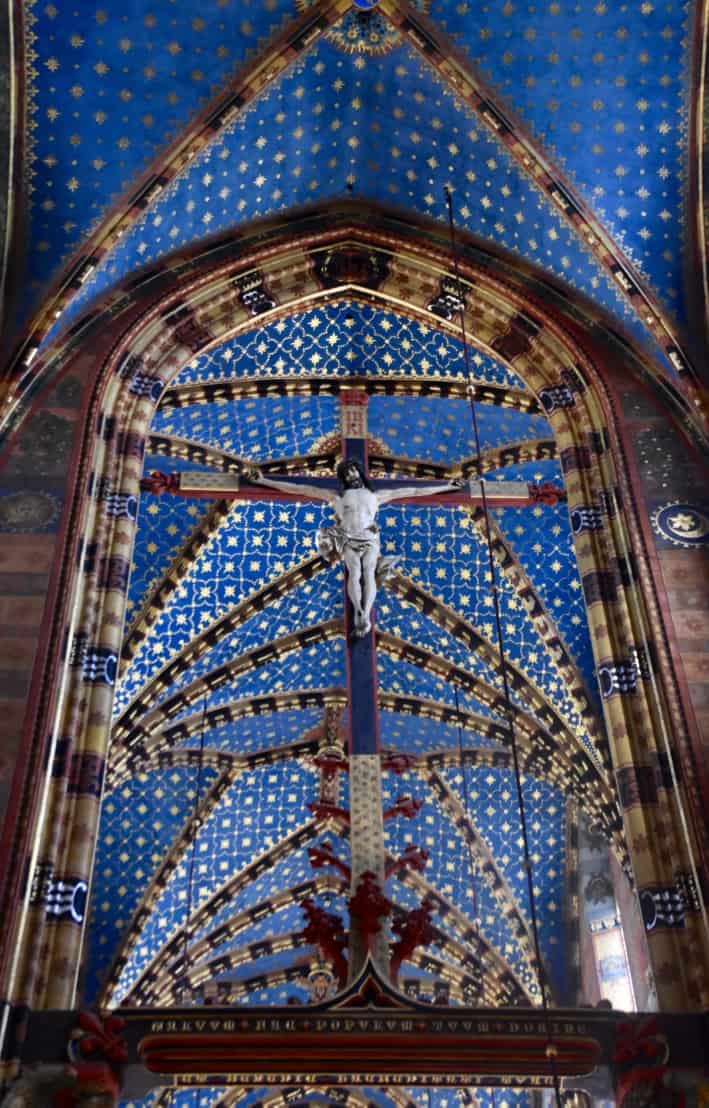
It was a beautiful church, as most of them are over here. They mean all the more, we think, to people who held on to their faith through decades of a system that did its best to stamp it out.
A shot of vodka. Walking back down toward Jamie's flat, one of us said it: how do you leave Krakow without a shot of ice-cold Polish vodka? We ducked into a small bar and were taken in hand by the barkeep, Ania, who had a bottle waiting in the freezer. We did several shots, each with a bite of fresh lime first.
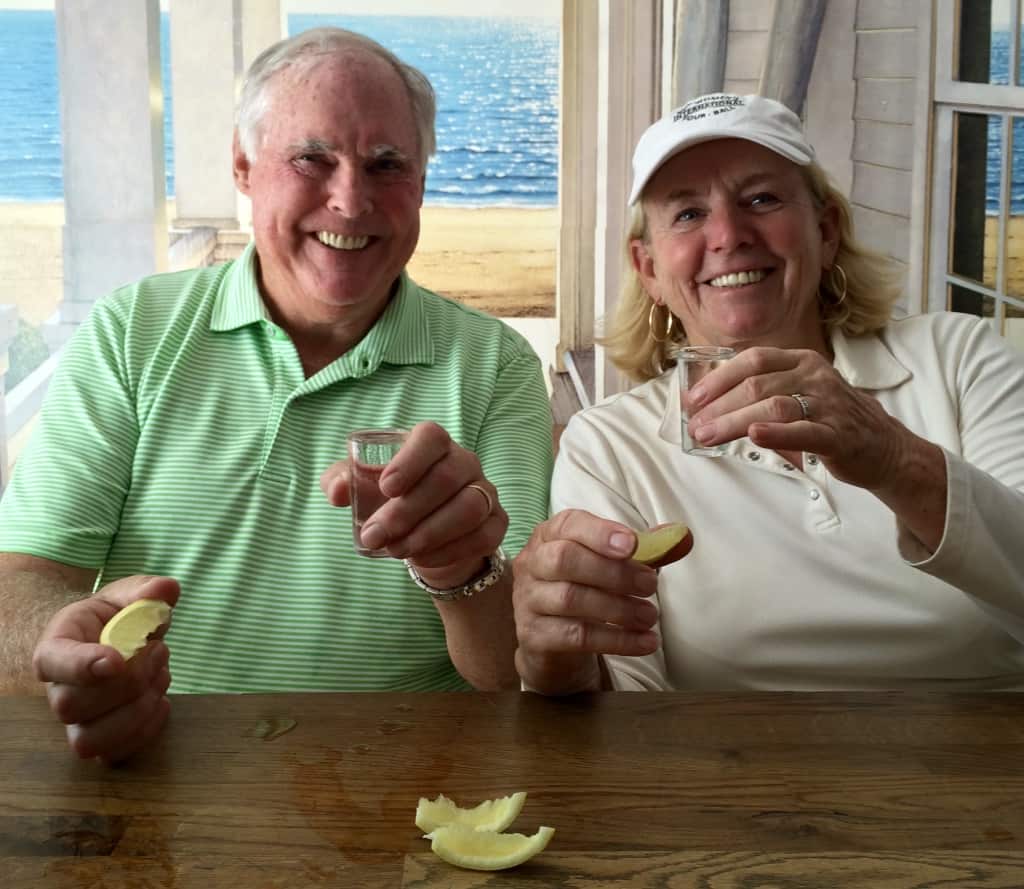
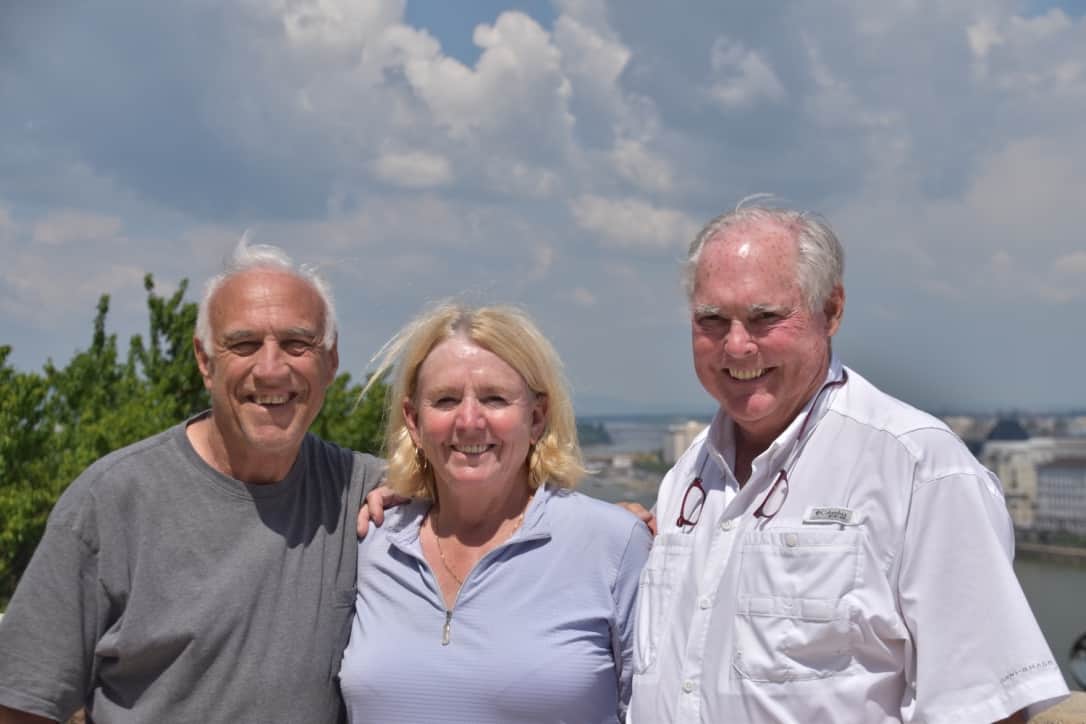
Ania took our picture, and no, despite the backdrop, we were not at the beach.
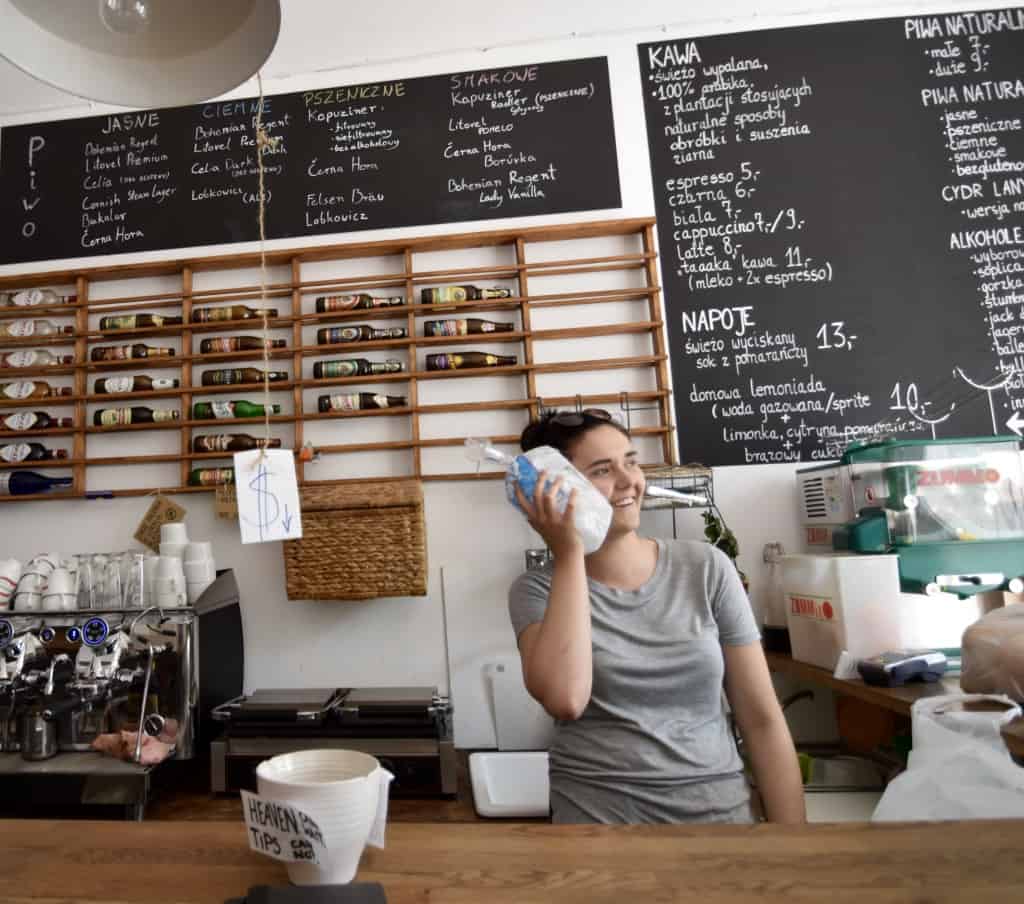
She looked after us beautifully, pressing ice to her head and swearing it was the warm afternoon and not the night before, and we talked happily until she had to leave for her other job.
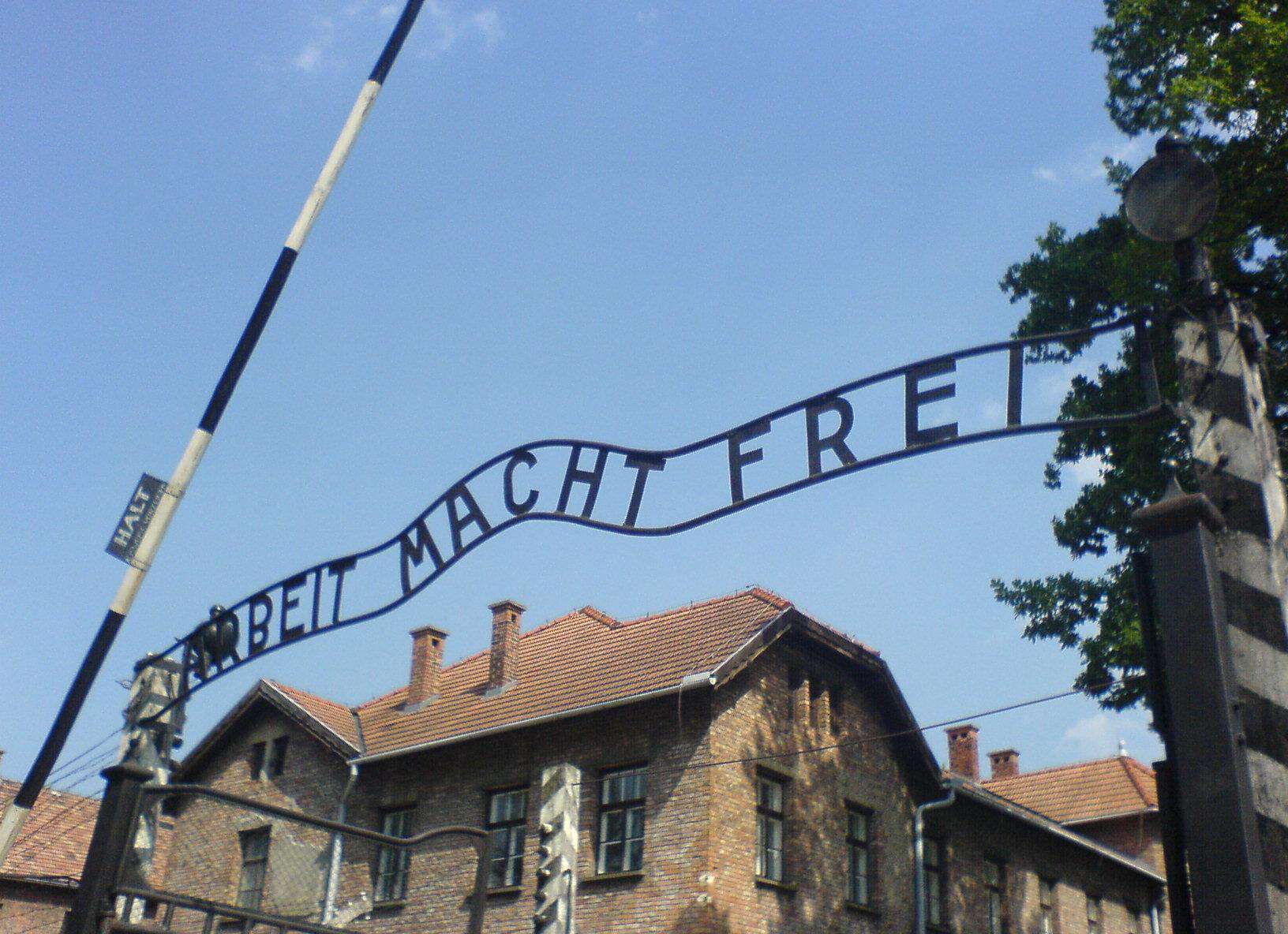
Down the salt mine. The next day we had a car booked for two stops about as far apart as two places can be. The first, Auschwitz, we are giving its own page, with the silence it deserves. The second, that afternoon, was the great salt mine at Wieliczka.
We started with a walk of more than five hundred steps down. The passages and chambers are still shored with timber, and because of the salt the wood is so well preserved it has needed almost no replacing.
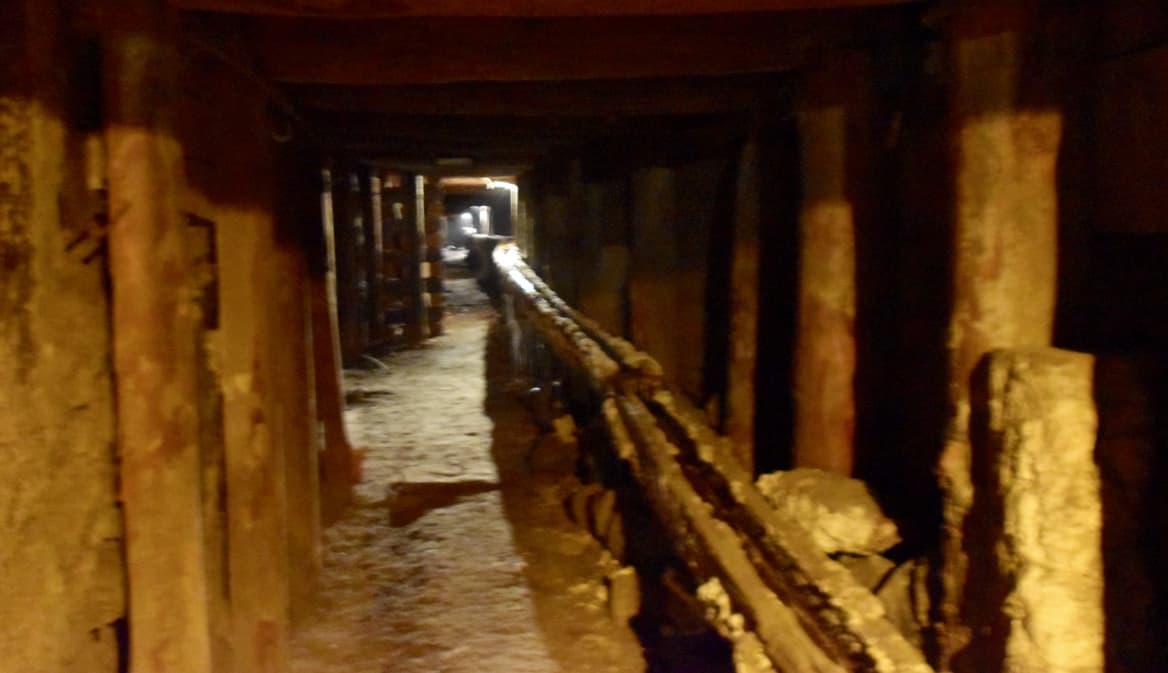
Between chambers there are air locks to keep the humidity out and the salt air in; the air was so salty our lips tasted of it the whole way down. Deep in the mine are chapels and places of worship carved straight out of the salt, a popular spot, we were told, for weddings.
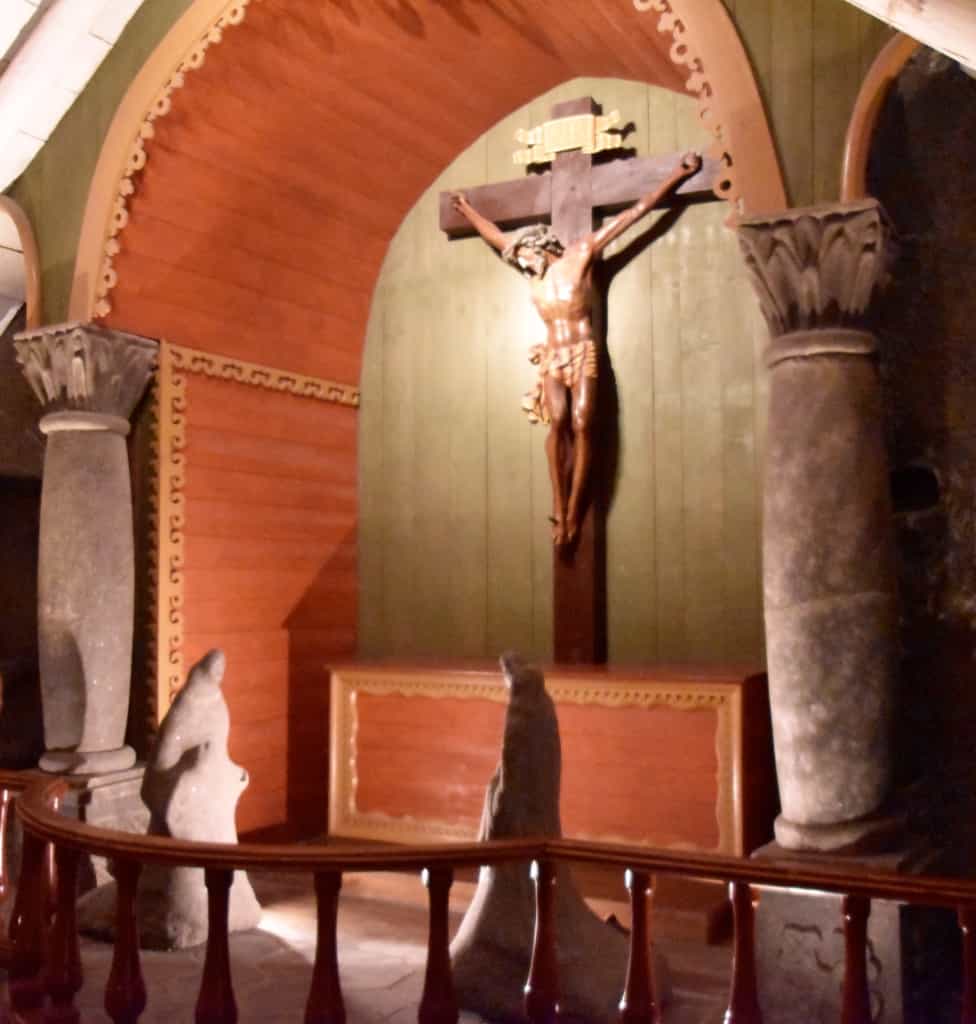
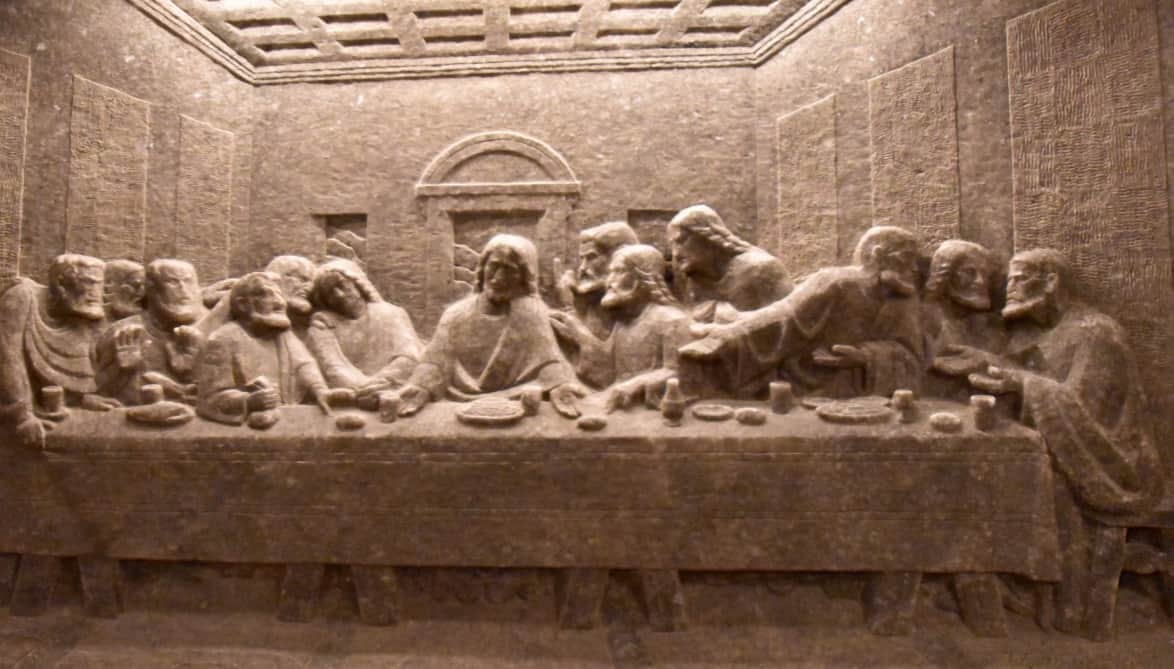
One carving of the Last Supper was remarkable, and most of the work, it turns out, was done not by famous artists but by the miners themselves.
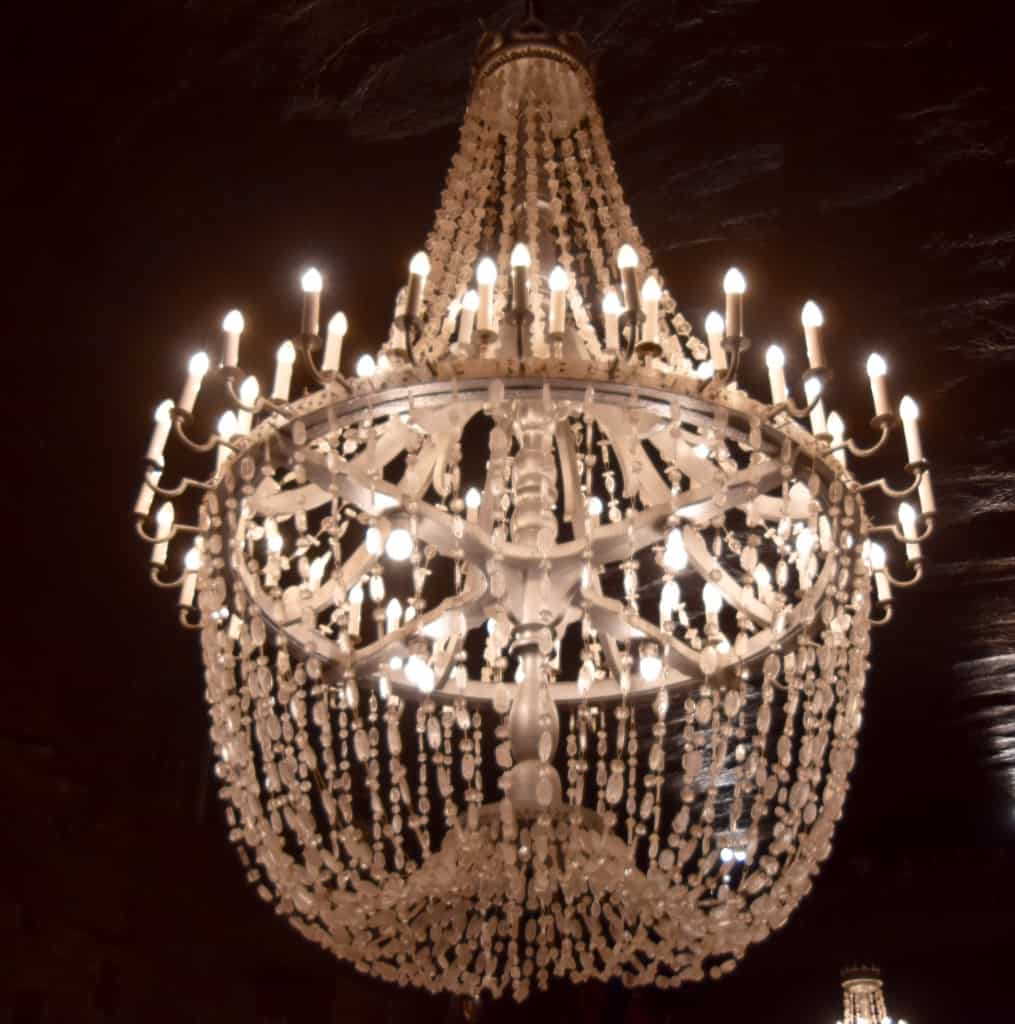
There was even a chandelier made of salt, the bulbs aside.
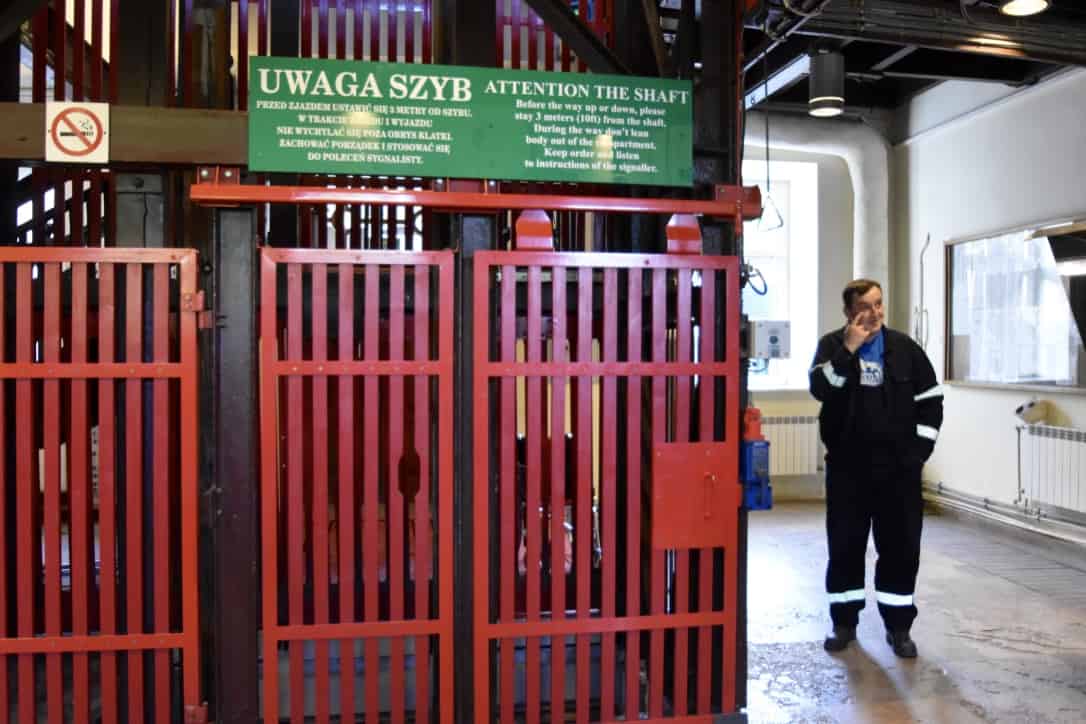
Getting back up would have meant about seven hundred stairs, but mercifully there was an elevator, which shot to the surface so fast it was exhilarating and a little terrifying at once.
That left only the morning we have not yet spoken of. Of everything we saw in those ten weeks, it is the one place we feel must stand on its own. So Auschwitz has a page to itself.