Dateline May 23, 2016, Warsaw
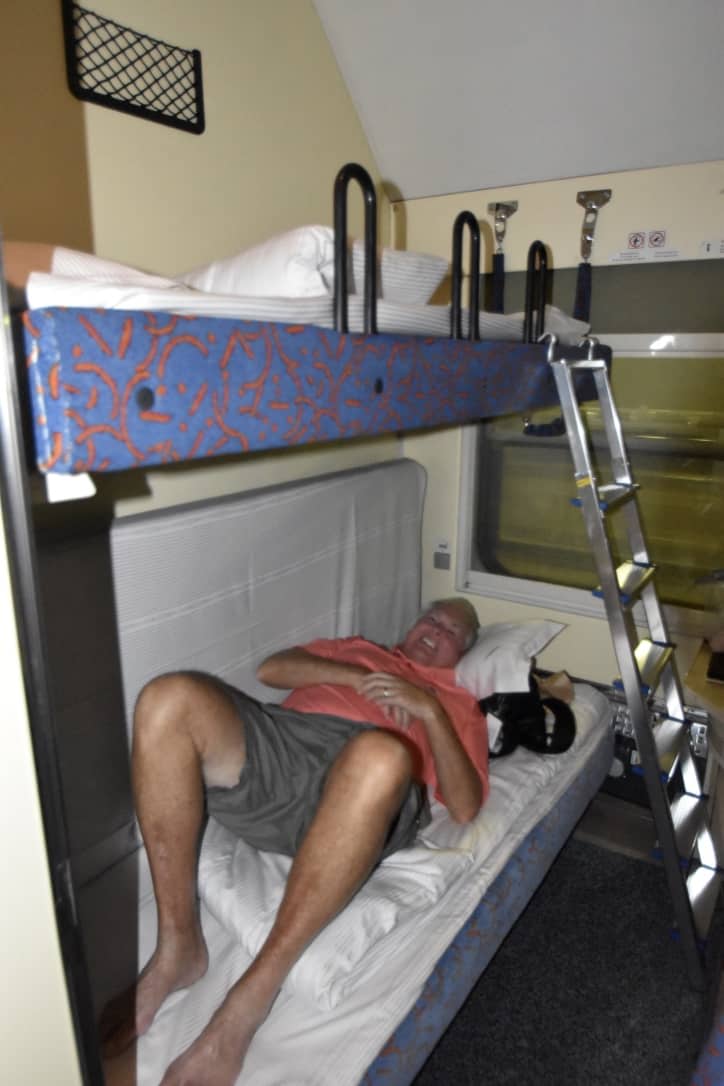
The night train. Somewhere in the booking we had convinced ourselves the overnight train to Warsaw came with a private room and a bathroom. We got the private room. What we had not counted on was the bunk beds, a straight trip back to childhood. Janice climbed the ladder to the big top bunk, a good five feet up, and John folded into the short lower one. We had ridden the upper decks of a ship through high seas on this trip; we can report that nothing at sea rolls quite like the top bunk of a moving train.
Our Airbnb host, Ada, met us right at the train and walked us to her flat in the Old Town. It was a five-floor walk-up, and those bags were heavy, but the apartment at the top was a wonderful two-bedroom with everything we could want.
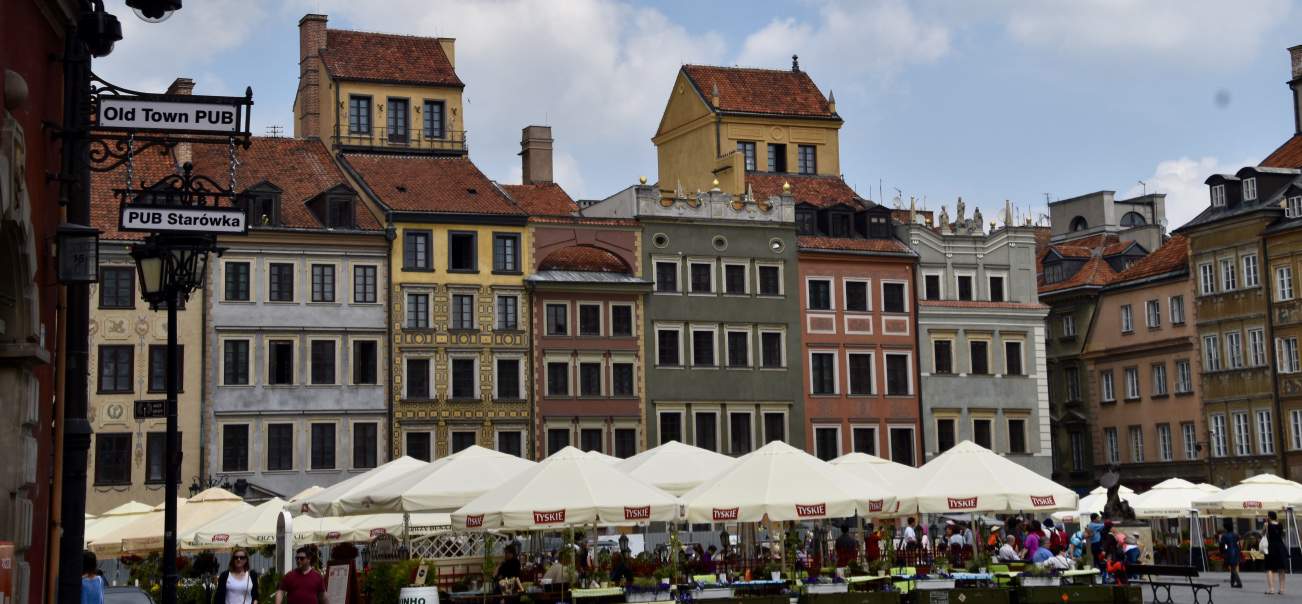
Old Town. We have come to love the free walking tours, and the Warsaw one began at Sigismund's Column, first raised in 1644, knocked down by the Germans, and put back up after the war. That, it turns out, is the story of the whole Old Town. In 1944, after the Poles rose up, knowing the Germans meant to ship them all off to be exterminated, the Germans leveled Warsaw almost completely. After the war the Old Town was rebuilt, using as much of the original brick and stone as could be salvaged from the rubble.
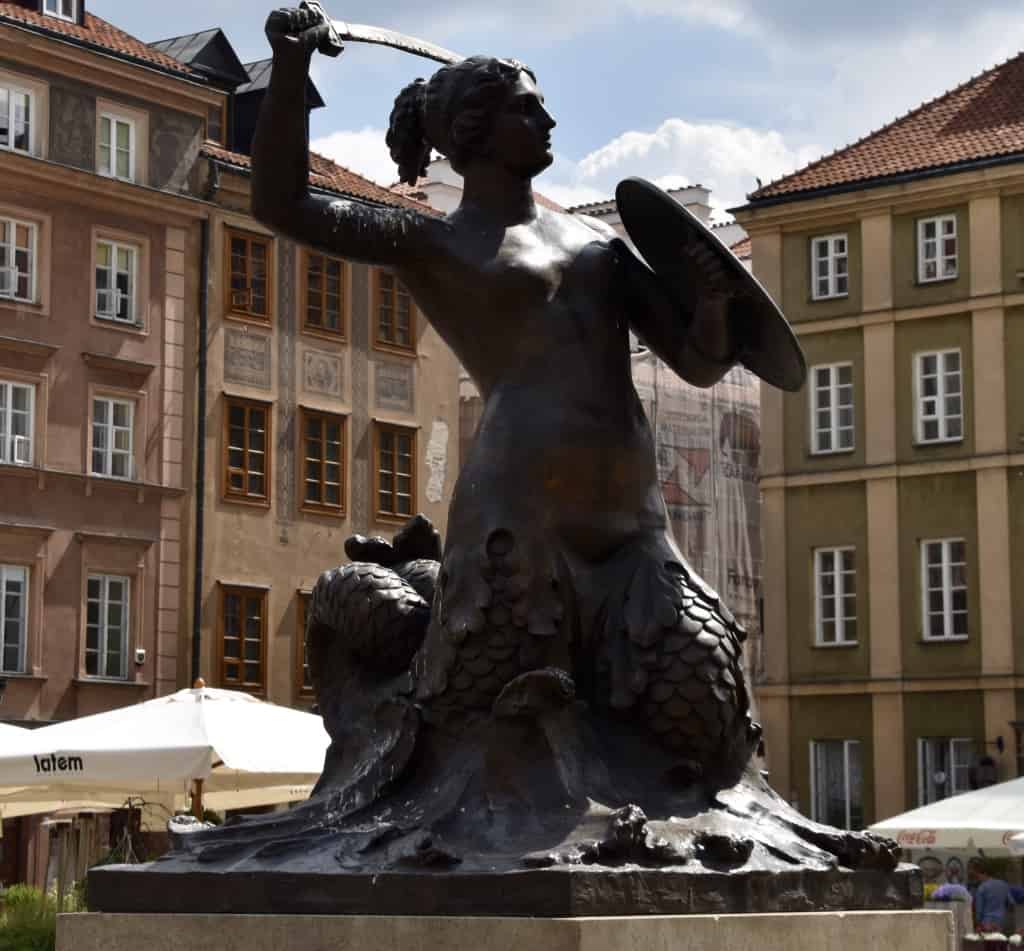
The Mermaid. In the square stands the Warsaw Mermaid. The legend goes that she was swimming up the river, stopped to rest on the bank near the Old Town, liked it, and stayed. The local fishermen noticed someone tangling their nets and freeing their fish, and set out to trap the culprit, only to fall in love with her singing. Later a greedy merchant did trap her and lock her away, until the fishermen heard her crying and rescued her. Ever since, armed with a sword and shield, she has stood ready to defend the city and its people.
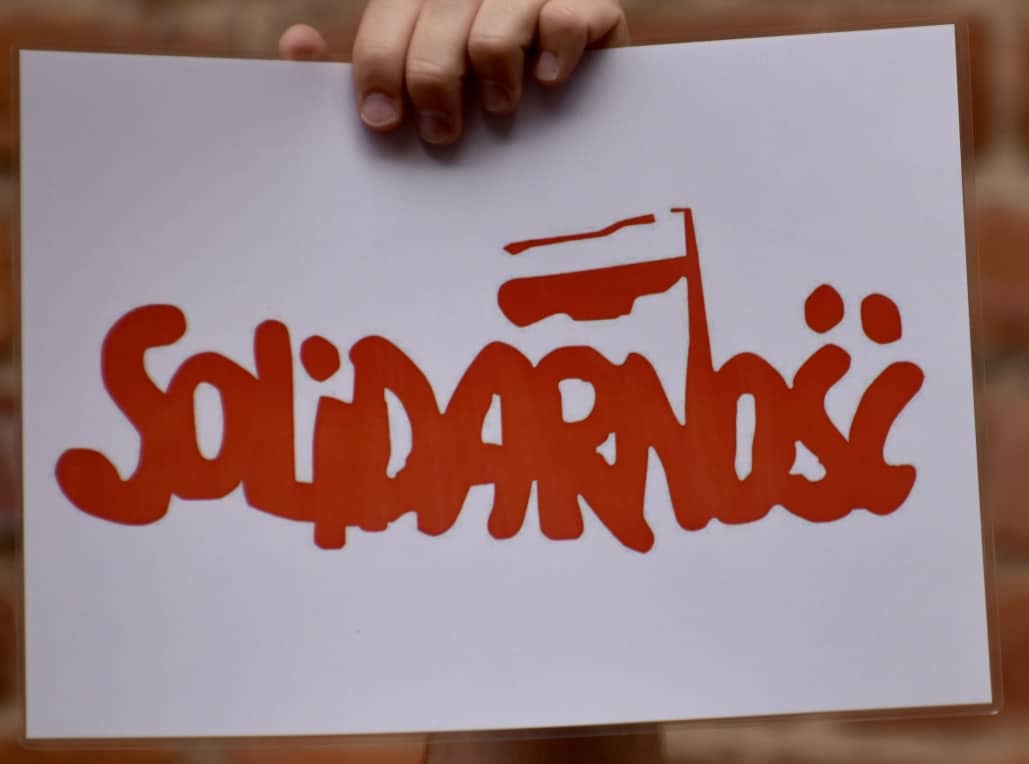
Solidarity. Our guide led us past a group holding signs, and told us how the road to a free Poland ran through Pope John Paul II and through Solidarity, the movement led by Lech Wałęsa that began in 1980, was driven underground, and rose again in 1989 to become the first opposition allowed into free elections.
The Ghetto. When John was young he read John Hersey's 1950 novel The Wall, the story of the Warsaw Jewish ghetto and the last stand its people made against the Nazis in 1943. It marked him, and it has stayed with him all his life. In the end they were all killed. The SS commander's own report back to Berlin recorded the ghetto burned and blown up and tens of thousands of its people sent to their deaths, and declared, in the cold arithmetic of that regime, that the Jewish quarter of Warsaw had ceased to exist.
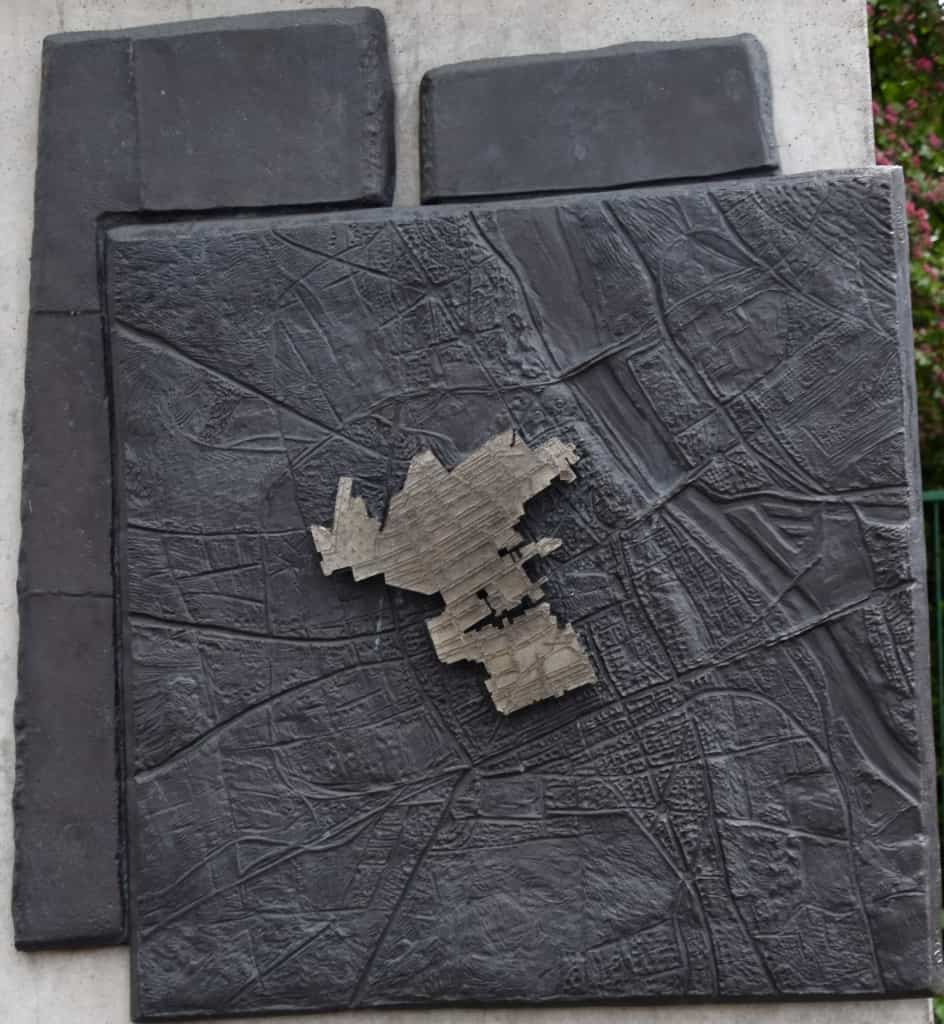
We stood in the bottom corner of the map, in what had been a very large district and was now mostly open ground. So many cities, we have learned, hold a place once called the Ghetto, where Jewish people were held and worked before being shipped to the camps or shot against a wall close to home.
From Warsaw we boarded a train south for Krakow.