Dateline May 17, 2017, West Texas and Hueco Tanks
The road west. From San Antonio we made for Fredericksburg, a cute German town in the Texas hill country. Janice had been before, but when we got close she realized it was no longer the small place she remembered from twenty-five years ago; it had grown into a big tourist stop, packed with people, so we decided to push on instead and get as far west as we could. We meant to reach Hueco Tanks State Park the next day, and we ended this leg of the drive in Fort Stockton. It was blowing hard, as west Texas usually is, and the sign in the park office summed it up: we know it is a little windy, but it will get much worse.
The Guadalupe Mountains. Along the way we passed Guadalupe Mountains National Park and stopped in at the visitors center. This range holds the four highest peaks in Texas and rises up out of the New Mexico border into the state.
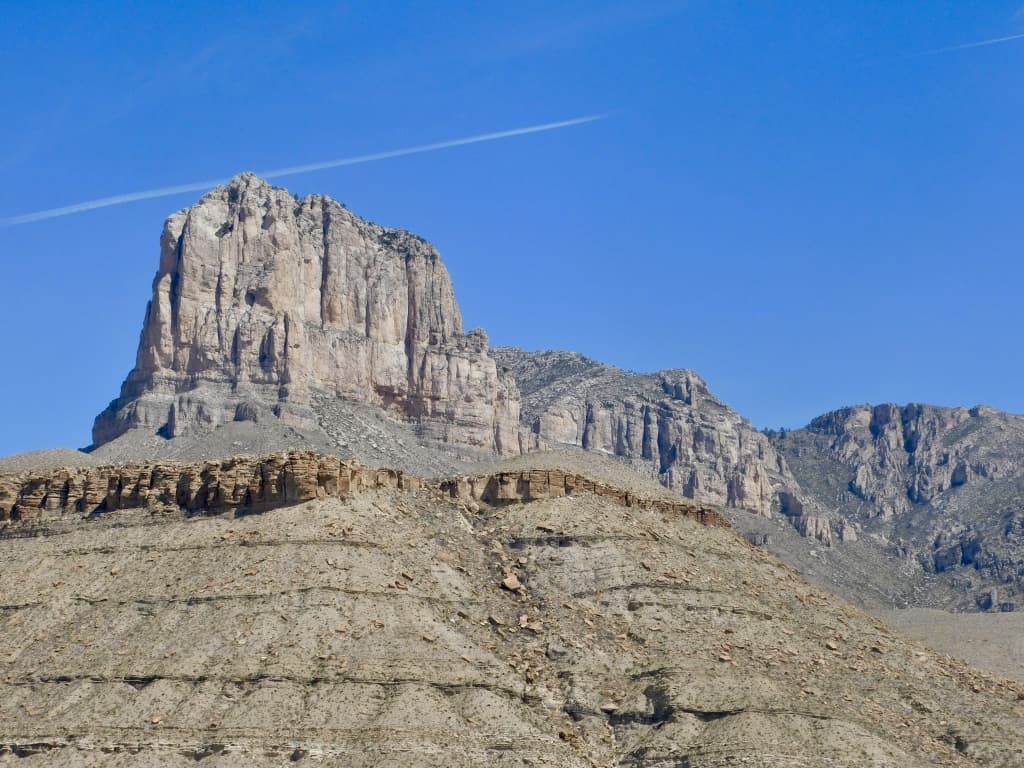
The park keeps some of the exposed bones of the Capitan Reef, one of the finest examples anywhere of an ancient barrier reef. Some two hundred and fifty million years ago this was the floor of a shallow sea, the Permian Sea, and lime from the water and from countless dying sea creatures built up along its edge into a reef hundreds of feet thick. The ocean drained away, sediments buried the reef, and then, over the last ten or twelve million years, the whole region was pushed slowly upward. Erosion has been wearing away the softer rock ever since, laying bare the hard limestone of the old reef. Stand there and try to picture it: this dry desert was once the bottom of a sea.
Oil country. The next morning we drove the back roads toward Hueco Tanks, and what struck us was the work going on all around: miles of pipeline being laid and one drilling rig after another going up.
Janice's brother Brian, who worked as a geologist on the rigs in his younger years, looked at our pictures and said every one of these was re-drilling an existing well. There is a great deal of oil and gas work happening in this part of the country now.
Hueco Tanks. We reached Hueco Tanks about one in the afternoon. It sits near El Paso, and it is a must, whether for an overnight or just a day hike.
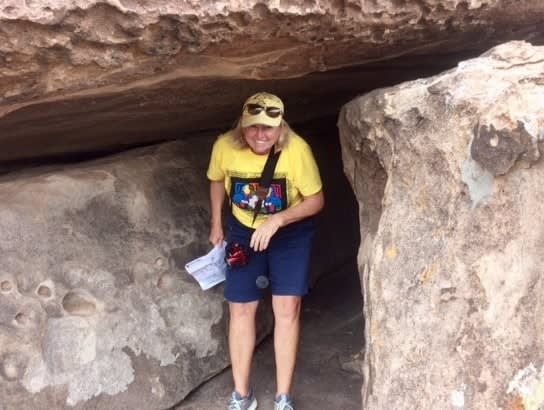
Hueco Tanks is more than a park; it is a historic site, watched over by the state of Texas, with a history that runs back more than ten thousand years. Hunters and gatherers crossed this land that long ago, and you can still see the geometric designs they painted on the rocks. The place owes everything to its great granite formations, exposed over the ages, whose hollows and cracks, the huecos, catch and hold rainwater. That water, along with the shade and the pockets of soil, makes small moist worlds in the middle of the desert, little habitats where plants and animals live that you would never expect to find out here, freshwater shrimp among them. We walked the self-guided trails to find the pictographs.
One of them is thought to be more recent, from the days of the Indian wars. Here it is as it looks now, and as they believe it first looked.
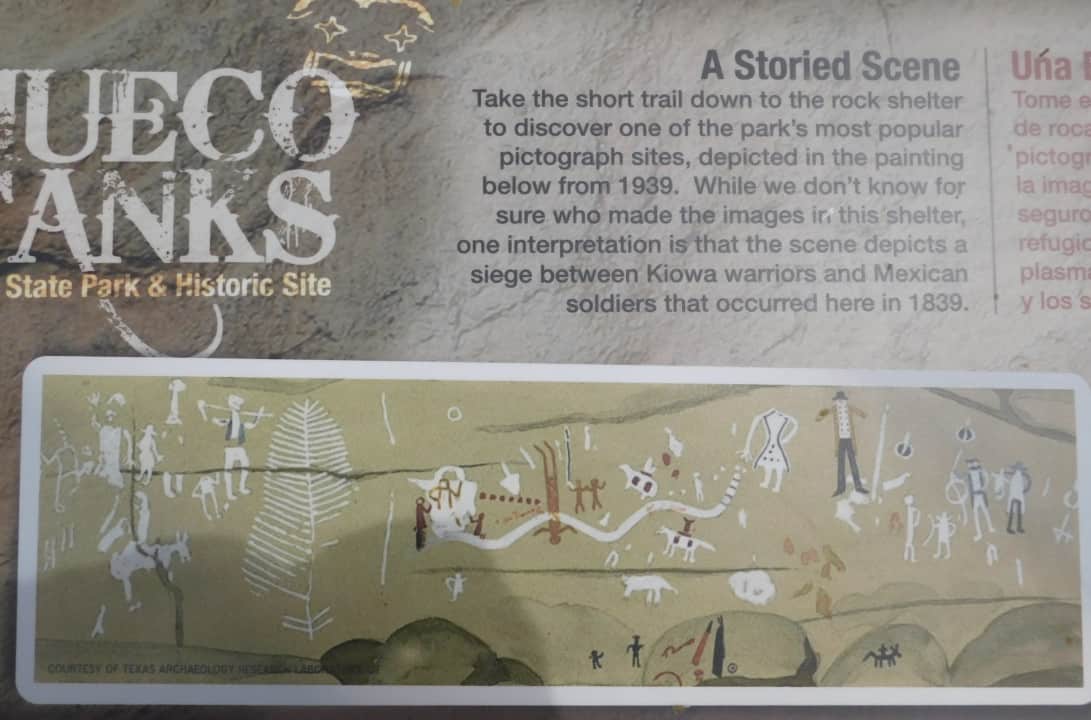
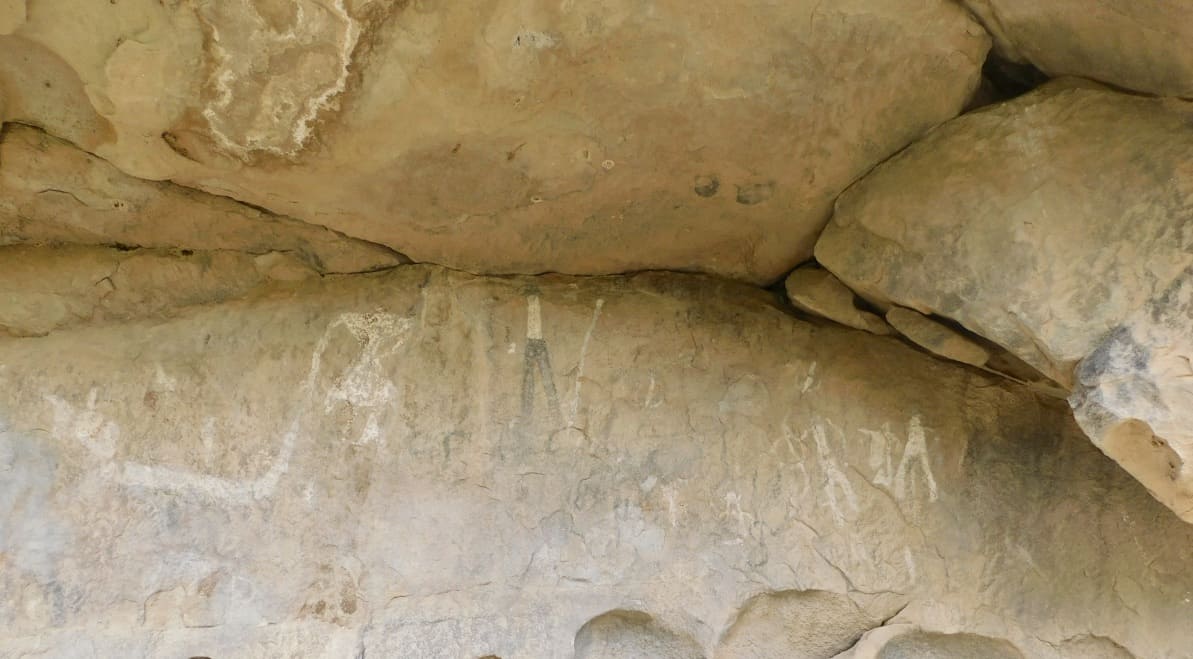
There are said to be more than two hundred painted masks in these rocks, most of which you can only reach on the guided tour, which runs Wednesday through Saturday. We saw only a small part of it, so next time, and there will be a next time, we will take the guided walk.
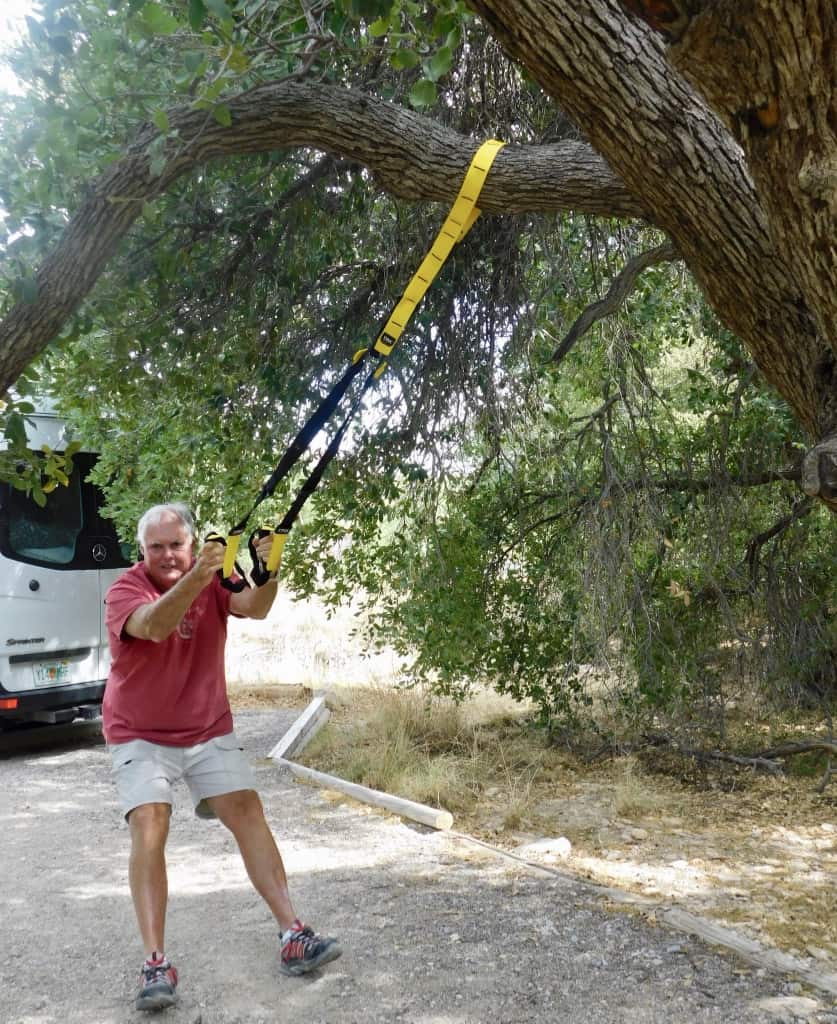
The campsite was excellent, and John got in some of his TRX exercise, as he has done at many of our stops.
We spent a quiet night at the foot of the rocks, already sure this was a place we would come back to. After a good night's sleep we headed out of Texas at last, bound for Janice's friend Marty's place in Sedona, Arizona.