Dateline May 23, 2017, The Arizona Parks
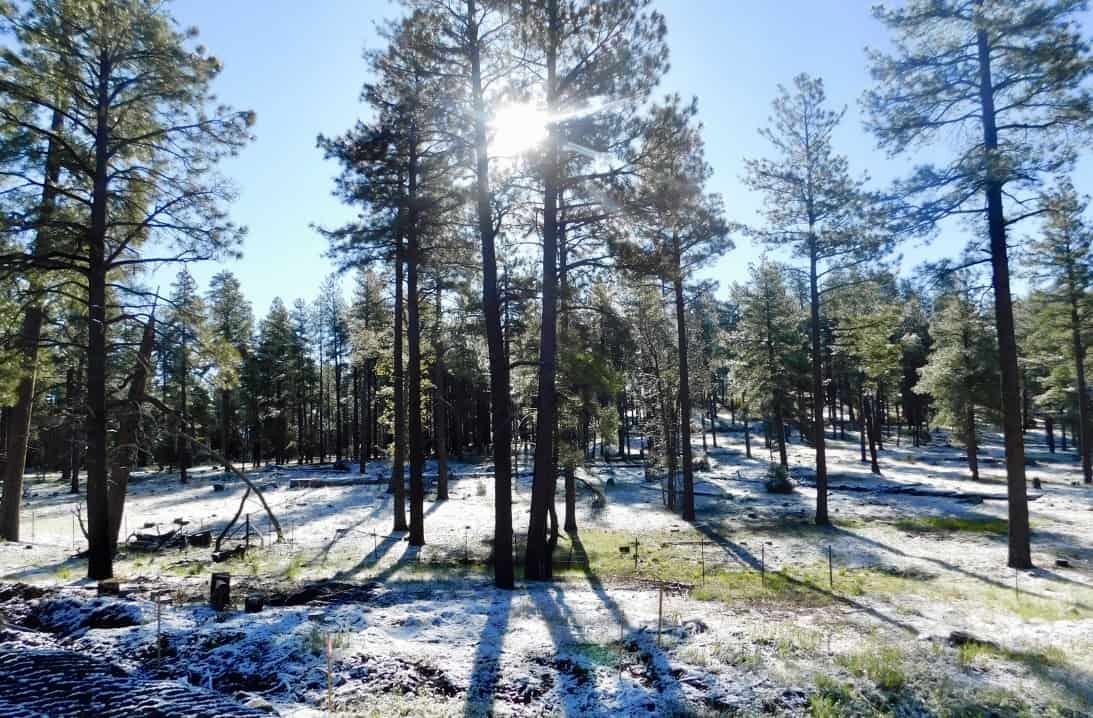
We pulled out early Friday and headed for Flagstaff, with the Petrified Forest and the Painted Desert ahead. Being from Florida, and it being the middle of May, we were startled to meet cars coming down from Flagstaff dusted with snow. Sure enough, when we got there it was beautiful, snow lying on the hills and the mountain.
Meteor Crater. Marty and Jeff had suggested a few stops along the way. We tried for Walnut Canyon National Monument but arrived an hour before it opened, so rather than wait we pushed on to Meteor Crater.
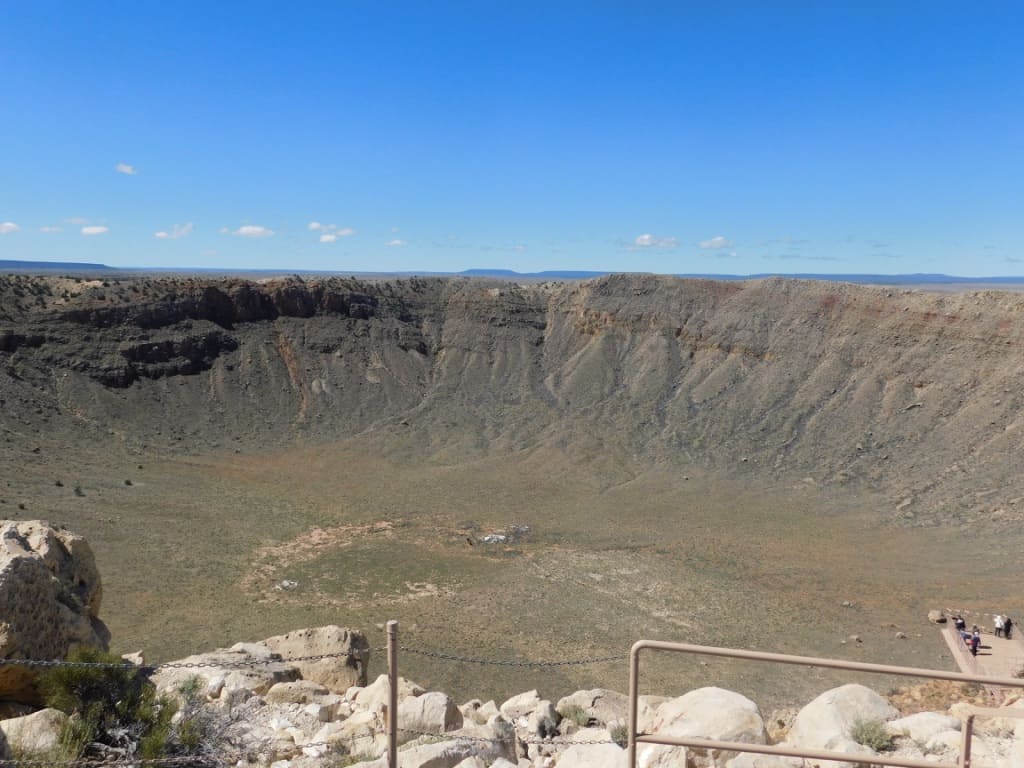
What a stop, when you think that NASA used this very crater to train the men who would go to the moon. It is fun to picture Neil Armstrong walking the rim and rehearsing his line about a small step.
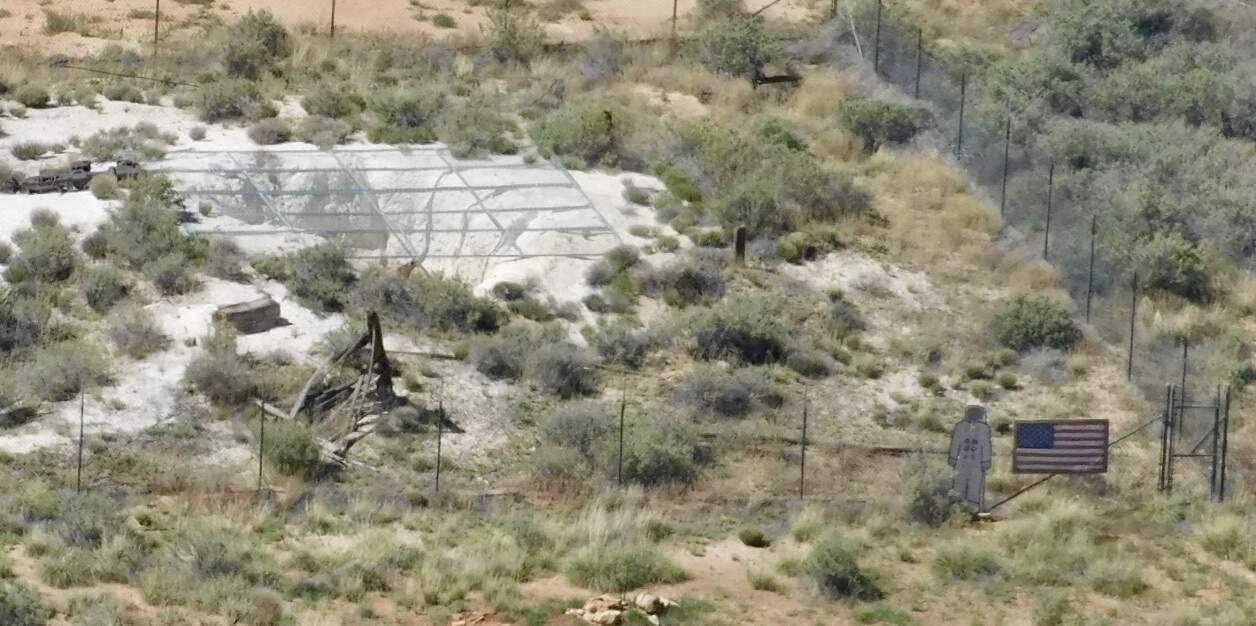
The crater is privately owned but recognized as a National Natural Landmark. It runs about three thousand nine hundred feet across and five hundred sixty feet deep. The meteorite that made it crashed here some fifty thousand years ago; it is reckoned to have been around a hundred and sixty feet long, having burned away half its size on the way down. Remarkably, it was not until 1960 that anyone proved for certain it had been a meteor at all.
The Petrified Forest. On we went to the Petrified Forest and the Painted Desert, entering by the south gate and the visitor center, where a number of trails lead out among the petrified logs.
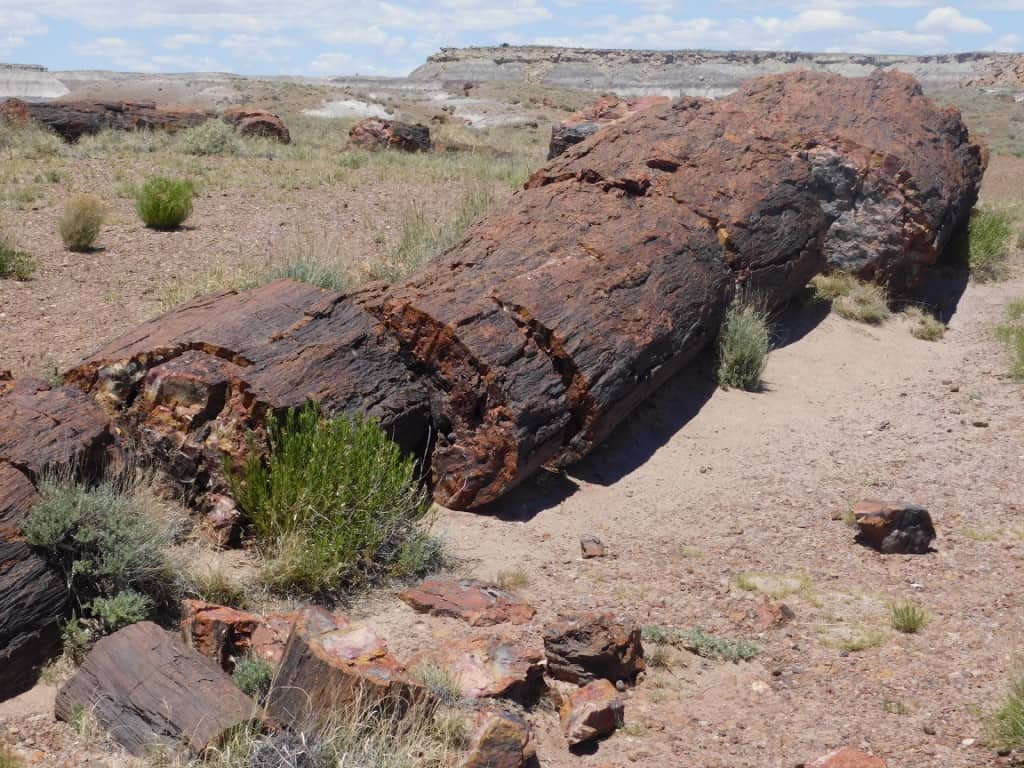
John asked one of the rangers why the logs look as though someone had sawn them into pieces. The answer is a good one. Petrified wood is mostly silica, which is to say quartz, and while it is very hard, nearly an eight on the ten-point scale, it is also brittle. Long after the wood had turned to stone, while it was still locked in the surrounding rock, the logs cracked under the strain. Then, as wind and ice and gravity wore the rock away and freed them, those cracks opened and the segments came apart. Silica breaks on a clean, straight angle, so the pieces look cut.
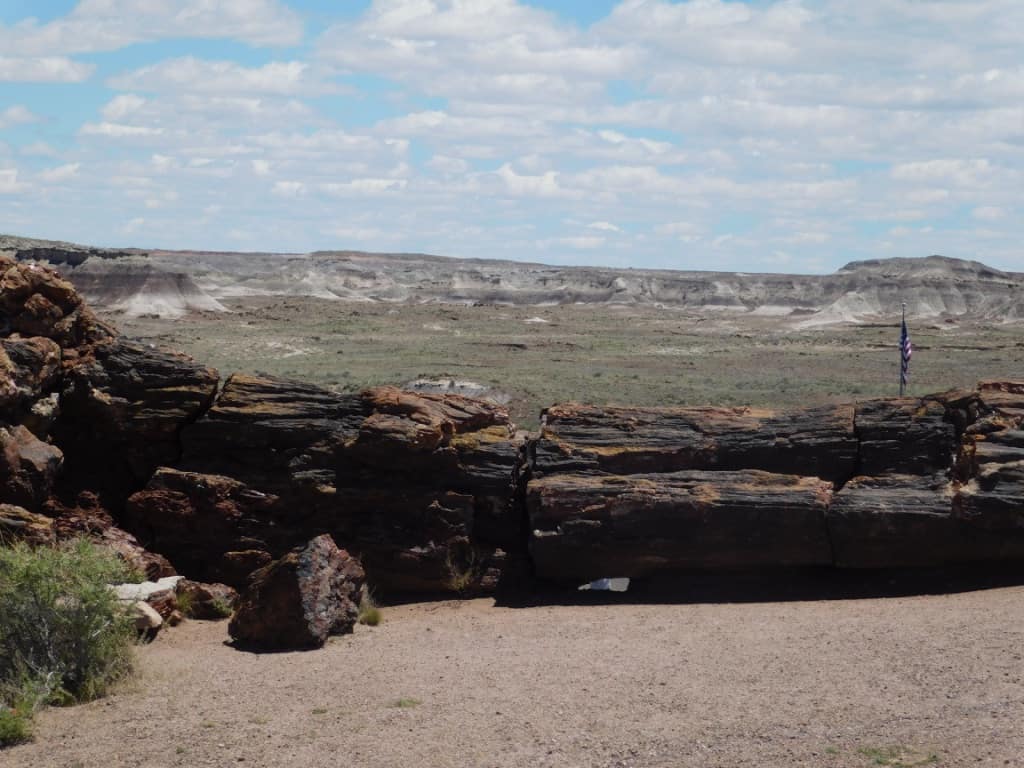
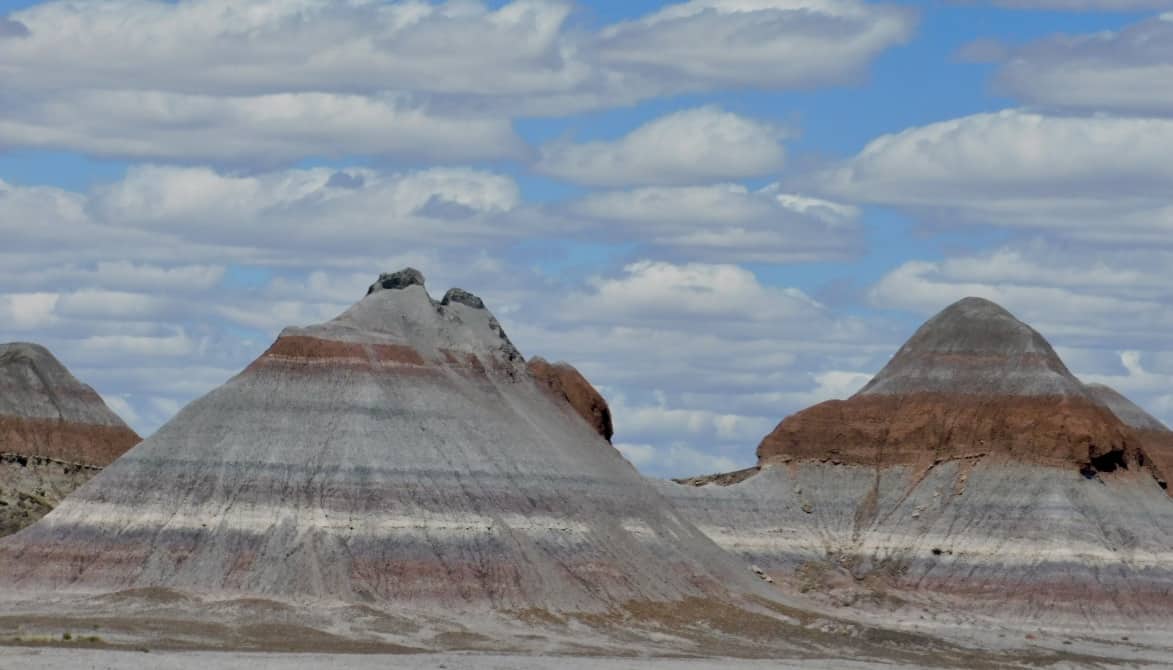
These parks are about far more than the wood and the colors. The land sits up around fifty-four hundred feet, and at least nine kinds of fossil trees have been found here, every one of them long extinct, along with a wealth of other fossils. The colorful badlands, the flat-topped mesas, and the carved buttes of the Painted Desert were laid down more than two hundred million years ago, in the late Triassic, in one of the richest beds of fossil plants anywhere on earth.
Newspaper Rock. Newspaper Rock is not one rock but a whole gallery, more than six hundred and fifty petroglyphs pecked into the stone by ancestral Puebloan people who lived, farmed, and hunted along the Puerco River somewhere between six hundred and two thousand years ago. There were far too many to take in; here are a few.
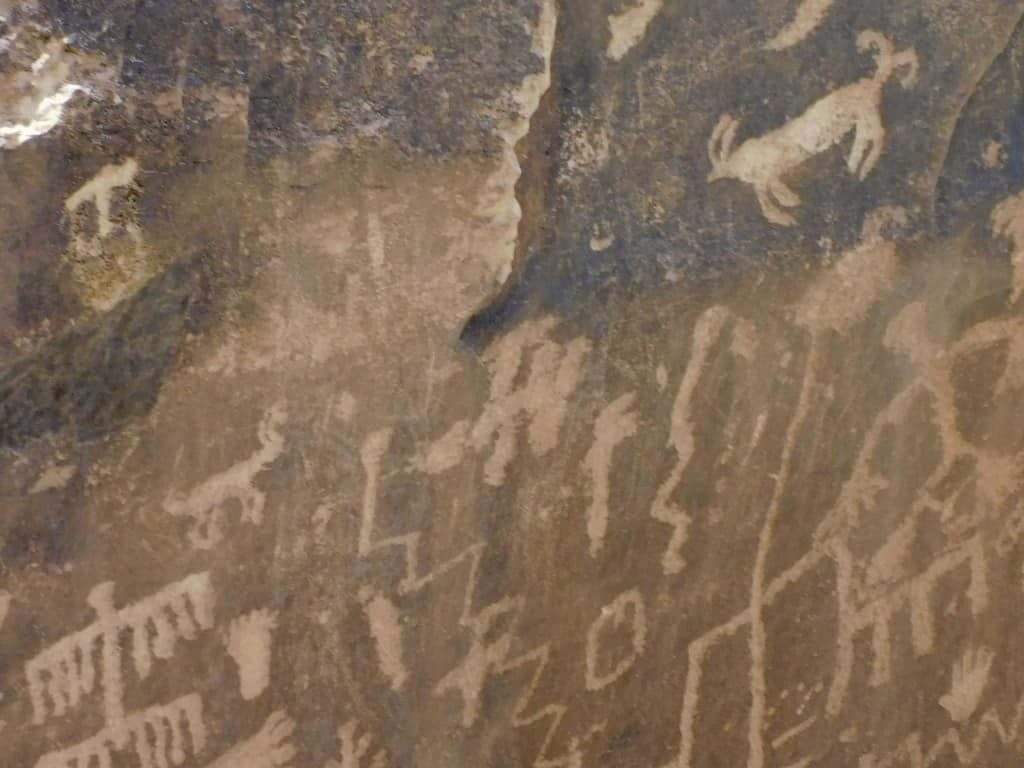
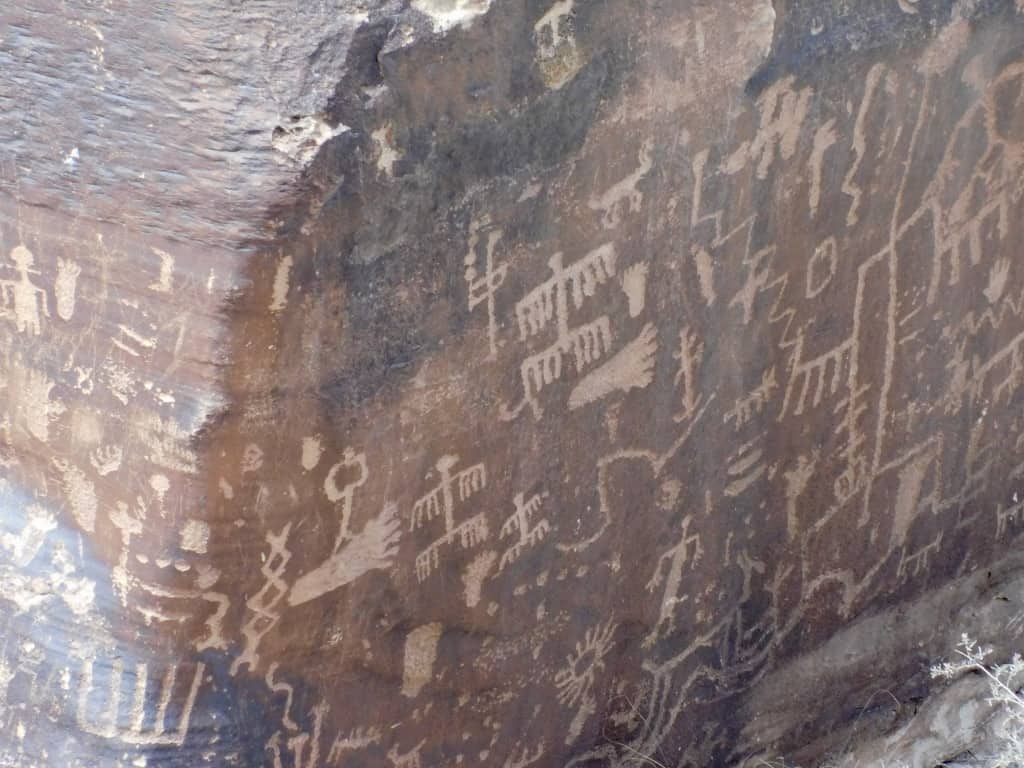
The Painted Desert. They say a picture is worth a thousand words. Here are a couple of thousand.

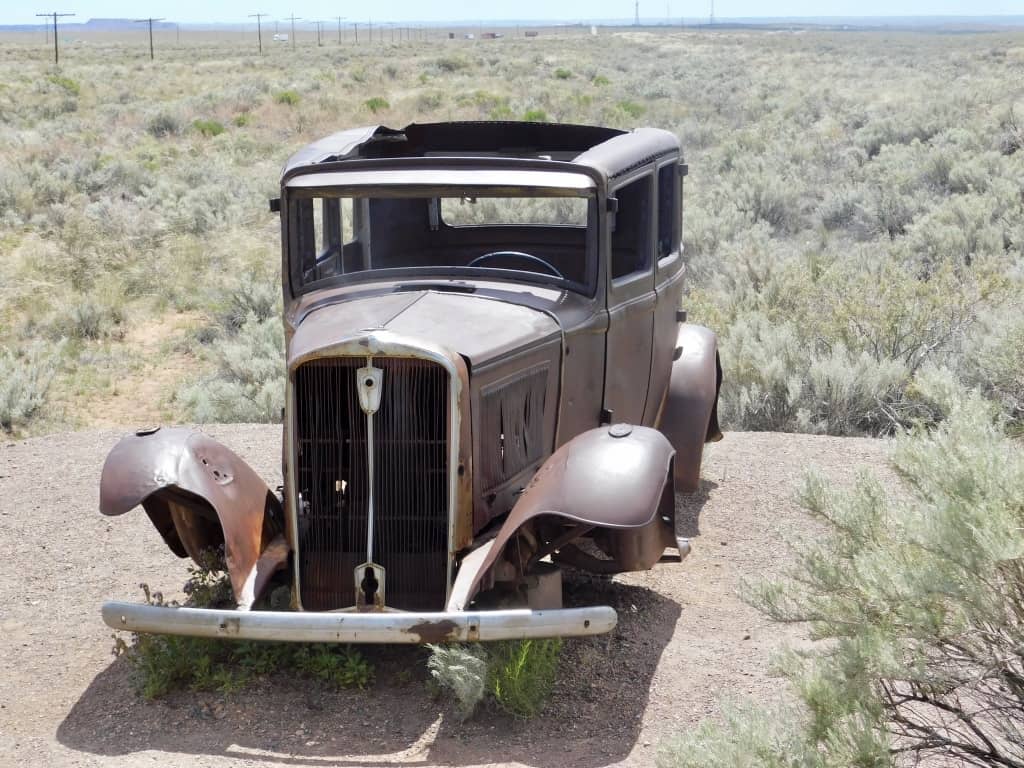
We spent the night in Holbrook, right on old Route 66, parking the RV and having some dinner before the next day's run to Santa Fe. We had hopped on and off Route 66 here and there along the way, and the old signs make you smile. Back in the Petrified Forest, an old Studebaker sits rusting right where the Mother Road once cut through the park.
In the morning we pointed the Roadtrek east, toward Santa Fe.