Dateline February 8, 2018, Lima, Peru
A bucket-list trip. It was time to cross a big one off the list, a trip to South America, beginning in Peru among the ruins of the Inca Empire. The plan was a land tour of the Sacred Valley and Machu Picchu, then a cruise from Santiago, Chile, down around Cape Horn and out to the Falkland Islands before ending in Buenos Aires, and finally a flight over to see Iguazu Falls from both the Brazilian and Argentine sides. We were traveling with Janice's brother Stephen and his wife Marilyn Roberts.
Getting started took a little juggling. We live ninety minutes from Orlando, and Delta texted that our flight there, to make the Lima connection in Atlanta, was running late and would leave us just thirty minutes between planes. We found two flights out of Daytona Beach, thirty minutes the other direction, that would put us in Atlanta with time to spare; Delta made the switch, and we made the connection. We landed in Lima right on time at midnight, and with luggage and customs behind us we reached the hotel by two in the morning. Lucky for us, Lima keeps the same clock as home in Florida.
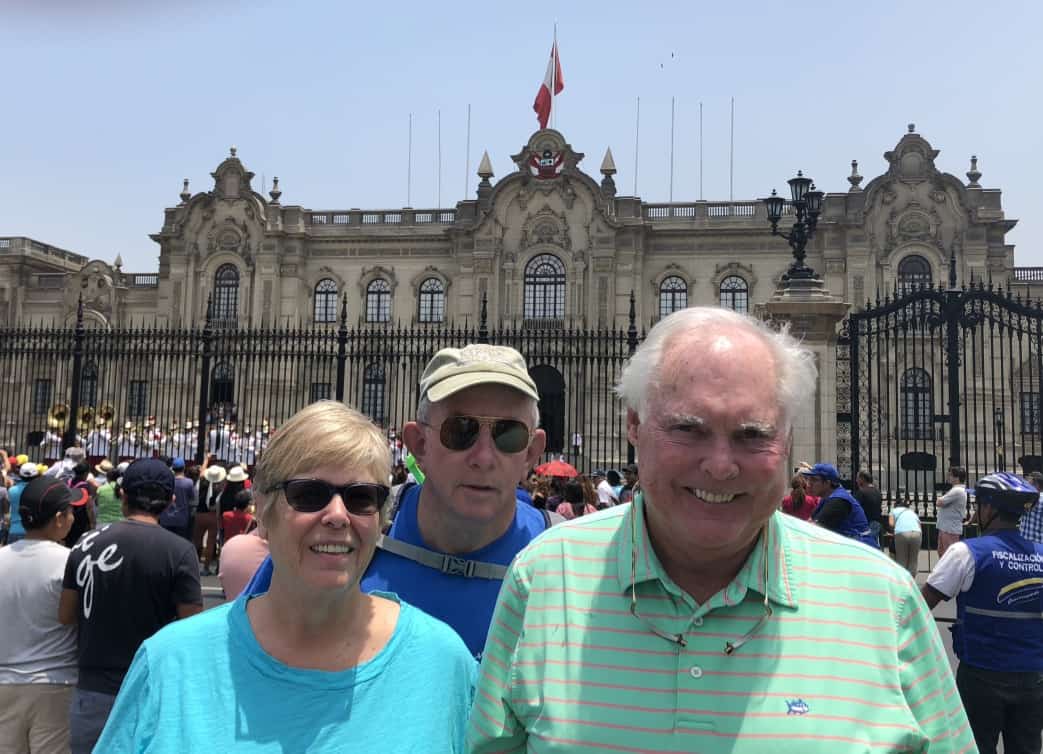
Lima. Peru is home to about thirty-three million people, a third of them in and around Lima. After breakfast we set out for downtown by Uber. The traffic is something to behold, but half an hour and five dollars later we were standing in the main square, the Plaza Mayor. It was noon, and we found ourselves in front of the Presidential Palace just as the changing of the guard began, pure luck.
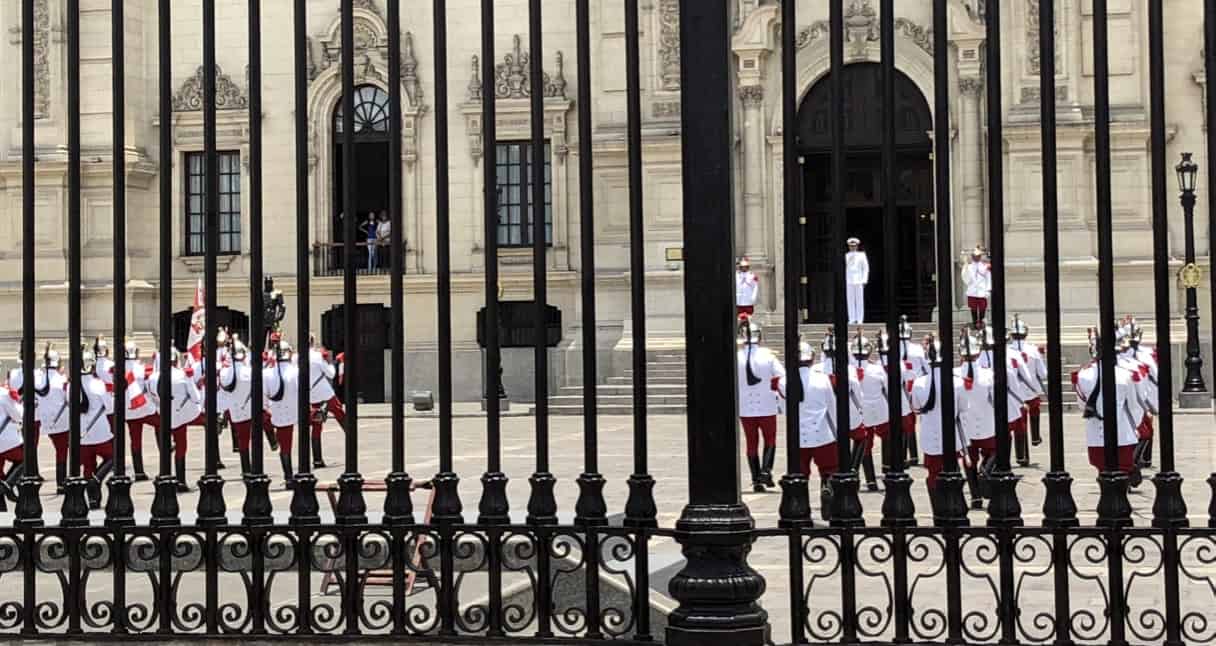
There was a great deal to look at and very little sense of what we were seeing, until a young man stopped and offered us a "free" tour. We have done these in Europe and loved them, so we said yes. "Free" means the guide works for tips, and ours, Alejandro Ordonez, was worth every bit of it.
It was in the Plaza Mayor, Alejandro told us, that Peru proclaimed its independence in 1821. The square is framed by the Government Palace, the Municipality of Lima, the Cathedral, and the Archbishop's residence.
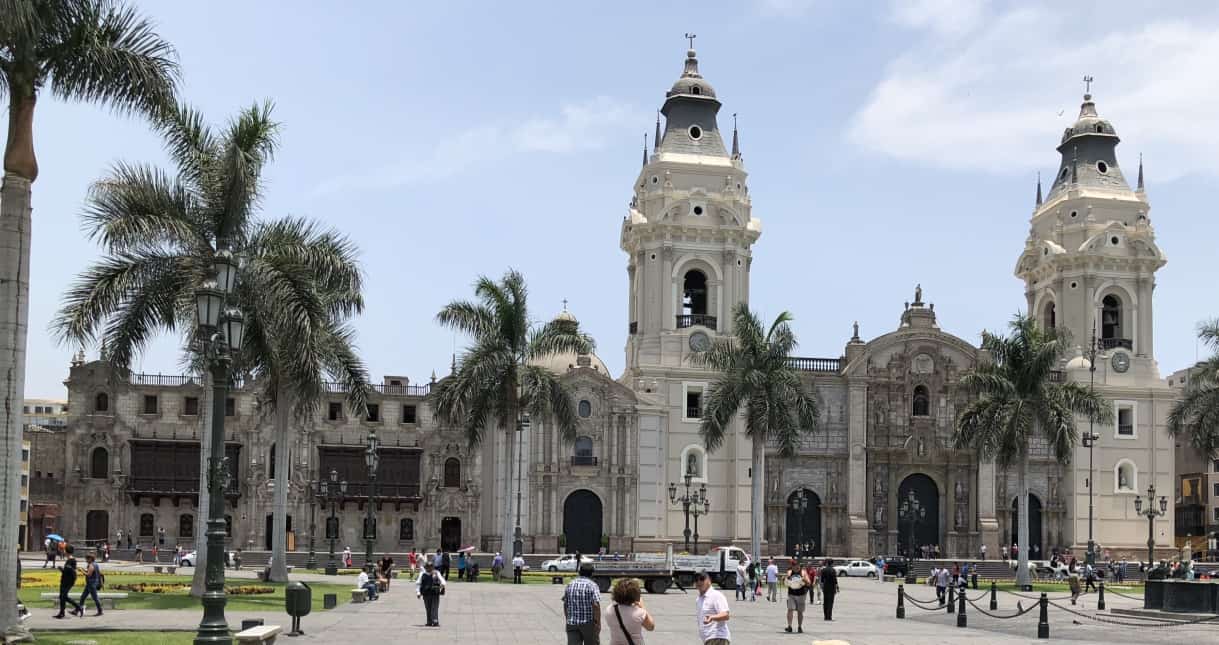
This had been the Inca seat of government for the Lima area until the Spanish under Francisco Pizarro conquered them in the 1530s. The Inca temples were torn down and Catholic churches and cathedrals raised in their place, and Pizarro made Lima the capital of a viceroyalty that reached from present-day Panama down through Peru. The Cathedral is used now only for great occasions, a presidential inauguration or the like; Pope Francis had said Mass there only weeks before. Today about eighty-five percent of Peruvians are Roman Catholic, and a good share of the country is of Inca descent, many of whom hold to the old reverence for Mother Earth alongside their faith. Alejandro pointed out the national flag, red and white, and noted that only government buildings may fly it with the coat of arms; everyone else flies plain red and white.
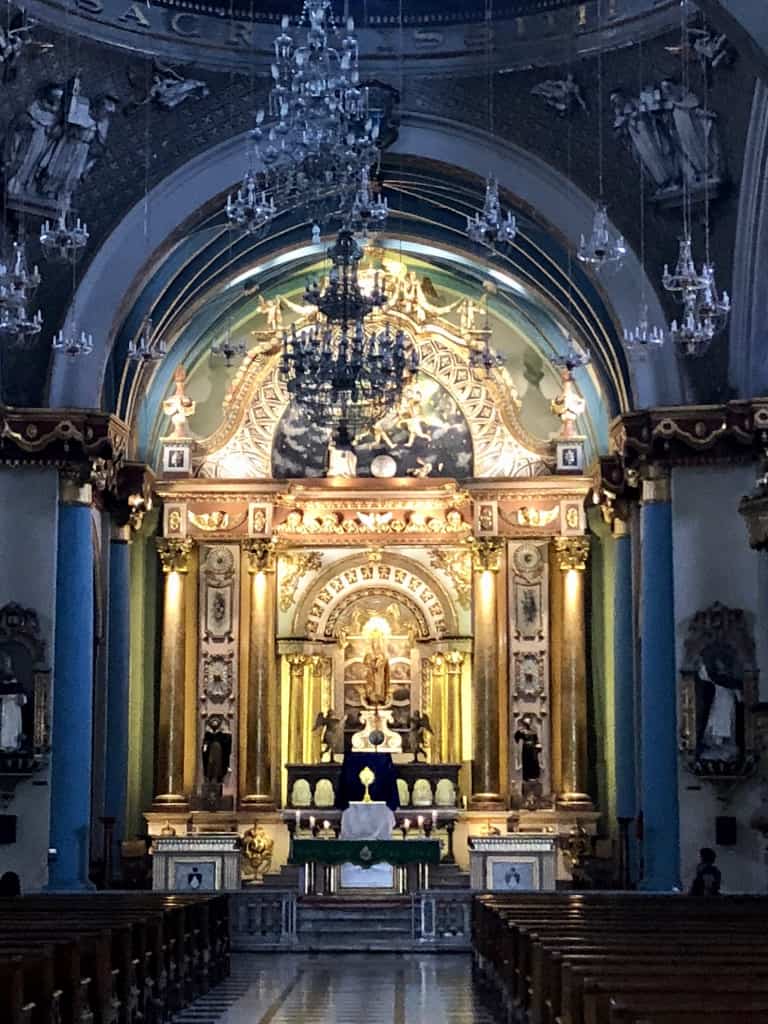
A few blocks on we came to the Church of La Merced, named for the Virgin of Mercy, patron of the nation's arms. It was built in the eighteenth century, and it is beautiful inside and out, full of fine art, with the great altar given over to the Virgin.
We passed through the old postal station, lined with stalls selling gifts to ship home, and came upon a local bar called Cardano with a story worth telling.
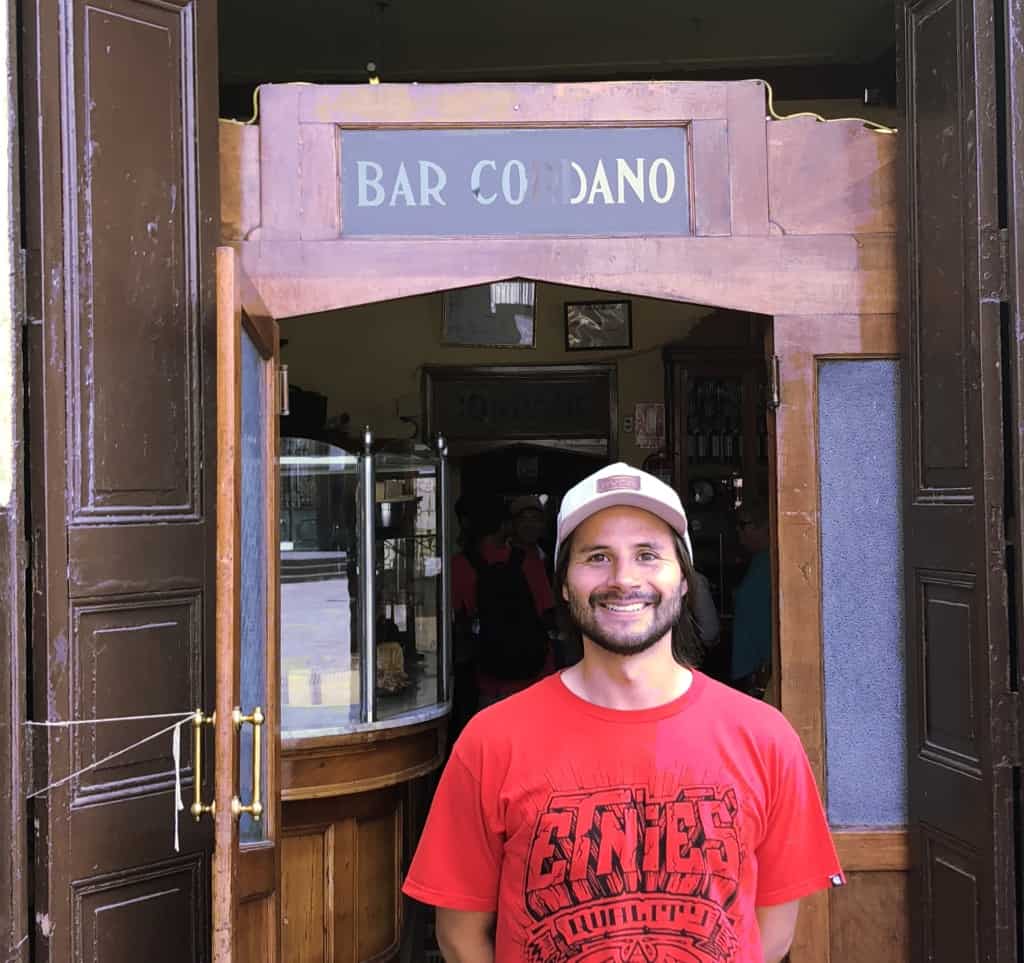
Years ago the owner took on five street boys to work for him. Generations later the families of those same boys own and run Cardano, and they have done well, and they have not forgotten where they came from: they hire orphans from across the street.
From there we walked up to the Church of San Francisco, which sits over the most extensive catacombs anywhere outside Paris, and on to a small city park just beyond the line of the old city wall. There we met a piece of local humor, a ninety-year-old monument to Francisco Pizarro on horseback, the horse with one hoof raised, which is the sculptor's way of saying the rider died of his wounds.
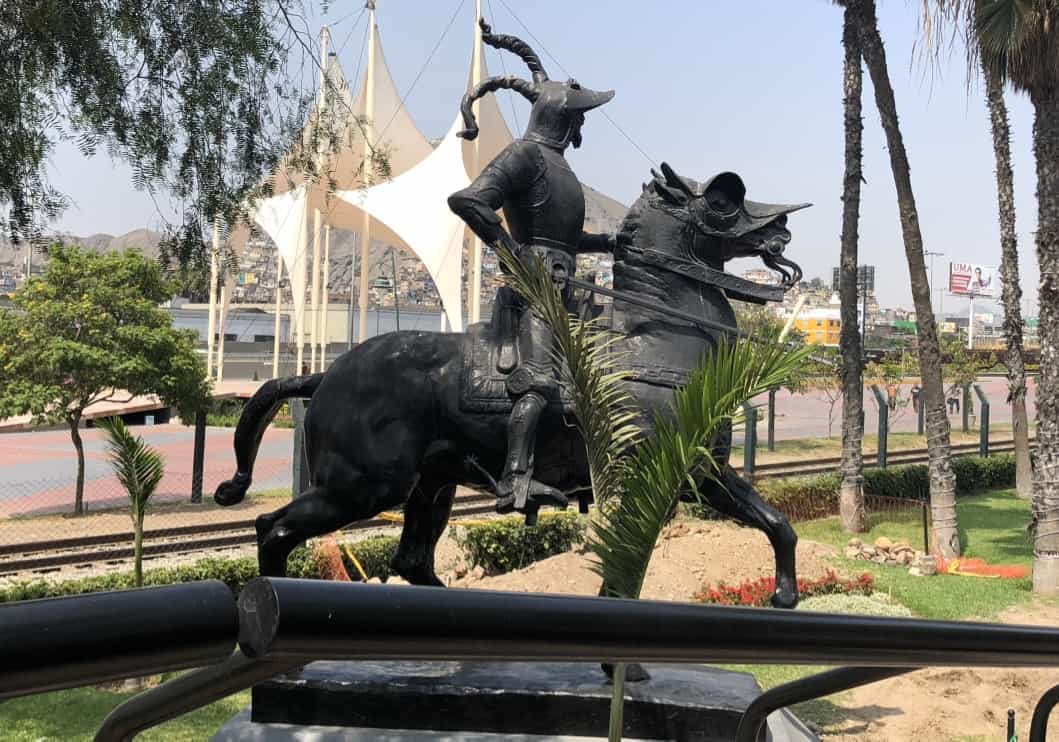
The statue has been shuffled from spot to spot over the years, and at last the city voted to set him out here, beyond the old wall. As the man who conquered the Inca, Pizarro is no hero in Peru.
Our last stop was a small stand for a Pisco Sour, where they showed us how it is made. Pisco is distilled from grapes and is, in plain terms, firewater, about forty-five percent alcohol. It is mixed in equal measures with simple syrup, lime juice, and pisco, with a dash of bitters across the top once it is poured. Two of those and it was goodnight.
The tour ran about two hours, and Alejandro was wonderful; if you find yourself in Lima, he has started his own small touring company and would be glad to show you around. It was a wonderful day.