Dateline February 12, 2018, Machu Picchu
Machu Picchu sits at the top of so many travelers' lists, and now, with our friends, it was our turn.
Getting there. A forty-five-minute bus ride took our group to Urubamba to catch the Peru Rail train up the river to Machu Picchu. At the station they walked us to the observatory cars, built back in the 1920s with glass roofs, and the ride was beautiful, the river roaring alongside and Inca terraces climbing the mountainsides the whole way.
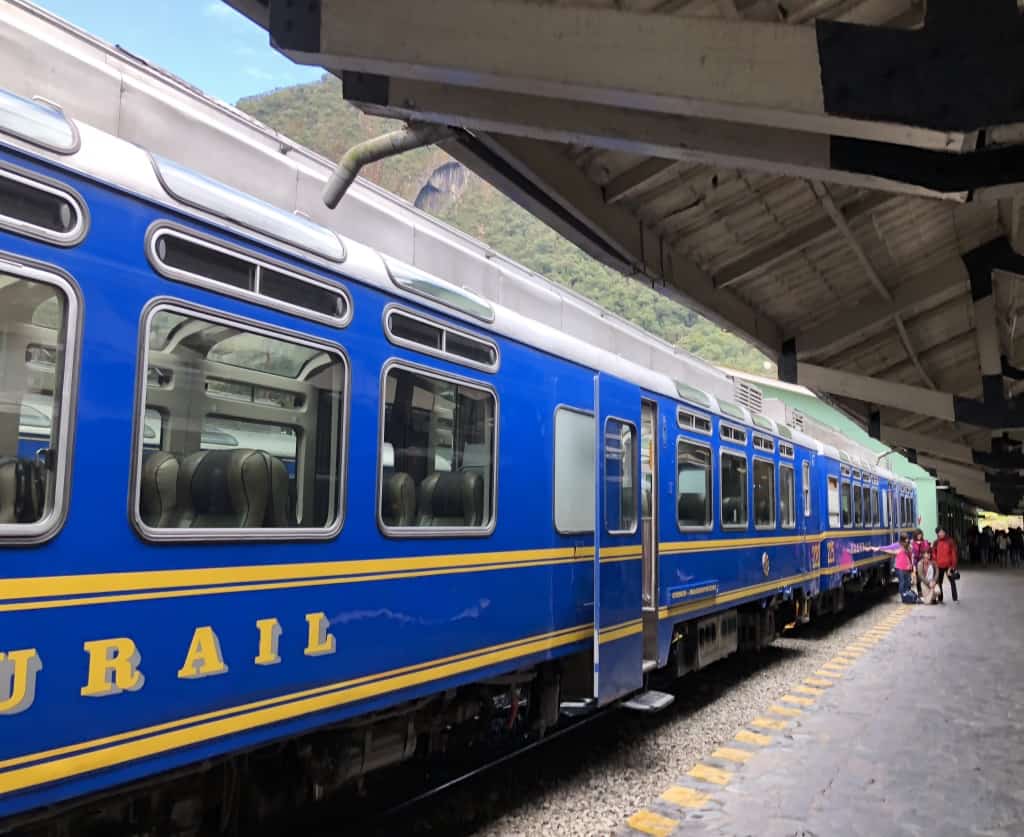
The train sets you down at the base, two thousand feet below the ruins, and there are two ways up: a bus on the switchbacks or your own two feet. We were happy to let the younger folks, none of them from our group, do the hiking. The hardy sort can walk the famous Inca Trail all the way from Urubamba over a few days and skip the train entirely.
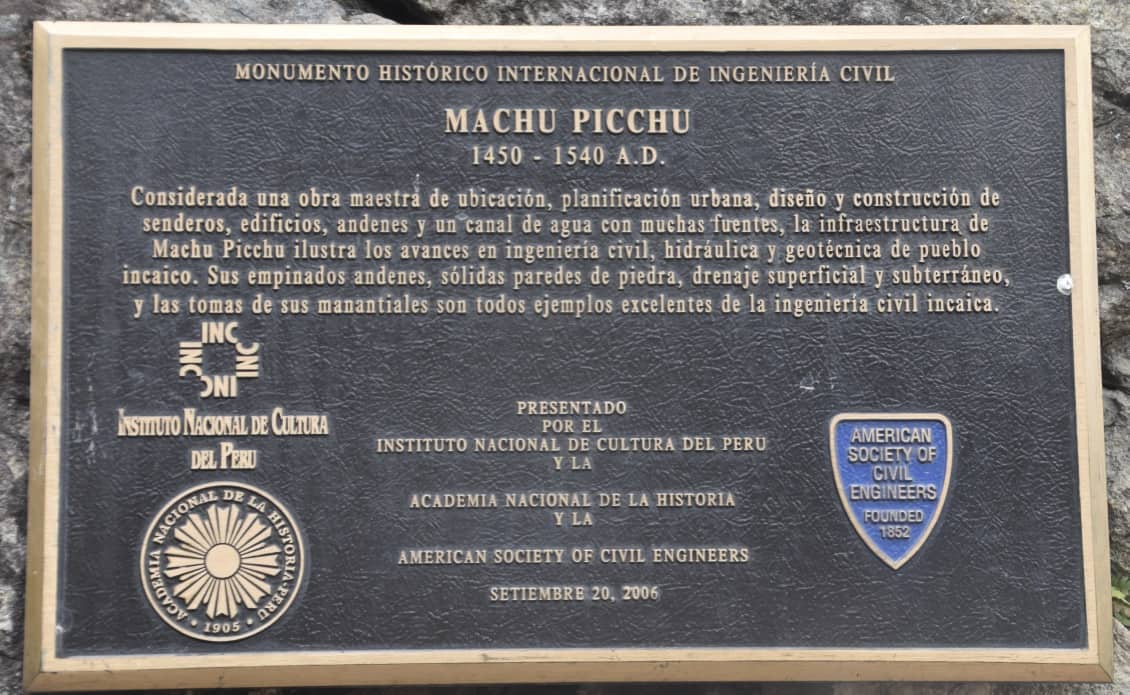
They guard the numbers carefully, so we had a set time to start up, ours at twenty-five to two. They call it two hundred steps; it felt like a good many more, the stones uneven and every step a different size, and at eight thousand forty feet, breathing is anything but a breeze. At the top we walked fifty yards to the right, and there it was, our first look down at Machu Picchu.
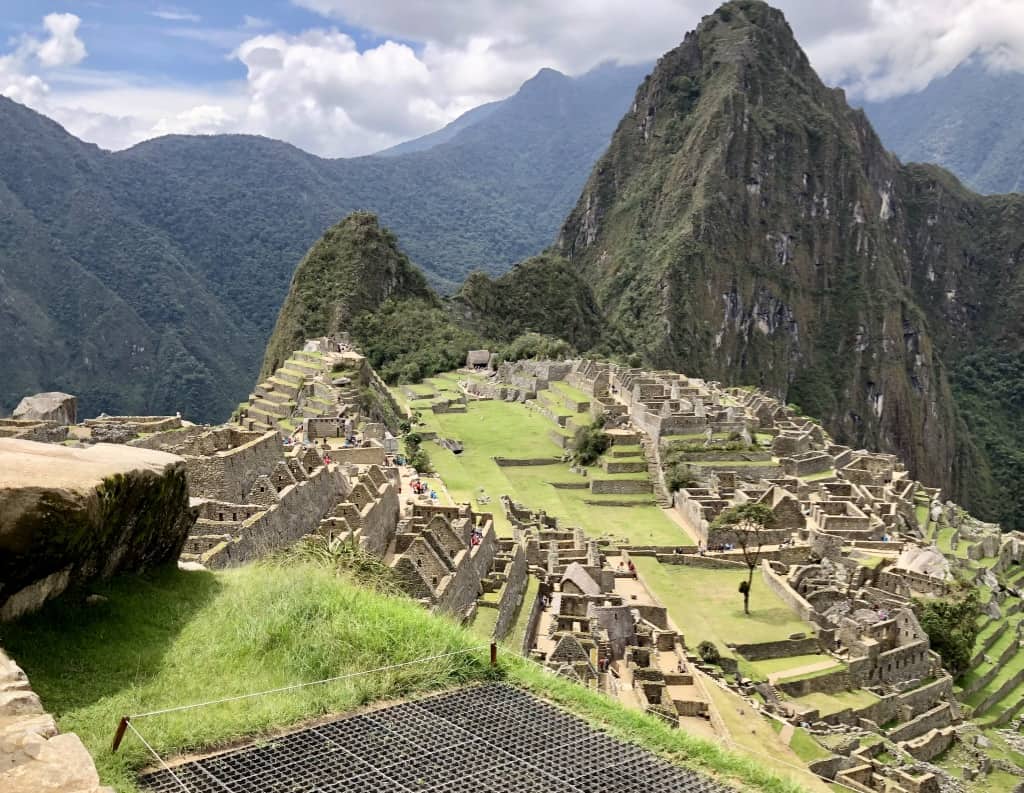
Pictures do not do it justice. It is simply amazing.
About the place. Machu Picchu is counted among the most sacred places on earth, set high in the Andes two thousand feet above the Urubamba. The Inca built it around 1450, a city of fitted granite, dwellings and terraces and storehouses and plazas and temples, raised, like everything they made, without iron tools or animals to haul the loads. The name means "old peak" in Quechua. It is thought to have served as a royal retreat for about a hundred years, until the Spanish conquest, and because it sat hidden fifty miles from Cusco, the Spanish never found it; it simply became a lost city.
Its discovery. It was brought to the world's notice in 1911 by Hiram Bingham, a professor of Latin American history at Yale, though the local people had of course known it was there all along. Bingham had traveled around Cusco and the Sacred Valley in 1908, and Yale sent him back in 1911 to look for lost Inca cities. As his party worked up the river, a farmer told him of old buildings on the mountain and sent his son along to show the way, and there it was, buried under the jungle. Bingham came back later to map the full size of it, and carried many artifacts home to the Yale museum; a good number of those have since been returned to Peru.
Through the city. With Edgar leading us we walked the ruins until nearly six in the evening, and at every turn he had the stories of what each place is thought to have been: the land tiered for crops, the buildings for storing and living and praying, and a main temple unlike the rest.
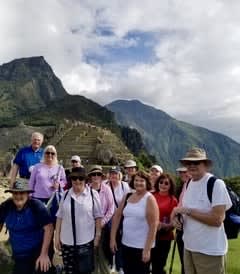
This is our Machu Picchu "Mob," the busload we had laughed our way through Cusco and the valley with, and we will remember them as long as we remember any of it.
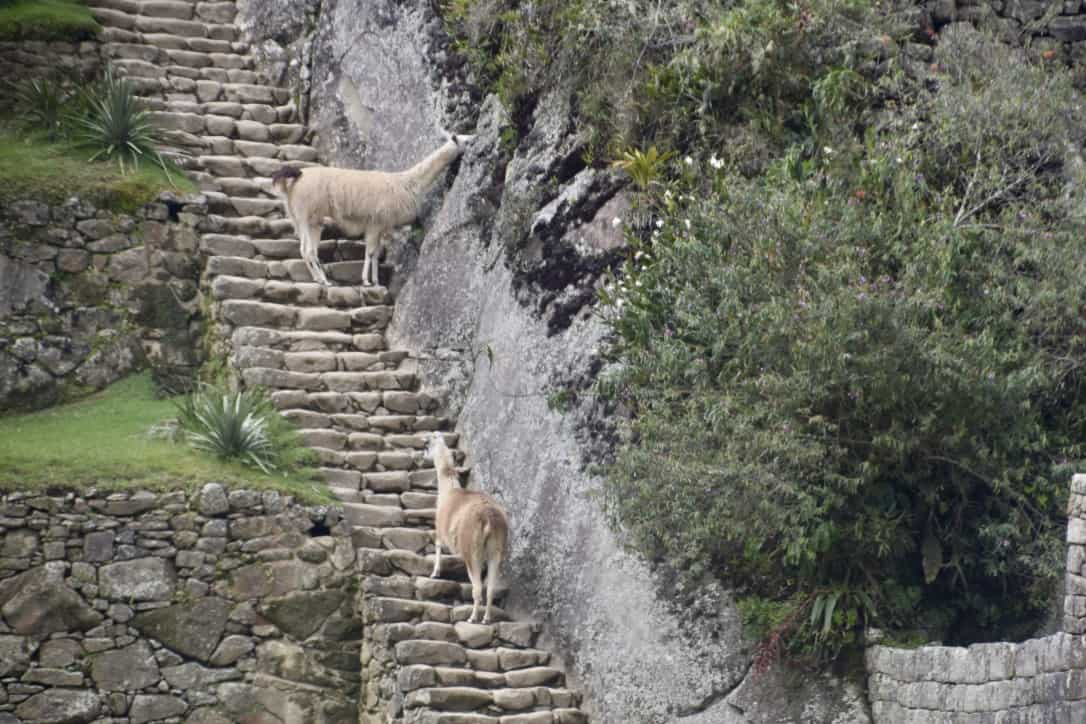
Edgar pointed out the two peaks that frame the city. One is Machu Picchu Mountain, with a staircase to the top; you need a separate ticket, and they let only four hundred people up a day. The other is Huayna Picchu, where a trail climbs past altars, narrow stairways, tunnels, and terraces to the most famous view down on the city, again capped at four hundred a day.
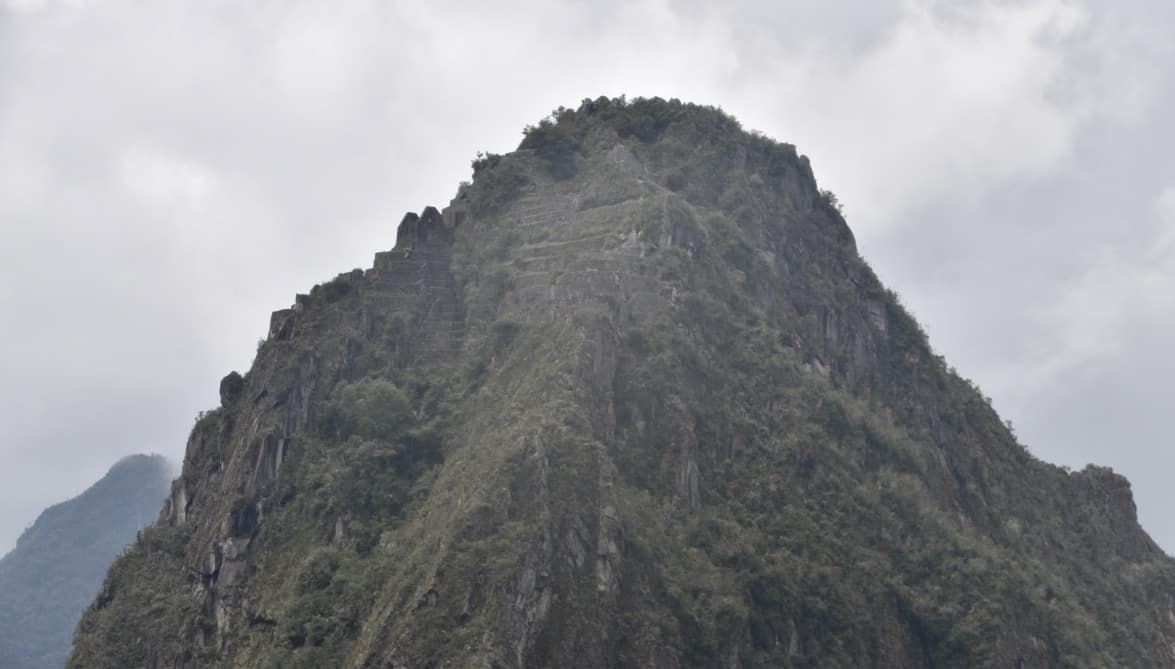
Both are steep, and downright dangerous when the rocks are wet. Twenty years younger, we would have been up them in a heartbeat; as it was, we were content. This was one of the most wonderful experiences of our lives, and if you ever get the chance, do not miss it.
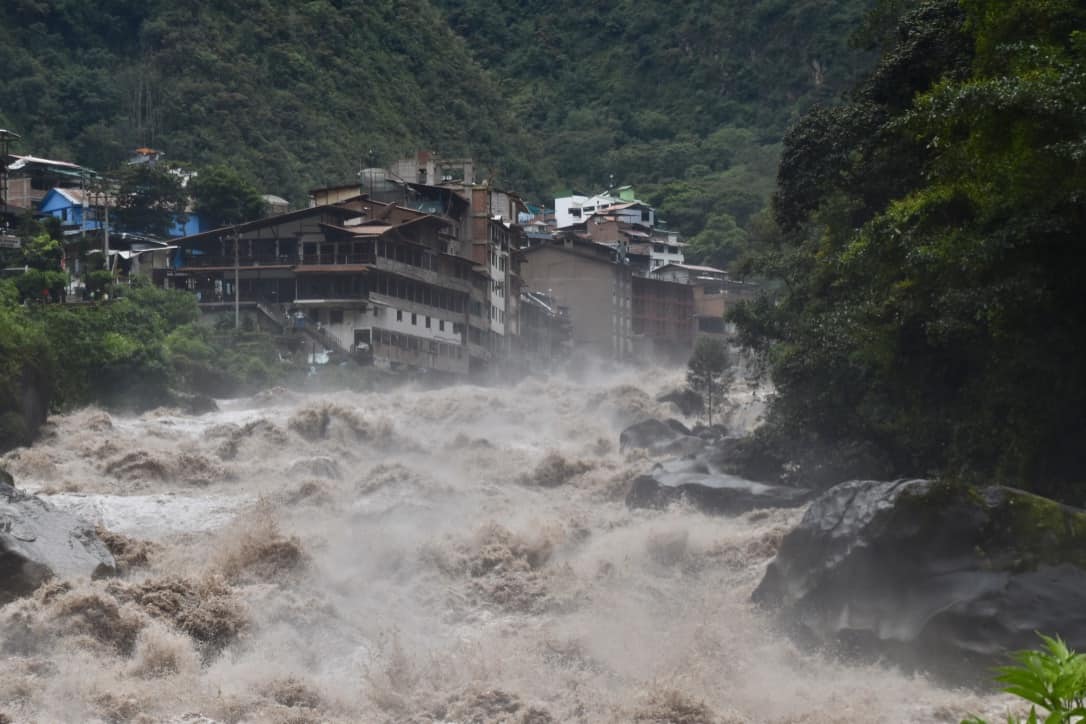
The night and the river. Worn out, we met our group and rode the bus back down to the town of Machu Picchu and our hotel, the Sumaq, for a few drinks, dinner, and a good night's sleep. We had come in the rainy season but were blessed with sunshine over the ruins; the rain saved itself for the nights, and when we woke the river beside the hotel had gone wild.
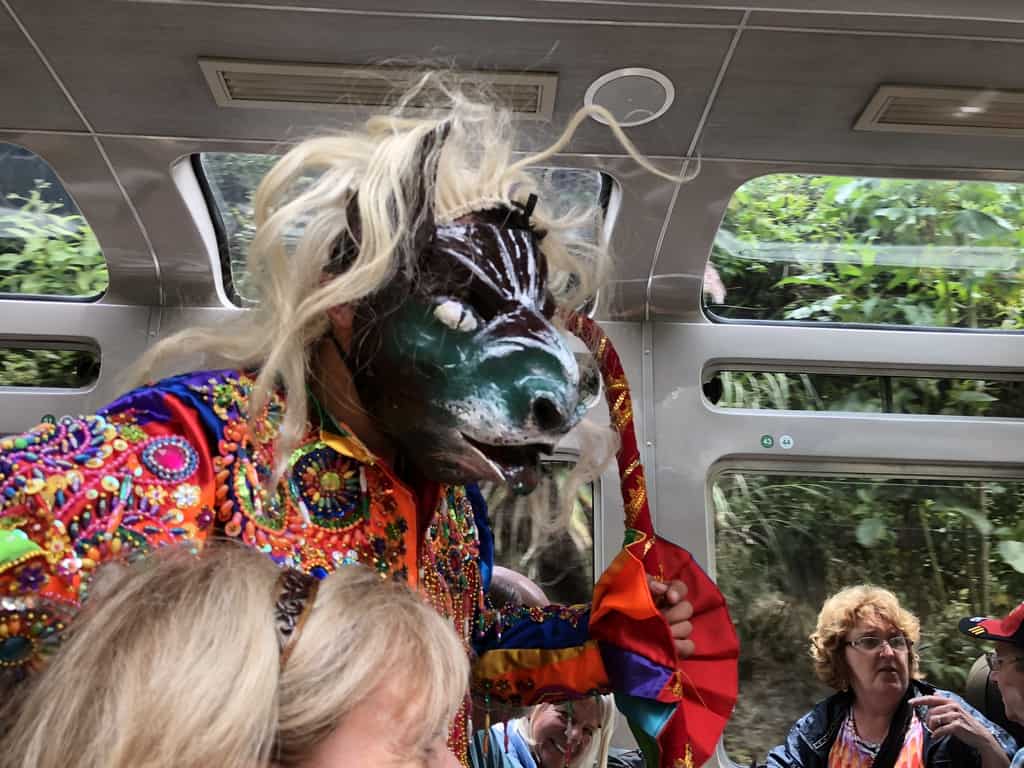
We left early to catch the train back to Cusco and our last evening in the Sacred Valley, and the ride home had a treat of its own: locals in costume dancing their way up and down the cars with the members of our "Mob."